
11 Farmhouse Remodel Choices That Stay Simple

On this page16 sections
- The rule behind every choice
- Wide-plank wood floors in a matte finish
- Plain Shaker cabinets
- A durable counter that can age
- A single apron-front sink
- A bridge or simple gooseneck faucet
- Simple, honest trim
- Warm, flexible lighting
- A working mudroom or back entry
- Painted walls in quiet colors
- Real wood and natural materials for furniture
- Fewer accessories, more function
- Where to spend and where to save
- Mistakes that date a farmhouse remodel
- Quick answers
- Keep it simple
Farmhouse style has gone through a decade of shiplap, sliding barn doors, and signs that tell you to gather. Plenty of homeowners now look at those remodels and see a dated trend. Yet the original farmhouse, the working rural house that inspired all of it, was never trendy. It was simple because it had to be: durable floors, plain cabinets, a big sink, and materials that could be repaired.
This guide is about remodel decisions, the expensive and permanent choices like floors, counters, and plumbing fixtures, rather than decor you can swap on a weekend. If you live in a newer house and want small farmhouse touches without a renovation, the guide to farmhouse details for a newer house is the better starting point. Here the goal is to make choices that stay simple, so the remodel looks settled for years rather than tied to one season of design.
As an Amazon Associate I earn from qualifying purchases.
The rule behind every choice
The simplest farmhouse remodels follow one rule: choose materials that age well and can be repaired, and keep the decorative layer light. A wood floor can be sanded. A soapstone counter can be oiled and its scratches buffed out. Unlacquered brass darkens gracefully. In contrast, heavily distressed finishes, printed faux wood, and themed accessories look tired as soon as the trend moves on.
When you are torn between two options, ask which one a farmhouse built a century ago would have used, and which one you could fix yourself in ten years. That question settles most decisions.
1. Wide-plank wood floors in a matte finish
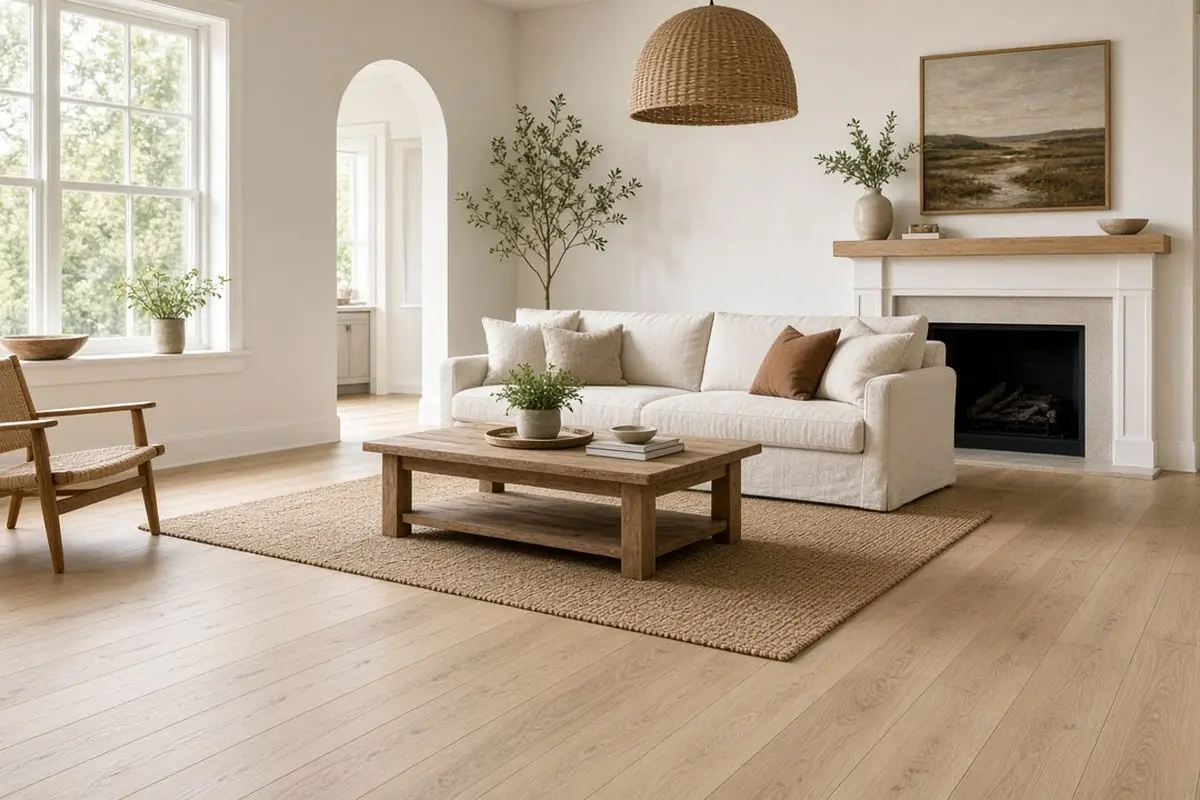
Wood floors are the foundation of a farmhouse interior. Wide planks, around 5 to 8 inches, feel more traditional than narrow strips. White oak is a strong choice because it is hard, takes stain evenly, and looks good in natural tones.
Choose a matte or low-sheen finish. Glossy floors show every scratch and look more formal. Matte floors hide wear and suit the relaxed farmhouse feel. Avoid heavy wire-brushing or hand-scraping, which can look forced.
If budget or moisture makes solid wood impractical, quality engineered wood with a thick wear layer can be refinished at least once.
Get the look
2. Plain Shaker cabinets
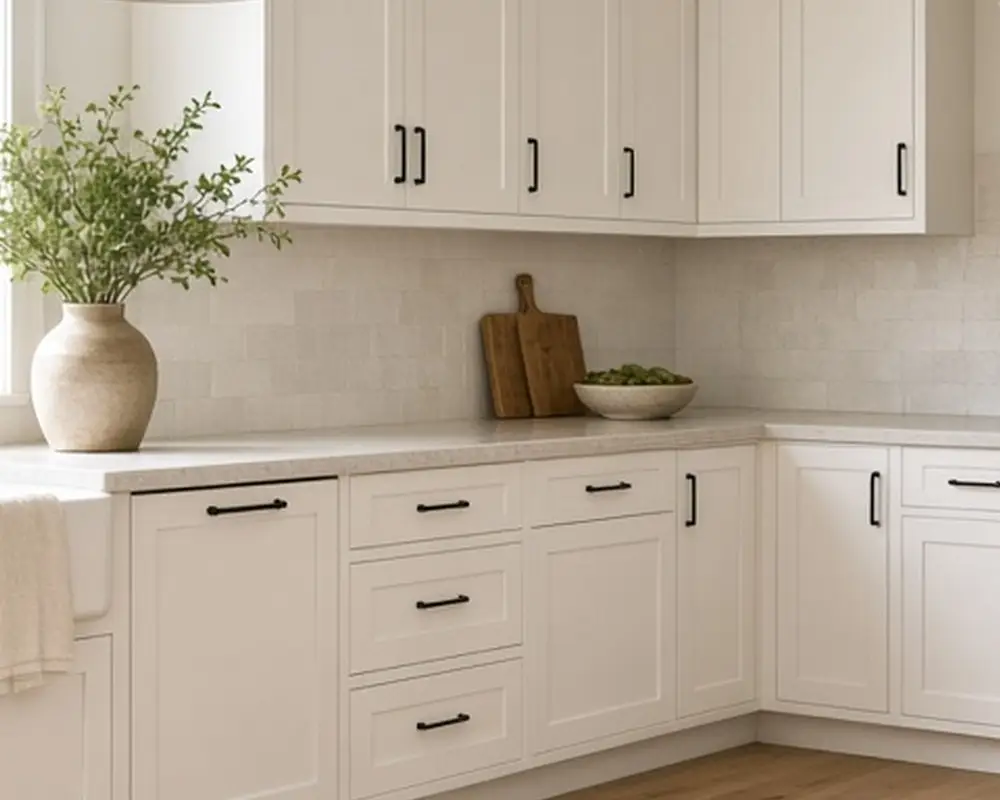
Shaker cabinets, with a simple recessed panel and square edges, have been around since the 1800s and are still the most adaptable cabinet style. They suit farmhouse, traditional, and modern rooms, which means they will not look out of place if your taste changes.
Skip the glazed, distressed, or heavily routed doors that often appear in farmhouse remodels. A plain Shaker door painted in a soft white, warm gray, or muted green looks right for years. Use inset construction if your budget allows, since it is closer to traditional cabinetry, but full-overlay Shaker doors work well and cost less.
For pulls and knobs that complement Shaker doors, the Shaker kitchen hardware update guide covers sizes and finishes.
3. A durable counter that can age
Counters take a lot of daily wear. In a farmhouse kitchen, choose a material that looks good worn rather than one that must stay perfect.
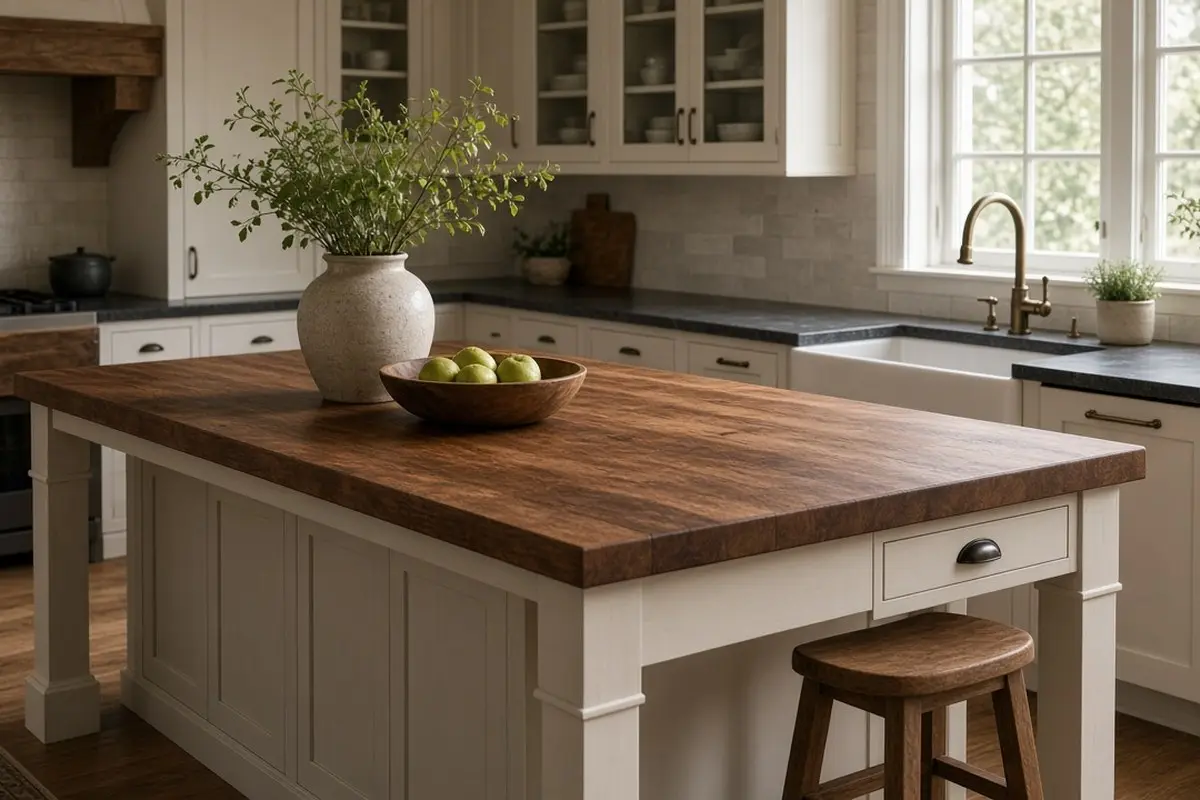
- Soapstone is soft, dark, and develops a natural patina. Scratches can be sanded or oiled away.
- Butcher block is warm and repairable. It needs regular oiling and care near the sink.
- Honed marble etches and stains, which some people love as character and others find stressful.
- Quartz in a simple, quiet pattern is low-maintenance, though it cannot be refinished like stone or wood.
A common simple approach is to use a durable stone or quartz around the sink and stove, with butcher block on an island where people gather.
Get the look
4. A single apron-front sink
The apron-front sink, with its exposed front panel, is one of the most recognizable farmhouse features, and it is practical as well. A deep single bowl holds large pots and sheet pans that do not fit in a divided sink.
Fireclay sinks are traditional and very durable, though heavy, so cabinets must be built to support them. Stainless apron sinks are lighter and quieter. Choose a plain front rather than a carved or decorated one. The simple version looks right for decades.
5. A bridge or simple gooseneck faucet
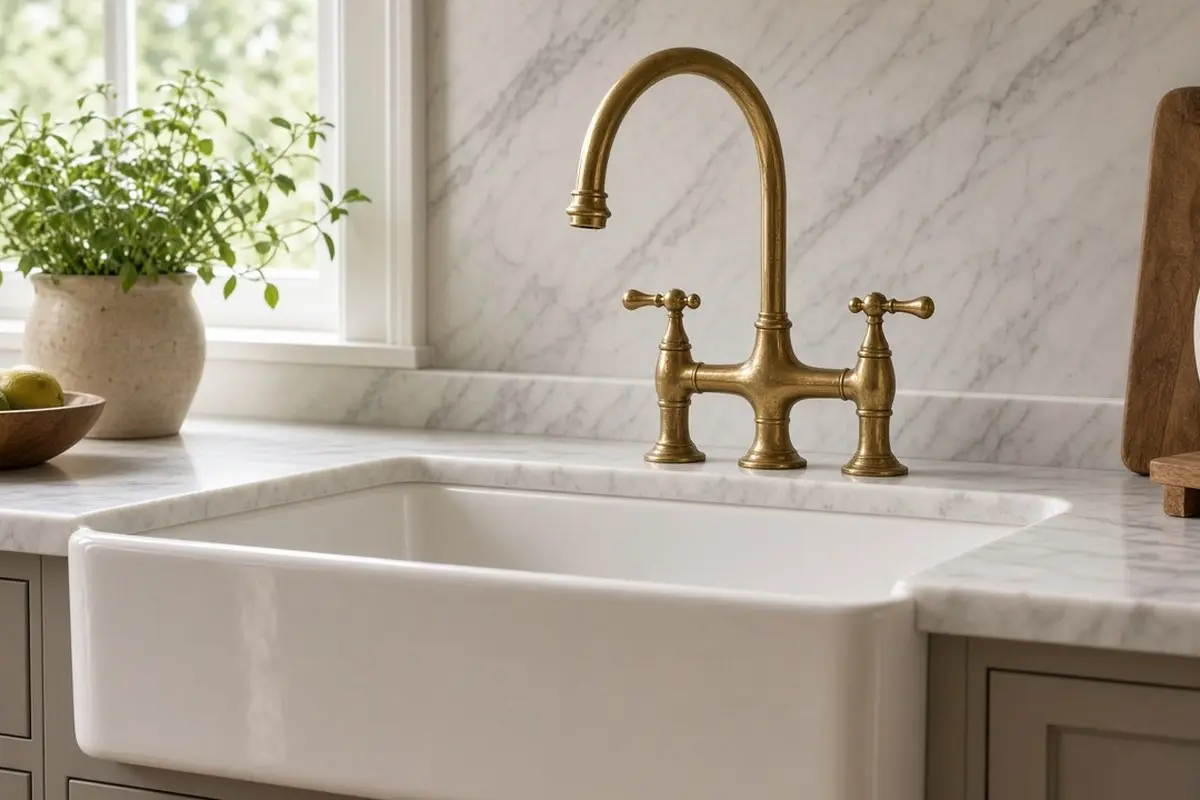
A bridge faucet, with two handles joined by a horizontal pipe, is a classic farmhouse fixture. It suits an apron sink and looks traditional without being themed. A simple gooseneck faucet with a side spray is another easy-to-live-with option.
Choose a finish that ages well: polished nickel, unlacquered brass, or matte black. Unlacquered brass will darken and spot over time, which suits a farmhouse kitchen. If you prefer a consistent finish, choose a lacquered or PVD-coated version instead.
Get the look
6. Simple, honest trim
Trim is where many farmhouse remodels go overboard. Shiplap on every wall and heavy crown molding everywhere can look like a set rather than a home.
A simpler approach uses flat-stock trim, plain boards around doors and windows, often with a slightly thicker head casing at the top. This style is common in old farmhouses and works with almost any room. Use shiplap or board and batten on one wall, or in a mudroom or bath, rather than throughout the house.
7. Warm, flexible lighting
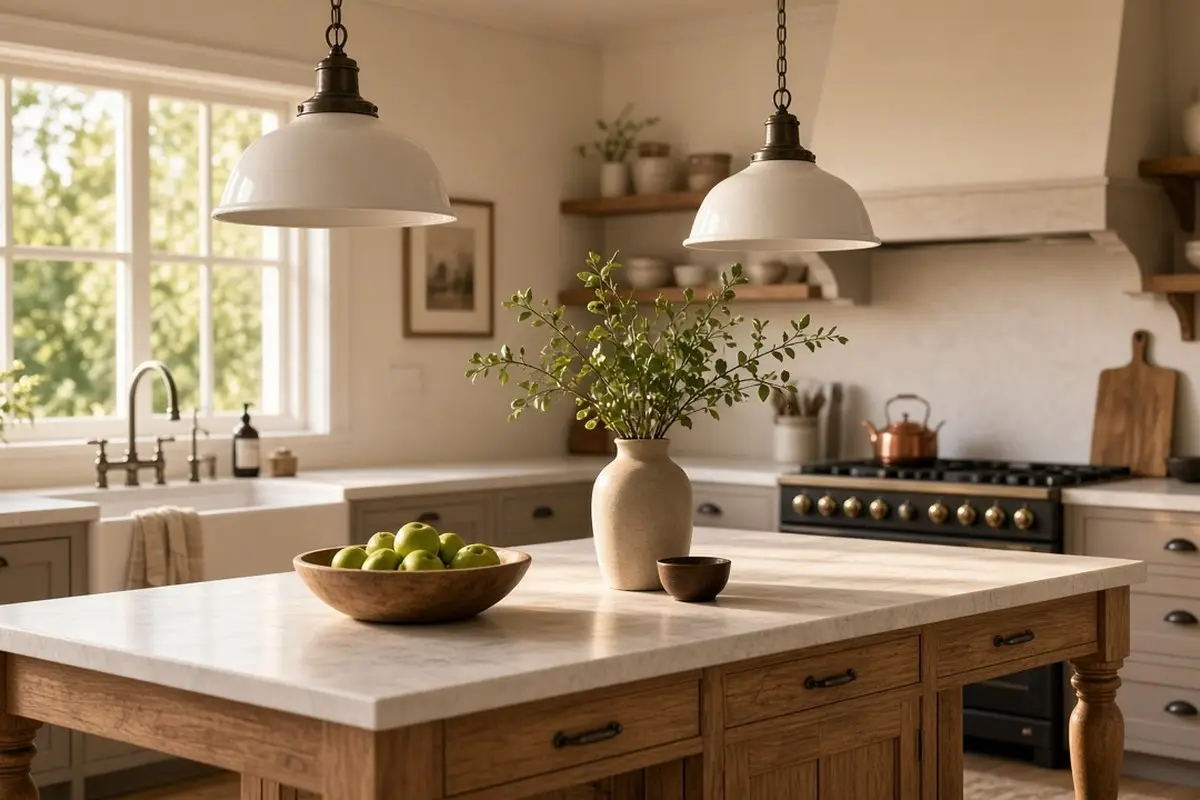
Lighting is easy to change later, so it can carry a bit more personality than permanent materials. Still, simple shapes age better than themed ones. Plain enamel or glass pendants, simple schoolhouse globes, and slim wall sconces suit a farmhouse remodel without dating it.
Layer the lighting: ceiling or recessed lights for general use, pendants over the island, under-cabinet lights for work, and a lamp or two for evening. Use warm white bulbs around 2700K, which feel like the soft light of an older house. Put lights on dimmers wherever possible.
For pendant height over an island, see kitchen island light height.
Get the look
8. A working mudroom or back entry
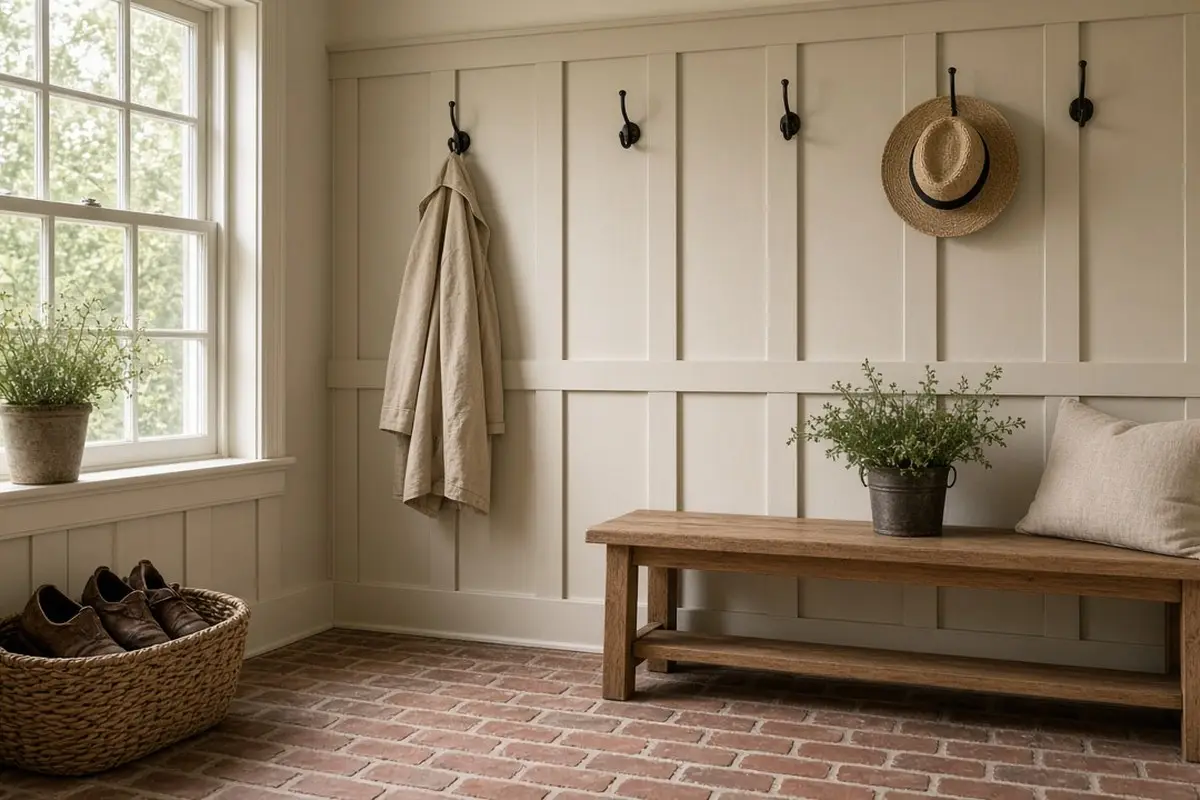
Real farmhouses were built for muddy boots, wet coats, and daily chores. A remodel that adds a working back entry with durable floors, hooks, a bench, and storage is more farmhouse in spirit than any decor.
Use durable, washable materials: tile or brick floors, painted beadboard or board and batten on the lower wall, and sturdy hooks. A simple bench with cubbies below keeps shoes off the floor. If space allows, a utility sink here is useful for gardening, pets, and cleaning.
Get the look
9. Painted walls in quiet colors
Farmhouse walls do not need to be bright white. Warm whites, soft creams, pale greige, and muted greens give a room a lived-in calm. Very cool, stark whites can feel clinical in an older-style house, especially in rooms with little natural light.
Choose one main wall color for the shared spaces and vary it only slightly between rooms. A consistent palette makes the house feel connected and calm. Use a durable eggshell or satin finish in busy rooms and a matte finish in bedrooms and living rooms.
10. Real wood and natural materials for furniture
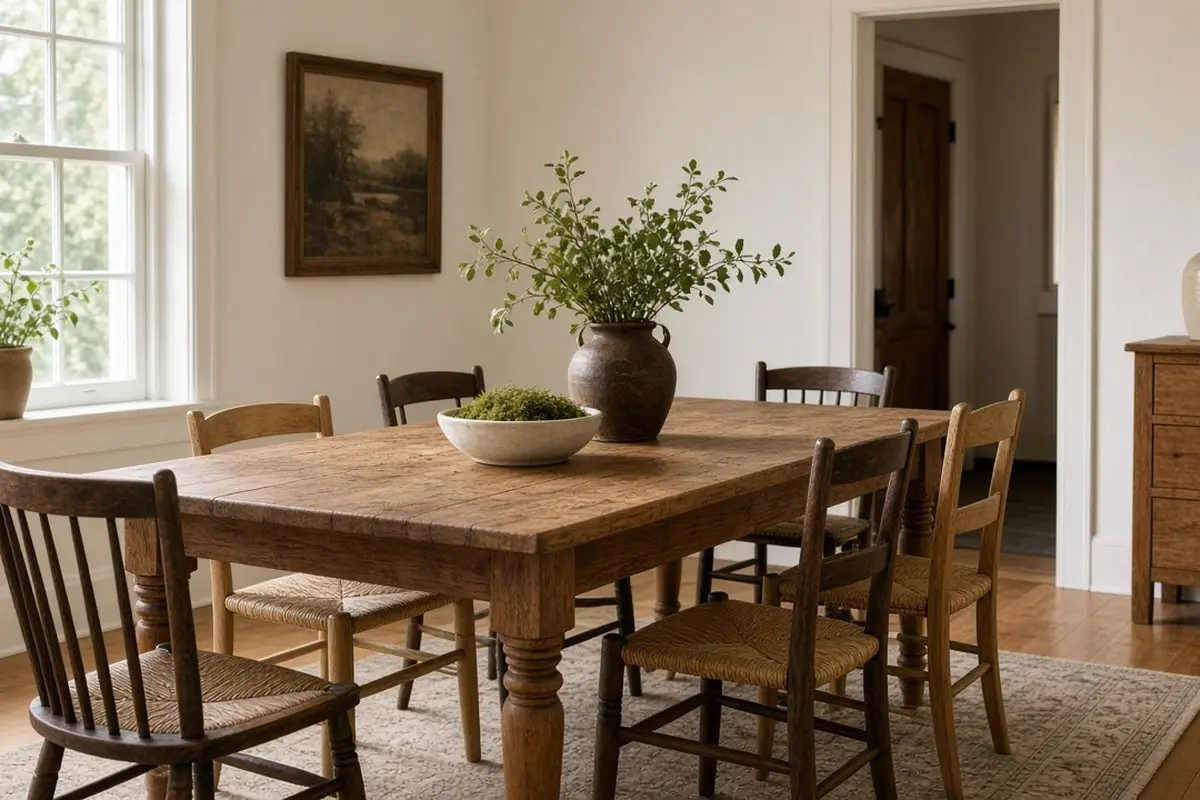
The furniture in a farmhouse room matters more than the decor. A solid wood dining table, wood or rush-seated chairs, and a few pieces of older furniture give a room depth. Avoid furniture with fake distressing, which tends to look artificial.
Mix new and old: a new sofa with a vintage side table, or new chairs with an antique table. Pieces from estate sales or family give the house character that new items cannot. For keeping a wood table in good shape, see farmhouse dining table care.
Get the look
11. Fewer accessories, more function
The last choice is about restraint. A farmhouse remodel looks most authentic when the accessories are useful: a bowl of fruit, a crock of wooden spoons, a stack of linens, a plant on the windowsill. Decorative signs, faux crates, and themed accents tend to date a room quickly.
Before adding a decorative item, ask whether it has a job. Open shelves are a good test: if everything on them is used at least weekly, they look generous and lived-in; if they hold rows of matching decor, they start to look staged. Keep one shelf for daily dishes and glasses, and the room will feel like a working kitchen rather than a showroom. If it does not, leave it out. The result is a calmer room that will look settled for years.
Where to spend and where to save
A remodel budget goes further when it is spent on the things that are hard to change.
Spend more on:
- Floors, since replacing them later is disruptive and expensive.
- Cabinets and their construction, which take the most daily wear.
- The sink and faucet, used many times a day.
- Electrical and plumbing work done right the first time.
Save on:
- Light fixtures, which are easy to swap later.
- Hardware, which can be upgraded in an afternoon.
- Paint colors, which can change with a weekend of work.
- Accessories and textiles, which can be collected slowly.
Mistakes that date a farmhouse remodel
- Shiplap everywhere. One wall or one room is enough.
- Fake distressing. Real wear looks better and comes with time.
- Too many signs and slogans. Let the house speak through materials.
- Barn doors where a swinging door would work better. Sliding barn doors do not close tightly and offer little sound privacy.
- Mismatched metals without a plan. Choose one or two finishes and repeat them.
Quick answers
Is farmhouse style still popular? The themed version has faded, but the simple, material-focused version remains widely liked because it is closer to traditional design than to a trend.
Can a farmhouse remodel work in a city house? Yes. Focus on materials and simplicity rather than rustic decor.
What is the single most important choice? The floor. A good wood floor sets the tone for every room.
Keep it simple
The best farmhouse remodels are the ones that look like they could have been there for decades. Choose honest materials, repairable surfaces, and a few useful details, and leave the trends for decor you can change.