
11 Shaker Kitchens You Can Update With Hardware Alone

On this page13 sections
- Why Shaker doors are different
- Classic knobs on doors, cup pulls on drawers
- Slim bar pulls for a modern shaker kitchen
- Wooden knobs for a Scandinavian look
- Leather pulls for warmth
- Latches for a vintage feel
- Edge pulls for a minimal look
- Mix finishes thoughtfully
- Match hole spacing to avoid repairs
- Painted cabinets plus new hardware
- Upgrade the hinges
- Finish with a consistent line
- FAQ
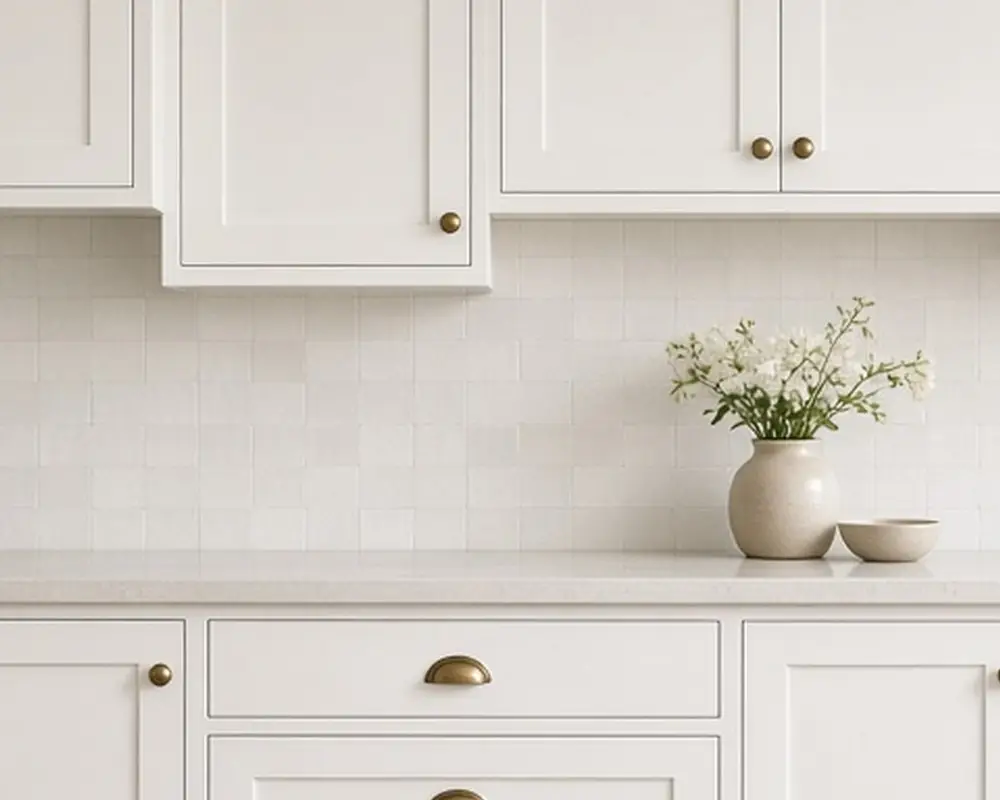
The Shaker cabinet door is the most common style in kitchens today: a flat center panel framed by four plain rails. Its simplicity is its strength. A Shaker door has no strong period style of its own, so it takes on the character of whatever you put on it. The same white Shaker kitchen can look farmhouse, modern, traditional, or Scandinavian depending almost entirely on the hardware.
That makes a hardware swap the most powerful update you can make to a Shaker kitchen. It is also one of the cheapest and quickest: most kitchens can be done in a single weekend with a drill and a template. But it only works if the pieces fit the door: the right size for the rail, placed at the right point, in a style that suits the frame. This post focuses on Shaker doors specifically: how their rails dictate size and placement, and which hardware styles transform them. For pairing hardware with paint and counters across any cabinet style, see the kitchen finish pairings post.
As an Amazon Associate I earn from qualifying purchases.
Why Shaker doors are different
A Shaker door has a frame, usually 2 to 3 inches wide, around a recessed panel. Hardware should sit on the frame, never on the recessed panel. A pull that straddles the edge of the panel looks wrong and does not sit flat.
That frame width also limits size. A knob up to about 1.25 inches across fits comfortably on most rails. A pull’s mounting posts must both land on the frame, so on doors, pulls are mounted vertically on the stile, the upright part of the frame. On drawers, pulls are centered horizontally on the top rail or in the middle of the drawer front if it is a slab.
Measure your rail width before shopping. Measure the door thickness too, because screws are sold in lengths, and screws that are too long will poke through on the inside or stick out behind a knob. Narrow, modern Shaker rails, sometimes called skinny Shaker, need smaller hardware than traditional wide rails.
1. Classic knobs on doors, cup pulls on drawers
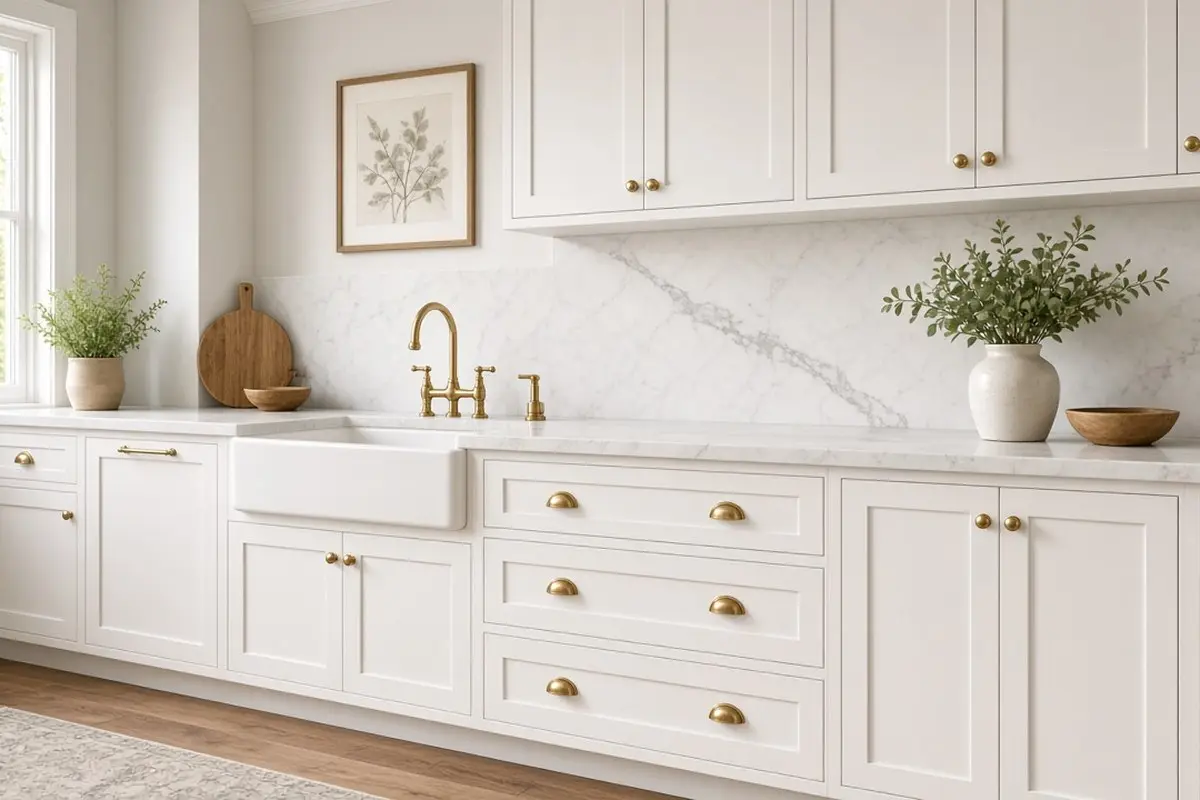
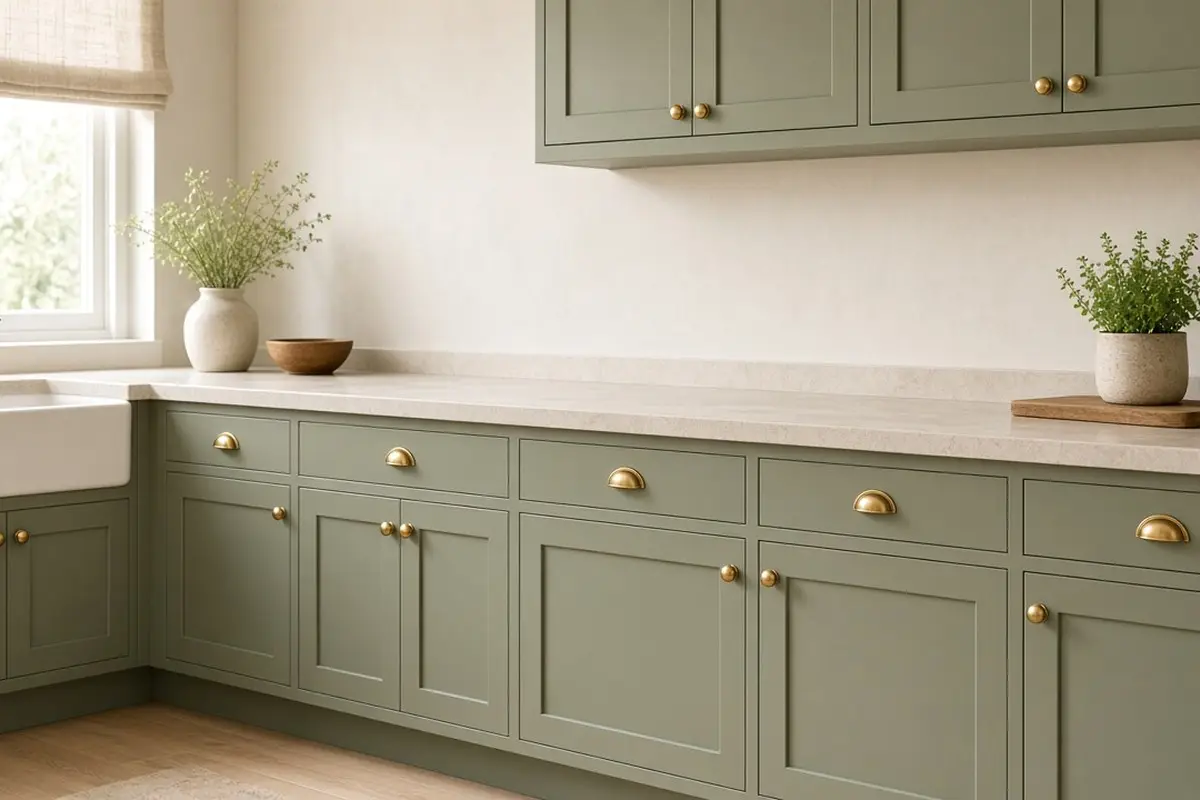
The most traditional Shaker combination is round knobs on every door and cup pulls (also called bin pulls) on every drawer. It is the look of old farmhouse and English kitchens, and it suits the plain frame perfectly.
Place door knobs on the stile opposite the hinge, about 2 to 3 inches from the top corner on base cabinets and from the bottom corner on wall cabinets. Center cup pulls on the drawer’s top rail. On a slab drawer front with no rail, center them on the front itself.
Aged brass, unlacquered brass, or oil-rubbed bronze gives a warm, traditional look. Polished nickel looks crisp and classic.
This pattern also helps with daily use. Knobs are quick to grab on doors you open with one hand, while cup pulls let you hook your fingers under and pull heavy drawers full of pots. Keep all the knobs the same size and all the cup pulls the same size; varying them looks fussy on a plain Shaker front.
Get the look

2. Slim bar pulls for a modern shaker kitchen
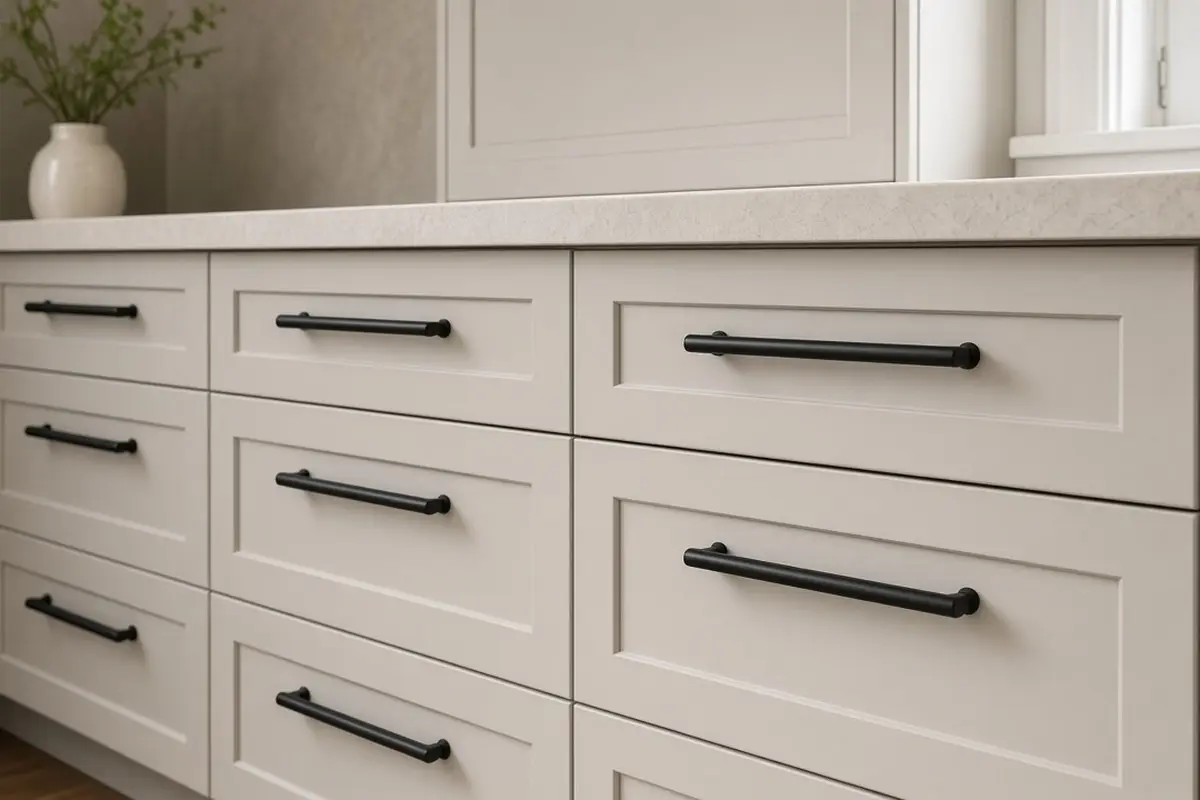
For a modern shaker kitchen, choose slim bar pulls in matte black or brushed nickel. Mount them vertically on doors and horizontally on drawers. Clean lines echo the simple frame.
Use one length throughout for a calm look, or a slightly longer pull on wide drawers. A common rule is that a drawer pull should be about one-third of the drawer’s width.
On very wide drawers, such as a 36-inch pot drawer, two pulls placed a third of the way in from each end are easier to use than a single long pull. They let you open the drawer evenly without it racking. On narrow drawers, a single knob can be enough.
Bar pulls with round posts that stand slightly away from the door are the easiest to grab. Very flat pulls look sleek but can be hard to use with wet hands.
Get the look
3. Wooden knobs for a Scandinavian look
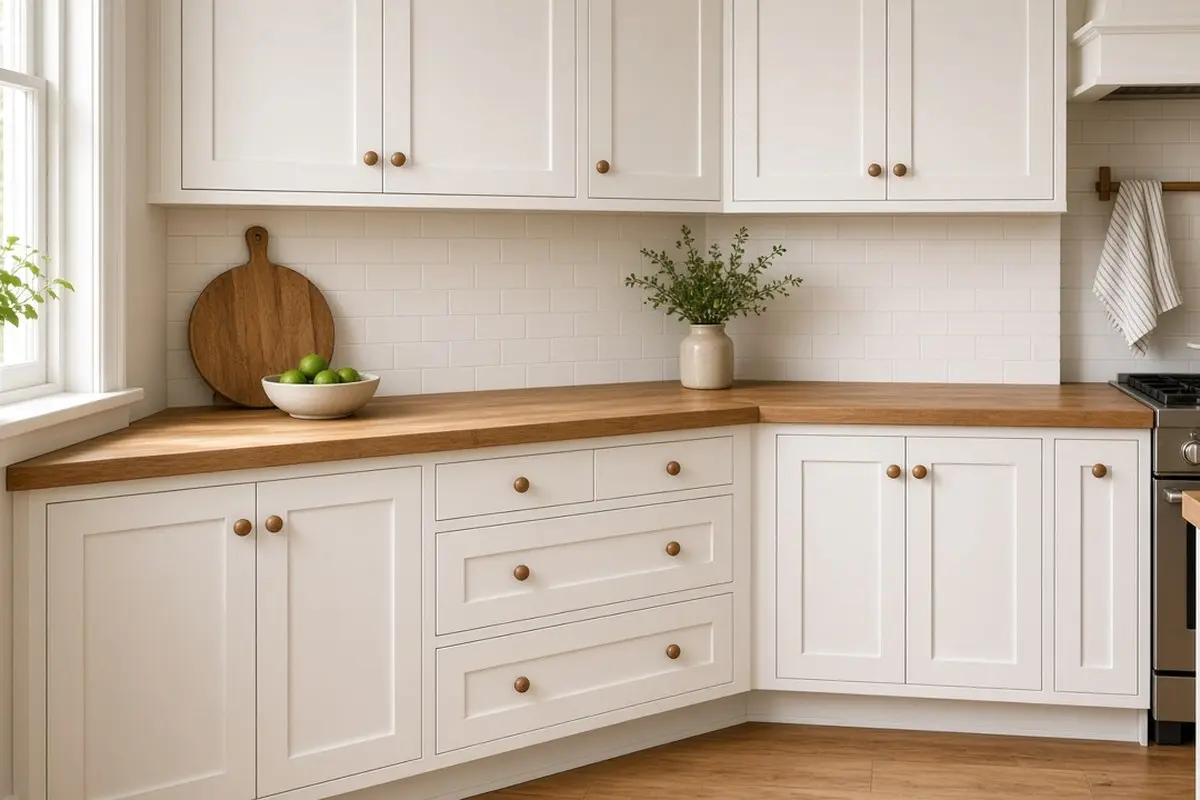
Plain wood knobs on white or pale Shaker cabinets look soft and Scandinavian. Choose oak or ash to match open shelves or a butcher block.
Wood knobs can be left natural, oiled, or painted the same color as the cabinets for a tone-on-tone look that is very soft. They are also among the cheapest hardware options, which makes them a good choice if you have a large kitchen with many doors and drawers.
Get the look
4. Leather pulls for warmth
Leather tab pulls or loops, fixed with small brass or black screws, add a tactile, modern-rustic note. They age beautifully and soften a painted kitchen.
Leather pulls work especially well on darker Shaker cabinets, such as navy, green, or charcoal, where a tan or cognac leather stands out warmly. Treat them with a little leather conditioner once a year to keep them supple near the steam of the stove.
Get the look
5. Latches for a vintage feel
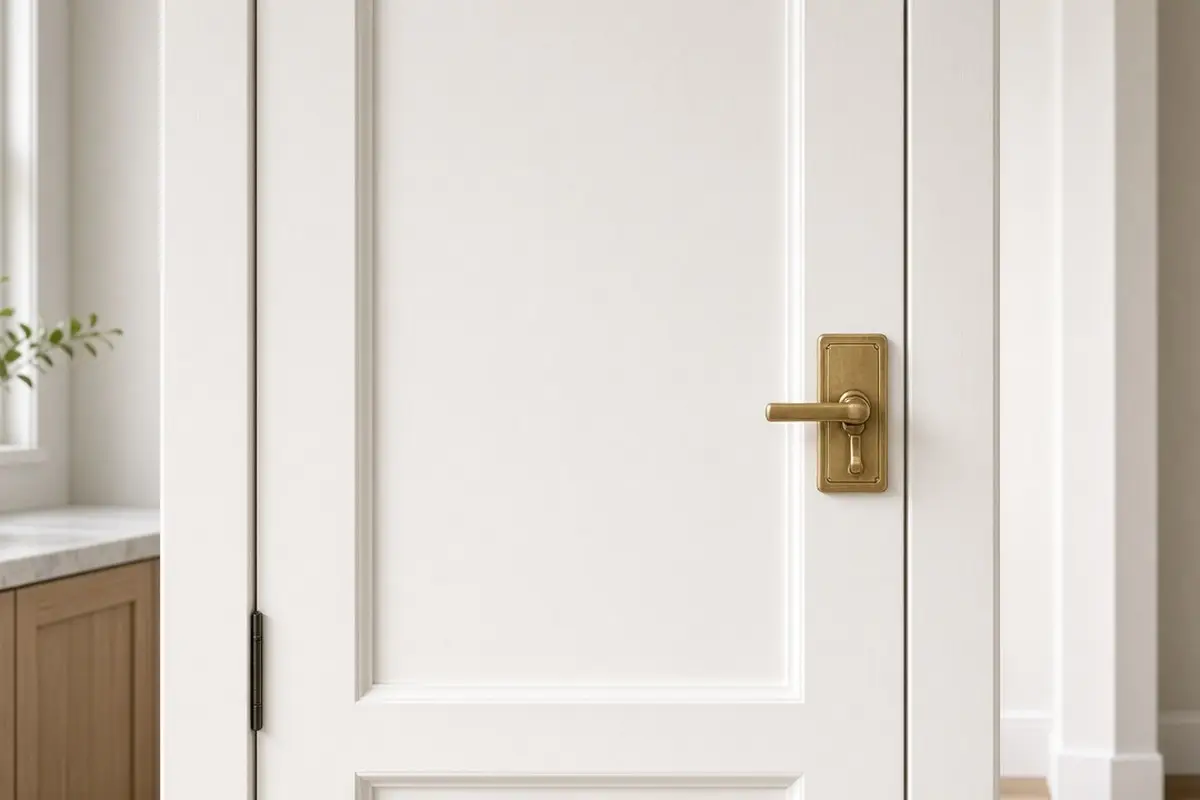
Cabinet latches on upper doors are a charming vintage detail. They suit glass-front or pantry doors.
Use latches on just a few doors as an accent rather than throughout, since they take a moment longer to open. A pantry, a glass-front display cabinet, or a pair of tall doors are good candidates. Pair the latches with knobs in the same finish for a coordinated look.
Get the look
6. Edge pulls for a minimal look
Edge pulls mount on the top edge of drawers or the side edge of doors, almost invisible from the front. They suit a minimal modern Shaker kitchen.
Edge pulls show off the Shaker frame itself, because nothing interrupts the face of the door. They are easier to install on drawers than on doors and work best on lighter drawers, since you grip them with only your fingertips.
7. Mix finishes thoughtfully
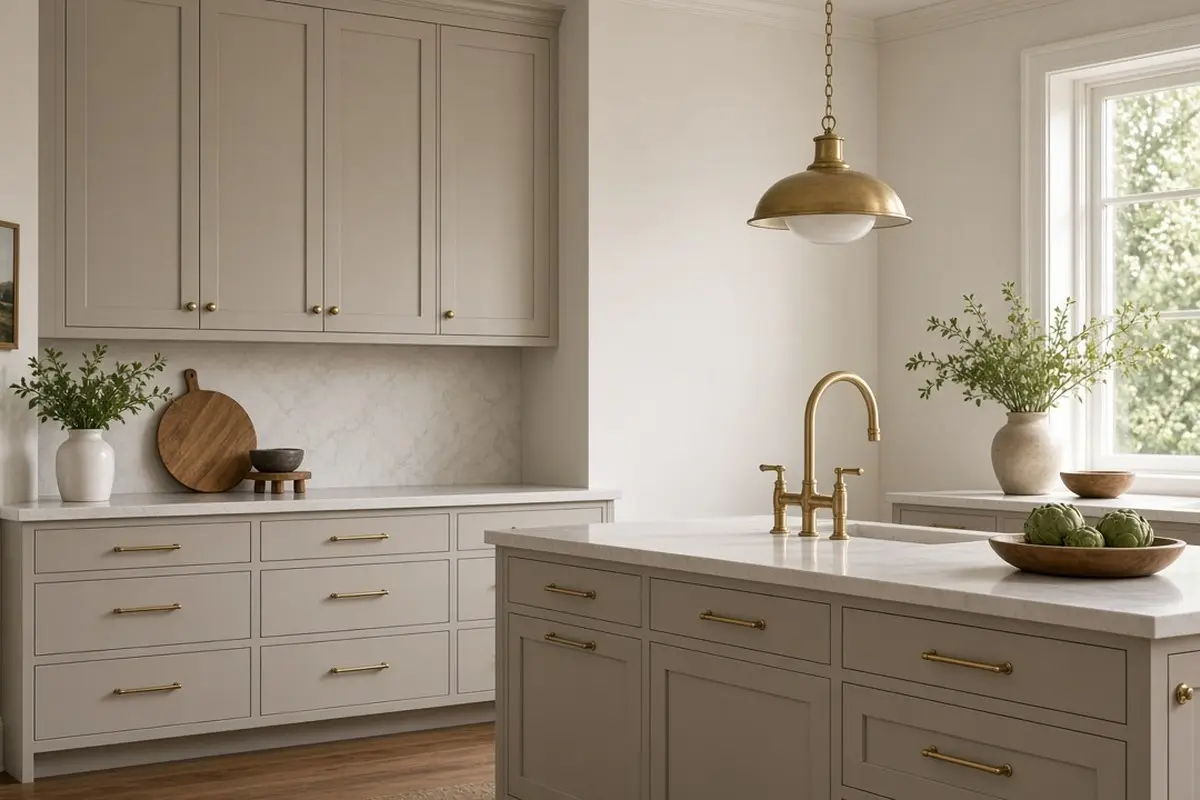
Use one metal for hardware and a second for the faucet or lights. Repeat each at least twice.
A Shaker kitchen with brass hardware often looks best with stainless appliances and a brass faucet, so the warm metal appears in at least two places. A black-hardware kitchen can repeat the black in pendant lights, a faucet, or a window frame. The key is to avoid a single, isolated finish that looks like a mistake.
Get the look
8. Match hole spacing to avoid repairs
Measure existing holes center to center before buying, so new pulls fit without filling old holes.
Common center-to-center sizes are 3 inches, 3.75 inches (96 mm), 5 inches (128 mm), and 6.3 inches (160 mm). If you are switching from knobs to pulls, or the old holes do not match, fill them with wood filler, sand smooth, and touch up the paint before drilling new ones. A backplate behind a new knob or pull can hide old holes neatly without any filling.
Get the look
9. Painted cabinets plus new hardware
Painting Shaker doors a new color and adding new hardware together is a complete makeover. Paint first.
Remove all hardware and take the doors off before painting. Label each door with tape inside the hinge hole so it goes back in the same place. Let the paint cure fully before fitting new hardware, or the screws can mark the soft paint.
10. Upgrade the hinges
Old visible hinges can be swapped for concealed soft-close hinges, or new exposed hinges in the hardware finish.
Concealed hinges make the frame look cleaner and stop doors from slamming. Exposed hinges, in a finish that matches the knobs, suit inset Shaker doors and look traditional. Either way, adjusting hinges so that every door lines up evenly is a small job that makes a big difference.
Get the look
11. Finish with a consistent line
Line up all hardware at the same height across the run. Use a jig, mark every door from the same reference edge, and check the line with a level before drilling. It is the detail that makes a kitchen look professional.
FAQ
What hardware looks best on Shaker cabinets?
Knobs and cup pulls for a classic look, slim bar pulls for modern.
Where should pulls go on Shaker doors?
On the stile opposite the hinge, never on the recessed panel.
What size pulls for Shaker drawers?
About one-third the drawer width. The very small kitchen layout post covers compact kitchens where scale matters.
Should Shaker upper and lower cabinets have the same hardware?
They can, but many kitchens use knobs on uppers and pulls on lowers. Keep the same finish throughout for a consistent look.
Can I install new cabinet hardware myself?
Yes. A drill, a hardware jig, and a tape measure are all you need. Work slowly, and test the jig on a scrap of wood before drilling into a cabinet door. The wall updates without furniture post has more small DIY projects.
Do knobs or pulls look more modern on Shaker doors?
Slim pulls generally look more modern, especially in matte black or brushed nickel. Knobs lean traditional, though small, simple knobs in black can look very clean.
Shaker doors are a blank canvas. Choose hardware sized for the frame, place it well, and the kitchen changes completely.