
11 Kitchen Finish Pairings That Do Not Need New Cabinets

On this page12 sections
- White cabinets with brushed brass
- Wood cabinets with matte black
- Gray cabinets with polished nickel
- Navy or green cabinets with unlacquered brass
- A wood accent to warm white
- Backsplash that bridges counter and cabinets
- A new faucet as the anchor
- Lighting that repeats the metal
- Kitchen counter styling with a tray
- Matching small details
- Textiles to soften the finishes
- FAQ
New cabinets are the most expensive part of almost any kitchen remodel. Yet in many kitchens the cabinet boxes are perfectly sound. What makes the room look tired is everything around them: dated hardware, a faucet that does not match anything, a light fixture from another decade, a backsplash that clashes with the counter, and a counter covered in mismatched clutter.
The good news is that finishes are cheap to change compared with cabinets, and they work as a set. Pick two or three finishes that go together, such as a metal, a wood, and a stone or color, and repeat them around the room. The kitchen starts to look planned. The eleven pairings below are all built on cabinets you already have. For layout fixes in small spaces, the very small kitchen layout post is a good companion.
As an Amazon Associate I earn from qualifying purchases.
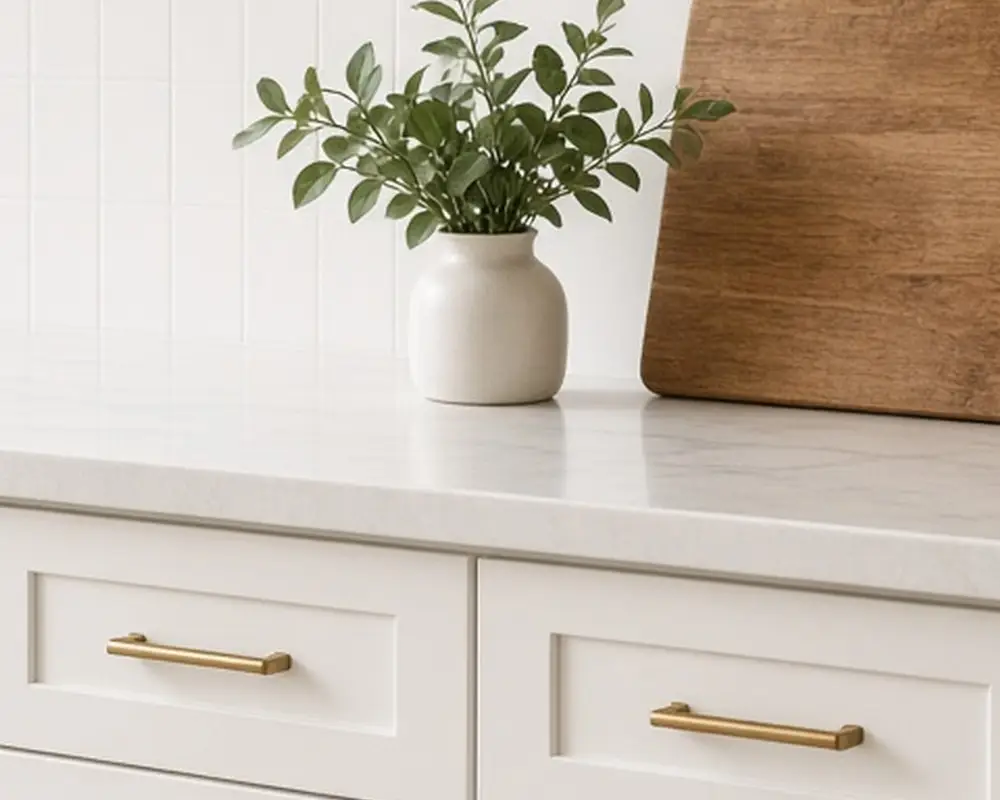
1. White cabinets with brushed brass
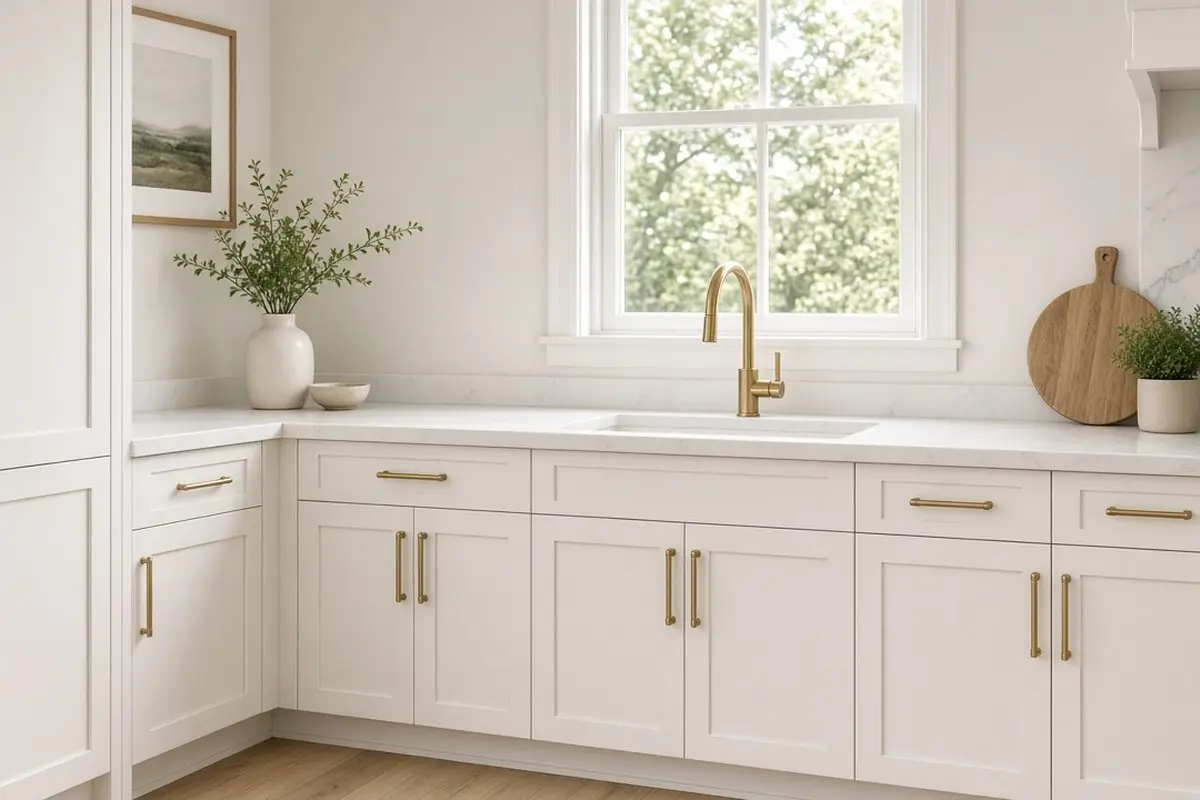
This is the most popular pairing for a reason. Brushed brass pulls and knobs warm up white cabinets immediately, and a brass faucet or light fixture ties the metal through the room. It looks fresh in a modern kitchen and right at home in a traditional one.
Choose brushed or satin brass rather than shiny polished brass. It hides fingerprints, ages gently, and looks more expensive. Match the faucet finish as closely as you can; different brands’ brass varies, so buy hardware and faucet from the same line if possible, or at least compare them side by side before you commit.
Before you buy pulls, measure the distance between the existing screw holes. Choosing new pulls with the same hole spacing means no new drilling and no filling of old holes, which turns a big job into an hour’s work with a screwdriver.
Get the look
2. Wood cabinets with matte black
Oak, maple, or cherry cabinets from the 1990s often feel dated mostly because of their brass or chrome knobs. Swap those for slim matte black pulls and add a black faucet and a black pendant, and the same wood looks deliberate and modern.
Black works especially well with mid-tone wood because the contrast sharpens the grain. Keep the counter light so the room does not feel heavy. A white quartz or a pale laminate in a soft stone pattern balances wood and black beautifully.
If the wood itself looks orange, a light clean and a coat of wipe-on finish in a slightly cooler tone can calm it without a full refinish. Test on the inside of a door first.
Get the look
3. Gray cabinets with polished nickel
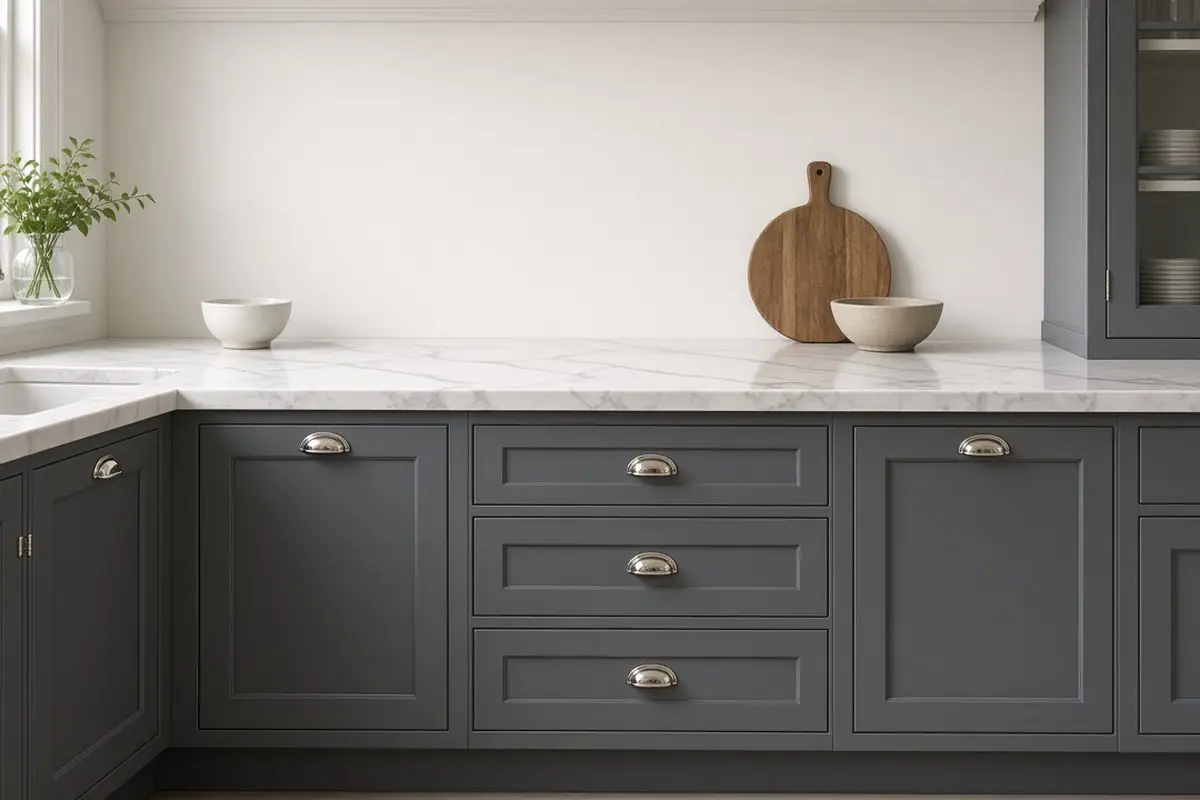
Gray cabinets can look flat. Polished nickel adds a soft, warm gleam that chrome does not have, and it suits both cool and warm grays. Pair with a white or marble-look counter and a white subway backsplash for a classic look.
Nickel and chrome look similar at a glance, but nickel has a slightly yellow warmth. If your faucet is chrome, nickel hardware can look slightly off beside it, so swap both together or stay with chrome throughout.
Get the look
4. Navy or green cabinets with unlacquered brass
If you have painted your cabinets a deep color, or plan to, unlacquered brass is the classic partner. It starts bright and darkens over time to a soft, lived-in patina. The combination looks rich and slightly old-world.
Dark cabinets also hide wear well, which makes them a good choice for busy family kitchens. Brass knobs on doors and cup pulls on drawers is a traditional pattern that always looks right. If you are unsure about the color, paint just the lower cabinets first and live with them for a month.
Get the look
5. A wood accent to warm white
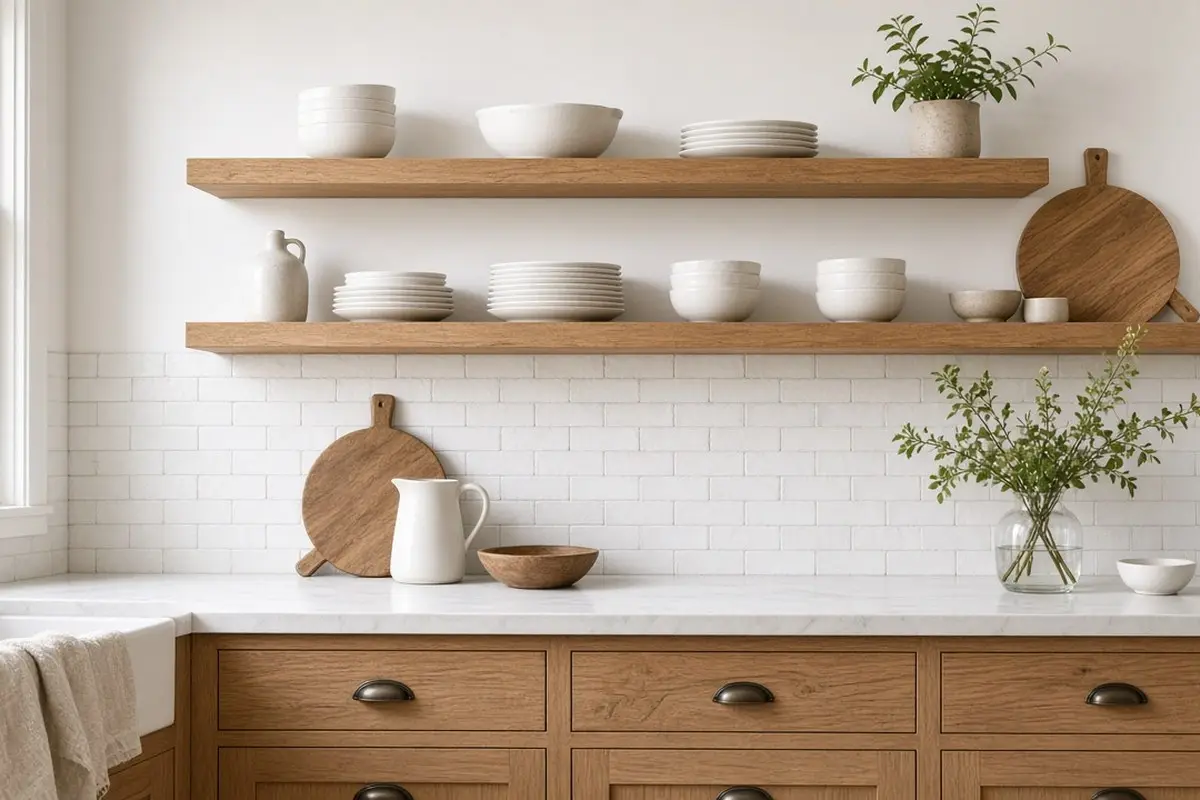
An all-white kitchen can feel sterile. A single wood element fixes it: open wood shelves, a butcher block section of counter, wood bar stools, or a large wood cutting board leaning against the backsplash. Repeat the wood in two or three places so it reads as part of the plan.
Match the wood tones loosely. They do not need to be identical, but they should share an undertone: all warm, or all cool and pale. A walnut board next to pine shelves can look accidental, while oak shelves with a teak board look collected.
Open shelves are also a chance to show off the finish scheme. A few white dishes, a brass candlestick, and a plant say more than a full shelf of mixed mugs.
Get the look

6. Backsplash that bridges counter and cabinets
A backsplash should connect the counter to the cabinets. If the counter is busy granite, choose a plain tile in one of its quieter colors. If the counter is plain, a patterned or textured tile adds interest. Peel-and-stick tile is a renter-friendly way to test the idea. Grout color matters too. A white tile with white grout looks clean and quiet; the same tile with gray or charcoal grout looks graphic and hides stains better. The kitchen wall treatments post covers more options.
Get the look
7. A new faucet as the anchor
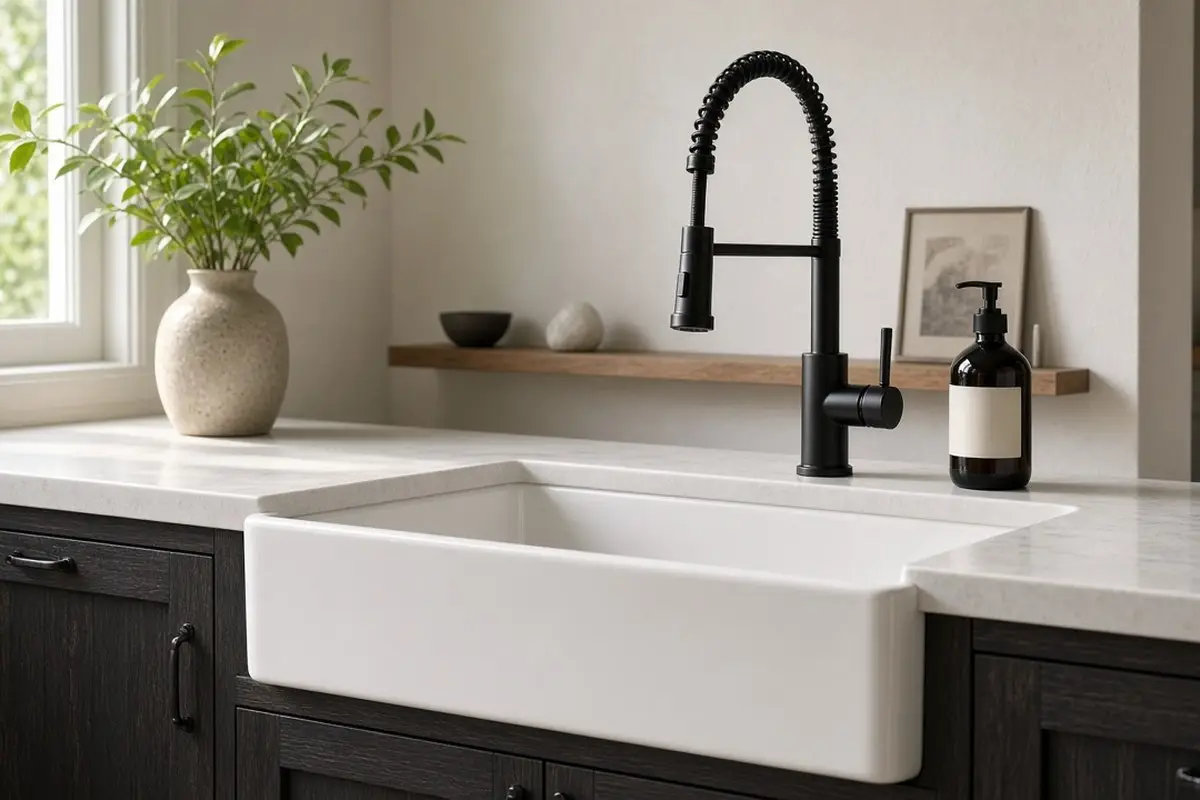
A faucet is one of the most-used and most-seen pieces in a kitchen. A tall gooseneck faucet in a finish that matches the hardware instantly updates the sink area. Many are designed for easy DIY installation.
Before buying, check how many holes your sink or counter has. If you are switching from a faucet with separate handles to a single-lever model, you may need a deck plate to cover the extra holes. Measure the depth of the sink, too, so a tall faucet does not splash.
A pull-down sprayer is worth it for most people. It makes cleaning the sink and rinsing large pots far easier, and the best models dock firmly with a magnet.
Get the look
8. Lighting that repeats the metal
Pendant lights over an island or sink, a flush mount, and under-cabinet lights should feel related to the hardware. A brass pendant over brass pulls, or black over black, makes the room feel coherent.
Under-cabinet lighting is the most useful upgrade of all. It lights the counter where you actually work and makes every finish look better in the evening. Plug-in and rechargeable strips need no electrician. Choose a warm white of around 2700K to 3000K so the kitchen feels welcoming, not clinical.
Get the look
9. Kitchen counter styling with a tray
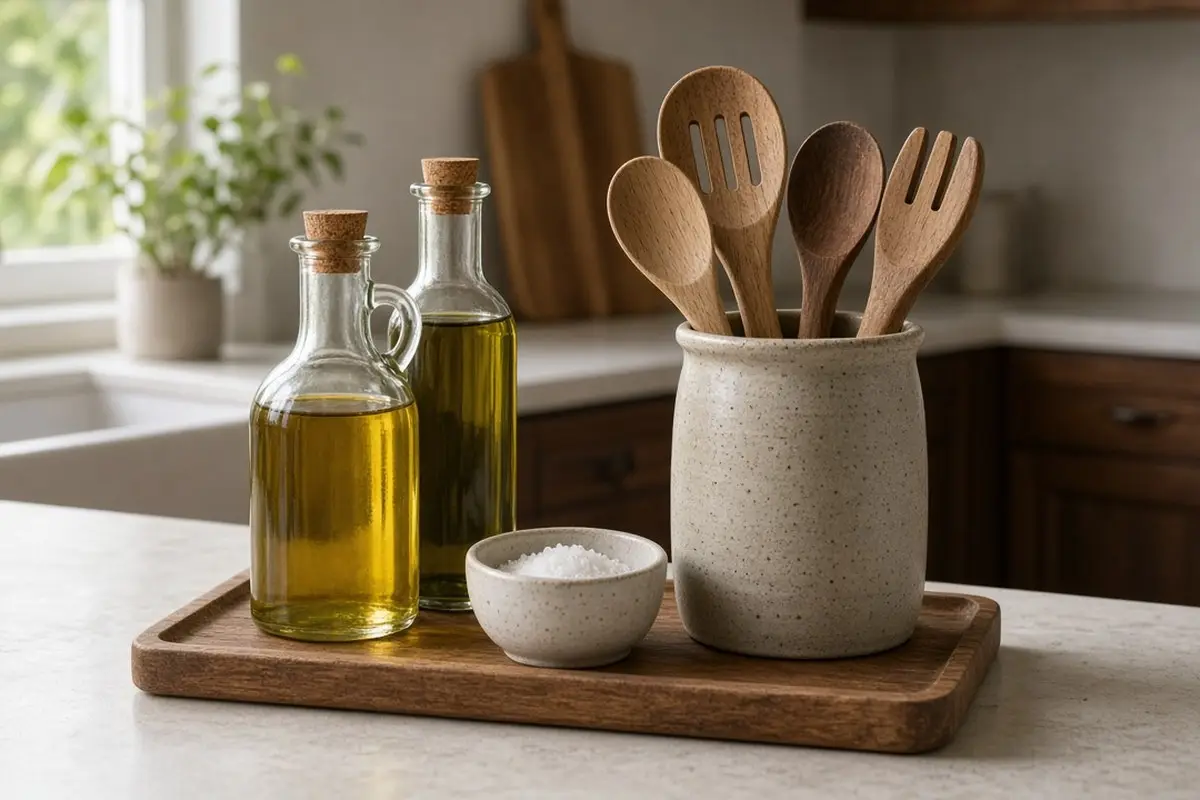
Counters crowded with appliances and bottles make any finish look messy. Put oils, salt, and utensils on a single tray in a material that matches your scheme: wood, marble, or brass. Store small appliances you do not use daily.
A useful rule: only things you use every day earn counter space. The kettle, the coffee maker, a knife block, and a tray of oils usually make the cut. The stand mixer and the air fryer may not. Clear counters make even an older kitchen look calm and well kept.
10. Matching small details
The little things count: outlet covers, switch plates, a paper towel holder, and a dish rack. Swapping them to match the hardware finish costs little and quietly finishes the room.
Do not forget the appliance handles and the range hood. Stainless steel works with almost everything, but if you have mixed white and stainless appliances, try to keep the most visible ones matching.
Get the look
11. Textiles to soften the finishes
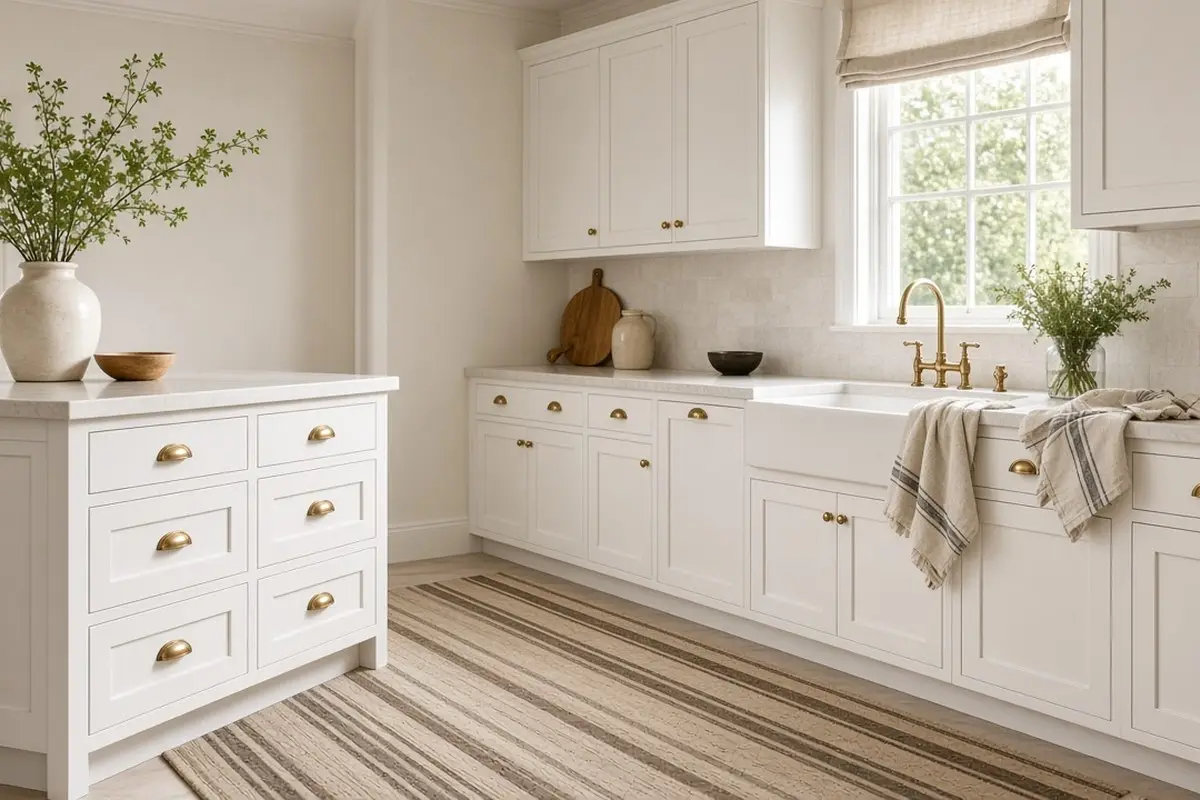
A runner rug, a linen tea towel, and a simple café curtain soften all the hard surfaces. Choose colors that pick up the cabinet or counter.
Textiles are also the easiest way to change the kitchen with the seasons. Swap tea towels and the runner in fall for warmer rust or olive tones, and back to lighter stripes in spring. A washable runner is essential in front of the sink, where spills happen every day.
Get the look

FAQ
How can I update kitchen cabinets without replacing them?
New hardware, paint, a new faucet, and matching lighting change the look dramatically.
Should cabinet hardware match the faucet?
It does not have to, but matching or closely related finishes look more planned. Two metals at most is a good rule.
What is the cheapest kitchen update with the biggest impact?
Cabinet hardware. For a full plan, the small kitchen organization post pairs well with a finish refresh.
Can I mix metals in a kitchen?
Yes. Two metals, used deliberately, look good: for example brass hardware and lighting with a stainless sink and appliances. Repeat each metal at least twice so it looks intended.
Should I paint my cabinets before changing the hardware?
If you plan to paint, do it first, then fit the new hardware. Remove all doors and hardware before painting for the cleanest finish.
How do I choose a finish scheme for my kitchen?
Start with what you are keeping, usually the counter and the cabinets. Pick one metal that suits both, then one wood or textile color. Repeat each choice at least twice around the room.
Your cabinets may be fine. Change the finishes around them, repeat them through the room, and the kitchen will look new for a fraction of the cost.