
8 Trays That Keep a Kitchen Counter From Spreading

On this page10 sections
Kitchen counters have a way of spreading. A bottle of oil stays out after dinner. The salt joins it. Then a jar of utensils, a stack of mail, a phone charger, vitamins, a fruit bowl, and a houseplant. Within a few weeks, the clear work surface has shrunk to a narrow strip by the sink, and wiping the counter means moving fifteen things.
A tray is the simplest fix. It costs little, needs no tools, and works in rentals as well as owned homes. It draws a boundary. Everything that belongs in a spot lives on the tray, and anything that does not is obviously out of place. Lifting one tray clears a whole section for cleaning. That alone makes a clean counter far more likely. And grouped on a tray, everyday items look deliberate instead of scattered. The eight ideas below use trays to create countertop zones, each with a job. For broader counter and cabinet organization, the small kitchen organization post covers the whole room.
As an Amazon Associate I earn from qualifying purchases.
Think in zones first
Before buying any trays, walk through how you use the counter. Most kitchens have a few natural zones: the cooking zone beside the stove, the sink zone, the coffee or breakfast zone, and a drop zone near the door where keys and mail land.
Each zone needs only the items used there every day. Be strict here. The test is whether you used it yesterday or will use it tomorrow. Oils, salt, and utensils belong by the stove. Soap and a brush belong by the sink. The kettle, mugs, and tea belong in the coffee zone. Anything used less than a few times a week can go in a cabinet.
Once you know the zones, choose a tray for each, sized to hold its items and nothing more. A tray that is too big invites clutter; one that is too small spills over.
Measure the counter depth too. Most counters are about 24 to 25 inches deep, and a tray that is more than half that depth eats into the working space in front of it. Shallow, long trays usually work better along the backsplash than square ones. Leave at least 16 to 18 inches of clear counter in front of each tray for prep.
It also helps to take a photo of your counter before you start. Looking at a photo makes clutter easier to see than standing in the room, where you have long stopped noticing it.
1. The stove tray
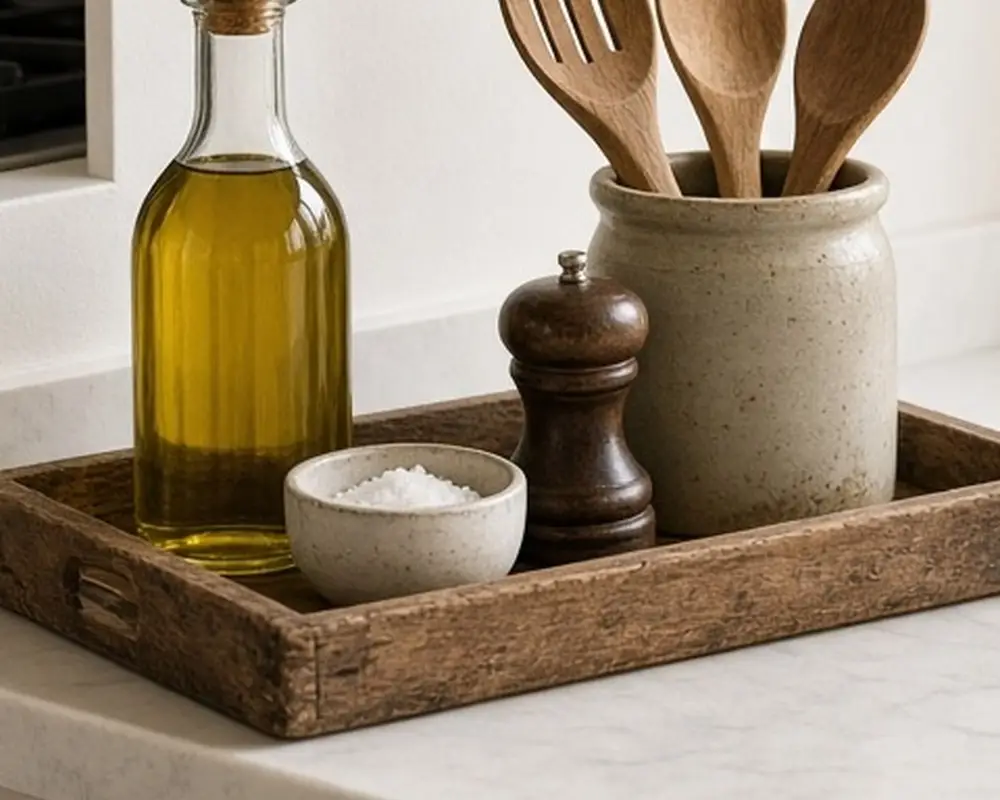
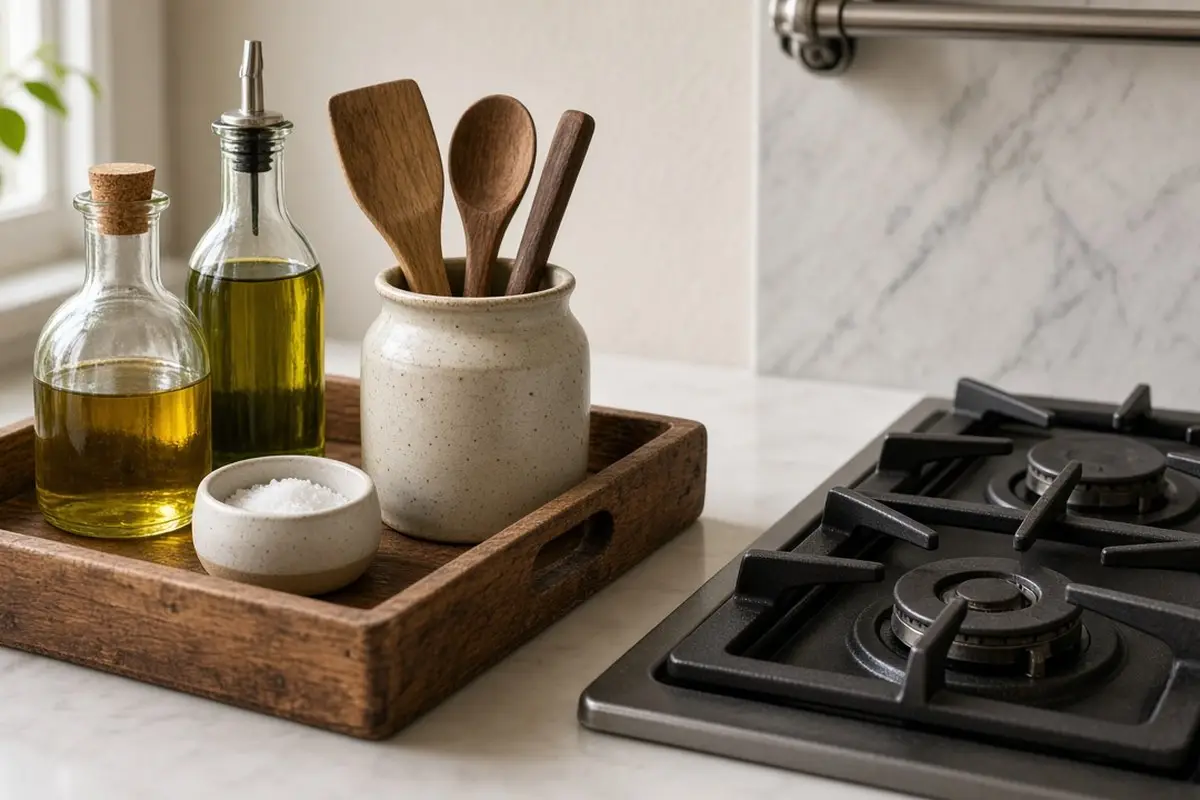
The most useful tray in any kitchen sits beside the stove. It holds cooking oil, vinegar, salt, pepper, and a crock of wooden spoons and spatulas. Everything you reach for mid-recipe is within arm’s length, and when you wipe the counter, one lift moves it all.
Rustic tray styling suits this spot well: a wood or metal tray with a lip catches oil drips and is easy to wash. Avoid unsealed wood, which can stain. A tray with handles is easier to lift with greasy hands.
Keep it to five or six items. More than that and it becomes its own clutter.
Decanting helps the stove tray look calm. Pour oil and vinegar into matching glass bottles with pour spouts, and keep salt in a small cellar or a lidded jar you can pinch from. Labels from supermarket bottles are the loudest thing on most counters; removing them quietens the whole kitchen.
Wash the stove tray every week or two. Cooking grease settles on everything near the hob, and a quick wash in hot soapy water keeps it from building up on the bottles and the tray.
Get the look
2. The sink tray
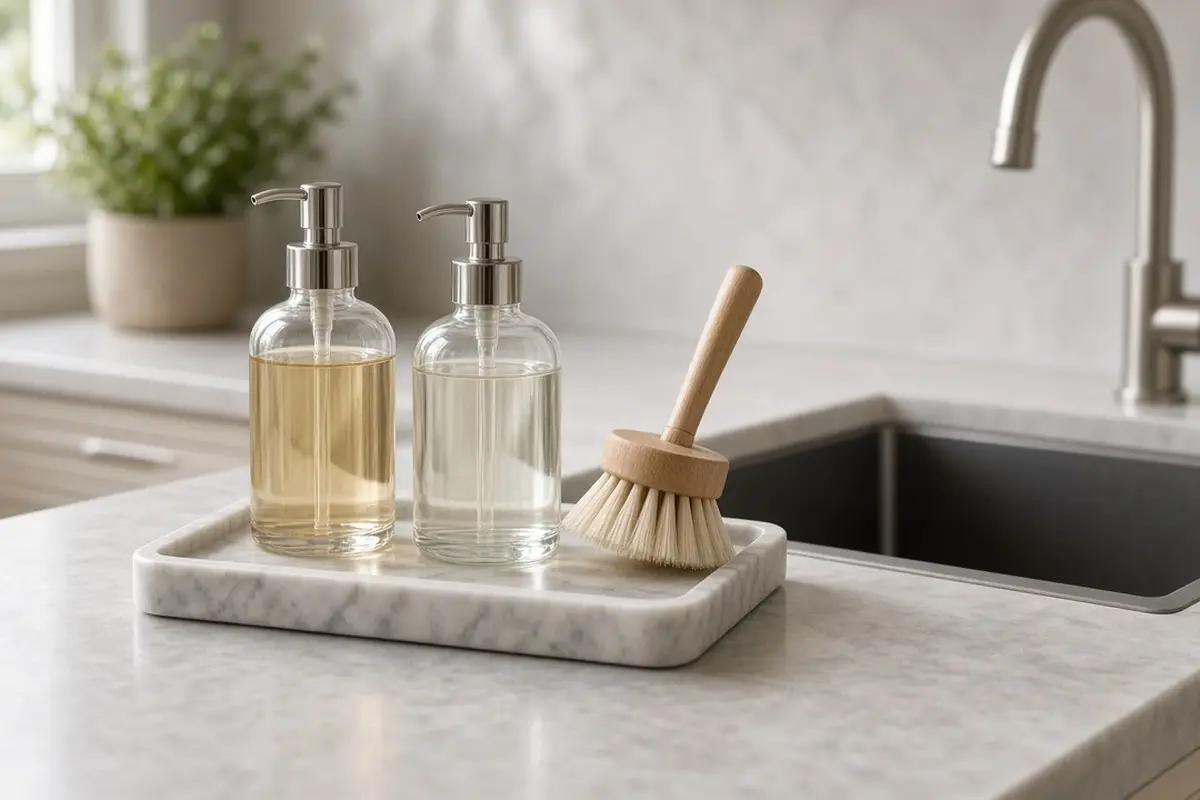
A small tray beside the sink holds dish soap, hand soap, a brush, and a sponge. It catches drips that would otherwise pool on the counter and leave marks. Marble, stone, ceramic, and metal trays suit this wet spot; wood can warp. If you love wood here, choose teak or acacia sealed with a food-safe oil, which handle water better than most woods.
Decant dish soap into a nice bottle and the sink looks calmer immediately. A small sponge holder keeps the sponge drying instead of sitting in a puddle.
A tray with feet or a raised edge lets water drain and air move underneath, which stops mildew. Rinse and dry it every few days. If you prefer to keep the sink area completely clear, mount a small caddy inside the cabinet door under the sink for the spare sponges and brushes, and keep only the soap on the tray.
Get the look
3. The coffee tray
Group the coffee maker or kettle with mugs, sugar, and spoons on a tray to create a compact station. In a busy household, it also stops people crossing the cooking zone for their morning drink. It keeps morning clutter in one place.
Size the tray to fit the machine plus two or three items beside it. Mugs can hang on hooks under a shelf, which saves tray space. Keep backup coffee and tea in a cabinet directly above or below, so refilling is easy. Choose a tray in a material that copes with drips; sealed wood, metal, or melamine all work. The simple home coffee corner post has more ideas for setting one up.
4. The drop zone tray
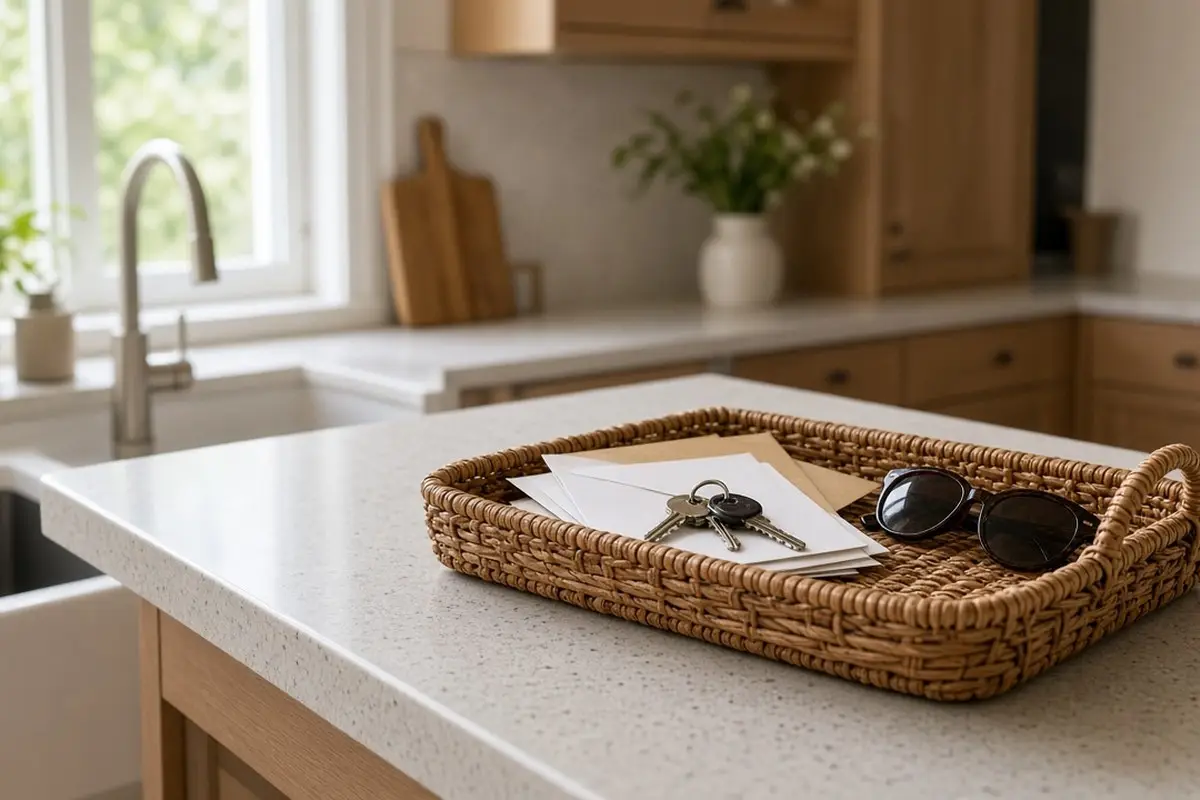
Keys, mail, wallets, and sunglasses often land on the kitchen counter. A tray by the door or at the end of the counter gives them a home. Empty it weekly. Sunday evening works well.
The drop zone tray is the one that most needs a rule, because it attracts everything. Decide what it is for, usually keys, wallets, and today’s mail, and clear anything else into its proper place each evening. A small wall-mounted organizer above it can take mail and keep the tray for keys only.
If the counter by the door is your main prep space, move the drop zone to a hook rail or a small shelf on the wall instead.

5. The fruit and bread tray
A large tray holds a fruit bowl, a bread board, and a butter dish together in one zone, separate from cooking.
This breakfast tray works well at the end of a counter near the table. Everything for toast and fruit is in one place, and it stays out of the way of cooking. Keep a bread knife in a slim block or on a magnetic strip nearby, so it is never hunted for.
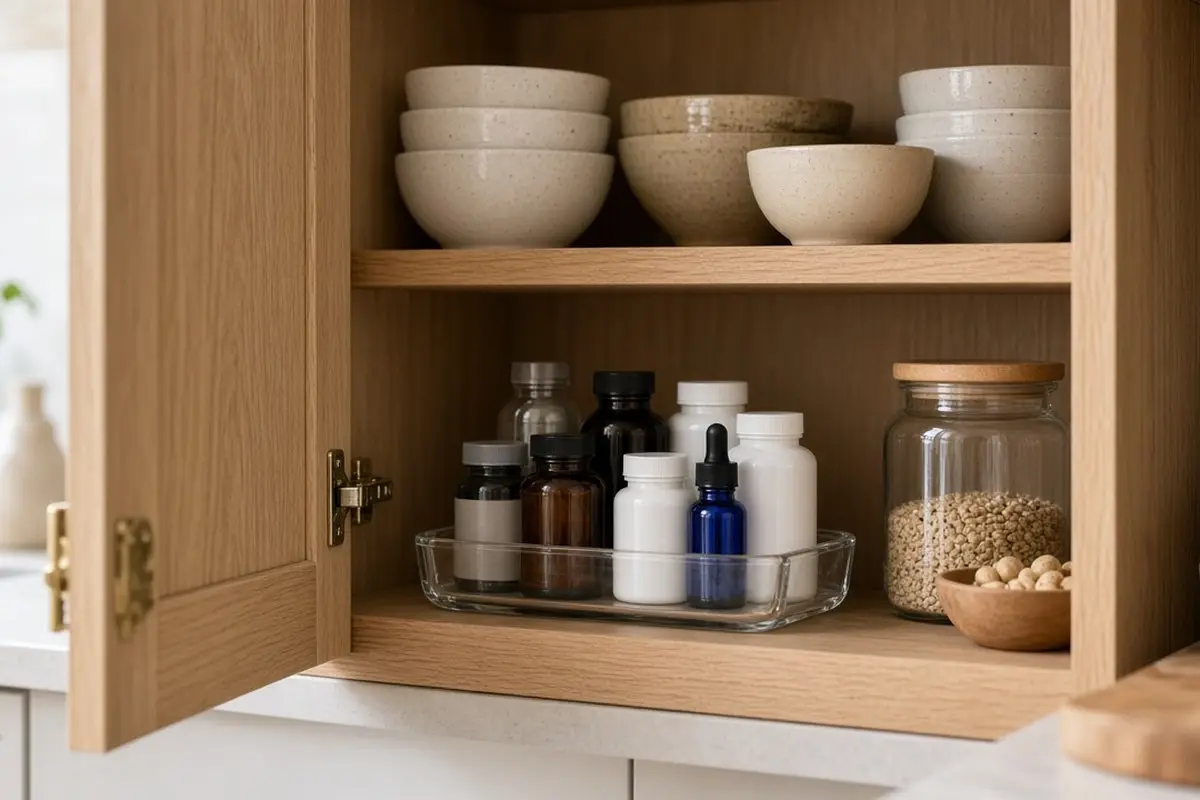
6. The vitamin and medicine tray
A small tray in a cabinet or on a high shelf keeps daily vitamins together. Keep medicines out of children’s reach.
Avoid storing vitamins and medicines on the counter right next to the stove or a sunny window, where heat and light can affect them. A cabinet away from the oven, or a high shelf, is better. A tray inside the cabinet lets you pull everything out at once.
Get the look
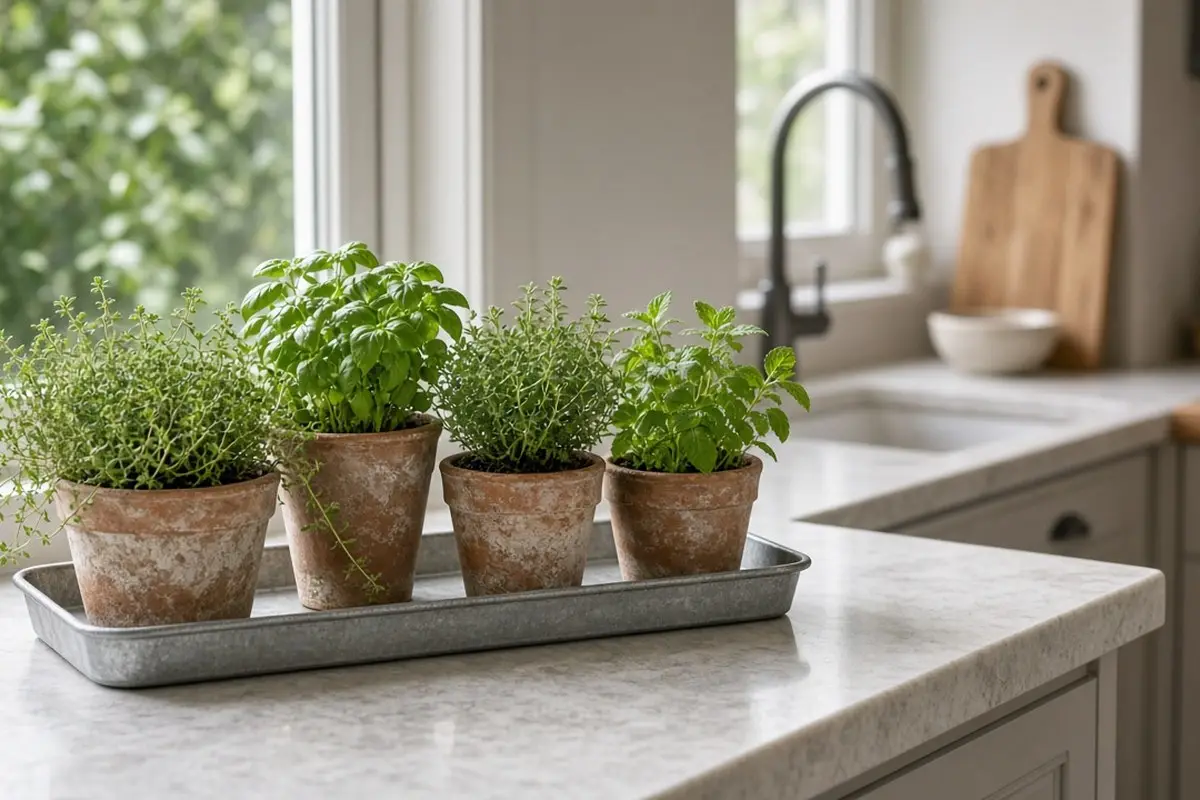
7. The plant tray
Herbs or small plants on a tray with a lip keep water off the counter.
A tray filled with small pebbles adds humidity around the plants and lets excess water drain away from the roots. Rotate the tray every few days so all the plants get even light. Herbs you use most, like basil or parsley, should sit closest to the stove end.
8. Match the trays
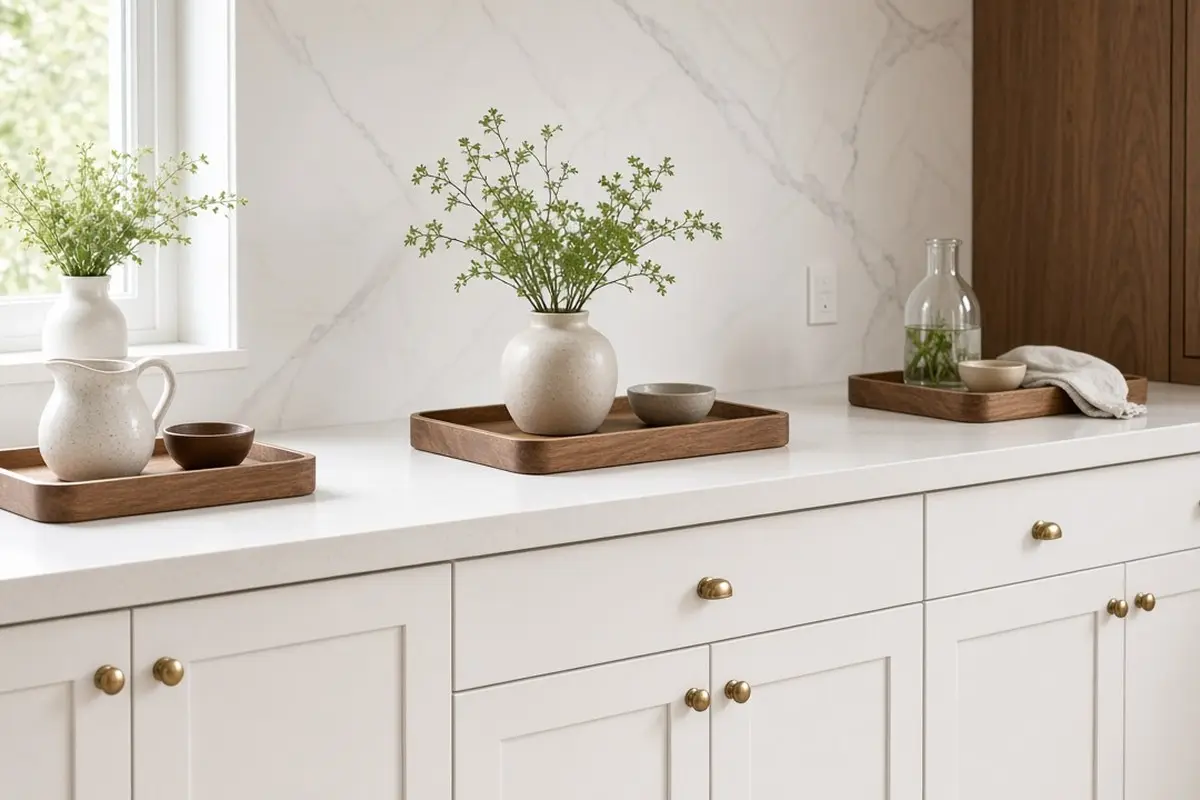
Trays in the same material or finish across zones make the whole counter look planned. From across the room, the eye reads repeated trays as a single design choice rather than a collection of separate fixes.
You do not need identical trays. A set in the same wood, the same marble, or the same color reads as one family even if the sizes differ. Mixing two materials, such as wood in dry zones and marble in wet zones, also works if each repeats at least twice.
FAQ
How do I organize a kitchen counter with trays?
Create zones, and give each a tray with only its daily items.
What kind of tray is best for a kitchen counter?
Wood for dry zones, marble or metal for wet zones.
How many things should go on a counter tray?
Five or six items at most. The kitchen table centerpieces post uses the same tray idea on the table.
How do I stop clutter coming back?
Give each item a home in a zone, keep only daily items out, and do a two-minute reset each evening. Anything without a tray goes back in a cabinet.
Do trays work in a very small kitchen?
Yes, and they matter even more there. Use one or two narrow trays at most, keep items to the essentials, and store everything else vertically on rails or shelves. The very small kitchen layout post has more space ideas.
Should I put a tray on the kitchen island?
A single tray with a few items, such as a bowl of fruit and a small vase, keeps an island looking finished while leaving most of it free for prep and eating. Lift it off whenever you need the full surface.
What size tray is best beside a stove?
About 12 to 16 inches long and no deeper than 8 to 10 inches, so it holds the essentials without eating into your prep space.
Trays turn a spreading counter into a calm one. Define zones, give each a tray, and let everything else go in a cabinet.