
9 Kitchen Table Centerpieces You Can Eat Around

On this page11 sections
A kitchen table works harder than any dining table. It hosts breakfast, homework, bill paying, laptop sessions, rolling out cookie dough, and weeknight dinners. A centerpiece there has a tough job: it should make the table look cared for, but it must never get in the way. The tall floral arrangement from a magazine is lovely for one evening, then it is moved to the counter and never returns.
The best kitchen table centerpieces are low, sturdy, easy to move with one hand, and either useful or nearly maintenance-free. You should be able to see and talk across them, set plates around them, and slide them aside in a second when the table becomes a workspace. The nine ideas below all pass that test. For care of the table itself, the farmhouse dining table care post covers finishes and everyday protection.
As an Amazon Associate I earn from qualifying purchases.
The three rules for an everyday centerpiece
First, keep it low. A low centerpiece, under about 12 inches tall, lets people see each other across the table. Anything taller blocks conversation and gets knocked over. Sit down and check the sight line at seated eye level before you settle on anything.
Second, keep it small enough to move with one hand. A good test: can you lift it with one hand while holding a plate in the other? If clearing the table for a project means two trips, the centerpiece will soon live somewhere else.
Third, keep it easy. A centerpiece that needs daily attention will soon be abandoned, however beautiful it was on the first day. Fresh flowers are lovely but need changing every few days. Everyday table styling works best when most of the arrangement lasts for weeks, with one fresh element you can swap cheaply.
1. A bowl of fruit
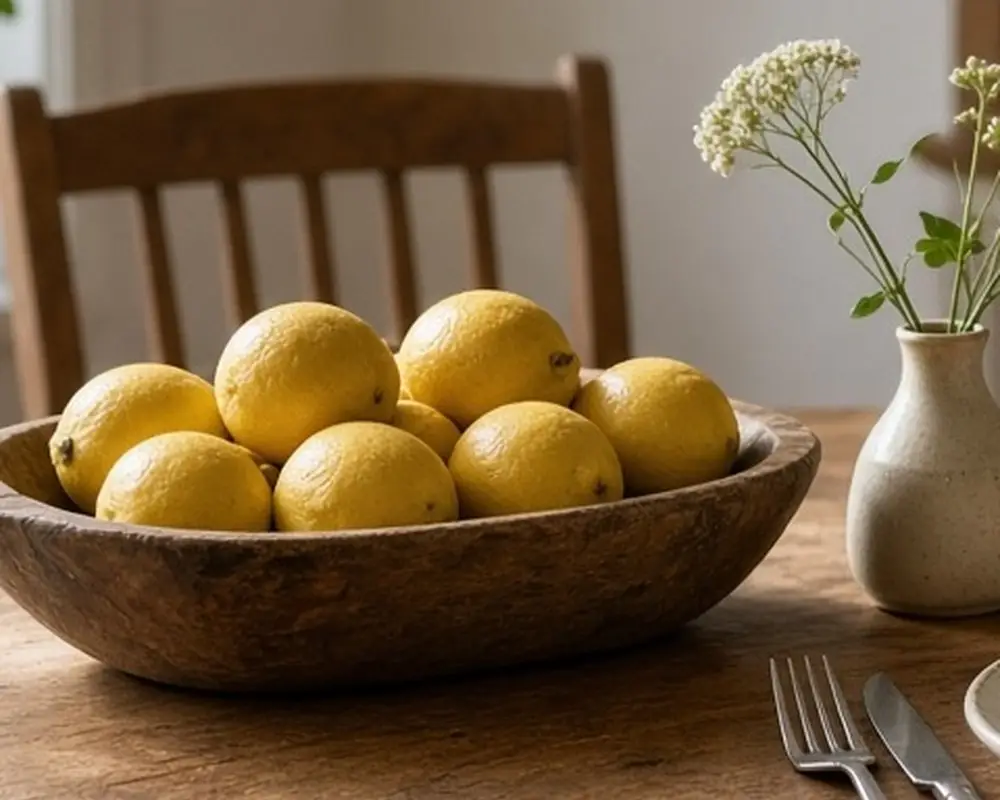
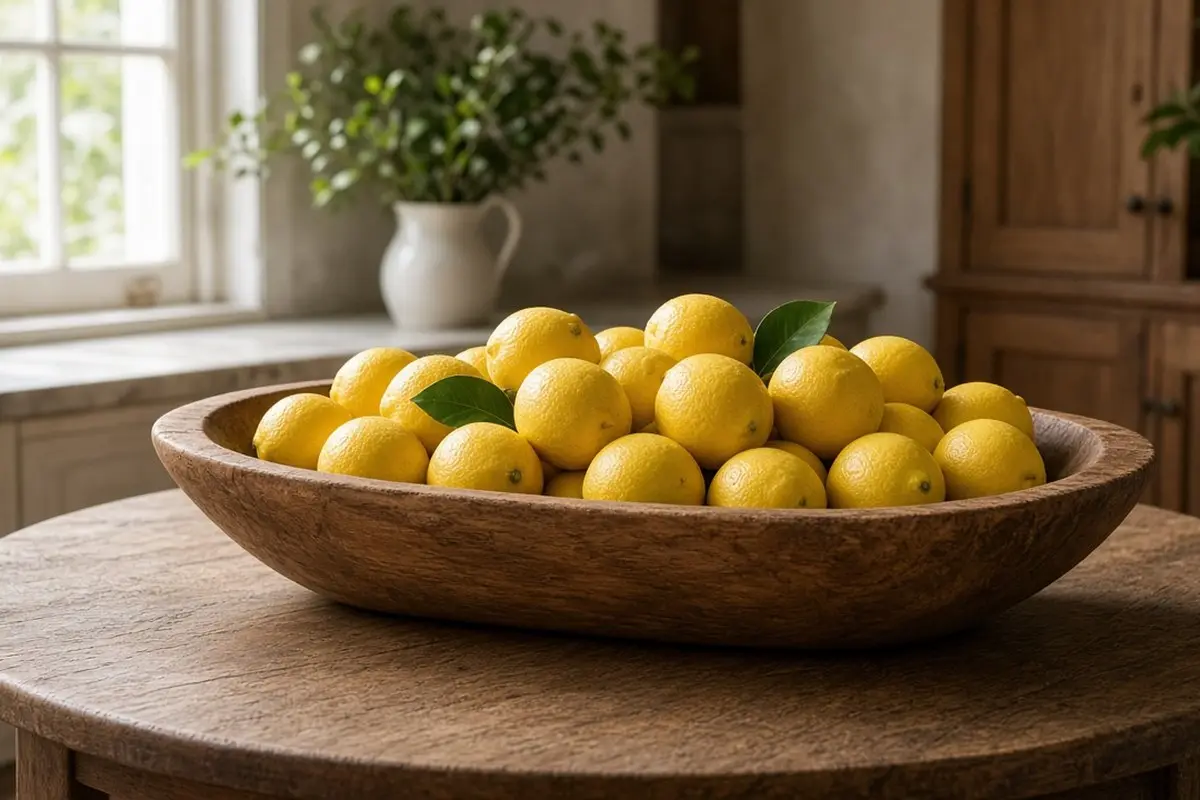
The simplest and most useful centerpiece is a wide, shallow bowl of seasonal fruit. Lemons, apples, pears, clementines, or a mix look fresh and colorful, and they get eaten, so the arrangement renews itself.
Choose a bowl whose color and material suit the table, since they matter as much as the fruit inside: a wooden dough bowl for a farmhouse table, a white ceramic bowl for a modern one, a woven basket for a casual look. Keep it shallow so fruit does not bruise under its own weight.
Fruit also changes with the seasons without any effort: citrus in winter, cherries and stone fruit in summer, apples and pears in fall.
Not all fruit belongs together. Bananas and apples release a gas that speeds up ripening in other fruit, so keep them in a separate bowl if you want the arrangement to last. Citrus, pomegranates, and hard pears last longest at room temperature and look good for a week or more.
A bowl of fruit also nudges everyone toward a healthy snack. A full bowl in the center of the table gets used far more than fruit hidden in a drawer.
Get the look
2. A single bud vase
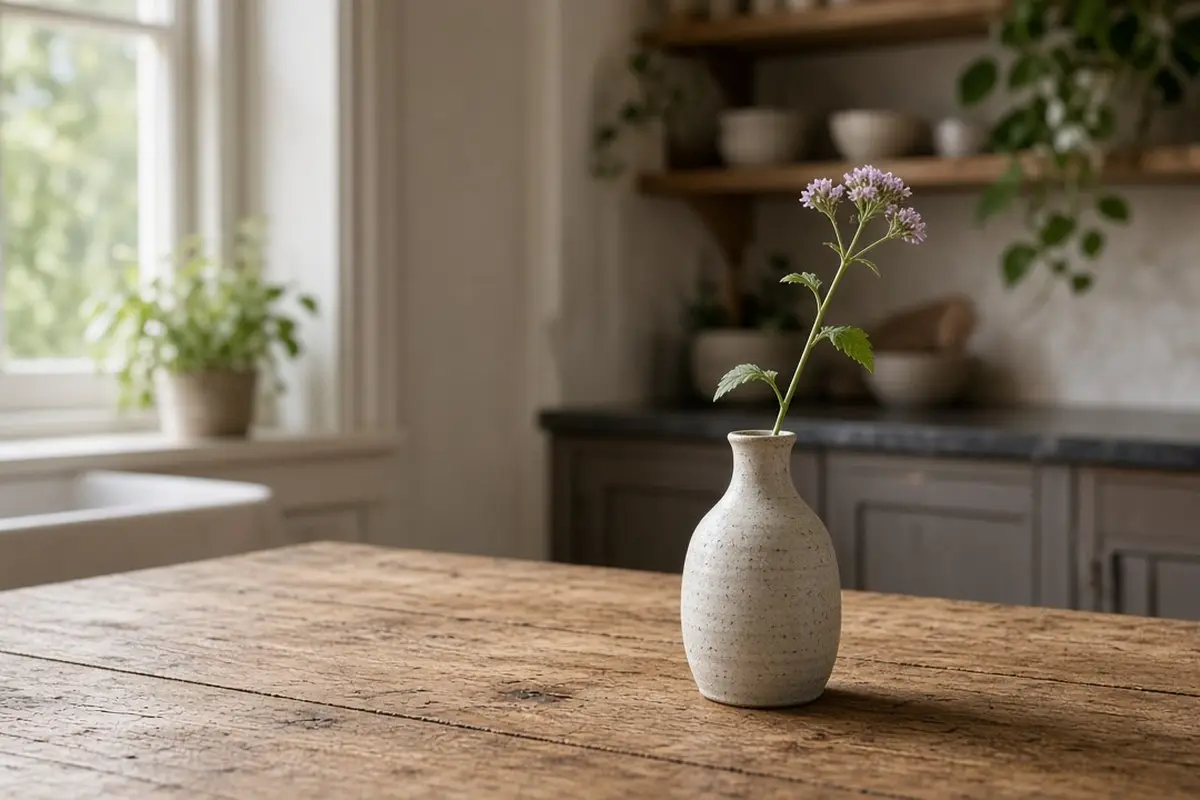
One small bud vase with a single stem or a few sprigs is the easiest fresh flower centerpiece. It costs almost nothing to refill: a flower from the garden, a sprig of herbs, a branch of greenery. Because it is tiny, it never blocks the view or gets in the way of plates.
Group two or three bud vases of different heights on a long table for a slightly fuller look.
Bud vases are also the most forgiving way to use flowers you already have. A single rose from a grocery bunch, a few sprigs of lavender, a stem of blossom from a tree in spring, or even a cluster of dried grass in fall all look deliberate in a small vase. Change the water every two days, and trim the stem at an angle to make it last longer.
Weighted bases help on a busy table. A heavier ceramic or thick glass vase is much less likely to tip when someone reaches for the bread.
Get the look
3. A low centerpiece on a tray
A small tray gathers a few pieces into one group, which makes moving them easy. Put a candle, a small plant, and the salt and pepper on a round tray, and the whole arrangement slides off the table in one motion.
Choose a tray with a lip so nothing rolls. Wood, marble, rattan, and brass all work.
The tray method also helps with clutter. Things that land on a kitchen table, like keys, mail, and sunglasses, tend to collect around a centerpiece. With a tray, it is clear what belongs and what does not, and it is easy to clear the rest away.
Keep the tray proportionate to the table. On a small round table, a tray about one-third of the diameter looks right. On a long rectangular table, a narrow oblong tray fits better.

4. Potted herbs
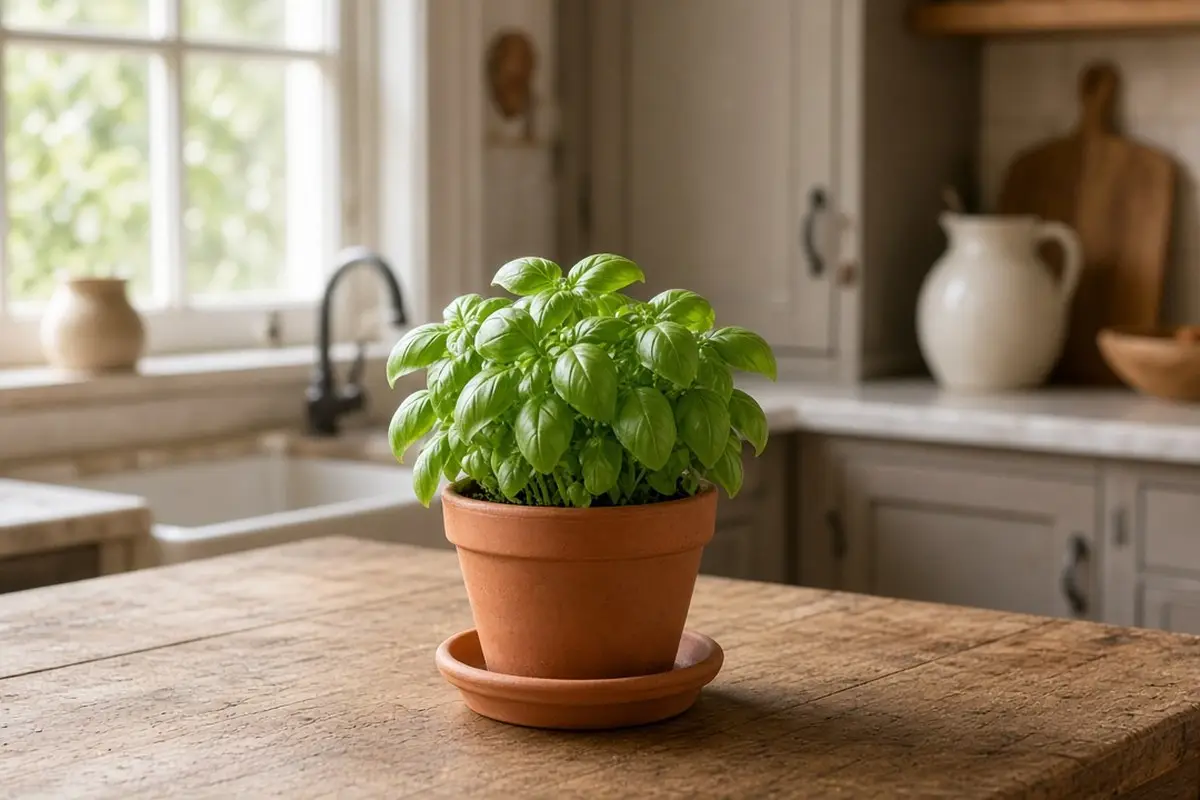
A pot of basil, thyme, or rosemary in the middle of the table looks fresh, smells lovely, and is useful at dinner. Guests can pinch a few leaves straight onto their plates. Choose a low, wide pot with a saucer, and move it to a sunny windowsill for part of the day so it thrives.
Most herbs need several hours of sunlight, so a table in the middle of a dim room is not a long-term home. Treat the herb pot as a visitor: it comes to the table for dinner and goes back to the sill afterwards. Alternatively, keep a few small pots and rotate them.
Trim herbs often to keep them bushy, and use the clippings in cooking. A well-used pot of basil looks better than one left to grow tall and leggy.
Get the look
5. A candle cluster
A few pillar candles of different heights on a plate or tray add warmth at dinner. Keep them low and unscented near food. Flameless candles are safer around children. Many now flicker realistically and run on timers.
Unscented candles matter at a table where people eat. Fragrance competes with food. Choose beeswax or soy candles for a clean burn, and keep them in a holder or on a plate to catch drips and protect the table finish. A cluster of three, in heights between 3 and 8 inches, looks balanced without blocking anyone’s view.
Get the look
6. A pitcher of greenery
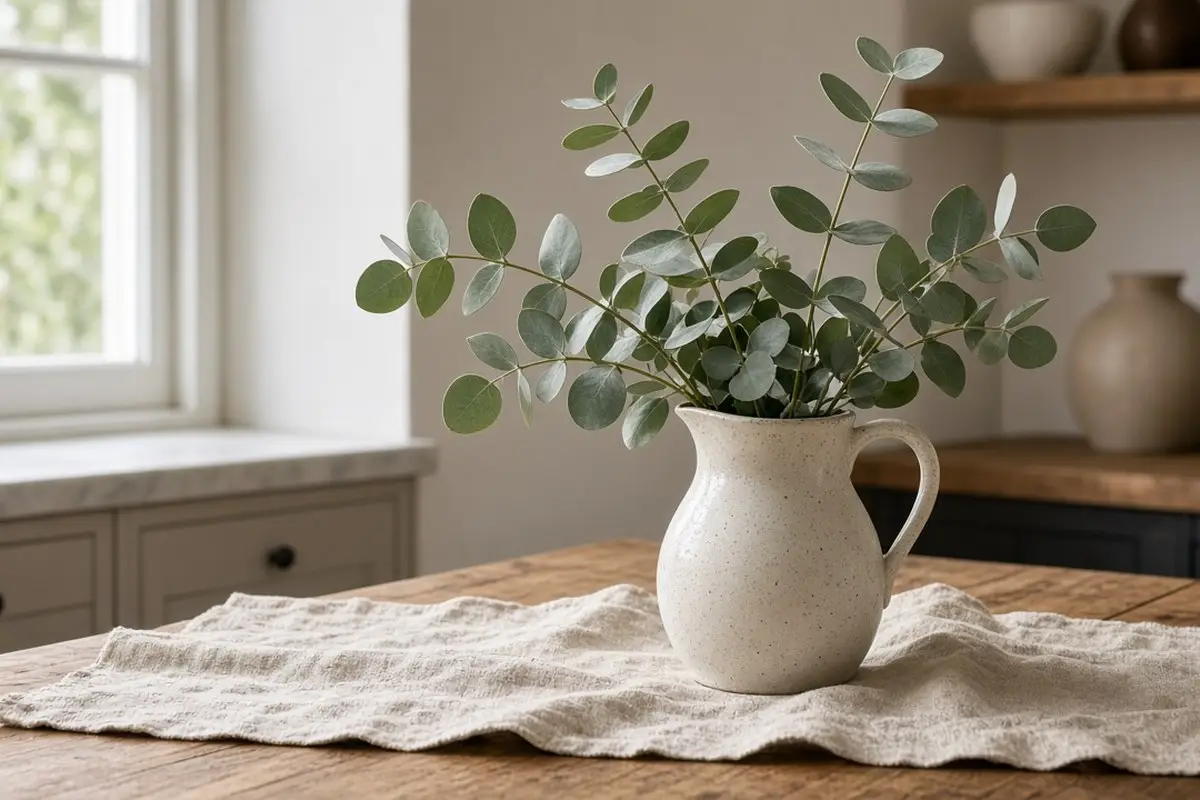
A ceramic or glass pitcher filled with cut greenery, like eucalyptus, olive branches, or garden clippings, lasts a week or two. Keep the greenery short so it does not rise too high.
Greenery is cheaper and longer lasting than flowers. Eucalyptus and olive branches can last two weeks or more in water and look good even as they dry. Many supermarkets sell bunches of greenery for little money. In winter, a few cut pine or cedar branches smell wonderful in a warm kitchen.
Get the look

7. A table runner
A simple linen runner defines the center of the table and protects it. Paired with one small object, it is a centerpiece in itself.
Choose a runner that is about one-third the width of the table and long enough to hang a few inches over each end, or stop it short of the edge for a modern look. Washable linen or cotton is essential at a kitchen table, where spills are inevitable. Darker colors and small patterns hide stains between washes.
Get the look

8. Seasonal touches
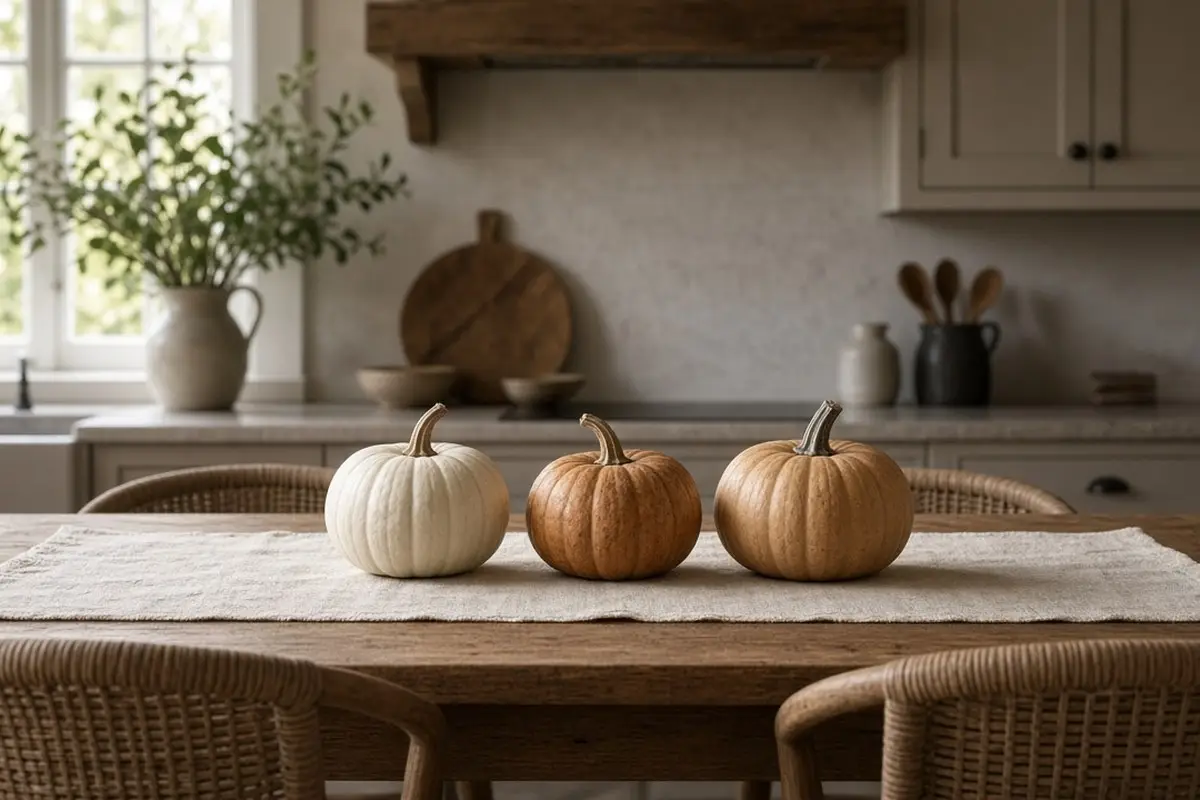
Change one small element with the seasons: small pumpkins in fall, pine cones in winter, tulips in spring, peaches in summer.
Keep a base that stays the same all year, such as a bowl or a tray, and change only what is in it. That way seasonal decor never becomes clutter, and switching takes a minute. Store the seasonal pieces together in a labeled box so they are easy to find next year.
9. Salt, pepper, and napkins
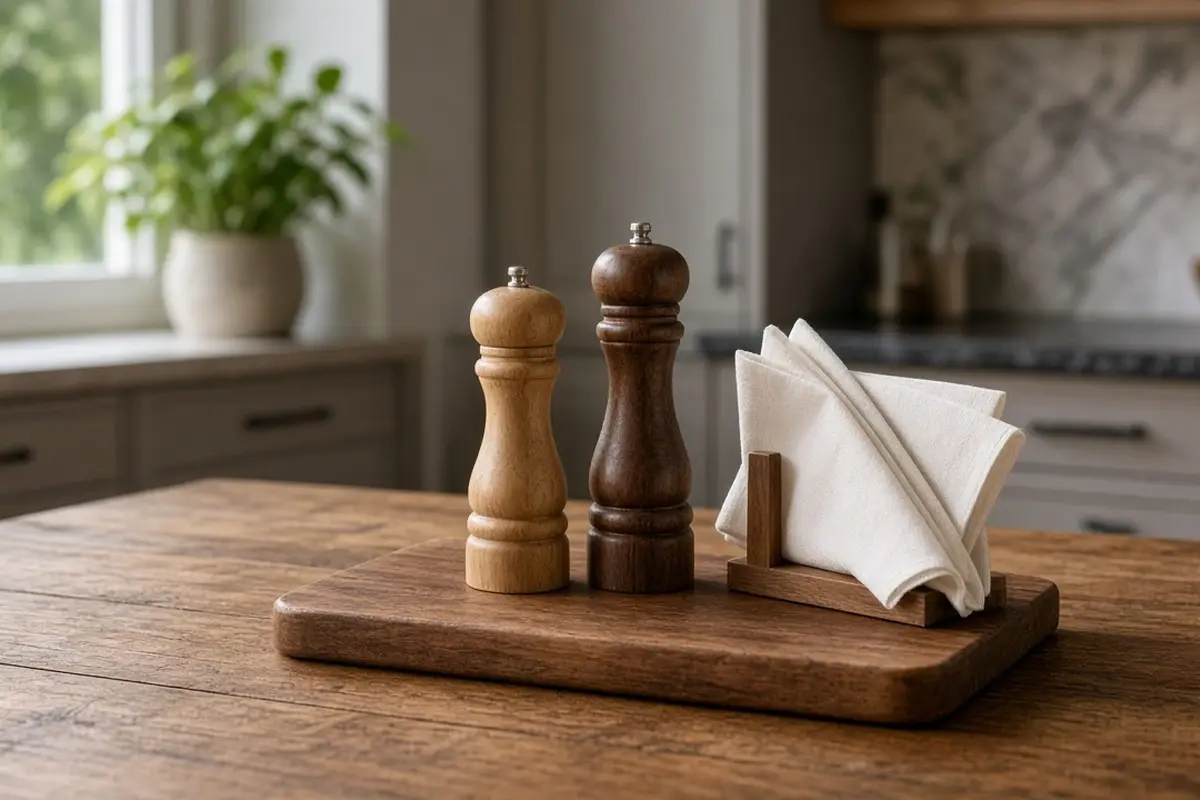
The most practical centerpiece: good salt and pepper mills and a napkin holder on a small board.
These things live on most kitchen tables anyway. Choosing nice versions and grouping them on a board turns everyday clutter into a tidy, intentional arrangement. Add a small bud vase to the board and you have a complete centerpiece that never needs to be cleared.
Get the look

FAQ
What is a good everyday kitchen table centerpiece?
A low bowl of fruit, a bud vase, or a small tray with a candle and salt and pepper.
How tall should a kitchen table centerpiece be?
Under about 12 inches so people can see each other.
How do I decorate a kitchen table I use every day?
Keep decor low, portable, and simple. The weeknight dining table post covers setting up for daily meals.
Should a centerpiece match the kitchen?
It should share one color or material with the room, such as wood that matches the table or a color from the backsplash. The dining room sized for six post covers scaling decor to the table.
What can I use as a centerpiece without buying anything?
A bowl of fruit, a jar of garden clippings, a stack of cookbooks with a candle on top, or salt and pepper on a cutting board. Most good everyday centerpieces come from what is already in the kitchen.
The best kitchen table decor works around you, not against you. Keep it low and easy, and the table is always ready.