
8 Dining Table Settings for a Weeknight, Not a Photo Shoot

On this page10 sections
Most dining table inspiration is built for a holiday or a photo: layered chargers, three glasses per guest, a long garland of eucalyptus, and a dozen candles. It is beautiful and completely impractical on a Wednesday, when dinner is pasta, someone is late, and the table also holds homework and the mail.
A weeknight table should make dinner a little nicer without making it more work. It should be quick to set, easy to clear, and calm enough that sitting down feels like a small pause in the day. The eight ideas below are everyday tablescape habits that take minutes, not an afternoon. If your dining area shares a room with the sofa, the L-shaped sofa layouts post can help you plan the space around it.
As an Amazon Associate I earn from qualifying purchases.
1. A centerpiece you never have to move
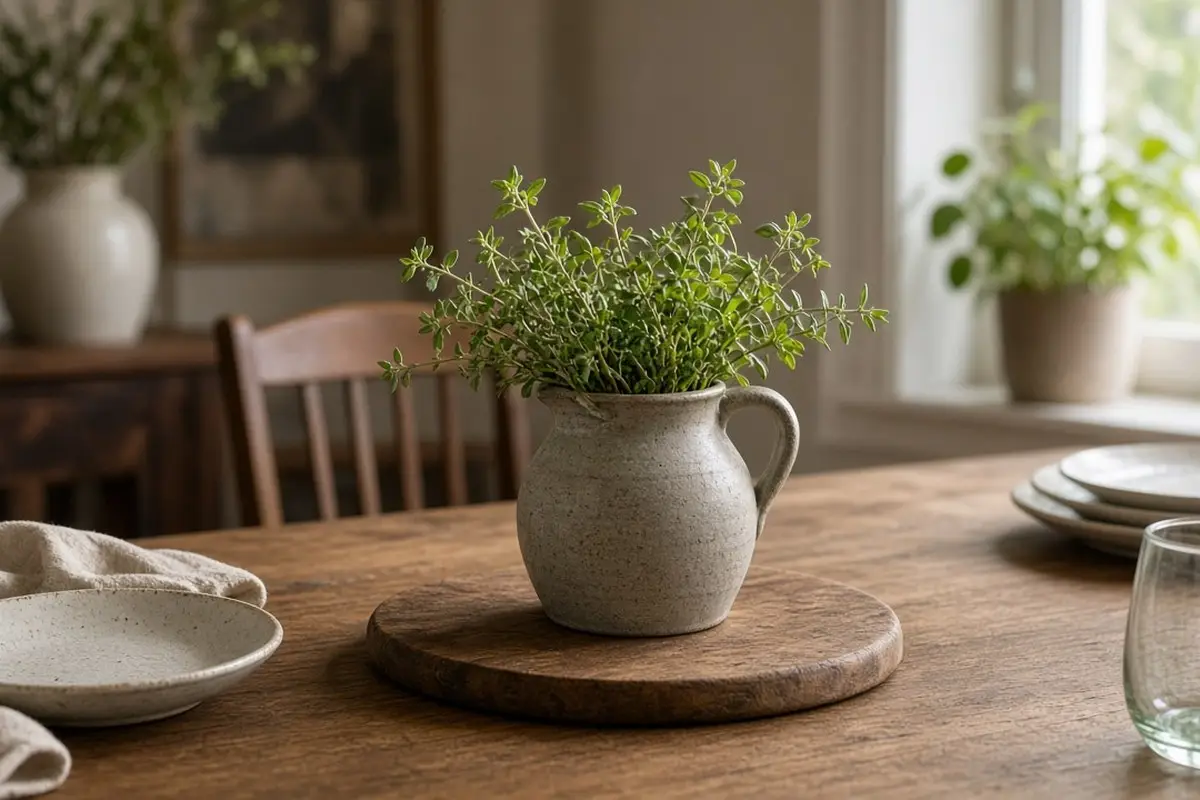
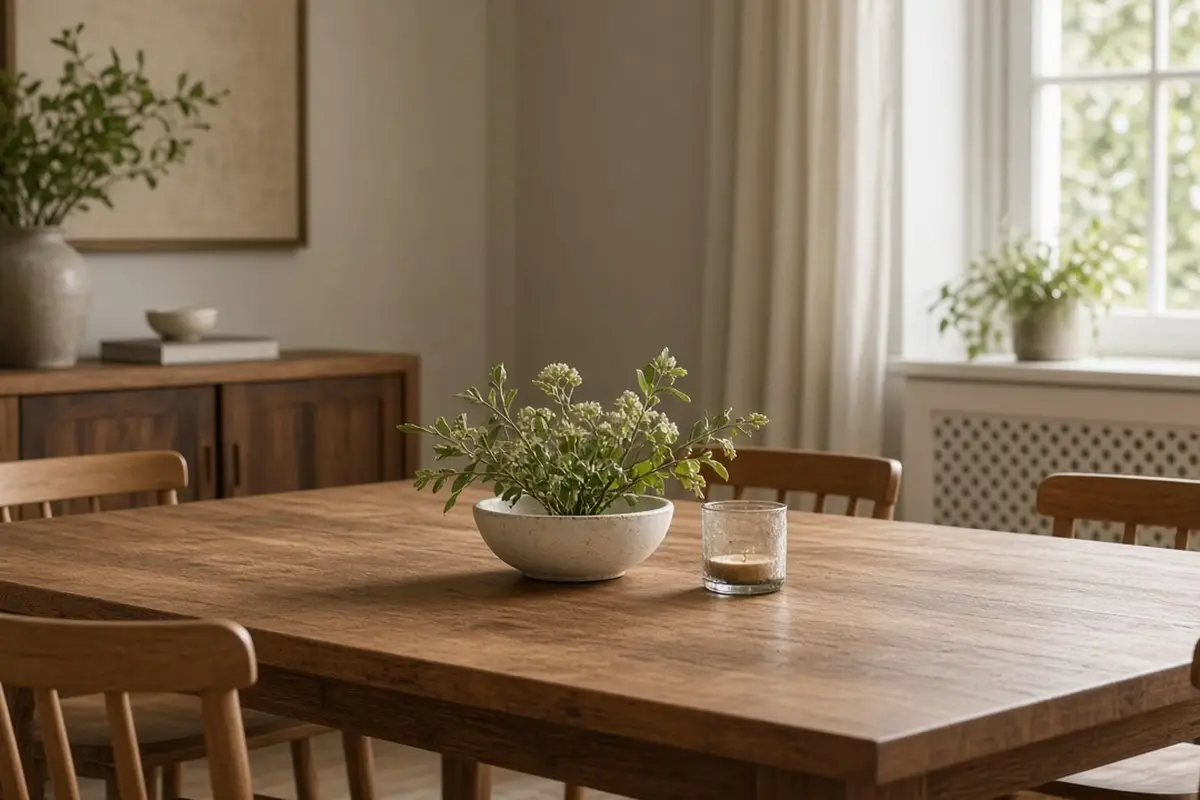
The most useful dinner table centerpiece is one that can stay put during the meal. That means low, narrow, and stable. A small jug of herbs, a bowl of fruit, a single potted plant, or a pair of short candles all qualify. Tall arrangements block faces across the table, and anything wide takes the space you need for serving dishes.
Keep the centerpiece in one spot, on a small tray or a wooden board, so it is easy to lift off when you need the whole table. A bowl of seasonal fruit doubles as dessert and changes itself every week. A pot of basil or rosemary looks fresh and gets used in cooking.
Aim for under 10 inches tall and no wider than a dinner plate. If you can see the person opposite you clearly over it, it passes.
Change the centerpiece with the seasons rather than every week. Herbs in spring, a few garden flowers in summer, small squash or apples in autumn, and a pot of paperwhites or a bowl of clementines in winter. Four changes a year is enough to keep the table feeling fresh without becoming another chore on a busy week.
2. Cloth napkins every night
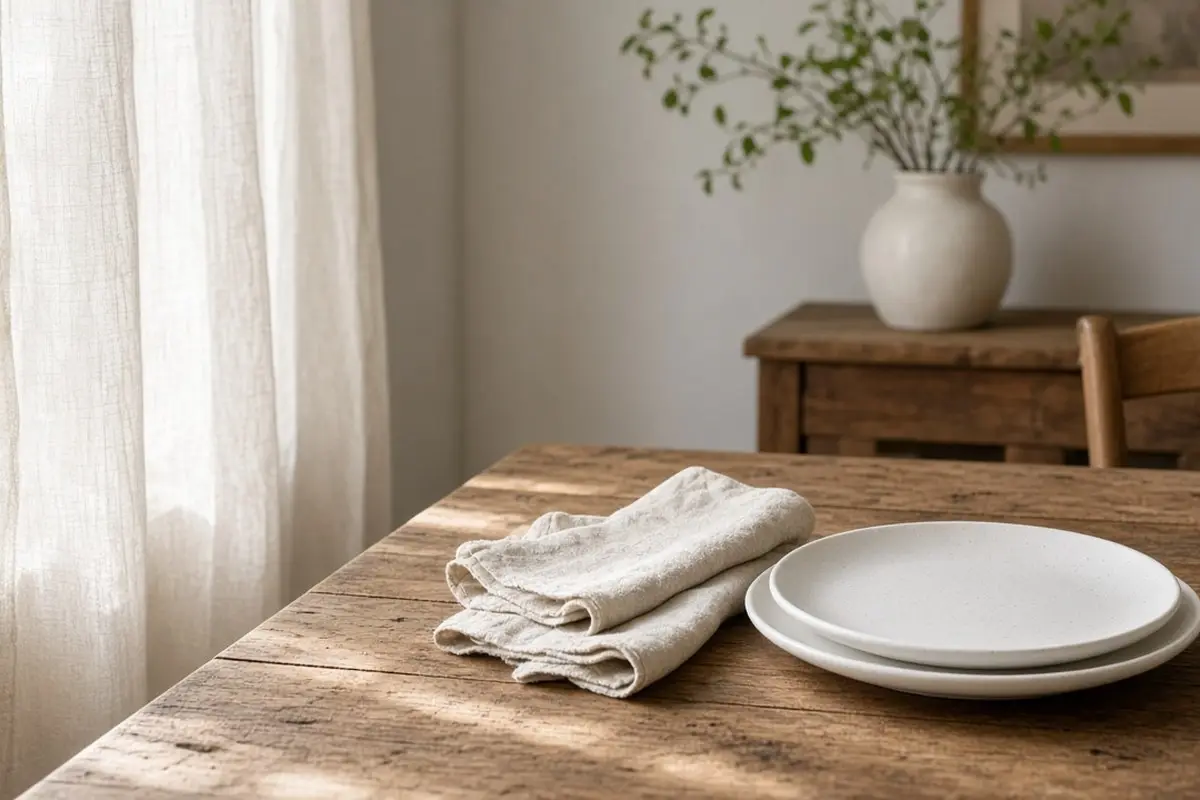
A simple table setting changes most when you add cloth napkins. They feel nicer to use, they look calm and finished, and they replace a pile of paper napkins every week. Linen and cotton both work, and they look better slightly crumpled, so there is no ironing.
Give each person their own color or a napkin ring so a napkin can be used for a couple of days before washing. Keep a basket of clean ones near the table. Fold them simply, in a rectangle beside the plate or a loose triangle on top. Elaborate folds are for the holidays.
Wash napkins with towels on a warm cycle. Avoid fabric softener, which makes linen less absorbent. Dry them and fold them straight out of the dryer, and they will look relaxed and neat without any ironing. Over time, linen gets softer with every wash, which makes it nicer to use the longer you have it.
If you start with a set of eight, you can rotate through a whole week before washing, even with a family of four.
3. One set of everyday plates
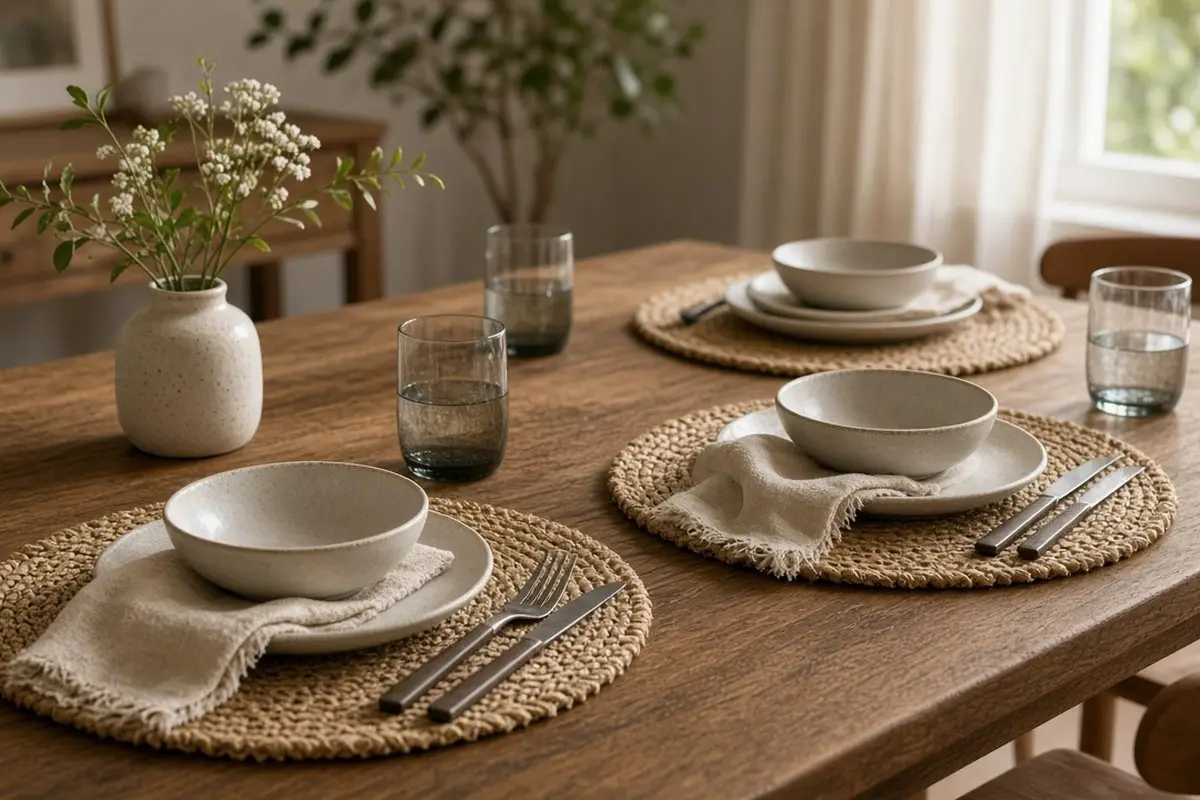
A weeknight table looks calmer when the plates match. You do not need fine china. One set of plain, sturdy plates and bowls in white, cream, or a soft glaze will look good every night and go with any food. Stoneware is durable and has a hand-made feel that suits casual meals.
Store them close to the table, or in the cupboard nearest the dishwasher, so setting and clearing take a minute.
Shallow bowls, sometimes called pasta bowls, are the most useful single piece for weeknight dinners. They hold pasta, stews, salads, and rice dishes, and they keep food from sliding off a flat plate. Many households use them more than dinner plates. Choose ones that stack well and fit your dishwasher.
If a plate chips, replace it from the same line or retire it to the garden shed. A matched stack keeps the table looking calm.
Get the look
4. Placemats or a runner, not both
Placemats protect the table and define each seat. A runner adds color down the center. Using both at once crowds the table and makes clearing harder. Pick one.
Placemats in woven cotton, cork, or wipeable linen are best for families and busy evenings. A runner suits smaller households and tables that are often clear. Either way, choose something you can wipe or throw in the wash without a second thought.
If the table itself is beautiful wood, you may not need either on most nights. A good oil finish handles everyday meals, and a damp cloth after dinner keeps it clean. Use placemats only under hot dishes or when small children are eating, and let the wood show the rest of the time.
Get the look
5. A water jug on the table
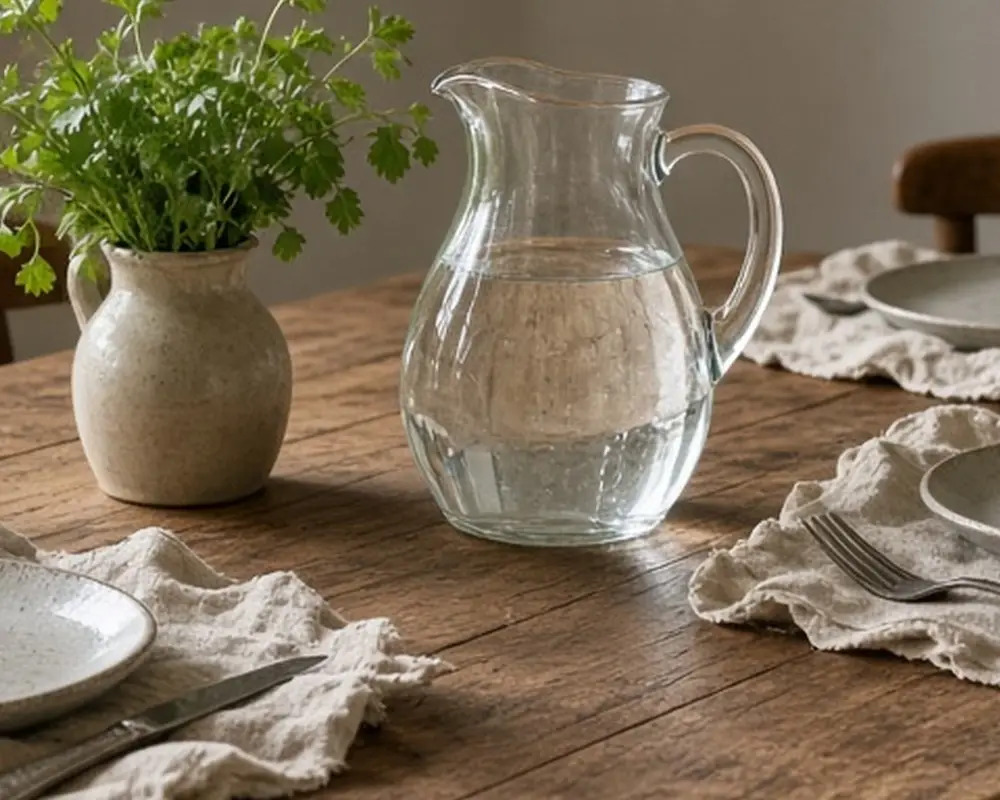
A jug of water in the middle of the table saves people from getting up during the meal and looks generous. Glass or ceramic both work. Add a few slices of lemon or cucumber, or a sprig of mint, for a little freshness.
Plain glasses, the same everyday tumblers you use for everything, are enough. A weeknight table does not need wine glasses unless you are drinking wine.
Keep the jug in the fridge between meals if you like cold water. A jug with a lid stays fresh longer and keeps lemon slices from taking on fridge smells. Wash it daily with the rest of the dishes so it never gets that cloudy look.


6. Low candles, lit at the start
Candles make an ordinary dinner feel like an occasion, and they cost almost nothing. Use short, unscented pillars or tea lights in holders. Scented candles compete with the food. Light them when the food arrives and blow them out when the meal ends.
Keep them in the middle, on the same tray as the centerpiece, so they never end up next to an elbow. A pair is enough.
In summer, when it is still light at dinner, skip the candles and let the window do the work. Open the curtains fully and enjoy the evening light on the table. In winter, when dinner happens in the dark, candles and a warm lamp nearby make the table feel like the warmest place in the house.
Get the look
7. A serving board for shared food
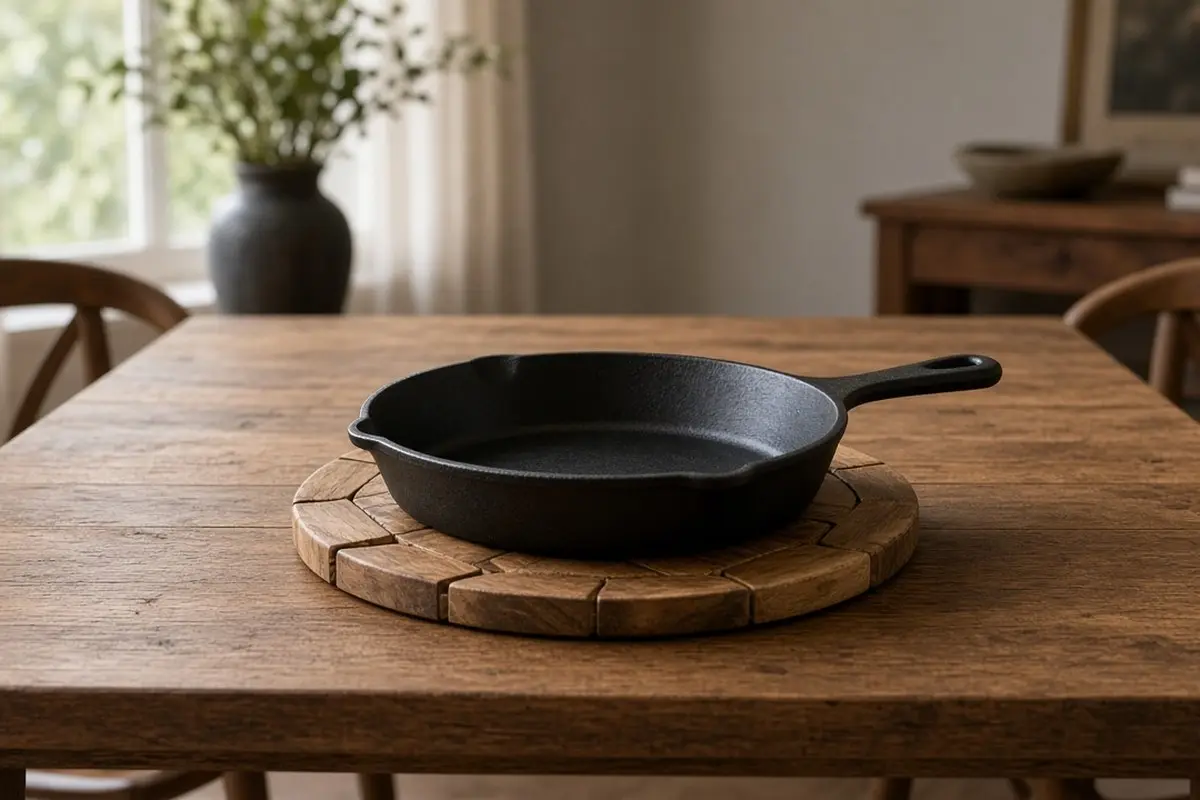
Serving straight from the pan is fine, but one wooden board or trivet in the middle of the table makes family-style serving easier and protects the wood. Put the main dish, a bread loaf, or a salad bowl on it, and let everyone help themselves.
Choose a board large enough for a big pot, and one that can be wiped clean. It also gives you a natural place to put the centerpiece back when dinner is done.
Family-style serving also cuts washing up. Instead of plating every dish in the kitchen and carrying a stack of serving bowls, the pan goes straight to the board and back to the sink. Fewer dishes, warmer food, and a table that looks generous without effort.
8. Clear the table every night
The final piece of a good weeknight table is a clear one. If the table holds bags, mail, laptops, and toys, setting it for dinner becomes a chore. Give those things somewhere else to go: a basket on a sideboard for mail, a shelf for school bags, a drawer for chargers.
Then, after dinner, clear everything except the centerpiece. The table is ready for breakfast, and tomorrow’s dinner starts calmly.
A quick wipe with a damp cloth and a dry tea towel after clearing keeps the surface ready. It takes a minute and stops crumbs and sticky spots from building up over the week. Make it the last step of the evening, and the habit sticks. Within a week or two it stops feeling like work at all, and simply becomes part of dinner.
Get the look

Tips Before You Start
- Keep the centerpiece under 10 inches tall.
- Use cloth napkins every day.
- Choose placemats or a runner, not both.
- Store plates close to the table.
- Light unscented candles only during the meal.
- Clear the table every night except the centerpiece.
FAQ
What is a good everyday dining table centerpiece?
A small jug of herbs, a bowl of fruit, or a low potted plant. It should be low enough to see over and easy to lift.
How do I set a simple table quickly?
Plate, fork, knife, napkin, and a glass. Add a water jug and candles in the center. That is all a weeknight needs.
Should a dining table always be decorated?
A small centerpiece is enough. A table that is too decorated is hard to use. The simple home coffee corner uses the same restraint for a kitchen counter.
How do I keep the dining table clear of clutter?
Give mail, bags, and chargers their own homes nearby. The small kitchen organization post has more ideas for keeping counters and tables clear.
What if we eat in front of the TV most nights?
Try the table one or two nights a week first. Set it simply, light a candle, and leave phones in another room. Many families find they start choosing the table more often once it is ready and easy to use.
A weeknight table should make dinner easier and a little nicer. Keep it simple, keep it clear, and let the meal and the people be the center of it.