
12 Small Home Libraries for a Wall of Paperbacks

On this page15 sections
- Size the shelves for the books
- A shallow floor-to-ceiling wall
- Shelves around a doorway
- A hallway library
- Picture-ledge shelves for face-out books
- Under-window shelves
- A library ladder for tall walls
- Shelves in an alcove
- A stair wall library
- Cube shelving turned into a library
- A corner library
- Shelves above a desk
- A rotating library
- Organizing a paperback wall
- Common questions
Paperback readers have a particular problem. The books are small, they multiply quickly, and standard bookcases are built for hardcovers and binders. A twelve-inch-deep shelf holding paperbacks leaves four inches of dead space in front, which collects dust, ornaments, and a second row of books you can never find. A home library for paperbacks can be shallower, tighter, and far more efficient.
This post covers twelve ways to build a small library around a paperback collection, from a single wall to a hallway, with notes on shelf depth, spacing, and how to organize hundreds of slim spines so the wall looks like a library rather than a storage unit.
As an Amazon Associate I earn from qualifying purchases.
Size the shelves for the books
A standard mass-market paperback is about four and a quarter inches wide and seven inches tall. Trade paperbacks run around five and a half by eight and a half inches. That means shelves six to eight inches deep hold almost any paperback, and shelf spacing of nine to ten inches fits even trade sizes with room to pull a book out. Compare that with standard bookcases at eleven to fifteen inches deep, and you can see how much floor space a paperback library saves.
Shallow shelves also look better. Spines sit near the front edge, the whole wall reads as books, and there is nowhere for clutter to hide. If your collection mixes hardcovers and paperbacks, keep one or two deeper bays for the bigger books and let the rest be shallow.
Before buying anything, count your books, or at least estimate. Measure a foot of paperbacks on an existing shelf and count them; most people fit around ten to fourteen per foot. Divide your collection by that number and you know how many feet of shelving you need. Then add a quarter more for growth. Paperback collections almost always grow faster than their owners expect, especially if you buy secondhand.
Think about weight too. Paperbacks are lighter than hardcovers, but a long shelf packed tight still carries a surprising load. Use shelves at least three-quarters of an inch thick for spans up to about thirty inches, add a center support for longer runs, and fix uprights to studs.
1. A shallow floor-to-ceiling wall
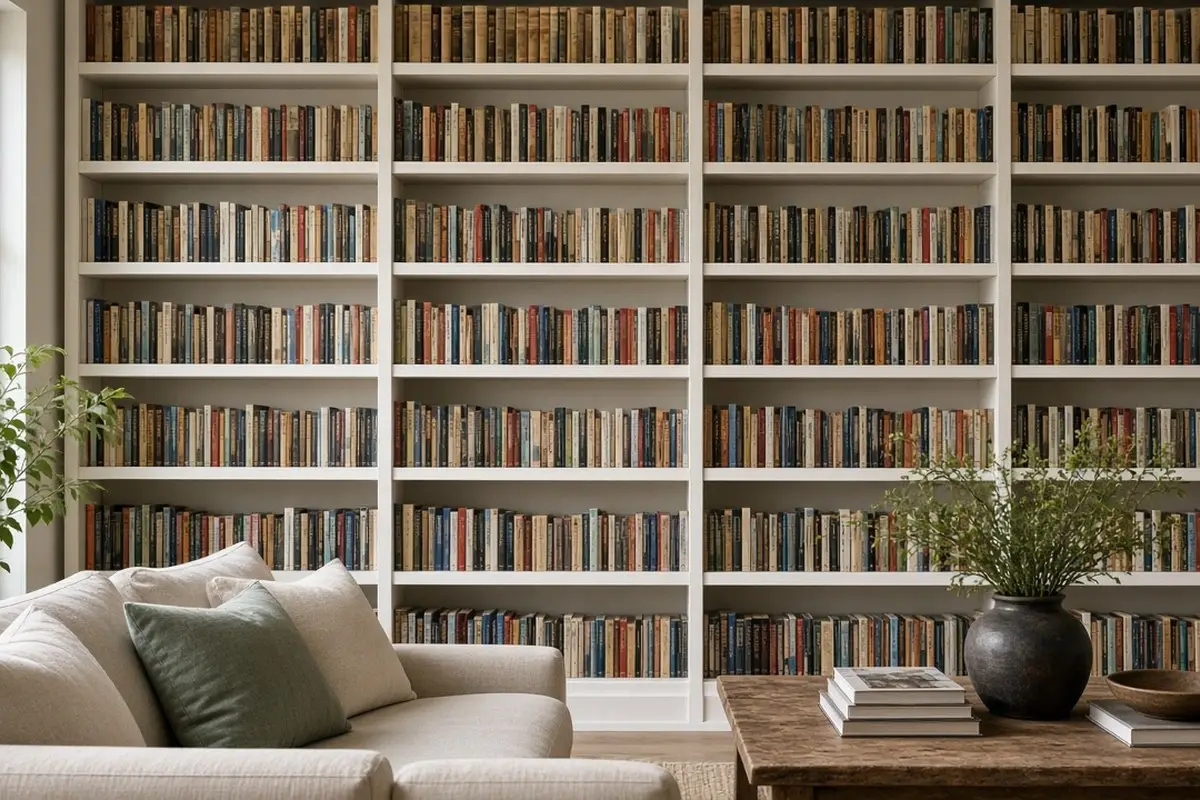
The most dramatic option is a whole wall of shallow shelves, floor to ceiling. Because each shelf is only seven or eight inches deep, the wall barely eats into the room. Stack bookcases side by side, or build simple shelves between uprights screwed to the wall. Paint everything the wall color so the books are the only thing you see.
A wall like this works in rooms where every inch counts: a small living room, a guest room that doubles as an office, or a dining room where books make the space feel warm between meals. Because the shelves are shallow, a sofa or dining table can sit close in front without feeling crammed. Add a small amount of trim along the top and bottom to give the wall a built-in look, and paint the back of each bay a slightly deeper shade if you want the books to pop.
Get the look
2. Shelves around a doorway
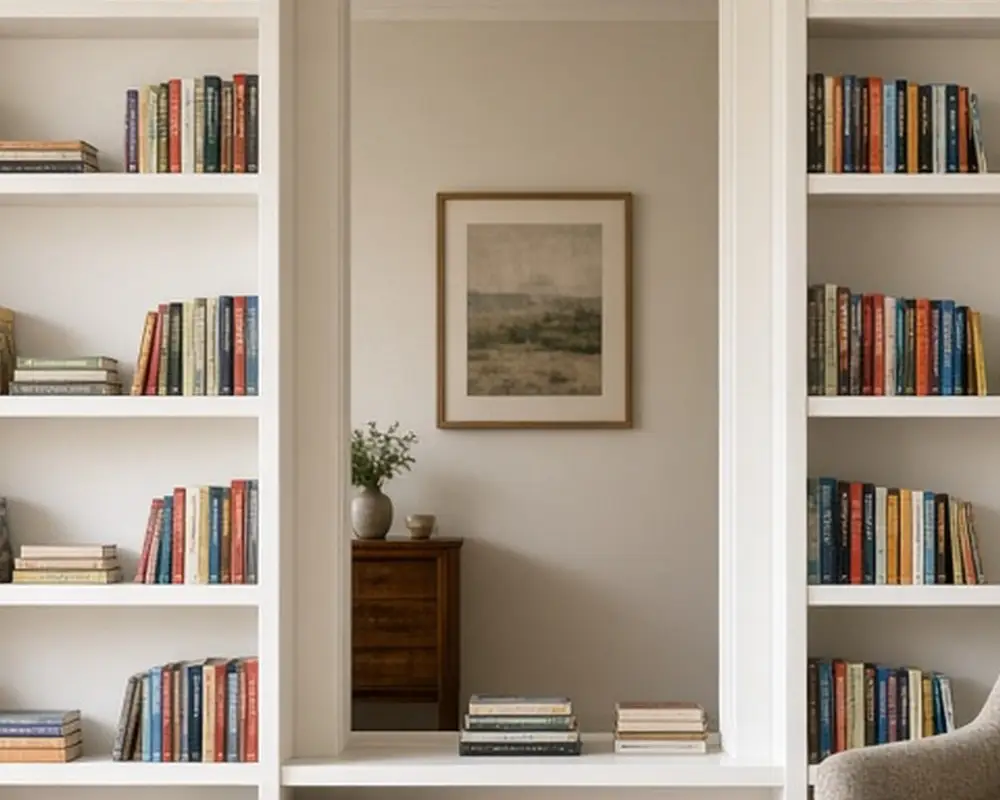
A doorway framed by bookshelves turns a plain wall into a library and uses the space above the door that usually goes to waste. Run shelves up both sides and across the top. Paperbacks suit the header shelf well, since they are light and short.
Doorway libraries look best when the shelves line up on both sides, with the same spacing and the same paint finish. Keep the shelves at the sides as shallow as possible so the door frame still reads clearly. If the door swings toward the shelves, check that the handle clears the spines when fully open, or mount a small door stop.
3. A hallway library
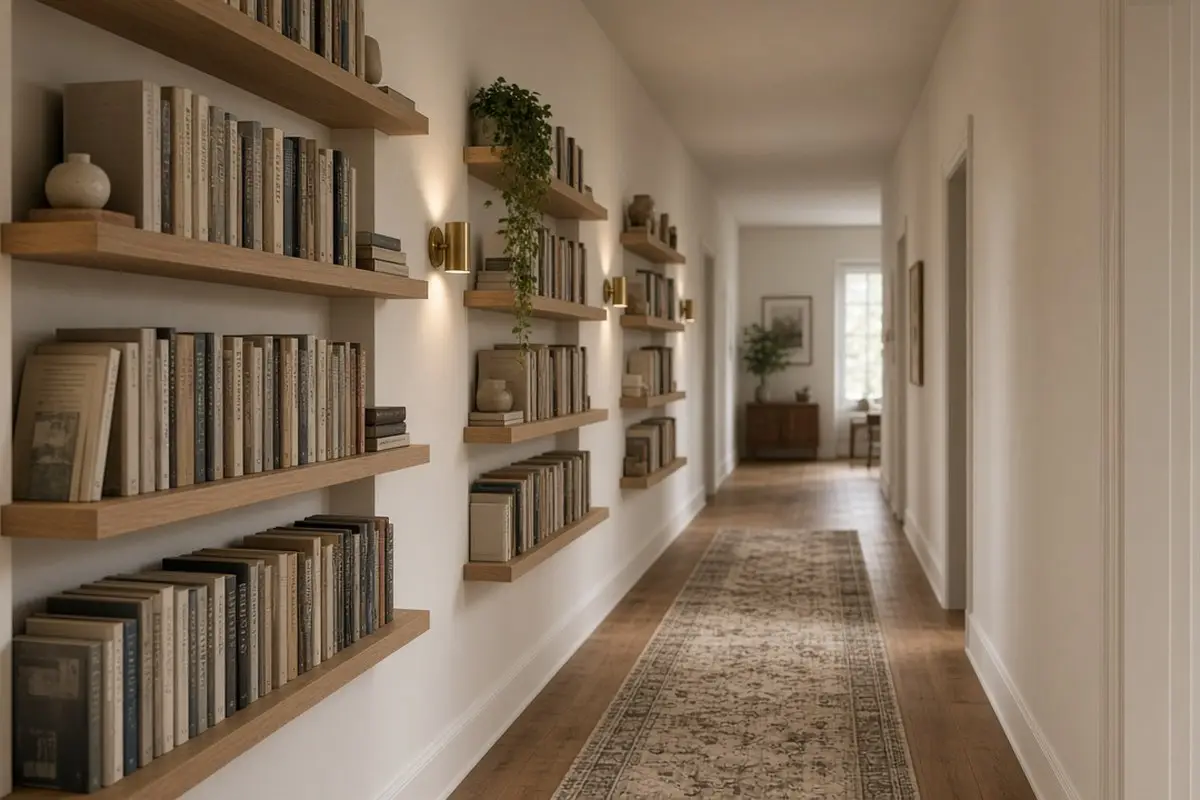
A long hallway often has room for shallow shelves even when it cannot take furniture. Six-inch-deep shelves leave the walkway clear and turn a dull corridor into a browsing walk. Light them with a few sconces or a strip light under the top shelf.
In a busy hallway, choose fixed shelves rather than adjustable ones with loose pins, so a passing elbow does not dislodge a shelf. Shelf lips or a thin rail along the front keep books from sliding off if someone bumps the wall. A hallway library also encourages browsing: you pass the books several times a day and often pick one up on impulse.
Get the look
4. Picture-ledge shelves for face-out books
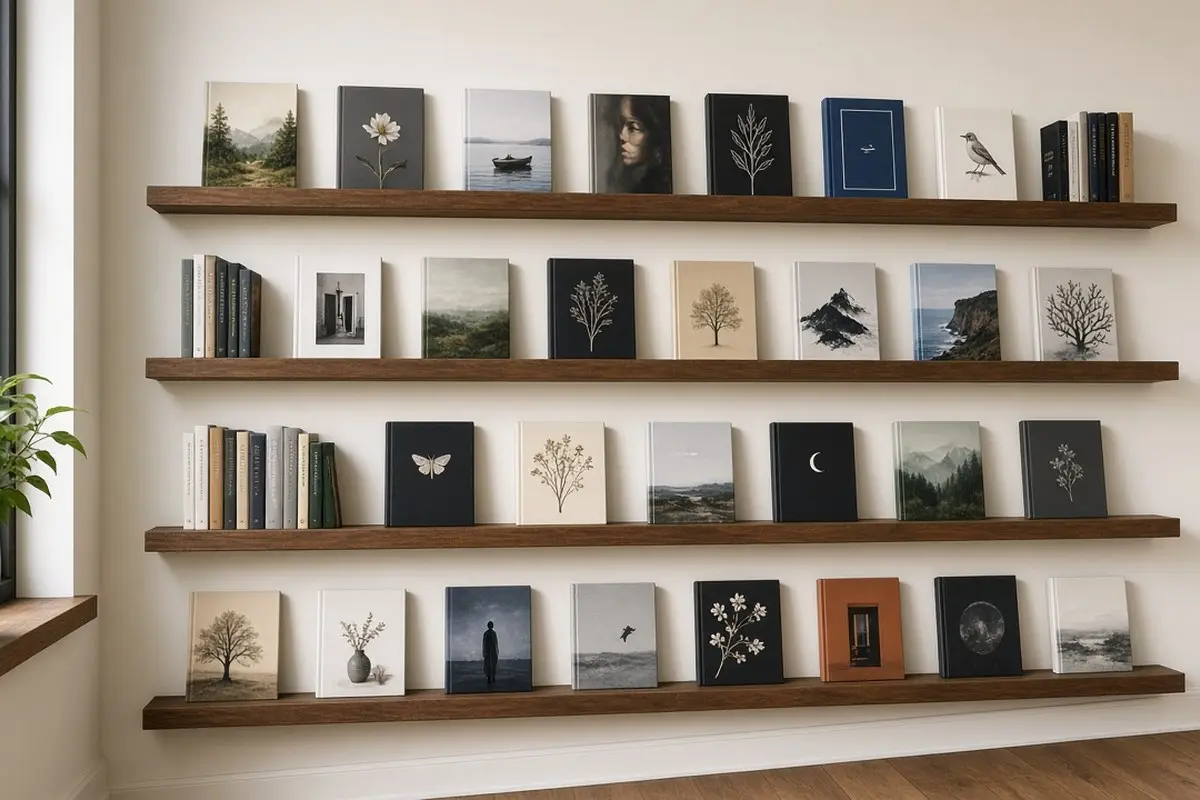
Picture ledges, the narrow shelves with a lip, work beautifully for paperbacks. Stack a few rows on one wall and display favorite covers face out. It feels like a bookshop and makes it easy to rotate what is on show.
Face-out display suits favorites, new arrivals, and children’s books with bright covers. Mix it with a spine-out bookcase elsewhere so you get both capacity and display. A ledge wall in a kids’ room makes choosing a bedtime story easier, since children recognize books by their covers long before they can read the spines.
Get the look
5. Under-window shelves
The wall beneath a window can hold a low run of shelves, which also makes a perfect base for a window seat cushion. Keep the shelves under the sill height and leave the window clear for light.
Under-window shelves stay cool and shaded, which is good for books, but avoid placing them directly over a radiator, since dry heat can warp paper over time. If there is a radiator, a deeper shelf top above it can act as a heat shelf and the books can sit in bays either side.
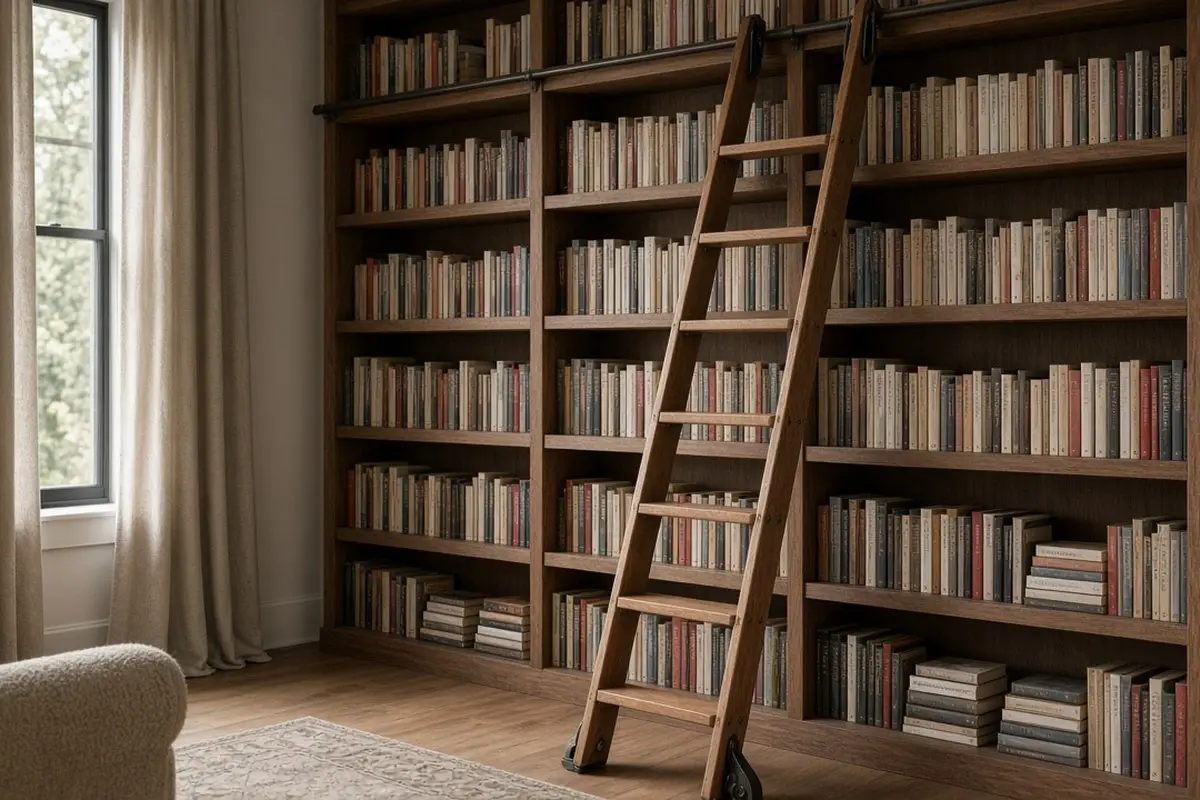
6. A library ladder for tall walls
If the shelves reach the ceiling, a rolling or hook-on library ladder makes the top rows usable. Hook-on ladders are simpler to install than rails and can move between bays. Store the books you read least on the highest shelves.
A ladder also adds a sense of occasion. Even in a small room, a wooden ladder leaning against a wall of books makes the space feel like a proper library. Choose one with wide, flat treads and rubber feet, and remove it when not in use if you have young children who might climb.
Get the look
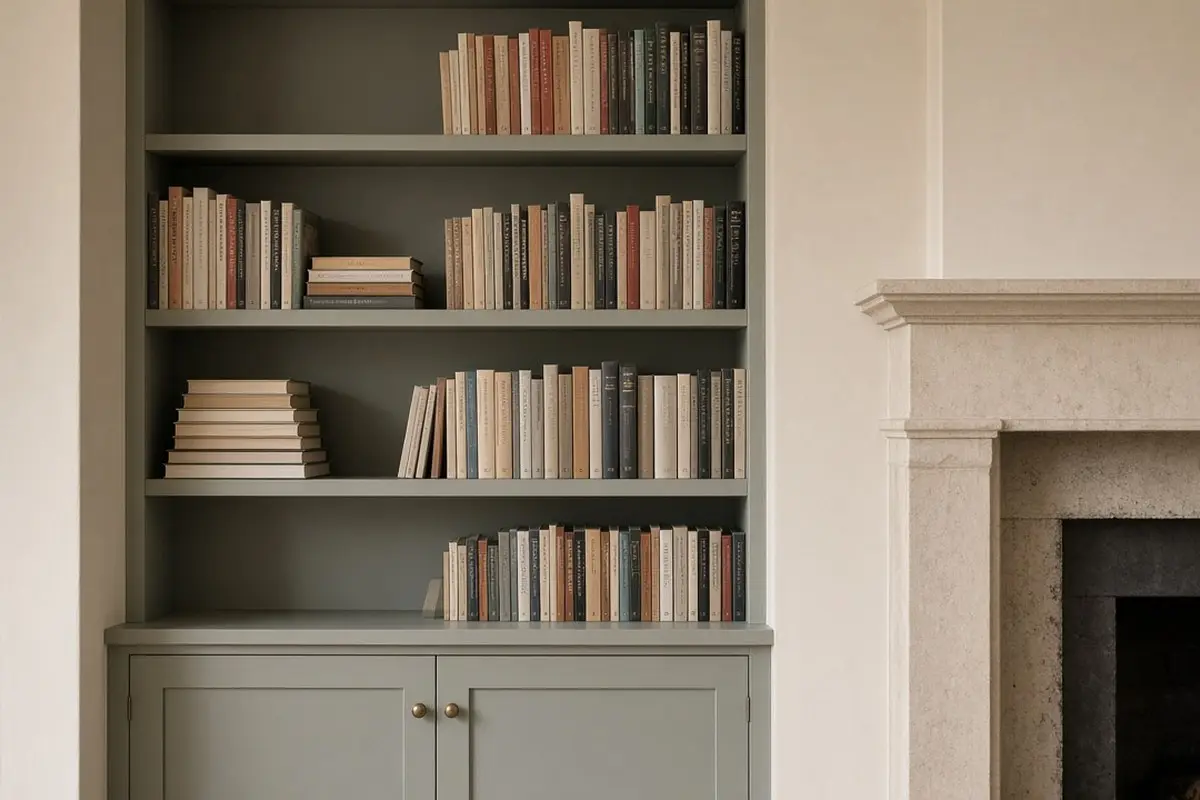
7. Shelves in an alcove
Alcoves beside a fireplace or chimney breast are natural homes for shelves. Fill both with shallow shelves and a matching paint color, and the room gains a library without losing floor space. Add a picture light above each alcove for a warm glow.
Get the look
8. A stair wall library
The wall along a staircase can carry shallow shelves stepped to follow the stairs. Keep them out of the handrail’s way and choose sturdy brackets. This is one of the few places where a library feels completely natural without taking a single square foot of floor.
Stair shelves need careful planning. Mark the stair line on the wall with tape and step the shelves so each sits at a comfortable height for someone standing on the nearest tread. Keep the lowest shelf well above the steps so feet do not knock it, and avoid the area where people swing around a turn.
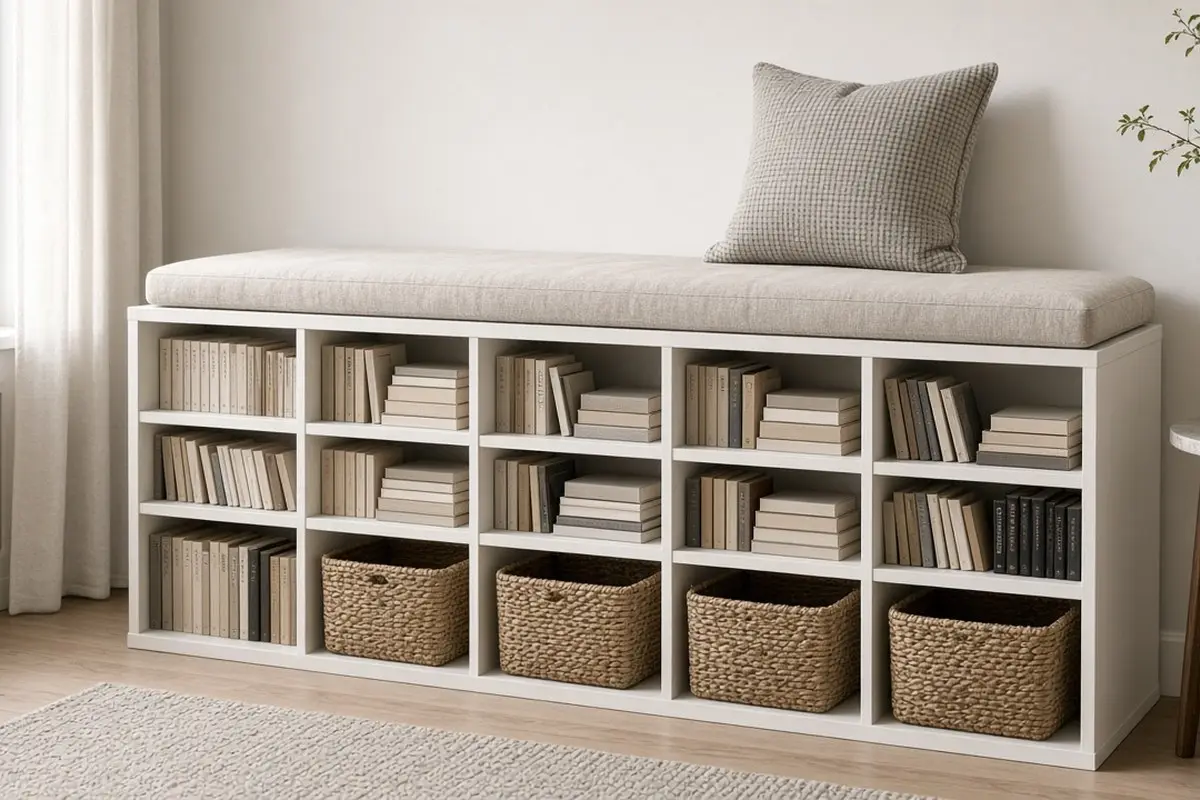
9. Cube shelving turned into a library
Cube units hold paperbacks well, especially in rentals. Fill some cubes with books spine out, others with stacks lying flat, and a few with baskets. Lay a long cushion on top of a low unit to create a reading bench. Cube units are also easy to take apart and move, which suits renters and anyone likely to rearrange.
Get the look
10. A corner library
Corner shelves make use of space that usually stays empty. A pair of narrow bookcases meeting in the corner, with a reading chair in front, creates a library nook in even a small room.
Corner units that wrap both walls make better use of the dead corner than two separate bookcases butted together. Shelves that meet at the corner often have an awkward inaccessible patch, so keep that spot for books you rarely need or for a tall plant.
11. Shelves above a desk
Shallow shelves above a desk keep reference books and favorites in reach while you work. Paperbacks are light enough for simple wall brackets.
12. A rotating library
If the collection keeps growing, keep a “current” library on display and store the rest in labeled boxes. Swap a box every few months. It keeps the wall fresh and the collection manageable.
This approach also makes it easier to let go of books. When a box comes out of storage and nothing in it calls to you, those books can go to a friend, a little free library, or a charity shop.
Organizing a paperback wall
Sort books by genre first, then by author within each genre. Mixing heights in a row looks messy with paperbacks, so group similar sizes together where you can. Leave a little space at the end of each shelf for new arrivals. A few small objects or bookends every couple of shelves break up long rows of spines.
Some people love sorting by color, which turns the wall into a rainbow. It looks striking but makes finding a specific book harder, so it suits collections you browse rather than search. A simple compromise is to sort fiction alphabetically and arrange a single display shelf by color.
Common questions
How deep should shelves be for paperbacks? Six to eight inches is enough for almost any paperback.
How do I make a small home library look tidy? Use shallow shelves painted the wall color, group books by size and genre, and leave a little breathing room on each shelf.
How many paperbacks fit on a shelf? Roughly ten to fourteen per foot, depending on thickness, so a three-foot shelf holds about thirty to forty books.
For a place to read, see corner reading nooks and our bedroom reading corner.