
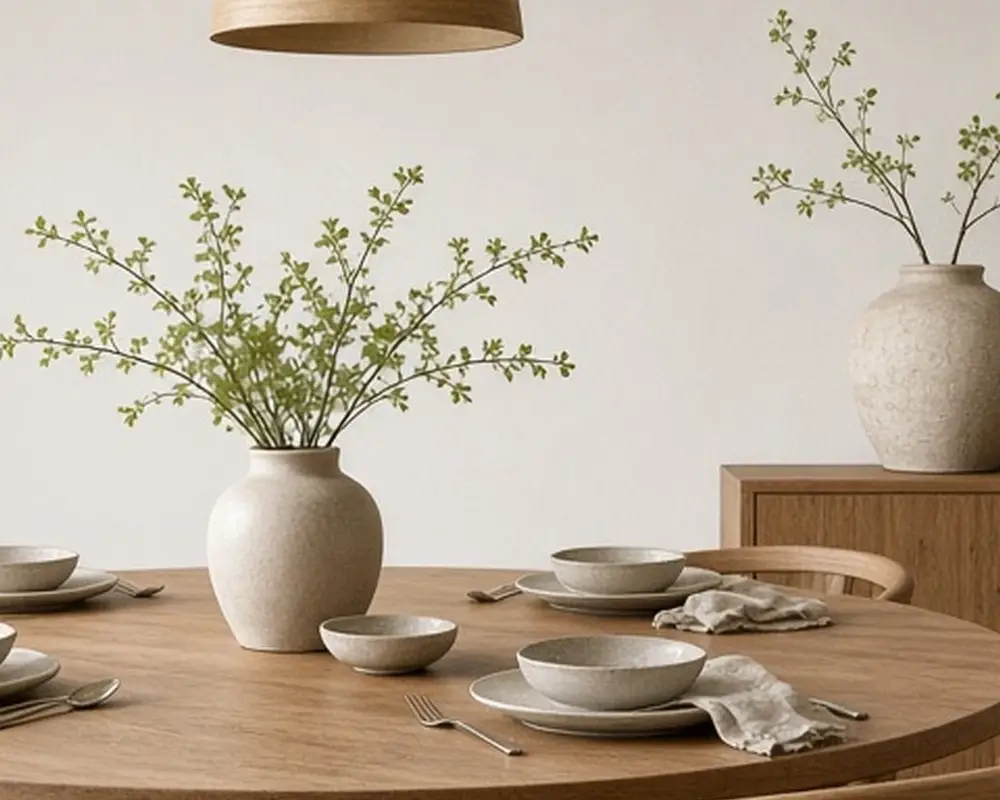
11 Dining Rooms Sized for Six and Furnished for Four

On this page13 sections
- Know the space each seat needs
- An extending table
- A round table that seats more than it looks
- Four chairs at the table, two elsewhere
- A bench on one side
- Folding chairs worth keeping
- Dining chair spacing that feels generous
- A sideboard for serving and storage
- One pendant, centered on the everyday table
- A rug sized for the extended table
- A small dining room layout that breathes
- Tips Before You Start
- FAQ
Most households eat as four, or two, or three, almost every night. Then a few times a year, family comes for Sunday lunch or friends stay for dinner, and suddenly the table needs to hold six or more. The usual answer is to buy a table for six and live with it. That means walking around a big empty table every day, squeezing past chairs nobody uses, and losing floor space in a room that might be small to begin with.
There is a better way. Plan the dining room for six, but furnish it for four. That means a table and seating that work comfortably for the everyday number and stretch easily for the occasional crowd. The eleven ideas below cover the sizes, spacing, and pieces that make it work. If your dining area shares space with the living room, the living and dining room split post covers zoning.
As an Amazon Associate I earn from qualifying purchases.
1. Know the space each seat needs
Before choosing any furniture, it helps to know how much room people actually need. Each diner needs about 24 inches of table width to eat comfortably, and 30 inches feels generous. Behind each chair, allow at least 36 inches from the table edge to the wall or nearest furniture, so someone can pull out a chair and stand up. Where people walk behind seated diners, 42 to 48 inches is better.
These numbers set the real size of your dining room. A room that looks big enough for a table for six might only fit one once you add the clearance. Measure from wall to wall, subtract 72 inches for clearance on two sides, and what is left is the largest table the room can hold.
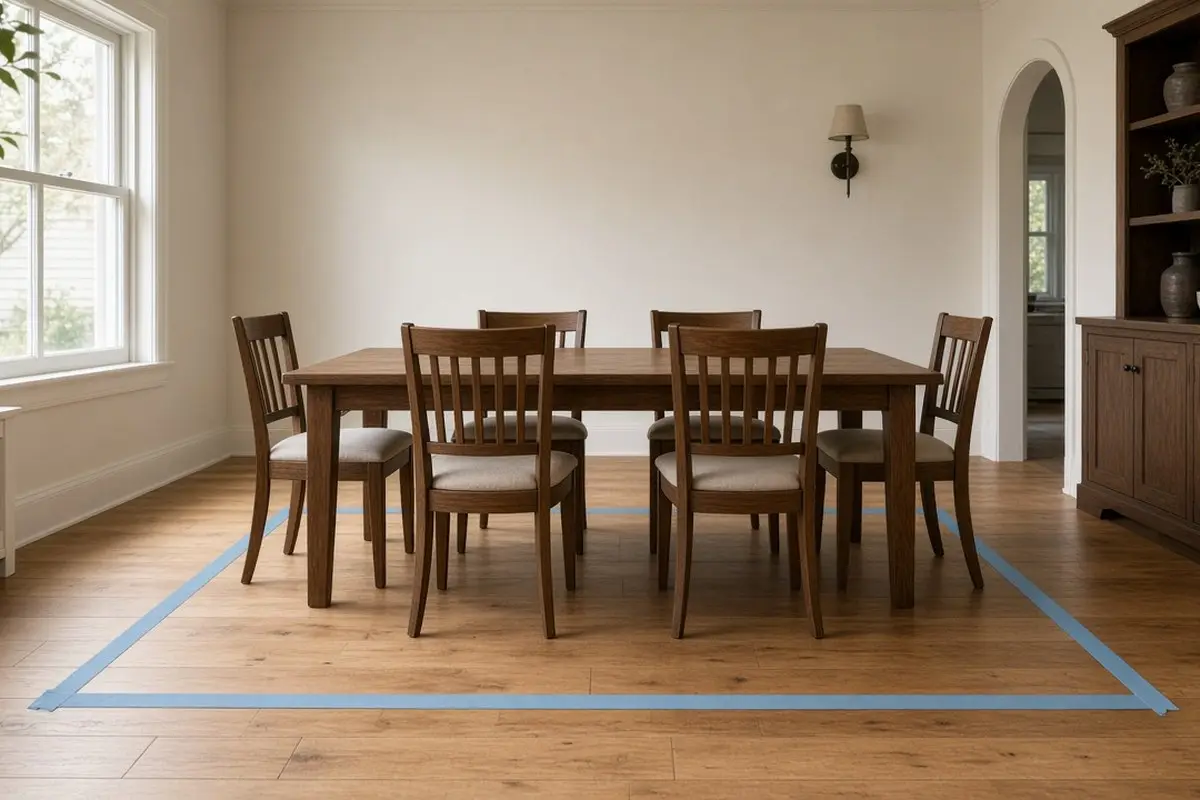
It is worth taping the outline of a table on the floor and placing chairs around it. Walk around. Pull out a chair and sit down. You will know within a minute whether the size works.
Get the look

2. An extending table
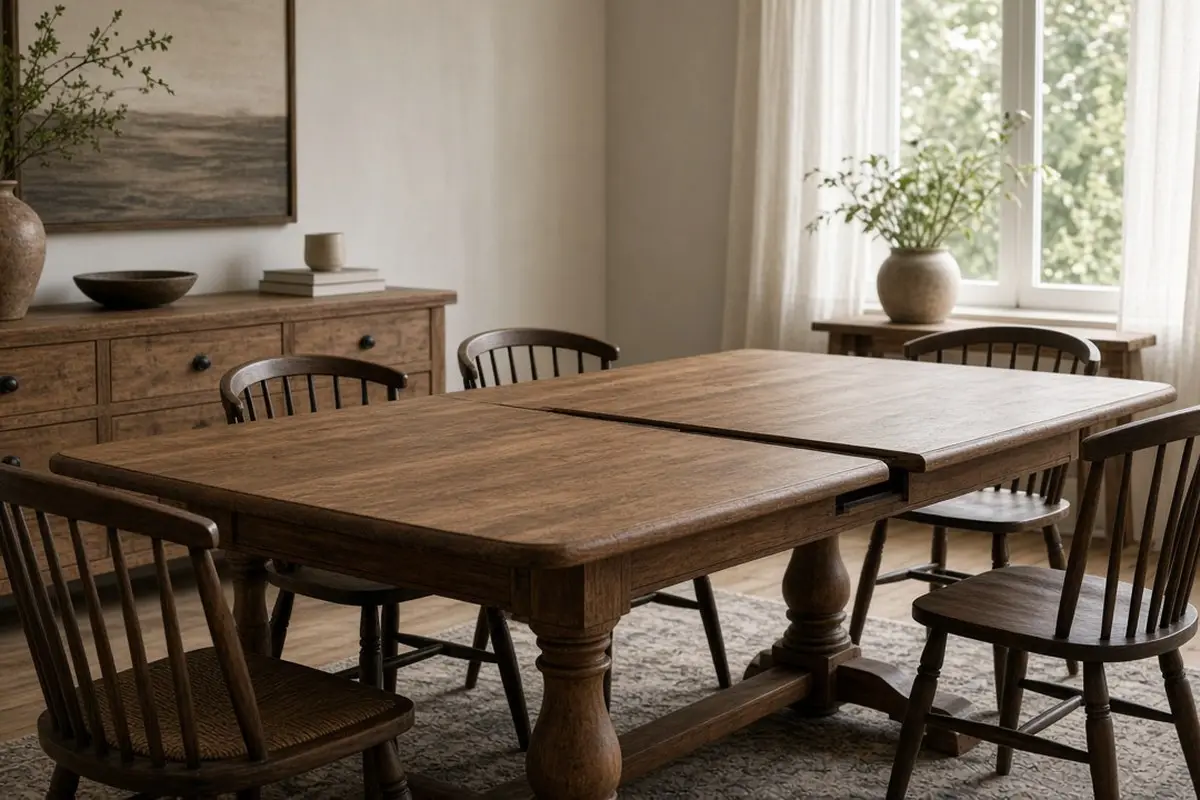
The most obvious answer is an extending table. A table that seats four at around 48 inches long and opens to 72 or 80 inches with a leaf seats six or eight. The best ones have a leaf stored inside the table, so you never have to find a closet for it.
Check how the extension works before buying. Butterfly leaves fold out from the center and are easy for one person. Separate leaves that drop in need storage and two people. Look at the legs too. Corner legs can get in the way of the extra seats when extended. A pedestal base or legs set slightly inward are easier.
An extending table also lets the room breathe on ordinary days. Keep it short, and the dining area feels open.
Get the look

3. A round table that seats more than it looks
Round tables seat more people for their size than rectangles, because there are no corners to waste. A 48 inch round table seats four comfortably and five or six at a squeeze. A 54 to 60 inch round seats six well. Round tables also make conversation easier, since everyone can see everyone.
An extending round table, which opens into an oval, is one of the most flexible pieces you can own for this purpose. It is round and compact for four, oval and long for six or eight.
A lazy susan in the middle of a round table helps when six people share dishes. Everyone can reach the salad and the bread without passing plates around, and it lifts off easily when the table is being used for homework or crafts. On a 54 inch table, a lazy susan of about 20 inches is enough.
Round tables also suit square rooms better than rectangles, which can leave awkward empty corners.
Get the look
4. Four chairs at the table, two elsewhere
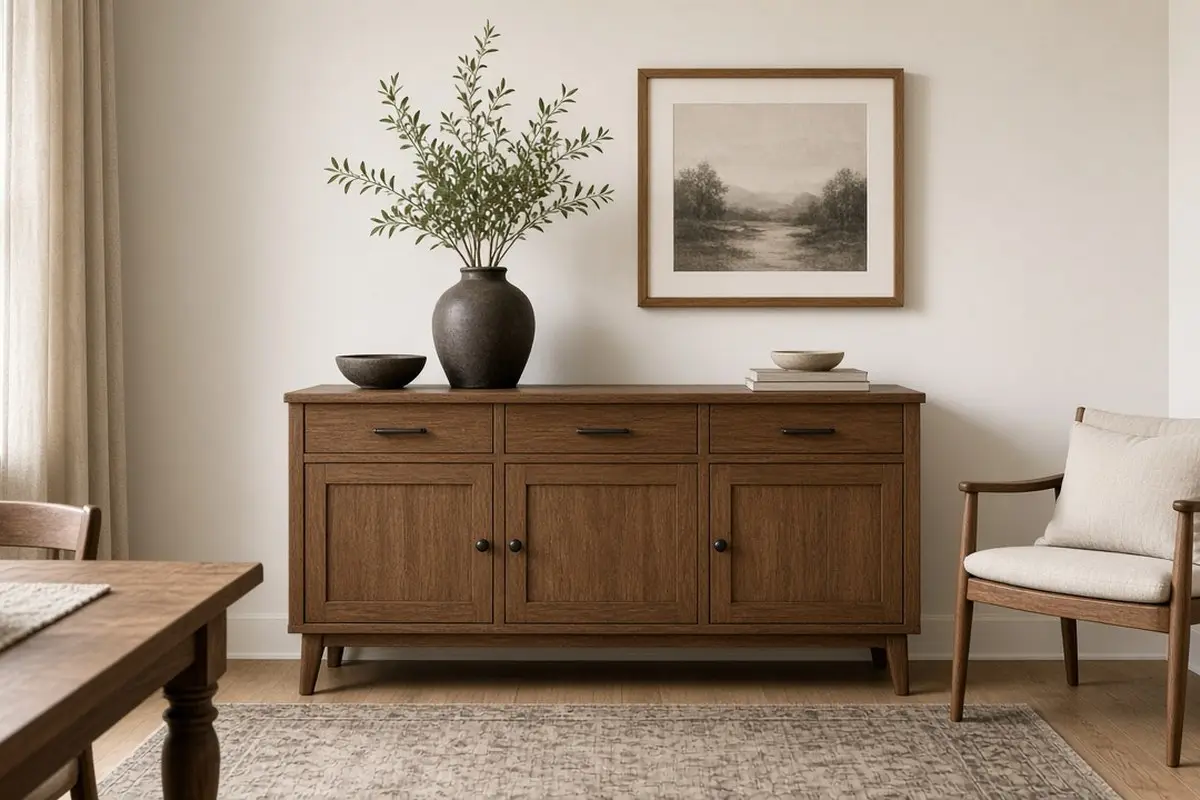
You do not need six chairs around the table every day. Keep four at the table and put the other two somewhere useful: at a desk, beside a console, in a bedroom, or flanking a sideboard. When guests arrive, bring them in.
Choose chairs that look good on their own. A pair of matching chairs on either side of a sideboard looks deliberate. Two random chairs pushed against a wall look like storage.
Get the look
5. A bench on one side
A bench along one side of the table seats two every day and three in a pinch. It slides fully under the table when not in use, which frees floor space in a tight room. Children love benches, and they are easy to clean.
Pair a bench with chairs on the other side and at the ends. For a family that eats as four most nights, a bench for two and two chairs is a good everyday setup that easily becomes six with two more chairs.
Choose a bench about 12 inches shorter than the table, so it tucks between the legs. Check the height too. A bench should sit at the same height as the chairs, or an inch lower, so everyone eats at a comfortable level.
Benches without backs are the most compact. If older relatives visit, keep at least two chairs with backs for them.
6. Folding chairs worth keeping
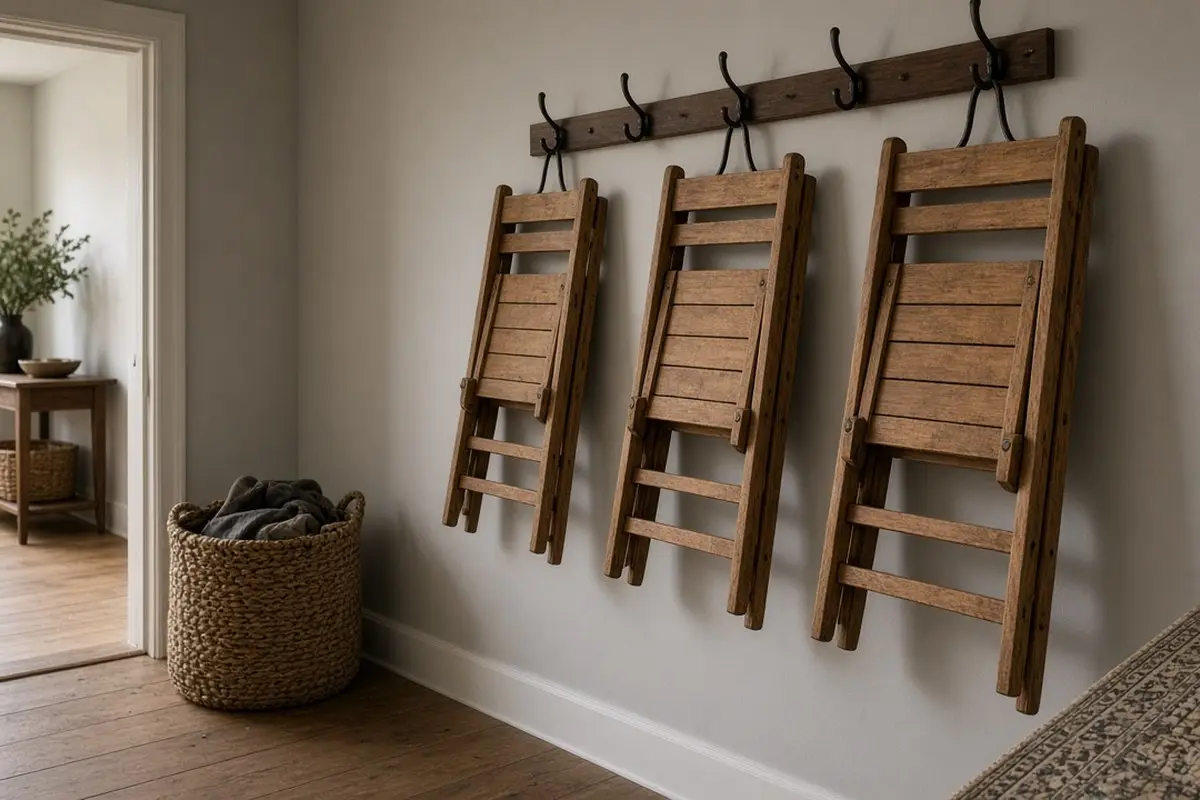
Good folding chairs are a quiet hero for occasional seating. Choose wooden or metal folding chairs that look nice and are comfortable for a long meal. Hang them on a wall hook in a closet or hallway, or store them flat under a bed.
Folding chairs mean you can seat eight at an extended table without owning eight dining chairs. Add a seat cushion and nobody will notice they fold.
Get the look
7. Dining chair spacing that feels generous
When four people sit at a table meant for six, spread them out. Put one at each end and one in the middle of each side, or two on one side and two on the other with a gap. The table feels spacious and relaxed, and nobody bumps elbows.
When six sit down, the chairs close in. Leave at least 6 inches between chairs, measured at the seat edges. Armless chairs fit more people than armchairs at the same table.
At the ends of a rectangular table, a pair of armchairs can look nice for everyday use and give a sense of occasion. Just know they take more room. If you often need every inch, keep armless chairs at the ends too.
Get the look
8. A sideboard for serving and storage
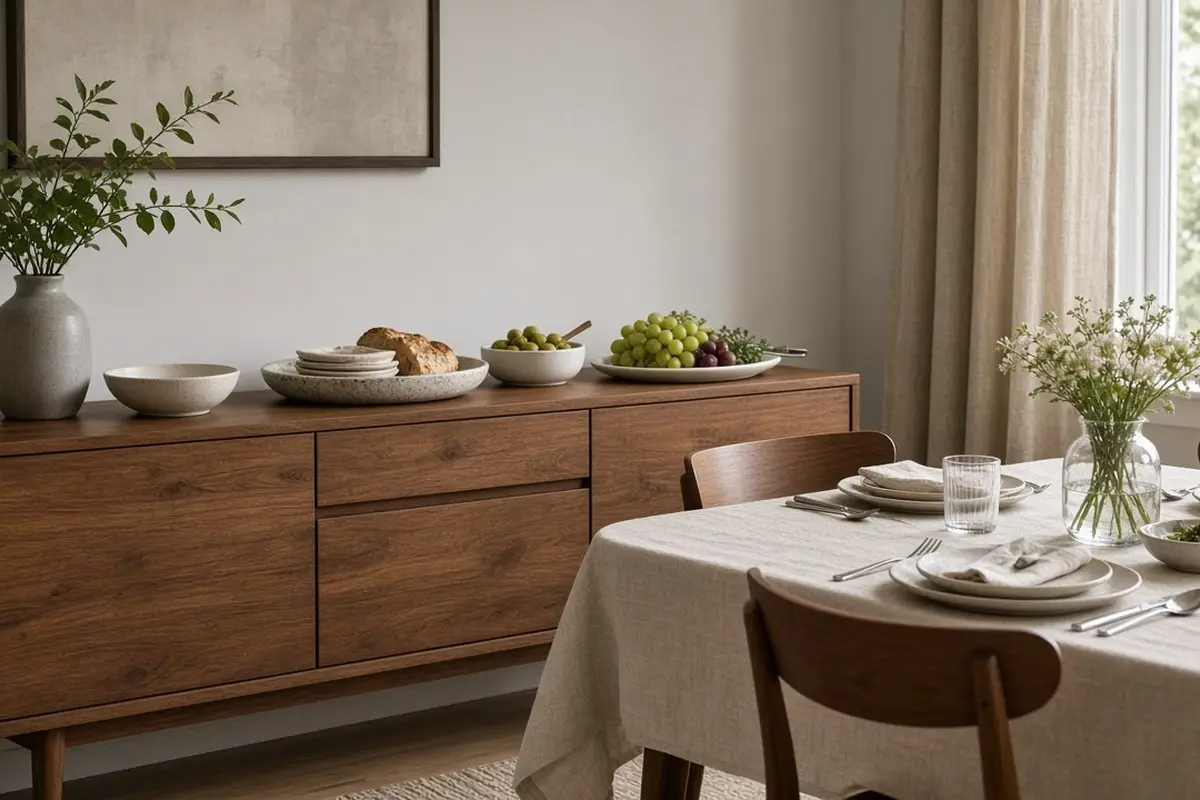
When the table is set for four, a sideboard holds the extra plates, glasses, and linens for six. When guests come, it becomes a serving station, so the table does not have to hold every dish. That keeps an extended table from feeling crowded.
Choose a slim sideboard, about 16 to 18 inches deep, so it does not eat into the clearance behind the chairs.
9. One pendant, centered on the everyday table
Center the pendant over the table at its everyday size. When the table extends, the light will be slightly off center, which is fine. A linear pendant or a pair of pendants can cover a longer table if you often extend it.
If you cannot move the ceiling box, a swag hook kit lets you drape the cord and hang the light exactly where you need it. Choose a dimmable bulb so the light can be softer for dinner and brighter for homework or board games.
Hang the bottom of the pendant about 30 to 34 inches above the table.
10. A rug sized for the extended table
If you use a rug under the dining table, size it for the extended table plus chairs. That means the rug should reach at least 24 inches beyond the table edge on every side when the table is fully open. A rug sized for the small table will catch chair legs when you extend.
A washable or flat-weave rug is best under a dining table.

11. A small dining room layout that breathes
The final idea is simple. On ordinary days, let the room have space. Keep the table short, the chairs few, and the walls lightly decorated. The room will feel calm and easy to move through. When a crowd comes, it expands with you.
A dining room planned this way works for both the everyday and the occasion, and it never feels crowded or empty.
Tips Before You Start
- Allow 24 to 30 inches of table width per person.
- Leave at least 36 inches behind every chair.
- Choose an extending or round table.
- Keep two spare chairs elsewhere in the house.
- Use a bench on one side to save space.
- Size any rug for the extended table.
FAQ
What size table seats six?
A 72 inch rectangle, or a 54 to 60 inch round. An extending table that grows from 48 to 72 inches handles both four and six.
How much space do I need for a table for six?
About 12 by 10 feet for a 72 inch rectangle with chairs and clearance. Measure your room and subtract 72 inches for clearance.
Can I seat six in a small dining room?
Yes, with an extending or round table, a bench, and folding chairs. The weeknight dining table post covers everyday setting.
What chairs fit more people at a table?
Armless chairs and benches. Chairs with arms need more width. The dining room walls post helps you finish the room.
Should I buy a table for my everyday number or my maximum?
Buy for the everyday number, with the ability to extend to your maximum. A table that fits four comfortably and opens to six or eight serves both needs without making daily life awkward.
A dining room sized for six and furnished for four is calm every day and generous when it counts. Plan the space for the crowd, then let the room relax for the family.