
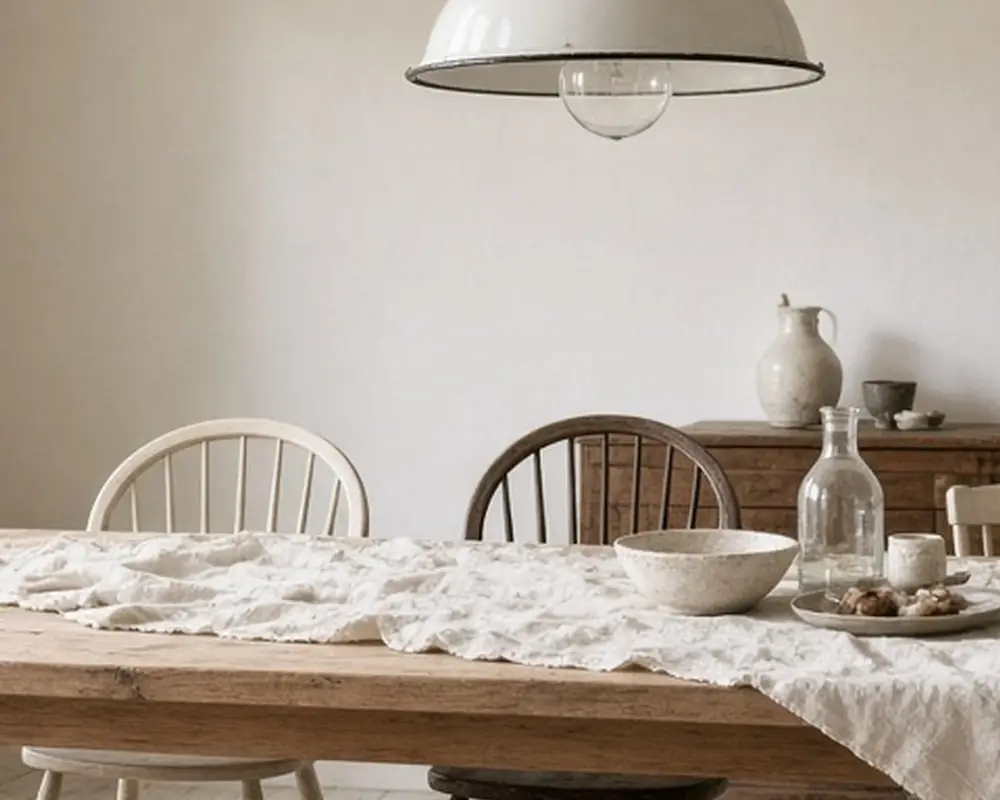
10 Farmhouse Dining Rooms With a Table You Can Scrub

On this page12 sections
- Choose a finish you can repair
- Scrubbed, unfinished pine
- A long dining bench
- Mixed wooden chairs
- A linen runner, not a tablecloth
- Weekly care routine
- Dealing with water rings and stains
- A pendant you can hang low
- Open storage for everyday dishes
- A casual dining room that welcomes mess
- Tips Before You Start
- FAQ
A farmhouse table is meant to be used. Bread is kneaded on it, homework spreads across it, children paint at it, and on Sunday the whole family crowds around it for a long lunch. The best ones look better for all of that. Their tops are soft and pale from years of scrubbing, with a few marks that tell stories.
Many modern “farmhouse” tables are not built for that life. A thick glossy coat looks fine in the showroom and then scratches, cloudy rings appear, and every mark becomes something to worry about. The ten ideas below focus on dining rooms built around a table you can actually scrub: the right finishes, the right care, and a casual dining room set up for real life. For the wider style, the farmhouse details that work in a newer house post covers the rest of the home.
As an Amazon Associate I earn from qualifying purchases.
1. Choose a finish you can repair
The most important farmhouse table finish decision is whether you can fix it yourself. Oil finishes, such as tung oil, hard wax oil, or linseed-based blends, soak into the wood rather than sitting on top. When the table gets scratched or stained, you sand the spot lightly and re-oil. The repair blends in.
Thick film finishes, like polyurethane or lacquer, protect well at first but are hard to repair. A deep scratch or a white heat ring means sanding the whole top and refinishing. For a table you plan to scrub and use hard, an oil or hard wax oil finish is the more forgiving choice.
If your table already has a film finish and it is in good shape, keep it. Just know that the care routine is different: gentle soap, soft cloths, and coasters.

2. Scrubbed, unfinished pine
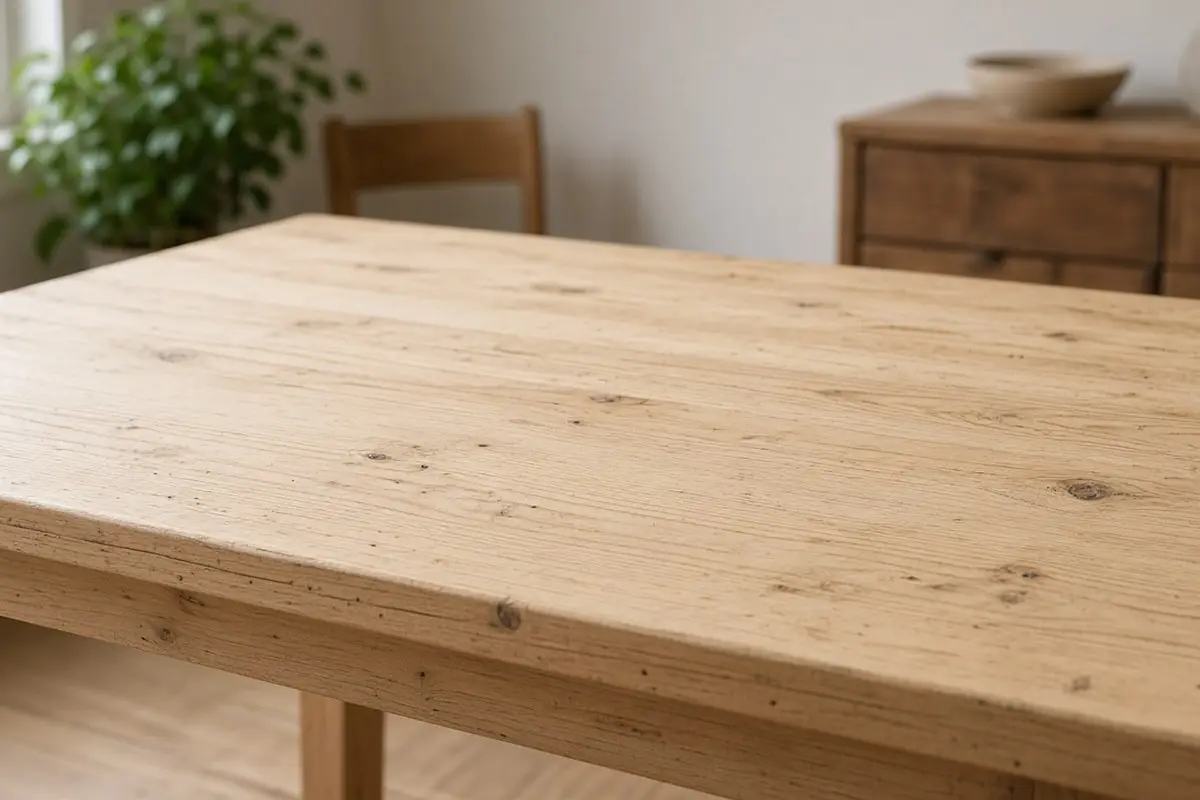
The traditional scrubbed table is raw pine or another softwood with no finish at all. It is scrubbed with water, a little soap, and sometimes salt or sand, which keeps it pale and clean. Over years, the soft grain wears down slightly and the hard grain stands up, giving that lovely ridged, silky surface.
A raw table will stain if you leave wine or oil on it, but scrubbing lifts most marks, and the ones that stay become part of its character. It suits people who would rather live with a table than protect it.
Scrub along the grain with a stiff brush and warm soapy water, rinse with a clean damp cloth, and let it dry fully before setting anything on it.
3. A long dining bench
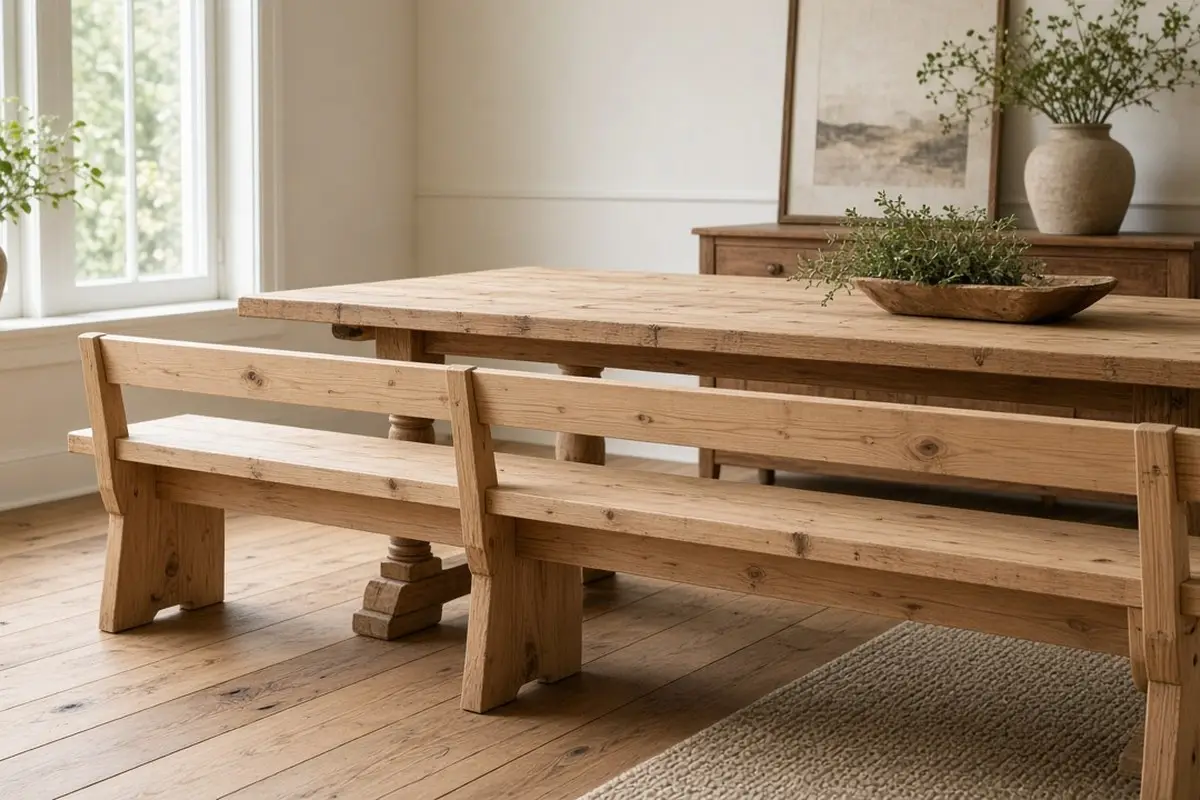
A dining bench is the classic farmhouse seat. It fits more people than chairs, slides under the table, and is easy to wipe. Children love it, and it suits the casual, family feel of a farmhouse dining room.
Match the bench wood to the table, or choose a contrasting painted bench for a little color. A cushion or sheepskin softens it for long meals.
4. Mixed wooden chairs
Farmhouse dining rooms often have chairs collected over years: a pair of spindle backs, an old Windsor, a ladder-back from a market. The mix looks relaxed and welcoming. To keep it calm, choose chairs in similar wood tones, or paint them all the same color.
Mixed chairs are also practical. When one breaks, you replace it with something you like rather than hunting for an exact match.
Check seat heights when mixing chairs. They should all be within an inch or two of each other, so everyone sits at a comfortable level at the table. Old chairs can wobble; a little wood glue in loose joints, clamped overnight, fixes most of them. Felt pads on the feet protect the floor and stop scraping noises.
Secondhand chairs are often far sturdier than new budget ones, because they were made from solid wood with proper joints.
Get the look
5. A linen runner, not a tablecloth
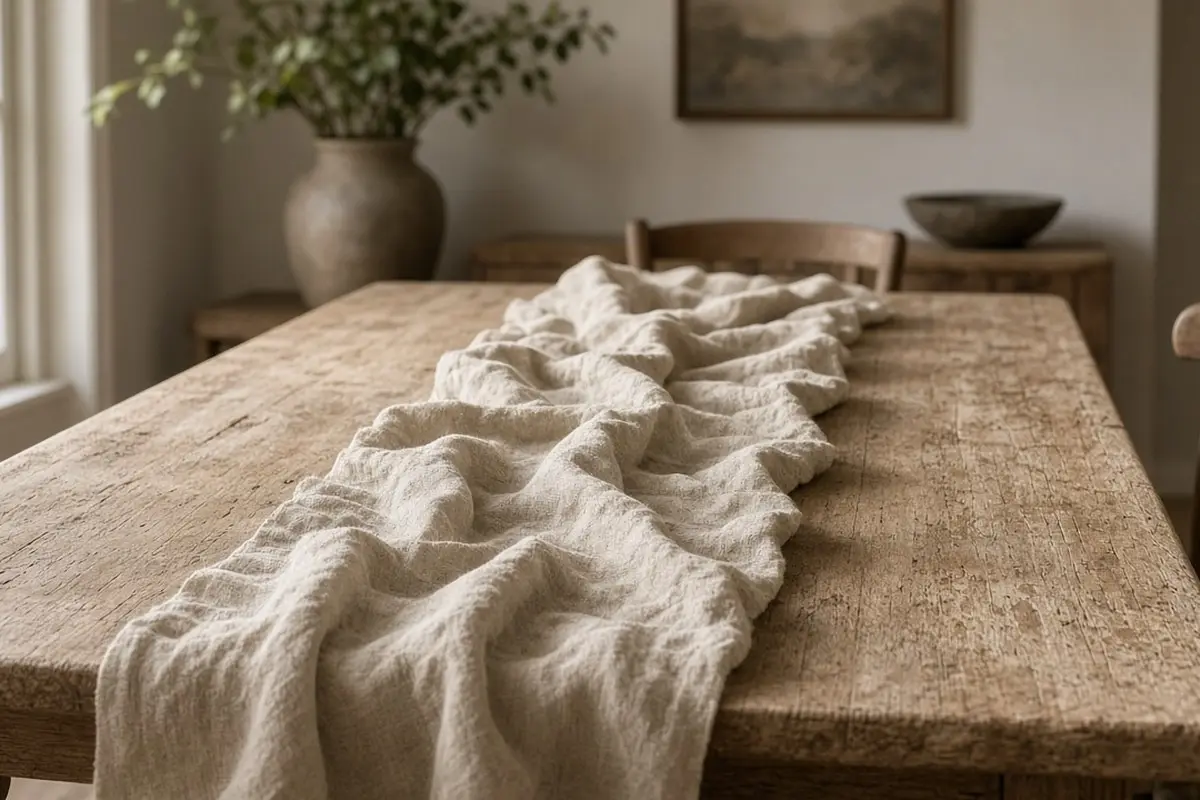
A tablecloth hides the wood. In a farmhouse dining room you want to see it. A linen runner down the center gives a soft line for serving dishes and candles and leaves the rest of the table bare. It washes easily and looks better crumpled.
For messy meals, roll the runner back and let the table take the spills. That is what it is for.
Choose a runner a little shorter than the table so the ends of the wood show. Natural, undyed linen goes with everything and hides small marks well. In winter you might swap to a heavier wool or a soft stripe. Keep two or three runners in rotation so one can always be in the wash.
Get the look

6. Weekly care routine
A farmhouse table needs a simple routine. After meals, wipe it with a damp cloth and dry it. Once a week, scrub it gently with warm soapy water along the grain. Every few months, depending on the finish, re-oil or wax the top to keep it nourished.
Do not use harsh cleaners, bleach, or silicone sprays. They dry out the wood or leave a film that makes future oiling harder.
A simple test tells you when a table needs oil: drip a little water on the surface. If it beads, the finish is healthy. If it soaks in and darkens the wood, it is time to oil. Apply a thin coat with a soft cloth, leave it for fifteen minutes, and wipe off every bit of excess. Leaving extra oil on the surface makes it sticky.
Oily cloths can catch fire as they dry. Lay them flat outside to dry before throwing them away.
7. Dealing with water rings and stains
Water rings on an oiled table usually sit near the surface. Rub them gently with a fine sanding pad along the grain, then re-oil. On a raw table, scrub with a paste of baking soda and water. Dark stains, such as wine, often fade with time and scrubbing.
On a film-finished table, white rings can sometimes be lifted with a warm, dry cloth and a hair dryer on low heat, held a few inches away. Test on a small area first.
Grease marks from butter or oil can be lifted from raw wood with a paste of fuller’s earth or cornstarch, left overnight and brushed off. Candle wax is easiest to remove when cold: chill it with an ice cube, then lift it gently with a plastic scraper.

8. A pendant you can hang low
Farmhouse dining rooms look best with a pendant hung low over the table, creating a warm pool of light. Enamel barn lights, woven shades, and simple glass globes all suit the style. Hang the pendant 30 to 34 inches above the table.
A dimmer lets the light shift from bright for homework to soft for dinner. Choose a shade that directs light down onto the table, so the wood glows and faces are lit warmly.
Get the look
9. Open storage for everyday dishes
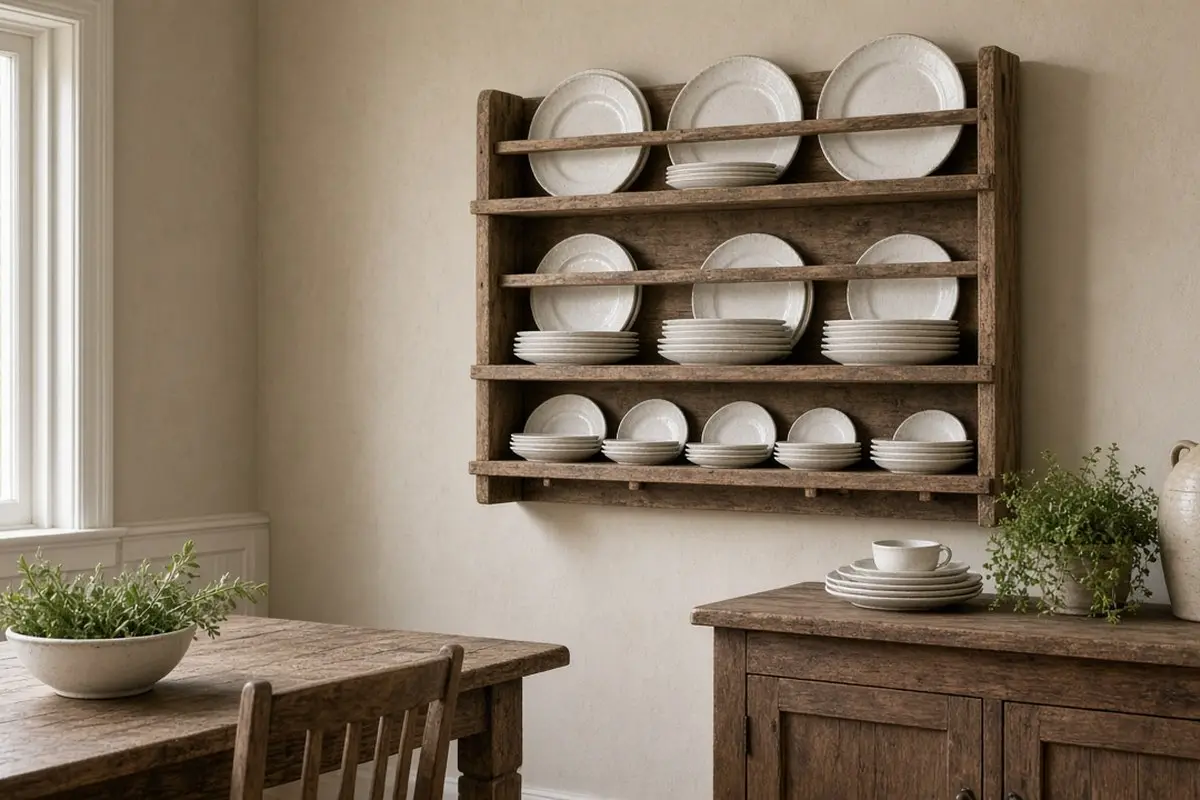
A farmhouse dining room shows the things it uses. An open shelf, a plate rack, or a hutch with open shelves holds everyday plates, bowls, and jugs close to the table. It looks warm and saves trips to the kitchen.
Keep it to things you use weekly. Dishes used every day stay dust-free.
Group by type: plates together, bowls together, jugs and pitchers together. Mismatched pieces look charming when they share a color, such as all white or all cream. A shelf of everyday stoneware, used and put back every day, looks more like a farmhouse than any decor bought for display.
Get the look
10. A casual dining room that welcomes mess
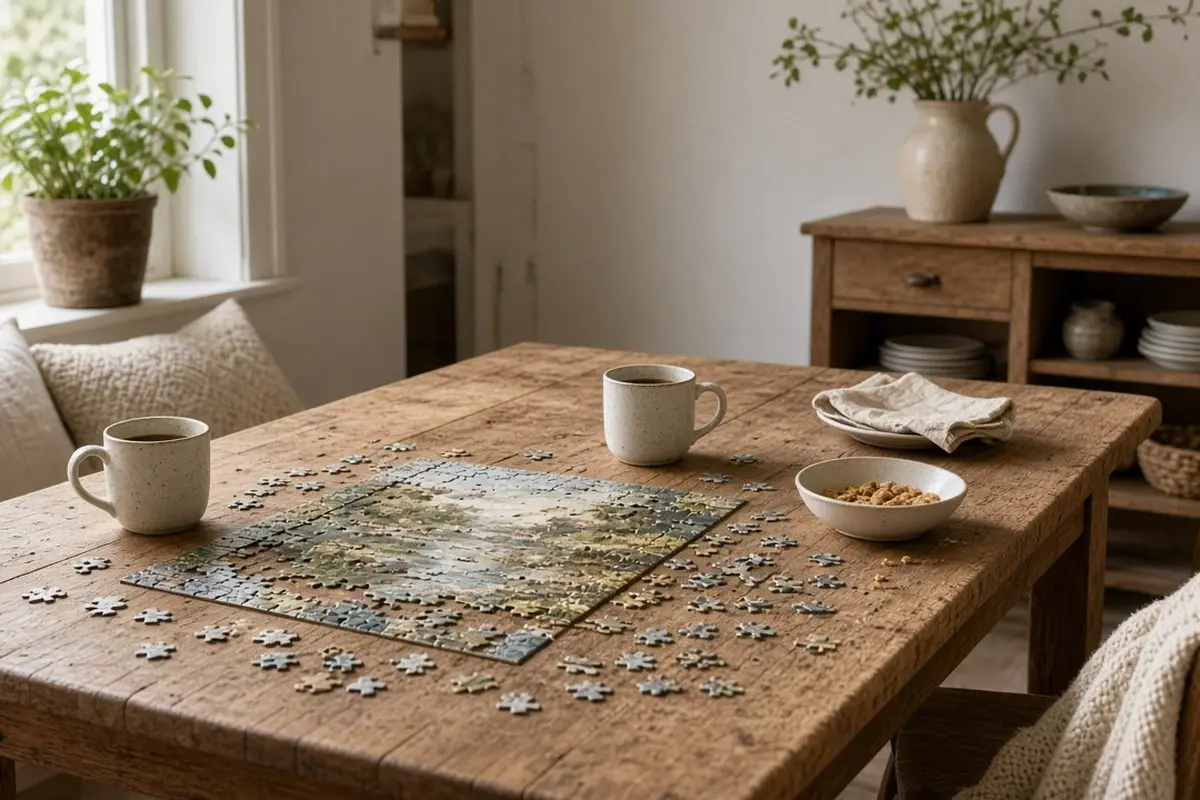
The final idea is an attitude. A farmhouse dining room is a place to make a mess: puzzles, flour, crayons, crumbs. Give it a washable rug or no rug at all, wipeable chairs, and a table you can scrub. Then stop worrying.
This is also where the family’s life happens. Board games on rainy Sundays, homework after school, birthday cakes, bread rising under a tea towel. A dining room that is built for all of that becomes the heart of the house, not a room kept for best.
The marks that build up over the years become the table’s character. They are proof that the room is loved and used.
Tips Before You Start
- Choose an oil or hard wax oil finish for easy repair.
- Scrub along the grain, never across it.
- Use a runner instead of a tablecloth.
- Re-oil or wax every few months.
- Avoid bleach and silicone sprays.
- Hang the pendant low over the table.
FAQ
What finish is best for a farmhouse table?
An oil or hard wax oil finish. It is easy to repair and ages well with use.
Can I scrub a farmhouse table?
Yes, if it is raw or oil-finished. Use warm soapy water and a soft brush along the grain.
How do I remove water rings?
On oiled tables, sand lightly and re-oil. On film finishes, try gentle heat with a dry cloth. The weeknight dining table post has tips for everyday use.
Do I need a tablecloth?
No. A linen runner protects the center and shows off the wood. For more dining ideas, see dining rooms sized for six.
Is pine too soft for a dining table?
Pine dents more easily than oak, but that is part of its charm. The dents and marks soften with time and scrubbing. If you want something harder, oak and ash are good farmhouse choices that still take an oil finish well.
How often should I oil my table?
Every three to six months for a well-used table, or whenever water stops beading on the surface. A new table may need oiling more often in its first year.
A table you can scrub is a table you can enjoy. Choose a forgiving finish, give it a little care, and let it collect the marks of a life well lived around it.