
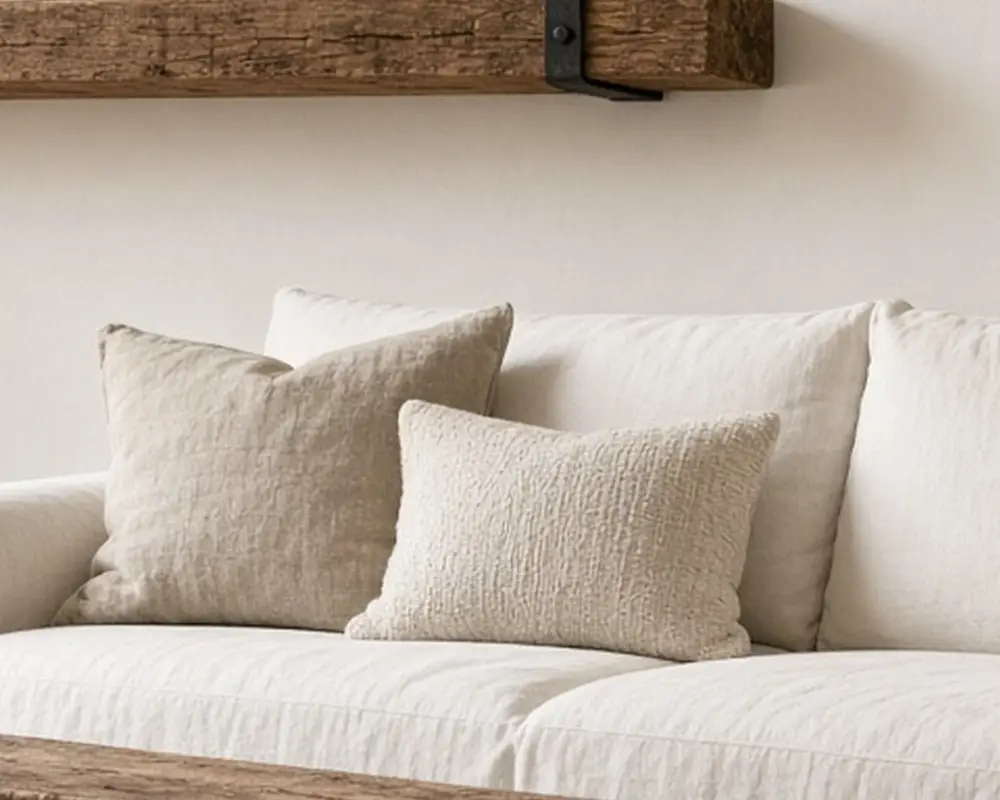
10 Farmhouse Details That Work in a Newer House

On this page12 sections
Farmhouse style was born in old houses: wide plank floors, exposed beams, deep window sills, and furniture that had been in the family for decades. Many of us live somewhere very different. A newer house with smooth drywall, standard ceilings, builder-grade trim, and big windows. Try to copy a hundred-year-old farmhouse in that kind of space and it can look like a stage set, with fake beams and signs telling you to “Gather.”
The good news is that the heart of farmhouse style is not age. It is warmth, honesty, and comfort: natural materials, useful furniture, simple shapes, and a feeling that people actually live here. The ten details below bring that feeling into a newer house without pretending it is something else. The brown and beige living room post is a good companion for the warm neutral palette that suits this style.
As an Amazon Associate I earn from qualifying purchases.
1. Real wood, not wood-look
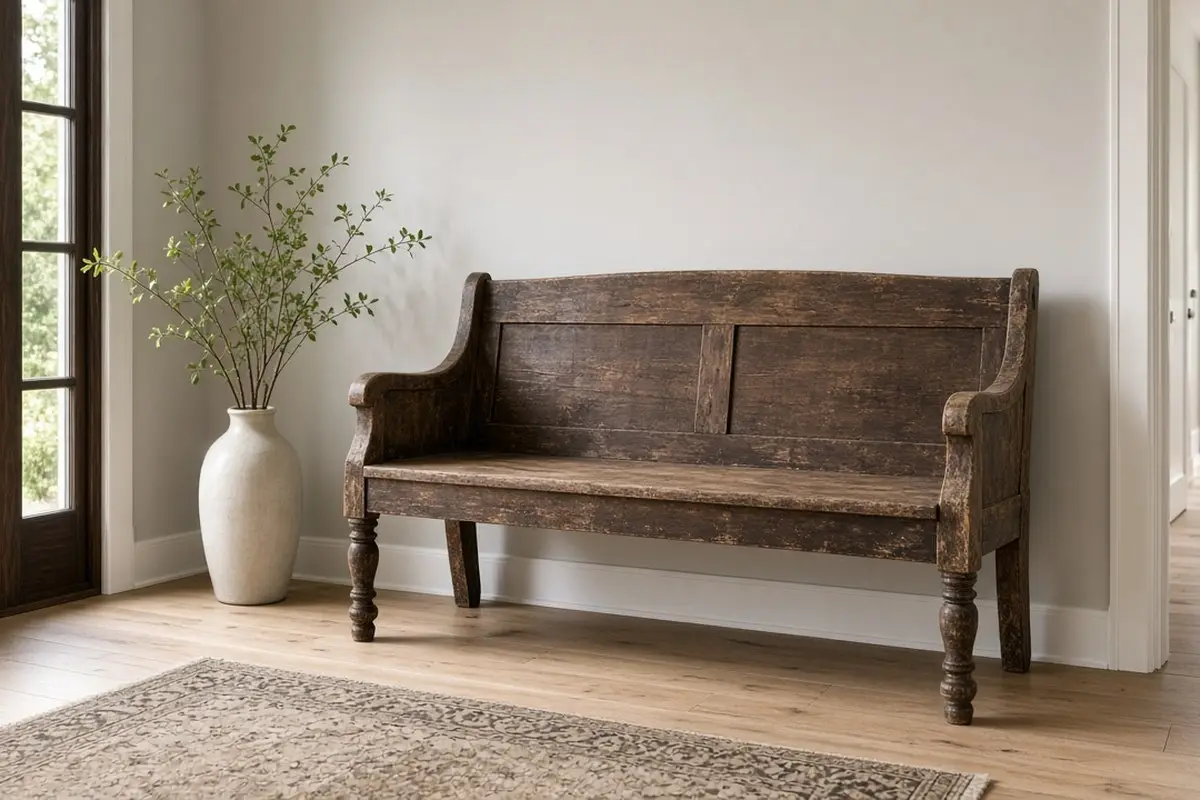
The biggest difference between real farmhouse style and a costume version is the material. Farmhouse rooms have real wood that shows its age and grain. In a newer house, you can bring that in with one or two solid wood pieces rather than wood-look laminate everywhere.
A secondhand solid wood table, an old bench, a vintage dresser, or a chunky wooden cutting board on the counter all bring real texture and history. Look at flea markets, estate sales, and online marketplaces. A piece with honest scratches and a worn finish does more for the style than any new distressed furniture.
Put the real wood where people touch it every day: the dining table, the coffee table, a bench by the door. That is where the warmth and character count.
2. Simple shelf instead of fake beams
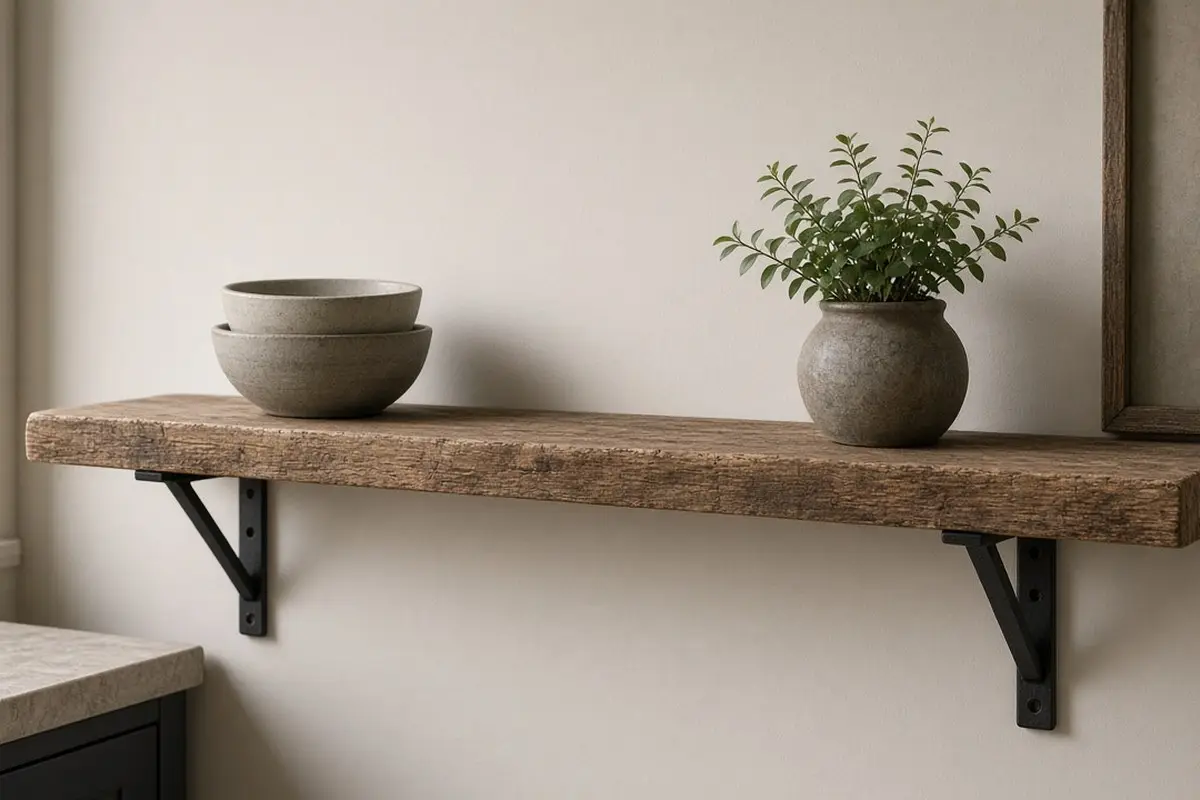
Faux ceiling beams in a newer house with eight-foot ceilings can feel heavy and fake. A better way to bring in rough wood is at eye level. A single thick wooden shelf on iron brackets, in the kitchen or living room, gives the same rustic texture without lowering the ceiling.
Use it for a few practical things: a stack of bowls, a jar of wooden spoons, a small plant, a few books. Farmhouse shelves look best when they are useful.
Mount the shelf into studs, especially in a kitchen where it may hold heavy stoneware. Leave about 18 inches between a shelf and the counter below so you can still use the counter comfortably. Oil the shelf once a year if it is raw wood, and it will slowly darken to the warm honey color that old farmhouse wood has.
Get the look
3. Warm white walls
Farmhouse walls are usually white or cream, often a little uneven and warm. In a newer house, choose a warm white with a hint of cream, not a cold bright white. It makes the drywall feel softer and goes beautifully with wood and iron.
Avoid shiplap on every wall. One wall of real or peel-and-stick shiplap in a mudroom or behind a bed is plenty. More than that feels like a theme.
If your newer house has very plain trim, a simple upgrade is to paint it the same warm white as the walls in a satin finish. It softens the builder look and lets the wood furniture and textiles do the talking. Thicker baseboards and window casings, if you ever replace them, also help a newer house feel more solid and settled.
Get the look

4. Black iron accents
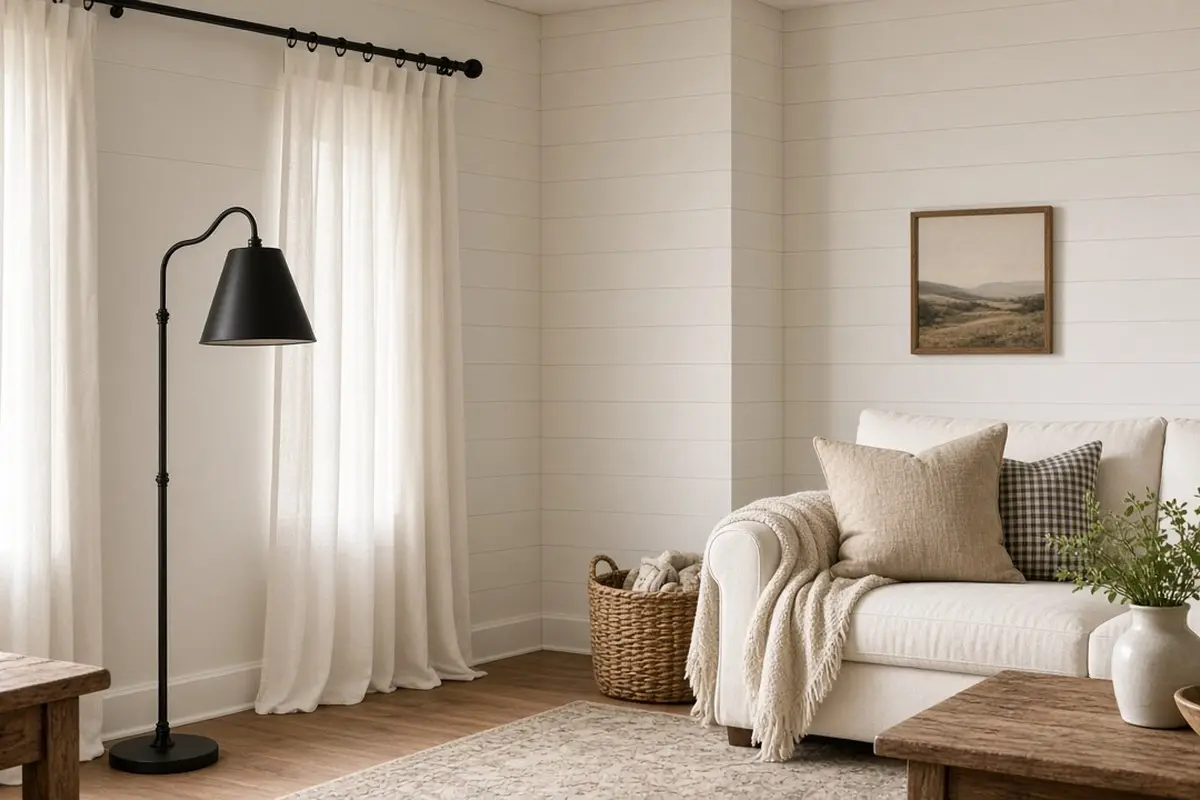
Black iron in light fixtures, curtain rods, cabinet hardware, and lamp bases is a classic farmhouse touch. It adds definition to a light room and looks crisp next to wood and white. Use it in thin lines: a simple black curtain rod, black cabinet pulls, a slim black floor lamp.
Do not mix too many metals. Black plus one warm metal, such as aged brass, is enough.
Check the existing fixtures in the house. Many newer homes come with brushed nickel or chrome door handles and taps. You do not need to replace them all. Keep black for the things you add, such as lamps, rods, and frames, and let the existing metal stay quietly in the background. Over time, swap the most visible pieces, like the kitchen cabinet pulls, first.
Get the look
5. Linen and cotton textiles
Farmhouse textiles are simple and practical: linen, cotton, and wool in plain colors, ticking stripes, or small checks. A linen slipcovered sofa, cotton curtains, and a wool throw bring the softness of an old farmhouse into a newer room.
Keep the colors calm: cream, oatmeal, soft gray, with a little faded blue, green, or black.
Washability is part of the farmhouse spirit. Choose slipcovers, throws, and curtains that go in the washing machine. A farmhouse living room is meant to be used, with muddy boots, dogs, and children. Fabrics that can be cleaned easily let you relax and enjoy the room.
Vintage grain sacks, old quilts, and cotton tablecloths are often affordable at flea markets and add authentic farmhouse character.
Get the look
6. A big farmhouse table
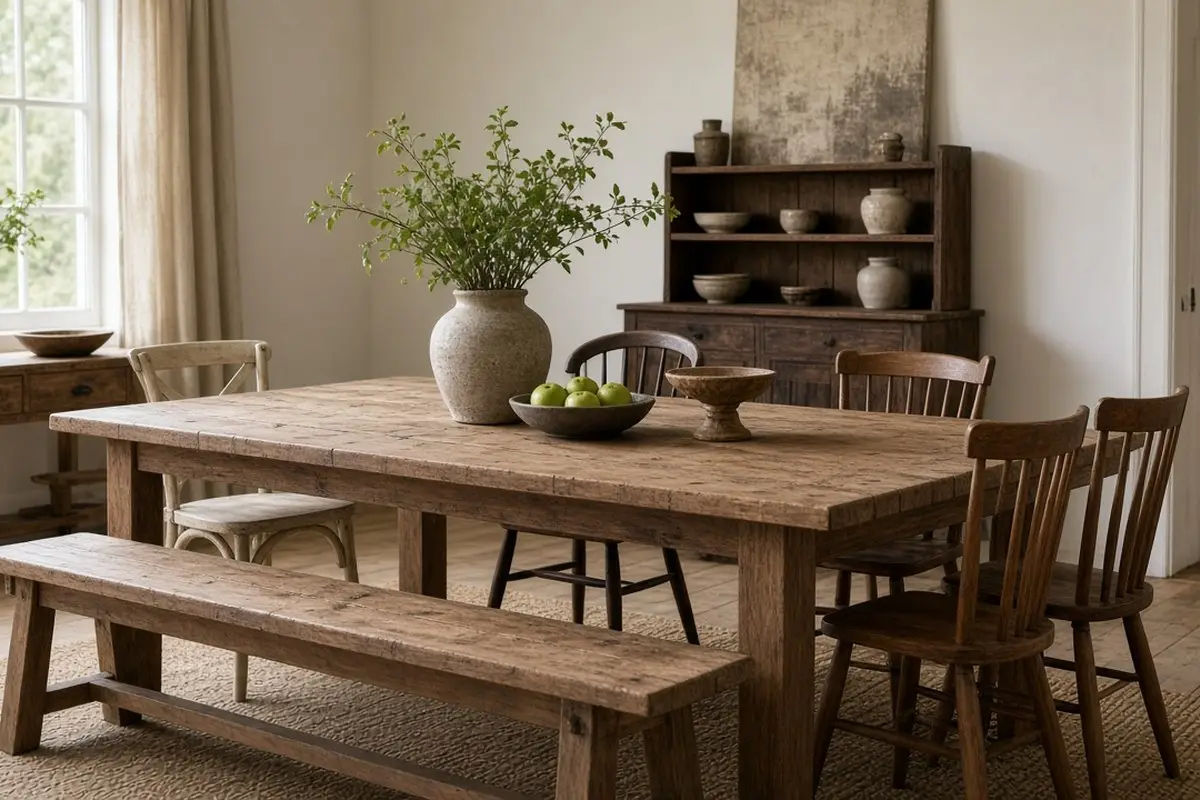
The dining table is the center of a farmhouse home. A large, simple wood table, with room for extra chairs, says “come and eat” more than any sign. Mix chairs if you like: a bench on one side, mismatched wooden chairs on the other.
The table does not need to be old. A simple solid wood table with a natural oiled finish, used every day, will age into character.
Do not worry about marks. Scratches, water rings, and dents are part of the farmhouse table’s story. An oiled finish can be refreshed with a light sanding and a new coat of oil whenever the wear starts to look tired rather than charming.
Get the look
7. Stoneware and practical pieces on display
Farmhouse kitchens and living rooms show the things people use: stoneware crocks, enamel jugs, wooden bowls, linen tea towels, a basket of eggs. In a newer house, put a few of these on open shelves or the counter instead of decorative objects.
A stoneware crock holding wooden spoons by the stove, or an enamel pitcher of flowers on the table, brings that honest, useful look.
8. Vintage-style lighting
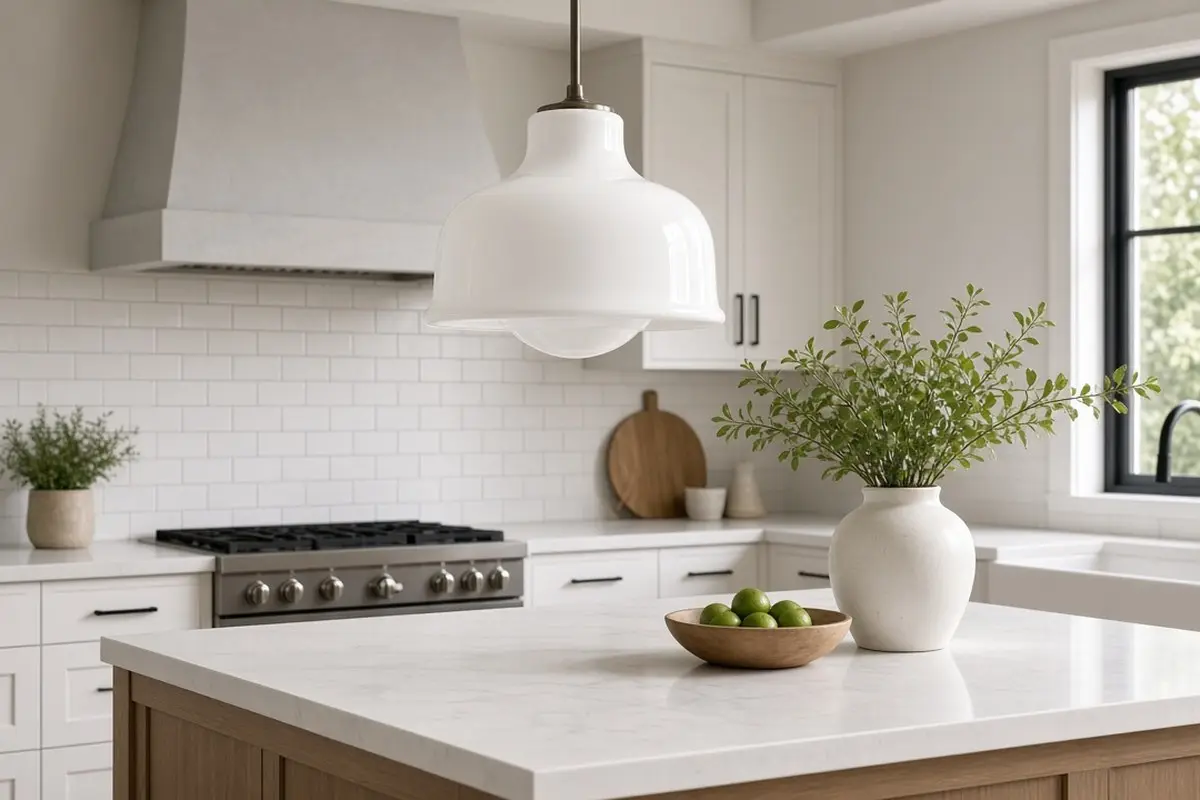
Light fixtures in a newer house are often plain builder fixtures. Replacing just one or two with vintage-style pieces, such as a schoolhouse pendant, an enamel barn light, or a simple glass globe, makes a big difference. Keep the shapes simple.
Use warm bulbs. Clear filament-style LED bulbs suit farmhouse fixtures and give a warm glow. Put them on dimmers where you can, so the kitchen and dining area can go soft and golden in the evening after dinner.
Get the look
9. Baskets for real storage
Woven baskets are practical farmhouse storage. Use them for blankets in the living room, shoes by the door, produce in the kitchen, and toys in the family room. Choose sturdy baskets in natural fibers with handles.
Avoid buying baskets just for display. Ones that hold things you use look natural. Empty decorative baskets look staged.
Give each basket one job. One for throws by the sofa, one for shoes by the door, one for kindling by the stove, one for onions and potatoes in the pantry. When a basket has a clear purpose, it gets used, and the house stays tidy without effort.
Get the look
10. Plants and cut greenery
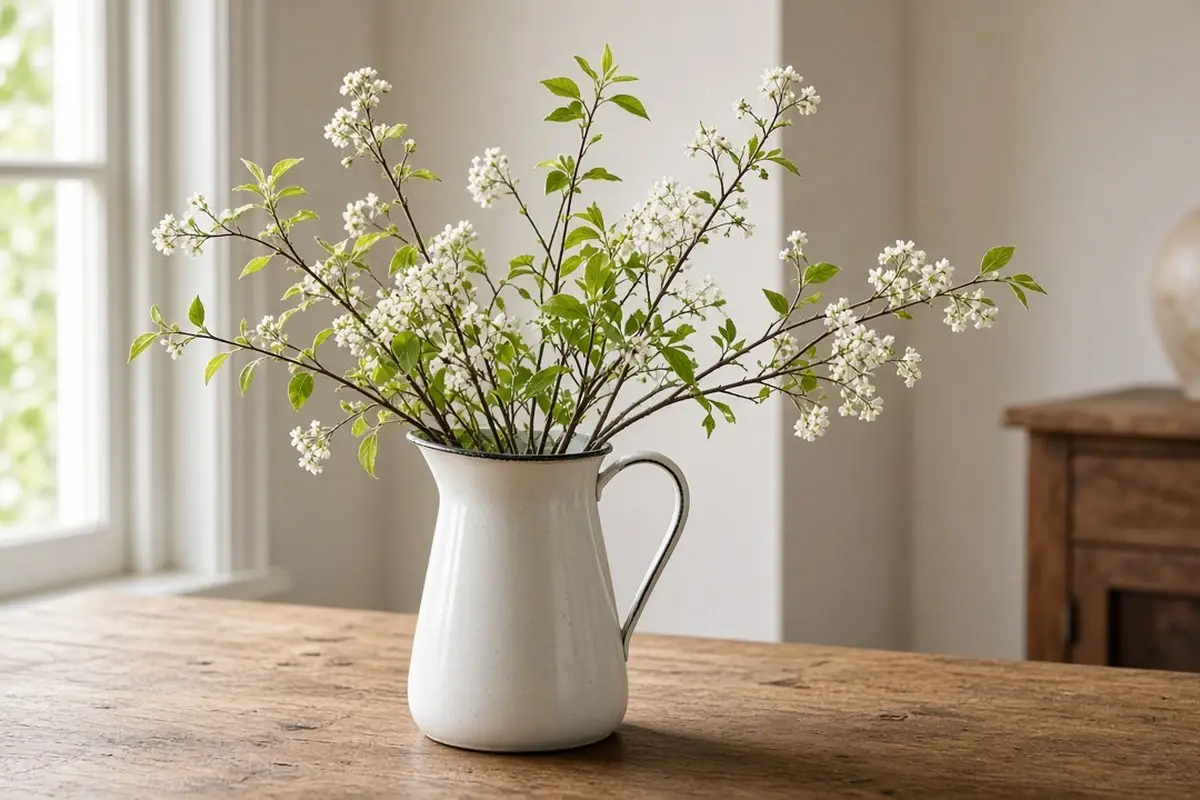
A farmhouse is close to the land, and greenery brings that feeling inside. A pot of herbs on the kitchen windowsill, a jug of branches from the garden, a few potted plants by the windows. Fresh flowers from the garden or market in a simple jug are perfect.
Keep arrangements loose and natural. Farmhouse greenery looks gathered, not arranged by a florist. A few stems of whatever is growing outside, changed every week or two, keep the house connected to the seasons.
Tips Before You Start
- Bring in real wood where people touch it.
- Skip fake beams in rooms with low ceilings.
- Use warm white walls and limited shiplap.
- Keep black iron in thin lines.
- Display useful things, not signs.
- Choose vintage-style light fixtures with warm bulbs.
FAQ
Can farmhouse style work in a new build?
Yes. Focus on real materials, useful furniture, and warm textiles rather than copying old architecture.
How do I make modern farmhouse decor not look dated?
Skip word signs, galvanized everything, and heavy distressing. Use real wood, simple shapes, and calm colors. The calm living room weekend refresh helps you edit a room.
What colors are farmhouse?
Warm whites, cream, oatmeal, soft gray, with accents of black, faded blue, and sage.
Where can I find old wood furniture?
Flea markets, estate sales, and online marketplaces. Look for solid wood with honest wear. The hundred dollar room refresh has more budget ideas.
Do I need shiplap for farmhouse style?
No. One wall at most, in the right room, is enough. Warm white paint and real wood do more for the style than shiplap on every wall.
Farmhouse style is about comfort and honesty, not age. Bring in real wood, useful things, warm textiles, and simple light, and even a brand-new house will feel like a home that has been lived in for years.