
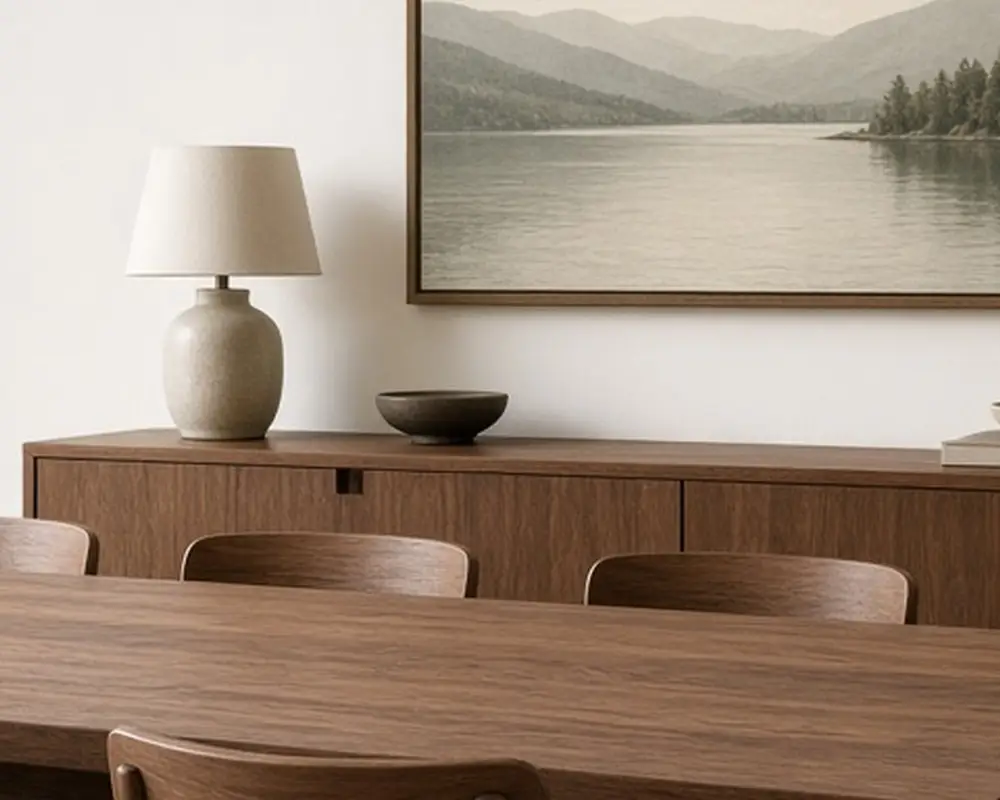
10 Dining Room Walls When the Table Is Already the Focus

On this page12 sections
In a good dining room, the table is the star. It might be an old farmhouse table with years of marks, a sleek walnut piece, or a round pedestal you found secondhand and refinished. Whatever it is, it deserves to be the first thing you see. The walls around it have a supporting role, and that is harder to get right than it sounds.
Too little on the walls and the room feels unfinished, like the table is waiting in an empty hall. Too much and the walls fight the table for attention. The ten ideas below aim for the balance in between: dining room wall decor that frames the table and makes meals feel calm. If you are rethinking the whole room, the living room edits you already own post works for dining spaces too.
As an Amazon Associate I earn from qualifying purchases.
1. One large piece on the main wall
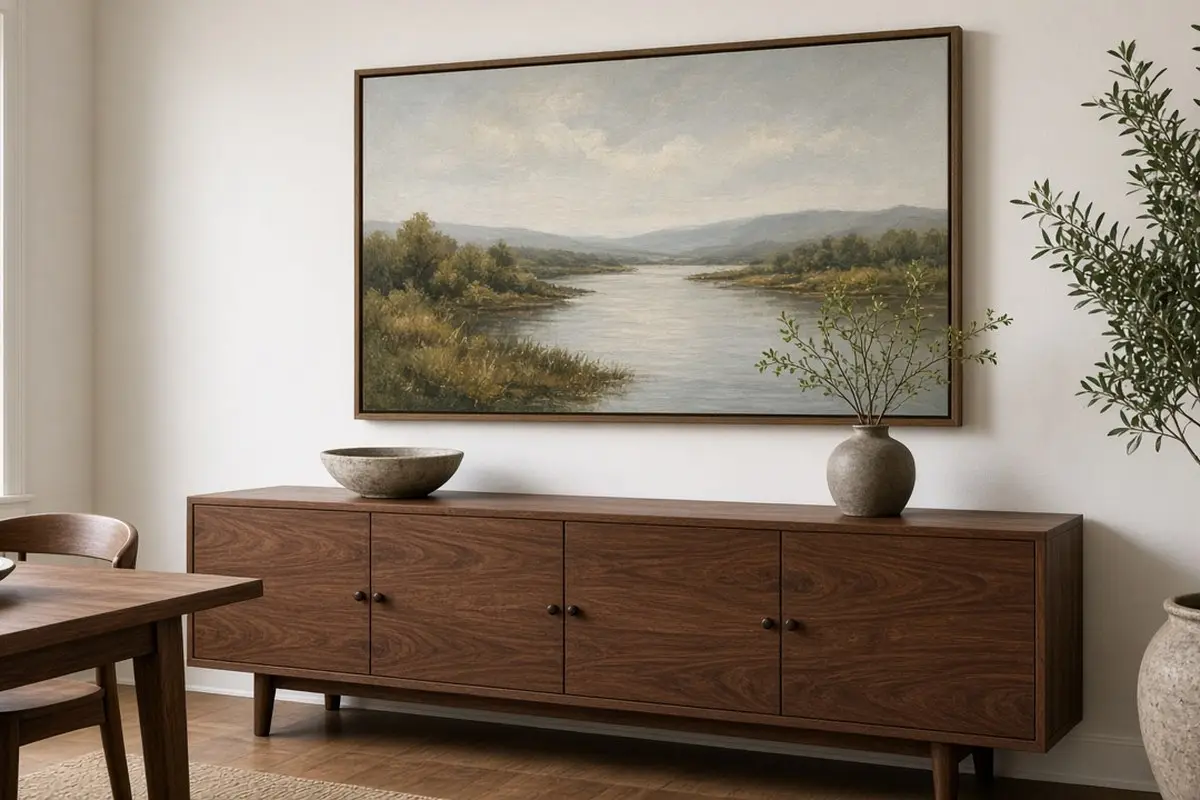
The simplest answer is one large piece of art on the wall the table faces most. A big landscape, a soft abstract, or a still life gives the room a focus at eye level without competing with the table below. Choose something with colors that echo the wood or the chairs, so the wall and the table feel related.
Size it to the table or the buffet beneath it. A piece about two thirds the width of the furniture below looks right. Hang it so the center sits around 60 inches from the floor, or about 8 to 10 inches above a buffet.
Dining room art should be calm. You will look at it through every meal, so pick something you find restful rather than something loud. Many people find landscapes and still lifes easier to live with at the table than strong abstracts or portraits that seem to watch you eat.
Get the look
2. A buffet wall
A buffet or sideboard against one wall gives the dining room storage, a serving surface, and a natural place for wall decor. The buffet wall becomes a small composition: the furniture below, a lamp or two on top, and art or a mirror above.
Keep the top simple. A pair of lamps, a bowl, and a stack of serving plates, or a single lamp and a vase of branches. Leave room to set down a dish during dinner. A buffet covered in decor stops being useful.
The art above should be slightly narrower than the buffet. Center it, and leave the same gap at each end.
3. A dining room mirror
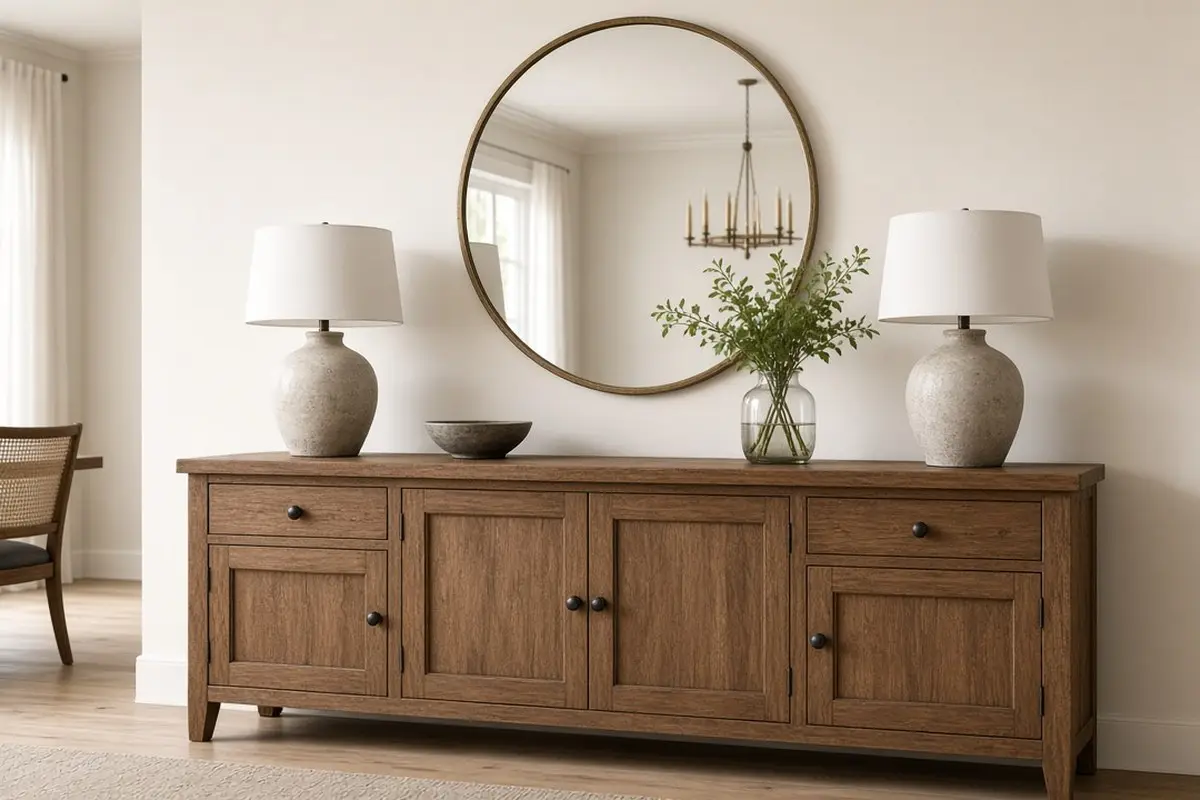
A mirror on the dining wall reflects light from the window and candlelight from the table, which makes evening meals glow. It also makes a small dining room feel bigger. Hang it on the wall opposite or beside a window, not directly facing it, to avoid glare.
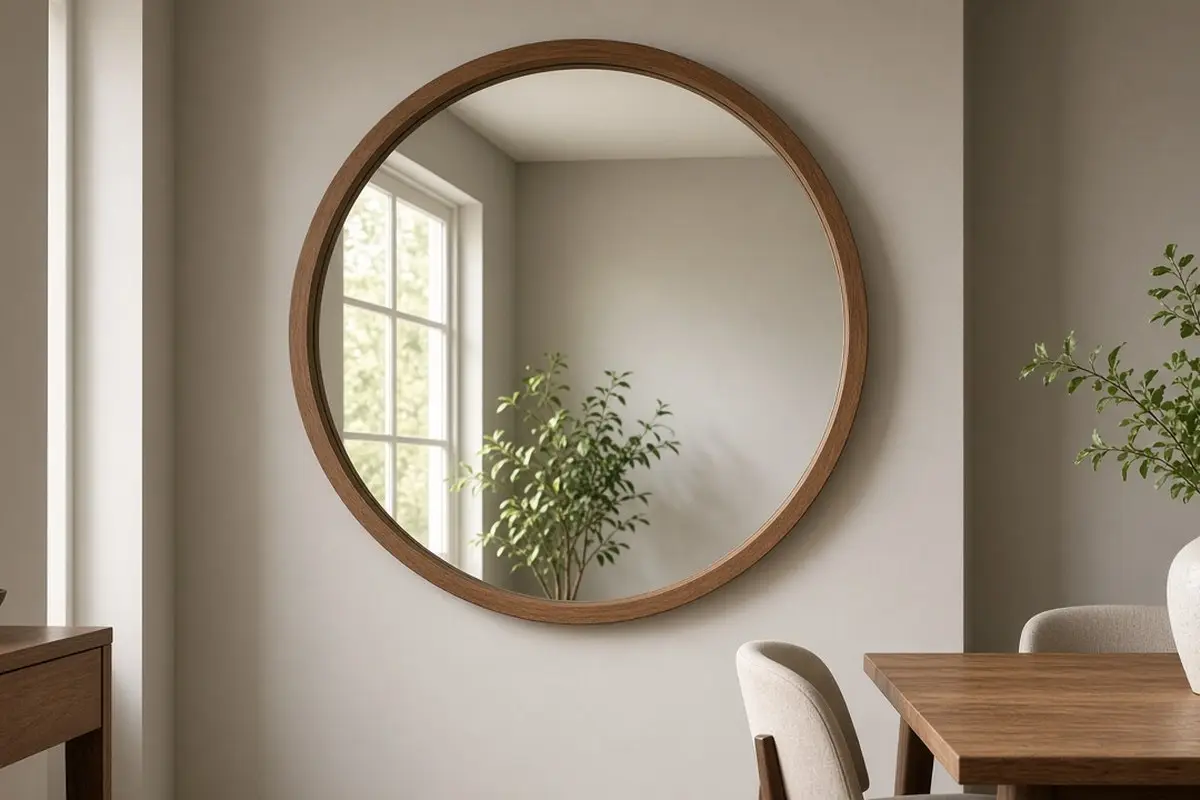
Choose a mirror with a frame that suits the table: wood with wood, brass with dark furniture, a plain thin frame with modern pieces. Round mirrors soften a room with a long rectangular table. Rectangular mirrors suit round tables.
Hang it high enough that seated diners see the room, not themselves. Most people dislike watching themselves eat.
Get the look
4. A plate wall, kept small
A group of plates on the wall is a classic dining room idea. It can look charming or busy depending on scale. Keep it small: five to nine plates in one tight group, not a whole wall. Use plates of related colors or patterns, such as all blue and white, or all cream with different rims.
Lay them out on the floor first, then trace each plate on paper and tape the paper to the wall before hanging. Use proper plate hangers or adhesive disc hangers.
Start with the largest plate in the center and build outward, keeping the gaps between plates even, about two inches. A tight group reads as one piece of art. Plates scattered with wide gaps look like they are drifting. Mix sizes, but keep the outer edge of the whole group roughly round or rectangular so it has a clear shape.
Flea markets and charity shops are good sources. Odd single plates are cheap and often have the most character.
Get the look

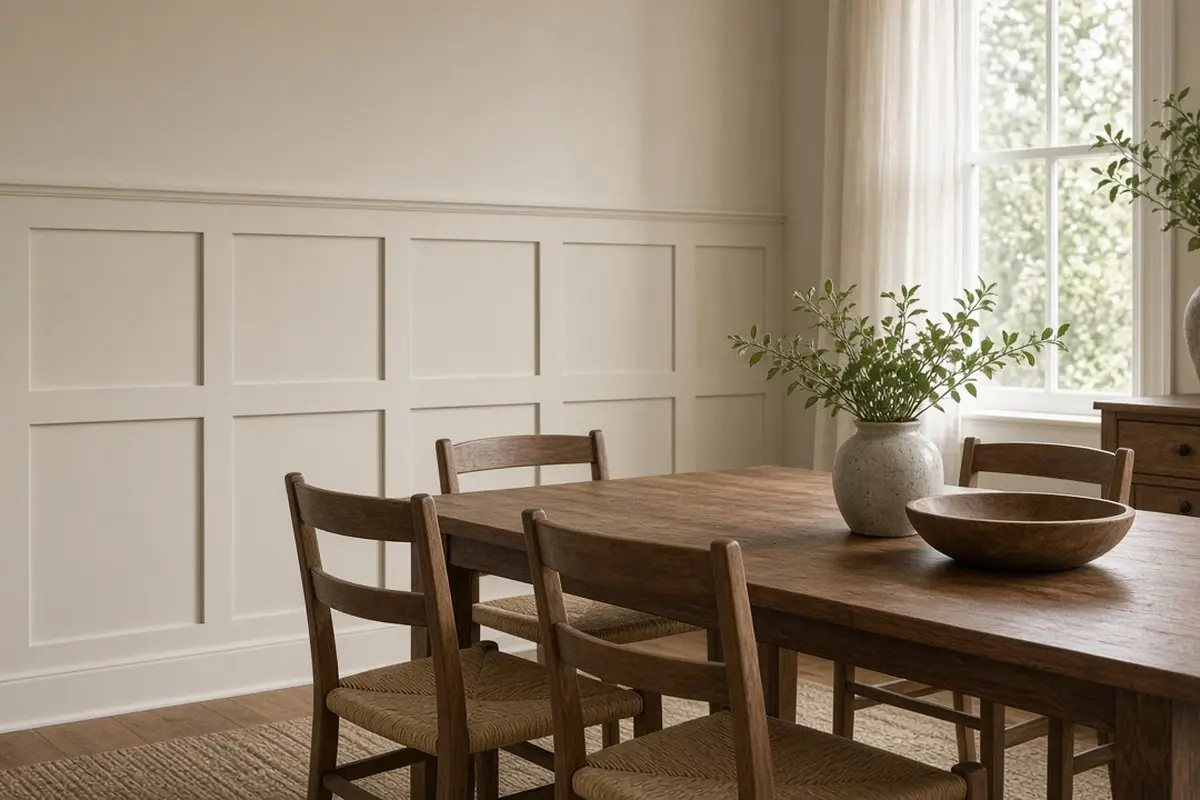
5. Paneling or wainscoting
Paneling on the lower part of the wall gives a dining room structure and protects the wall from chair backs. Simple board-and-batten, beadboard, or picture frame molding all work. Paint the paneling and wall the same color for a calm look, or paint the panels a shade darker for contrast.
Keep the top of the paneling about one third of the wall height, or line it up with the top of the chair backs. With paneling in place, the wall above may need very little else.
Get the look

6. A pair of sconces
Wall sconces on the dining wall add soft light at the height of faces, which is the most flattering light for a meal. A pair on either side of a mirror or a piece of art frames the wall beautifully. Plug-in sconces with cord covers work if you cannot add wiring. Paint the cord cover the wall color and it disappears.
Hang sconces about 60 to 66 inches from the floor, and about the same distance from the center of the art or mirror on each side. Shades that point light down onto the buffet create a warm pool of light for serving.
Use warm bulbs and dimmers. During dinner, the sconces and candles should do most of the work, with the overhead light low or off.
Get the look


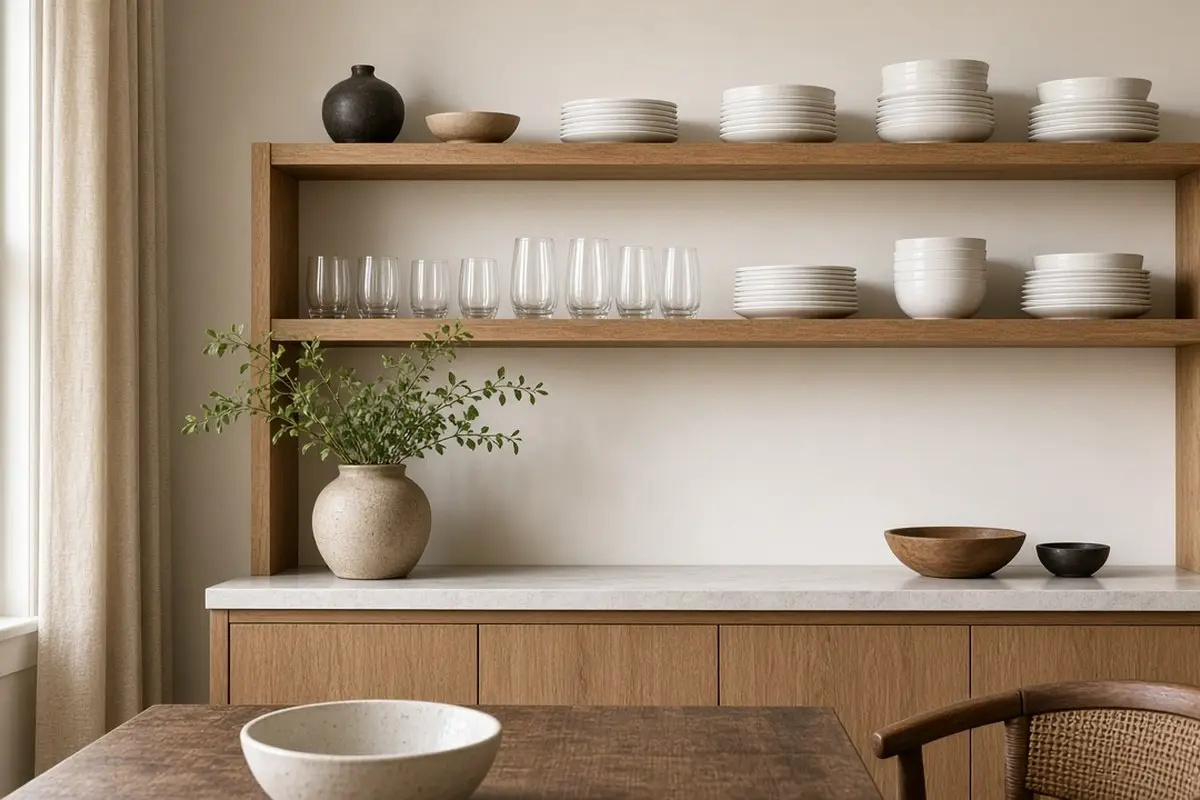
7. Open shelves for everyday dishes
A couple of open shelves on a dining room wall can hold everyday plates, glasses, and a few serving pieces. It is practical, because the dishes are close to the table, and it looks warm and lived in. Keep the shelves to dishes you use often, so they do not collect dust.
Group items by color or type, and leave space between groups. Wood shelves with simple brackets suit most dining rooms.
Get the look

8. A painted color block
Color can define a dining room wall without anything hung on it. A deep, warm color such as olive, terracotta, or navy on one wall, or on all four, makes the table stand out against it. Darker colors also make candlelight dinners feel intimate.
Use eggshell or matte paint. A satin finish reflects candle flames and lamp light in distracting spots.
Test the color at night as well as during the day. A dining room is used most in the evening, and some colors change a lot under lamps. A green that looks fresh at noon can turn muddy by candlelight, while a terracotta that seems strong in daylight can glow beautifully at dinner.


9. A textile hanging
A woven textile, a vintage tablecloth, or a quilt hung on the dining wall adds warmth and softness. It also absorbs sound, which helps in dining rooms with hard floors and lots of chatter. Hang it on a wooden rod or dowel.
Choose a textile with colors that suit the table and chairs. One textile is enough on the main wall.
Vintage textiles are often fragile, so keep them out of direct sun and away from the steam of serving dishes. A simple sleeve sewn to the back spreads the weight evenly along the rod and keeps the fabric from stretching over time.
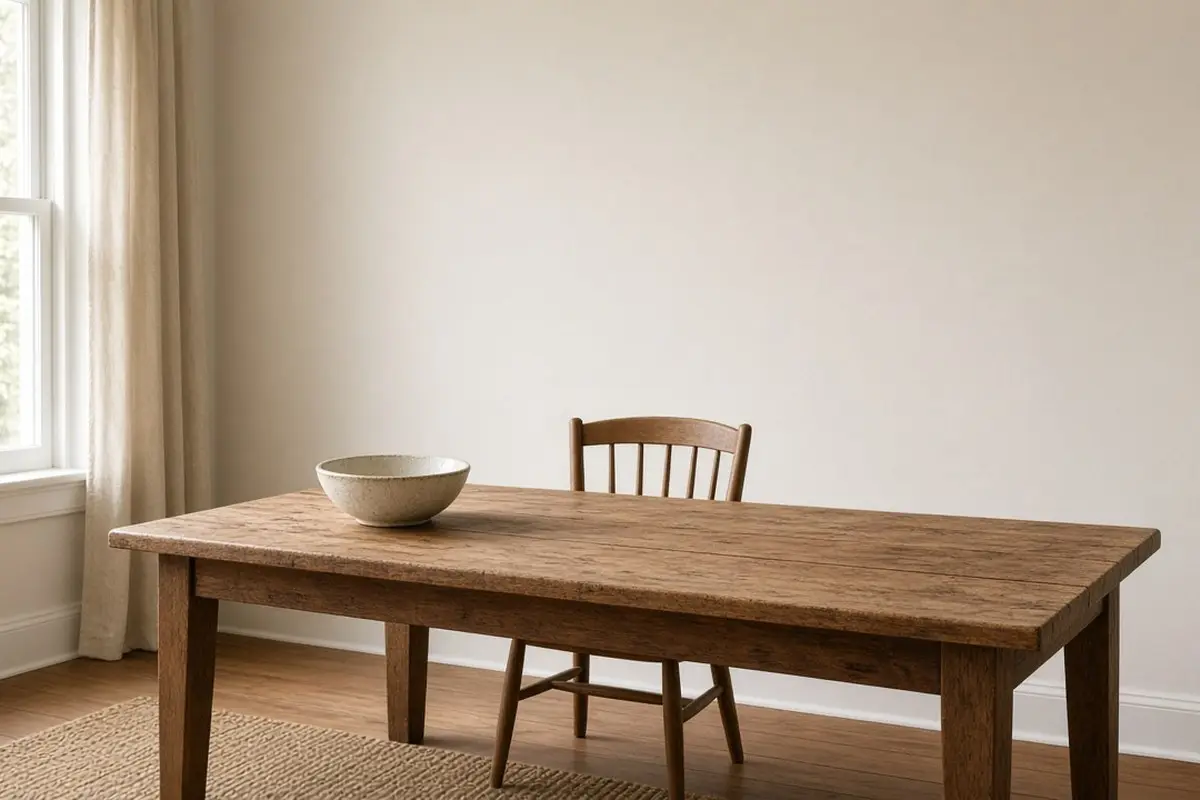
10. Leave one wall bare
Not every wall needs decor. In a dining room with a beautiful table, one bare wall gives the eye a rest and lets the table and art on another wall stand out. A bare wall with good paint and good light is not empty. It is calm.
If the bare wall has a window, let the view be the art. Keep curtains simple and open during meals.
Tips Before You Start
- Let the table stay the main focus.
- Size art to about two thirds of the furniture below.
- Hang mirrors to reflect light, not diners.
- Keep plate walls small and tight.
- Use warm, dimmable light at face height.
- Leave at least one wall simple.
FAQ
What should I hang on a dining room wall?
One large calm piece of art, a mirror, or a pair of sconces. Choose one idea for the main wall.
How high should art be above a buffet?
About 8 to 10 inches above the buffet top, with the center near 60 inches from the floor.
Is a mirror in a dining room a good idea?
Yes. It reflects light and candlelight. Hang it so seated people do not see themselves.
What color is best for a dining room?
Warm, deeper colors make candlelight dinners feel intimate. The kitchen wall treatments post has more paint and paneling ideas, and the wall updates without furniture post covers quick changes.
Should dining room walls match the living room?
In an open plan home, related colors help the two areas feel like one house. The dining wall can be a step deeper or warmer than the living walls without clashing.
When the table is the star, the walls only need to support it. Pick one strong idea for the main wall, keep the rest calm, and every meal will feel a little more settled.