
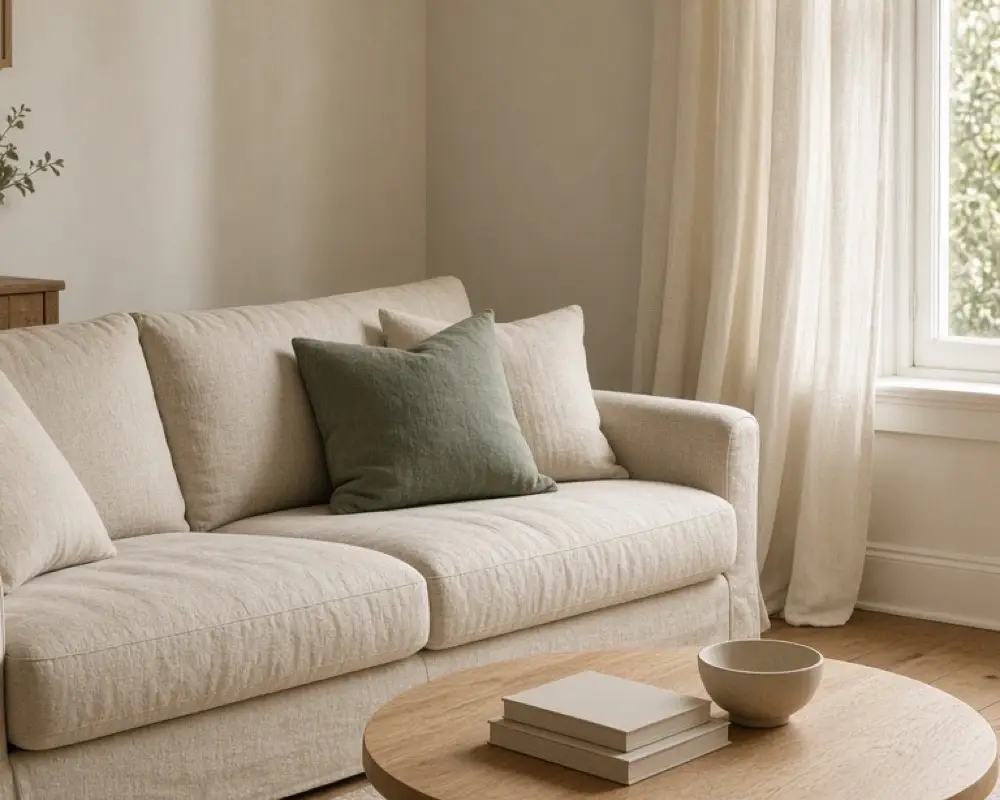
14 Living Room Edits That Use What You Already Own

On this page16 sections
- Turn the sofa toward the light you use
- Put only the front legs on the rug
- Change the bulb, not the lamp
- Corral the small objects on one tray
- Move the plant from the screen to the floor
- Borrow a dining chair for the extra seat
- Show one throw, and fold the rest
- Lean one frame instead of hanging the big one
- Leave the side table almost empty
- Turn closed storage toward the doorway
- Hang the same curtains higher
- Give shoes one basket, not the sofa arm
- Flip the cushions before you restyle
- Remove five things on a timer
- Tips Before You Start
- FAQ
Living room decor ideas usually start with a shopping tab. We start on the floor. If the sofa, the rug, and at least one lamp are already in the room, the next hour is about where they sit and what we take off them.
Most of these edits cost nothing. A few ask for a warmer bulb you may already have in a closet lamp. We measure with a tape before we slide anything heavy, and we stop while there is still a clear place to set a cup.
The weekend living room refresh is the short version of this same habit. Use that when you only have Sunday afternoon. Use this list when the room has been “almost fine” for months.
As an Amazon Associate I earn from qualifying purchases.
1. Turn the sofa toward the light you use
Point the seat at the window or the lamp you actually switch on after dinner. A sofa pressed to the long wall often faces a dark screen and leaves the bright corner unused. If you have 36 inches behind the sofa, pull it forward and rotate it a few degrees toward that light. Mark the front feet with painter’s tape, sit, then bring the side table level with the arm so a drink does not require a lean.
In a room under 12 feet wide, skip the angle. Pull the sofa forward 4 to 6 inches instead. That gap stops the back from looking glued to the baseboard, and it gives the same breathing room we use in a small bedroom. Furniture sliders belong under the feet before you push. Bare wood and felt pads will scar if the sofa is heavy.


2. Put only the front legs on the rug
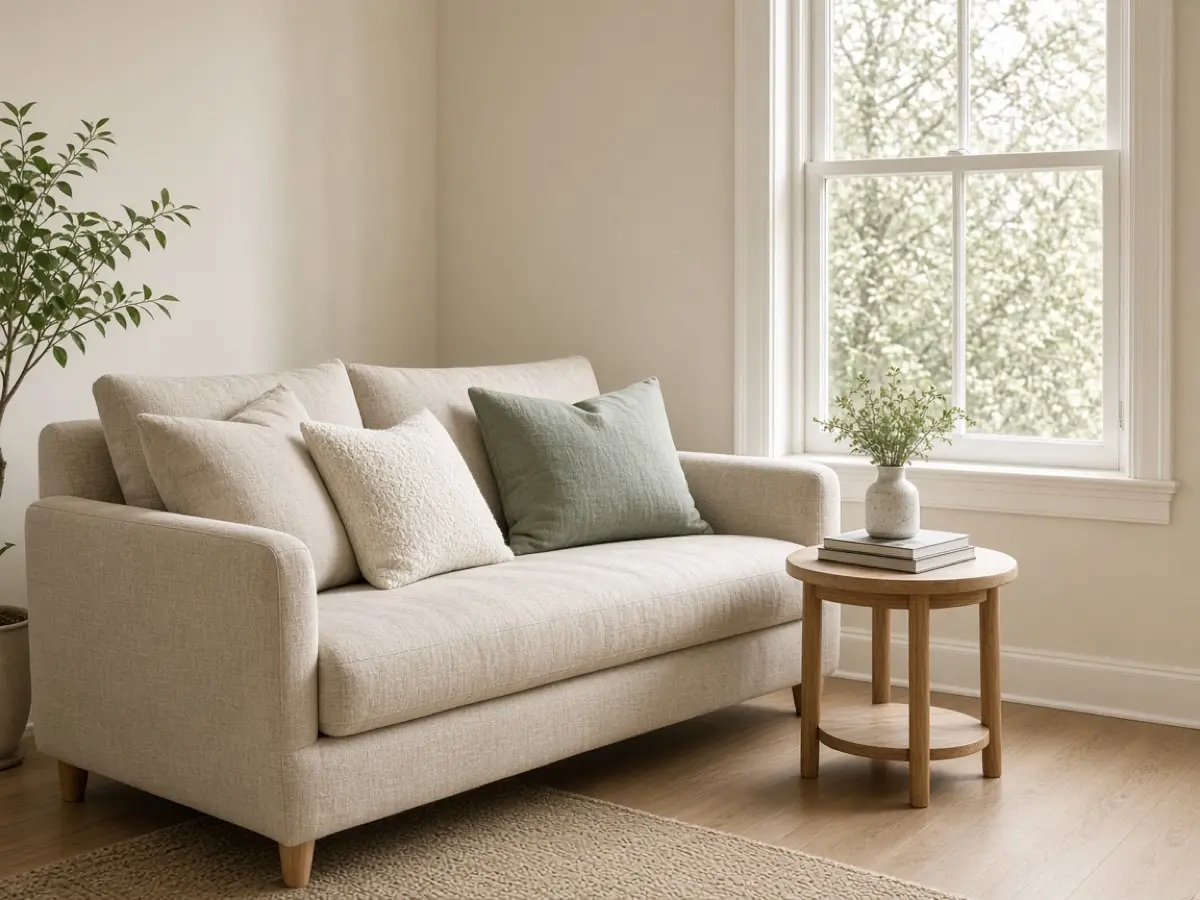
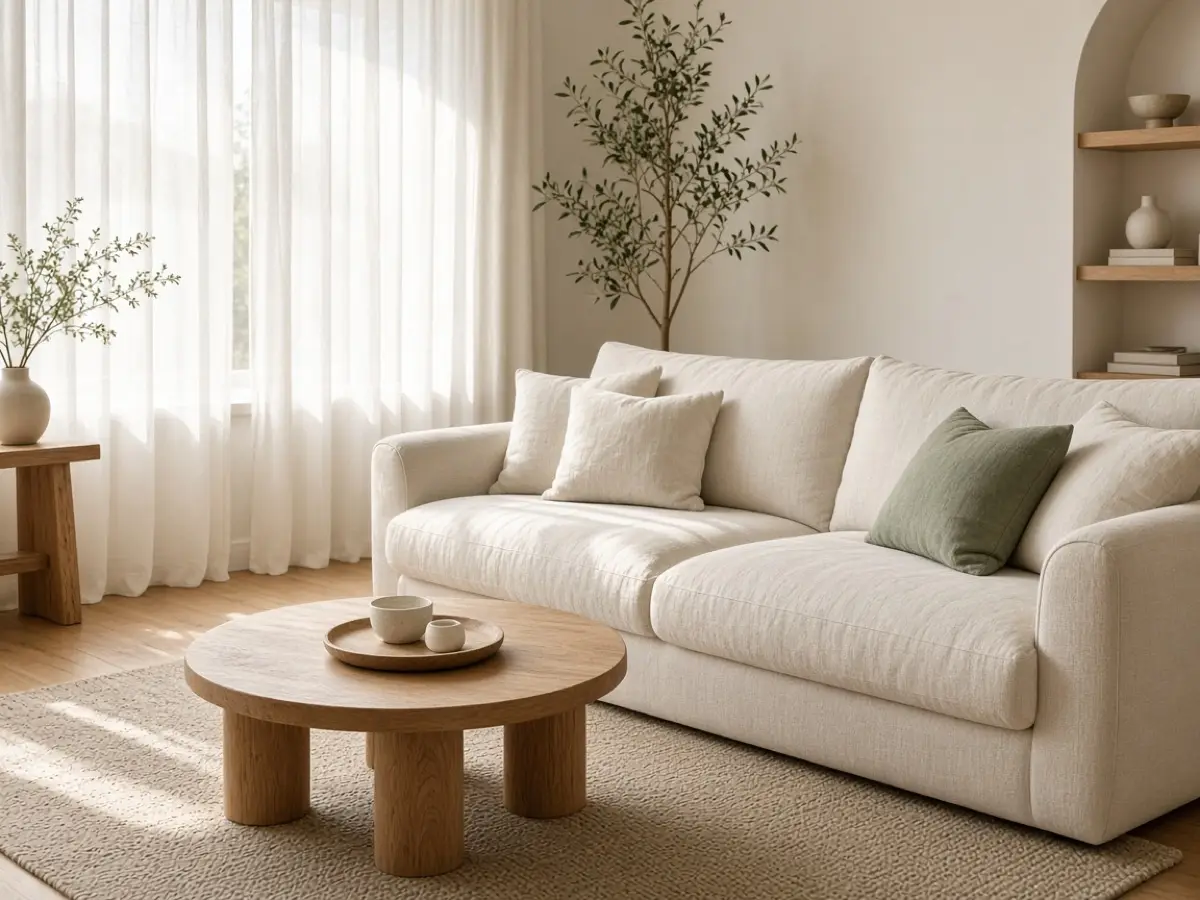
A rug that is smaller than the seating group still works if the front legs of the sofa land on it and about 18 inches of rug remain in front of those legs. The back legs can stay on the floor. That partial overlap reads as a choice. A postage-stamp rug floating in the middle of the room reads as a leftover.
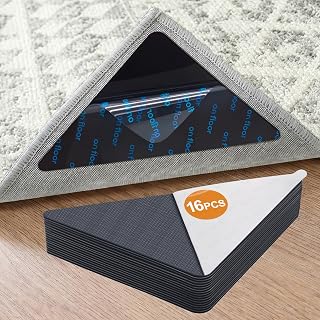
If the rug is large enough for all the front legs in the group, use it that way and leave 8 to 12 inches of floor visible at the walls. Vacuum the fringe, or tuck a curled corner under for a day so it lies flat. We do not buy a new size until we have lived with this placement for a week.


3. Change the bulb, not the lamp
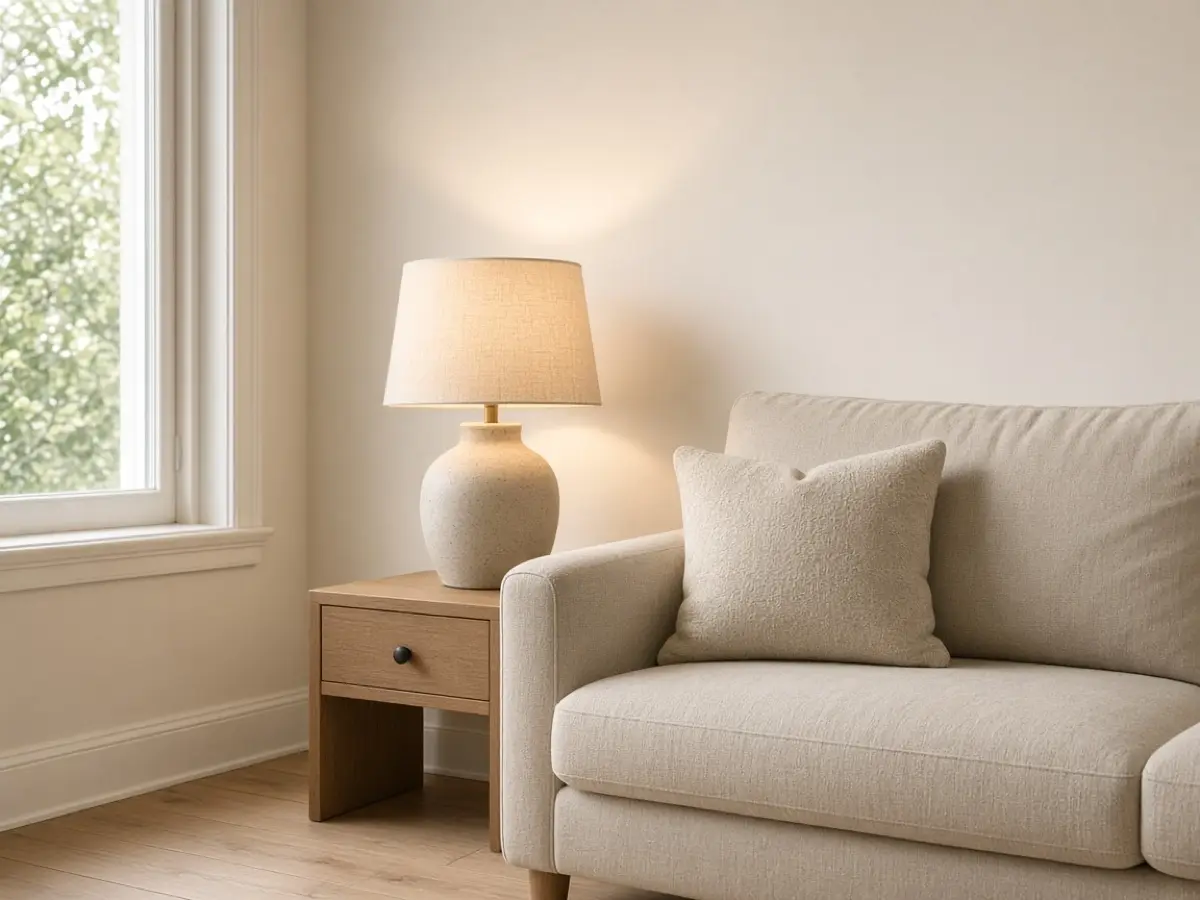
The lamp you own is often fine. The bulb is the harsh part. Swap in a 2700K LED, around 800 lumens for a table lamp and 1600 for a torchiere that bounces light off the ceiling. Match the base, usually E26, and check that a fabric shade is not rated only for a low-watt bulb if you are using an old incandescent chart. LEDs run cooler, but the shade label still matters.
Turn the overhead off and read one page. If you squint, add a second lamp you already own in the opposite corner rather than a brighter cool bulb. Cool 4000K light makes cream walls look gray at night. Warm light is the cheapest living room decor idea on this list.
Get the look


4. Corral the small objects on one tray
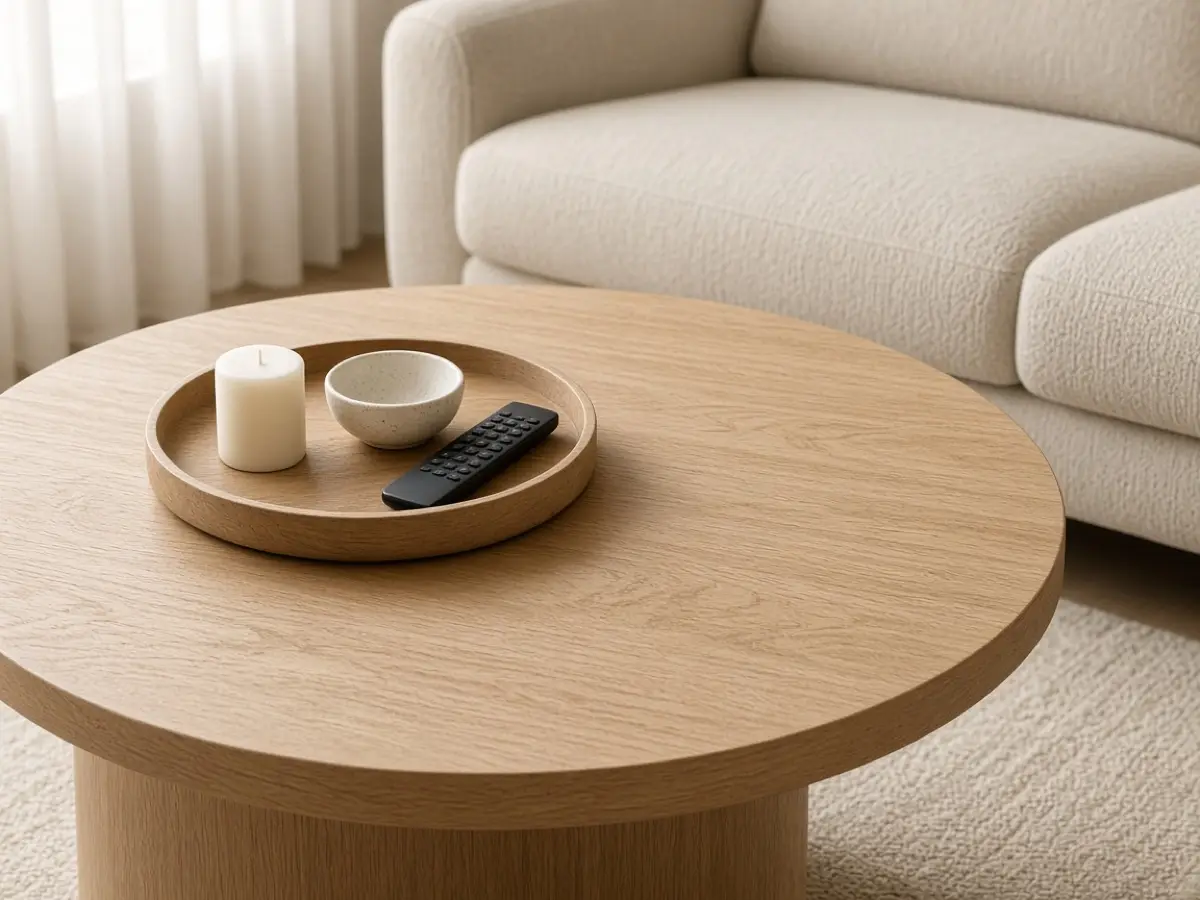
Remotes, a candle, and a coaster can stay if they share one tray. The tray should be about one-third the width of the coffee table, with a low rim so nothing visually spills. Everything else on that table leaves: mail, chargers, the third candle. A round wood tray suits a round table. A rectangular one suits a long table and should sit slightly off center, not dead in the middle like a place setting.
This is the same rule as a small coffee corner: one surface, one job. If you do not own a tray, use a cutting board you are not using tonight. It will tell you whether the edit works before you spend anything.
Get the look



5. Move the plant from the screen to the floor
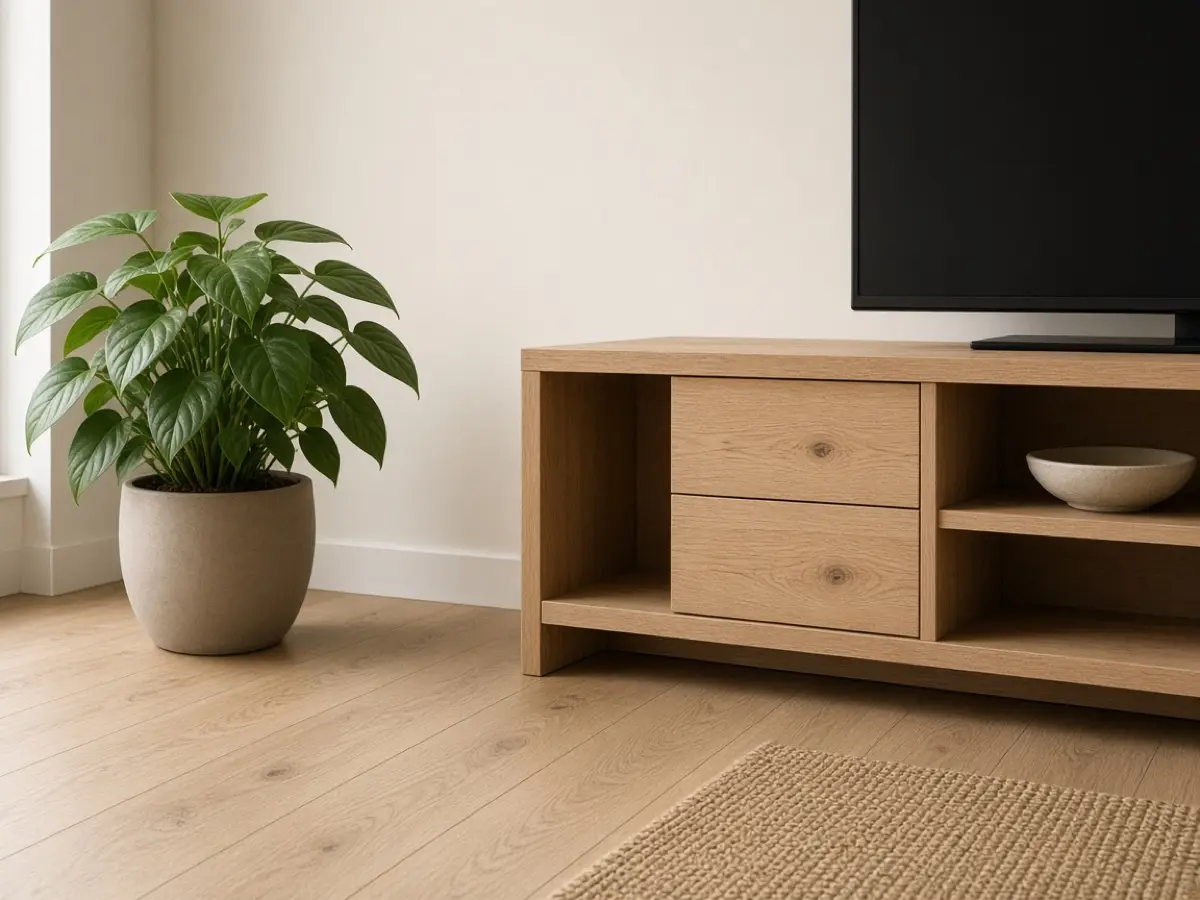
A plant on the TV stand competes with the screen and collects dust in the worst spot. Set it on the floor, 6 to 8 inches beside the console, in a pot you can lift when you vacuum. The top of a tall plant can reach the middle of the wall. A short plant belongs next to the sofa, not under a dark shelf where it will fail.
Wipe the leaves, turn the pot so the fuller side faces the room, and take the decorative moss out if it stays wet. If the only window is across the room, the plant moves to that light even if the composition was “balanced” before. A healthy plant in the bright corner beats a styled one in the dark.


6. Borrow a dining chair for the extra seat
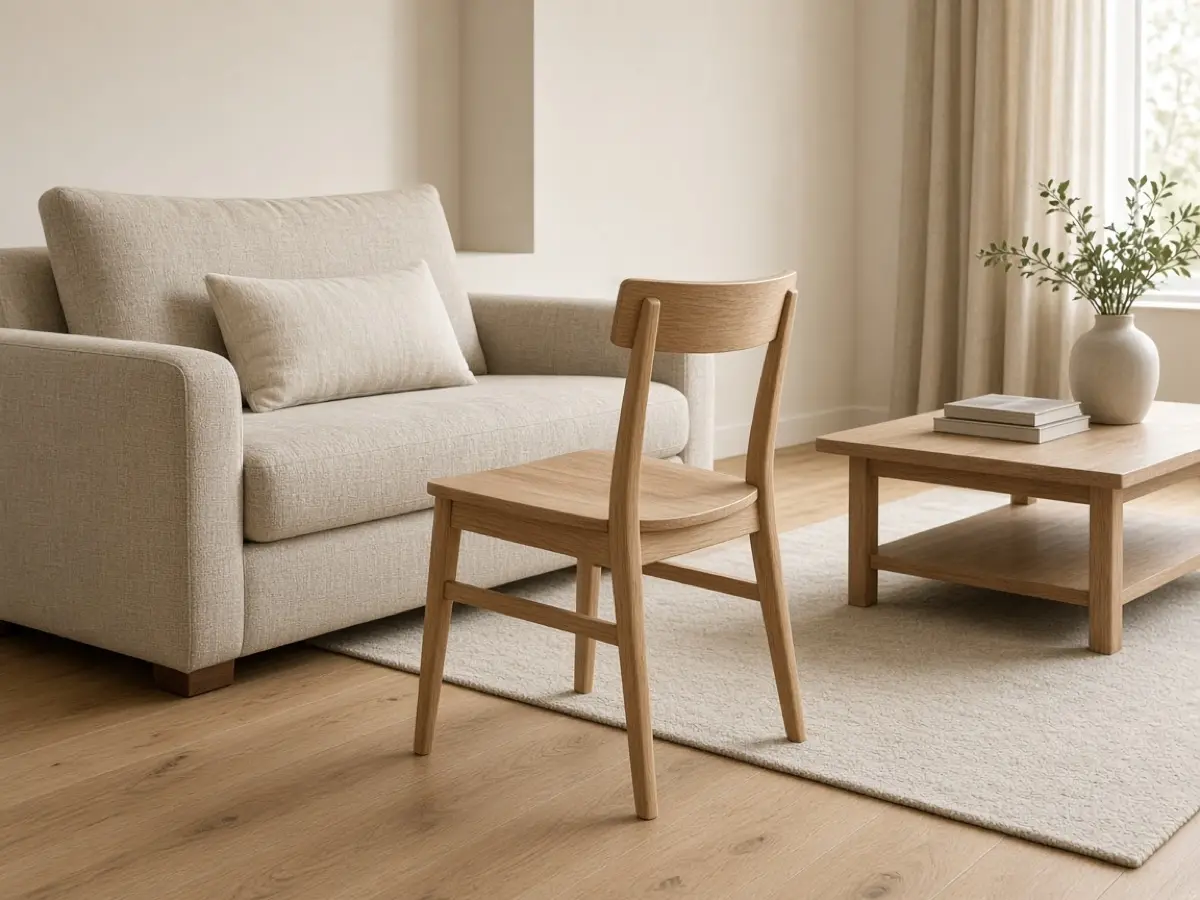
If people perch on the sofa arm, you need another seat, and the dining room may already have it. Pull one wood chair in and place it at a right angle to the sofa, with the front edge about even with the sofa’s front edge. Leave 18 inches between the chair and the coffee table so knees clear. A mismatched chair is fine when the wood tone is within a shade of the table.
Slide it back to the dining table on weeknights if the path gets tight. What you are testing is the conversation circle, not a permanent floor plan. If the chair blocks the door swing, it does not stay, no matter how good it looks in the corner.
Get the look


7. Show one throw, and fold the rest
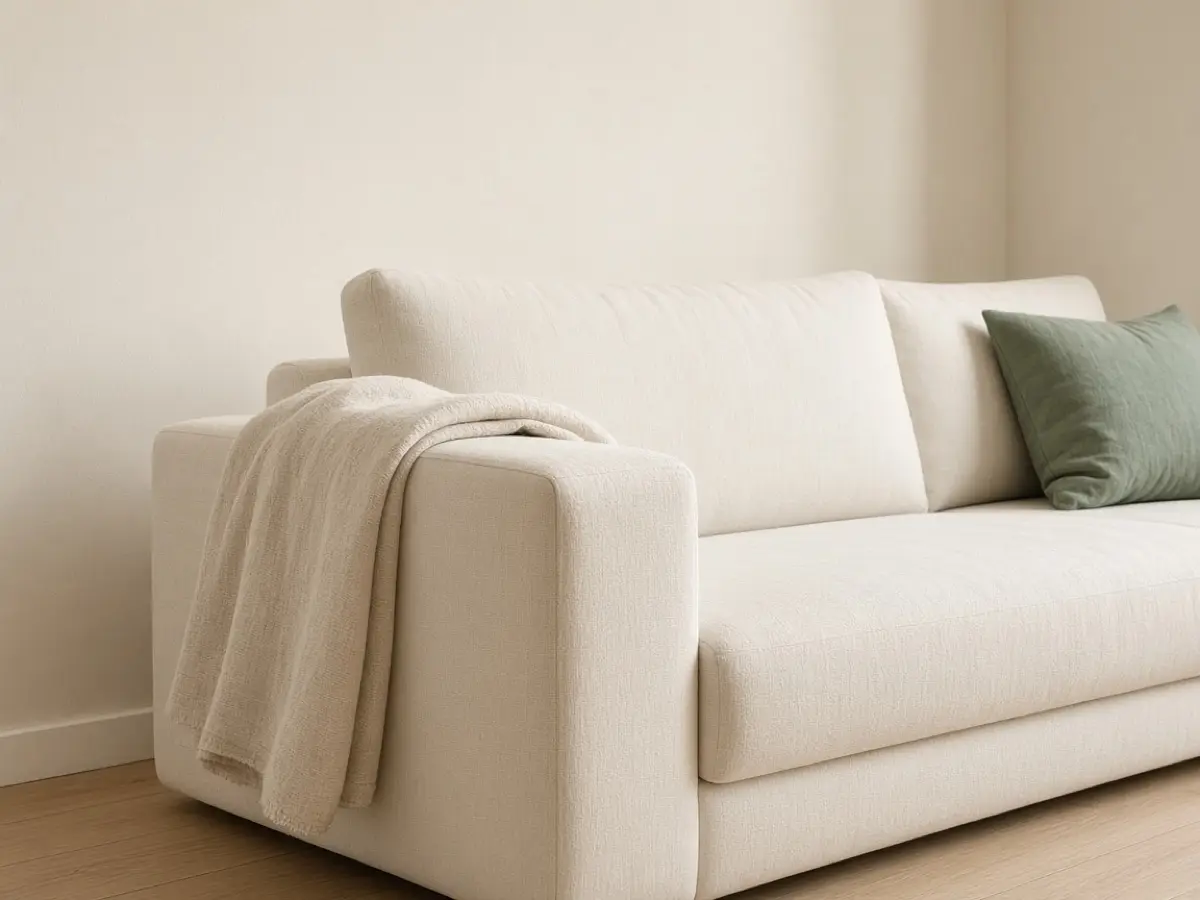
Two throws, a quilt, and a hoodie on the sofa back make the seat look unfinished even when the rest of the room is calm. Keep one throw, folded once over the arm you actually reach from, in a material you like against your neck. Linen and cotton win in a warm room. A fuzzy throw can live in a basket and come out at night.
The basket sits on the floor at the end of the sofa, not on the seat. If you do not own a basket, use the largest tote you already carry and put it in a closet between guests. The point is a single textile in view. Color can repeat the sage or cream you already have. It does not need a new accent.


8. Lean one frame instead of hanging the big one
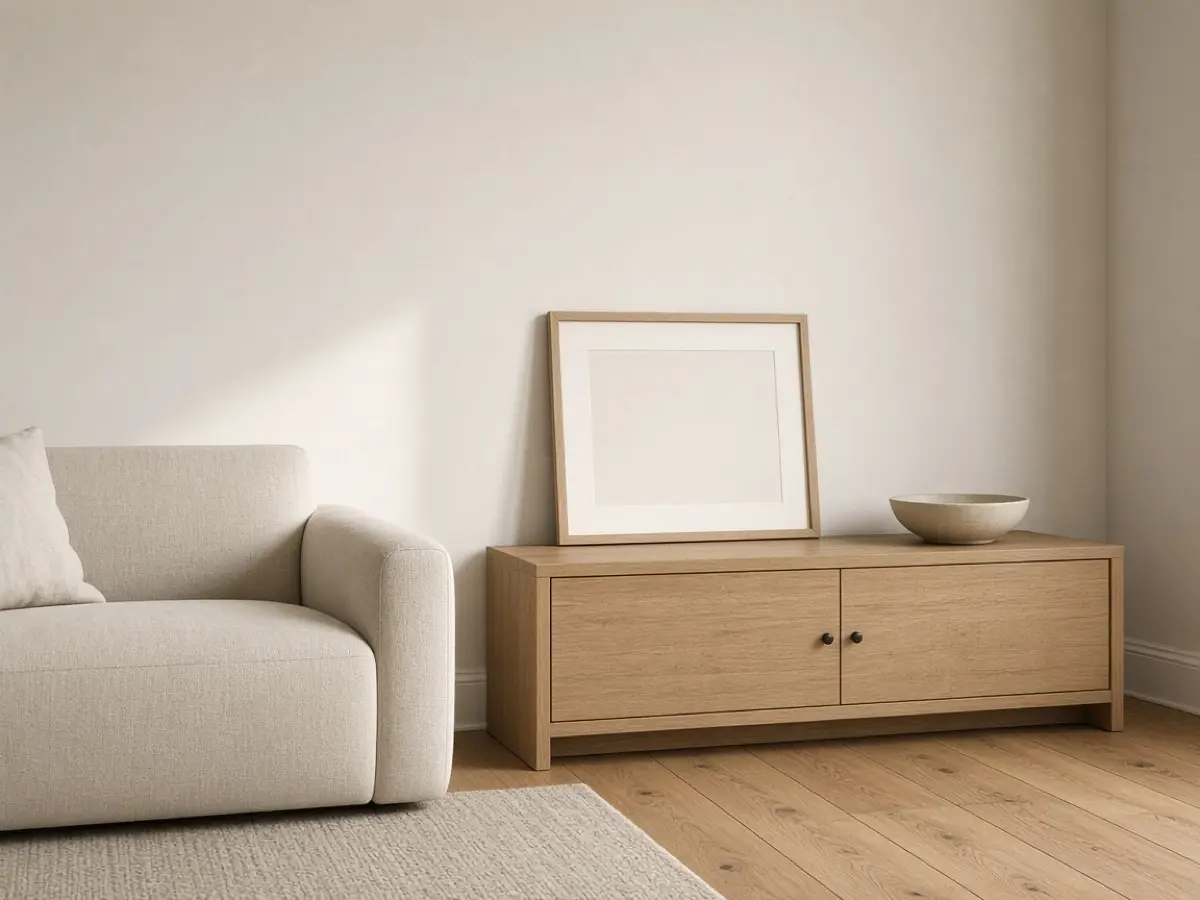
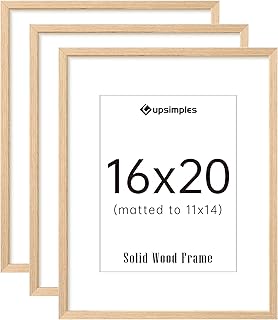
Take the largest frame down if it hangs too high or too small for the sofa. Lean one medium frame on the console or on a shelf, bottom edge resting on the surface, top tilted back until it feels stable. The center of that frame should still land near 57 inches from the floor if it is the only art you see from the doorway. Leave 6 to 8 inches between a frame on the console and the wall art above it, if anything stays up.
Patch and touch up only the nail holes you can see from the seat. A leaning frame is a trial, not a forever installation. If it slides, a pea-sized bit of museum putty at the bottom corners keeps it still without a new hole.
Get the look


9. Leave the side table almost empty
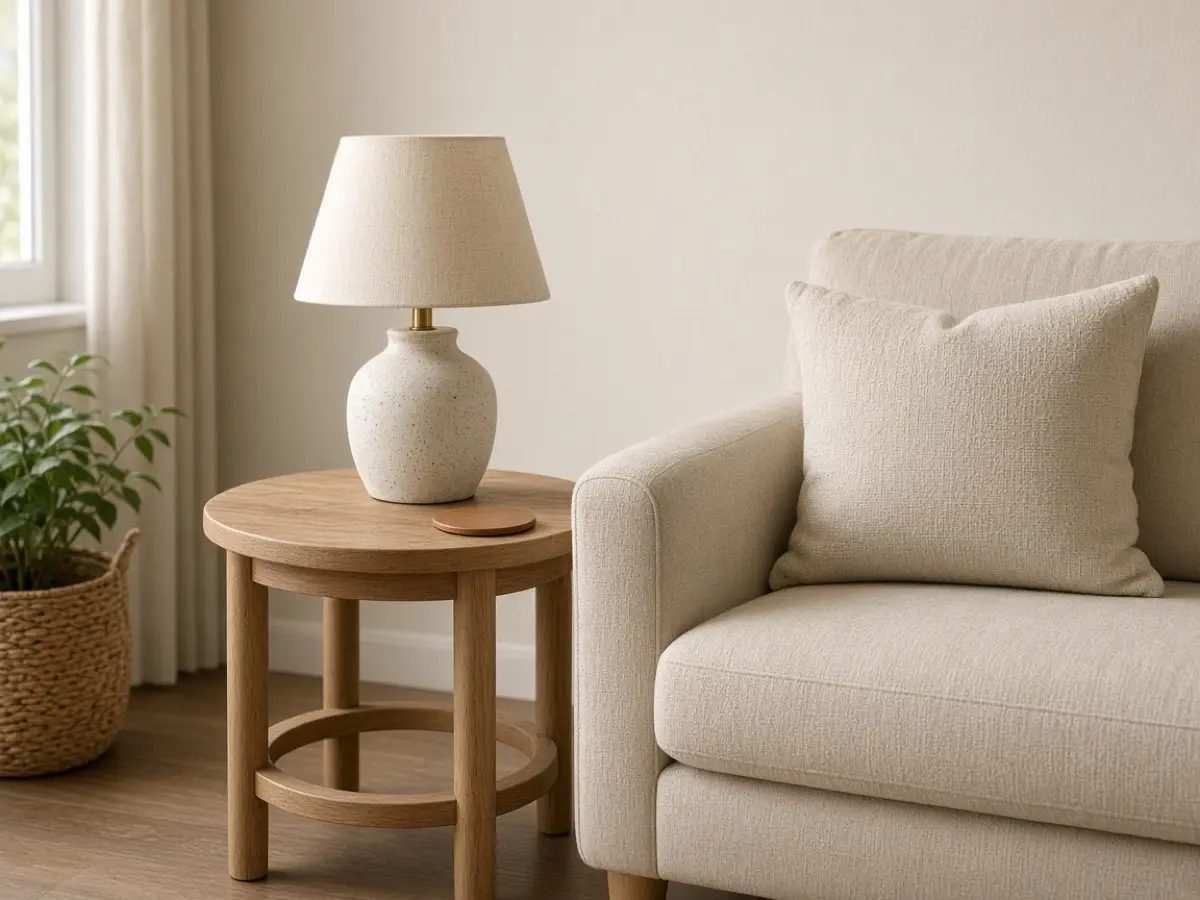
The side table keeps a lamp and one coaster. A stack of books is allowed only if the lamp still sits steady and the shade clears your shoulder when you lean back. Measure from the floor to the bottom of the shade. Seated eye level is the target, often around 40 inches to the middle of the shade for a standard sofa. A table that is much lower than the arm puts the lamp in your lap, visually.
Clear the charger, the lotion, and the glass from last night into a drawer or the bedroom. If the table has no drawer, a small lidded box you already own can hide the clutter. The empty top is what makes the lamp look intentional.
Get the look


10. Turn closed storage toward the doorway
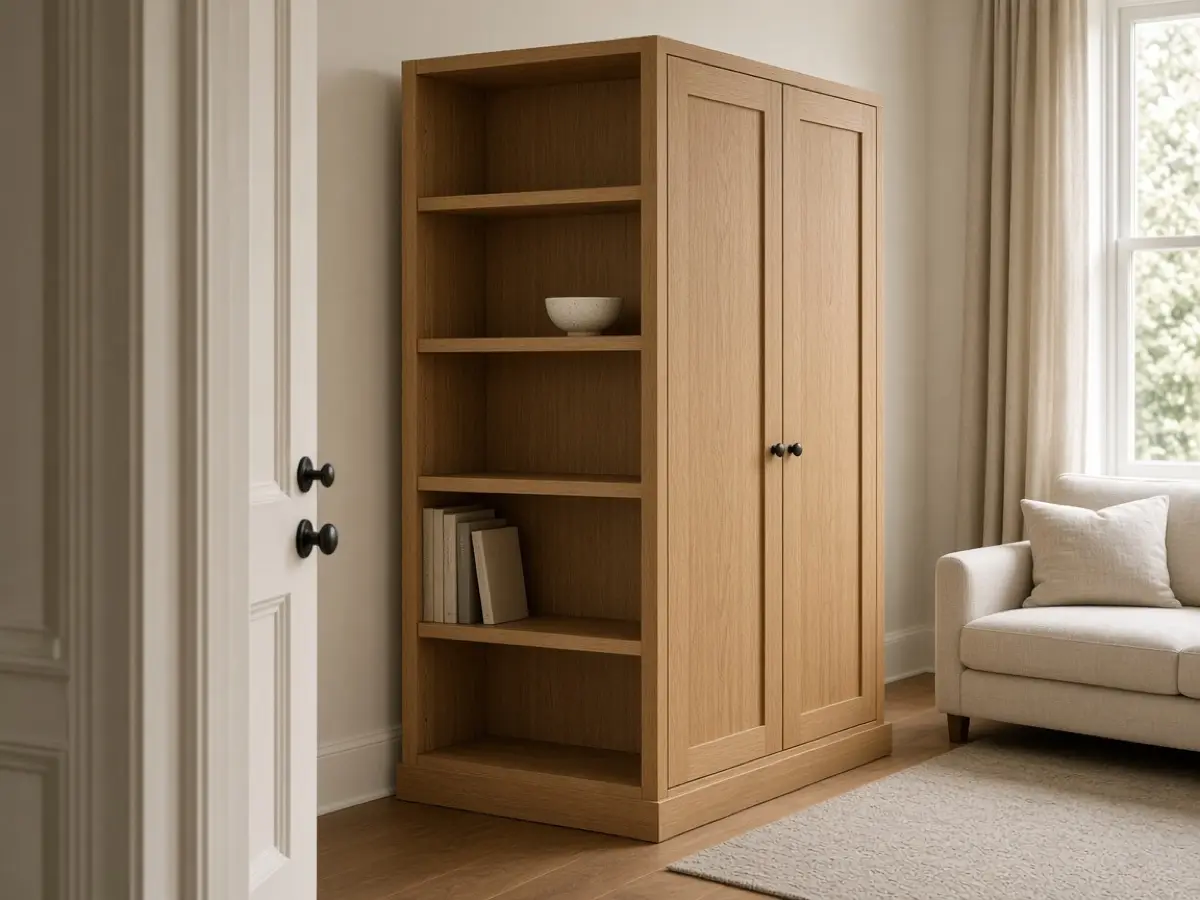
If a bookcase has doors or drawers on one side, turn that closed side toward the door. Open shelves full of mismatched objects are the first thing a guest reads as clutter. Closed storage can hold the board games and the extra cords. On the shelves that remain visible, leave about a third of each shelf empty and keep objects in odd counts: one bowl, three books standing, one short stack lying flat.
Height matters. The tallest bookcase should not cross in front of a window. If turning the case blocks a vent or a outlet you use, stop and edit the shelves instead. The turn is only an improvement when the path and the plug still work.


11. Hang the same curtains higher
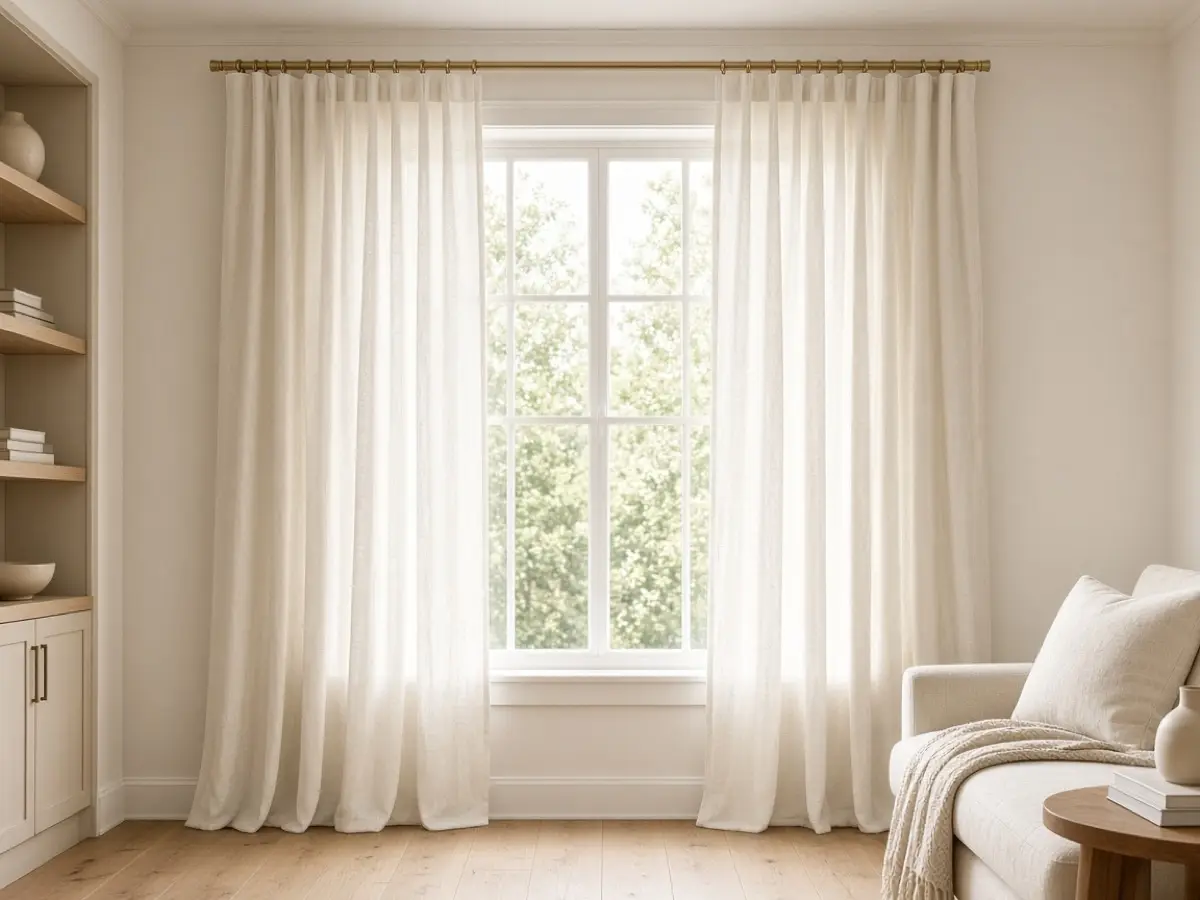
Keep the panels. Move the rod. A rod set 4 to 6 inches above the window frame, and wider than the frame by 3 to 6 inches on each side, makes the same curtains look longer. On an 8-foot ceiling, we often place the rod about 6 inches below the ceiling if the window head is already high. The panels should just clear the floor, or hover half an inch above it. Pooling fabric collects dust and shortens the room.
Use the existing brackets if the screws still bite. If the new holes are in fresh drywall, anchors rated for the rod’s weight are worth buying. This is one of the few edits that may need a drill. Steam the panels while they are down so you are not pressing them on the wall.
Get the look


12. Give shoes one basket, not the sofa arm
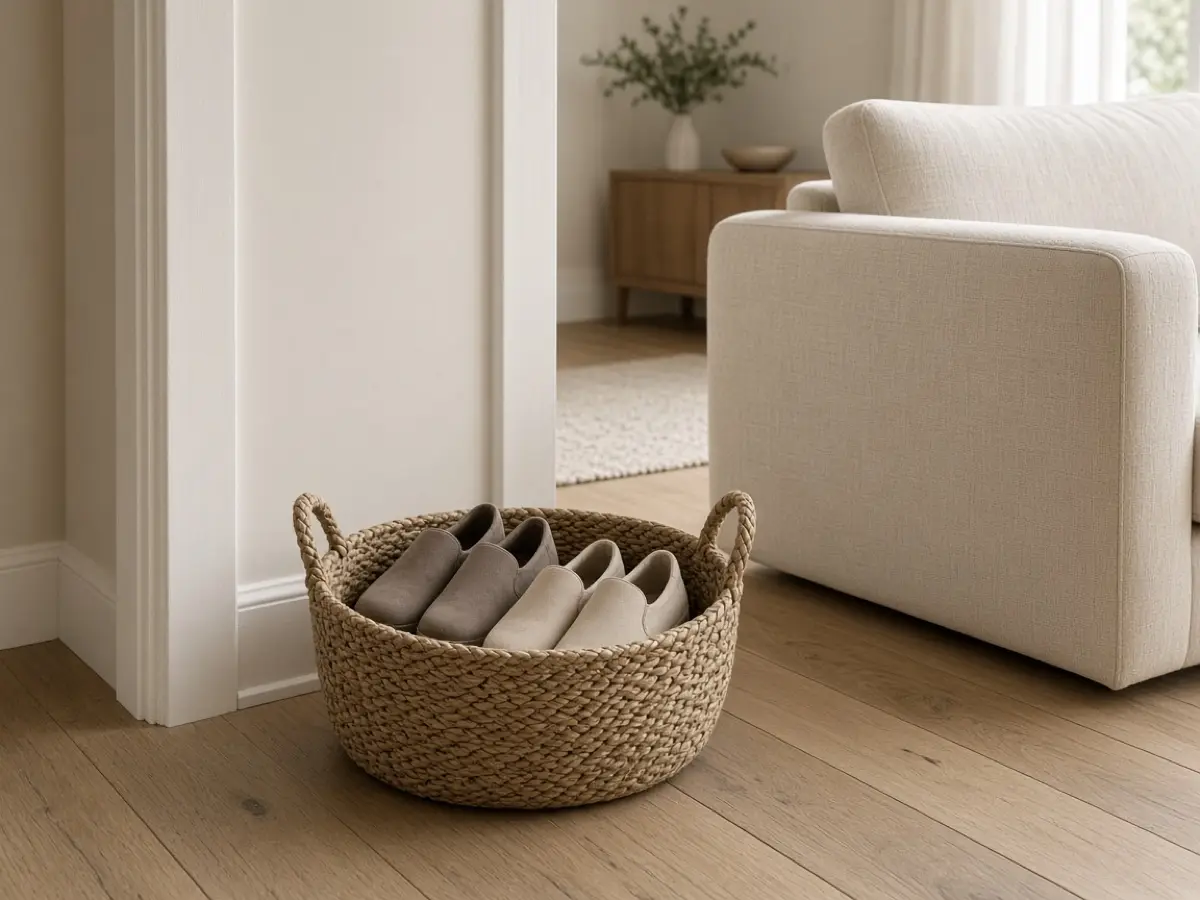
Shoes and bags on the sofa arm undo every other edit the moment someone walks in. Put one basket at the living-room side of the entry, sized so two pairs sit inside without a pile above the rim. A handle you can carry to the closet is more useful than a pretty bin that stays overflowing. If the basket is wider than 14 inches, check that the door still opens fully.
The sofa arm stays clear, including the hoodie. Hooks you already have on the back of a door can take bags. We are not building a mudroom. We are giving the daily drop a single spot that is not the seat.


13. Flip the cushions before you restyle
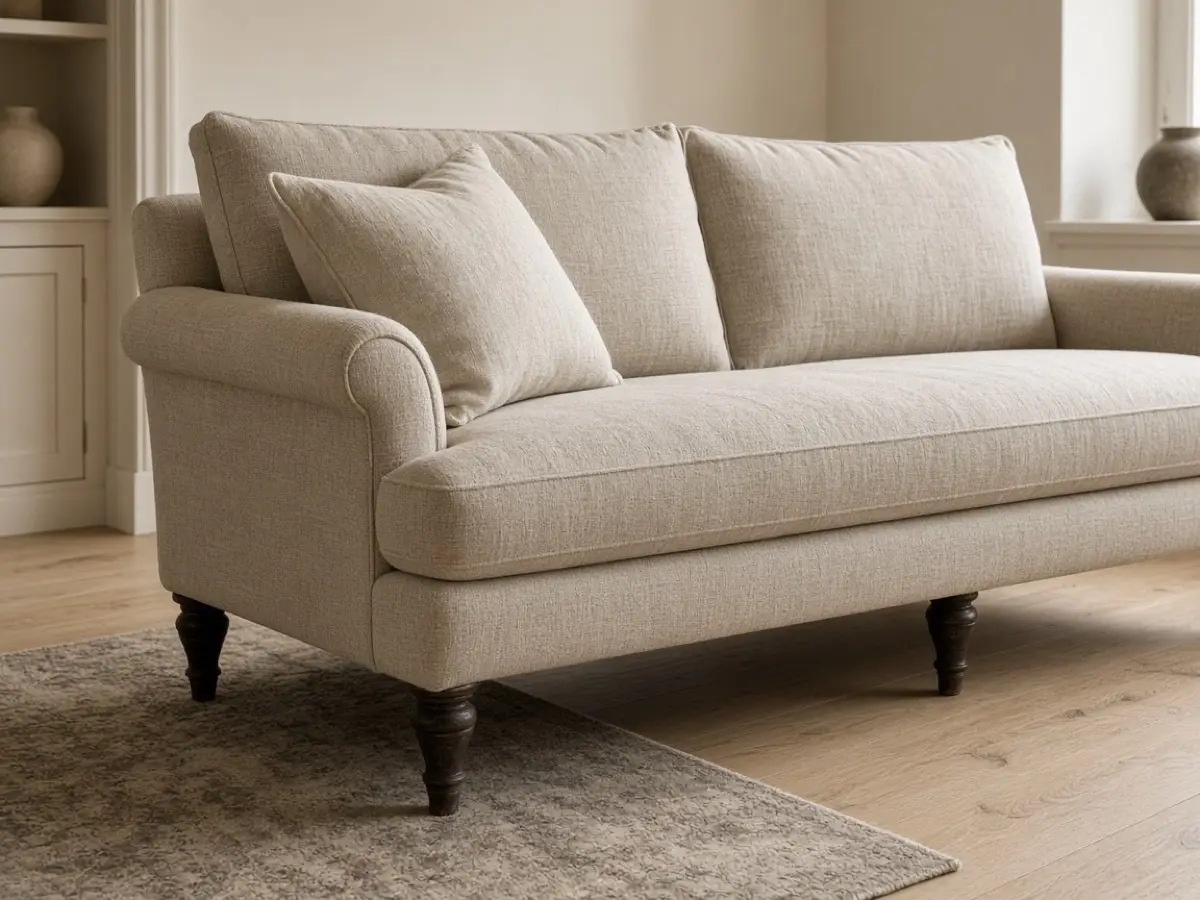
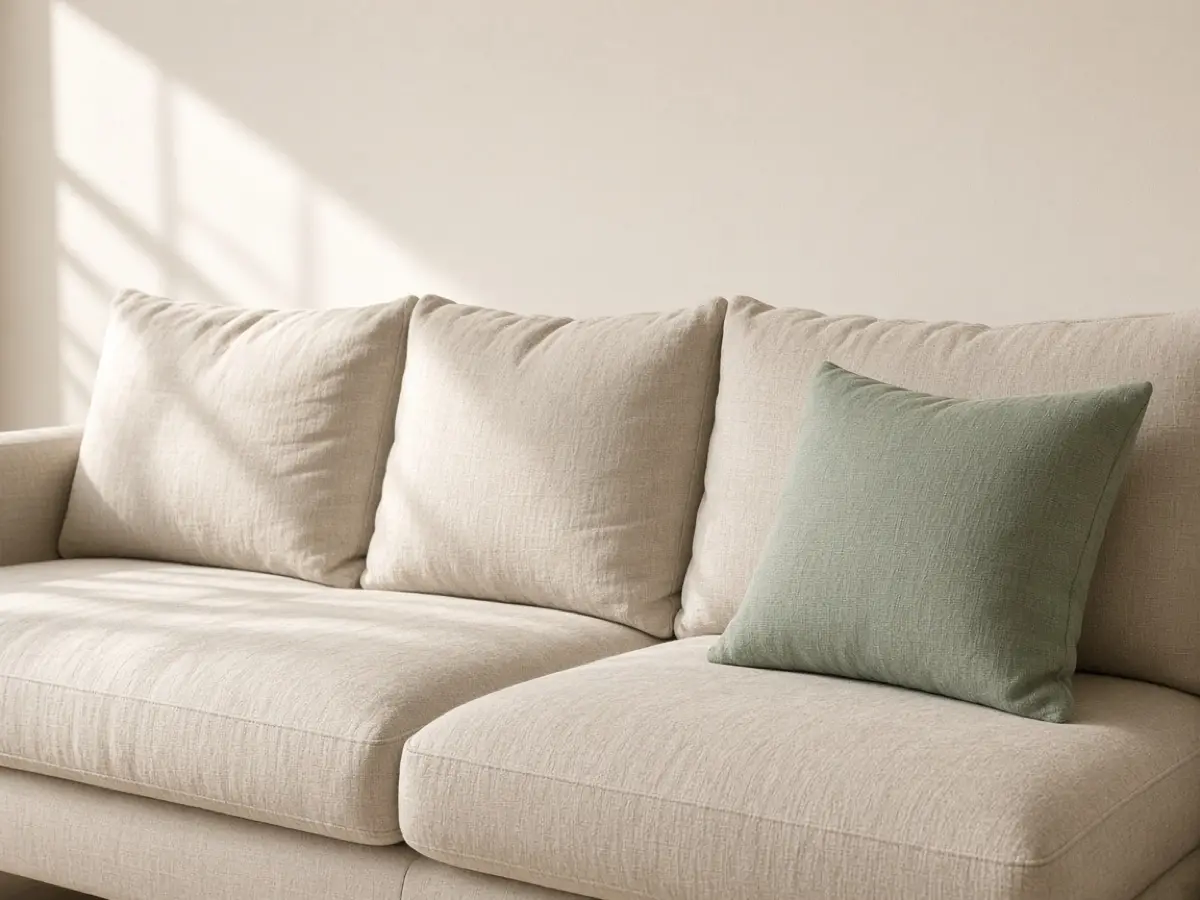
Do this before you decide the sofa looks tired. Flip seat cushions, pound the back pillows, and vacuum the seams with the brush attachment. Check the cushion covers for a zipper and rotate the ones that have been in the sun. Twenty minutes of this changes the silhouette more than a new pillow, because the seat height comes back.
If a cushion is stained on both sides, a washable cover you already own from another pillow can bridge the gap. Replacement foam is a purchase, so it waits until the flip test fails. While you are there, tighten any loose sofa legs. A wobble reads as neglect even in a thoughtfully edited room.
Get the look


14. Remove five things on a timer
Set a timer for 20 minutes. Walk the room once and take five objects out: the extra candle, the pile of mail, a souvenir, a second frame, the bowl you never use. Put them in a box in another room, not in a new pile on the dining table. Live with the gap for three days. If you do not go looking for an object, it does not come back.
This is the edit that protects the other thirteen. A room can survive a sofa that is not perfect. It cannot survive a fresh arrangement buried under the things you meant to sort later. When the timer ends, stop. Five things is enough for one day.


Tips Before You Start
- Measure the walkway before you slide the sofa. Keep at least 30 inches on the path you use every day.
- Put sliders down before the first push, especially on oak or soft pine.
- Photograph the room from the doorway so you can put a piece back without guessing.
- Work in daylight, then check the lamps at night. A layout that looks right at noon can fail at 8 p.m.
- Keep paint, new art, and a larger rug off the list until these edits have had a week.
- One basket, one tray, and one throw are the only “new” objects worth considering, and only if you do not already own them.
FAQ
What are easy living room decor ideas if I cannot buy furniture?
Move the sofa toward the light, put the front legs on the rug you have, and clear the coffee table down to one tray. Those three changes use pieces you already own and usually do more than a new accessory.
How do I make a living room look styled without adding clutter?
Give each surface one job. The side table holds a lamp. The coffee table holds a tray. Shoes get a basket by the door. When a surface has two jobs, one of them is clutter.
Should the rug be bigger than the sofa?
If you can fit a rug that catches every front leg, do that. If the rug is smaller, slide it so the sofa’s front legs sit on it with about 18 inches of rug in front. A small rug in the open center of the floor will look lost.
What light bulb should I use in living room lamps?
Use a warm 2700K LED. About 800 lumens is plenty for a shaded table lamp. Cooler bulbs make cream paint look gray after dark, which is why the room can feel off even when the furniture is fine.
A living room comes together when the pieces you already paid for have a clear place to be. Turn the sofa, warm the bulb, and take five things out. Then sit in the seat you use at night and leave the room alone for a week.