
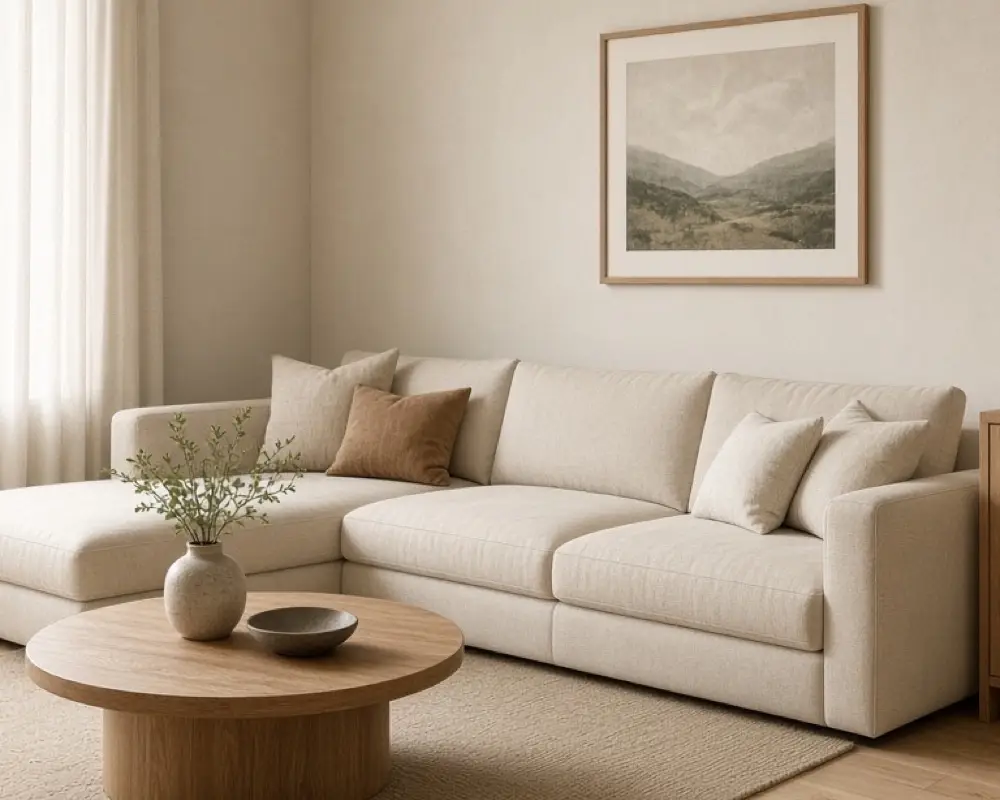
9 Rooms That Work With an L-Shaped Sofa

On this page11 sections
- Put the long side on the long wall
- Stop the return before the door
- Decide if anyone walks behind it
- Keep the corner sittable
- A table that fits inside the L
- The rug goes beyond the front legs
- Put the screen on the open side
- Light the corner so it is not a cave
- Measure the stairs before delivery day
- Tips Before You Start
- FAQ
An L shaped sofa living room fails in the same place every time: the short side sticks into the only path, or the corner is so full of pillows that nobody sits there. The L is a good sofa when the long run uses the long wall and the return stops before the door. It is a bad sofa when you buy the size that looked right in a wider photo.
Measure your two walls before you measure the sofa in the listing. The weekend living room was about a refresh you already own. This is about whether this shape belongs in the room at all.
As an Amazon Associate I earn from qualifying purchases.
1. Put the long side on the long wall
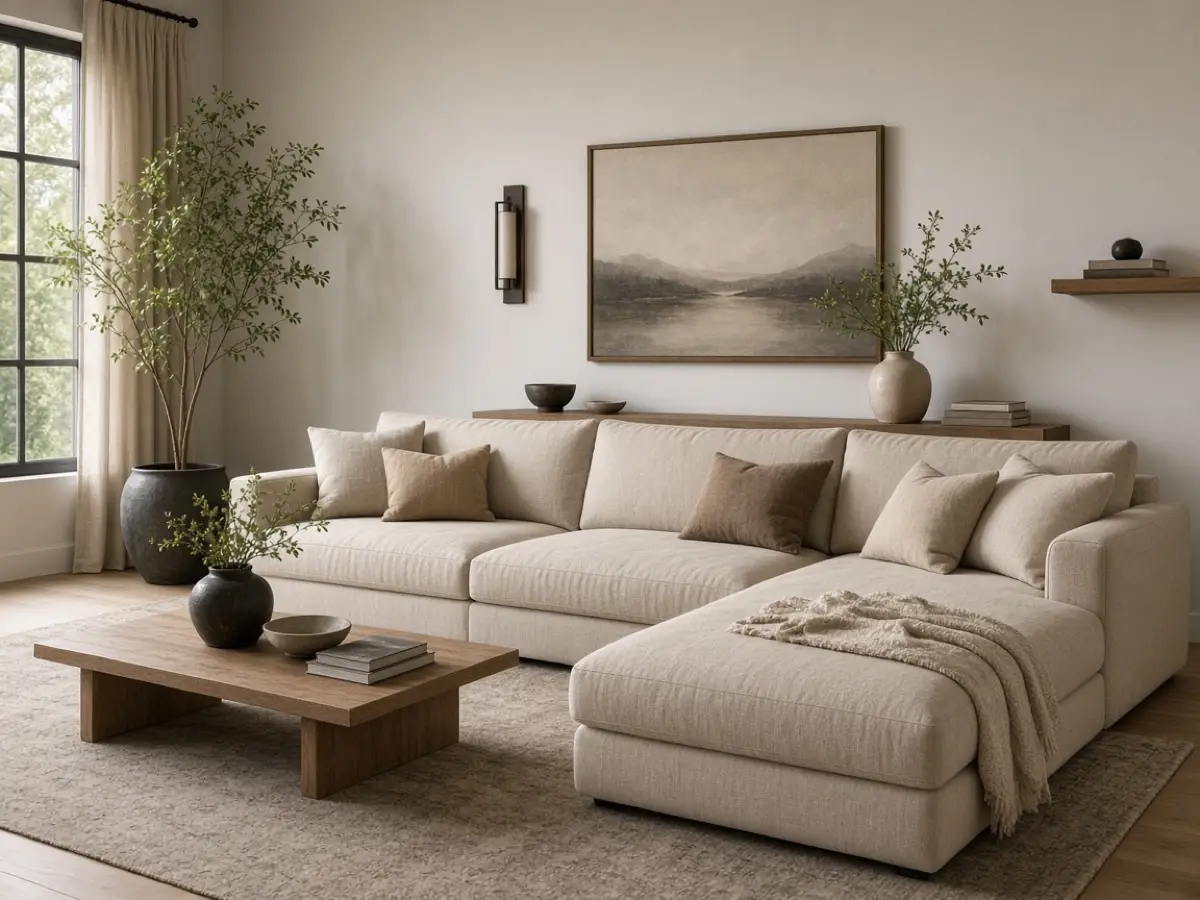
The longer run of the L belongs on the longer clear wall, the one without the door. A 90-inch side on a 100-inch wall leaves a few inches at each end so the arms do not kiss the trim. If your longest wall is 84 inches, you do not have a home for a standard L. Look at a loveseat instead of forcing the return into the room.
Leave the side with the window for the return only if the return is the shorter piece. A long chaise under a window can work. A long chaise across the window, blocking the sill, does not. Sit where the glass is. Do not put the back of the sofa through the view. Write the wall length down and compare it to the sofa’s outside measurement, not the seat width.


2. Stop the return before the door
Walk from the entry to the window with the sofa in place, or with tape marking its footprint. You want about 32 inches of clear floor beside the return. If the chaise ends in that lane, the sofa is too deep or the return is on the wrong side. Many L sofas can be assembled with the chaise on the left or the right. Pick the side that leaves the door swing empty.
Open the door all the way. A return that the door hits is not a close call you will get used to. You will stop opening the door, and the room will feel smaller than the sofa made it. Switch the chaise before you buy a smaller rug to compensate. Tape the door’s full swing on the floor too. A path that only exists with the door half shut will annoy you every day.


3. Decide if anyone walks behind it
A sofa pulled off the wall needs a path behind it, about 30 inches, or it needs to sit against the wall. The in-between, 10 inches of dead space, collects dust and does not let a person pass. In a small room, put the back on the wall. In a long room, float it only if the path behind is real.
The corner of the L makes floating harder, because the return also has to clear the wall or sit on it. Both pieces should follow the same rule. One piece on the wall and one floating looks like the sofa arrived in two trips and never got pushed in. If you cannot mark the wall, use the baseboard as the line and keep the back legs touching it.


4. Keep the corner sittable
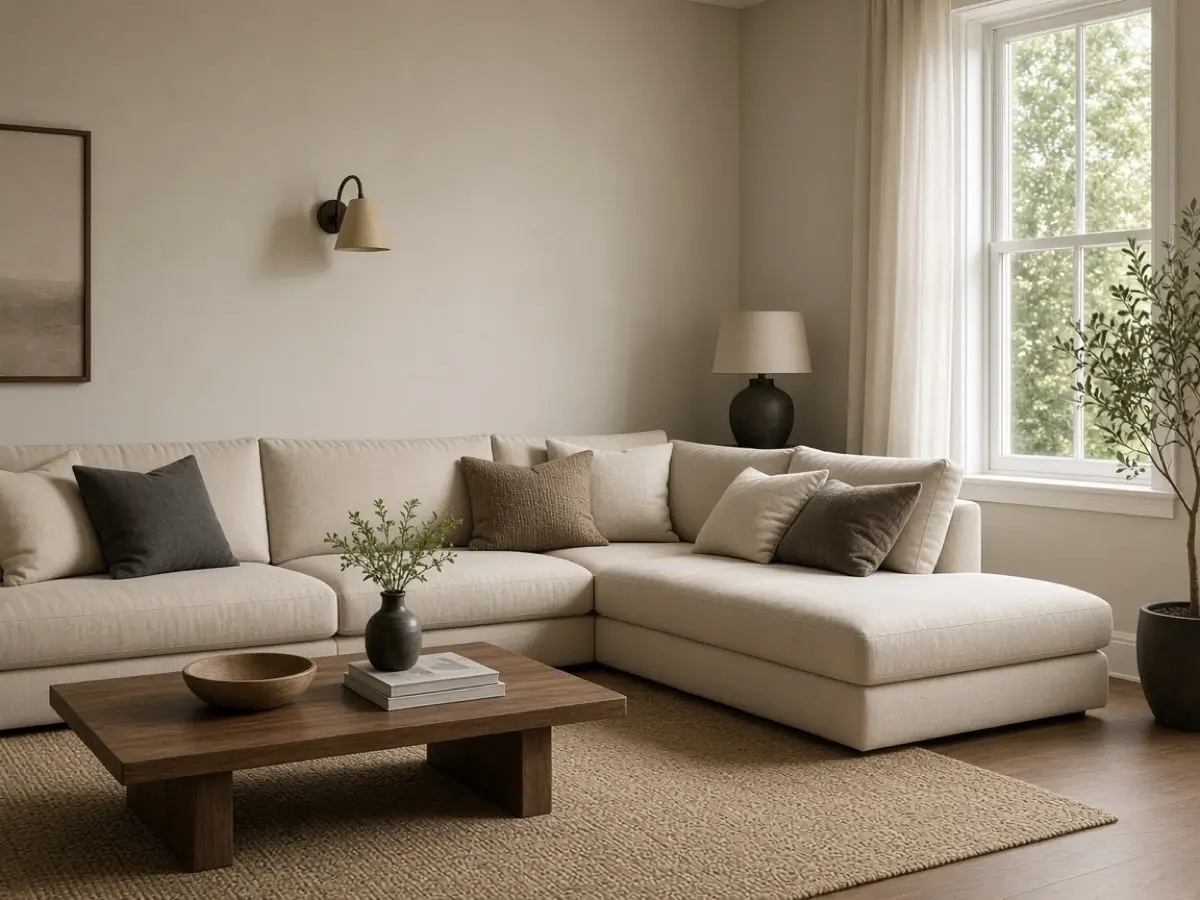
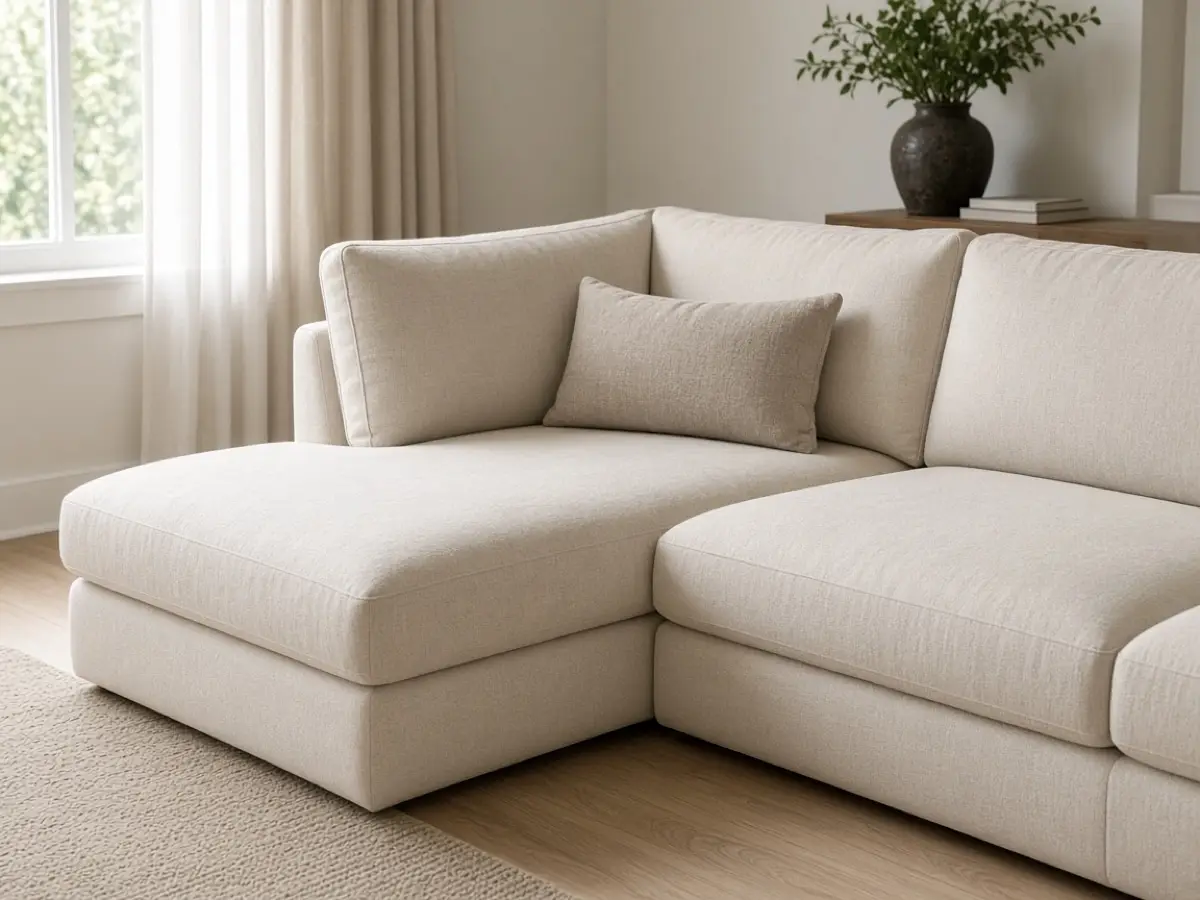
The inside corner is the best seat if it has a back to lean on and a place for one pillow, not five. A nest of pillows means nobody uses the corner, and the corner was the reason you bought the L. Leave one lumbar pillow. The seat should still show.
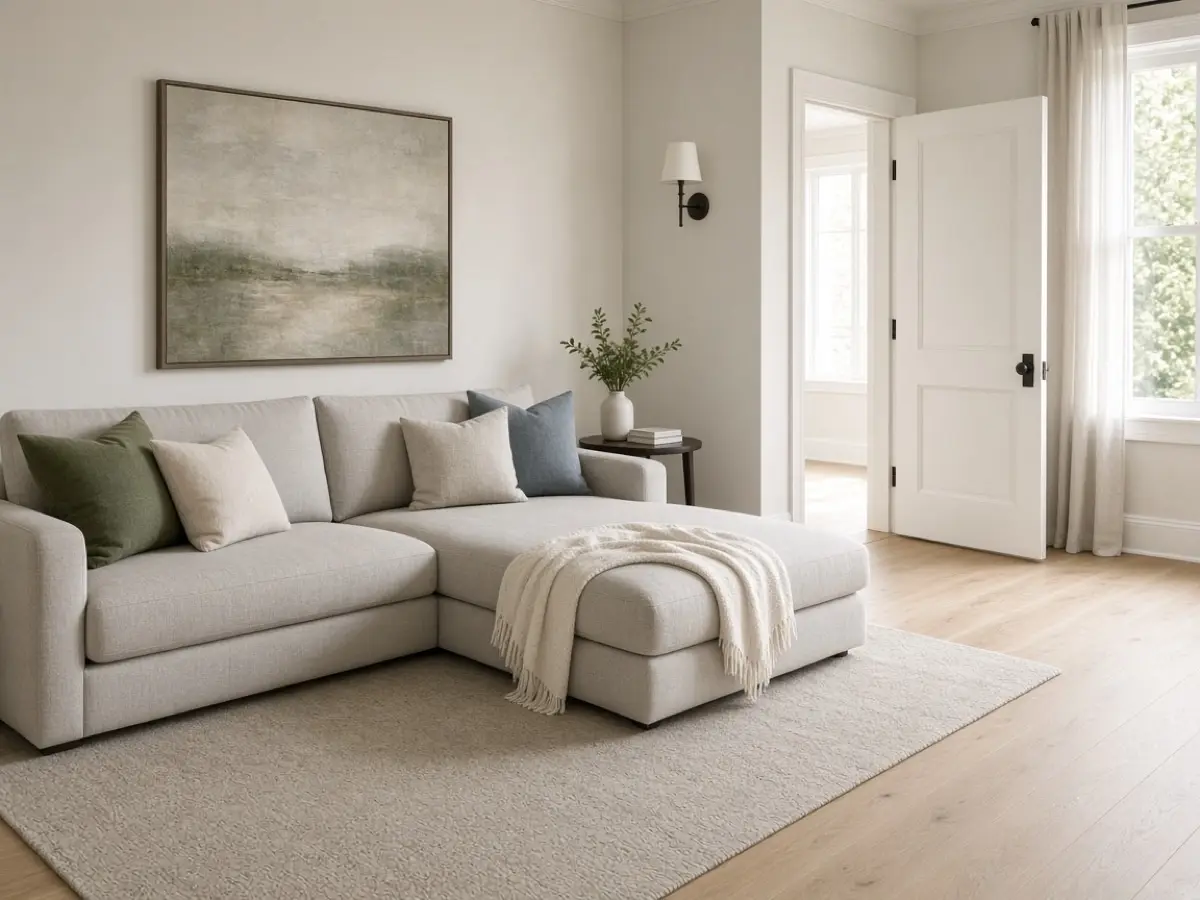
If the corner cushion is a different depth than the arms, sit there for ten minutes. Some sectionals have a corner piece that tips you forward. That is a return, not a seat, and you should know it before the delivery team leaves. The blue and beige room can spare a pillow. This corner cannot spare the seat. Sit with a cup. If you have to move two pillows to do it, those pillows do not live in the corner.


5. A table that fits inside the L
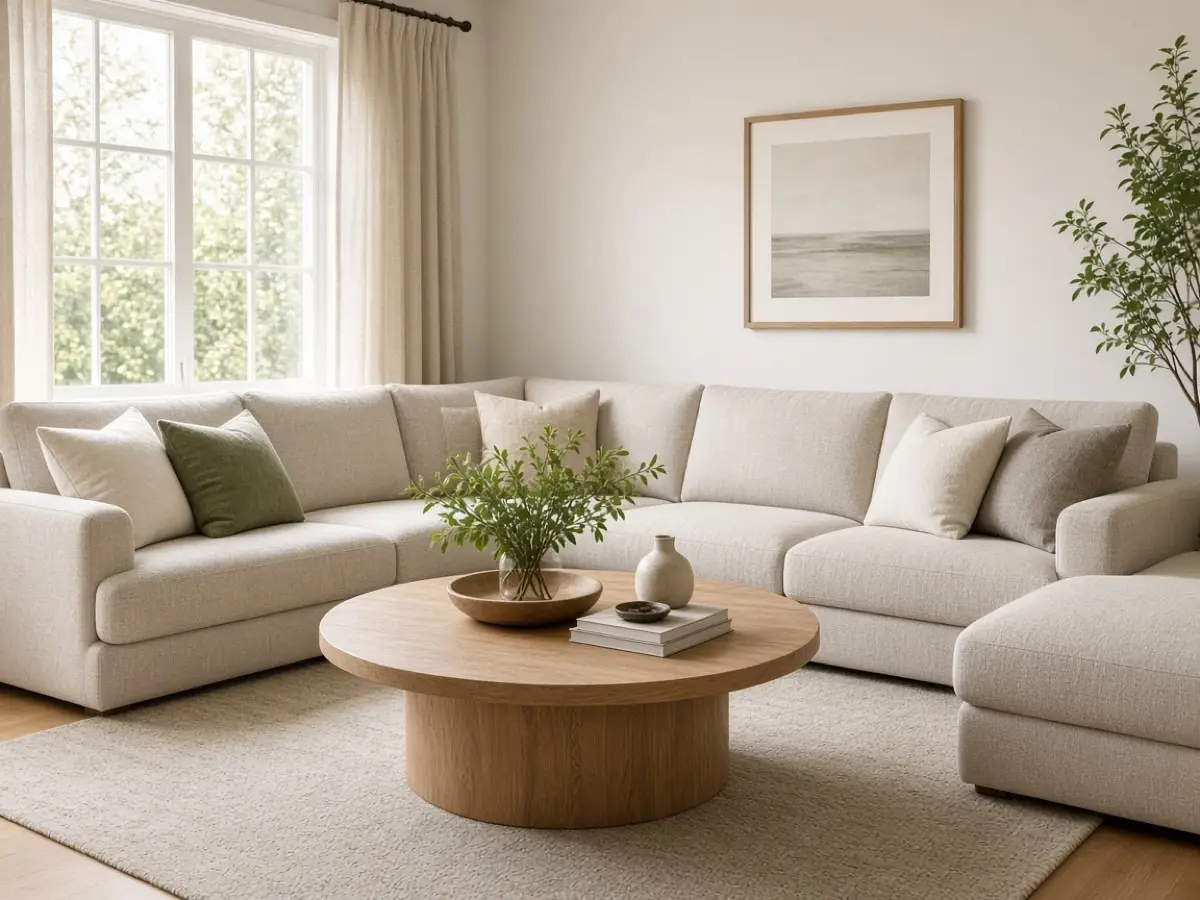
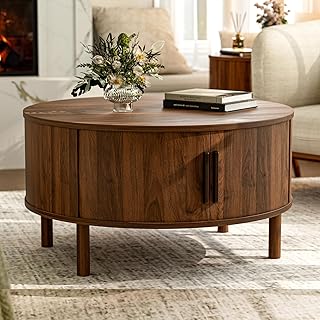
The coffee table wants to sit about 16 to 18 inches from the sofa edge, and it should not stick past the return into the path. A round table, 30 to 36 inches, often fits an L better than a rectangle that echoes the long side and then jabs the chaise. You should reach a cup from the corner without standing up.
If your L is small, a pair of nesting tables beats one table that fills the well. Pull one out when you need it. A table you have to walk around to leave the sofa is too big, even if it looks balanced in a photo taken from the ceiling. Measure the gap with a book, about the reach of your hand.


6. The rug goes beyond the front legs
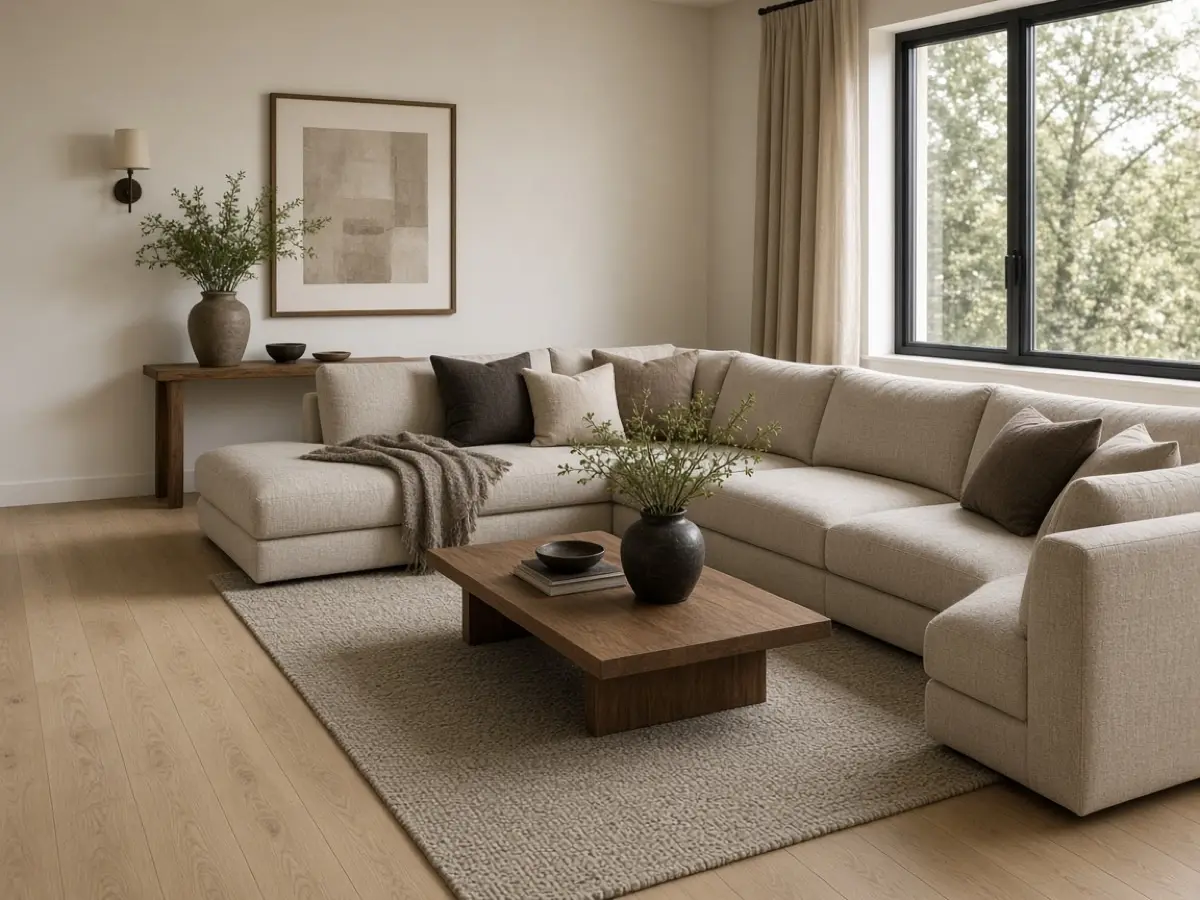
Front legs of both runs should sit on the rug, with 6 to 8 inches of rug showing beyond them if you have the floor. A rug that only covers the well of the L makes the sofa look like it is floating away from the floor. If the room is too small for that, put all four front legs on and let the back legs sit off. Do not put only one side on the rug.
An 8-by-10 rug is the common size that holds a small L. Measure. If the rug crosses the 32-inch path, it is too big. A rug in the path is a curl waiting for a toe. The path stays smoother than the seating zone. A pad under the rug matters more here, because the front legs carry the weight.



7. Put the screen on the open side
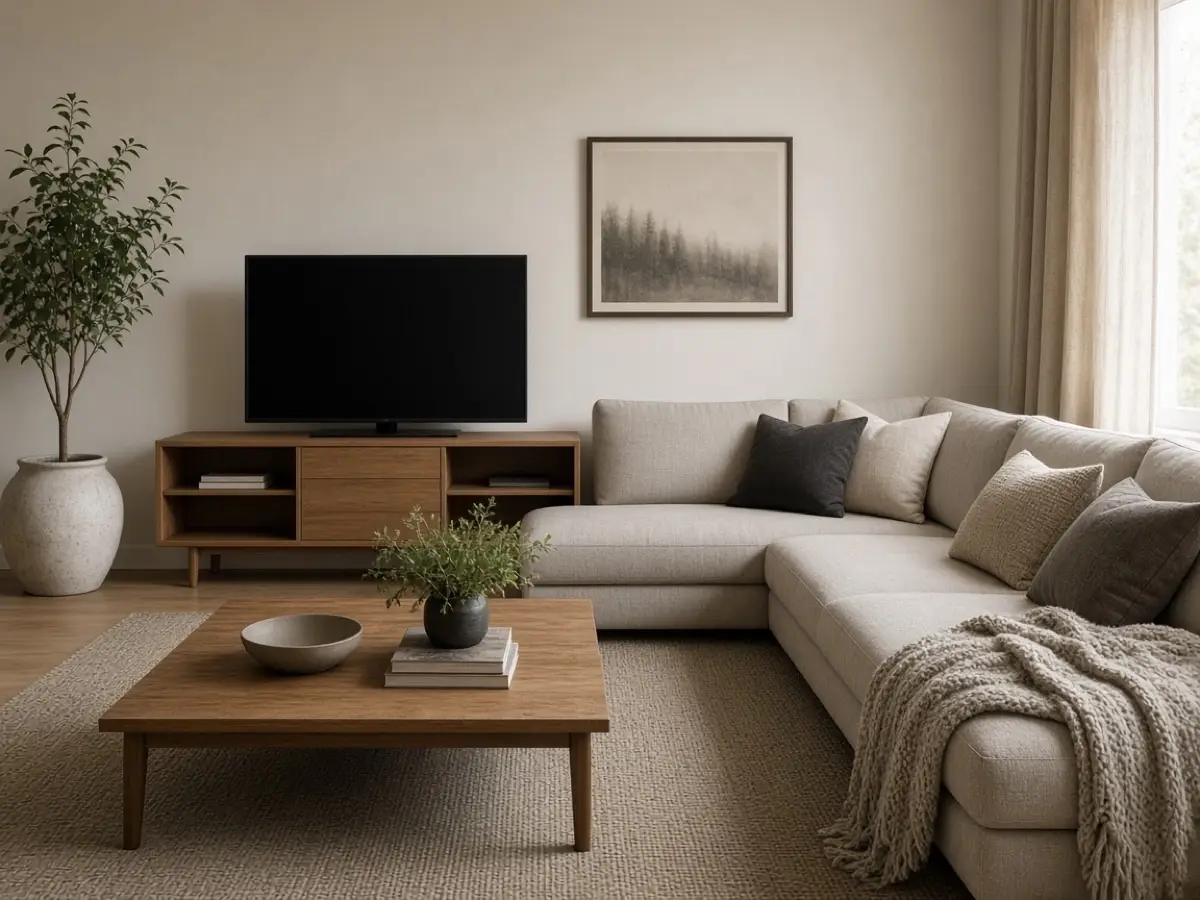
The screen belongs on the wall the L opens toward, centered on the long run, not shoved into the corner where only one person can see it straight. If the chaise faces away from the screen, the person on the chaise will watch by twisting. Turn the chaise toward the screen when you pick left or right.
Mount or set the screen so the seated eye line hits the middle of it. A screen too high, above a fireplace you also have to clear, is a sore neck on a sofa you cannot move closer. In a tight room, a 43-inch screen is easier to place than a 65 that needs a longer look. Sit on the chaise and on the far cushion before you drill anything into the wall.


8. Light the corner so it is not a cave
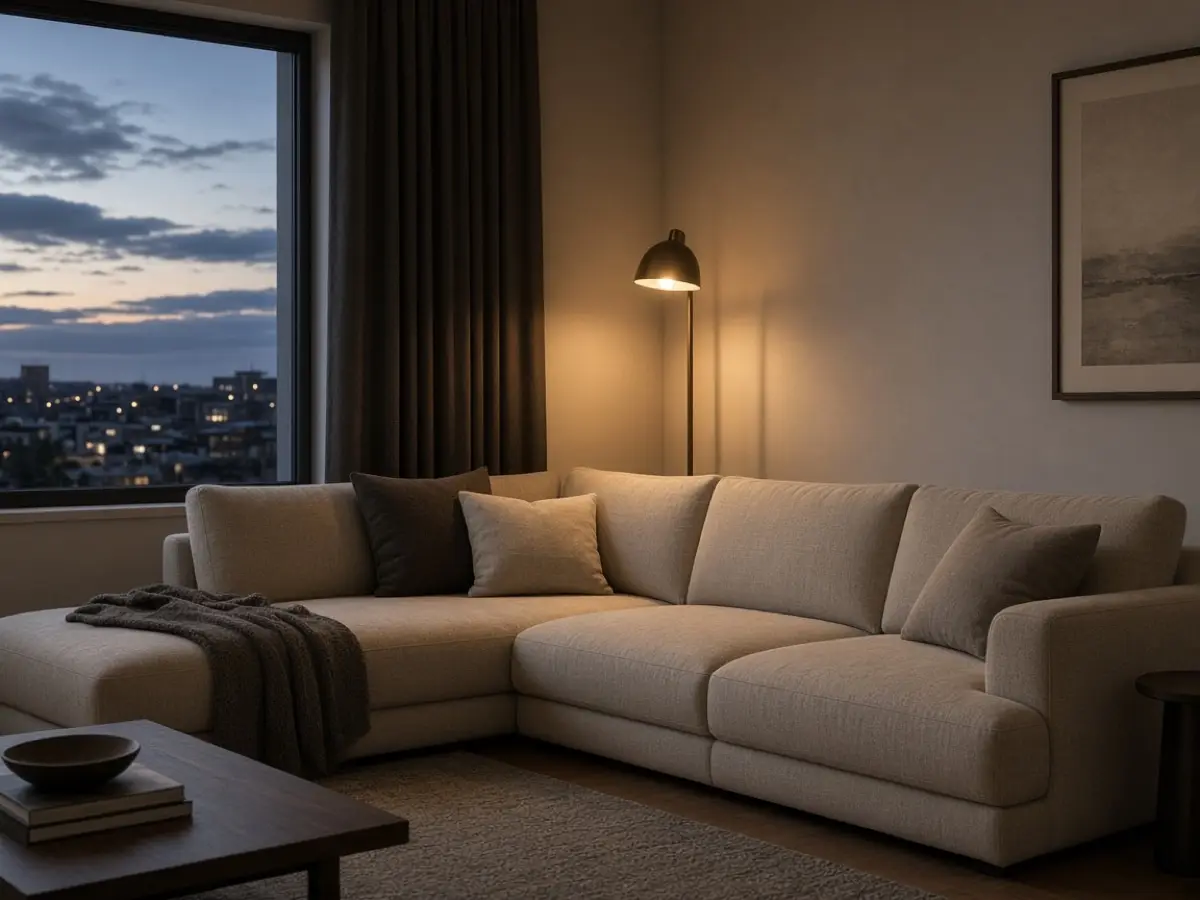
The inside corner sits farther from a window than the ends of the sofa. A lamp on a table at the outer arm, or a slim floor lamp just behind the corner, keeps that seat usable after dusk. One overhead can leaves the corner dim, and a dim corner becomes the spot you pile blankets.
Use a warm bulb, 2700K, and a shade that does not block your view of the screen. The brown and beige room already treats light as part of the color. Here the lamp is how the corner stays a seat at 8 p.m. If the lamp has to stand in the path, it is the wrong lamp. Choose a swing-arm or a lamp on the table inside the L. Turn it on at dusk with the overhead off, and read a page from the corner seat.


9. Measure the stairs before delivery day
An L that fits the wall still has to arrive. Measure the stair width, the landing, and the doorway with the sofa’s longest packed piece in mind. A sectional that comes apart is the one that fits a turn. A single-piece L that looked perfect in the room may not leave the truck. Ask how it splits before you pay.
Once it is in, sit in the corner, walk the path, and open the door. If all three work, stop adding chairs. A chair in the well of the L undoes the table and the path. The room that works with this sofa is the room that still lets you cross it. Photograph the landing and the tightest turn so you are not guessing from memory when you call the store.


Tips Before You Start
- Put the long run on the long wall, with a few inches to spare at the trim.
- Choose the chaise side that leaves 32 inches by the door.
- Sit the back against the wall unless a full path fits behind it.
- Leave the corner as a seat, with one pillow.
- Use a round table you can reach from that corner.
- Put the front legs on the rug and keep the rug out of the path.
- Confirm the sofa splits before delivery day.
FAQ
Where should an L-shaped sofa go in a small living room?
On the longest wall, with the return pointing away from the door. You want about 32 inches of clear floor beside the chaise. If the longest wall is shorter than the sofa, pick a different sofa.
Can a sectional work in an awkward layout?
Yes, if you tape the footprint and the door swing first. Reversible chaises exist so the short side can switch. The awkward part is usually the path, not the corner.
What size rug works with an L-shaped sofa?
Large enough that the front legs of both runs sit on it. An 8-by-10 is a common start. If that rug enters the walking path, use a smaller one and keep every front leg on it anyway.
Should the chaise face the TV?
The person on the chaise should see the screen without a full twist. Put the screen on the open side of the L and choose the chaise side with that seat in mind.
An L-shaped sofa belongs in a room that still has a path, a corner you will sit in, and a table you can reach. Tape the floor, pick the chaise side, and measure the stairs. A smaller sofa is the right answer when those three do not fit. If the tape already crosses the door, believe the tape. The listing photo was taken in a wider room than yours, and the path will not appear after the pillows do. Measure twice, then order the smaller size if the numbers argue.