
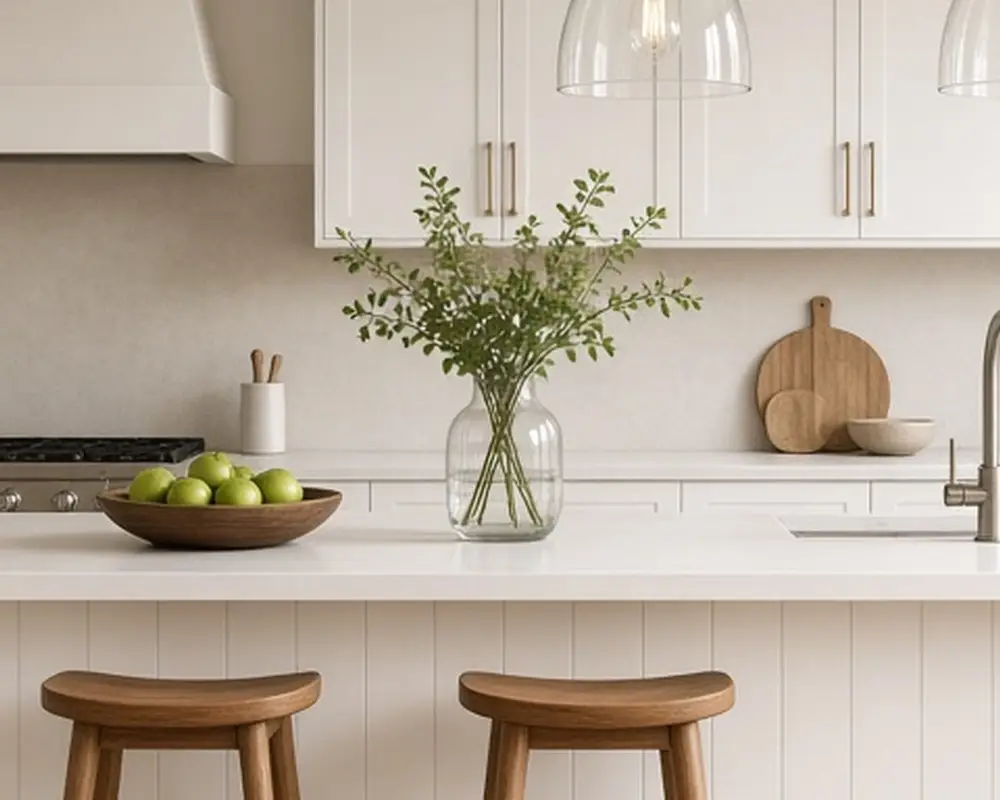
8 Island Lights That Clear a Standard Ceiling

On this page9 sections
Most kitchen lighting photos show soaring ceilings with long, dramatic pendants. Most real kitchens have ceilings around 8 feet high. In that space, a pendant chosen from a photo of a 12-foot ceiling can hang so low it blocks the view across the room, or sit so high it lights nothing but the top of your head.
Getting island lighting right in a standard room comes down to three numbers: how high the pendants hang above the counter, how far apart they are, and how big they are compared with the island. Get those right, and the right style follows. The eight ideas below walk through the practical rules first and then the kinds of kitchen pendants that suit lower ceilings. For other ways to make a compact kitchen work, the very small kitchen layout post is a good place to start.
As an Amazon Associate I earn from qualifying purchases.
1. Start with pendant height over the island
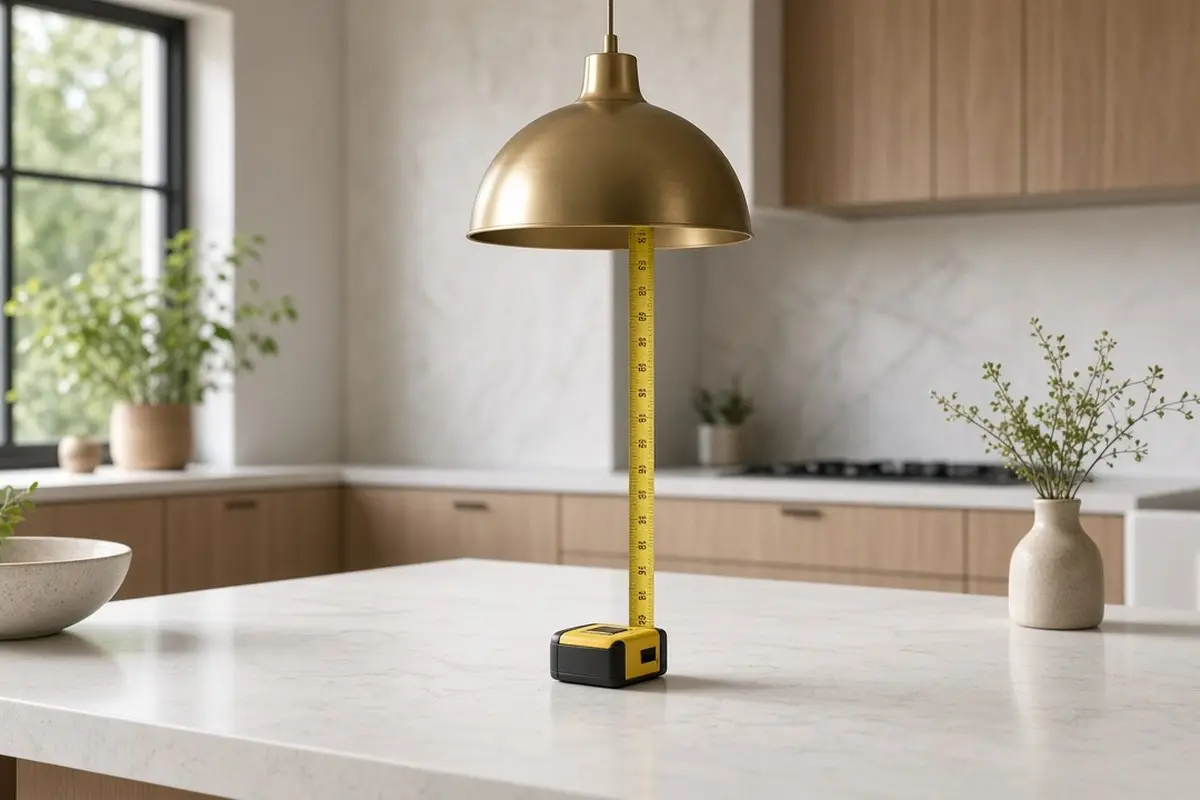
The usual guideline is to hang the bottom of a pendant about 30 to 36 inches above the island counter. With a standard 36-inch counter and an 8-foot ceiling, that leaves around 24 to 30 inches between the ceiling and the bottom of the light, which must include the canopy, the cord or rod, and the shade itself.
That is less room than many people expect. A shade that is 14 inches tall leaves only 10 to 16 inches of cord. It still works, but it rules out very tall lights.
Before buying, measure from the counter to the ceiling. Subtract 30 to 36 inches. What is left is the maximum height of the whole fixture, from canopy to the bottom of the shade. Most pendants list an adjustable overall height; make sure your number falls within it.
Tall household members may want the lights on the higher end of the range, so they do not see the bulb when standing. Seated at the island, the light should not block the view of the person across from you.
If you are unsure, hang one pendant first on a temporary hook at different heights and live with it for a day. Most adjustable cords can be shortened later, but they cannot be made longer.
Get the look
2. Get the island light spacing right
For two or three pendants over an island, a common rule is to space them about 24 to 32 inches apart, center to center, depending on their size, and to keep each end pendant at least 6 inches in from the end of the island. A good shortcut: divide the island length by the number of pendants plus one, and center a pendant at each division.
For an island 72 inches long with two pendants, that gives roughly 24 inches from each end and 24 inches between them. With three pendants on a longer island, the spacing is tighter and smaller shades work better.
Lay painter’s tape on the ceiling at each planned position before the electrician arrives. Standing back and looking at the tape makes it easy to adjust spacing before any holes are cut.
If the island has a cooktop or a sink, keep pendants from hanging directly over it where steam and heat rise. Shift them slightly, or choose a fixture that can be cleaned easily. And remember that the island may not be centered in the room; the lights should be centered on the island, not on the ceiling.
Get the look

3. Choose shallow, wide shades
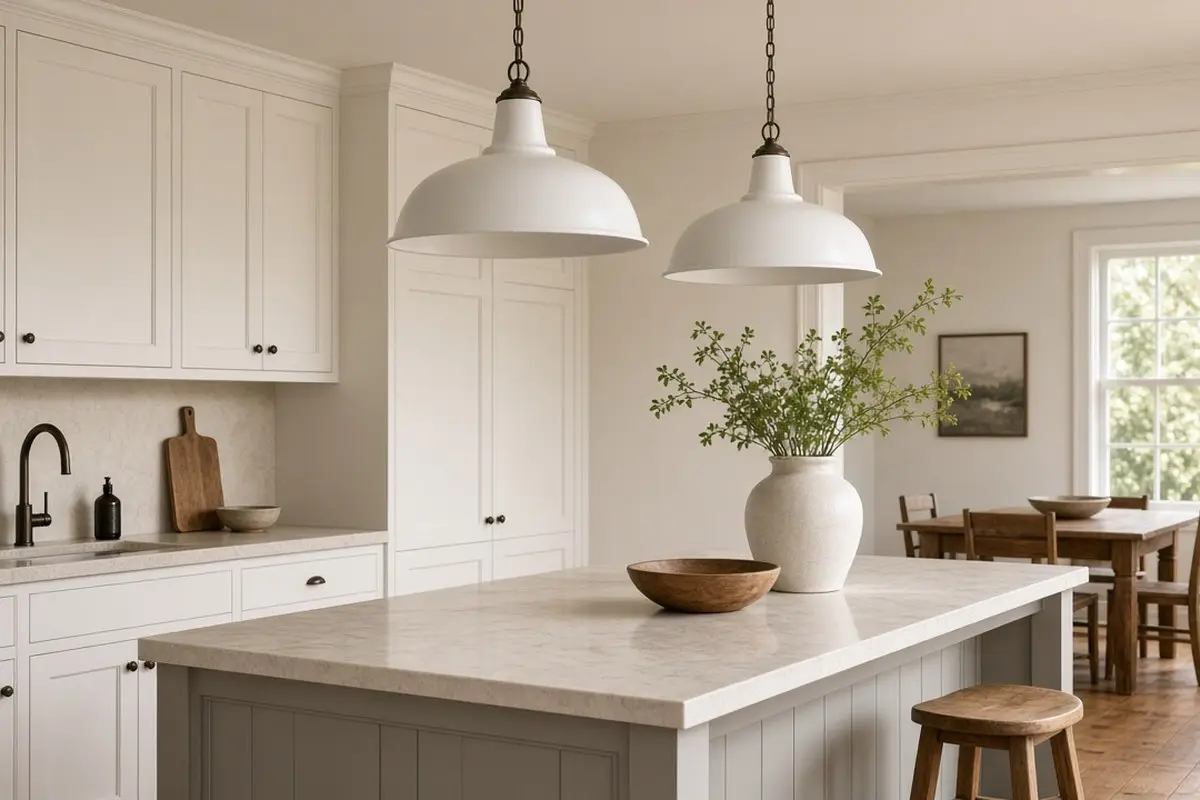
In a room with a standard ceiling, shallow shades are your friend. Wide domes, flat discs, and low bowls give a generous pool of light without needing much vertical space. A 16-inch-wide dome that is only 8 inches tall fits easily, while a tall lantern of the same width might not.
Shallow shades also keep sightlines clear across the island, so the room feels open even with lights hanging over it.
Size the shade to the island. A rough guide is that the combined width of all pendants should be no more than about half to two-thirds of the island length, leaving space between them. Two 14-inch domes over a 72-inch island leave plenty of breathing room. Two 24-inch domes would crowd it.
Shade finish changes the light. A white interior bounces light down onto the counter, which is best for cooking. A dark or metallic interior gives a moodier pool of light and makes the shade itself the feature.
Get the look
4. Clear glass keeps it light
Clear or seeded glass pendants are almost invisible when switched off, which makes them ideal for lower ceilings. They do not block the view, and they let light spread in every direction. A simple glass globe or a cylinder in clear glass works in nearly any kitchen style.
Use a bulb that looks good when visible: a soft globe or a warm filament bulb. The bulb becomes part of the design, so choose its shape as carefully as the shade, and keep all the bulbs in a row identical. Bare, cool bulbs look harsh through clear glass.
Glass needs regular cleaning, especially above a cooktop island where grease can build up. Choose a shape you can reach and wipe easily, or one with a removable shade. Seeded or ribbed glass hides fingerprints and dust better than smooth clear glass.
If the kitchen gets lots of daylight, glass pendants also sparkle during the day, adding a little life even when the lights are off.
Get the look
5. Semi-flush mounts for very low ceilings
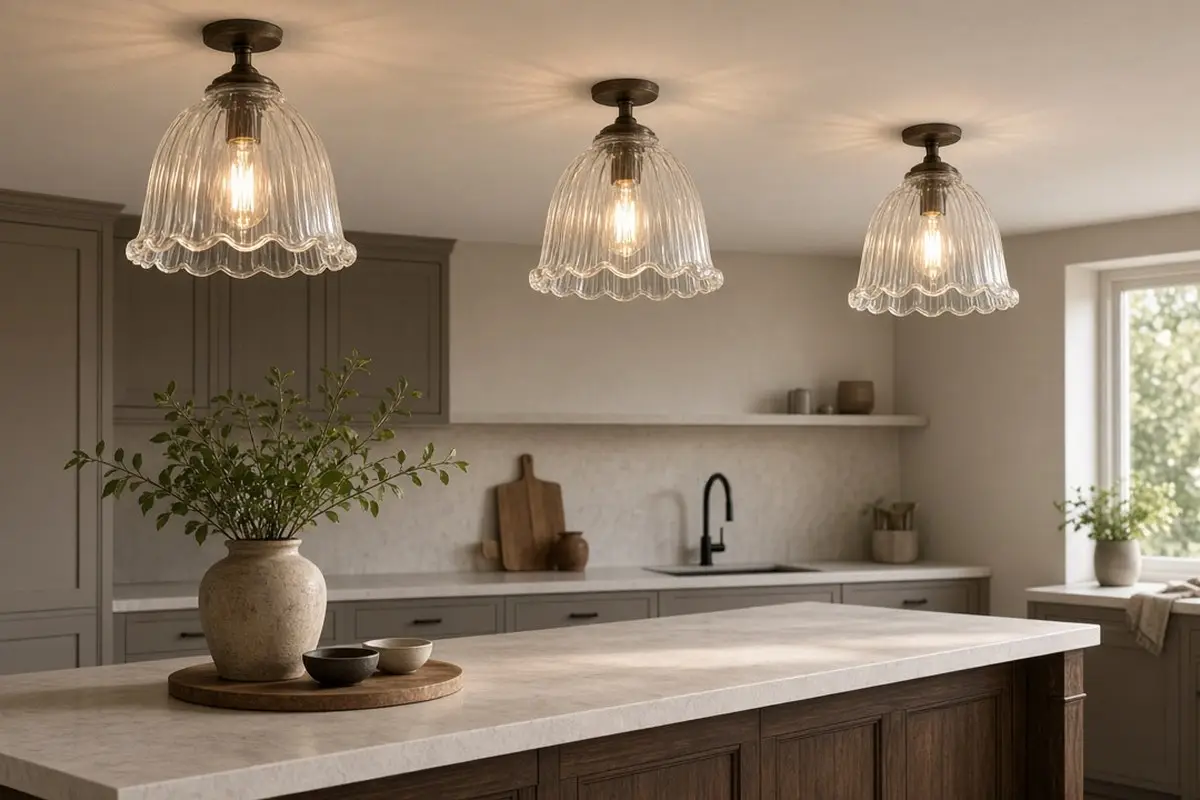
If your ceiling is under 8 feet, or the island is unusually tall, regular pendants may not fit at all. Semi-flush mounts hang only a few inches below the ceiling and still look decorative. Two or three in a row over the island give the same rhythm as pendants.
Semi-flush lights are also a good choice when the island sits in a walkway or near a doorway, where tall people might brush against a hanging pendant. They give clearance everywhere while still marking the island as its own zone.
Recessed lights on their own can light an island, but they rarely feel special. Combine a few recessed cans for task light with decorative semi-flush fixtures for character.
Get the look
6. A single linear pendant
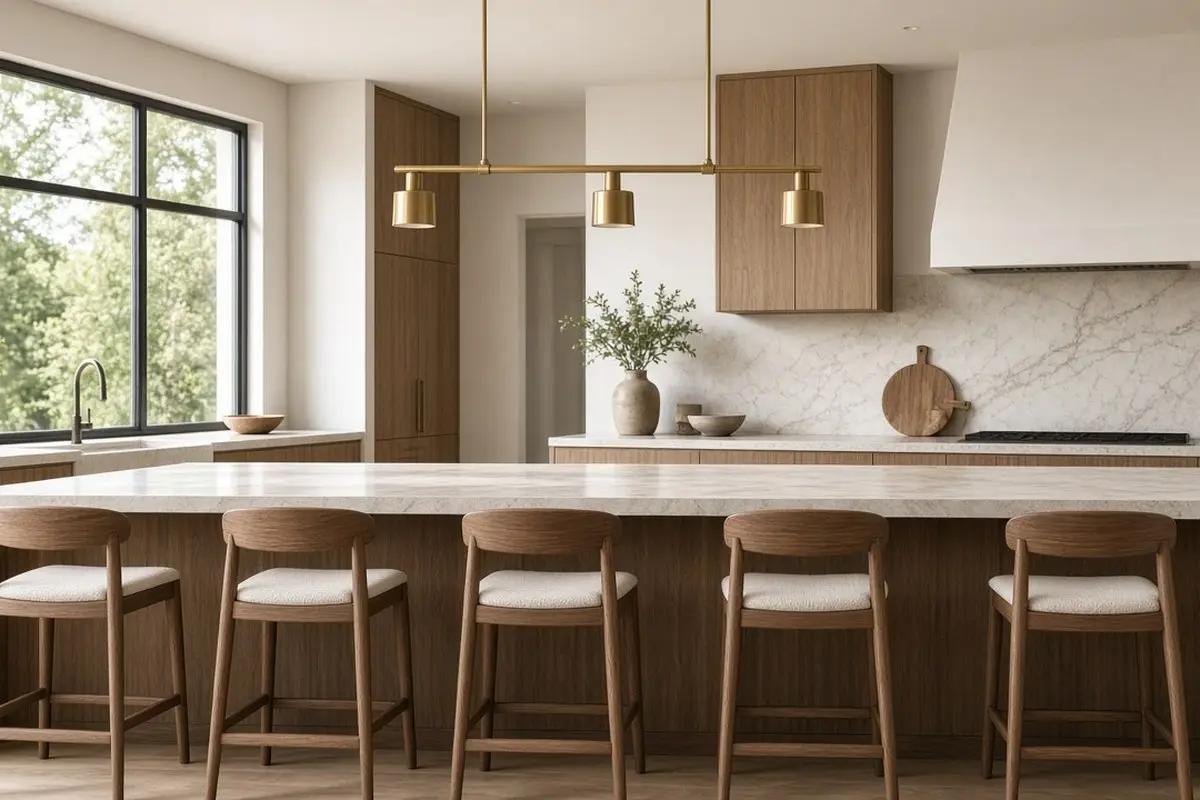
A long linear fixture can light the whole length of an island from one ceiling box. It suits modern kitchens and is easy to hang at the right height because there is only one fixture to level. Look for ones about two-thirds the length of the island.
Because it is one fixture, a linear pendant needs the island and the ceiling box to line up. If the existing box is off center, ask an electrician to move it, or choose a fixture with a canopy that can slide along a rail. Many linear lights have adjustable cables at each end, which makes leveling easy.
Linear fixtures also suit narrow islands, where two round pendants would hang too close to each edge.
Get the look
7. Woven and rattan shades
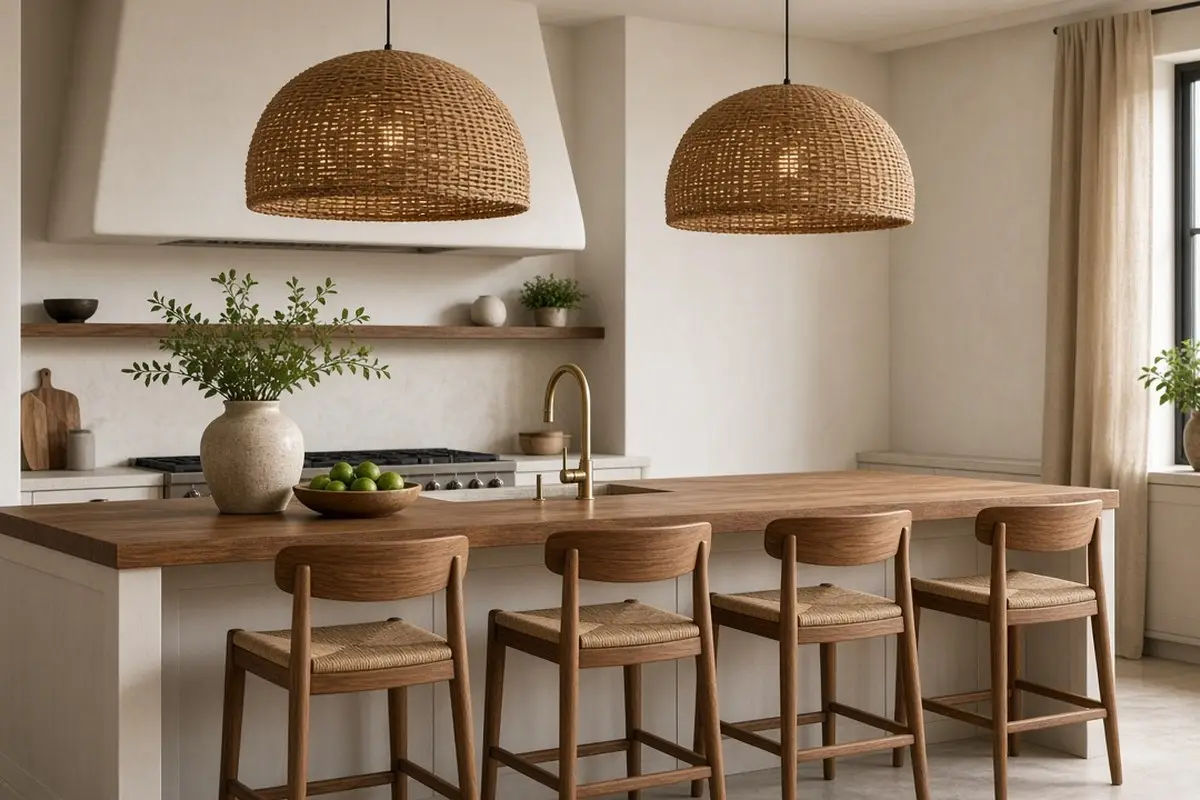
Woven pendants add warmth and texture and filter light softly. Choose shallower versions for standard ceilings. They suit coastal, boho, and farmhouse kitchens.
Natural fibers cast patterned shadows on the ceiling and counter, which looks beautiful at night. They are also light in weight, which makes them easy to hang. Dust them regularly with a soft brush or a hair dryer on cool, and keep them away from steam right above a cooktop, where grease can stick in the weave.
Get the look
8. Put them on a dimmer
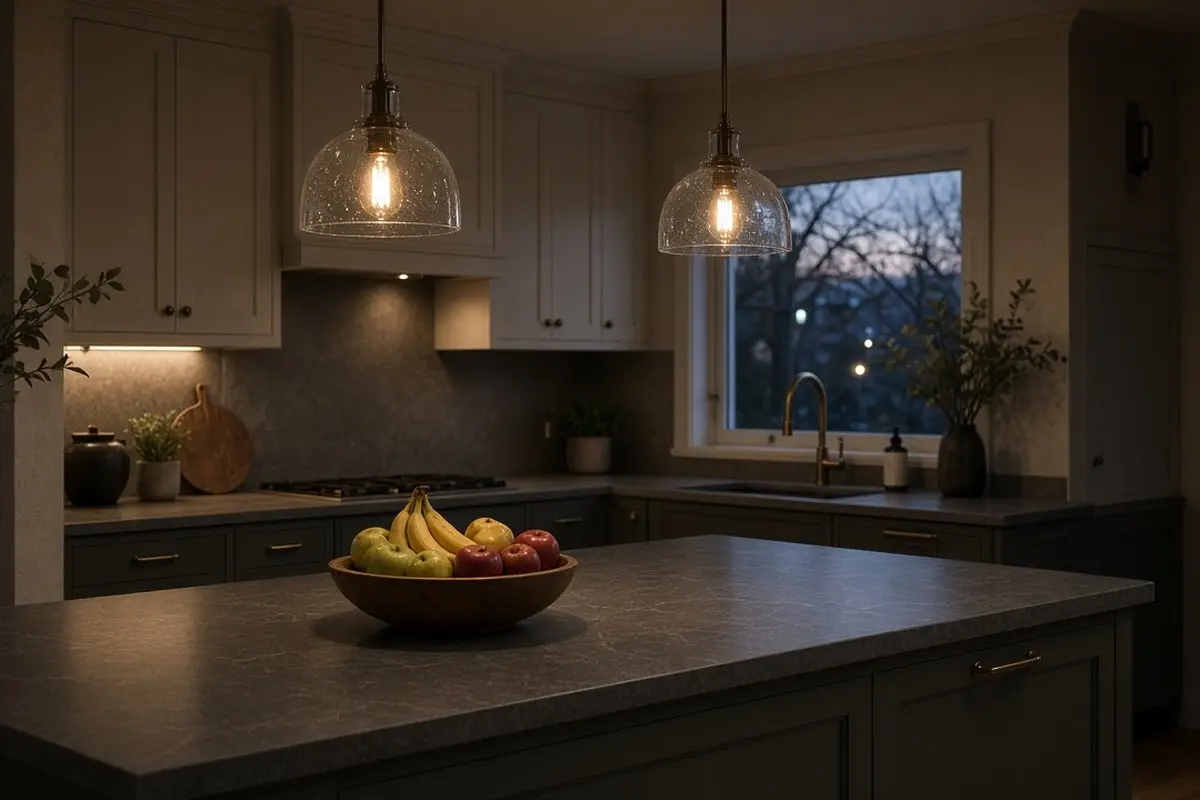
Island lights on a dimmer can go from bright for cooking to low for dinner or a late-night snack. Use dimmable LED bulbs and a compatible dimmer.
Separate switches for island pendants, ceiling lights, and under-cabinet lights give you control over the whole kitchen. Bright task light for cooking, warm low light for eating, and a soft under-cabinet glow at night make one room work for every part of the day. Choose bulbs around 2700K to 3000K for warmth.
Get the look
FAQ
How high should pendants hang over an island?
About 30 to 36 inches above the counter is the common guideline.
How far apart should island pendants be?
Roughly 24 to 32 inches center to center, with at least 6 inches at each end.
How many pendants over a kitchen island?
Two for most islands, three for longer ones, or one linear fixture. The kitchen finish pairings post explains matching the light finish to the hardware.
What size pendant fits an 8-foot ceiling?
A fixture whose total drop, including canopy and shade, leaves 30 to 36 inches above the counter. In most 8-foot kitchens, that means a shade no taller than about 12 inches.
Can I hang pendants without a ceiling box over the island?
Plug-in pendants with swag hooks can work for a temporary fix, but a proper ceiling box installed by an electrician is safer and looks neater.
Should island pendants match the dining light?
They should relate, not necessarily match. Share a finish or a shape, and keep the dining light slightly larger so it reads as the main fixture. The living and dining room split post covers lighting zones in open rooms.
Island lighting in a standard kitchen is about proportion. Measure first, choose shallow shapes, and the lights will look like they were made for the room.