
7 Beadboard Ceilings for a Porch or a Bath

On this page13 sections
- Panel or plank: the first decision
- Materials that suit damp or outdoor ceilings
- Classic porch-blue beadboard
- White beadboard over a small bath
- Natural wood on a screened porch
- Beadboard with a tray of trim
- Seams that disappear
- Working around lights and fans
- A bold color overhead
- Installing beadboard overhead: the basics
- Caring for a beadboard ceiling
- Quick answers
- Before you start
Walls get most of the attention in a room makeover, but the ceiling is the largest unbroken surface in many small spaces, and on a porch it is the surface you see most. Beadboard, the grooved paneling with a small rounded bead between each board, has been used overhead on porches and in bathrooms for well over a century. It hides small cracks, adds texture without adding pattern, and gives a plain room a finished, cottage feel.
This guide sticks to ceilings. Wainscoting and wall panels are a separate project with different rules about height and trim; if that is what you are after, see the guide to bathroom wall panels. Here the questions are about working overhead: which material holds up to humidity, how to hide seams, what to do around a light or a fan, and which colors suit a ceiling rather than a wall.
As an Amazon Associate I earn from qualifying purchases.
Panel or plank: the first decision
Beadboard comes in two main forms, and the choice shapes the whole project.
Sheet panels are usually 4 by 8 feet and a quarter inch thick, with the grooves milled into the face. They go up quickly, since one sheet covers 32 square feet, and they are the lighter option for working overhead. The downside is seams: where two sheets meet, you will see a line unless you plan for it with trim or a careful joint.
Tongue-and-groove planks are individual boards, typically 3 to 6 inches wide, that lock together. They take longer to install but look more authentic, since each board is separate and the joints disappear into the grooves. They also handle uneven ceilings a little better, because each board can follow small dips.
For a bathroom of average size, panels are usually the more practical choice. For a long porch, many people prefer planks, since the run of individual boards reads clearly from the yard and short end joints can be staggered like a floor.
Materials that suit damp or outdoor ceilings
The material matters more on a ceiling than on a wall because warm, wet air rises. A bathroom ceiling sees more steam than any wall, and a porch ceiling faces humidity, temperature swings, and wind-driven rain.
- PVC beadboard does not absorb water, will not rot, and is a strong choice for a shower ceiling or an exposed porch. It is heavier than it looks and expands with heat, so it needs the gaps the manufacturer recommends.
- Primed MDF beadboard is smooth and inexpensive, but it swells if water gets in. Use it only in a well-ventilated bathroom away from the shower, and seal every cut edge.
- Solid wood planks, such as pine or cedar, are the traditional choice for porches. They need primer on all sides and edges before installation so moisture cannot get in from behind.
- Plywood beadboard panels sit in the middle: lighter than PVC, more moisture-tolerant than MDF, and paintable.
Whatever you choose, check the product label for interior or exterior use and follow the fastening instructions. The details below assume a painted finish, which is how most beadboard ceilings look best.
1. Classic porch-blue beadboard
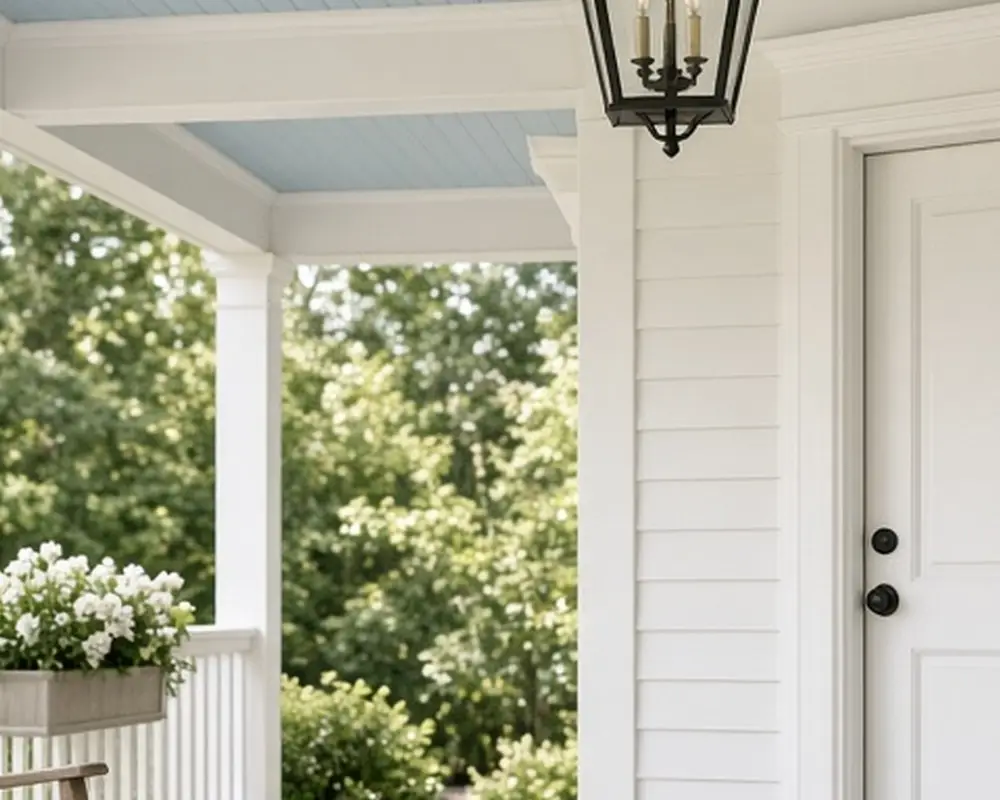
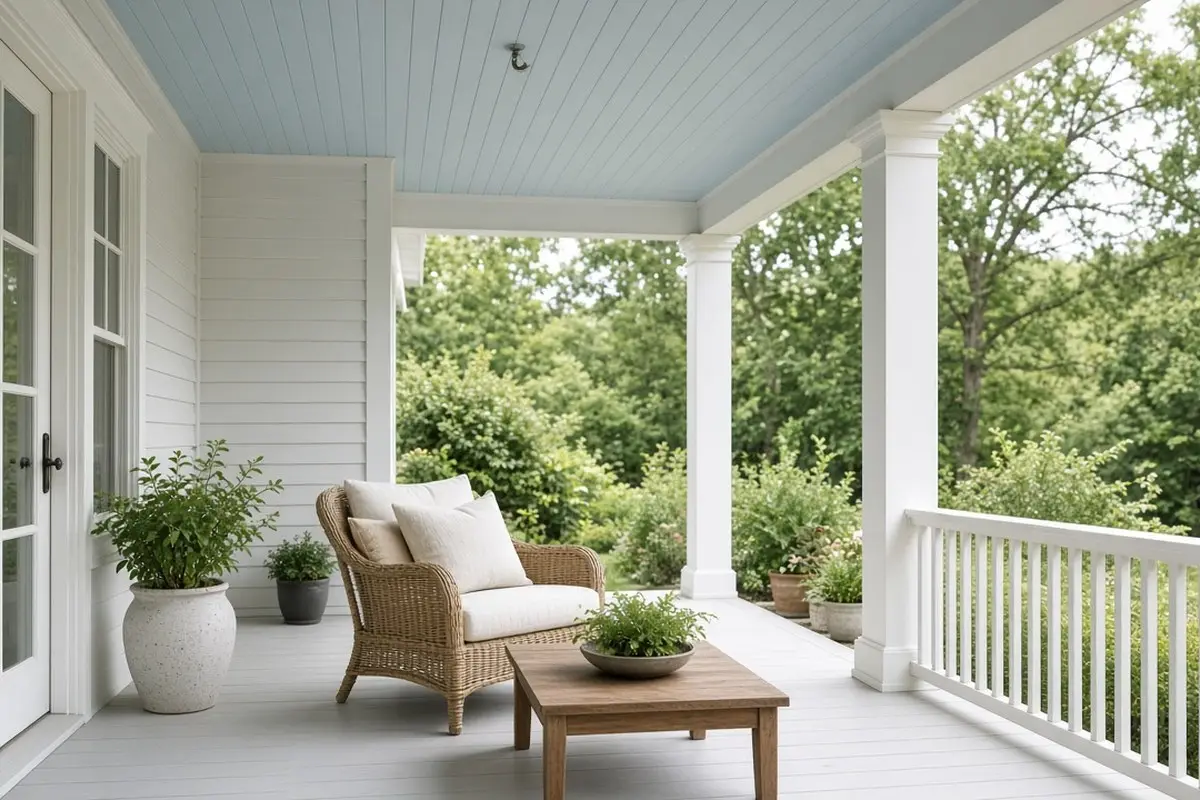
The pale blue porch ceiling is a long tradition in parts of the American South, and it still looks right on almost any covered porch. The color is soft enough to read as sky, and it brings a little color to a porch without competing with the house body or the front door.
Run the boards perpendicular to the house wall, so the grooves lead the eye out toward the yard. Paint the boards before installation if you can, since painting grooves overhead is slow and drippy. Then do one final touch-up coat after the trim goes on.
Choose an exterior paint in a satin finish, which cleans easily and hides small dents better than gloss. Very pale blues with a hint of green or gray tend to look the most natural in daylight.
Get the look
2. White beadboard over a small bath
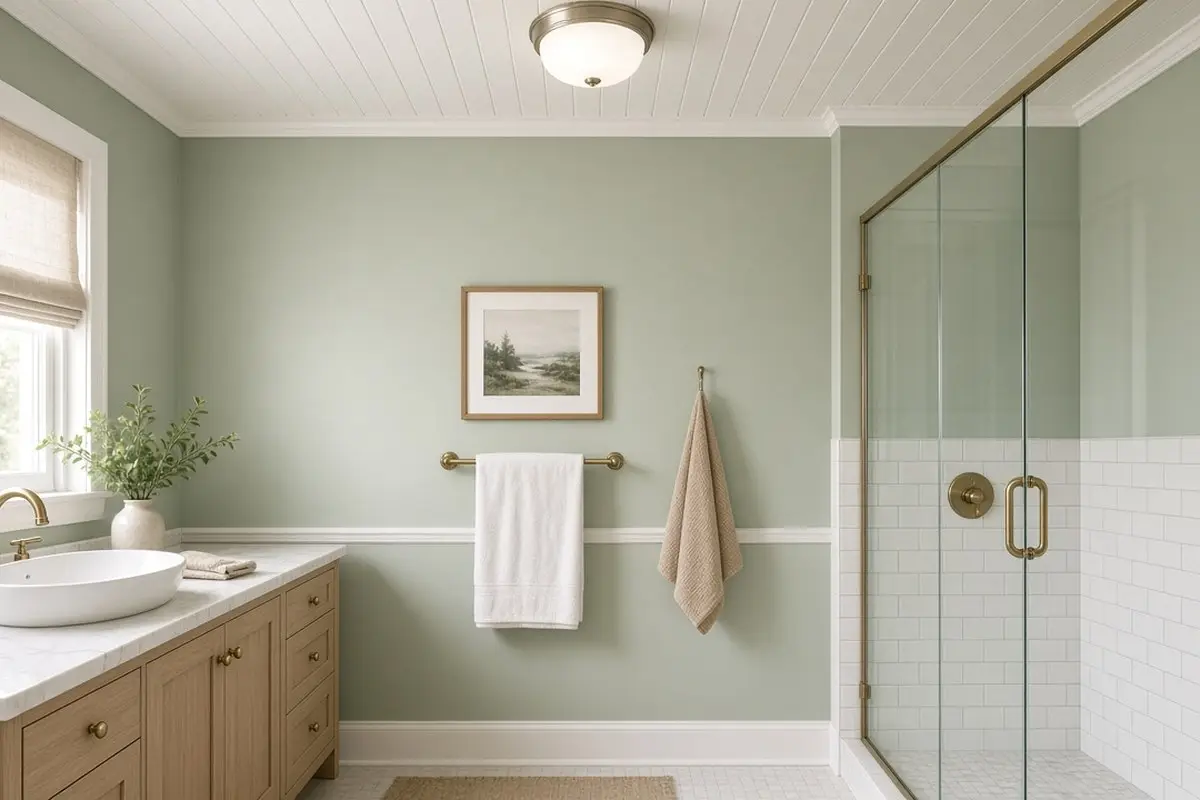
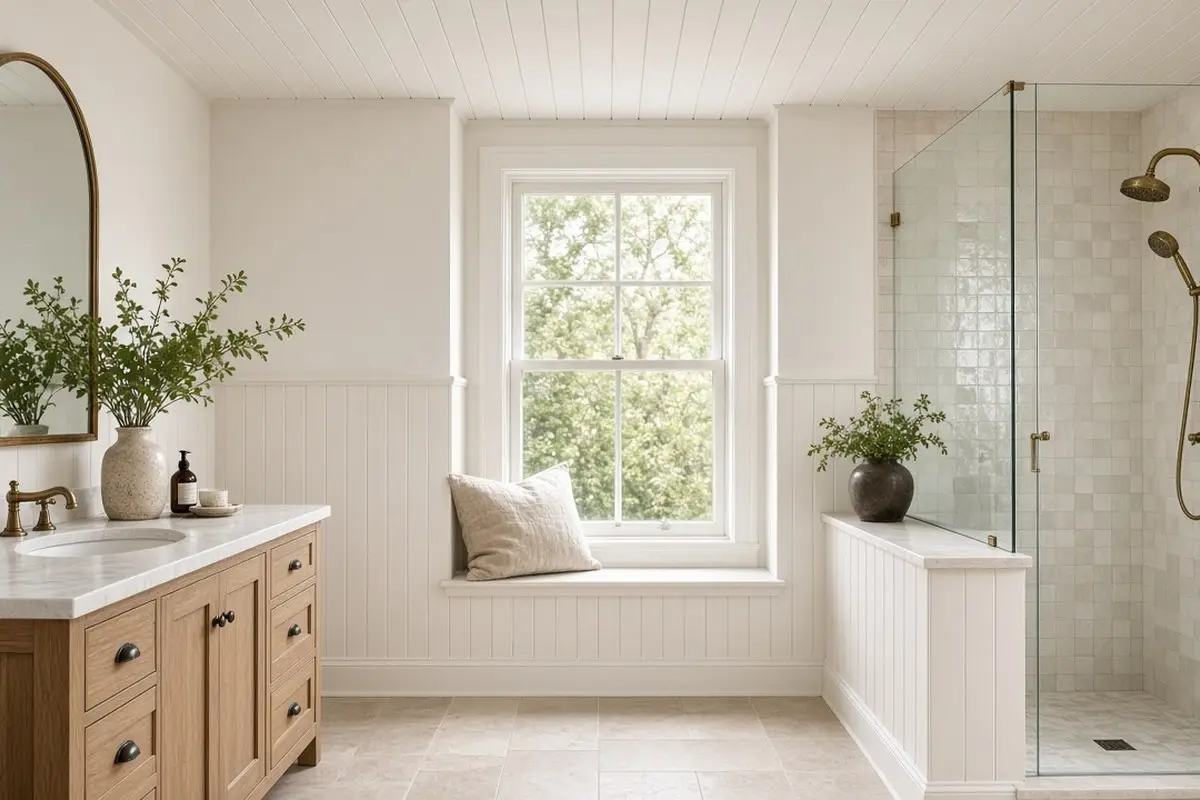
In a small bathroom, a white beadboard ceiling bounces light back down and makes a low ceiling feel more intentional. It also hides the hairline cracks that drywall ceilings tend to develop in humid rooms.
Use a moisture-resistant panel, and paint it with a bathroom paint that has mildew resistance in a satin or semi-gloss finish. Flat paint on a bath ceiling holds onto moisture and marks. Make sure the exhaust fan is rated for the room size, since beadboard grooves can collect condensation and dust if the room stays damp after showers.
Keep the wall color simple, so the ceiling texture is the feature. A white ceiling with soft gray or pale green walls is calm and easy to live with.
Get the look
3. Natural wood on a screened porch
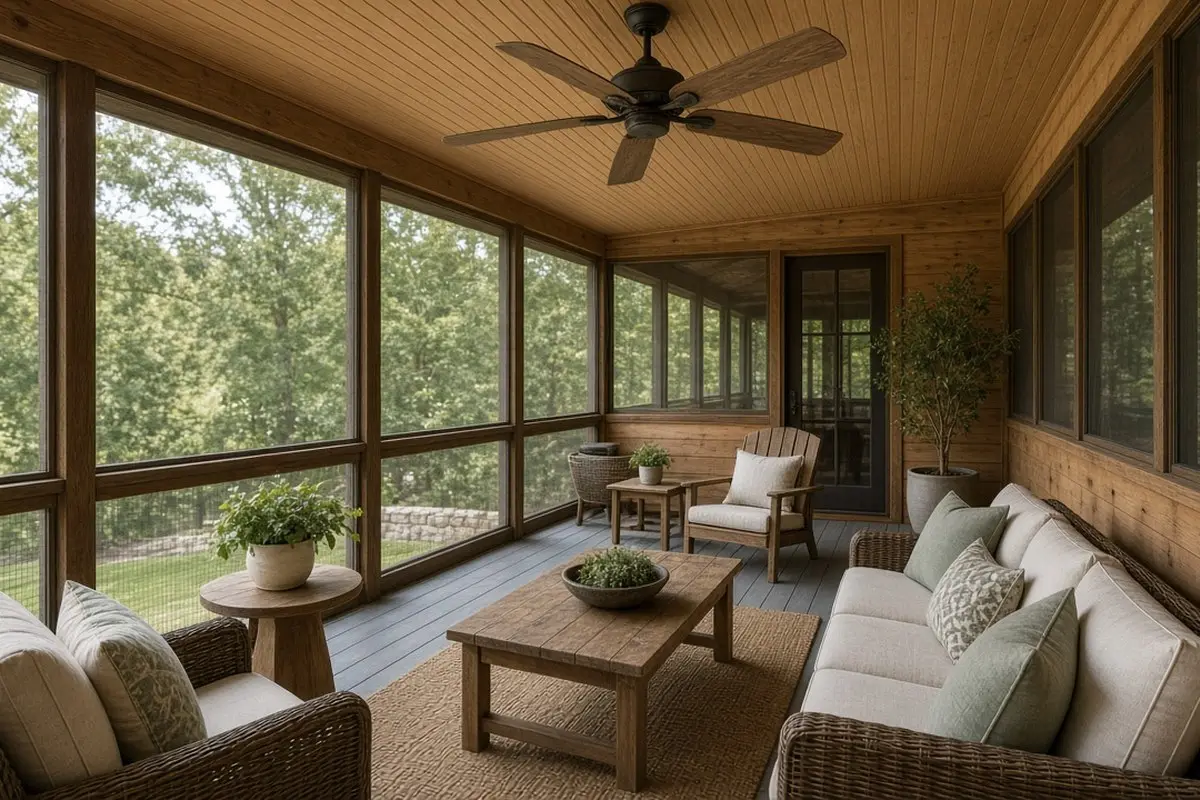
Not every beadboard ceiling needs paint. On a screened porch, clear-finished pine or cedar planks give a warm, cabin-like feel that pairs well with wicker, wood, and outdoor fabrics.
The key is protection. Use a finish rated for exterior use that blocks UV, since sunlight entering through screens will gray and yellow untreated wood. Seal the backs and ends of each plank before installation. Apply a fresh coat every few years, since ceilings are easier to maintain than they are to strip and redo.
For furniture ideas that suit a wood ceiling, see the screened porch furniture guide.
Get the look
4. Beadboard with a tray of trim
A flat beadboard ceiling can look unfinished where it meets the wall. A simple frame of trim, such as a crown molding or a flat board with a small cove, ties the ceiling to the walls and hides the edge gaps that every ceiling installation has.
In a bathroom, a painted trim band around the perimeter creates a tray effect without changing the ceiling height. Paint the trim the same color as the beadboard for a quiet look, or in the wall color for a frame. On a porch, the trim covers the joint between the ceiling and the beam or fascia.
Leave a small expansion gap at each wall, about an eighth of an inch for wood and more for PVC as the manufacturer directs. The trim covers it.
5. Seams that disappear
The most visible flaw in a sheet-panel beadboard ceiling is the joint between panels. A few methods solve it:
- Plan the layout. Measure the ceiling and center the panels so the cut pieces at each side are equal. A balanced layout looks deliberate even if the seams show slightly.
- Join on a groove. Some panels are milled so the edge falls in a groove. Joining there makes the seam blend in.
- Use batten strips. For a cottage look, cover each seam with a thin flat strip running across the ceiling. Spaced evenly, the strips look like part of the design rather than a cover-up.
- Land seams on framing. Every edge must be fastened to a joist or a strapping strip. An unsupported edge sags and opens over time.
Caulk the seams with a paintable caulk before the final coat. A small bead, smoothed with a damp finger, fills the hairline and stops paint from cracking at the joint.
Get the look
6. Working around lights and fans
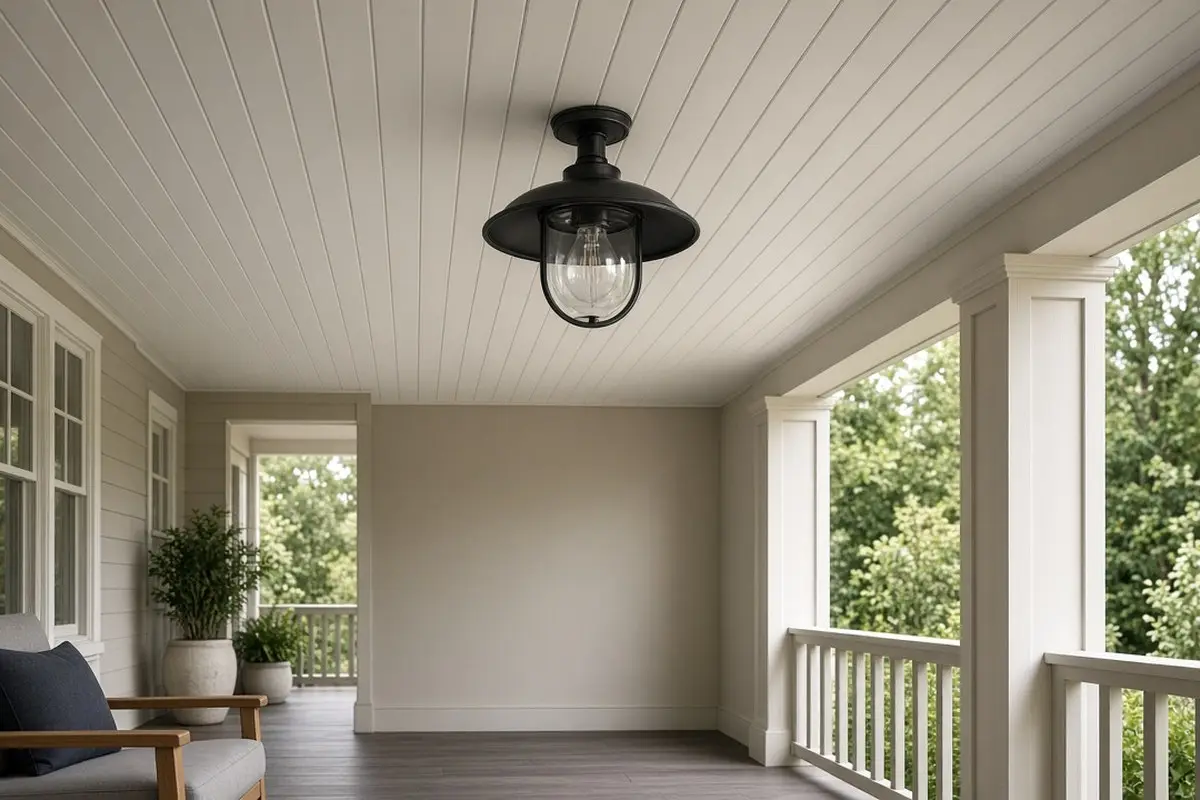
Every ceiling has at least one fixture, and beadboard adds a quarter inch to half an inch of depth. Turn off power at the breaker before any work around a fixture.
Remove the fixture and its canopy, then cut the opening in the beadboard to fit around the electrical box. A box extender ring brings the box flush with the new surface, which is important for the fixture to sit tight and safely. For ceiling fans, confirm the box is fan-rated and anchored to framing, since a fan’s movement loosens anything less.
Recessed lights need trim rings sized to cover the cut. On a porch, choose fixtures rated for damp locations, or for wet locations if the ceiling sees rain. If you are unsure about any part of the wiring, hire an electrician for that step.
Get the look
7. A bold color overhead
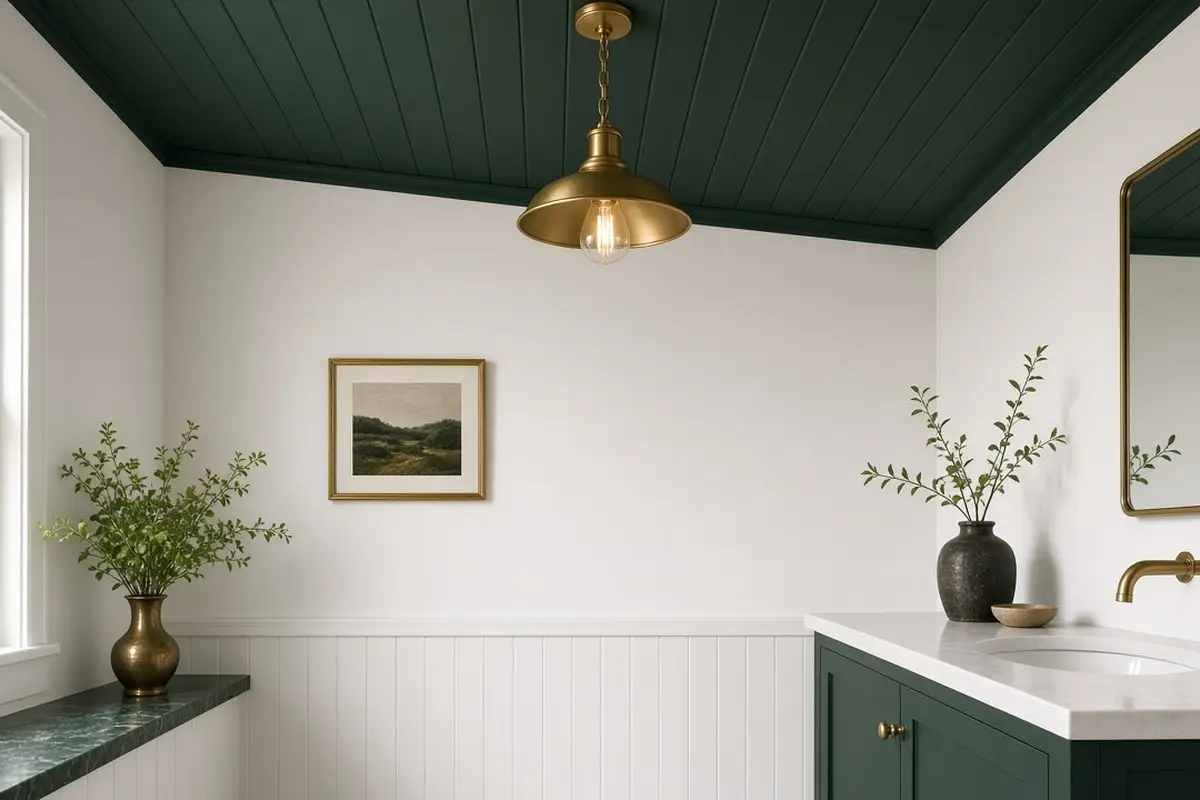
A ceiling does not have to be white or pale blue. In a powder room or a small bath with good lighting, a deep green, navy, or charcoal beadboard ceiling makes the room feel cozy and finished, almost like a lined jewelry box. The grooves catch light and shadow, so dark colors show the texture more clearly than pale ones.
Dark ceilings work best when the walls stay lighter and the trim is crisp. Use enough light, ideally a fixture that throws some light upward, so the ceiling does not read as a black hole at night. For more ideas on color in small baths, see bold bathroom palettes.
Get the look
Installing beadboard overhead: the basics
Ceiling work is tiring and has a few specific safety points. Here is a general outline.
- Find the joists. Use a stud finder and mark each joist with a chalk line across the ceiling. Every fastener needs to hit framing or strapping.
- Prime and paint first. Paint all faces and edges before installation. It is much easier on sawhorses than on a ladder.
- Get help. Panels are awkward overhead. A second person, or a pair of drywall support poles, holds the sheet while you fasten it.
- Fasten with the right nail or screw. Use the length and type the manufacturer recommends. Construction adhesive helps, but never rely on adhesive alone overhead.
- Trim and caulk. Add perimeter trim, fill nail holes, caulk seams, and give the whole ceiling a final coat.
Wear safety glasses when nailing overhead, and use a stable step ladder or a low scaffold rather than a chair.
Caring for a beadboard ceiling
Beadboard grooves collect dust and, in a bathroom, a bit of mildew over time. Run the fan during and after every shower. Once or twice a year, vacuum the ceiling with a soft brush attachment, then wipe it with a mild cleaner on a microfiber mop. On a porch, a gentle rinse with a garden hose sprayer and a soft brush removes pollen and cobwebs. Avoid pressure washers, which can force water into joints and lift paint.
Quick answers
Can beadboard go directly over a drywall ceiling? Yes, in most cases. Fasten through the drywall into the joists. Check that the drywall is sound first.
Should the boards run long or short? On a porch, running toward the yard is traditional. In a bath, running the boards along the room’s longest dimension usually looks best.
Is beadboard too country for a modern home? Not when it is painted a single solid color with simple trim. Wider grooves and a flat finish read more modern than narrow, glossy ones.
Before you start
Look up at the ceiling you have now and note every fixture, vent, and crack. A short list of what needs to move, patch, or extend makes the project go faster and keeps the finished ceiling clean and simple.