
10 Screened Porches Furnished for Humid Afternoons

On this page14 sections
- Know your porch
- Teak seating
- All-weather wicker
- Quick-dry cushion foam
- Powder-coated aluminum tables
- A ceiling fan rated for damp locations
- A porch swing or daybed
- An outdoor rug
- Storage bench for cushions
- Outdoor curtains
- A side table that holds drinks
- Caring for porch furniture in humidity
- Making a small porch work
- Quick questions
A screened porch is the best seat in the house on a humid afternoon. The screens keep out mosquitoes, the roof blocks the sun, and a breeze can move through. But humidity is hard on furniture. Cushions stay damp for days, wicker unravels, metal rusts, and a sweet-smelling porch turns musty by August.
The trick is to furnish a screened porch like the semi-outdoor room it really is. It is protected from rain but not from damp air, so indoor furniture fails and full outdoor furniture can feel too hard and plain. The ten ideas below are chosen for comfort in sticky weather and for surviving a season of humidity without mildew. They work for a large wraparound porch or a small back porch with room for two chairs.
As an Amazon Associate I earn from qualifying purchases.
Know your porch
How much rain blows in? If storms push water through the screens, treat the porch as fully outdoor, with all-weather fabrics and frames.
How much airflow? A porch with screens on three sides dries quickly. One with only a single screened wall stays damp longer and needs more care.
How much sun? Even through screens, afternoon sun fades fabrics. Solution-dyed outdoor fabrics resist fading far better than printed ones. Note which hours the porch gets direct sun and place the main seating where you will actually want to sit during those hours.
1. Teak seating
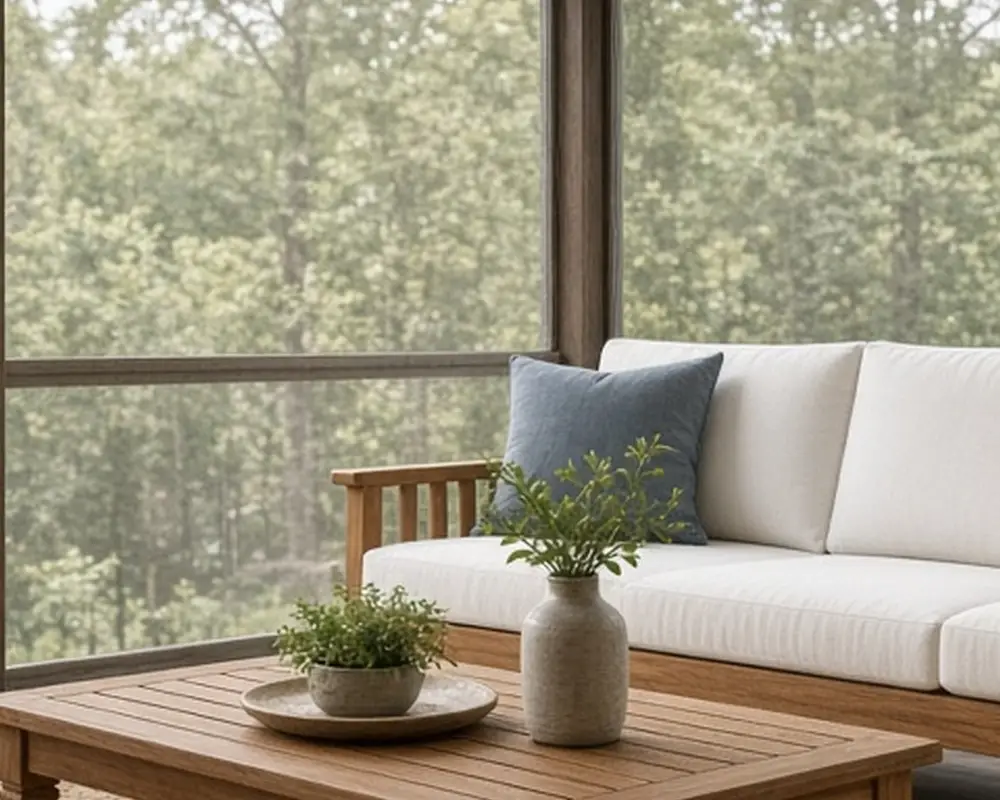
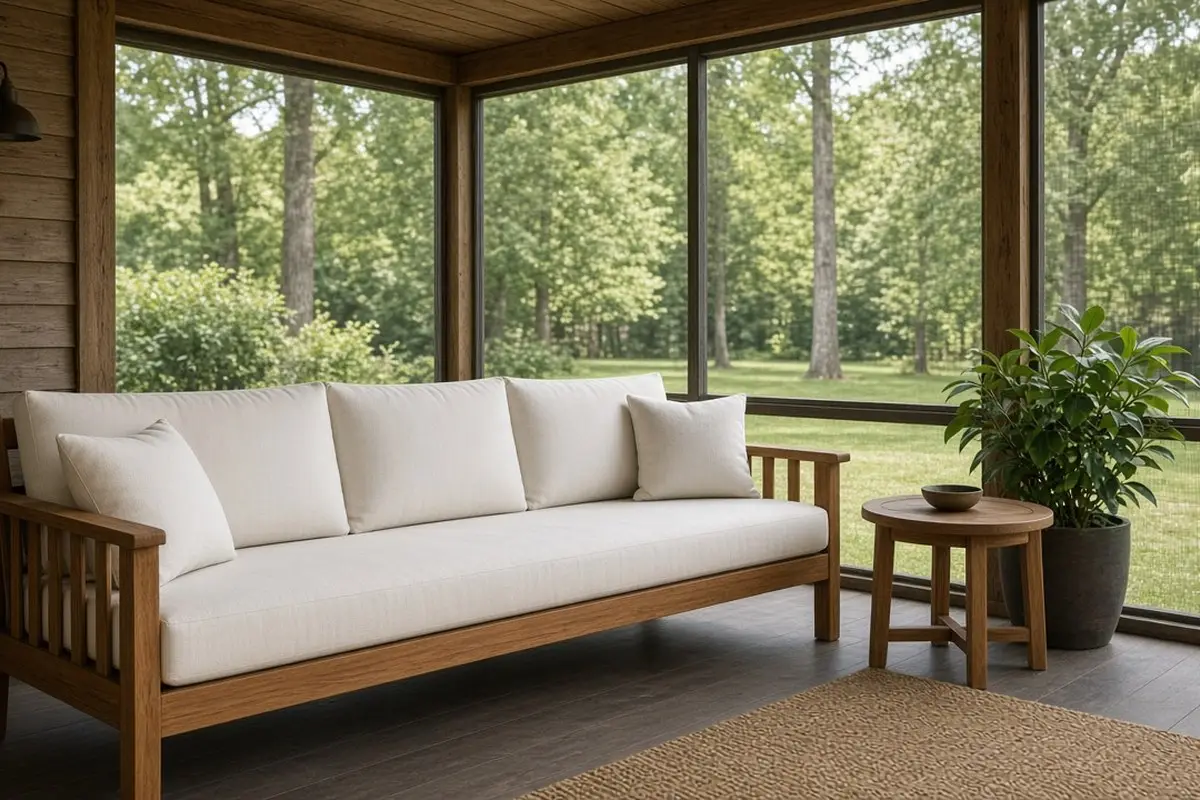
Teak is the classic porch wood because its natural oils resist moisture, rot, and insects. Left untreated, it weathers to a soft silver gray. Oiled once a season, it stays honey brown. A teak sofa or pair of armchairs will last for decades on a screened porch. Quality matters: look for grade A teak from mature heartwood, which has more oil and a tighter grain than cheaper sapwood. Joints should be mortise and tenon rather than simple screws. If you prefer the honey color, clean the wood with a soft brush and mild soap, let it dry fully, and apply teak oil in a thin coat. If you prefer silver, skip the oil and simply wash it once or twice a year. Either way, teak is happy in humid air, which few other woods can claim.
2. All-weather wicker
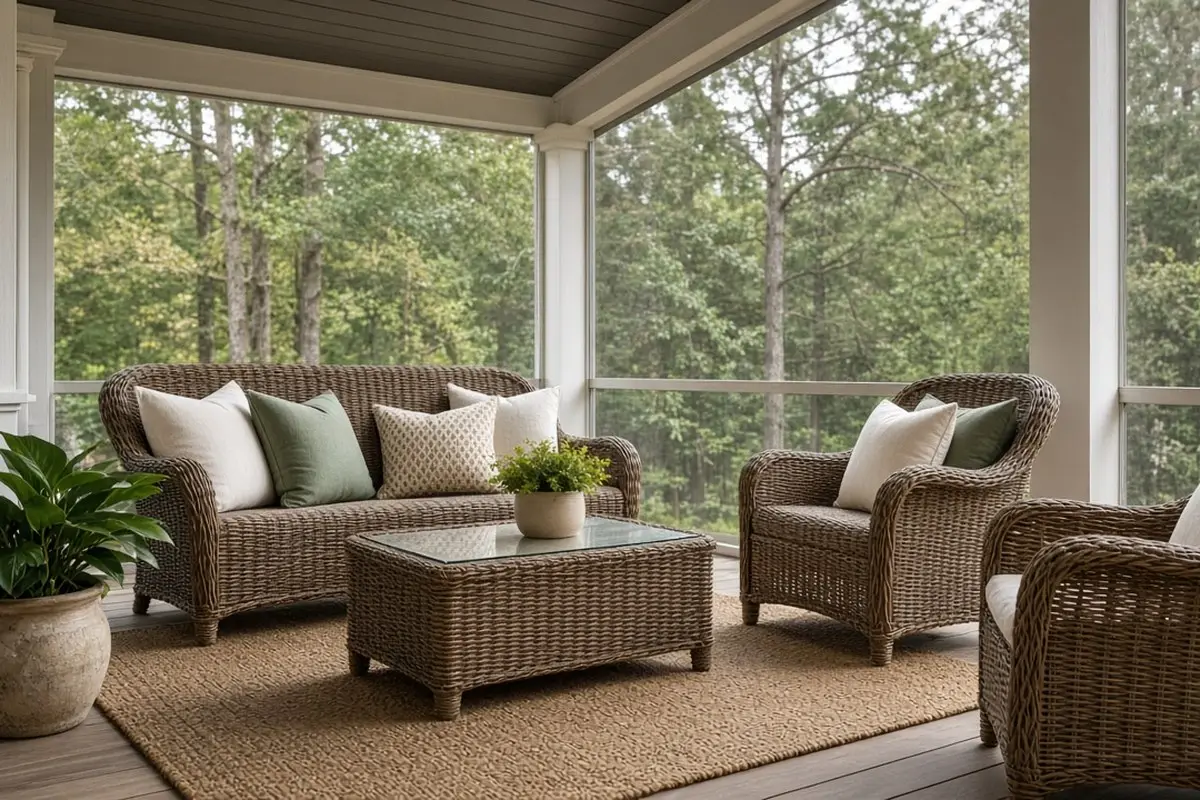
Resin wicker looks like the natural rattan that suits porches so well, but it does not soak up humidity or unravel. Look for a powder-coated aluminum frame underneath, so nothing rusts. The weave should be tight and even, made from a solid-color resin strand so scratches do not reveal a different color underneath. Cheap resin wicker can crack in strong sun, so check that it is UV-stabilized. On a screened porch, all-weather wicker in white, gray, or a warm brown gives that classic Southern porch look with almost no upkeep beyond a rinse with the hose.
Get the look
3. Quick-dry cushion foam
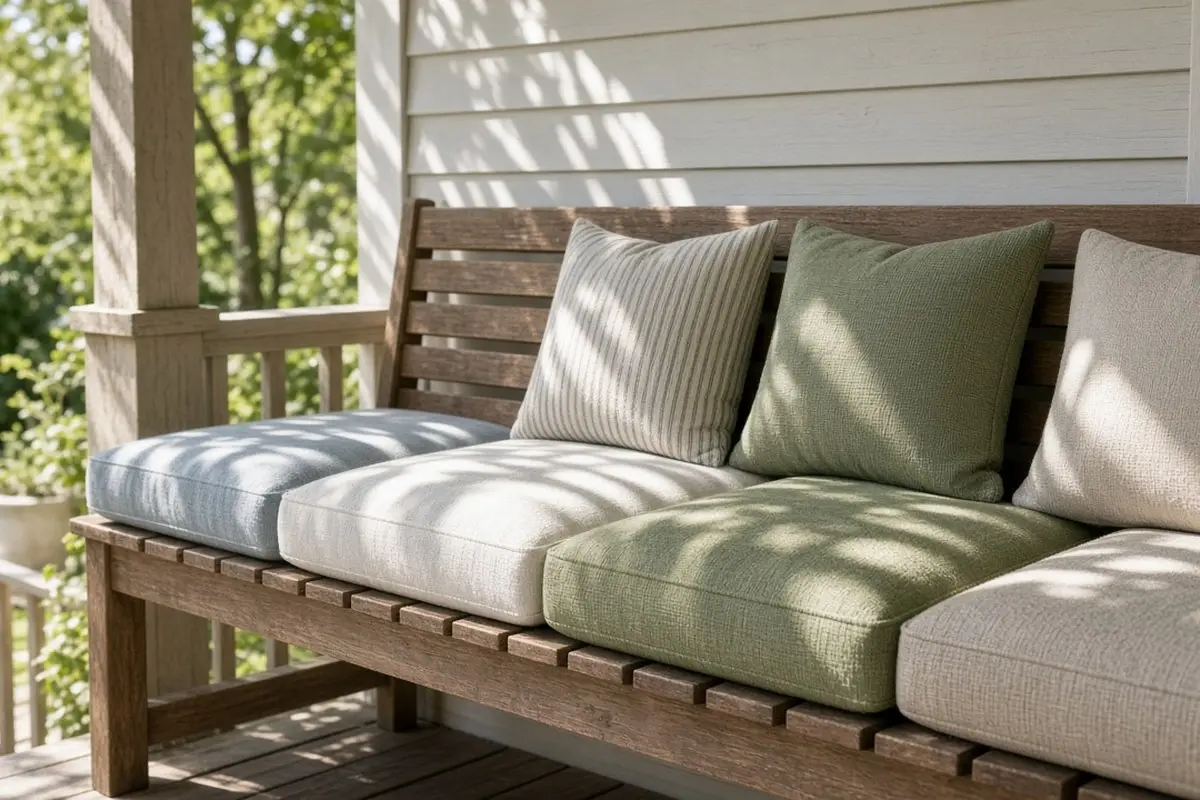
The biggest humidity problem is cushions. Standard foam holds water like a sponge. Reticulated quick-dry foam has an open cell structure that lets water drain straight through and air circulate. Pair it with an outdoor fabric cover. Solution-dyed acrylic fabrics are the standard for good reason: the color goes all the way through the fiber, so they resist fading and can be cleaned with a mild bleach solution if mildew ever appears. Choose covers with zippers so they can be removed and washed. After a storm or a very humid night, stand cushions on their edges to drain and dry; they will be ready to use within an hour or two instead of staying damp all day.
4. Powder-coated aluminum tables
Aluminum never rusts, and a powder-coated finish gives it color. A small aluminum bistro table works for morning coffee and afternoon iced tea. Avoid cheap steel tables painted to look like aluminum; once the paint chips, rust spreads quickly in damp air and stains the porch floor. A slatted or mesh top lets rain and spilled drinks drain away. For dining, a larger aluminum table with a slatted top seats four to six and needs only an occasional wipe.
Get the look
5. A ceiling fan rated for damp locations
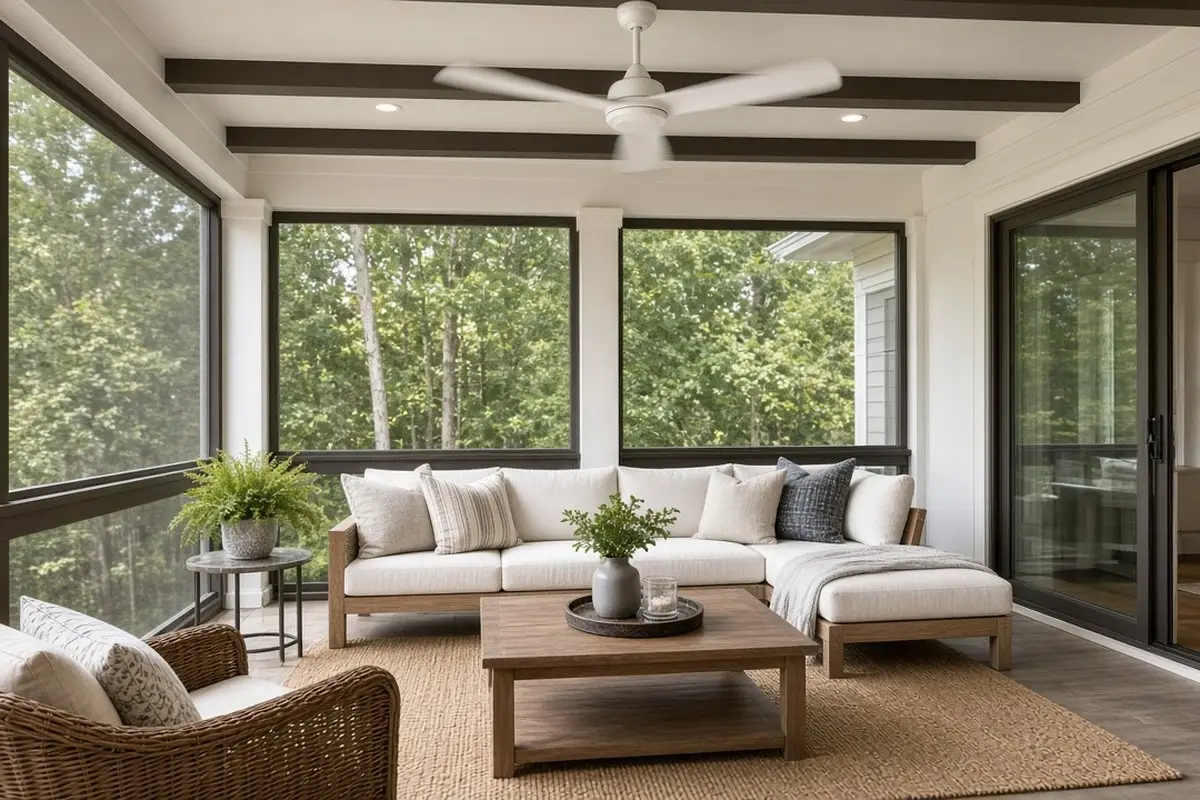
Moving air is the single best defense against humidity, both for your comfort and for the furniture. A damp-rated or wet-rated ceiling fan is a must on a screened porch. Damp-rated fans handle humidity under a covered roof; wet-rated fans can take direct rain, which is the safer pick if storms blow through your screens. Size the fan to the porch, with a larger blade span for bigger spaces, and choose one with a light kit and a reverse setting. In summer, run it counterclockwise for a cooling downdraft. A fan also keeps mosquitoes that slip through a torn screen from settling, since they are weak fliers.
Get the look
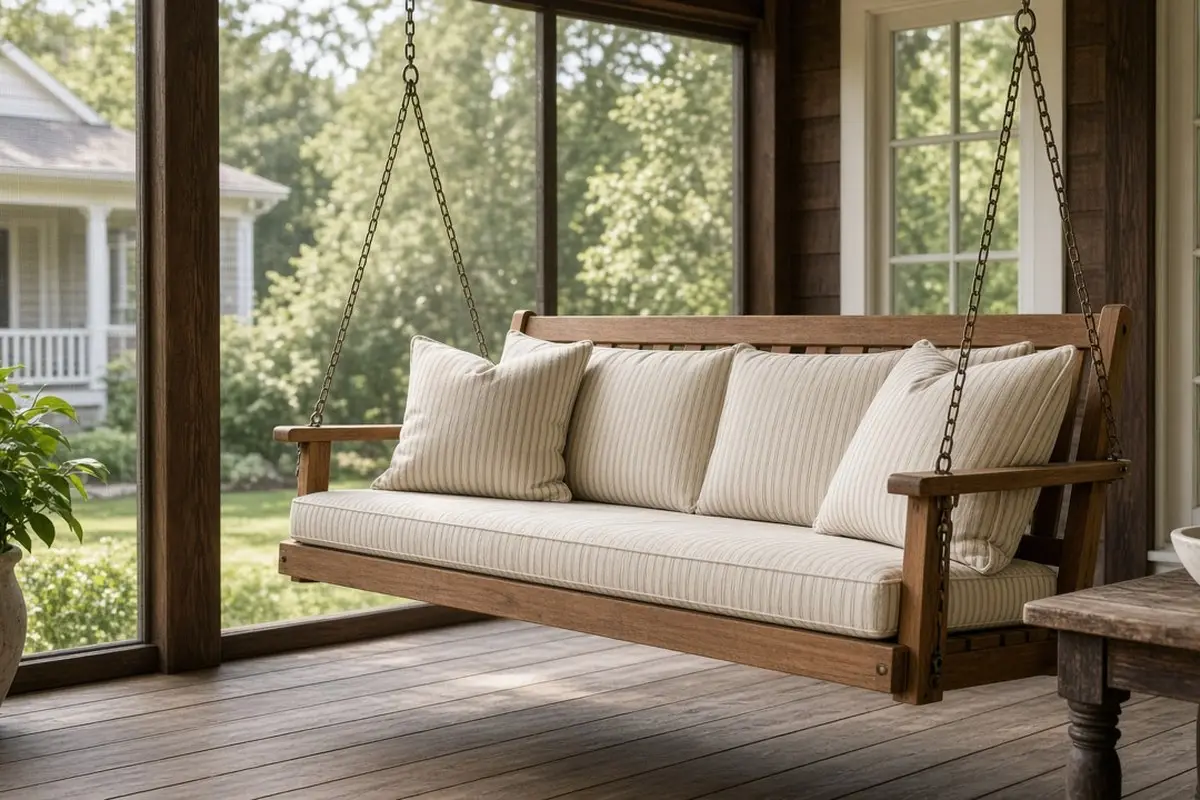
6. A porch swing or daybed
Nothing says screened porch like a swing. A hanging daybed with an outdoor mattress becomes the favorite afternoon nap spot. Hang a swing from a ceiling joist with hardware rated for well over the combined weight of the swing and its riders, and leave enough clearance behind it so it does not hit the wall or screen. Chains or rope both work, but stainless or galvanized chain resists rust best in humid air. Use outdoor cushions and throw pillows on the swing, and bring them in during long wet spells.
7. An outdoor rug
Polypropylene outdoor rugs look like jute or sisal but do not mildew. Hose them down when they get dirty. Lay the rug in the sun to dry fully afterward, and lift it once in a while to sweep beneath it, since dirt and moisture can collect under any rug. A rug defines the seating area and makes a large porch feel like a cozy room. Choose a size that lets at least the front legs of every chair rest on it.
Get the look
8. Storage bench for cushions
A ventilated storage bench lets you bring cushions in during long wet spells. Choose one with drainage holes. Keep the bench slightly off the floor on small feet, and leave the lid propped open on dry days to air it out. A bench placed under a window or against the house wall doubles as extra seating when friends come over.
Get the look
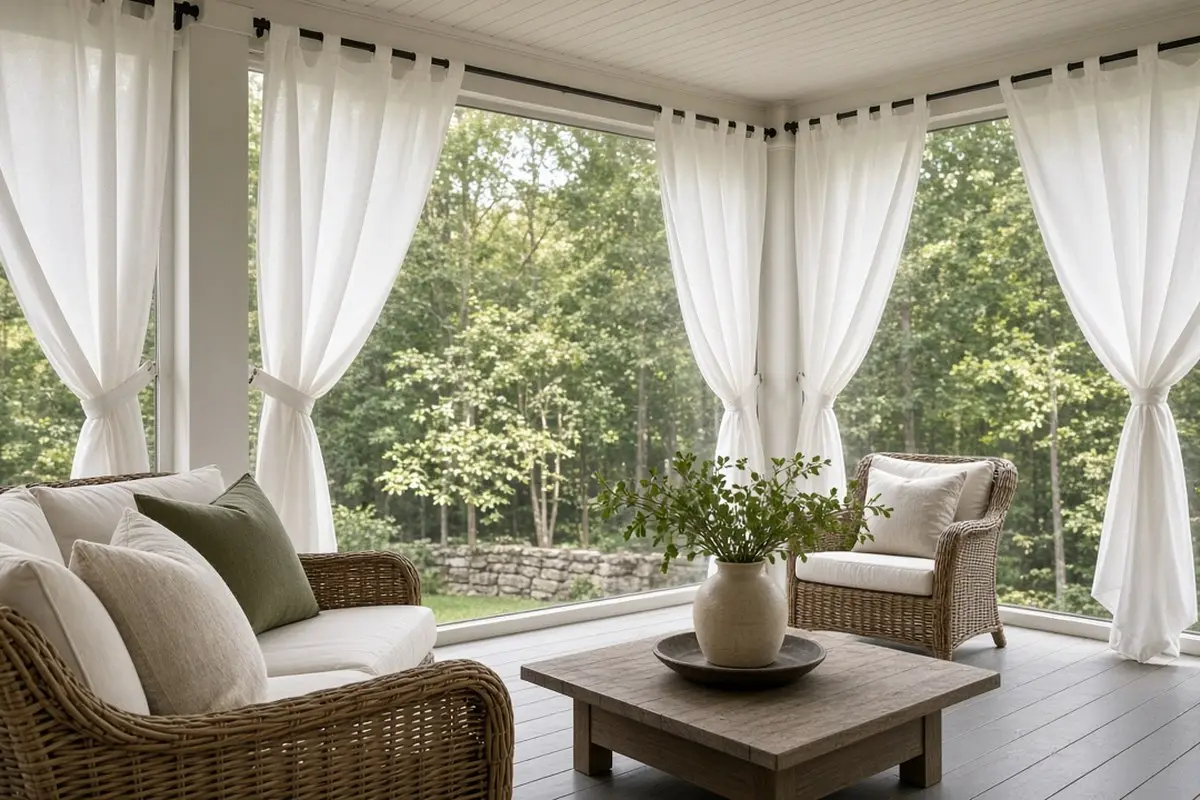
9. Outdoor curtains
Outdoor curtains block low afternoon sun and add softness. Choose fabric made for outdoor use, which resists mildew and fading. Hang them on a rust-proof rod or a tensioned cable, and add tiebacks at each corner so they frame the view when open. On windy days, curtain weights sewn into the hem keep them from flapping against the screens. White and cream curtains reflect heat; darker ones block more light but absorb warmth.
Get the look
10. A side table that holds drinks
Every seat needs a spot for a cold drink. Ceramic garden stools are waterproof and double as extra seating. Teak or aluminum side tables work too. Place one within easy reach of every chair, since nobody wants to get up for a drink on a hot afternoon. A small tray on the table keeps glasses from leaving rings and makes it easy to carry snacks out from the kitchen.
Get the look
Caring for porch furniture in humidity
Wipe surfaces after storms, stand cushions on edge to dry, run the fan, and give the porch a deep clean in spring and fall. A little routine keeps it fresh. In spring, wash the screens and the floor, check the fan, oil teak if you like the warm color, and replace any cushion covers that have faded. Through summer, a quick weekly sweep and a wipe of tables keeps pollen and dust from mixing with humidity into a sticky film. In fall, wash and dry every cushion cover thoroughly before storing it, and leave storage bench lids slightly open over winter so nothing grows inside. Torn screens are worth patching right away with a small repair kit; one gap lets in enough insects to spoil an evening, and it is a five-minute fix when caught early. A small dehumidifier is worth considering on a porch with poor airflow in a very humid climate, run during the muggiest weeks with the doors closed.
Making a small porch work
If your screened porch is small, choose two comfortable chairs and a small table rather than a full sofa set. Leave a clear path to the door and avoid bulky pieces that block airflow. A narrow porch can be furnished along one wall like a galley, with a bench facing the view. For the street-facing side of the house, the fall porch from the sidewalk post covers how a front porch reads to neighbors, which is a different challenge from a private back porch. If you want a softer, less outdoor look indoors too, the fall living room seating post has ideas for cozy seating that move well between seasons.
Quick questions
Can I use indoor furniture on a screened porch? Only for short periods in a dry climate. In humid weather, indoor upholstery and particleboard will mildew and swell.
How do I get rid of mildew on cushions? Brush off loose spores, spray with a solution of mild soap and water or a diluted bleach solution safe for the fabric, rinse, and dry in the sun.
Should I cover furniture in winter? On a screened porch, breathable covers protect against dust and pollen. Avoid plastic covers that trap moisture underneath.
A screened porch is made for humid afternoons. Choose teak, aluminum, and resin wicker, use quick-dry cushions, run a ceiling fan, and the porch will stay comfortable and fresh all summer.