
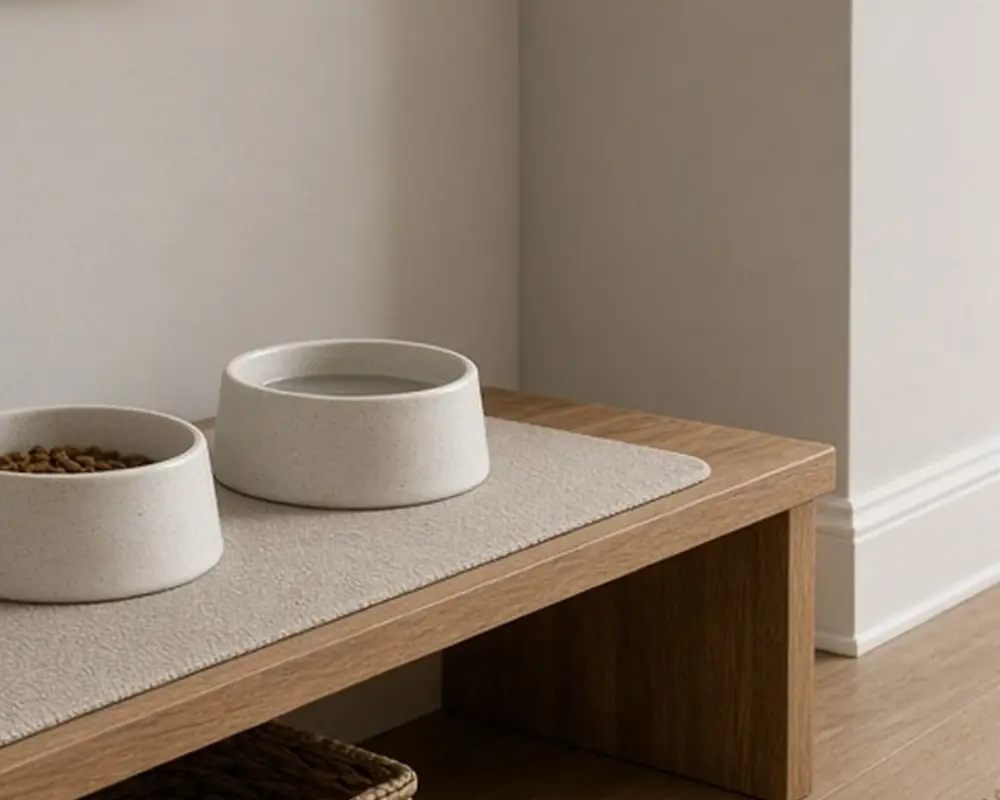
6 Cat Feeding Spots Away From the Kitchen Island

On this page10 sections
- What makes a good feeding spot
- A toe-kick drawer or base cabinet nook
- A mudroom or entry bench
- A raised shelf in the laundry room
- A hallway nook with a low console
- A feeding station built into furniture
- Water in a second spot
- Moving the bowls without upsetting the cat
- Mats, bowls, and cleaning
- Common questions
In many homes the cat bowls end up on the kitchen floor beside the island, right where people stand to cook, unload groceries, and open the fridge. It seems convenient, since the food is stored nearby. But it is the busiest spot in the house, bowls get kicked, kibble scatters under the cabinets, and a cat who likes to eat in peace keeps getting interrupted. Some cats respond by eating too fast and bringing it back up; others leave food and come back later, which makes it hard to tell how much they really eat.
These six feeding spots move the bowls somewhere calmer, without turning a corner of the house into a pet zone. Each one keeps food and water easy for you to refill, clean, and see at a glance, and each looks tidy enough that guests barely notice it.
As an Amazon Associate I earn from qualifying purchases.
What makes a good feeding spot
Cats prefer to eat somewhere quiet, with their back to a wall and a clear view of the room. They dislike eating next to their litter tray, and many prefer their water a short distance from their food, since in the wild water near prey could be contaminated. A good feeding spot is therefore out of the main traffic path, away from the litter, and easy for you to reach every day.
If you have a dog or small children, add one more requirement: the cat’s food should be somewhere they cannot reach. Height is usually the answer, since cats jump and dogs and toddlers mostly do not.
Think about your own routine too. If you feed first thing in the morning, a spot on your way from the bedroom to the kettle is easier than one at the far end of the house. A feeding station you pass several times a day also lets you notice quickly if food is left uneaten, which is often the first sign a cat feels unwell.
1. A toe-kick drawer or base cabinet nook
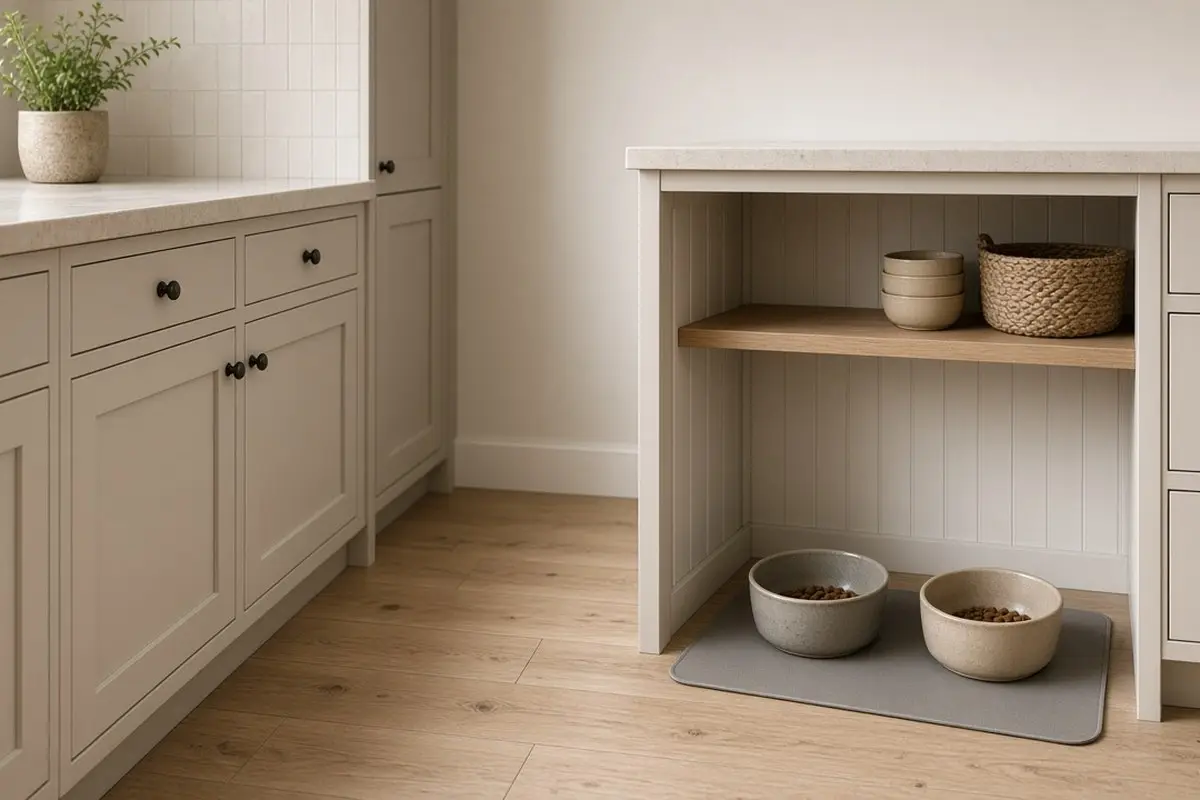
The space under kitchen base cabinets, behind the toe-kick, is usually wasted. A toe-kick drawer that pulls out to reveal two shallow bowls keeps food in the kitchen but off the walkway, and slides shut when guests come. In a remodel, you can also leave one base cabinet open at the bottom as a small nook with a bowl set back from the edge.
This keeps feeding close to where food is stored, while getting bowls out from under your feet. Choose the end of a cabinet run farthest from the stove and the dishwasher.
If you are not remodeling, the end panel of an island or a peninsula facing away from the cooking zone can work for a small tray. The aim is the same: bowls tucked against the cabinet, not out in the open floor where feet land. A low, heavy tray keeps bowls from sliding when a cat pushes them.
Get the look
2. A mudroom or entry bench
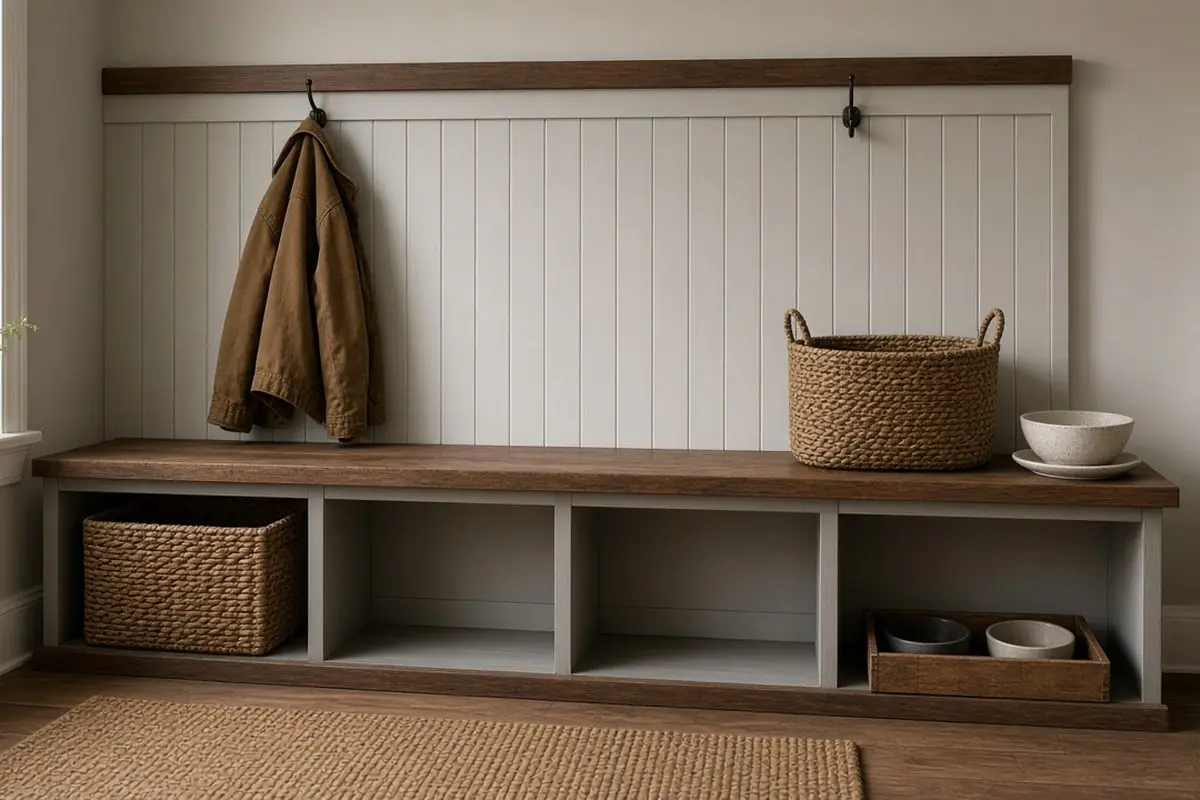
A mudroom bench often has an open shelf underneath for shoes. Give one end of that shelf to the cat: a tray with bowls, set back from the front edge. The area is usually quiet once everyone has left for the day, the floor is built for mess, and the wall behind gives the cat a safe back. Keep food in a sealed container in a nearby cubby.
If shoes and boots share the space, put a small divider between them and the bowls so dirt does not end up in the water.
In winter, mudrooms can be colder than the rest of the house, and some are drafty near the door. Check the temperature at floor level before choosing this spot, and move the bowls inward if the area gets chilly. Wet food in particular is best served at room temperature.
Get the look
3. A raised shelf in the laundry room
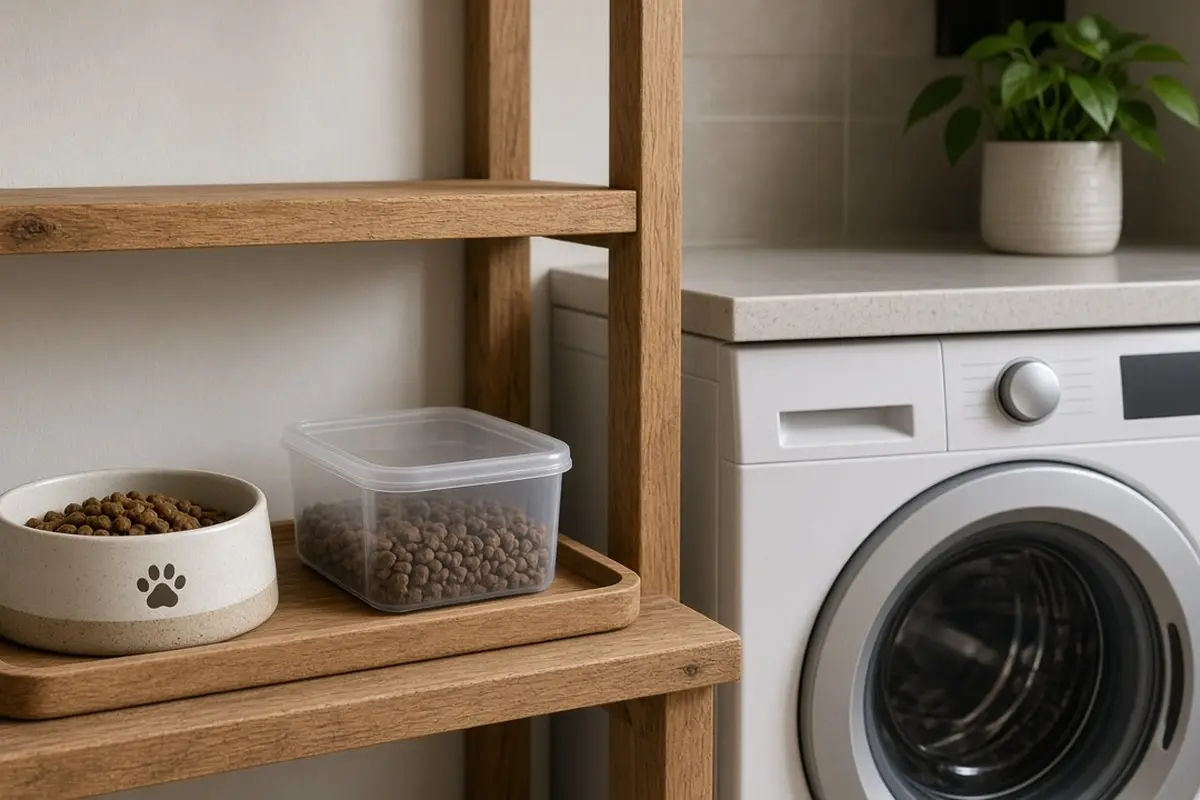
The laundry room is often quiet for most of the day, and the floor is built to handle spills. A shelf about 30 to 36 inches high, beside or above the dryer, puts food out of reach of a dog while still being an easy jump for most cats. Make sure the cat has a clear jumping path and that the shelf is deep enough, at least 12 inches, to land on safely. Add a non-slip liner to the shelf so bowls and paws do not slide, and give older cats a step up, such as a sturdy stool or a lower shelf, so the jump stays easy as they age.
Keep bowls away from detergent and cleaning products, and feed only when the machines are not running if your cat is nervous about noise. See laundry closet setups for ideas on fitting storage around the machines.
Get the look
4. A hallway nook with a low console
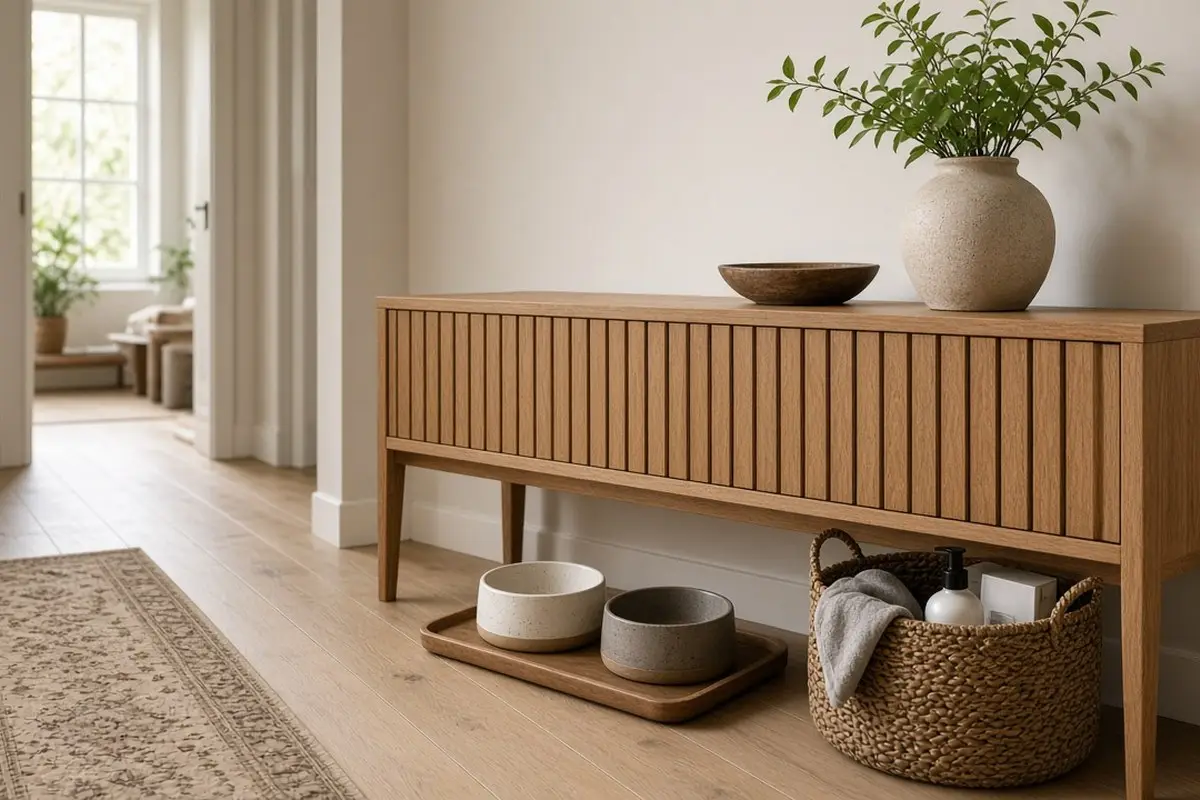
A quiet hallway or a landing with a wide spot can hold a low console with bowls on a tray underneath, or on top for a household with a dog. The console looks like normal furniture, and a basket on the shelf holds food, scoops, and spare mats. Add a small lamp, and the corner reads as a styled vignette.
Choose a spot where the cat can see someone coming from either direction. A dead-end corner at the end of a long hall can make some cats uneasy.
A console also gives you a place for the feeding routine: a small dish for a measuring scoop, a pen and a notebook to log meals if you share feeding with others, and a hook on the side for a cloth. A clear system stops a cat being fed twice by two people who each think the other forgot.
Get the look
5. A feeding station built into furniture
Some pet furniture combines a cabinet with an elevated feeding tray that pulls out, and a drawer above for food and treats. These look like small side tables or nightstands. In a small home, one piece holds everything, and the bowls disappear when you close the drawer.
If you prefer something simpler, a sturdy side table with a lower shelf works too. Put the bowls on the shelf and a lamp and plant on top.
If you go this route, choose a plant that is safe for cats, and make sure the lamp cannot be knocked over by a cat jumping up. Wipeable finishes such as painted wood or laminate are easier to keep clean than raw wood, which can stain from wet food.
6. Water in a second spot
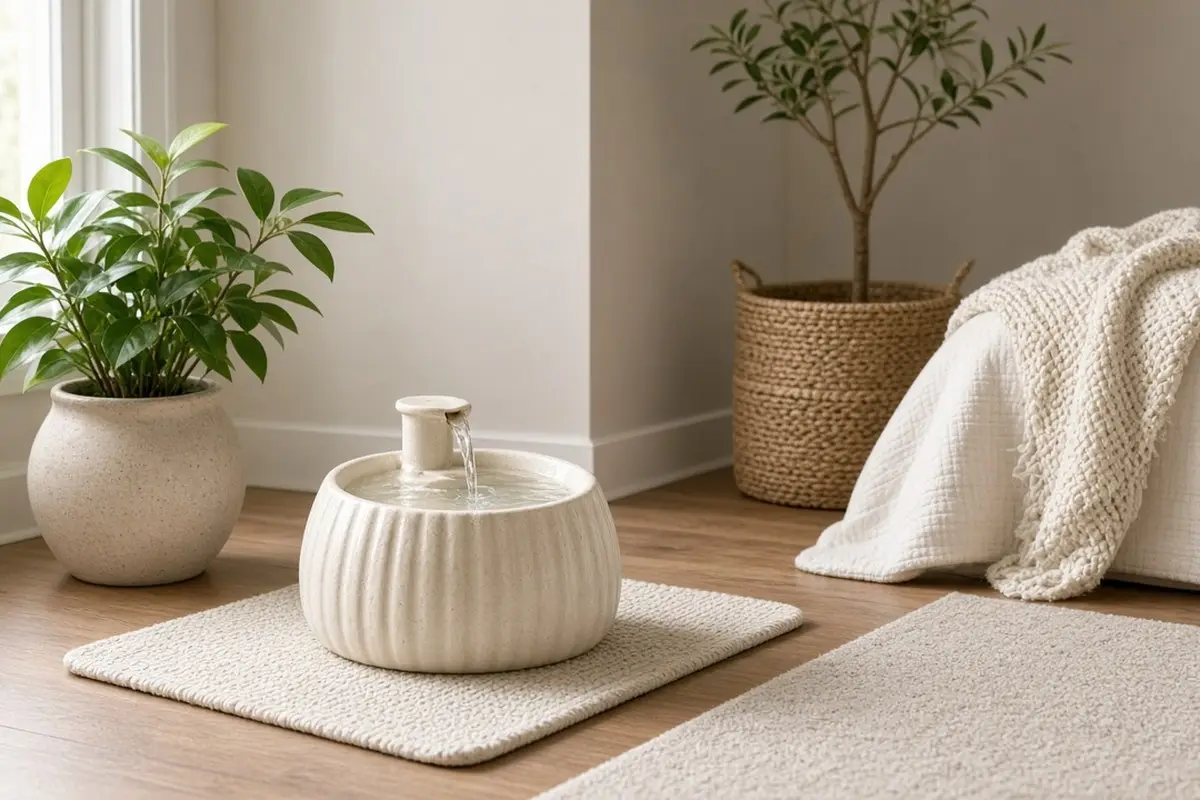
Many cats drink more when water is not right next to their food. A second water bowl or fountain in a different room, such as a bathroom, a bedroom corner, or near a window, encourages them to drink throughout the day. A ceramic or stainless fountain is quiet and easy to clean, and moving water appeals to many cats. Clean the fountain and change its filter on the schedule the maker recommends, since a dirty fountain can put cats off drinking altogether.
Put a fountain near an outlet but out of a walkway, and on a mat that can be wiped dry.
Get the look
Moving the bowls without upsetting the cat
Cats are creatures of habit, and a sudden change of feeding spot can put some off their food for a day or two. Move the bowls gradually if you can, a few feet each day toward the new spot. Or set up the new station while leaving the old one in place for a week, filling both, then stop refilling the old one once the cat is eating happily in the new place.
Show the cat the new spot at mealtime by carrying the bowl there and setting it down while they watch. Feed at the usual times so only one thing changes at once. Keep an eye on how much is eaten during the move, and if a cat skips meals for more than a day, return to the old spot and try again more slowly.
Mats, bowls, and cleaning
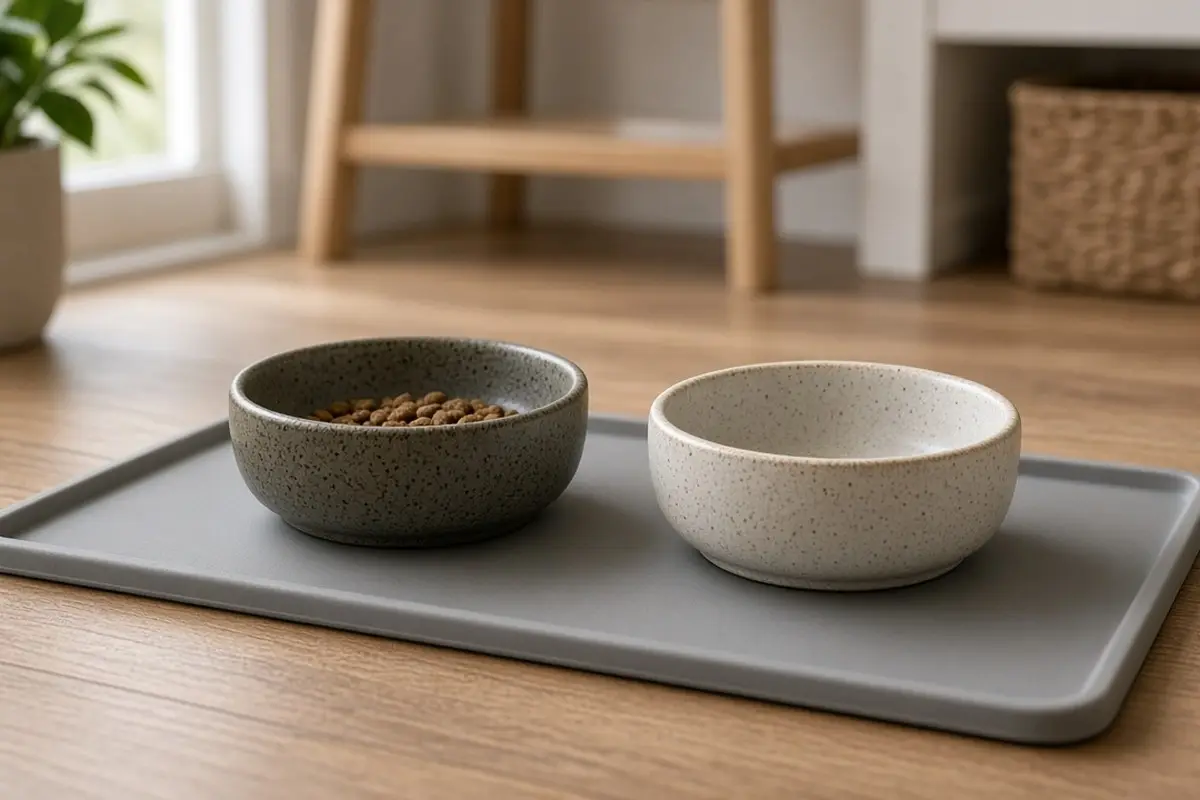
Whichever spot you choose, put the bowls on a mat with a raised edge, which catches spills and kibble. Silicone mats wash easily in the sink and roll up flat when you need to move them, which makes them handy for travel too. Choose wide, shallow bowls, since many cats dislike their whiskers brushing the sides of a deep bowl.
Get the look
Wash bowls daily in hot soapy water, and wipe the mat and floor around the station at the same time. Store food in an airtight container with a scoop inside.
Once a week, scrub the mat and wipe the wall or cabinet face behind the bowls, where splashes collect. Check the date on the food when you refill the container, and wash the container itself between bags so old crumbs do not go stale at the bottom. Small habits like these keep the station looking neat and smelling fresh, wherever it lives.
Common questions
Where is the best place to put a cat food bowl? In a quiet spot away from heavy traffic and the litter tray, with a wall behind it and a clear view of the room.
Should a cat’s water be away from its food? Many cats drink more when water sits a short distance from their food, so a second water bowl or fountain in another room helps.
How do you keep a dog out of the cat’s food? Raise the cat’s bowls onto a shelf or console at least 30 inches high, or use a gated area or a door strap that leaves a gap only a cat can fit through.
For more, see indoor cat room ideas, entryway drop zone, and kitchen corner cabinet storage.