
8 Indoor Cat Rooms That Still Look Like Part of the House

On this page11 sections
- What a cat actually needs from a room
- Wall shelves in the same wood as your furniture
- A window perch with a real view
- Scratching that looks like furniture
- Litter hidden in a cabinet
- Hiding places that double as decor
- Fabrics and floors that clean up
- A chair for you
- Calm colors and a few plants
- Make the room part of the house
- Common questions
A cat room does not have to look like a pet shop. Cats need a handful of things: height, a view, somewhere to hide, something to scratch, and a clean litter tray in a quiet spot. All of those can be built from furniture and materials you would happily use in any other room.
These eight cat rooms are for spare rooms, sunrooms, large landings, and even a corner of a home office. The goal is a room your cat loves and that you still enjoy walking into, with a chair for you, decent light, and no carpet of fur and kibble.
As an Amazon Associate I earn from qualifying purchases.
What a cat actually needs from a room
Cats think in three dimensions. A room that is empty at floor level but full of perches, shelves, and boxes higher up feels much larger to a cat than a big room with nowhere to climb. They also need routes: a path along the walls from floor to high perch and back down, so one cat can pass another without a standoff.
Add to that a window view, at least one hiding place, scratching surfaces both vertical and horizontal, and a litter tray away from food and water. That list fits in a room as small as 8 by 10 feet.
If you have more than one cat, double up on the essentials. A common guide is one litter tray per cat plus one extra, and at least two separate places to eat, drink, and sleep. Cats who share a room peacefully often still prefer not to share a bowl or a perch, and giving them choices prevents quiet tension from turning into spraying or hiding.
1. Wall shelves in the same wood as your furniture
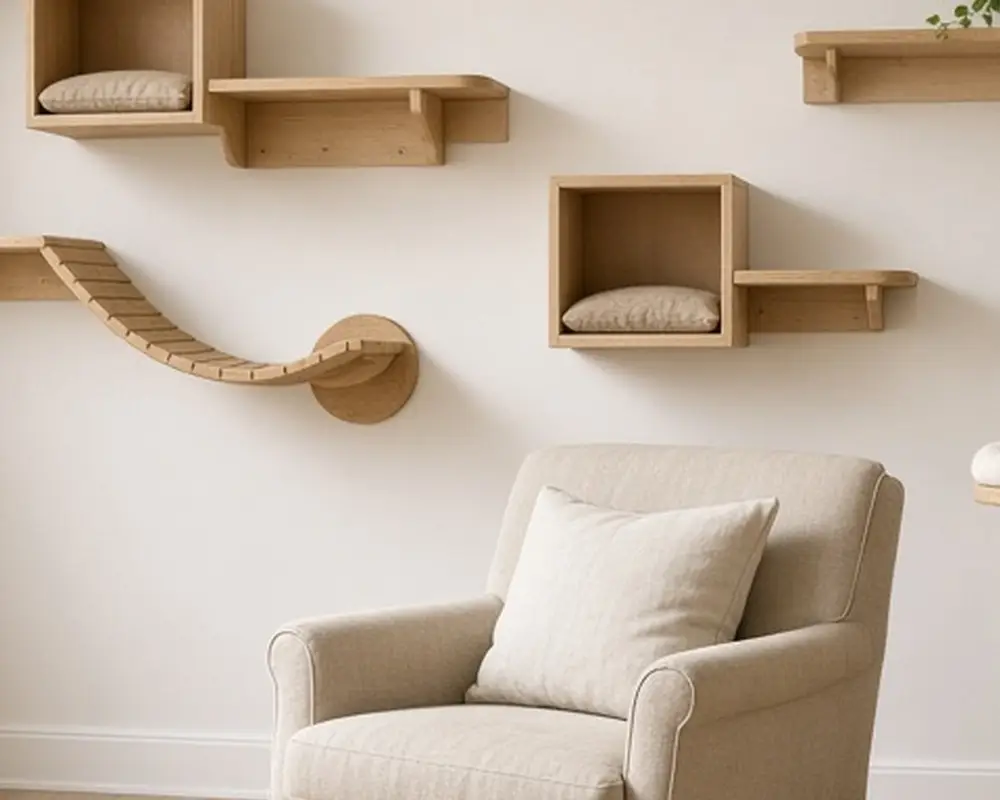
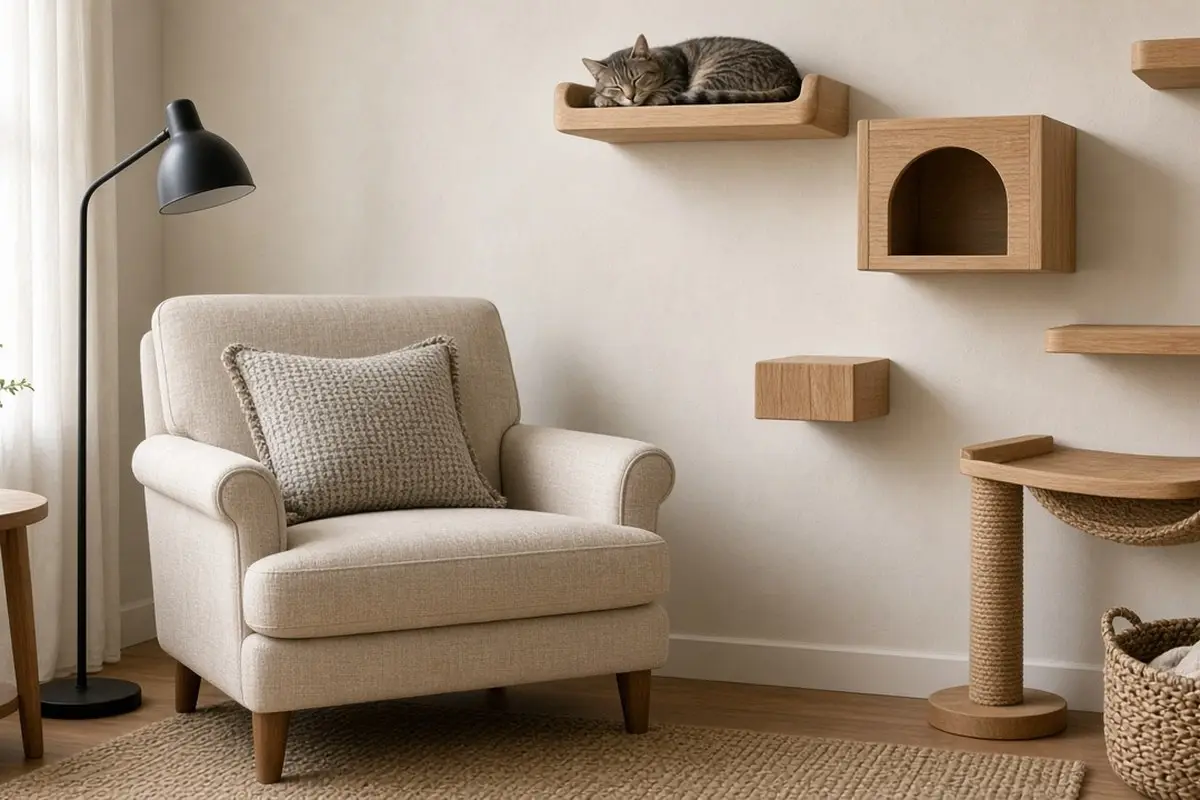
Cat wall shelves are the backbone of a cat room, and they look best when they match the rest of the house. Choose solid wood or wood-veneer shelves in the same tone as your bookcase or floors. Stagger them up the wall like a staircase, each about 12 to 18 inches above and beside the last, and finish with a wider top perch.
Mount shelves into studs or with heavy-duty anchors. A cat landing from a jump puts far more force on a shelf than its body weight suggests.
Add a few shelves with a carpet or cork top so paws grip, and make the top perch wide enough for a cat to stretch out fully, about 12 by 24 inches. Plan an exit at the top, too. A cat who can only come down the way it went up can be cornered by another cat, so a second route down, such as a bookcase or a hanging bridge, keeps things calm.

Get the look
2. A window perch with a real view
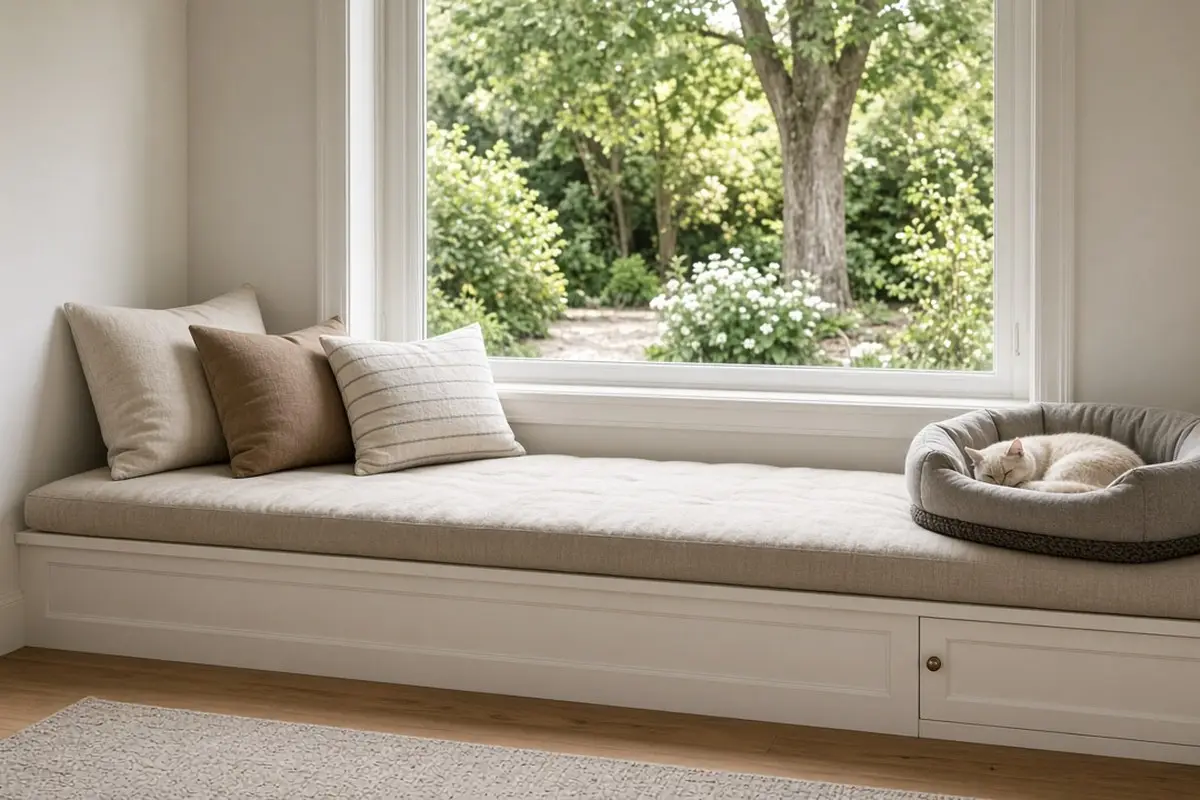
The window is the cat’s television. A sturdy window perch or a deep shelf under the sill gives a front-row seat to birds and passing cars. If you are building in, a bench seat under the window with a cushion works for both of you: the cat takes the sunny end, you take the other.
Bird feeders outside the window turn the view into all-day entertainment. Position the feeder a little way from the glass so birds are not startled by the cat, and so the cat does not hurl itself at the window. Check that windows have secure screens if you open them in warm weather.
Get the look
3. Scratching that looks like furniture
Cats scratch to stretch, mark, and keep claws healthy. Give them a tall, heavy sisal post that does not wobble, plus a flat cardboard or sisal scratcher on the floor. Wrapped posts in natural rope look calm in most rooms. Some cat trees now come in walnut or oak with neutral fabric, and they read more like a sculptural plant stand than a carpet tower.
Horizontal scratchers suit cats who stretch long and low. A wide cardboard scratcher under a console table or at the foot of a chair is barely noticed by visitors and saves the rug. Replace cardboard pads once they are shredded, since a worn-out scratcher is less appealing than the sofa next to it.
Put a scratcher near the door and another near where the cat sleeps. Those are the spots where cats most like to stretch.
If your cat already scratches a particular sofa arm or doorframe, put a post right in front of that spot rather than across the room. Once the habit moves to the post, you can shift it slowly toward where you would like it to live. Rubbing a little catnip into the sisal helps.
4. Litter hidden in a cabinet
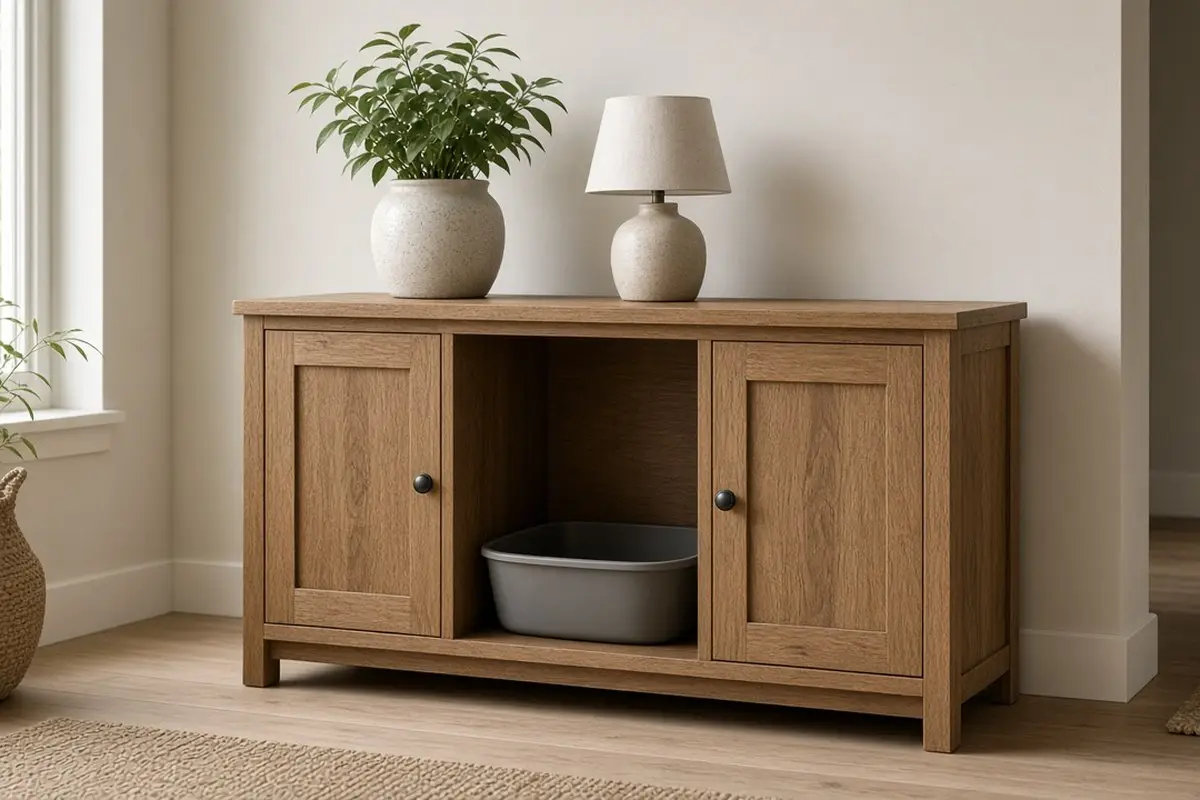
The litter tray is the hardest piece to make look good. A litter cabinet, which looks like a small sideboard or bench with a cat-sized opening on the side, hides the tray and catches some scattered litter. Choose one with a removable back or a front door so you can scoop easily.
Put it in a quiet corner away from food, with good airflow. A washable mat in front of the opening catches litter on paws.
Scoop at least once a day, ideally twice, and change the litter completely on a regular schedule. A clean tray is the single biggest factor in whether a cat uses it, and no cabinet hides a smell that comes from a neglected box. Unscented clumping litter is the safest choice for most cats.
Get the look
5. Hiding places that double as decor
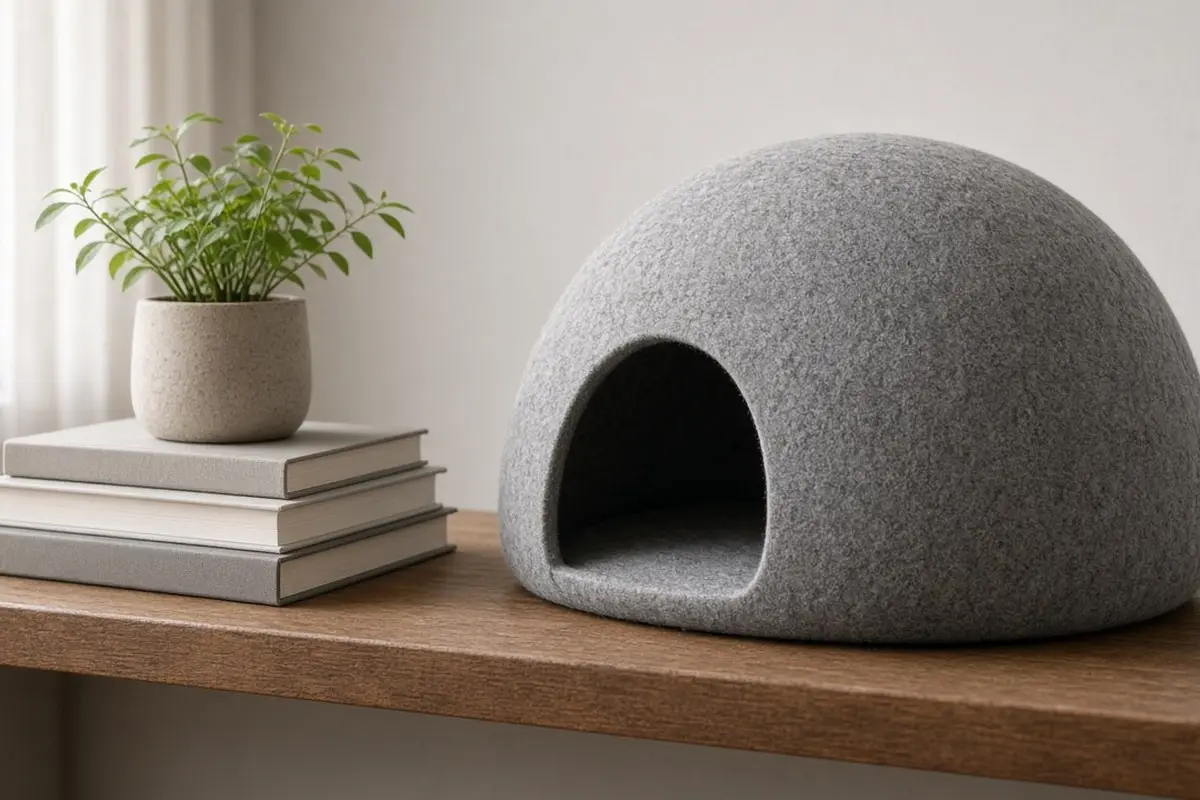
Cats feel secure when they can watch from a hidden spot. A covered cat bed in wool felt, a basket on a low shelf, or a cube in a storage unit with one bin removed all make good hideaways. Felt caves come in soft grays and oatmeal tones that look like a design object rather than a pet product.
High hiding spots are popular too. A wide shelf with a box or basket on top lets a shy cat watch the room unseen. Make sure every hiding place has a clear way in and out, and put one near the door so a nervous cat can retreat quickly when visitors arrive.
Get the look
6. Fabrics and floors that clean up
Fur, claws, and the occasional hairball are part of life with cats. Choose a hard floor or a washable flat-weave rug. For a chair or daybed, pick tightly woven fabrics such as microfiber, canvas, or leather, which claws do not catch on easily. Avoid loose weaves and loop-pile rugs, which cats love to pull.
Keep a lint roller and a handheld vacuum in the room, so clean-up happens in two minutes rather than turning into a project. Wash cat blankets and bed covers weekly, and keep a spare set so the room never goes without.
7. A chair for you
A cat room you never sit in is a cat room your cat spends alone. Add a comfortable armchair, a reading lamp, and a side table. Cats love company, and a quiet half-hour reading in their room is good for both of you. It also makes the room feel like part of the house rather than an annex.
Choose a chair with arms low enough for a cat to jump onto, and add a throw in a fabric that sheds fur easily. A lamp with a heavy base and a cord tucked out of sight keeps curious paws from tipping it over.
Get the look
8. Calm colors and a few plants
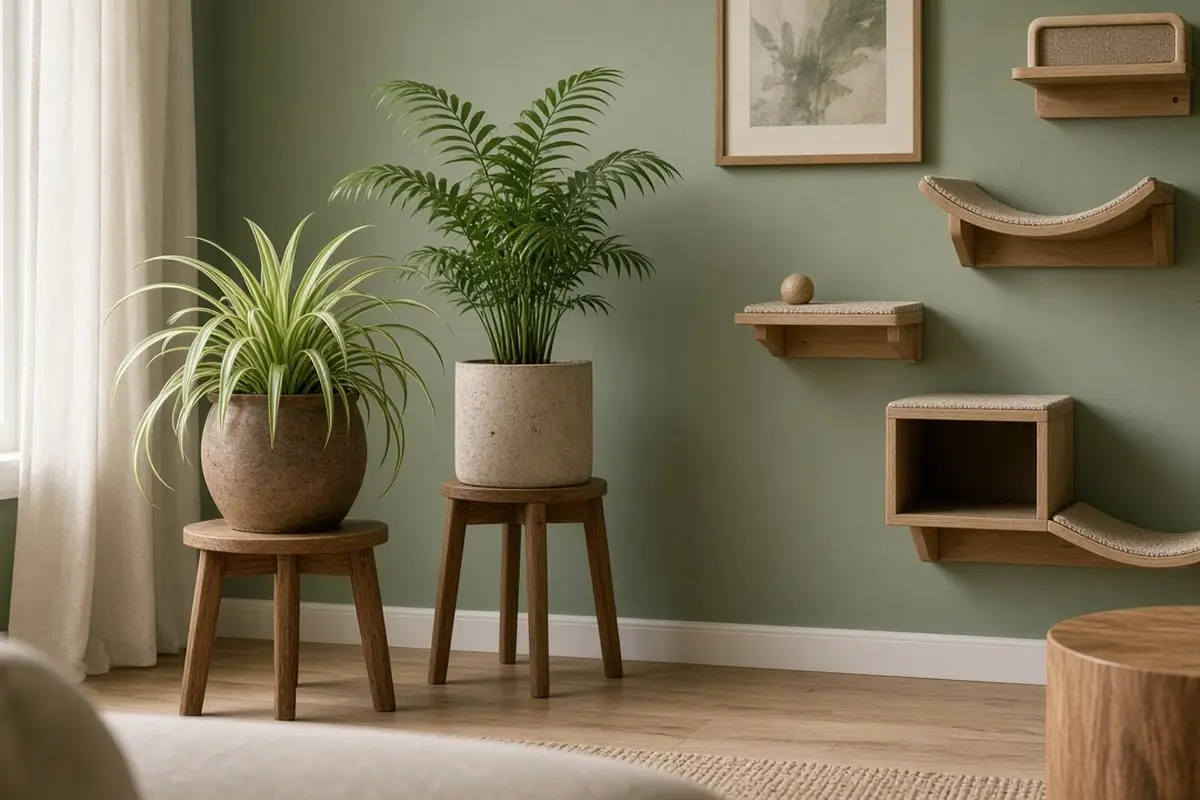
Soft walls make shelves, perches, and posts look intentional. Warm white, pale greige, or a muted green all work. Add plants, but choose only cat-safe ones, such as spider plants, calathea, parlor palms, and Boston ferns. Lilies are especially dangerous to cats and should never be in the house. Check every plant against a trusted list before buying, including cut flowers. Hang trailing plants out of reach if your cat likes to chew leaves, and give them a pot of cat grass of their own instead.
Get the look
Make the room part of the house
The best cat rooms connect to the rest of the home. Leave the door open when you are around, add a cat flap or a gap in a door if needed, and let the cat choose when to use the room. Feed one meal a day in the room and play there each evening with a wand toy, so it becomes linked with good things. Rotate a few toys each week to keep things interesting, and leave a puzzle feeder out on days when you are away for long hours. Keep toys in a lidded basket so the floor stays clear between play sessions. A cat room should be a favorite place that they choose freely, somewhere warm and interesting, and never a place they are shut away out of sight for hours.
Introduce the room slowly, especially if your cat is older, nervous, or new to your home. Put the cat’s favorite blanket on a perch, scatter a few treats along the shelf route, and sit in the room with them for the first few days. Once the room smells familiar and the routes feel safe, most cats claim it quickly.
Common questions
How do you make a cat room look nice? Use wood wall shelves that match your furniture, hide the litter in a cabinet, choose calm colors, and add a chair for yourself.
What do cats need in a room? Height, a window view, hiding places, scratching posts, a clean litter tray, and fresh water.
Where should a litter box go in a cat room? In a quiet corner away from food and water, with easy access, good airflow, and a mat in front to catch scattered litter.
For more, see studio apartment layout, sunroom daytime ideas, and low furniture apartment habits.