
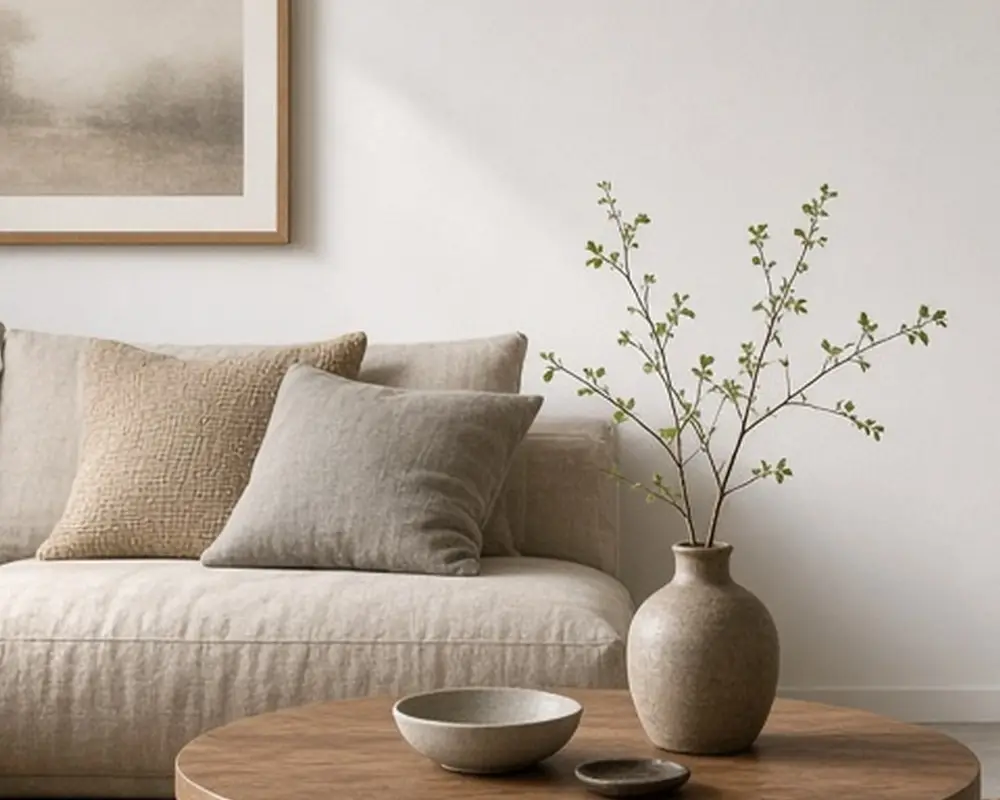
10 Low-Furniture Habits for a Small Apartment

On this page14 sections
- Why less furniture works in small rooms
- Sit on the floor some of the time
- Own one table that does everything
- Choose low pieces
- Clear every surface at night
- Store things in walls, not furniture
- Fold away what you use once a day
- Use the bed as seating
- One-in, one-out
- A large rug instead of many small things
- Leave one wall mostly empty
- Low furniture, not no furniture
- Making it work with roommates or a partner
- Quick questions
The usual advice for a small apartment is to buy smarter furniture: a storage ottoman, a sofa bed, a nesting table. That helps, but there is another approach that is cheaper and often more effective. Own less furniture in the first place, and build daily habits that make the space work without it.
Low-furniture living is not about having an empty, cold apartment. It is about choosing a handful of pieces that each do a lot, keeping the floor open, and making a few routines automatic so the room resets itself. Many people who try it find their small apartment feels larger, cleans faster, and is easier to rearrange for guests, work, or exercise. The ten habits below are the ones that make the biggest difference. Start with one or two and see how your space changes.
As an Amazon Associate I earn from qualifying purchases.
Why less furniture works in small rooms
Every piece of furniture takes up floor space and visual space. A small apartment with a sofa, armchair, coffee table, side table, media console, desk, and dining table feels crowded even if each piece is small. Remove two or three, and the floor appears. Visible floor is one of the strongest signals our eyes use to judge how big a room is, which is why a sparsely furnished studio can feel larger than a cluttered one-bedroom.
Fewer pieces also mean fewer surfaces to collect clutter. A side table is a magnet for mail, keys, and cups. Without it, those things go back where they belong.
1. Sit on the floor some of the time
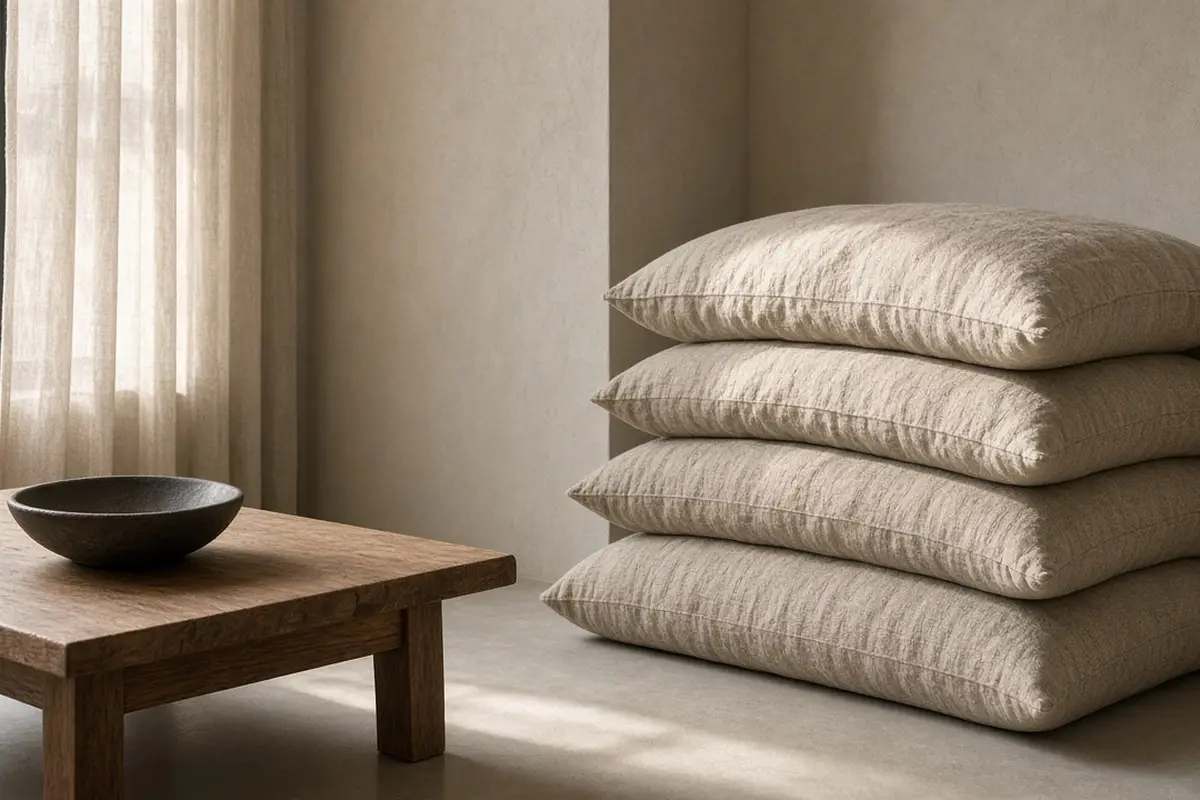
Floor cushions, a pouf, or a thick rug give you extra seating that disappears when not in use. Many cultures sit on the floor as a matter of course, and a few large cushions around a low table can seat more people than an armchair. Stack them in a corner when you are done. Choose cushions with removable, washable covers and a firm fill, such as foam or dense fiber, so they keep their shape after months of use. Square cushions about two feet across are comfortable for most adults. If sitting on the floor is hard on your knees or back, a low meditation bench or a pair of backjack floor chairs gives support while keeping the look. Floor seating also makes a small apartment feel more relaxed and social; guests naturally gather around a low table in a way they rarely do around a formal coffee table.
2. Own one table that does everything
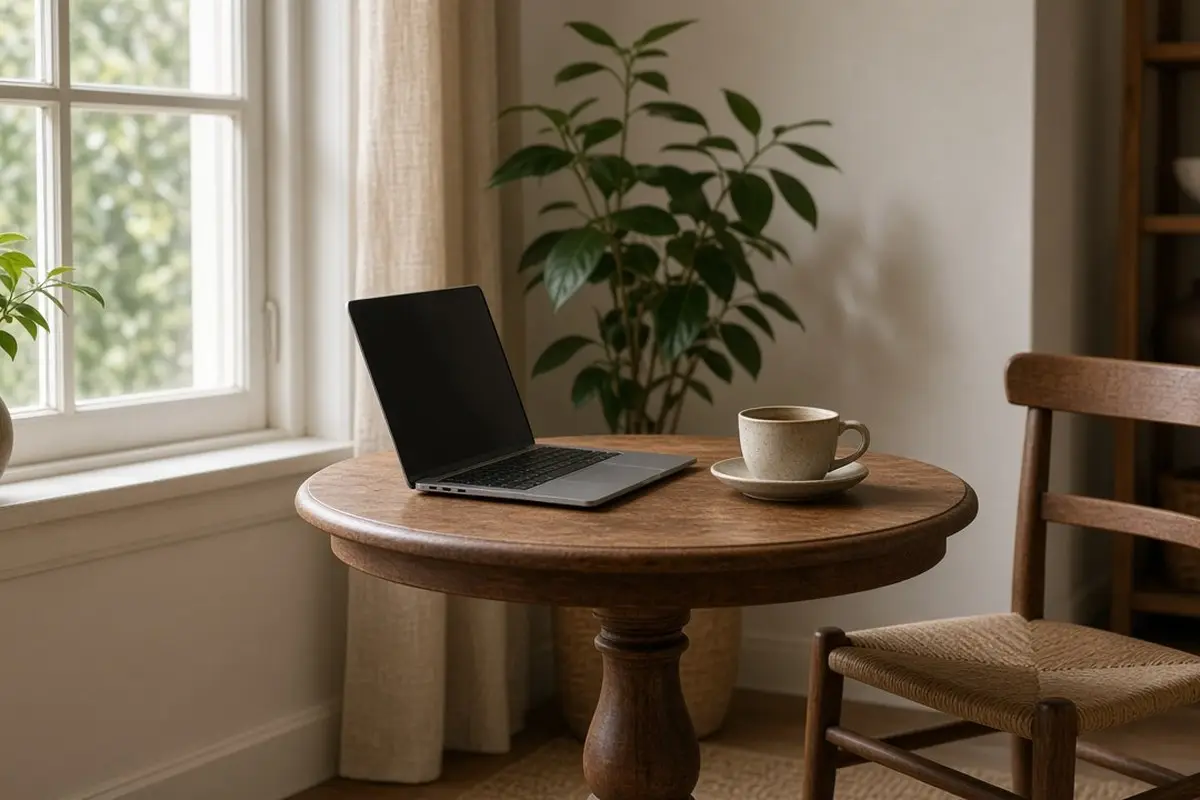
Instead of a coffee table, a desk, and a dining table, choose one table that can do all three. A round table that seats two to four works for meals, laptop work, and board games. A drop-leaf table folds down when not needed. Place the table near a window, where it gets the best light for work and meals, and keep only one thing on it permanently, like a small lamp or a plant. Everything else goes away after use. Two comfortable chairs are enough; extra seats can be folding chairs hung on the wall or floor cushions pulled up when friends visit. The habit that makes this work is resetting the table between uses so it is always ready for its next job.
3. Choose low pieces
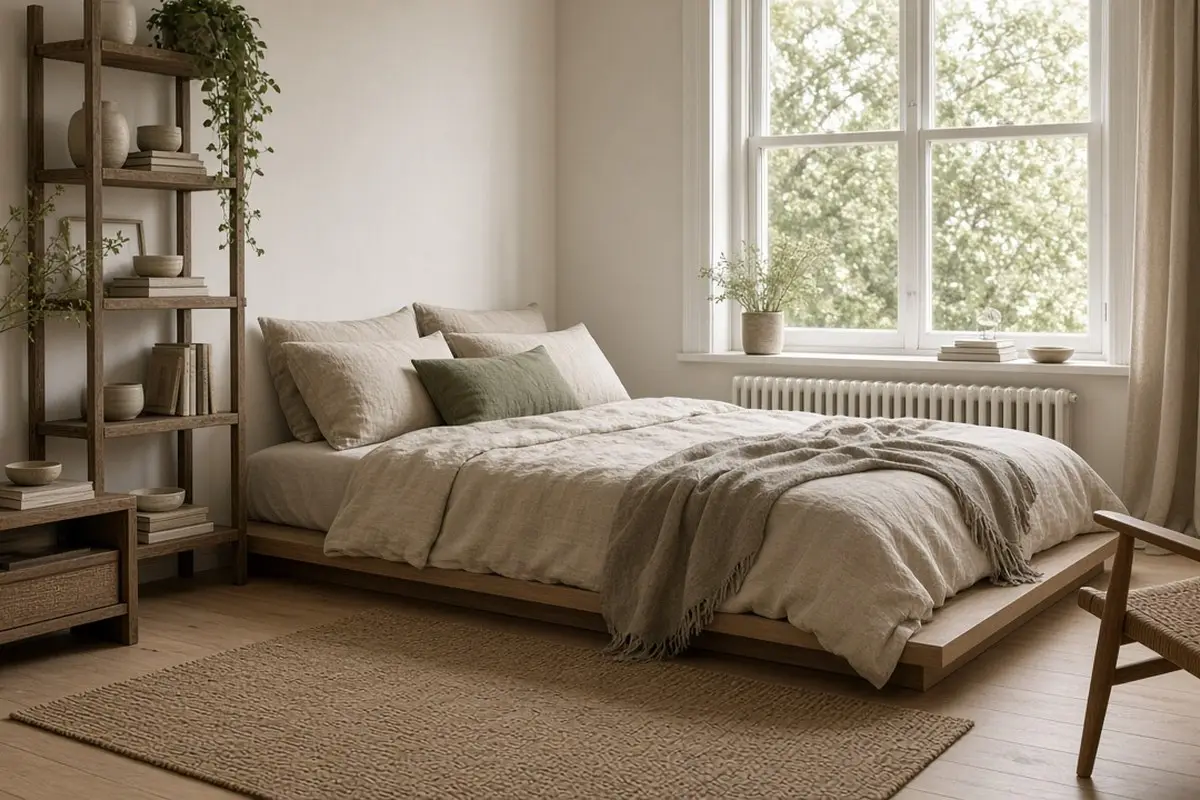
Low sofas, low beds, and low shelves keep sight lines open above them. When the tops of your furniture stay below the windowsill, the walls look taller and the room feels airier. A platform bed or mattress on a low frame works especially well in a studio. Low pieces do not have to mean uncomfortable ones. Test a low sofa for seat depth and the height of the cushion from the floor; around sixteen inches suits most people. Keep tall items, like a bookcase or a wardrobe, against a single wall rather than scattering them, so the rest of the room keeps that open band of space above eye level.
4. Clear every surface at night
The most important habit. Before bed, clear the table, the counter, and any other flat surface. It takes five minutes, and you wake up to a calm room. In a small apartment, one messy surface makes the whole space feel chaotic. Make the reset easier by giving every common item a home within a few steps of where it gets used. Keys and wallet go in a tray by the door. Chargers live in a drawer near the bed. Mail goes straight into a single folder or the recycling bin. If you live with others, agree on a simple shared rule: the table is clear before anyone goes to sleep. The first week feels like effort; after that, it becomes as automatic as brushing your teeth.
Get the look
5. Store things in walls, not furniture
Wall hooks, rails, and shelves hold what a dresser or side table would, without using floor space. A rail by the door for bags and coats, a shelf above the bed for books, and hooks in the kitchen for utensils keep the floor clear. Renters can use heavy-duty adhesive hooks and rails or ask permission to drill a few anchors; small holes are usually easy to patch at move-out. Keep wall storage at consistent heights so it looks deliberate, and resist the urge to cover every wall. Two or three well-placed rails and shelves replace a dresser and a console table without making the room feel crowded.
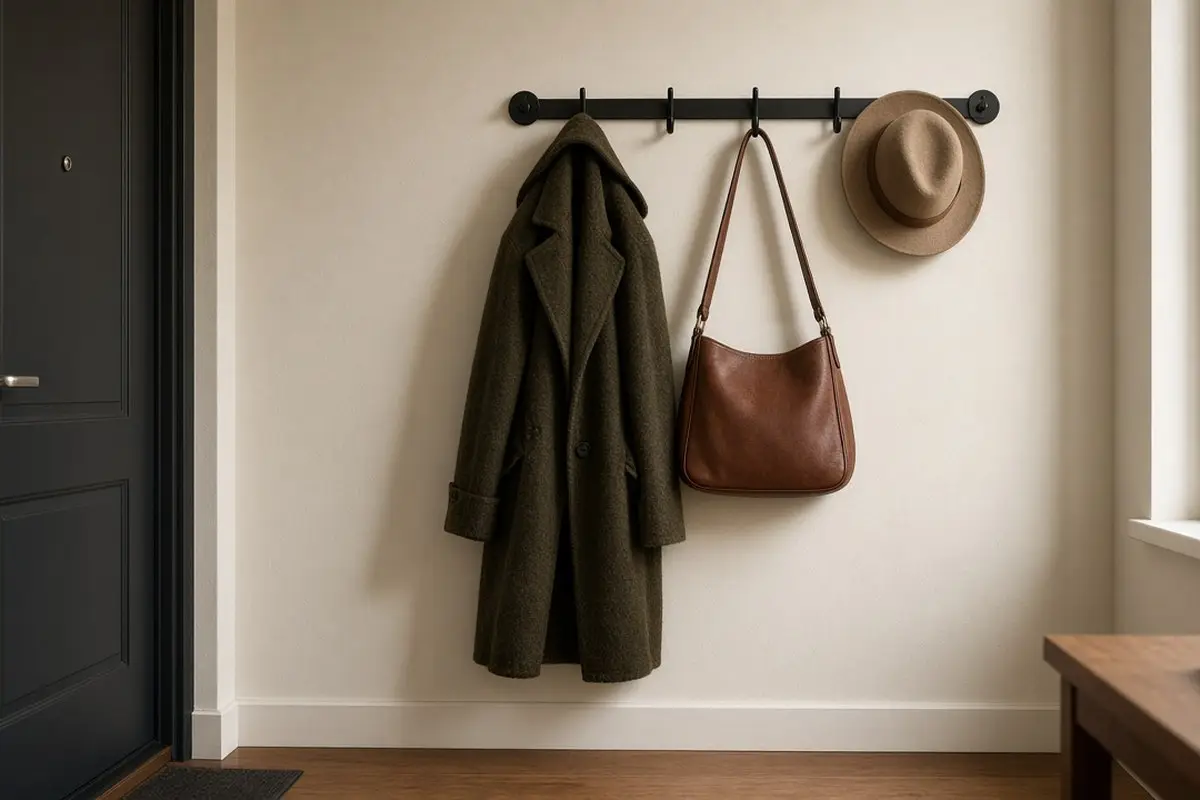
6. Fold away what you use once a day
A folding chair hung on the wall, a folding desk, a folding drying rack. Things you only use for a short time each day can live flat against a wall or tucked in a closet. The test is simple: if something sits unused for more than twenty hours a day and takes up floor space, it is a candidate for folding. Shaker-style peg rails were designed for exactly this, holding chairs off the floor while the room was cleaned. A wall-mounted desk that folds into a shallow cabinet closes the workday too, which helps separate work from rest in a single room.
7. Use the bed as seating
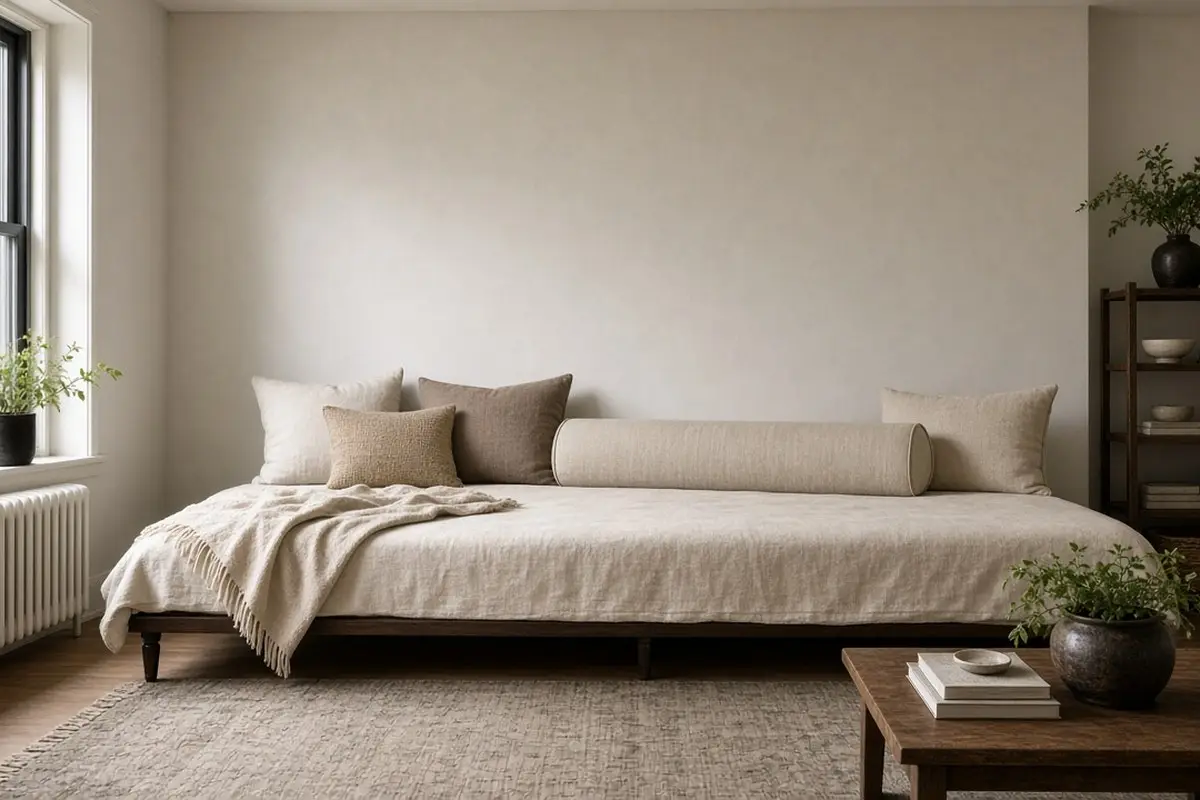
In a studio, the bed is the largest piece of furniture. Make it work as a daybed with bolster pillows along the wall side. It becomes a sofa during the day. Use a fitted cover or a tailored bedspread that tucks in neatly, and pile two or three firm bolsters along the wall side. A bed against a corner works best, since two walls act as a backrest and armrest. Keep pillows for sleeping in a basket or a closet during the day so the bed does not look half-made.
Get the look
8. One-in, one-out
Every time a new item comes in, one goes out. This habit keeps the low-furniture approach from slowly filling back up. It works for clothes, books, kitchen gadgets, and furniture itself.
Get the look
9. A large rug instead of many small things
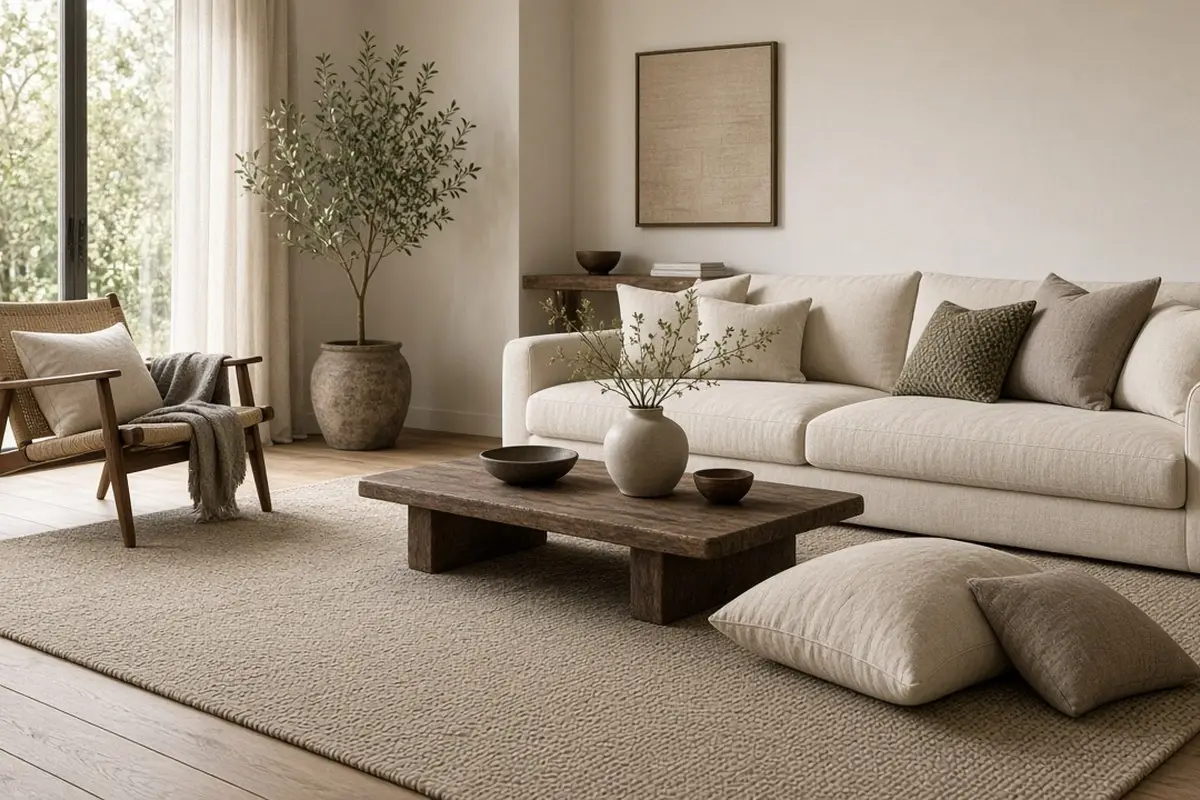
A single large rug defines the living area and makes the space feel finished without more furniture. It also gives floor seating a comfortable base. Choose a rug large enough that the front legs of the sofa sit on it, which ties the seating together. A washable rug is practical when you sit on the floor often, and a low-pile or flat weave is easier to clean than shag. Neutral or softly patterned rugs hide crumbs and wear better than solid dark colors.
Get the look
10. Leave one wall mostly empty
A bare wall is a resting place for the eyes. In a small apartment, one calm wall with a single large print or nothing at all makes the rest of the room feel less busy. Choose the wall you see first when you walk in, or the one opposite the sofa, and keep it simple. A large single piece of art reads as calm, while many small frames read as busy.
Get the look
Low furniture, not no furniture
You still need a comfortable place to sit, a good bed, and somewhere to eat. The goal is to stop there, choose those pieces well, and let habits do the rest.
Making it work with roommates or a partner
Low-furniture habits are easiest when everyone in the home shares them. Talk about which pieces are truly needed, agree on the nightly surface reset, and give each person a clear storage zone on the walls or in a closet. If noise from neighbors or hard floors is a concern in a sparsely furnished space, the quiet apartment details post has ideas for softening sound with rugs and textiles. For arranging the few pieces you keep, the studio apartment layout post walks through zones for sleeping, eating, and relaxing.
Quick questions
Will a low-furniture apartment echo? Hard floors and bare walls can make sound bounce. A large rug, curtains, and a few fabric cushions absorb most of it.
Is floor seating okay for older guests? Keep at least one or two proper chairs with backs. Floor seating is an addition, not a replacement for everyone.
How do I decide what to remove? Live without a piece for two weeks by moving it into a closet or another room. If you never miss it, sell or donate it.
Living with less furniture in a small apartment makes the space feel bigger and easier to keep clean. Sit low, own one hardworking table, clear surfaces every night, and use walls for storage. The room will feel open, not empty.