
12 Houseplants for a Room With One Window

On this page7 sections
A room with one window can still hold plenty of plants. What changes is where each one goes. Light falls off quickly as you move away from glass: a spot right on the sill might get bright, direct sun, while a corner ten feet back gets a small fraction of that, even if it looks bright to your eyes. The plants that thrive in a one-window room are the ones placed according to that drop-off, not according to where a plant would look nicest.
This guide sorts twelve reliable houseplants into three zones: the window itself, the band a few feet back, and the far side of the room. Pick from the zone that matches the spot you want to fill, and the plant will have a fair chance.
As an Amazon Associate I earn from qualifying purchases.
Read your window first
Before buying, notice which way the window faces and what is outside. In the northern hemisphere, a south-facing window gives the strongest and longest light, west gives hot afternoon sun, east gives gentler morning sun, and north gives steady but soft light all day. A tree, a building across the street, or a deep overhang can cut any of those dramatically.
A simple test: at midday, hold your hand a foot above a sheet of white paper in the spot you want to use. A crisp, dark shadow means bright direct light. A soft shadow with blurry edges means bright indirect light. A faint shadow you can barely see means low light. Most plants sold as “low light” still need at least the faint-shadow level to keep growing rather than just surviving.
It is worth repeating the test at different times of day and in different seasons. A spot that gets direct sun in winter, when the sun is low, may get none in summer when it rides high overhead. Plants adapt slowly, so if the light in a spot changes a lot through the year, choose a plant that tolerates a range rather than one with narrow needs.
Watering habits also change with light. A plant in a dim corner uses water far more slowly than the same plant on a sunny sill. The most common mistake in a one-window room is watering every plant on the same schedule. Check the soil with a finger instead and water only when the top inch or two feels dry.
Zone 1: On or right beside the sill
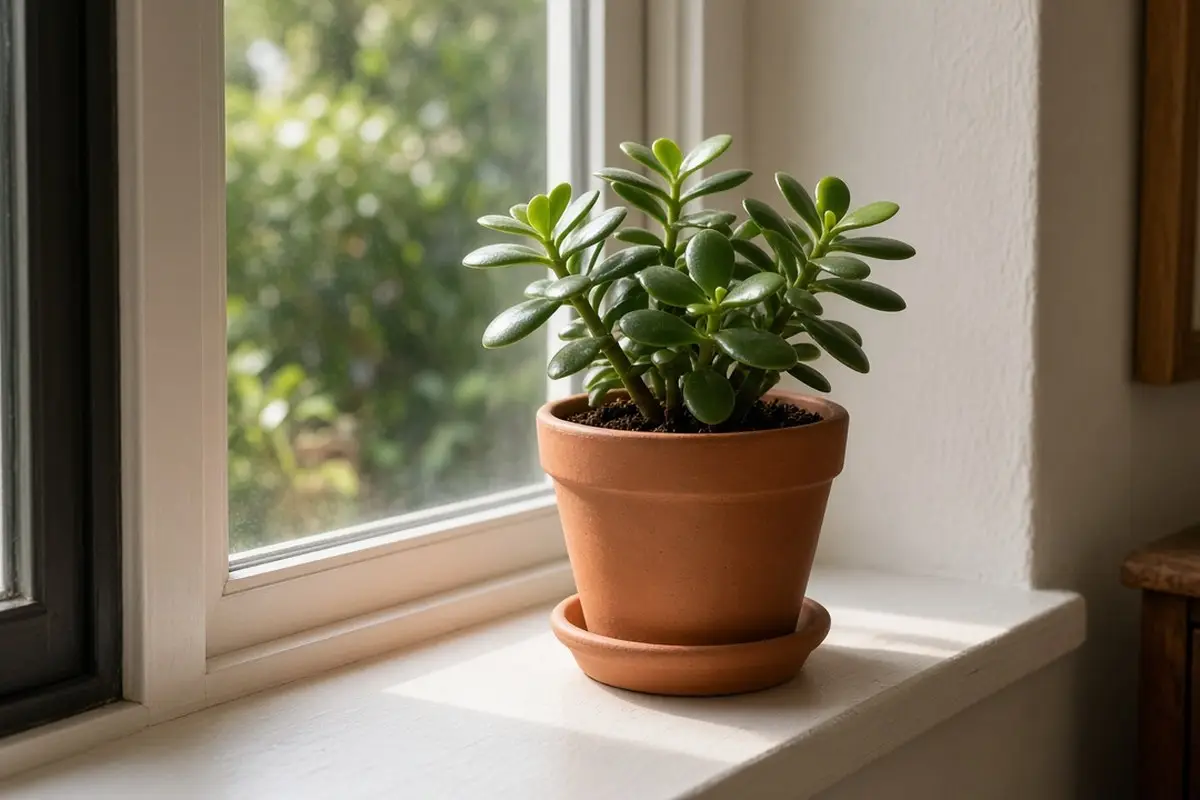
1. Jade plant
Jade likes several hours of direct sun and dry soil between waterings, which makes it ideal for a south or west sill. It grows slowly into a small, tree-like shape with thick, glossy leaves. Use a heavy terracotta pot to keep it from tipping as it gets top-heavy.
In winter, move it back a few inches from very cold glass. Jade tolerates cool nights but not freezing drafts, and leaves touching an icy pane can scar.
Get the look
2. Aloe
Aloe wants bright light and very little water. On a sill it stays compact; in weaker light it stretches and leans. Turn the pot a quarter turn each week so it grows evenly.
Aloe also makes a good first plant for anyone nervous about keeping things alive, because it signals clearly when something is wrong: thin, curling leaves mean it needs water, soft or translucent leaves mean it has had too much. Use a gritty cactus mix and a pot with a drainage hole, and let the soil dry completely between drinks.
3. Herbs in a row
Basil, thyme, rosemary, and chives grow best on a sunny sill. A narrow planter or a row of small pots puts kitchen herbs in reach. Herbs indoors are short-lived compared with foliage plants, so think of them as a rotating crop rather than permanent decor.
Buy small starter plants rather than seeds if you want quick results, and pinch off the tops regularly to keep basil and other leafy herbs bushy rather than tall and sparse.
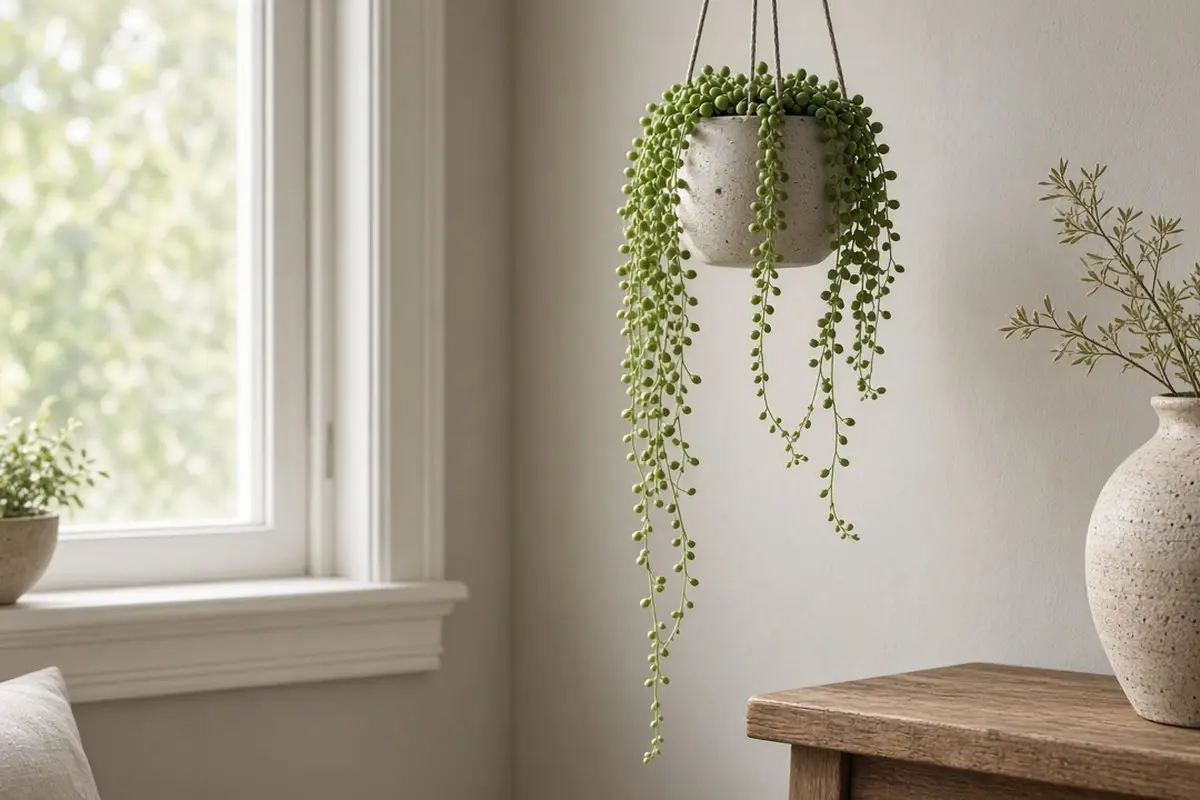
4. String of pearls
A trailing succulent that cascades over the edge of a pot, string of pearls needs bright light close to the glass. Hang it right in the window or set it on a high sill so the strands can spill down.
Water string of pearls sparingly, about every two weeks in summer and less in winter, when the little beads look slightly wrinkled. Shriveled beads mean thirst; mushy ones mean too much water.
Get the look
Zone 2: Three to six feet back
5. Fiddle-leaf fig
The fiddle-leaf fig is famous for being fussy, mostly because people put it in the wrong spot. It wants bright, steady, mostly indirect light and hates being moved. Placed a few feet from a bright window and left alone, it does well. Water when the top two inches of soil are dry.
If the leaves start to brown at the edges or drop suddenly, check for drafts from a heating vent or a door before blaming the watering. Fiddle-leaf figs react quickly to temperature swings.
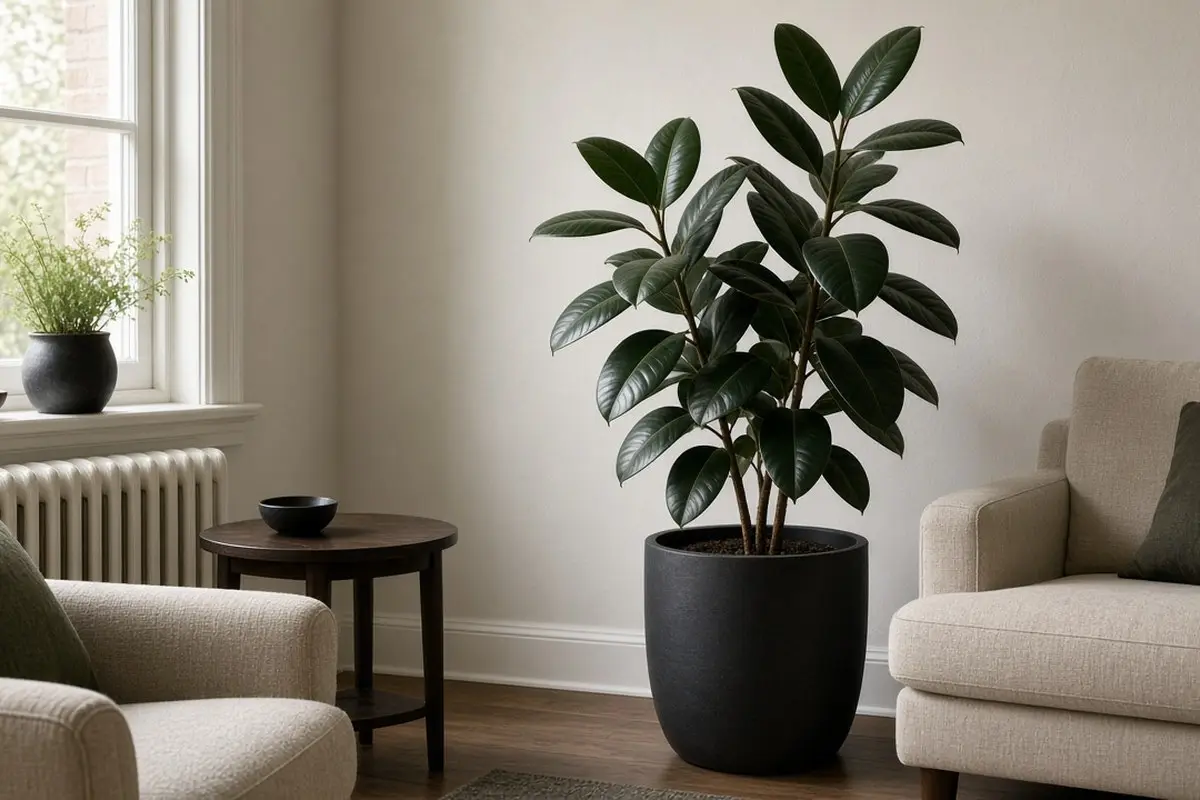
6. Rubber plant
A rubber plant gives a similar tall, leafy look to a fiddle-leaf with far less drama. It tolerates a bit less light and recovers better from a missed watering. Wipe the large leaves with a damp cloth now and then so they can take in light.
Rubber plants come in deep burgundy, green, and variegated forms. The dark types handle lower light best, while variegated leaves with cream or pink markings need a brighter spot to keep their color. Prune the top if it gets too tall, and it will branch out below the cut.
Get the look
7. Pothos on a shelf
Pothos is the most forgiving trailing plant. On a shelf a few feet from the window, it grows long vines you can let hang or train along a hook.
Pothos is also easy to multiply. Snip a length of vine just below a leaf node, stand it in a jar of water on the sill, and roots appear within a couple of weeks. A few cuttings potted together make a fuller plant, or a gift. Variegated types keep more color with more light.
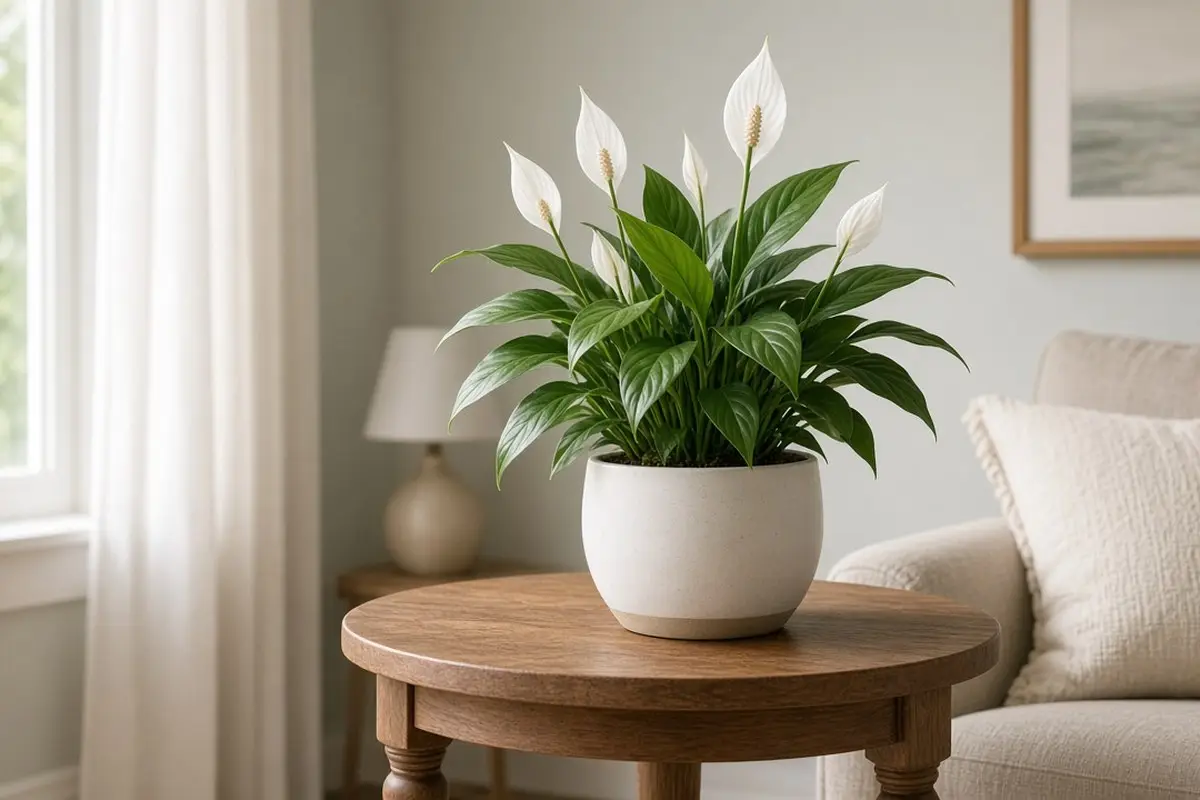
8. Peace lily
Peace lilies tolerate medium light and show you when they are thirsty by drooping dramatically, then recover within hours of watering. With enough light, they bloom with white flowers.
Keep peace lilies out of reach of cats and dogs, as they are toxic if chewed. The same goes for pothos, ZZ plants, and snake plants. If you have pets, the parlor palm and the cast iron plant are safer choices.
Get the look
Zone 3: Across the room
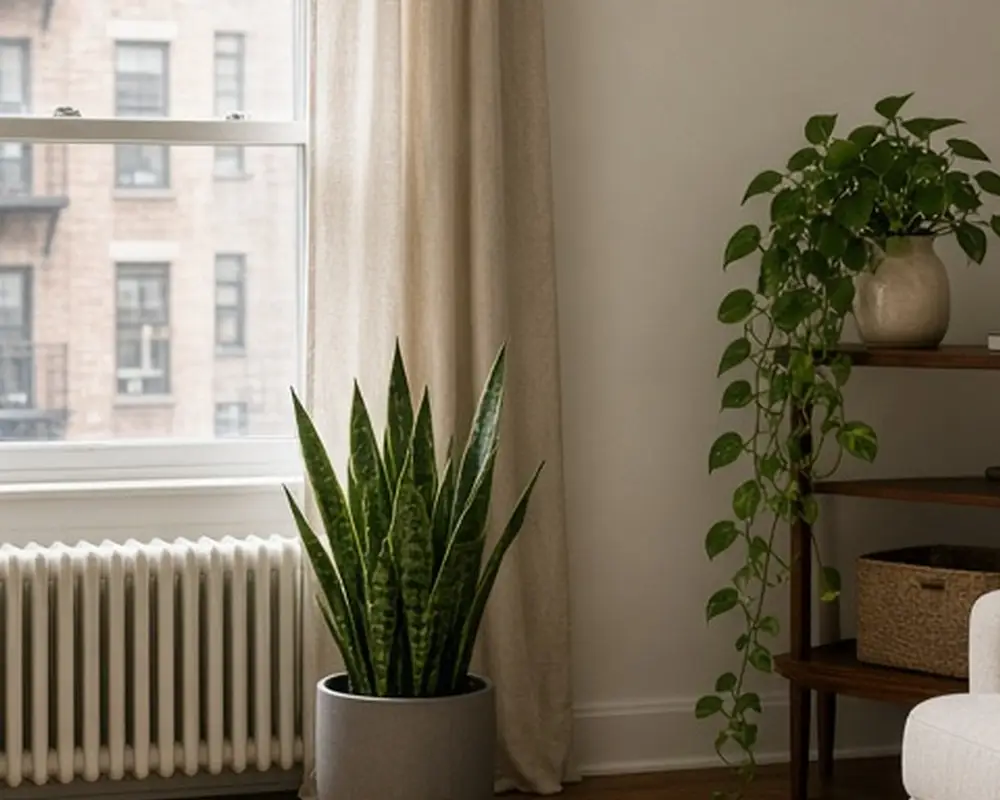
9. Snake plant
The snake plant is the usual answer for a dim corner, and it earns the reputation. It handles low light and infrequent watering, growing slowly upright. Overwatering is the main way to kill it.
Water every three to four weeks in a dim spot, less in winter, and use a pot with a drainage hole. Snake plants come in many forms, from tall, sword-like leaves to short rosettes, so you can choose one that suits the scale of the spot.
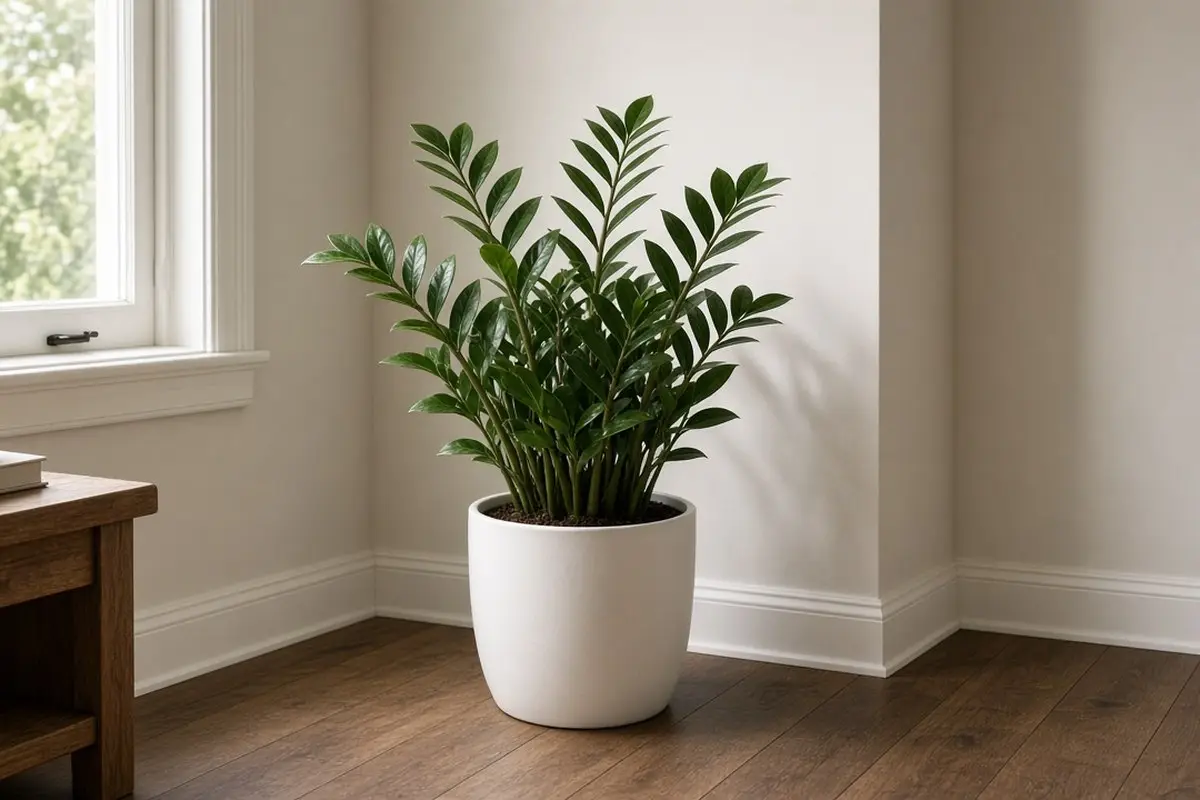
10. ZZ plant
ZZ plants have thick, waxy leaves and underground rhizomes that store water, so they shrug off neglect. They are slow in low light but stay healthy and green.
A ZZ plant can go a month or more between waterings in a dim corner. Its stems grow straight and upright, which suits a narrow spot beside a sofa or a bookcase where a spreading plant would get in the way.
Get the look
11. Cast iron plant
Named for its toughness, the cast iron plant tolerates deep shade, dry air, and irregular care. It grows slowly, so buy one at the size you want rather than expecting it to fill out quickly. Its long, dark leaves suit a hallway end or a far corner.
12. Parlor palm
A small, feathery palm that has been a houseplant favorite for generations, the parlor palm handles lower light and adds a soft, leafy shape to a side table or the floor.
Group several plants at different heights where you can, such as a floor plant, one on a stool, and one trailing from a shelf. A cluster looks fuller than a scattering of single pots and raises the humidity around the leaves slightly, which most tropical houseplants appreciate.
Use mirrors and pale surfaces
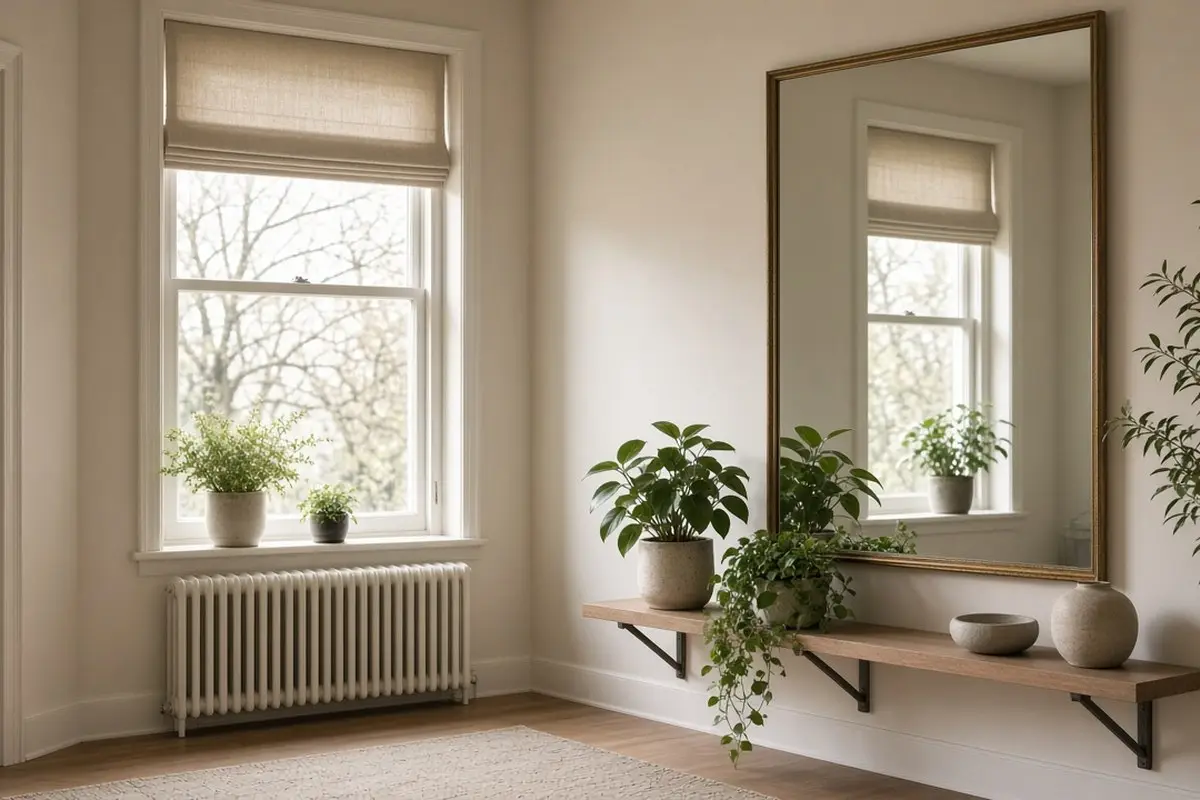
A mirror placed to catch the window bounces light deeper into the room for you and the plants alike. Pale walls help too. Our guide to mirror placements for light shows where a mirror does the most good.
Get the look
Add a grow light where the window cannot reach
If you love a corner that gets almost no light, a small LED grow light makes it workable. Modern ones look like ordinary desk lamps or slim bars that tuck under a shelf. Run them on a timer for ten to twelve hours a day.
A grow light also helps in winter, when even a good window offers short, weak days. Position it a foot or two above the leaves and choose a warm white light if it will be on while you are in the room, so the space does not take on a purple or harsh tint.
Common questions
What plant does best in a room with one window? It depends on how far from the window it sits. Succulents and herbs on the sill, fiddle-leaf figs and rubber plants a few feet back, and snake plants or ZZ plants farther away.
How far from a window can a plant be? Light drops sharply beyond five or six feet. Past that, choose low-light plants or add a grow light.
Do plants need a window that faces south? No. North and east windows suit many foliage plants well. South and west windows suit sun-lovers like succulents, cacti, and herbs.
For more ways to make a small home feel open, see our studio apartment layout and quiet apartment details guides.