
8 Dog Bed Spots That Do Not Block the Walkway

On this page13 sections
- What a dog looks for in a resting spot
- Measure the dog, then the spot
- The corner beside the sofa
- Under a console or a sofa table
- A nook under the stairs
- The foot of the bed
- A spot by the window, set back
- Built into a cabinet or bench
- A second bed in a quieter room
- A rug that marks the spot
- Choose a bed that stays put
- Teach the dog to use the spot
- Common questions
Dog beds have a way of drifting into the middle of the room. The dog drags it toward the sunny patch, someone nudges it out of the way with a foot, and soon it sits right in the path between the sofa and the kitchen. Everyone steps around it, and nobody, including the dog, gets any rest. A bed in a walkway is restless for a dog, too: every passing foot wakes it, and some dogs become protective of a bed that keeps getting approached.
These eight dog bed spots keep the walkways clear while giving the dog what it actually wants: a place near the family, a wall at its back, and a view of the door. Each one works with the furniture you already have, and each is sized so the bed looks planned rather than parked.
As an Amazon Associate I earn from qualifying purchases.
What a dog looks for in a resting spot
Dogs like to rest where they can see their people and hear what is going on, but they also want to feel protected. A corner, the side of a sofa, or the space under a table gives them a solid edge on two or three sides. They also like to watch the main door, so a spot with a sightline to the entry often wins over a quieter but hidden one.
Watch where your dog chooses to lie when there is no bed at all. That is the best clue. If it always ends up on the cool floor by the back door, it may be too warm elsewhere. If it squeezes behind the armchair, it wants more cover. Put the bed close to that natural choice and it will be used from the first day.
Temperature matters, too. Avoid placing a bed right next to a radiator, in front of a drafty door, or in a patch of direct afternoon sun the dog cannot get out of. Older dogs and short-coated breeds feel the cold more, so give them a spot well away from drafts and a bed with raised sides. Big, heavy-coated dogs may prefer a cooler floor and a flatter mat.
Measure the dog, then the spot
Measure your dog from nose to the base of the tail while it lies stretched out, and add about 8 to 12 inches. That is the length the bed needs. Dogs that curl up can use a round bed a little smaller; dogs that sprawl need a rectangle. Then hold that rectangle against your floor plan with painter’s tape. A bed that is too big for its corner pushes into the walkway; a bed that is too small gets abandoned for the sofa.
Keep at least 30 to 36 inches of clear path past the bed in any well-used route. That is enough for a person carrying a laundry basket to pass without stepping over a tail. In narrow rooms, it is better to choose a smaller bed in the right place than a large one that crowds the route.
1. The corner beside the sofa
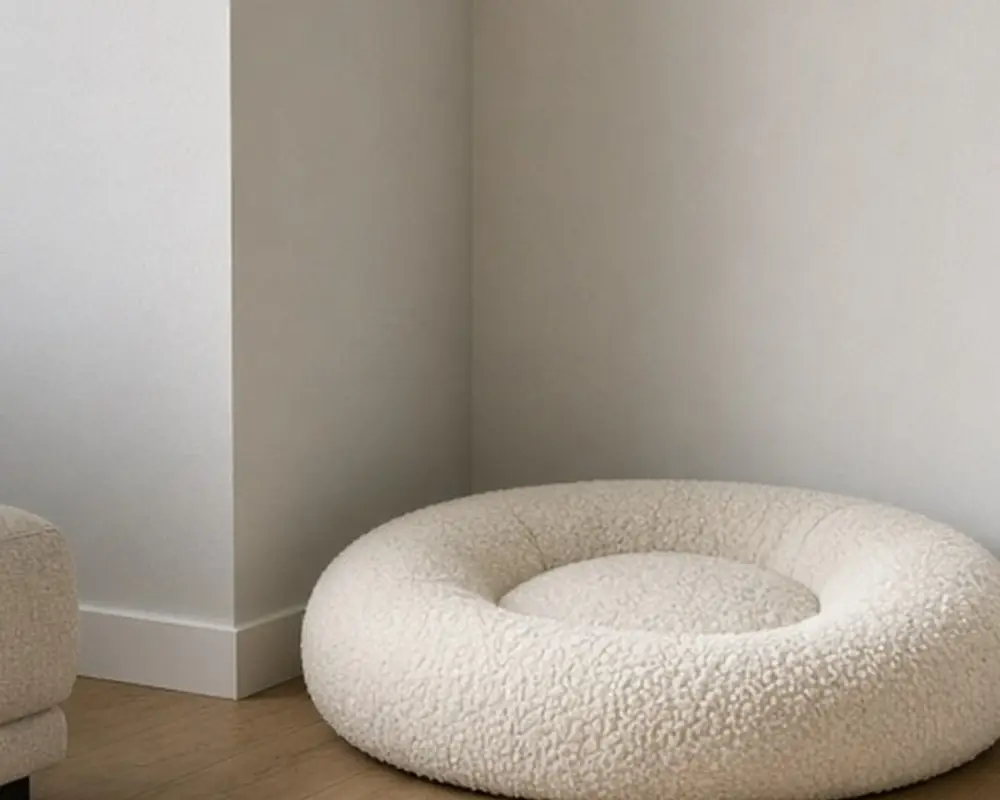
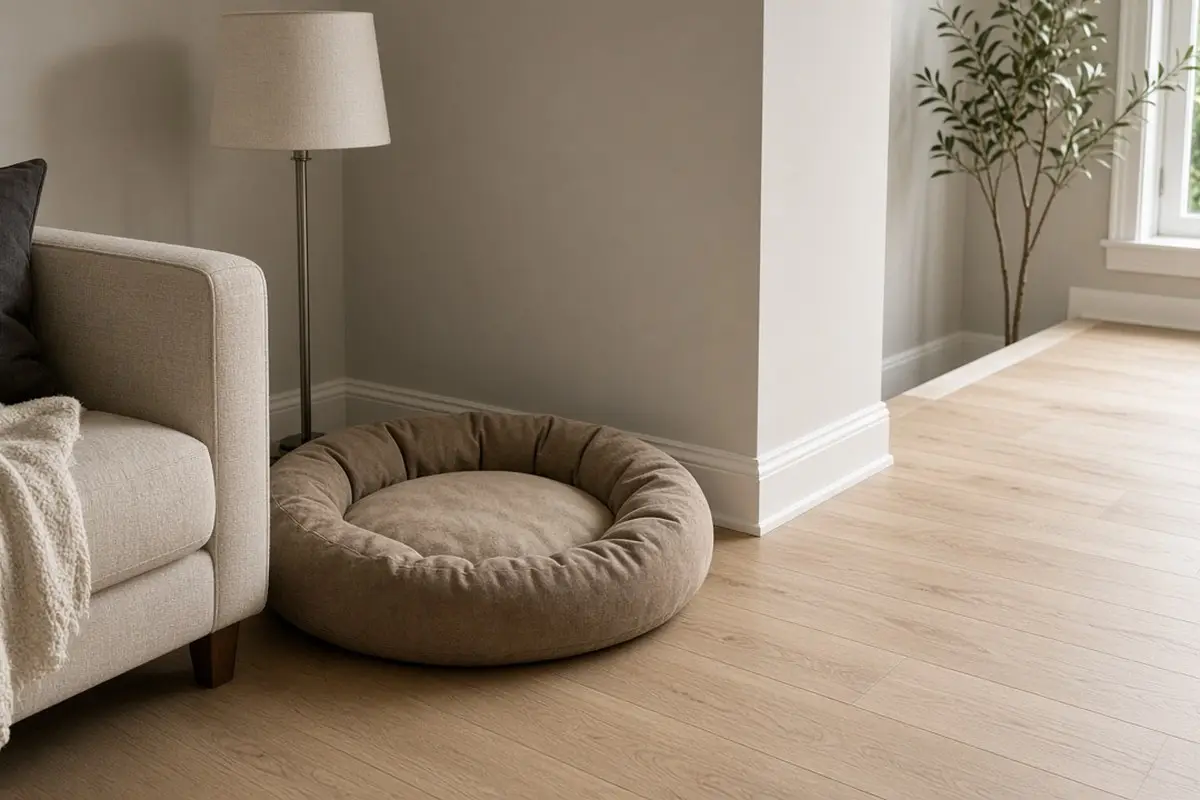
The corner where a sofa meets the wall is often empty floor. A round bed there is close to the family, out of the path, and protected on two sides. Add a floor lamp behind it or a side table beside it, and the corner looks styled rather than given over to the dog.
Match the bed fabric to the sofa or rug, rather than choosing a bright pet print. Boucle, tweed, and canvas in oatmeal, gray, or brown look like part of the furniture and hide fur well. If the corner gets a lot of foot traffic nearby, a bed with a raised edge stops it from being nudged.
Get the look
2. Under a console or a sofa table
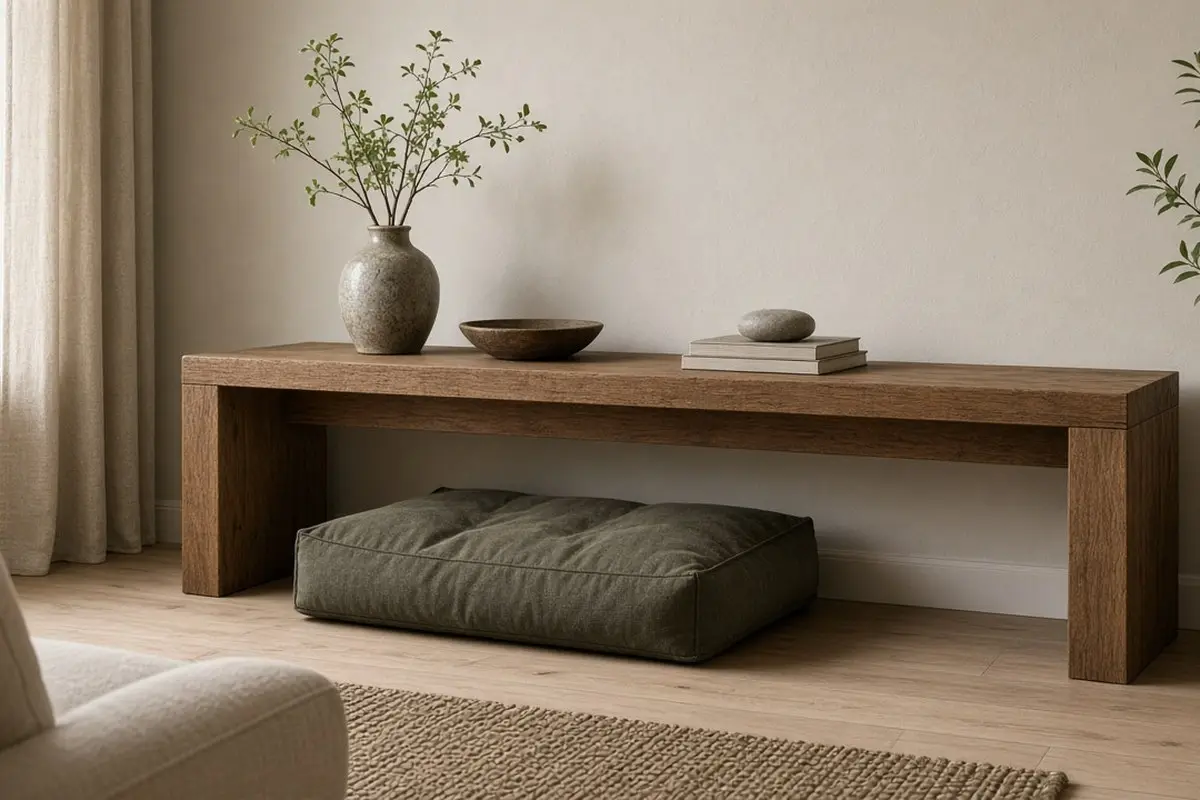
A long console behind a sofa or against a wall often has open floor beneath it. A low rectangular bed fits under there and gives the dog a roof, which many dogs love. Check the clearance first: a medium dog needs about 20 inches of height to stand up comfortably as it gets out.
This works especially well for small and medium dogs in apartments, where every square foot of floor counts. Keep cords from lamps and chargers on the console tidied away so a curious dog does not chew them while lying underneath.
Get the look
3. A nook under the stairs
The triangle under a staircase is often wasted or crammed with shoes. Open up the lowest part as a dog den with a cushion sized to fit, and the dog has a cave-like spot right in the middle of the house but out of everyone’s way. Add a small light or a picture above, and it becomes a feature.
Make sure the nook has good airflow and is easy for you to reach for cleaning. If the space slopes steeply, keep the cushion in the taller part, where the dog can stand, and use the low end for a basket of toys and leads. A simple arched opening cut into a closed panel makes a stair nook look built-in rather than improvised.
4. The foot of the bed
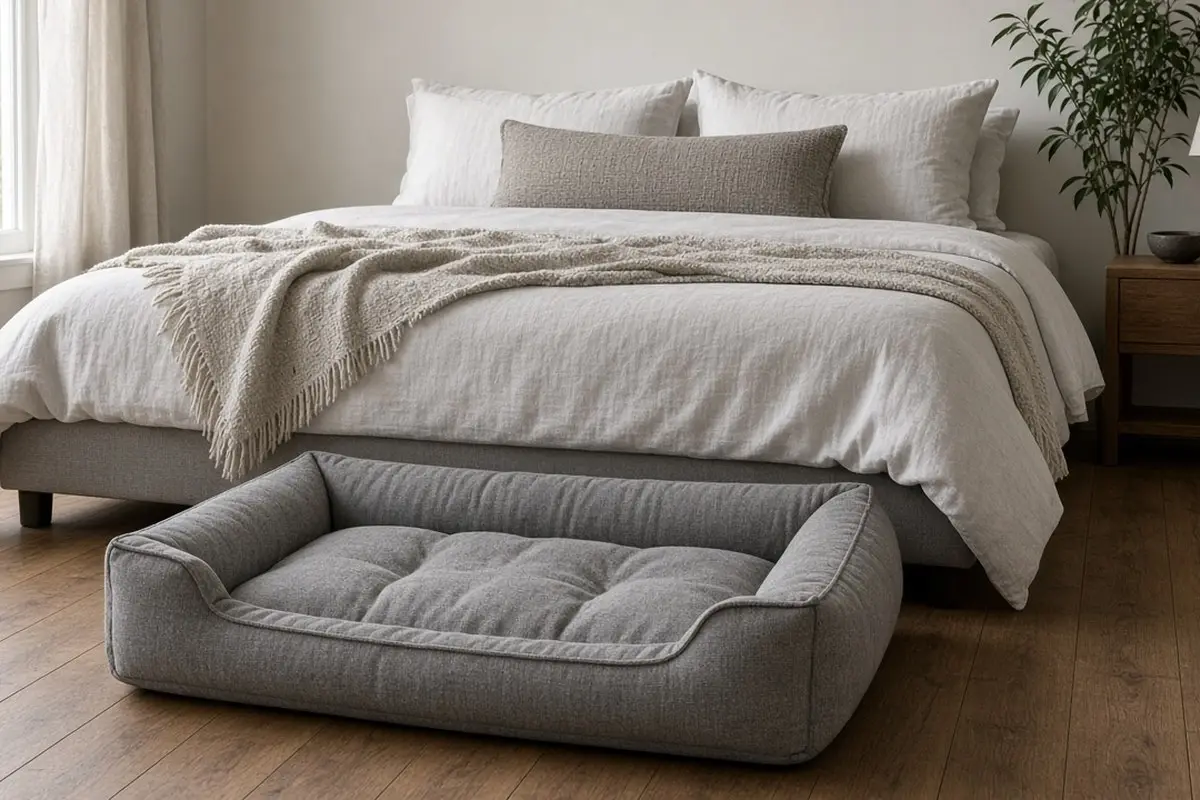
Many dogs want to sleep near their people. A bed at the foot of your own bed, or along the side opposite the door, lets them be close without sharing the mattress. Choose a low bolster bed that sits below the bed frame, and make sure you can still walk around the bed at night without tripping. A night light in the hall helps both of you on late-night trips.
Get the look
5. A spot by the window, set back
Dogs love to watch the street. Instead of putting the bed right against a window where it blocks the curtains and the radiator, set it a little back and to one side, so the dog can see out by lifting its head. A low bench or window seat can sit in front, giving you a spot to sit as well.
If the window gets strong sun, add a sheer curtain or a light blind, so the dog can lie there through the afternoon without overheating. A washable throw on the bench keeps muddy paws from marking the cushion when the dog stands up to bark at the mail carrier.
6. Built into a cabinet or bench
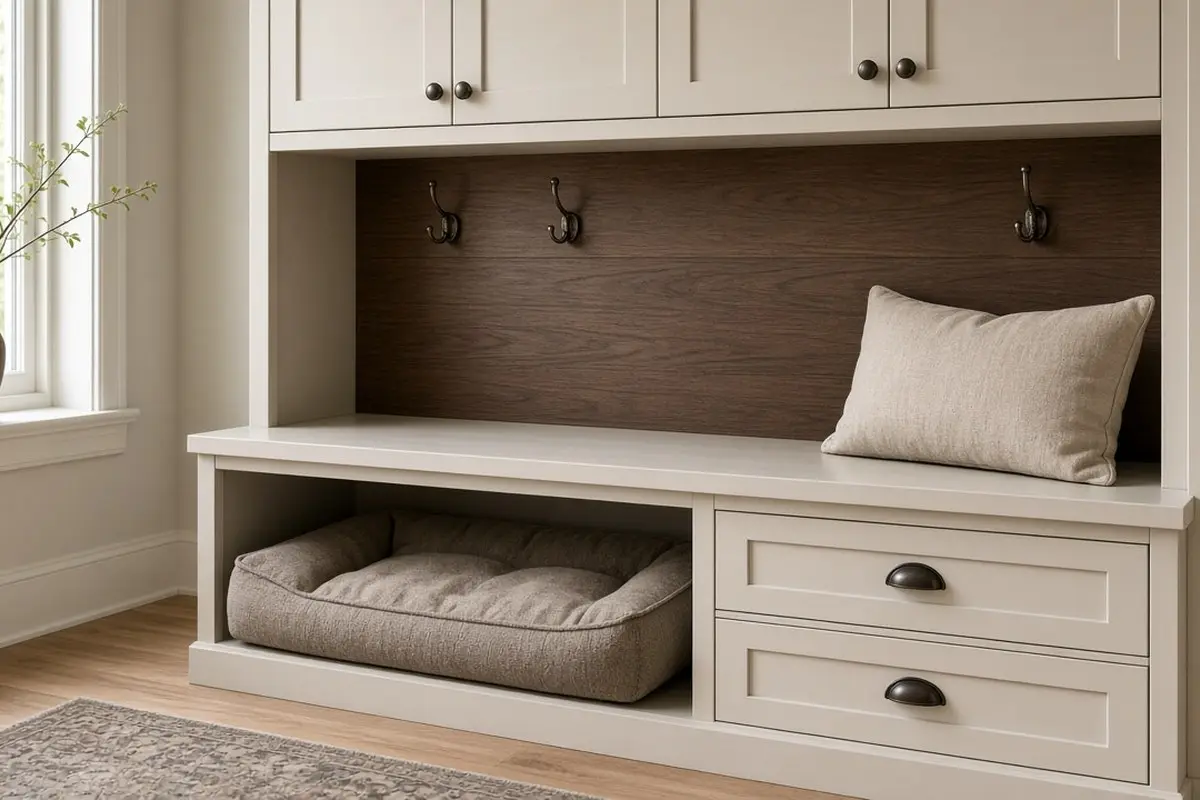
If you are building storage, include the dog. An open bay in a bench, a cabinet with one door left off, or an end table with an open lower shelf all make a tidy den. Fit a custom cushion to the opening, and the bed disappears into the furniture. Leave enough room at the opening for the dog to turn around before lying down, and choose a cushion with a zip cover you can wash.
Get the look
7. A second bed in a quieter room
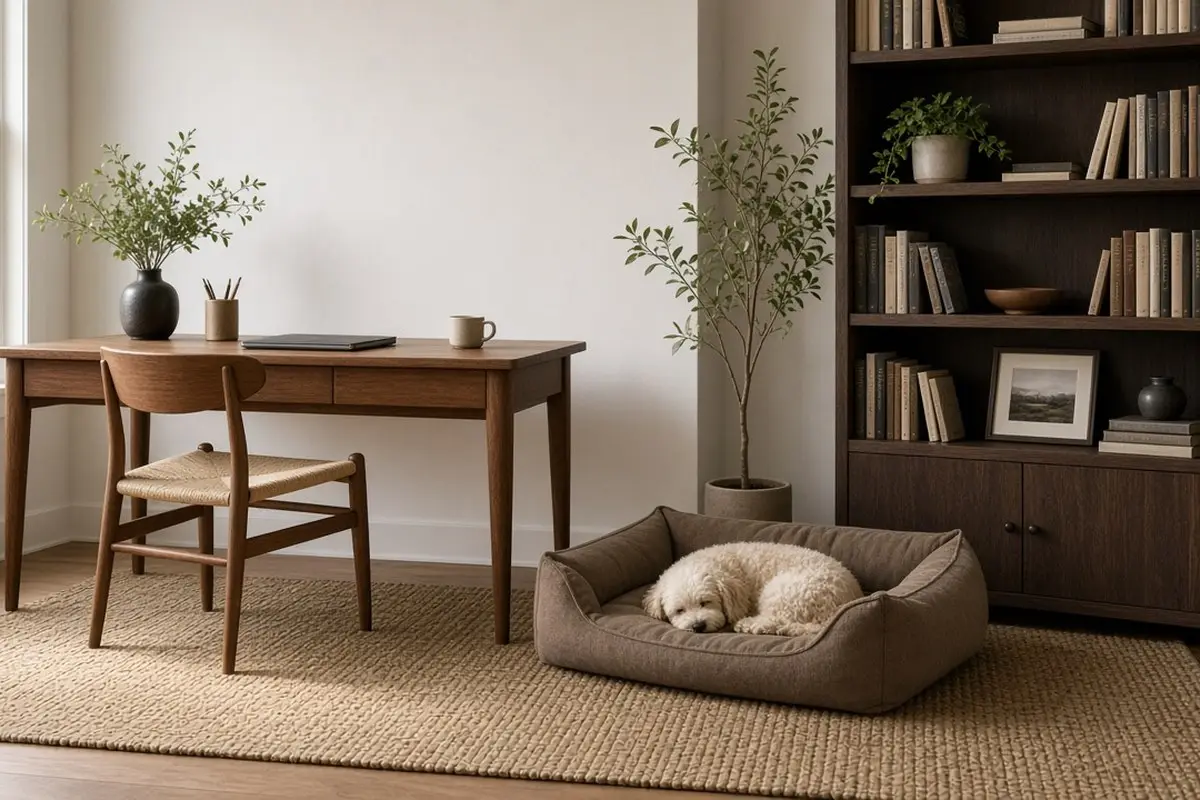
Most dogs benefit from two resting spots: one in the busy family room and one somewhere quieter, such as a home office or a bedroom. The second bed is a place to retreat when there are guests or children are playing loudly. It also stops the main bed being dragged from room to room.
The second bed does not need to match the first. A simple flat mat or a folded blanket in a basket works well in a bedroom or office. What matters is that the dog has somewhere to go that is its own, away from noise, when it chooses.
Get the look
8. A rug that marks the spot
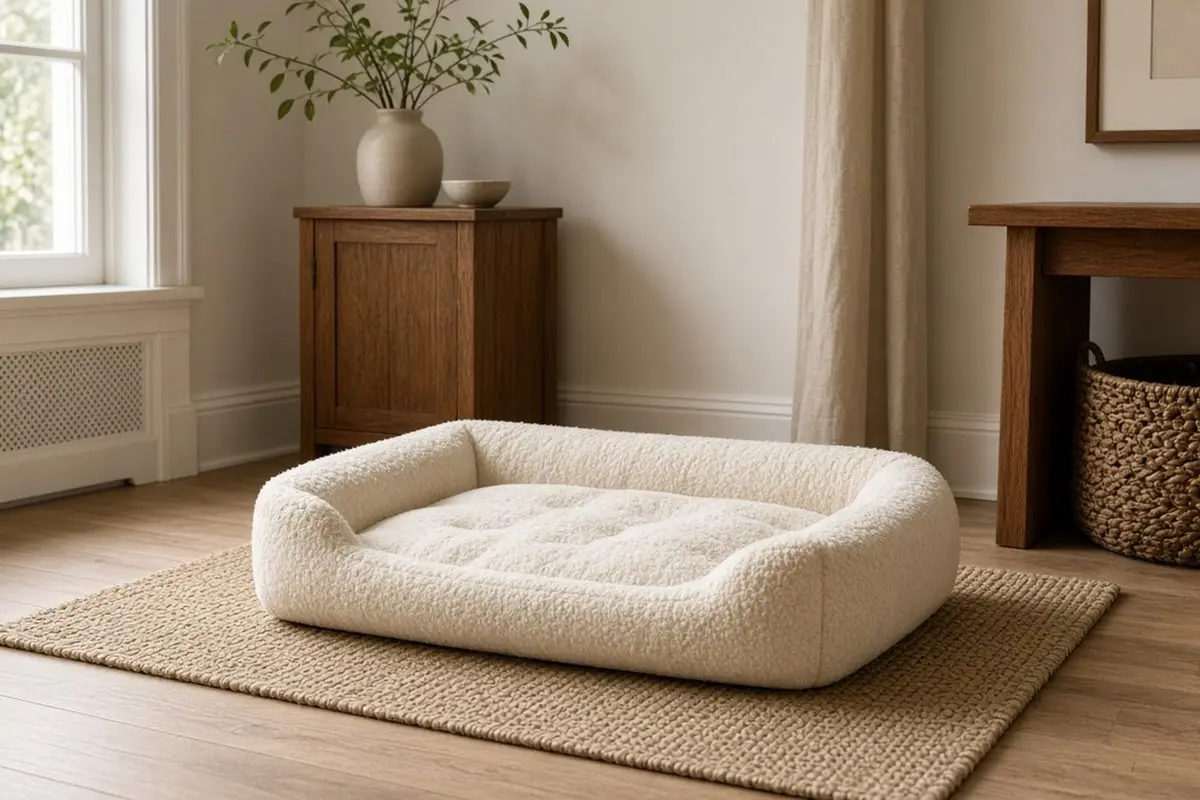
If your dog keeps moving its bed, anchor it with a small washable rug. The rug sets out where the bed belongs, protects the floor, and makes the corner look intentional. Pick a flat-weave or washable rug that goes straight into the machine.
Get the look
Choose a bed that stays put
A heavier, well-made bed with a non-slip base is much less likely to travel across the floor than a light cushion. On hard floors, put a rug gripper underneath, or choose a bed with a rubber bottom. Beds with a firm, flat foam base also hold their shape better than loose stuffed cushions, which flatten and get pushed around. For older dogs with stiff joints, a supportive memory foam base is kind, and a low entry edge makes stepping in easier. Check the base every few months and replace foam that no longer springs back.
Teach the dog to use the spot
A new bed in a new spot needs a little training. Put a worn blanket or T-shirt on it, reward the dog with a treat when it lies there, and use a word such as “bed” or “place.” Within a week or two of steady practice, most dogs head there on their own.
Never use the bed as a punishment spot. It should be a good place: treats, chews, and praise happen there, and nobody disturbs a dog that is resting on its bed. Children in particular need to learn to leave a dog alone when it is lying in its spot. Wash covers every week or two to keep fur and smell under control.
Common questions
Where should a dog bed go in the living room? In a corner or beside the sofa, out of the walkway, where the dog can see the family and the door.
How big should a dog bed be? About 8 to 12 inches longer than your dog measured from nose to tail base while lying stretched out.
Should a dog bed be in the bedroom? It can be, if the dog sleeps calmly at night. Place it at the foot of the bed or along the far side, out of your path to the door.
For more, see l-shaped sofa layouts, cat feeding station placement, and entryway drop zone.