
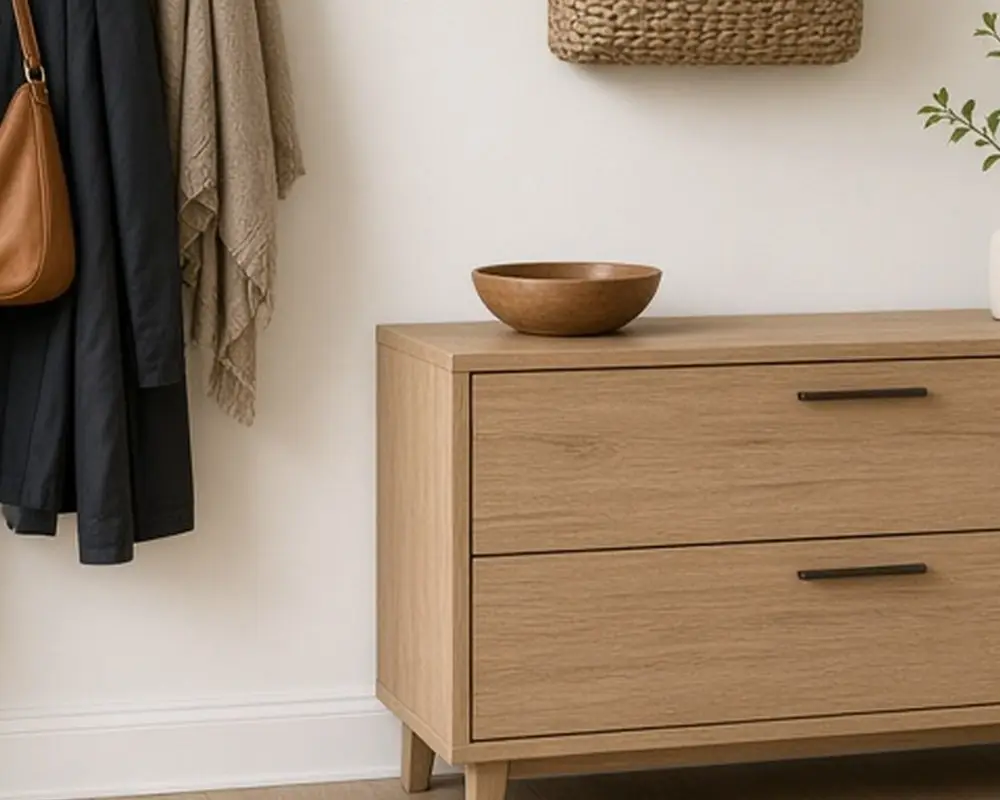
11 Entryways With a Drop Zone and a Clear Floor

On this page14 sections
- Map what comes through the door
- Hooks at two heights
- A shoe tray by the door
- A closed shoe cabinet for the rest
- A wall pocket for mail
- A key bowl or key hooks
- A charging spot
- One bin per person
- A bench for putting shoes on
- A leash and dog gear station
- A seasonal rotation shelf
- A washable rug that shows the floor is clear
- The two-minute reset
- Common questions
The floor of an entryway tells you how well it works. If you can see the rug, the system is doing its job. If you are stepping over sneakers, a backpack, and the dog’s leash, the entry needs a drop zone: a set place for everything that comes through the door, arranged so putting things away is easier than dropping them.
This post is less about the furniture and more about the system. These eleven ideas cover hooks, shoe storage, mail, charging, and seasonal gear, with the goal of a clear floor at the end of every day.
As an Amazon Associate I earn from qualifying purchases.
Map what comes through the door
For one week, notice what lands in the entry. Write it down if you can. Typical lists include coats, bags, shoes, keys, mail, packages, umbrellas, sports gear, dog leashes, and the odd library book. Each category needs a home within one step of the door, at a height the person who uses it can reach. A drop zone fails when the home is too far away, too high, or too fiddly. The best systems use open hooks and open bins because they take one motion.
Notice who drops what, too. Often one person brings in the mail, another arrives with sports bags, and someone else walks the dog. Each habit needs its own landing spot, near where that person naturally stops. If the dog walker always pauses by the light switch, the leash hook belongs there, not across the room. Building the system around real behavior rather than an ideal picture is what keeps it working after the first enthusiastic week.
Decide what does not belong in the entry at all. Spare umbrellas, old shopping bags, and coats nobody has worn in a year take up the space that daily things need. Clear them out before buying any storage, so you are organizing only what truly passes through the door.
1. Hooks at two heights
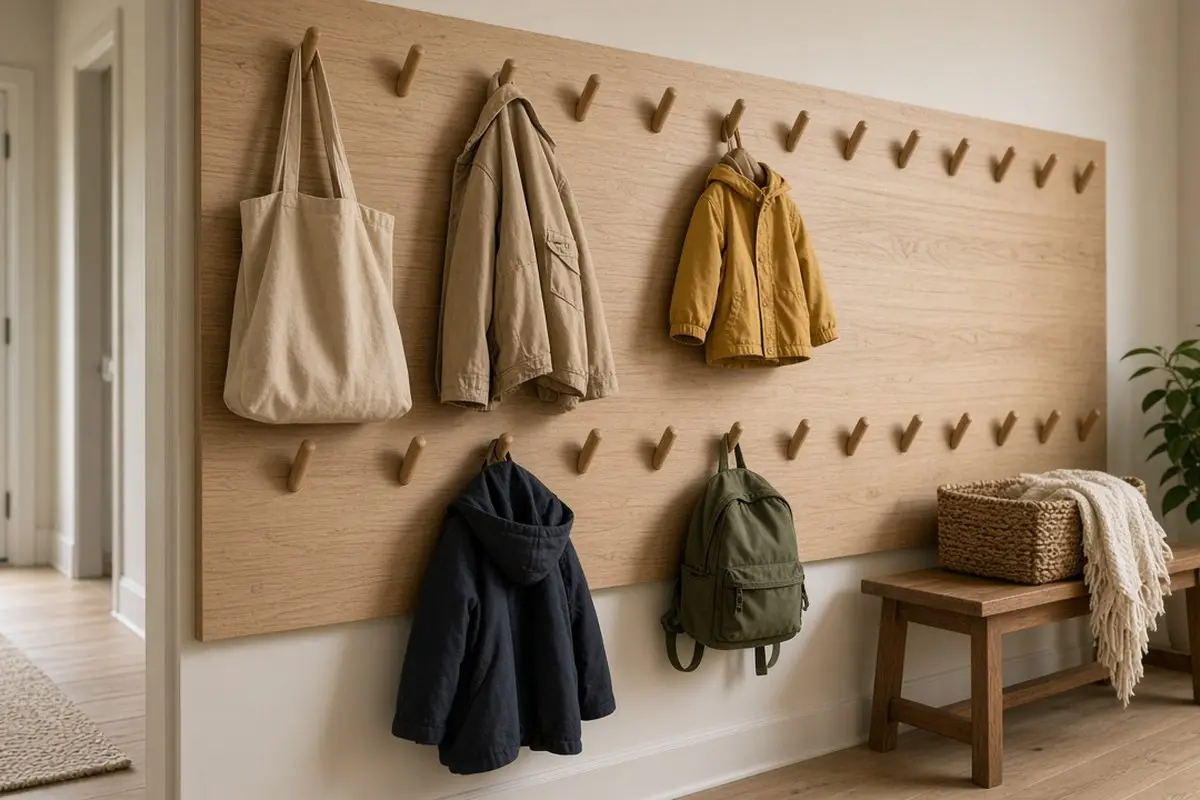
Mount one row of hooks at about sixty inches for adults and a second row around forty inches for kids. Children are far more likely to hang their own coats when they can reach the hook without help. Give each person their own hook or two, and label them if that helps.
Space hooks about eight to ten inches apart so bulky winter coats do not pile onto each other. Double hooks, with a small upper and larger lower prong, hold a coat and a hat or bag on the same spot. Mount hooks into studs or onto a board fixed to studs, because a hook loaded with a wet coat and a heavy backpack pulls hard on drywall. A painted board behind the hooks also protects the wall from zips and buckles.
Get the look
2. A shoe tray by the door
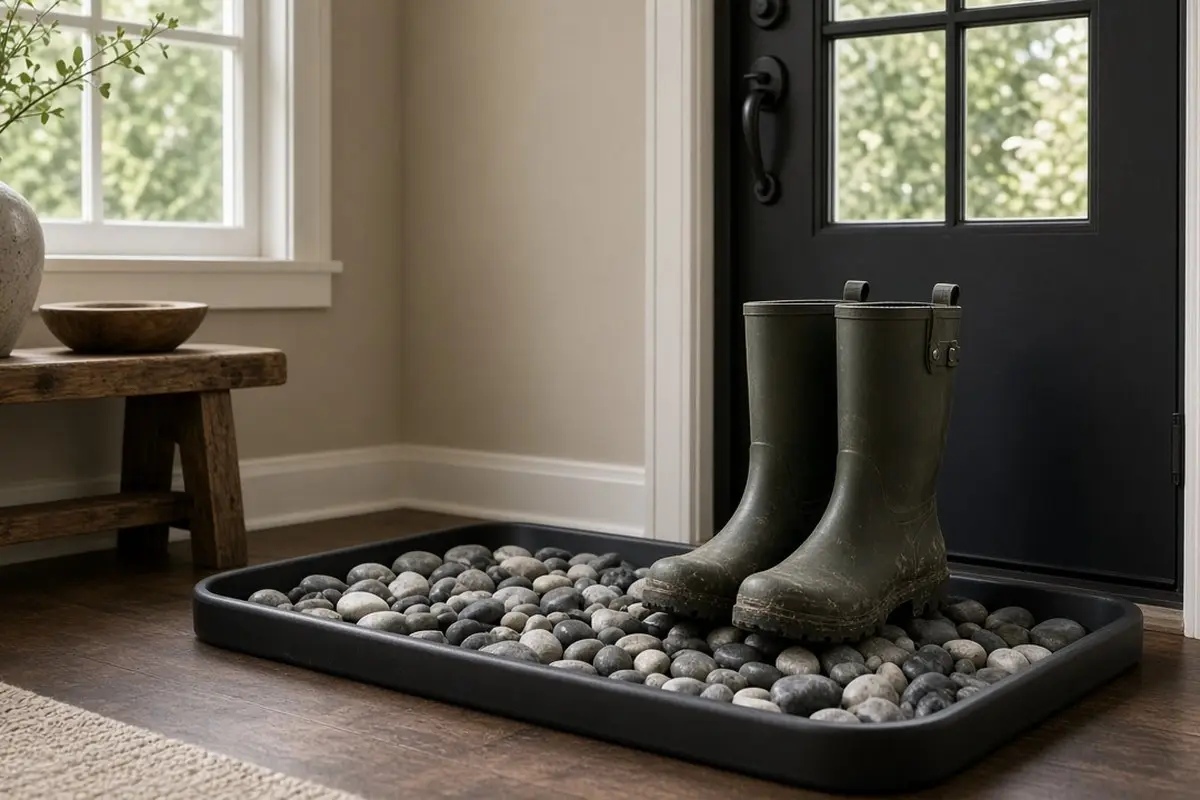
A boot tray catches wet shoes and gives the rule of shoes-off a clear place to happen. Choose one large enough for each person’s daily pair. Rubber trays are easy to rinse; a tray filled with smooth river stones looks nicer and dries boots faster.
Place the tray where people actually take their shoes off, which is usually right inside the door or beside the bench. In wet climates, keep a small towel on a hook above the tray for wiping paws and boots. In snowy winters, a second tray outside the door catches the worst of the slush so the inside one stays manageable.
Get the look
3. A closed shoe cabinet for the rest
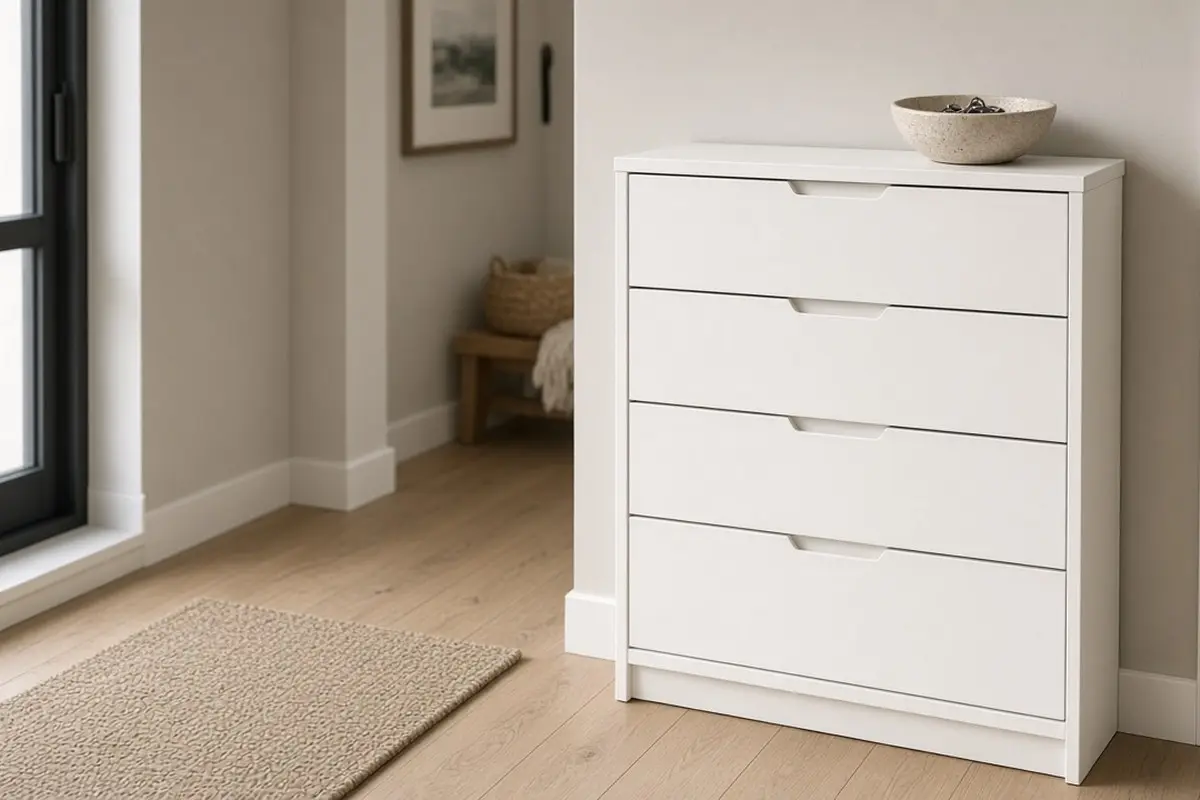
Only the shoes worn this week should live by the door. Everything else goes in a slim tip-out shoe cabinet, which hides a dozen pairs in about nine inches of depth. The flat top doubles as a landing spot for keys.
If several people share the cabinet, assign each one a flap or a shelf. Teenagers with large sneakers may need their own cabinet or a dedicated cubby. Anchor tip-out cabinets to the wall, since the flaps shift weight forward when opened and can pull a slim unit over.
Get the look
4. A wall pocket for mail
Mail spreads across every flat surface unless it has a vertical home. A wall pocket or file holder near the door keeps letters upright and visible. Sort as you come in: junk goes straight to a recycling bin beside it, anything to act on goes in the pocket.
A small recycling bin hidden in a cabinet or beside the console makes the first sort instant. Empty the act-on pocket once a week, perhaps on a weekend morning with coffee, so it never overflows. Some households add a second pocket for outgoing items, like returns and letters to post, so they leave with you on the way out.
5. A key bowl or key hooks
Keys get lost when they have no fixed home. A shallow bowl on a console or shelf, or a small row of key hooks near the light switch, ends the daily search. Pick one and commit; two key homes defeat the purpose.
A key bowl works best when it is wide and shallow, so keys are easy to spot and grab. A small tray inside a drawer works if you prefer nothing on display. For households with spare keys for cars, bikes, or a neighbor’s house, label a separate hook so spares do not mix with everyday sets.
6. A charging spot
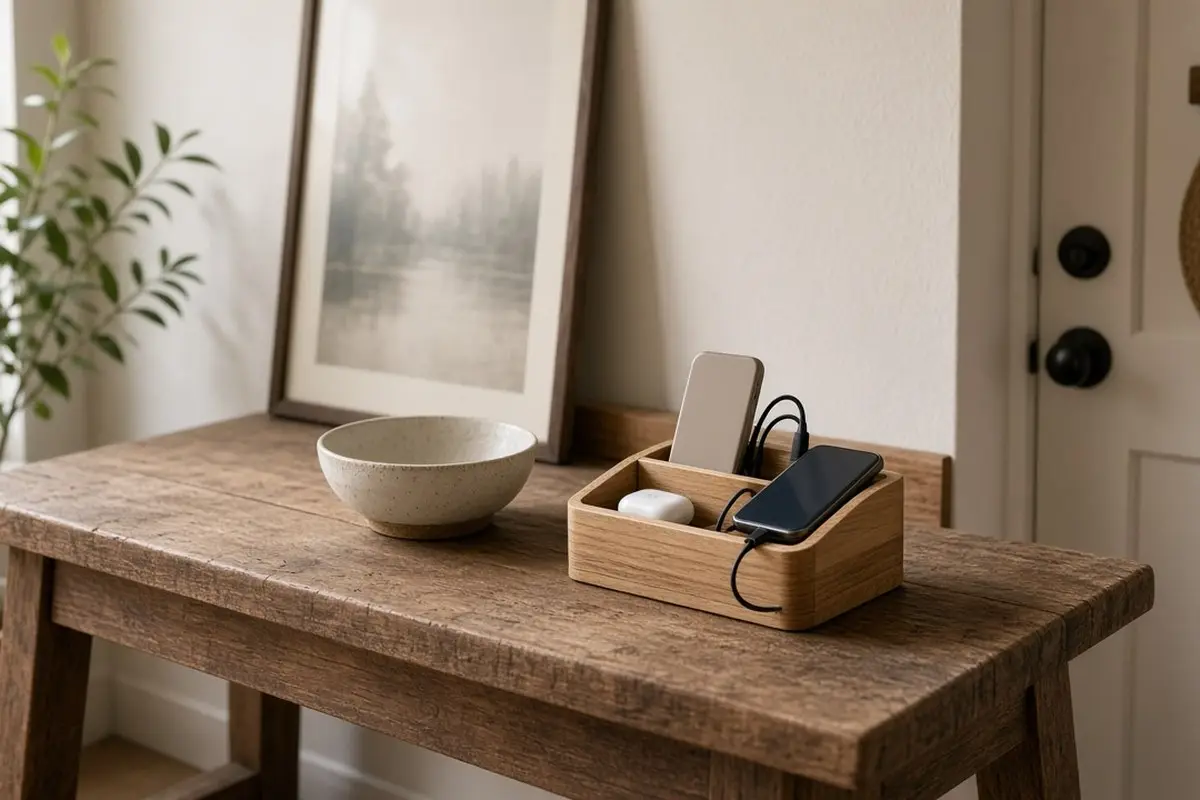
Phones, earbuds, and watches often get dropped at the door. A small charging station in a drawer or on a shelf near the entry gives them a home and stops cables trailing across the house. Choose a spot away from the door itself so devices are not on show to anyone looking in.
The charging spot also helps with a quieter evening routine. If phones live at the door overnight, they are not in the bedroom, and everyone knows exactly where to find theirs in the morning rush. A short multi-device cable with three tips keeps the setup tidy and works for most phones, earbuds, and watches at once. Hide the power strip inside a box with a cord hole.
Get the look
7. One bin per person
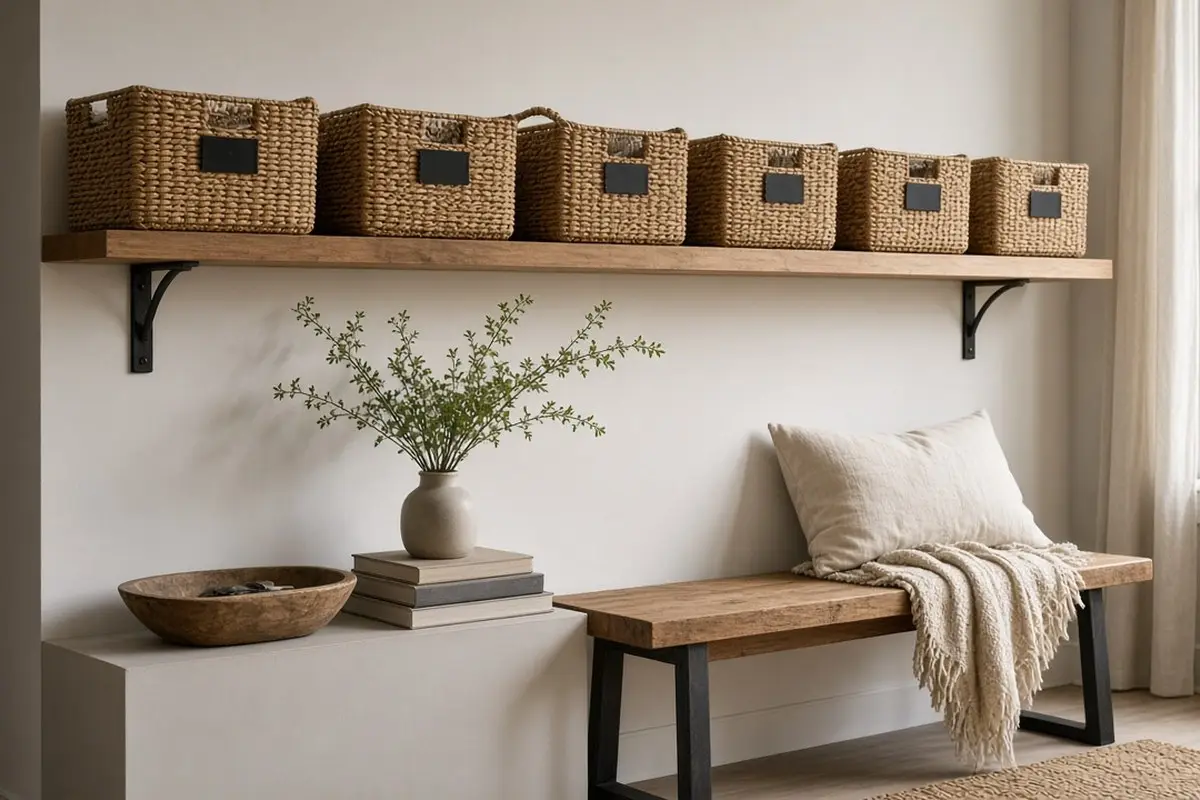
A lidded bin or open basket for each family member holds gloves, hats, sunglasses, and the other small things that otherwise end up on the floor. Shelves above a bench or cubbies in a storage unit work well. Keep bins small enough that they cannot become junk drawers.
Put the youngest person’s bin lowest and the adults’ bins higher. Clear out the bins at the change of seasons; a single forgotten glove or broken pair of sunglasses quickly multiplies. A label with a name or a small picture for younger kids makes it obvious whose bin is whose, which reduces the arguments about lost hats.
Get the look
8. A bench for putting shoes on
A place to sit makes shoes-off easier and gives bags somewhere to land other than the floor. A bench with an open shelf below can also hold the boot tray, so wet shoes sit right where you take them off.
Choose a bench around sixteen to eighteen inches high, a comfortable height for sitting and pulling on boots. A cushion makes it more inviting but should be removable and washable, since entries collect dirt. In a very small space, a storage ottoman can do the same job and hide gear inside its lid.
9. A leash and dog gear station
If you have a dog, give the leash, poop bags, and treats a dedicated hook and small basket by the door. A wall-mounted leash holder keeps everything at hand for walks and off the console. Hang it at a height everyone who walks the dog can reach, and keep a spare collapsible water bowl in the basket for long walks.
Get the look
10. A seasonal rotation shelf
Winter gear and summer gear compete for the same hooks. Keep only the current season’s things in the entry and store the rest in a closet, under a bed, or on a high shelf. Swap twice a year. The entry stays light, and you rediscover things you forgot you owned.
Season boxes stay tidy if they are clear and labeled. On swap day, wash and check each item, donating anything outgrown before it goes back into storage. Kids grow fast, and a quick try-on session in the fall saves a frantic search for boots that fit on the first snowy morning.
11. A washable rug that shows the floor is clear
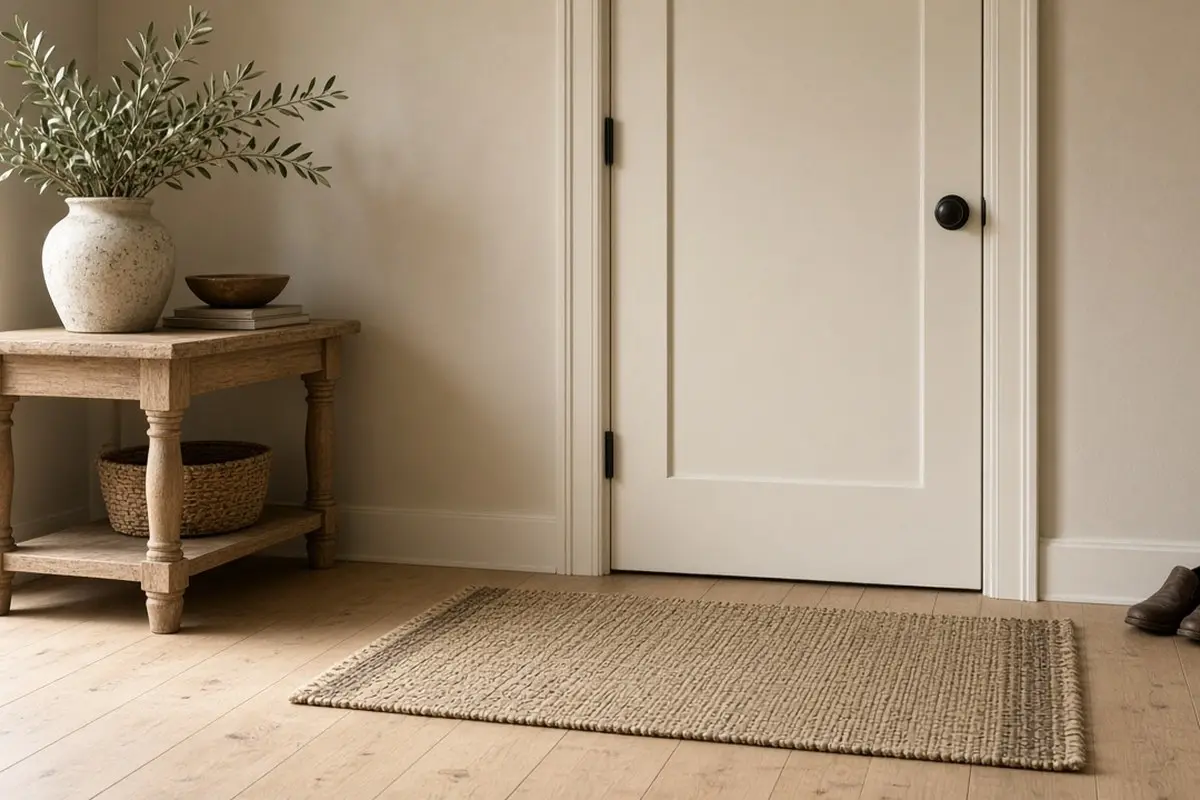
A washable rug sized to the entry finishes the drop zone and makes the clear floor visible. When everything has a home, the rug is the reward. Choose a low pile or flatweave so the door clears it and so grit shakes out easily.
Get the look
The two-minute reset
Even the best drop zone drifts. A two-minute reset each evening, putting stray shoes in the cabinet and mail in its pocket, keeps the floor clear. Make it a household habit, perhaps tied to locking the door at night.
A small job chart can help younger children join in. One person checks shoes, another clears the bench, someone else empties the mail pocket of junk. When the reset becomes automatic, the entry stays welcoming without anyone having to nag.
Common questions
What is an entryway drop zone? A set of hooks, bins, trays, and surfaces near the door that give everyday items a quick, fixed home.
How do I keep shoes off the entry floor? Keep only the current week’s shoes on a boot tray and store the rest in a slim shoe cabinet.
How many hooks does an entryway need? Plan on at least two per person, one for a coat and one for a bag, plus a couple of spares for guests and seasonal gear.
For furniture that fits a tight entry, see our narrow entry table ideas and entry mirror heights.