
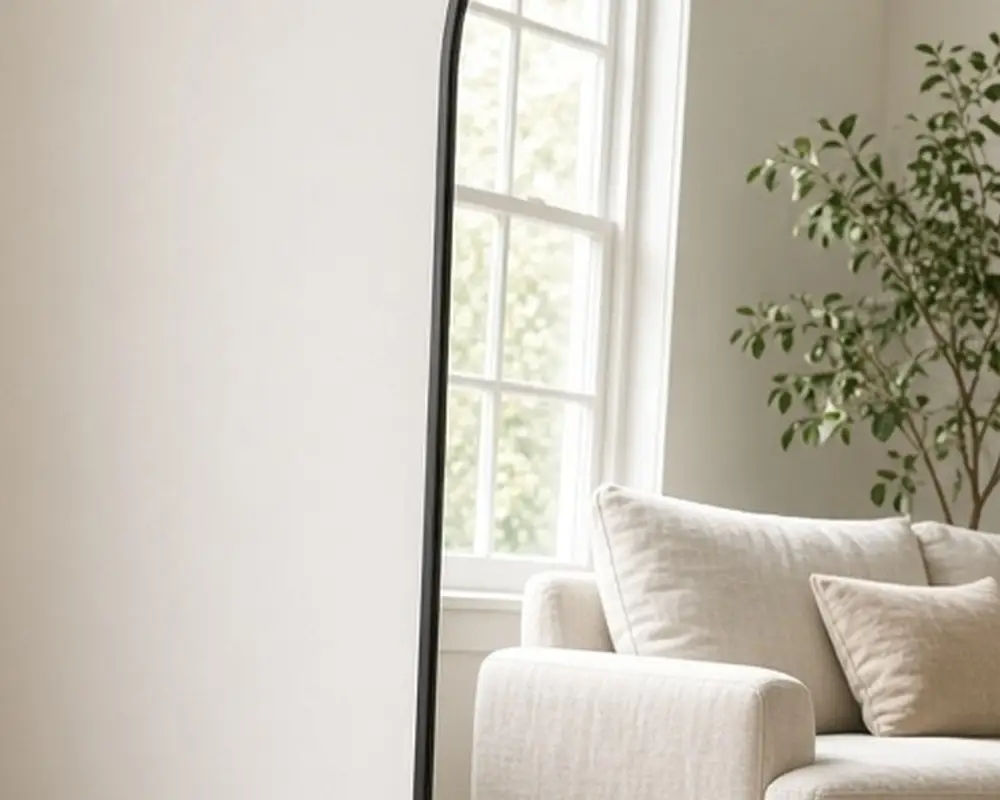
10 Mirror Placements That Add Light

On this page12 sections
A mirror is the cheapest window you can add to a room. Put it in the right spot and it bounces daylight into a dark corner, doubles the glow of a lamp, and makes a small space feel twice its size. Put it in the wrong spot and it reflects a blank wall, a cluttered shelf, or your own face every time you sit down.
Placement is everything. The ten ideas below are about mirrors that brighten a room: where to hang them, what they should reflect, and how big they need to be to make a real difference. They work in rentals and owned homes alike, and most need nothing more than a couple of strong hooks. For other ways to brighten walls, the wall updates without furniture post is a good next read.
As an Amazon Associate I earn from qualifying purchases.
1. On the wall beside a window
The most effective place for a mirror is usually on a wall next to a window, at a right angle to it. From there, the mirror catches daylight coming in at an angle and spreads it across the room, without reflecting harsh direct sun straight back at you. It also reflects the view outside, so the room seems to have a second window.
Hang the mirror at about the same height as the window, with its center near eye level. The bigger the mirror, the more light it moves. A small mirror beside a window helps a little. A large one, close to the size of the window, changes the room.
Check the reflection from your main seats before hanging. You want to see sky, trees, or the bright part of the room, not a corner of the ceiling.
Get the look

2. A mirror opposite a window, done carefully
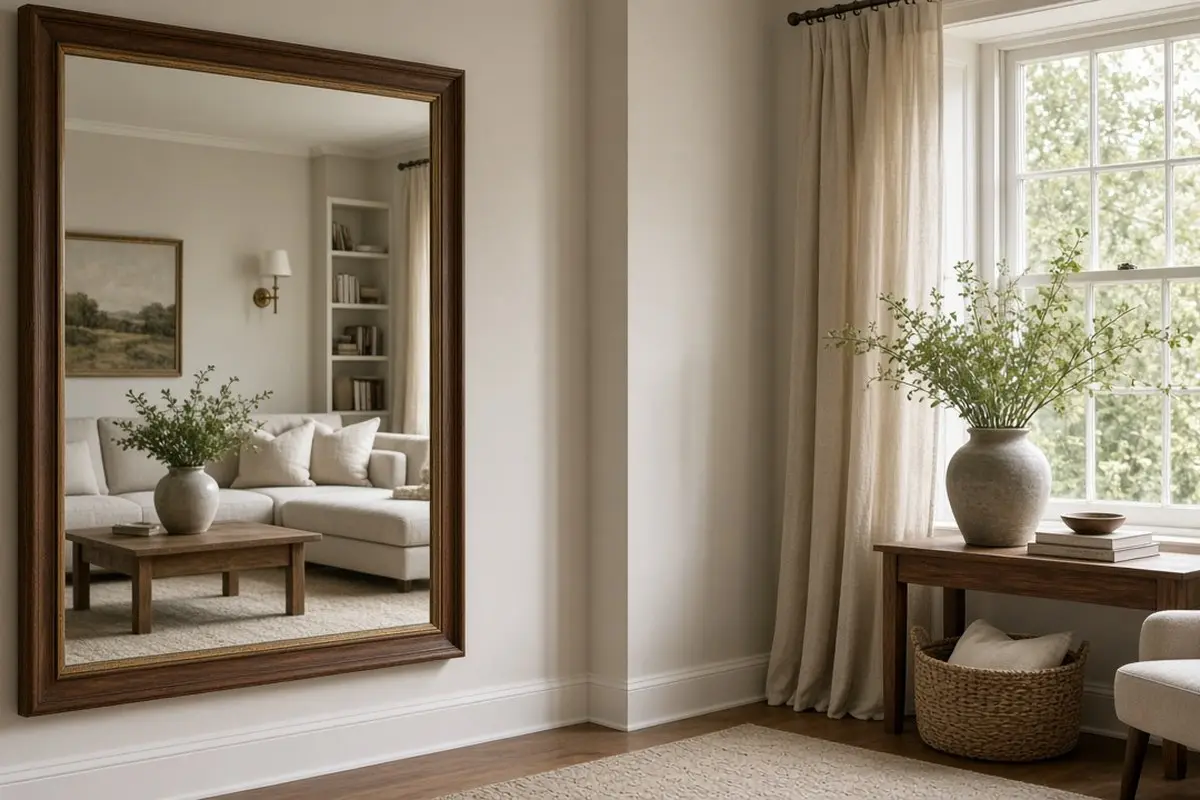
A mirror opposite a window doubles the light and the view. It can be beautiful, especially if the view is green or open sky. It can also create glare, and some people find it unsettling to see the window twice.
It works best when the window gets soft, indirect light, such as a north-facing window, or when there are sheer curtains to filter strong sun. Choose a mirror slightly smaller than the window, so the reflection does not overwhelm the wall. Avoid this placement in a bedroom where morning sun would bounce onto the bed.
If you love the idea but worry about glare, try an antique or smoked mirror. The slightly darker glass softens the reflection and the bounced light, while still opening up the wall. It also suits older homes and traditional rooms, where a bright modern mirror can look out of place.
Test first by propping the mirror against the wall for a few days and watching how the light moves through the day.
3. A leaning floor mirror
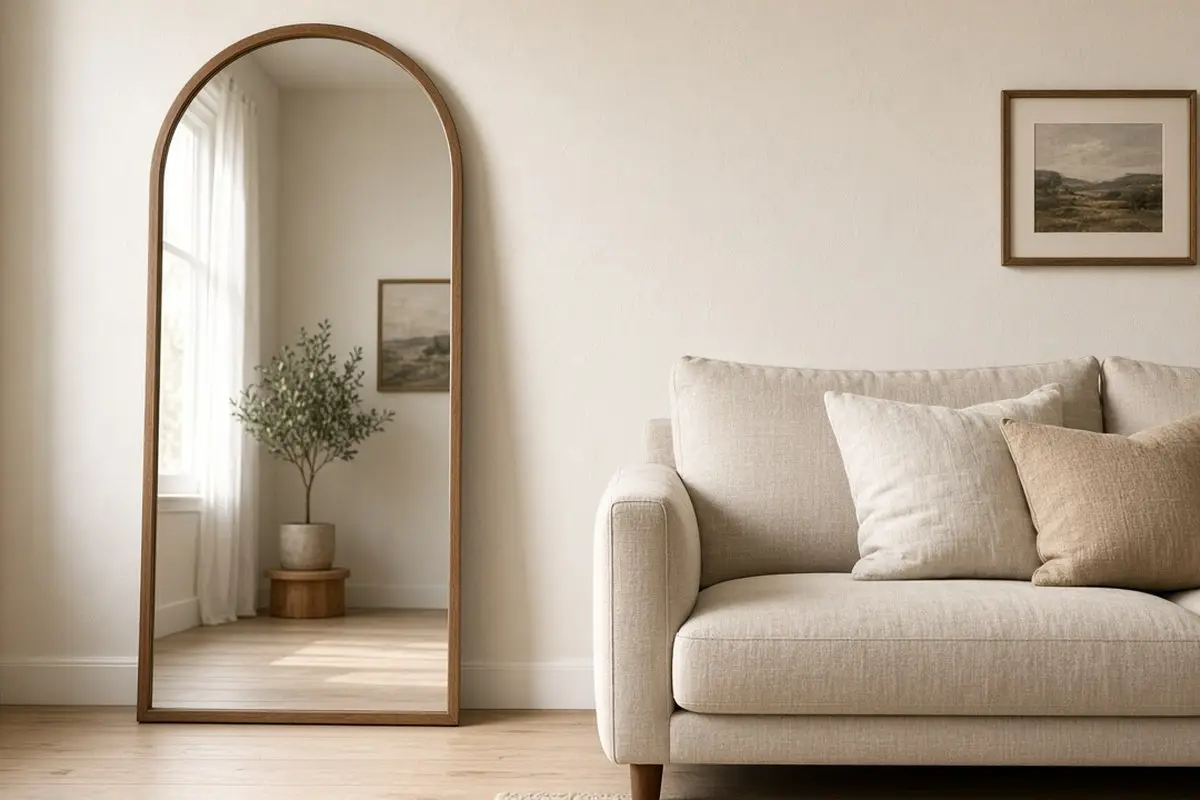
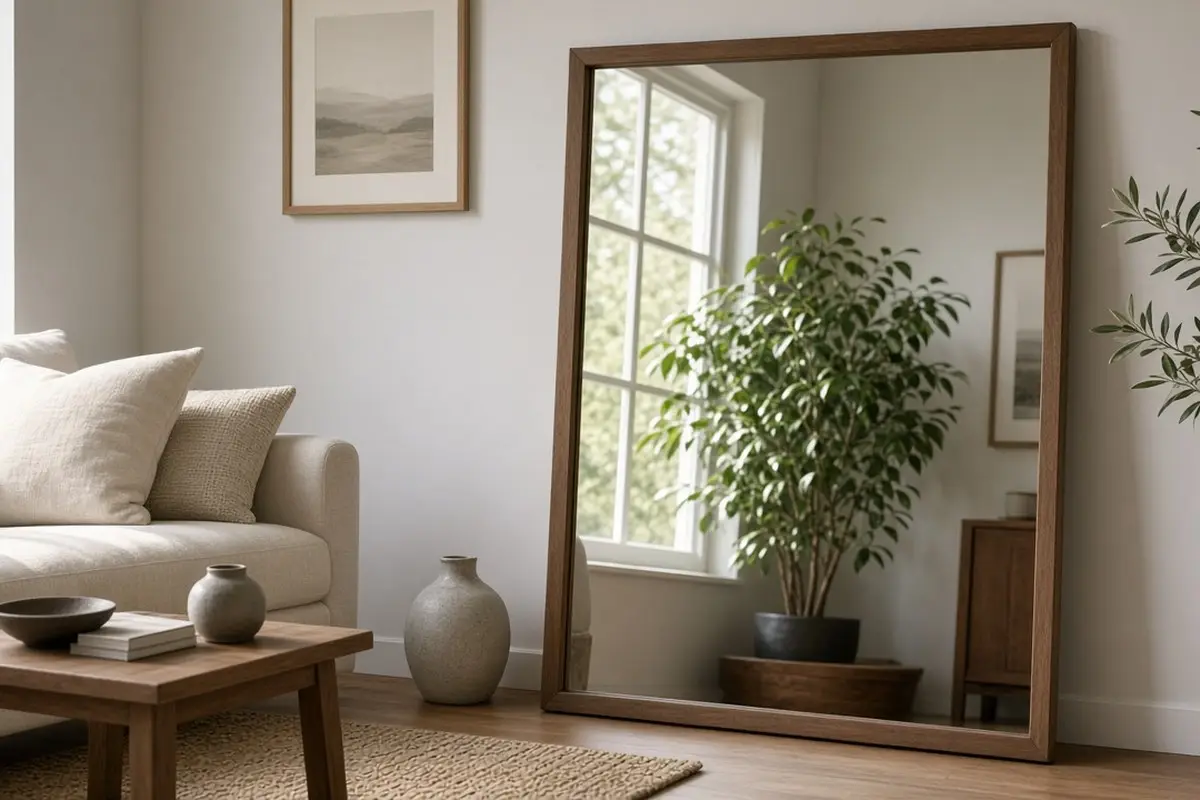
A tall leaning mirror is easy, flexible, and great for renters because it needs no holes, or just one anchor for safety. Lean it against a wall in a living room, bedroom, or hallway. It reflects the floor and lower half of the room, which makes a space feel deeper.
Always secure a leaning mirror to the wall with a strap or anti-tip kit, especially with children or pets in the house. Lean it at a gentle angle, about five degrees, and put felt pads under the bottom edge to stop it sliding.

4. Above a console in a dark hallway
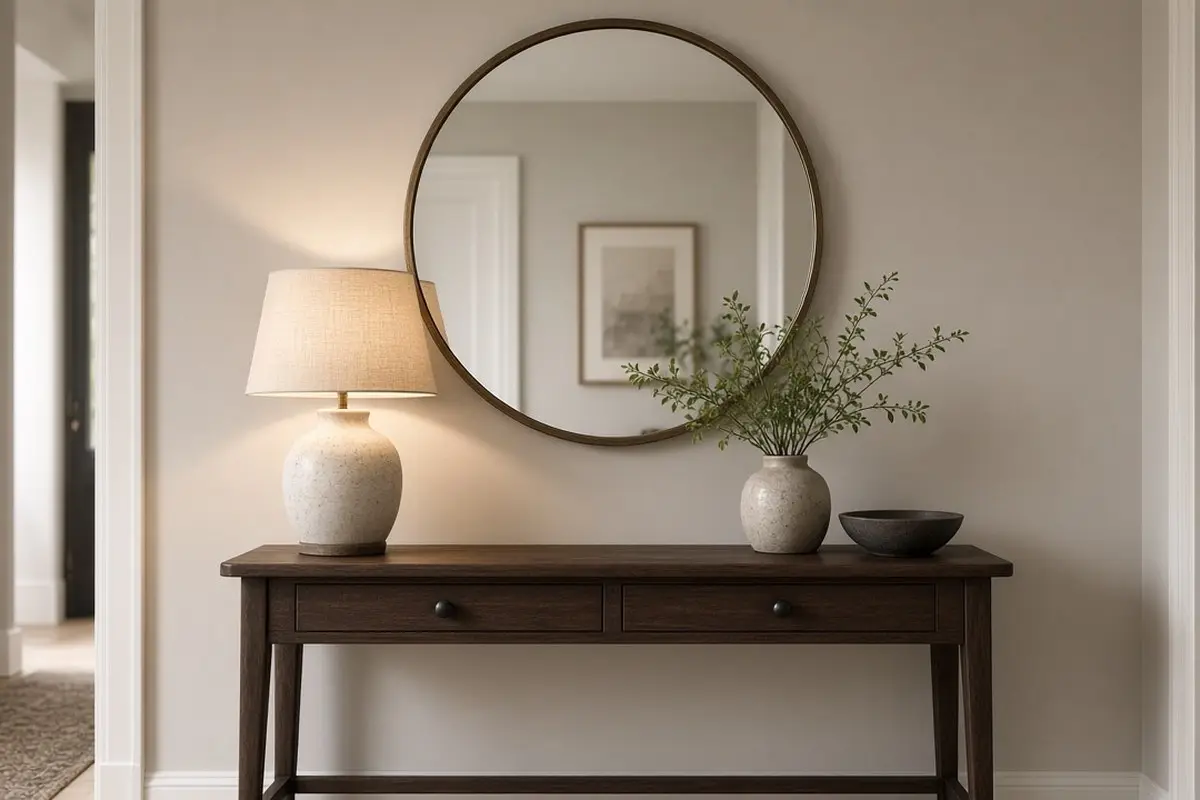
Hallways are often the darkest part of a home. A mirror above a console table catches whatever light comes in from doorways and lamps and spreads it along the hall. It also gives you a place to check your coat before you leave.
Add a lamp on the console beside the mirror. The mirror doubles its glow, and the hallway feels welcoming instead of dim.
Get the look

5. Behind a lamp
A mirror placed behind a table lamp doubles the light at night. On a sideboard, a desk, or a side table, set the mirror on the wall behind the lamp so the bulb’s glow reflects back into the room. It is a small trick that makes evenings feel brighter without more lamps.
Keep the lamp shade light in color so it glows rather than blocks. A warm bulb keeps the reflection soft.
This is especially useful on a desk or in a home office, where a mirror behind the lamp adds light for evening work without another fixture. Keep the mirror a little wider than the lamp shade so the reflection has room to spread across the wall.


6. A mirrored wall of smaller mirrors
A group of smaller mirrors, arranged like a gallery wall, scatters light around a room in small flashes. It works well in a dining room or entry, where you want sparkle without one large reflective surface. Use mirrors with similar frames, such as all brass or all wood, to keep the group calm.
Lay the arrangement on the floor first, then trace each mirror on paper and tape the templates to the wall.
Keep the gaps between mirrors even, about two to three inches, so the group reads as one piece. Too many very small mirrors can look busy. Five to nine mirrors in a mix of two or three sizes is usually enough for a wall above a sideboard or bench.
Get the look

7. At the end of a long room
A mirror on the end wall of a long, narrow room makes it feel shorter and wider. It reflects the length of the room back toward you, which balances the proportions. In a long living room or a corridor-like kitchen, this simple placement makes a big difference.
Choose a wide mirror for this, not a tall narrow one. A tall mirror makes the room look even longer.
If the end wall has a door or window, a pair of mirrors on either side works just as well. The idea is to put reflective surface across the far end so it pushes the walls outward visually.
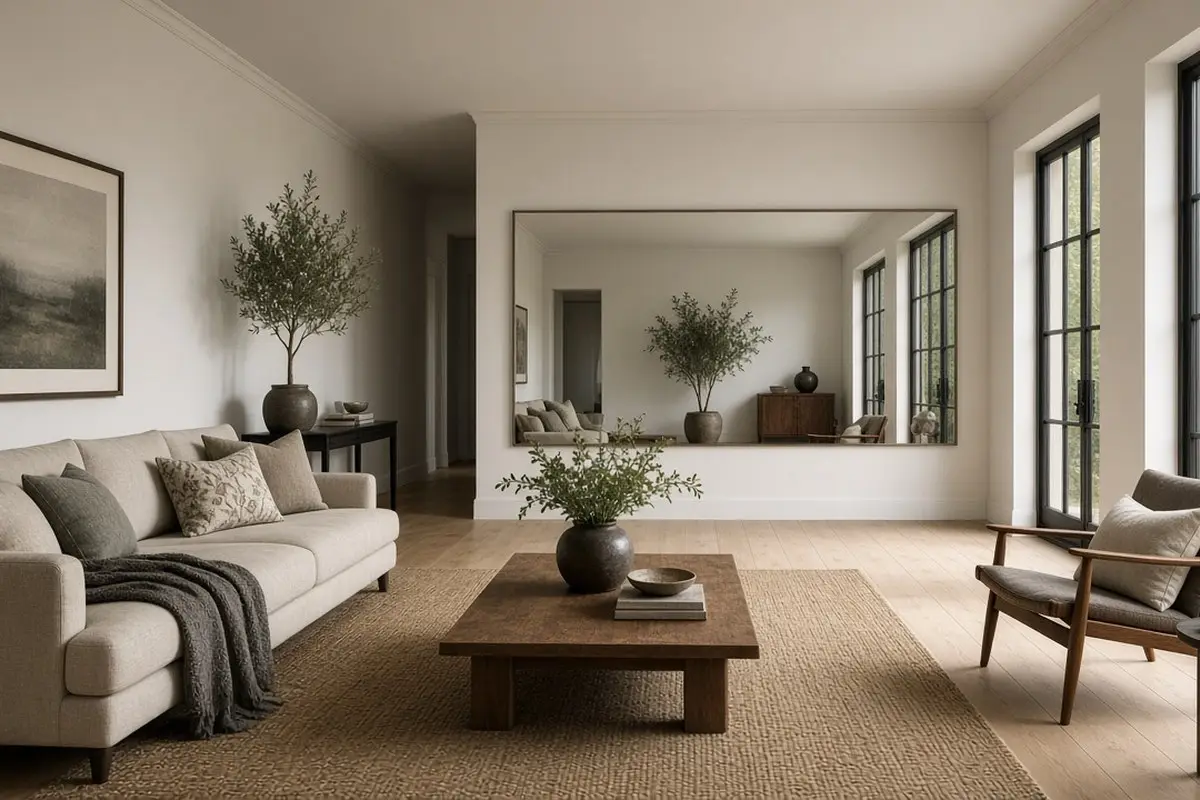
8. Over the dining sideboard
In a dining room, a mirror over the sideboard reflects candlelight and the glow of a pendant. Dinners feel warmer and the room looks bigger. Hang it high enough that seated diners see the room and not themselves.
A round or arched mirror softens a room with a long rectangular table.
Light two or three candles on the sideboard below the mirror during dinner. The reflection doubles them, and the room glows without extra fixtures. Keep candles well away from the mirror’s frame if it is wood or fabric-wrapped.
9. Inside a dark nook or alcove
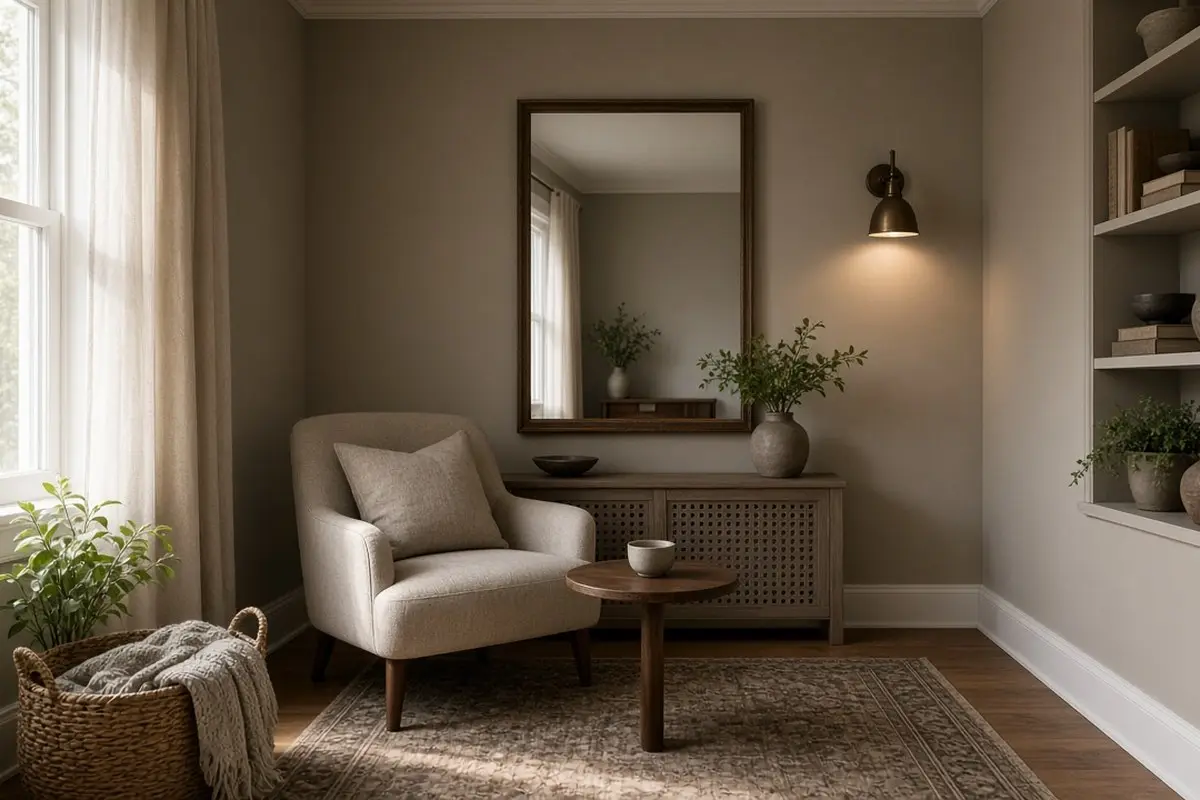
A small alcove, a reading nook, or a space beside a fireplace can be very dark. A mirror at the back of the nook catches whatever light reaches it and makes the space feel open rather than closed in. It works especially well with a wall sconce or small lamp in the nook. Together, the two turn a forgotten corner into one of the brightest, most inviting spots in the house.

10. Check what it reflects
The final rule applies to every placement: look at what the mirror will reflect before you hang it. A mirror doubles whatever is in front of it. If that is a beautiful view, a lamp, or a plant, the room gets more of it. If it is clutter, a TV, or a blank wall, the room gets more of that too.
Stand where you sit most and look into the mirror. If you like what you see, it is in the right place.
Get the look
Tips Before You Start
- Hang mirrors beside windows rather than directly opposite where glare is a risk.
- Choose large mirrors for the biggest effect.
- Secure leaning mirrors to the wall.
- Put mirrors behind lamps to double evening light.
- Check the reflection from your main seats.
- Use studs or proper mirror hardware.
FAQ
Where should I put a mirror to brighten a room?
On a wall beside a window, at a right angle to it. It spreads daylight across the room without glare.
Is it bad to put a mirror opposite a window?
Not always. It doubles light and the view, but can cause glare in sunny rooms. Use sheers or choose a north-facing window.
How big should a mirror be to make a room brighter?
As large as you can fit. Mirrors close to the size of a window make the biggest difference.
Are leaning mirrors safe?
Yes, if secured to the wall with a strap or anti-tip kit. The small bedroom that feels bigger post shows leaning mirrors in tight rooms, and the quiet apartment details post covers renter-friendly hanging.
How do I keep mirrors clean?
Wipe them with a dry microfiber cloth weekly and a lightly damp one when needed. Spray cleaner on the cloth, not the mirror, so it does not drip behind the frame and damage the backing.
A well-placed mirror is a window you can hang yourself. Put it beside the light, behind a lamp, or at the end of a long room, check what it reflects, and the room will feel brighter from the first day.