
12 Sunrooms That Stay Usable When the Sun Is High

On this page16 sections
- Understand your sun
- Top-down, bottom-up cellular shades
- Solar window film
- Exterior shades or an awning
- Sheer linen curtains
- A ceiling fan
- Cross ventilation
- Fade-resistant upholstery
- Light, reflective colors
- Seating out of the direct beam
- Plants as living shade
- A rug that resists fading
- A screen-friendly corner
- A midday plan
- Quick questions
- Related reading
Sunrooms are wonderful at breakfast and lovely at sunset. At noon in July, many of them are unusable. Glass on three sides and sometimes overhead turns the room into a greenhouse, the glare makes screens unreadable, and the sofa fabric fades a little more every week. Plenty of homeowners end up closing the door on their sunroom for the middle of the day, which wastes the brightest room in the house.
This post is about the hours when the sun is highest. It focuses on controlling heat, glare, and fading so you can read, work, or nap in the sunroom at midday. Flooring is covered in its own posts, so here we stick to shades, glass, air, fabrics, and furniture placement.
As an Amazon Associate I earn from qualifying purchases.
Understand your sun
Watch the room for a full day. Note which walls get direct sun and when, where glare lands on seating, and how warm the room gets by early afternoon. A south-facing sunroom gets high, strong sun at midday; a west-facing one gets low, hot sun late in the day, which is harder to block. A room with a glass roof needs the most help, because overhead sun is the most intense of all.
Heat comes mostly from sun passing through glass. Stopping it at the glass, with film, shades, or exterior shading, works far better than trying to cool the air afterward.
Glare is about contrast. A bright window behind a dim wall or screen strains the eyes. Diffusing light evens it out.
Fading comes from ultraviolet light. Even on cloudy days, UV fades fabrics, rugs, and wood. Books, artwork, and photographs are especially vulnerable, so keep them on the shaded wall.
1. Top-down, bottom-up cellular shades
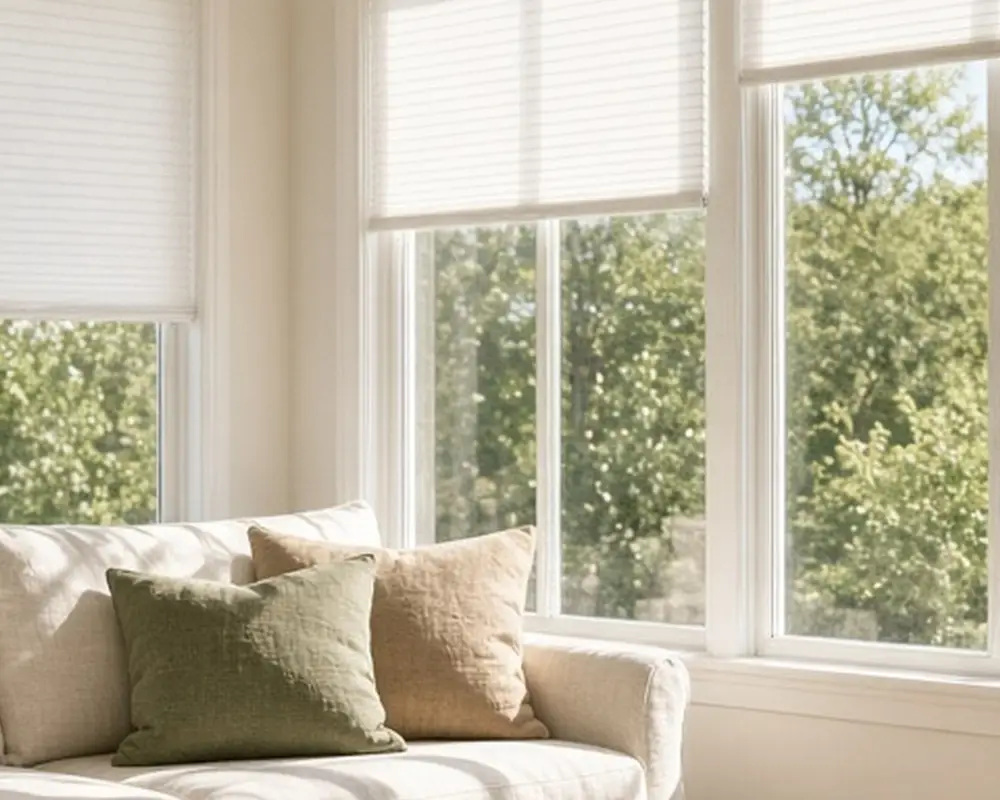
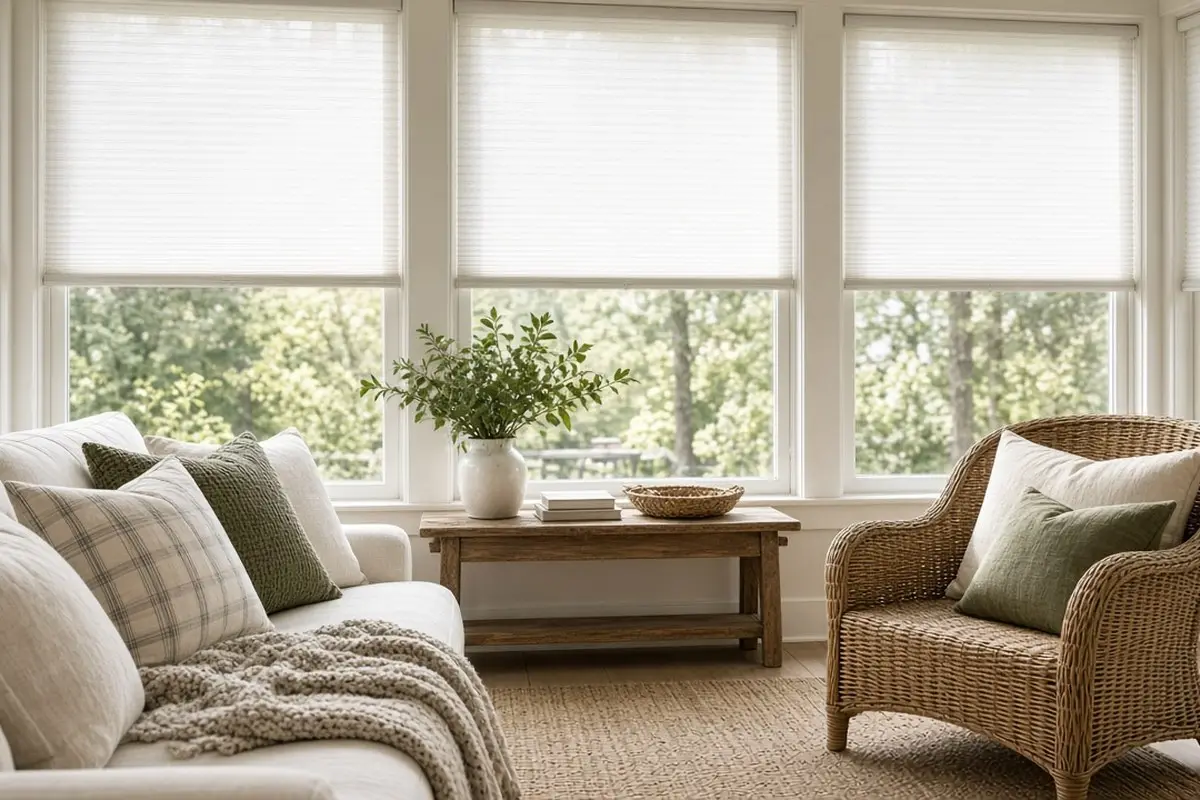
These shades can lower from the top, letting light in high while blocking the glare at eye level. The honeycomb cells also trap air, adding a layer of insulation against heat. They are the most flexible single treatment for a sunroom. For a glass roof, look for skylight versions of cellular shades that run on side tracks so they stay taut overhead. A light-filtering fabric keeps the room bright, while a room-darkening fabric suits a sunroom used for afternoon naps. Cordless or motorized operation is worth considering when there are many windows, since adjusting a dozen corded shades several times a day quickly becomes a chore. Choose white or a pale neutral facing the glass; it reflects more heat back outside.
Get the look
2. Solar window film
A clear or lightly tinted solar film on the glass rejects a large share of solar heat and almost all UV without blocking the view. It is one of the most effective changes for a hot sunroom, and many films can be installed by a careful DIYer. Check your window warranty before applying film, as some manufacturers restrict certain types on double-pane glass. Clean the glass thoroughly, spray it with a slip solution, lay the film, and squeegee out the bubbles from the center outward. Spectrally selective films block heat while letting most visible light through, so the room stays bright. If your sunroom has many large panes, a professional installation may be worth it for a cleaner finish.
3. Exterior shades or an awning
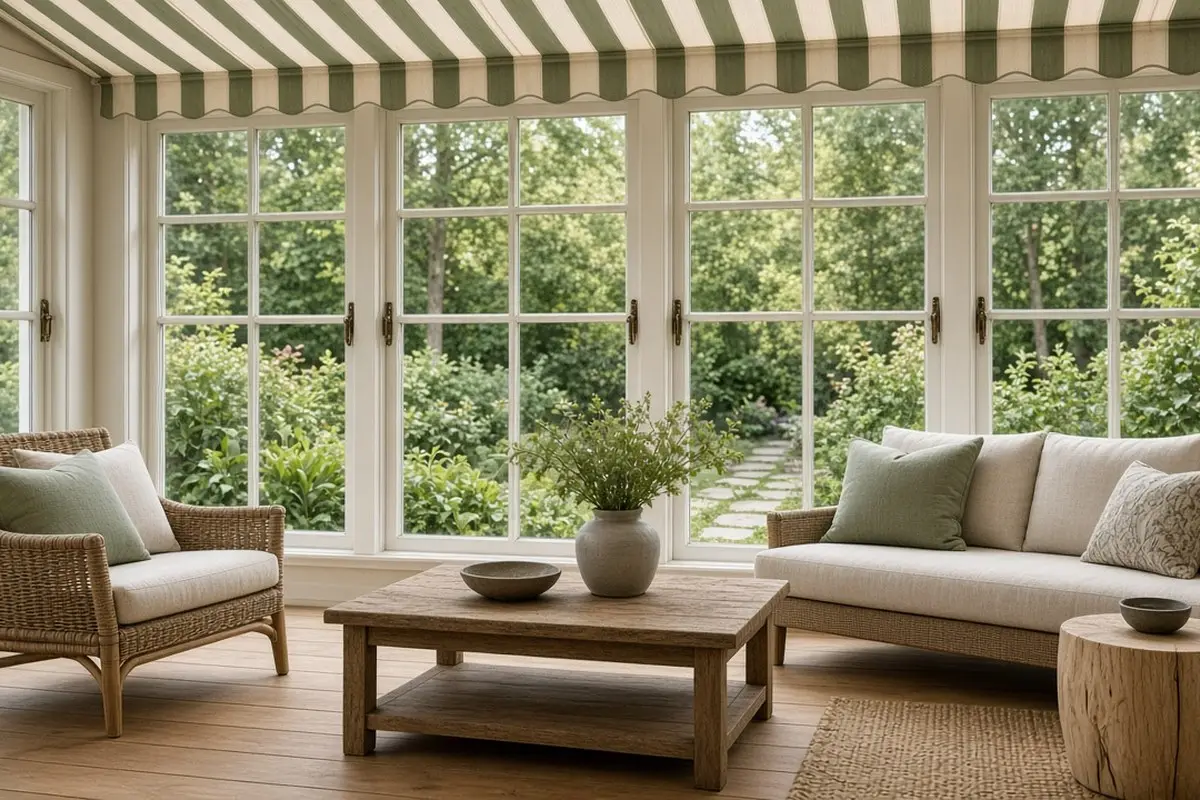
Blocking sun outside the glass stops heat before it ever enters. A retractable awning, exterior roller shades, or a pergola with a vine all work. They are the most effective heat control of all. An awning can be extended at midday and retracted in the evening or in winter, when you want the sun’s warmth. A deciduous vine on a pergola does the same thing naturally, shading in summer and dropping its leaves in fall. Exterior roller shades made from solar mesh block heat while keeping the view visible from inside.
Get the look
4. Sheer linen curtains
Sheer curtains diffuse harsh light into a soft glow, cutting glare while keeping the room bright. They also soften the hard lines of a glass room. Hang them on a rod mounted close to the ceiling and extending past the window frame, so they can be pulled fully clear when you want the view. Linen and linen-blend sheers look natural and relaxed. Layer them with cellular shades for flexible control throughout the day.
Get the look
5. A ceiling fan
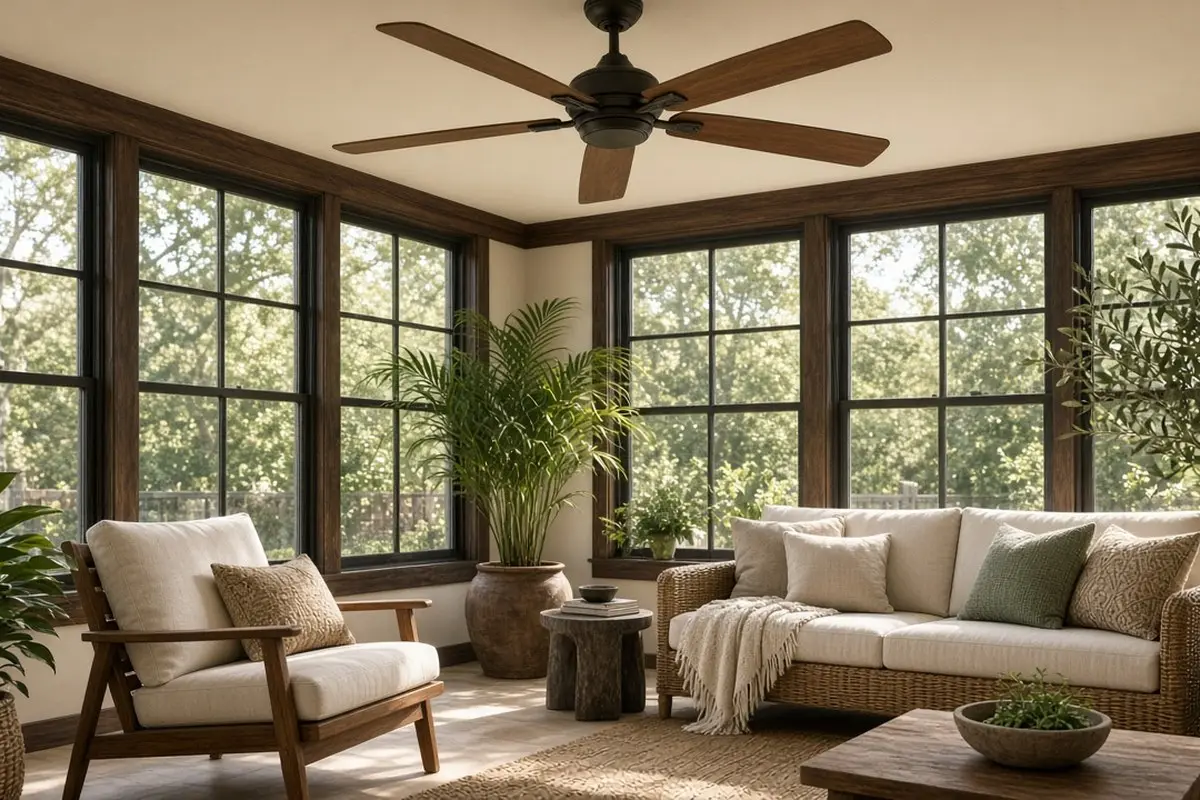
Moving air makes a warm room feel several degrees cooler. A ceiling fan in a sunroom is essential. Run it counterclockwise in summer for a cooling breeze. In a room with a sloped or high ceiling, use a downrod so the blades sit at a useful height. A fan with a light kit adds evening light without another lamp.
Get the look
6. Cross ventilation
Open windows on opposite sides to let air flow through. Window fans can help pull hot air out. Hot air rises, so open high windows or vents on the warm side and low windows on the cool, shaded side; air will flow in low and out high on its own. Do this in the early morning to flush the room with cool air, then close the windows and lower the shades before the sun peaks. A reversible window fan set to exhaust in a high window speeds the process. If your sunroom windows do not open, a portable fan aimed out through the doorway into the house can still move stale warm air.
Get the look
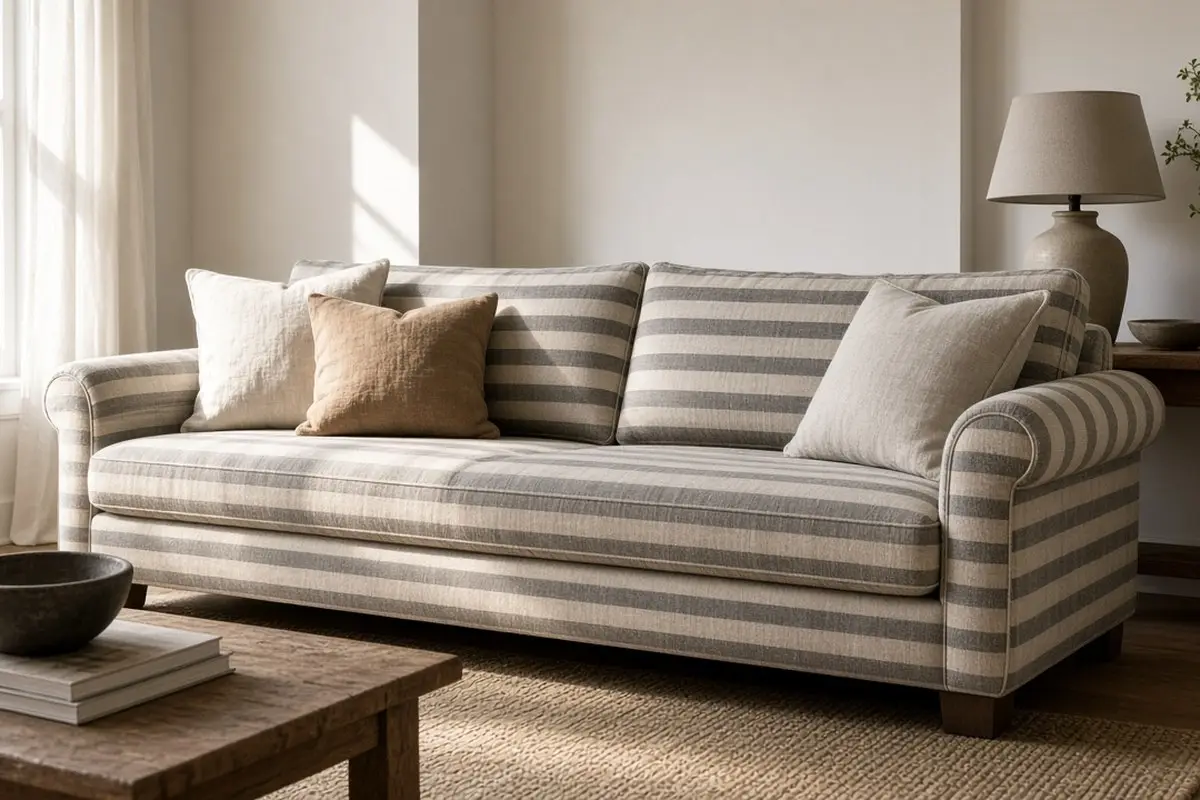
7. Fade-resistant upholstery
Choose solution-dyed or performance fabrics rated for outdoor or sunroom use. They keep their color far longer than ordinary cotton. Slipcovers are another smart option: when the sun fades them, wash or replace the cover rather than the sofa. Rotate cushions every few weeks so they fade evenly, and keep throws and pillows in colors that age gracefully, like soft blues, greens, and natural tones, rather than strong reds and purples that fade fastest.
Get the look
8. Light, reflective colors
Pale furniture and walls stay cooler than dark ones in direct sun and show fading less. White, cream, sand, and pale wood tones reflect heat instead of absorbing it, and a dark leather chair in direct sun can become too hot to sit on. If you love deeper colors, use them in small accents that are easy to replace, like a pillow or a vase, and keep them out of the strongest light.
Get the look
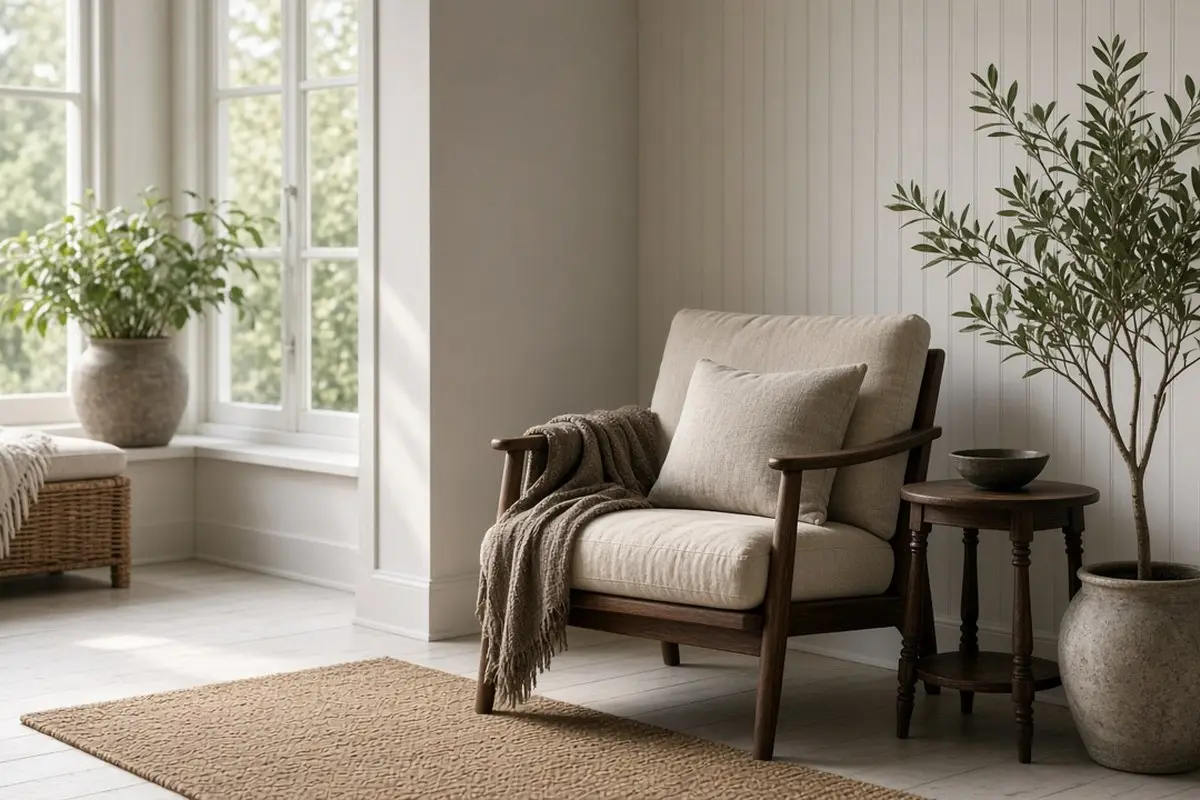
9. Seating out of the direct beam
Place the main seating where the sun does not land directly at midday, and keep sunny spots for plants. Track where the beam falls at noon and position sofas and chairs just outside it. Plants, a potting bench, or a bar cart can occupy the sunniest spots, since they either thrive in sun or do not mind it. Furniture on casters makes seasonal adjustments easy, since the sun’s path shifts a lot between summer and winter.
Get the look
10. Plants as living shade
Tall plants near the brightest windows filter light and cool the air slightly through transpiration. A row of potted palms, fiddle-leaf figs, or citrus trees along the hottest glass acts like a living sheer curtain. Water early in the day, and watch for leaf scorch on plants pressed against hot glass; move them back a little if leaves brown at the edges.
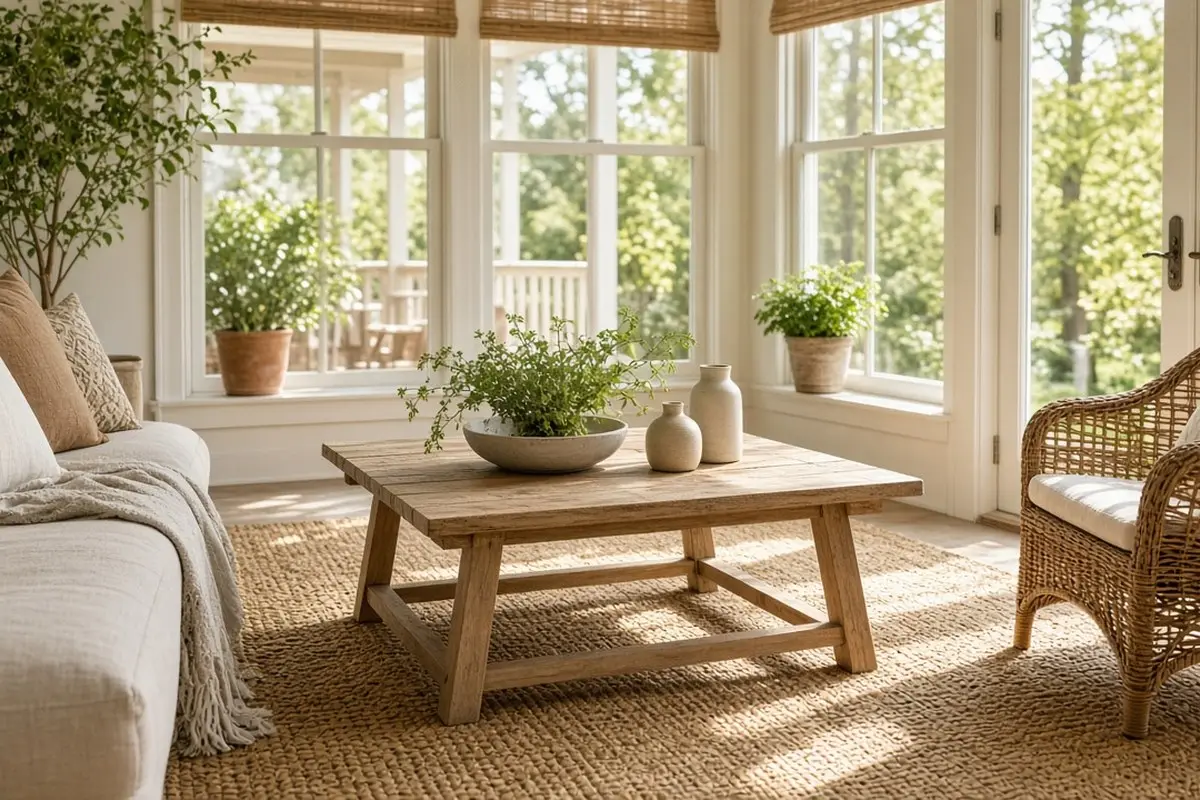
11. A rug that resists fading
Natural fibers like jute and sisal hold up to sun better than dyed wool, and they look right in a sunroom.
Get the look
12. A screen-friendly corner
If you work in the sunroom, set up the desk with the windows to your side and an anti-glare screen. Sitting with your back to the window puts glare on your screen, and facing it makes you squint. A matte screen and brighter display settings help on the sunniest days. Keep a small lamp on the desk for overcast afternoons and evenings.
Get the look
A midday plan
Lower the top-down shades, close sheers on the hottest wall, run the fan, and open windows on the shaded side. Combined, these simple steps keep a sunroom comfortable through noon. In the late afternoon, reverse the routine on a south-facing room as the sun moves west: raise the south shades and lower the west ones. After sunset, open everything again to let the room cool overnight. Once this rhythm becomes habit, it takes only a minute or two at each change, and the room stays pleasant for most of the day instead of only at its edges.
Quick questions
Will blackout shades make a sunroom pointless? Only if you keep them down all day. Use them at the hottest hours and raise them in the morning and evening.
Do window films darken the room? Clear spectrally selective films barely change visible light. Tinted films darken more but also cut more glare.
Is an air conditioner necessary? In very hot climates, a small ductless unit may be needed for full comfort. Try shading, film, and fans first; they often make the room usable without one.
What plants handle full sunroom sun? Citrus, succulents, bird of paradise, and many herbs love bright light. Ferns and calatheas prefer filtered light away from the glass.
Related reading
For a porch rather than a glass room, the screened porch furniture post covers comfort in humid weather. If you are setting up a work spot in a bright room, the bedroom corner desk post has ideas for lighting and desk placement that translate well to a sunroom.
A sunroom can be used all day. Stop heat at the glass, diffuse the glare, protect fabrics from UV, and keep air moving. Then the brightest room in the house is also the most comfortable.