
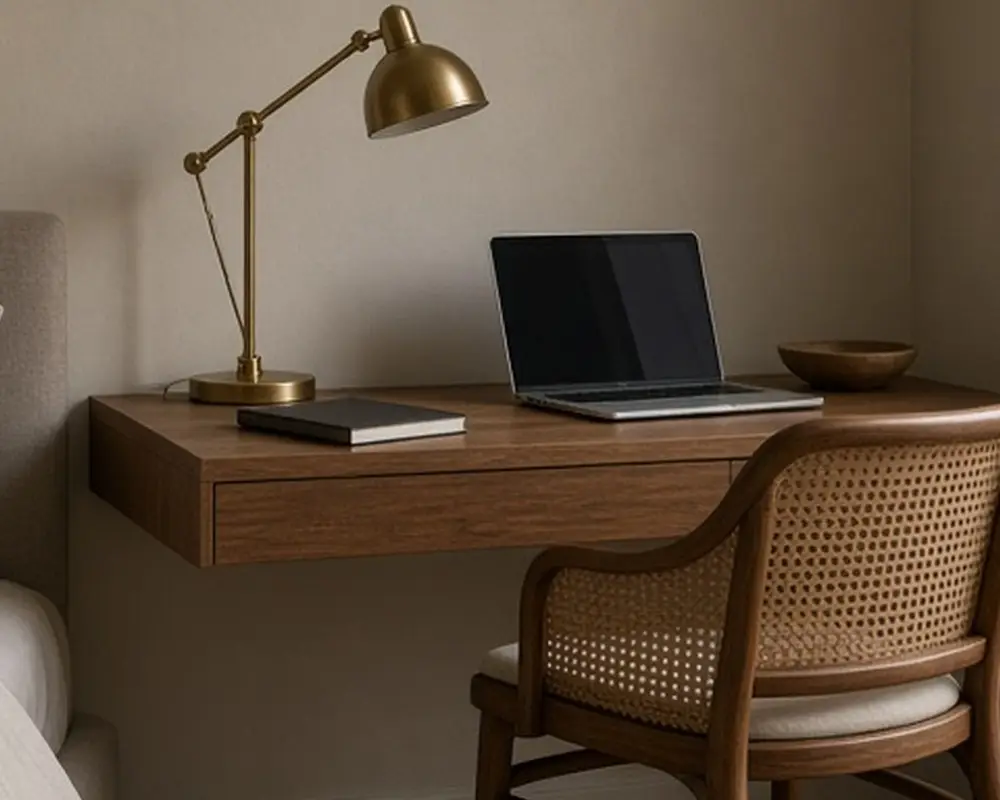
9 Bedroom Corners That Become a Desk After Dinner

On this page13 sections
- What an evening desk needs
- Floating shelf desk in the corner
- Wall-mounted fold-down desk
- A secretary desk
- Dressing table that doubles as a desk
- A nightstand desk
- Closet nook desk
- Window corner with a ledge desk
- A rolling cart office
- A screen to hide the corner
- Closing the desk at night
- Keeping the bedroom restful
- Quick questions
Not everyone needs a full home office. Many people do their main work elsewhere and only need a desk for an hour or two in the evening: paying bills, answering personal email, writing, sketching, studying for a course, or working on a side project. For that kind of after-dinner work, the bedroom corner is often the only quiet spot in the house.
The challenge is keeping that corner from taking over the bedroom. A bedroom should feel restful, and a desk piled with papers and a glowing laptop three feet from your pillow is the opposite of that. The nine ideas below are designed for part-time use. Each one gives you a proper surface and good light when you need it, then folds, closes, or tidies away so the bedroom goes back to being a bedroom before you sleep.
As an Amazon Associate I earn from qualifying purchases.
What an evening desk needs
A surface at the right height. About 28 to 30 inches for typing. A counter-height dresser or a coffee table will hurt your back within a week.
Task light that is warm. In the evening, a bright, cool desk lamp keeps you awake long after you stop working. Choose a warm bulb and a lamp you can aim at the surface, not your eyes.
A way to close the day. A drawer, a lid, a cabinet door, or a basket. When work goes out of sight, your brain is more likely to let it go too. Even a lidded box on a shelf counts, as long as the day’s papers and cables have one place to land when you stop.
A chair that fits the room. A chunky office chair looks out of place in a bedroom. A cane, upholstered, or wooden side chair can tuck under the desk and pass for bedroom furniture.
1. Floating shelf desk in the corner
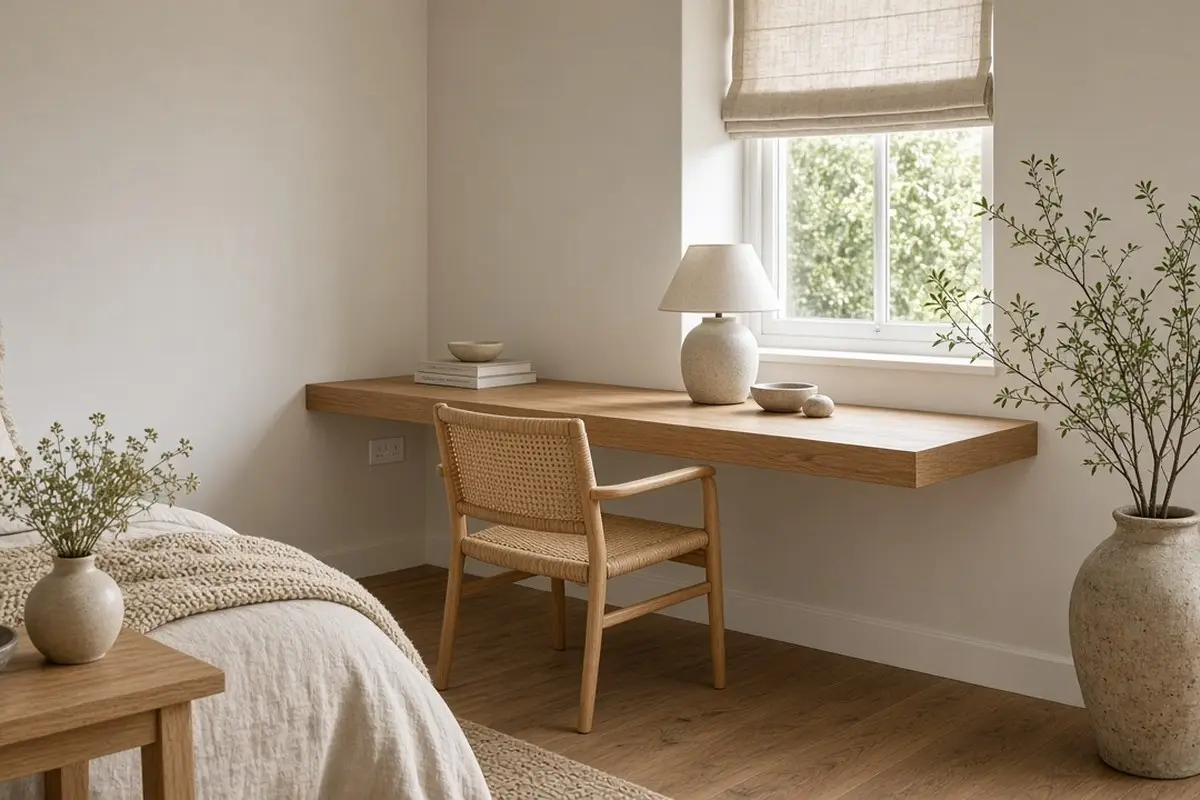
A deep wall shelf, mounted at desk height across a corner or along one wall, makes a desk with no legs and almost no visual weight. It suits a narrow bedroom where a freestanding desk would block the path. Add a small shelf above for a lamp and a few books. Mount the shelf into studs or use heavy-duty anchors, since you will lean on it while typing. A depth of around 18 to 20 inches is enough for a laptop and a notebook. Run a cable grommet or an adhesive cable clip along the underside so the charger cord does not trail across the wall. Paint the wall behind the desk the same color as the rest of the room, so the corner blends in and does not announce itself as an office.
2. Wall-mounted fold-down desk
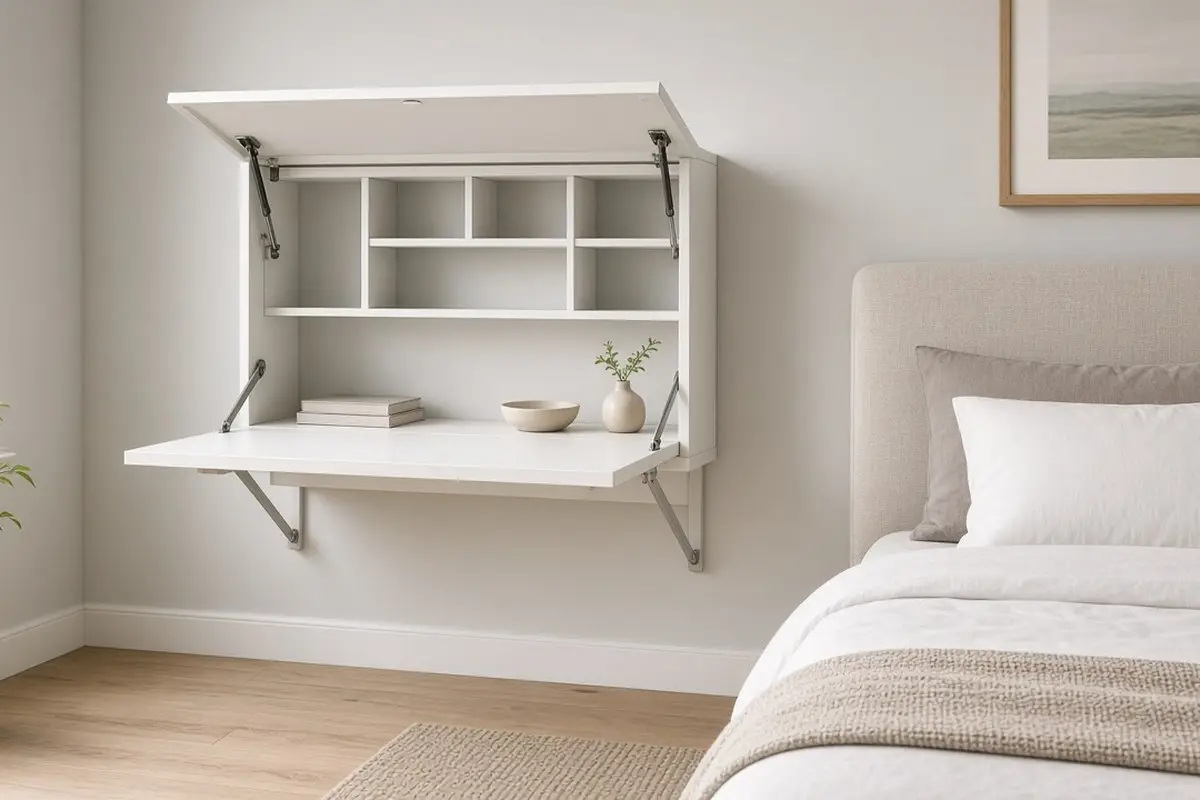
A cabinet that folds open into a desk and closes flat is the purest version of an after-dinner workspace. When it is closed, the bedroom shows nothing but a slim box on the wall. Inside, small cubbies hold pens and papers. Look for one with a flat, sturdy surface when open and a latch that holds it securely shut. Some models include a small shelf on top for a plant or a lamp, so the closed cabinet still looks decorative. Mount it at a comfortable height for your chair and check that the open desk does not block the bedroom door or a closet.
Get the look
3. A secretary desk
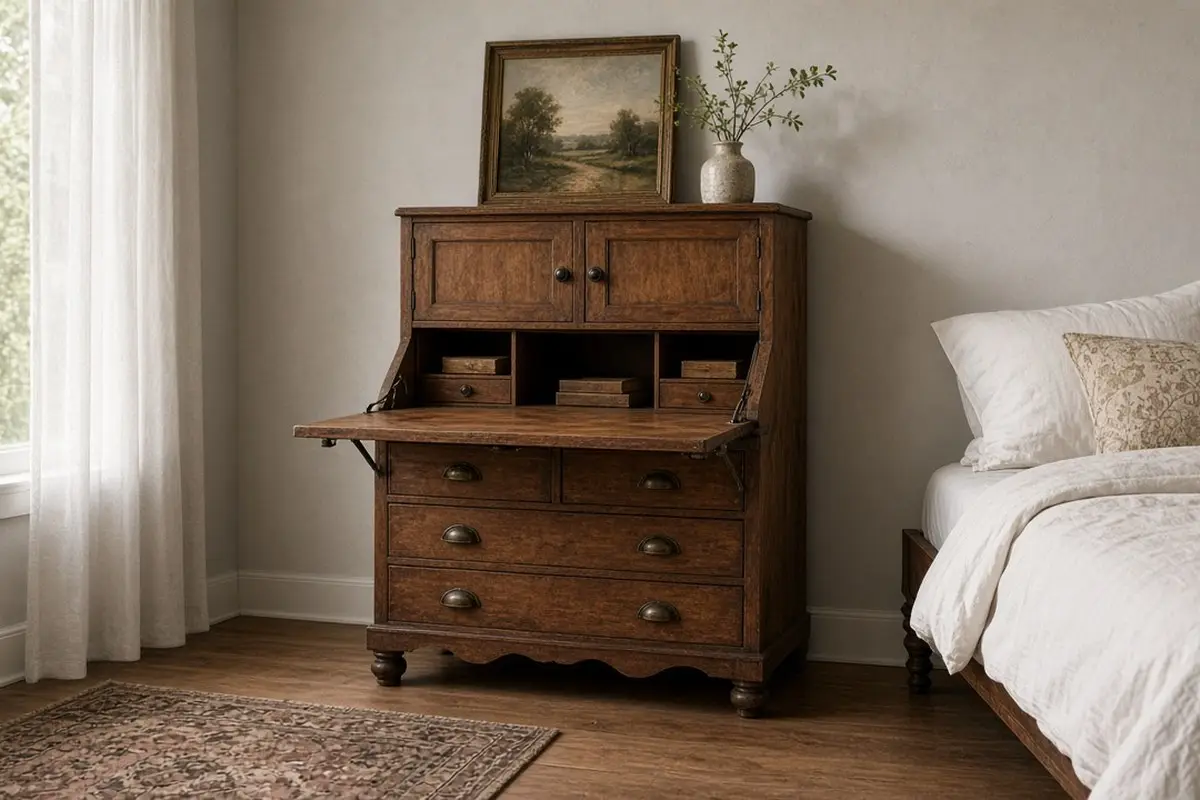
A secretary or drop-front desk is a traditional answer to the same problem. The front panel folds down to make a writing surface, and everything closes behind it. Vintage secretaries are easy to find secondhand and look lovely in a bedroom. Check the depth of the writing surface before buying; some older pieces are shallow, which suits handwriting better than a laptop. Test that the hinges and support arms are solid. Many secretaries have a set of drawers below the writing surface, which can double as clothing storage, giving one piece two jobs.
Get the look
4. Dressing table that doubles as a desk
If you have room for a dressing table, choose one that is the right height for working too. A mirror on the wall above can be swapped for a small pinboard on work nights, or simply kept, since it bounces lamp light around the room. Keep makeup and hair tools in one drawer and work supplies in another, so switching between uses takes seconds. A dressing table desk is ideal for anyone whose evening work is light, like writing, journaling, or planning, and for whom a second desk would crowd the room. The bedroom dressing table post has more ideas for choosing the piece itself.
Get the look
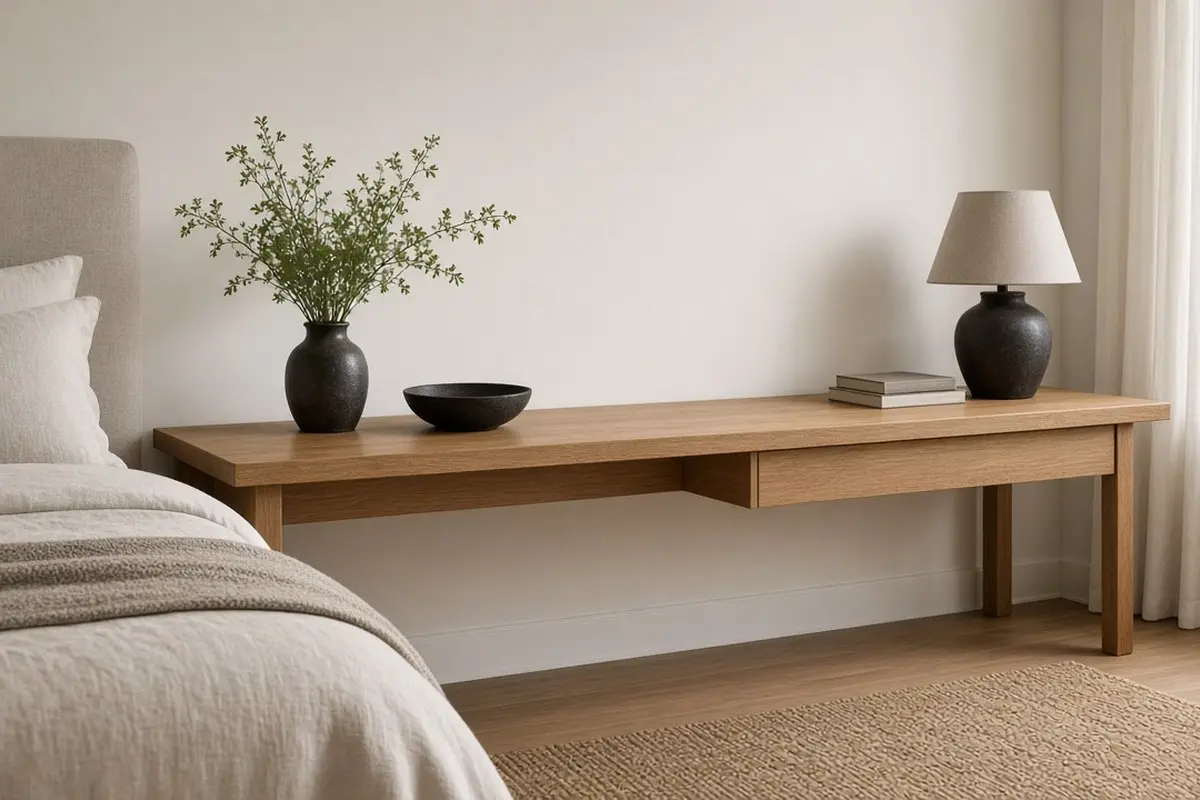
5. A nightstand desk
In a very small bedroom, extend one nightstand into a narrow desk that runs along the wall from the bed. It does double duty as a bedside table, and a single lamp serves both. Keep the desk end clear and use the bed end for a glass of water and a book, so the two jobs do not spill into each other. A depth of twelve to fifteen inches is usually enough for a laptop and still leaves room to walk past the bed. Choose a lamp with an adjustable arm that can swing toward the desk for work and toward the pillow for reading.
Get the look
6. Closet nook desk
A reach-in closet with the doors removed or kept open can house a desk with shelves above. When work is done, close the doors or draw a curtain. Add a battery-powered light inside the closet, since closets are usually dark, and leave room for your knees by keeping the desk surface clear of shelving below. Clothes can still live on the higher shelf or a rod at one end. This works best in a guest room or a single person’s bedroom where one closet is not already overflowing.
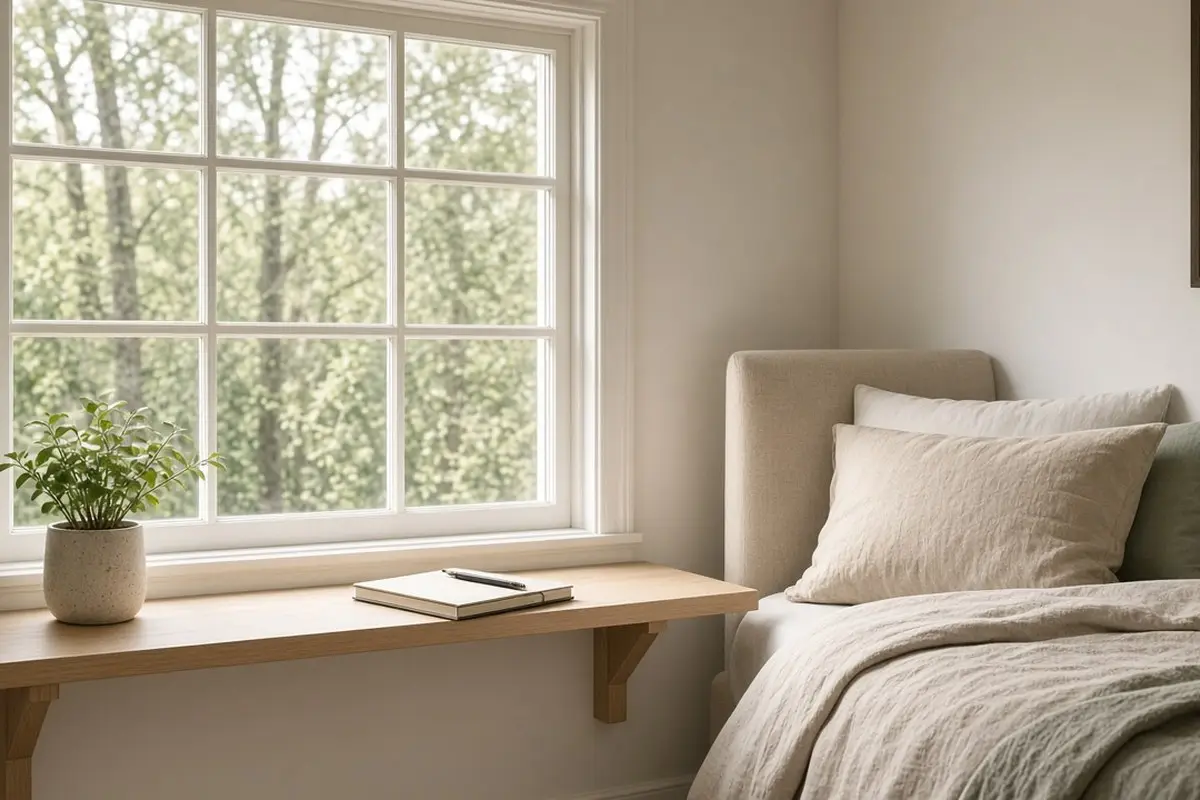
7. Window corner with a ledge desk
A window corner gets the best natural light for weekend work and a pleasant view in the evening. A narrow ledge desk under or beside the window keeps the window clear. Watch for glare on the screen: position the desk so the window is to your side rather than directly behind the laptop or in front of you. A sheer curtain softens strong afternoon light without darkening the room. In winter, check for drafts near the glass, since a cold window corner can be unpleasant on long evenings.
Get the look
8. A rolling cart office
Keep your laptop, chargers, and papers on a small rolling cart. Roll it next to a small table or the edge of the bed when you work, then park it in a closet afterward. Put a power strip with a long cord on the bottom tier so everything charges in one place. The top tier holds the laptop and a notebook, the middle holds pens, a mouse, and headphones. Because the whole office moves, this works even in a bedroom with no free corner at all, and you can roll it to the kitchen table on weekends.
Get the look
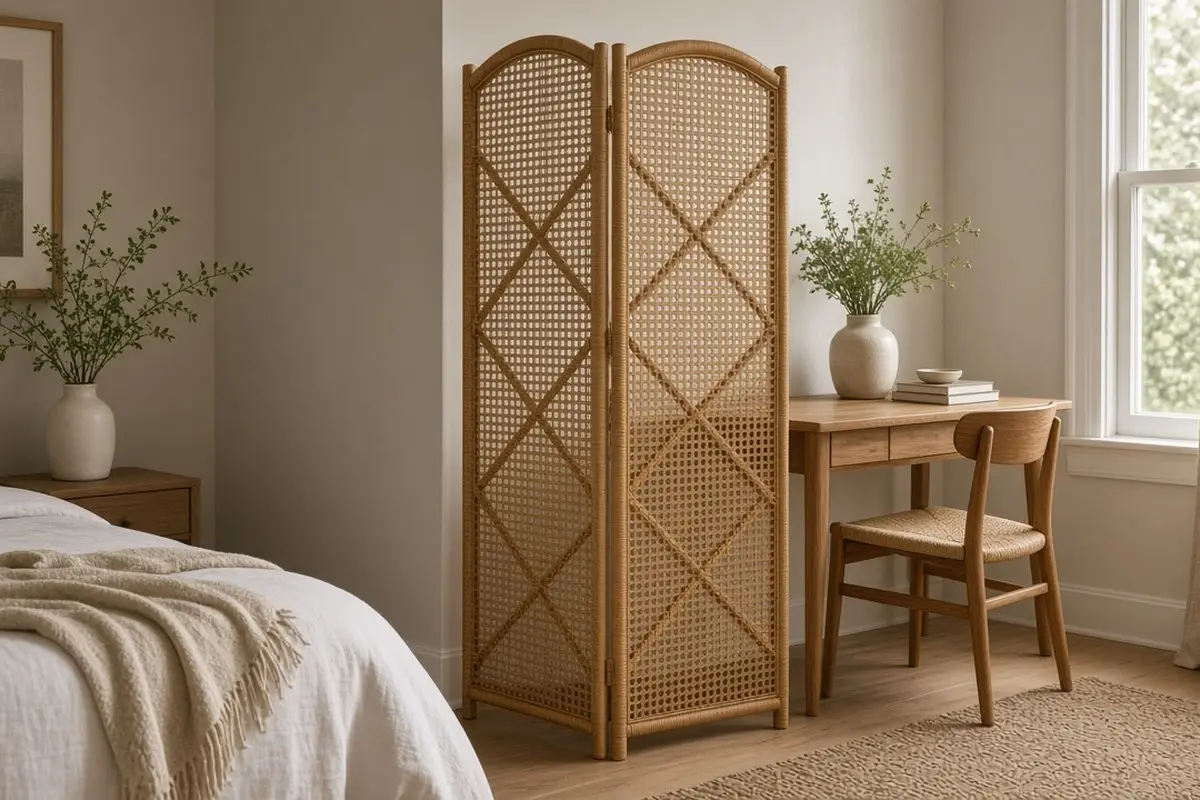
9. A screen to hide the corner
A folding screen in front of the desk corner hides it after work hours. Rattan, linen, or wooden screens look like bedroom furniture rather than office equipment. A three-panel screen is enough for most corners. Choose one tall enough to hide a monitor if you use one, and stand it at a slight zigzag so it stays stable on its own.
Get the look
Closing the desk at night
The habit matters as much as the furniture. Before bed, close the laptop, put papers in a drawer or basket, switch off the task lamp, and push the chair in. A two-minute ritual like that tells your brain that work is over. Some people like a physical signal as well: draping a linen cloth over the closed laptop, closing the screen in front of the corner, or setting a small basket over the day’s papers. Keep the phone charger away from the desk and away from the bed if you can, so the last thing you look at before sleep is not a work notification. Over a few weeks, the corner starts to feel like a place you visit for a while each evening, and the rest of the bedroom stays a place for rest. A desk that disappears at night is the whole point of this approach.
Keeping the bedroom restful
A bedroom desk works best when the rest of the room stays calm. Keep the bedding simple and the floor clear, and make sure the desk corner does not face the bed directly if you can help it. Seeing an open laptop from your pillow is the opposite of relaxing. The bedroom reading corner post covers another way to make a bedroom corner useful without making it feel like work. If the room is tiny, the small bedroom that feels bigger post has ideas for freeing up the floor space a desk needs.
Quick questions
What desk height is best? Around 28 to 30 inches for most adults, with your elbows at about 90 degrees when typing.
What bulb should the lamp use? A warm white bulb, around 2700K to 3000K, in the evening. Cooler light is fine for daytime work but can make it harder to wind down at night.
Can I use the bed as my desk chair? Only for short sessions. Sitting on a soft mattress strains your back, and it blurs the line between work and sleep.
A bedroom corner can be a perfectly good part-time desk. Pick a piece that closes or tidies away, use warm light, choose a chair that suits the room, and close the desk before you sleep.