
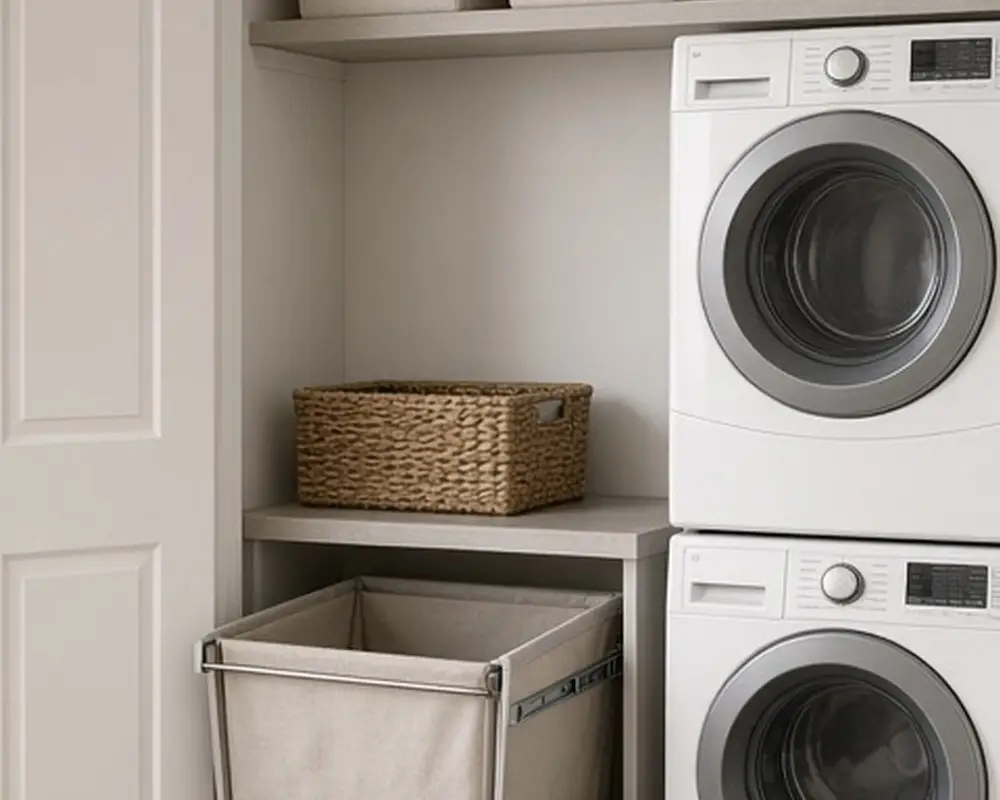
9 Laundry Closet Setups That Hide the Hamper

On this page13 sections
- Measure before you buy
- Stack the machines to free floor space
- A slim rolling hamper in the gap
- A pull-out hamper in a cabinet
- Countertop over front loaders
- Shelves above with matching bins
- Use the back of the door
- A fold-down drying rack
- Choose the right doors
- Add light inside
- Keep it running smoothly
- Planning around a small floor plan
- Quick questions
A laundry closet is a gift and a puzzle. The gift is that the washer and dryer live behind doors, so you do not have to look at them. The puzzle is everything else that comes with laundry: the overflowing hamper, the jug of detergent, the drying rack, the lint, the single socks waiting for their partners. In a dedicated laundry room, those things have a home. In a closet, they end up on the floor in front of the doors, which defeats the point of having doors at all.
This post focuses on that problem. Rather than decorating the closet, it looks at how to set it up so the hamper and every other laundry item disappear when the doors close. If your machines sit in an open nook instead, the narrow laundry nook post covers ideas for that layout.
As an Amazon Associate I earn from qualifying purchases.
Measure before you buy
Laundry closets are tight, and an inch matters. Measure the width, depth, and height of the closet with the machines in place, and note where the water hookups, dryer vent, and outlet sit. Then measure the clearance in front of the machines with the doors open. Many closet doors swing into the hall or block the dryer door, so the type of door you choose shapes everything else.
Leave breathing room. Dryers need space behind them for the vent hose, usually a few inches. Washers vibrate and should not touch the walls or cabinets.
Check the door swing. Bifold, sliding, and pocket doors each use space differently. More on that below.
1. Stack the machines to free floor space
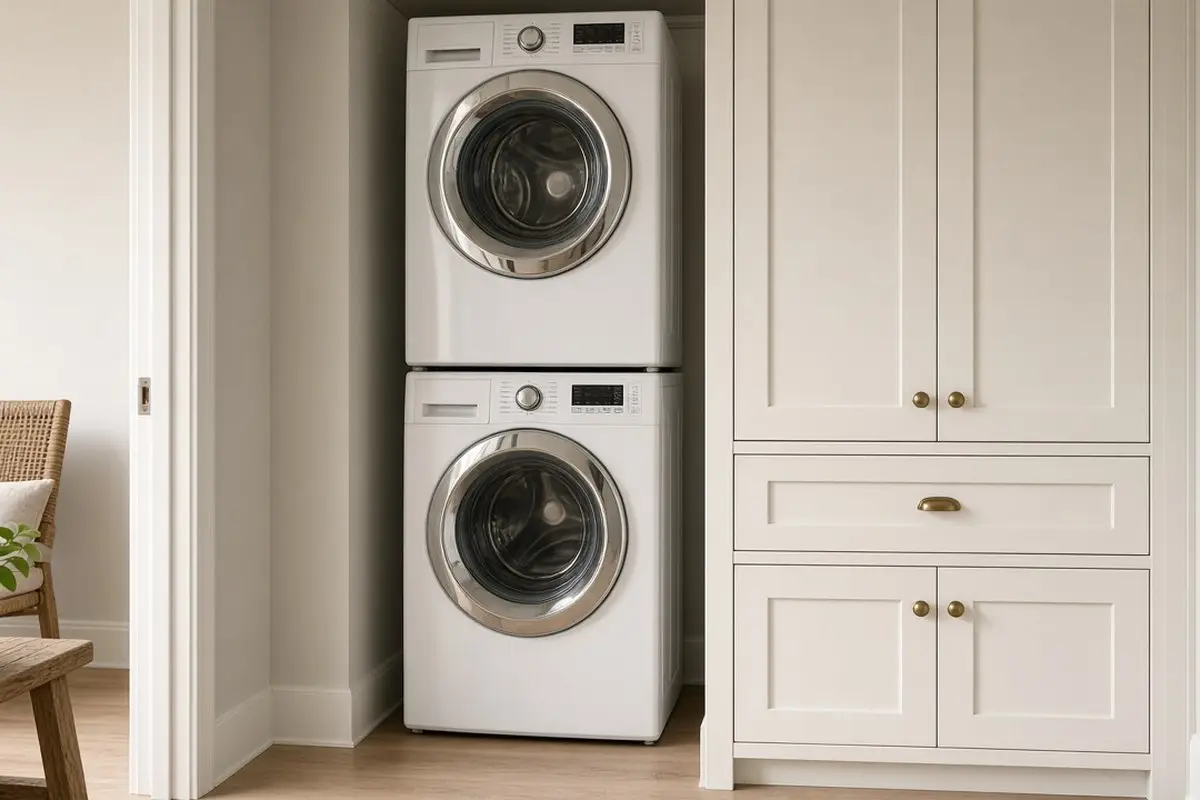
If your machines sit side by side, stacking them is the single biggest change. A stacking kit lets a front-loading dryer sit on top of a front-loading washer, freeing half the closet’s width for a hamper, shelving, or a tall cabinet. Check that your models are stackable and that the closet has the height. Most manufacturers sell a stacking kit made for their own models, and it is worth using that one rather than a universal kit if you can. Stacking puts the dryer controls high, so think about who does the laundry; a shorter person may need a sturdy step stool tucked beside the machines. Once the second half of the closet is free, plan it as carefully as a kitchen cabinet run. A tall cabinet can hold the hamper at the bottom, supplies at eye level, and spare linens up top, which turns a cramped corner into the most organized spot in the house.
2. A slim rolling hamper in the gap
Even side-by-side machines usually leave a gap of a few inches to a foot. A slim rolling hamper, made for exactly this space, slides between or beside the machines. Pull it out when it is full, roll it to the bedroom, and slide it back. Look for a hamper with smooth casters that roll on both tile and carpet, and a removable liner you can wash. Measure the gap at its narrowest point, often near the back where hoses bulge, and buy a hamper an inch narrower so it slides without scraping the machines. If the gap is too narrow for any hamper, it can still hold a slim rolling cart for detergent, which frees a shelf above for the hamper basket instead.
Get the look
3. A pull-out hamper in a cabinet
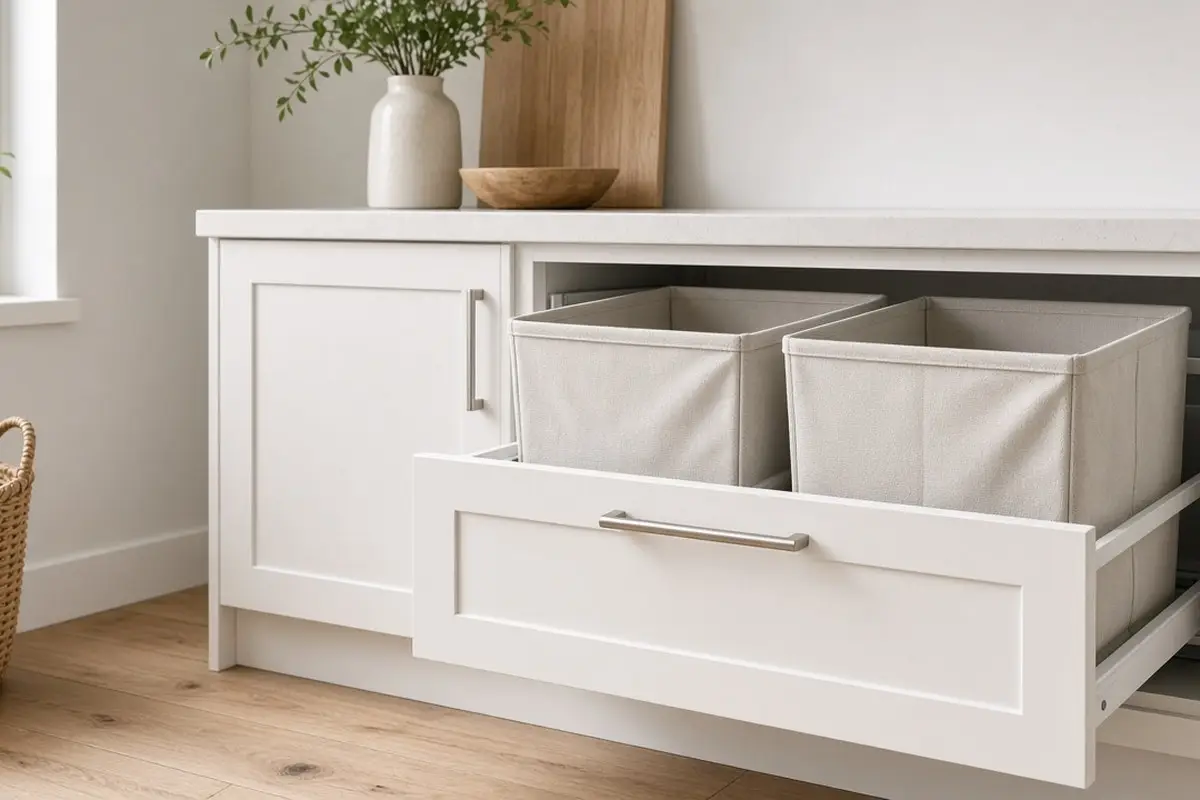
If there is room for a narrow base cabinet next to the machines, fit it with a pull-out hamper. It works like a kitchen trash pull-out and keeps dirty clothes completely out of sight. Choose one with removable bags so you can carry the load straight to the washer. Two-bag pull-outs make sorting automatic: lights in one bag, darks in the other. Install the slide hardware carefully so the drawer does not rub when fully loaded, and check its weight rating, since a bag of wet towels is heavier than you expect. If a new cabinet is not possible, a freestanding cabinet with a tilt-out hamper front gives a similar effect without any installation.
Get the look
4. Countertop over front loaders
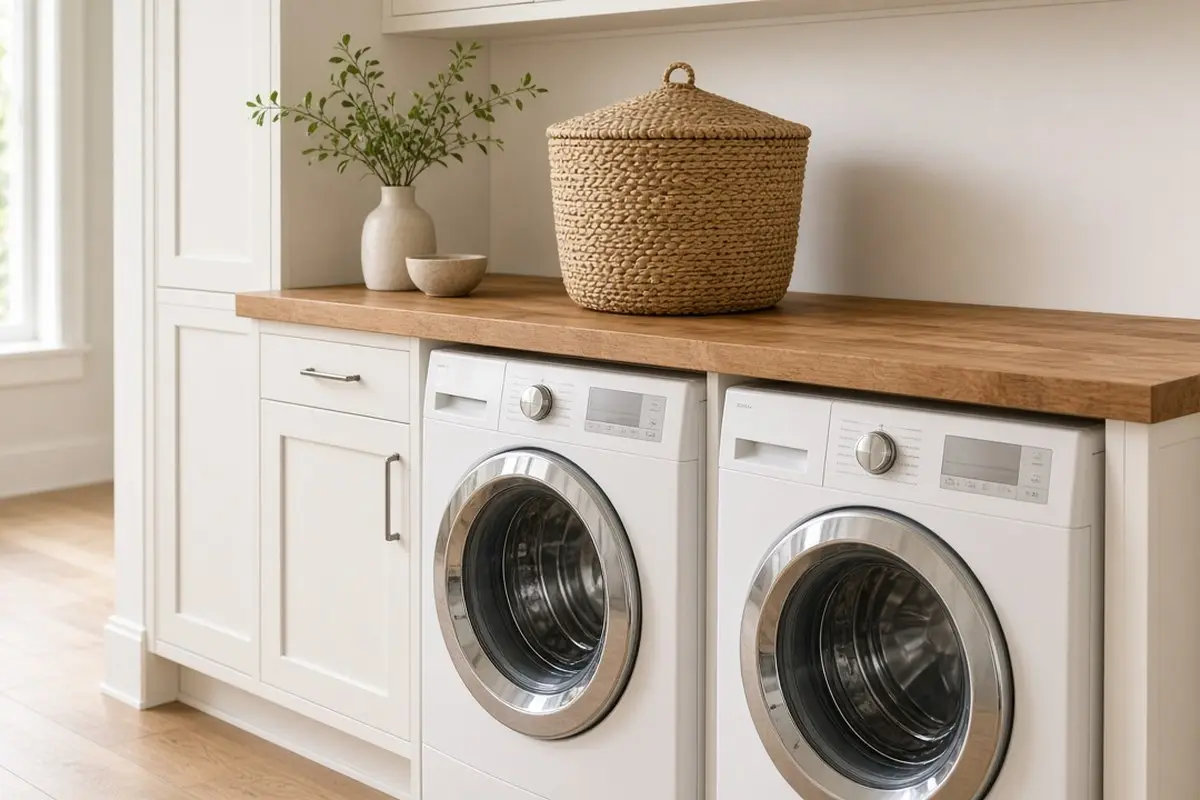
A counter laid across two front-loading machines gives you a folding surface and a place for a hamper basket. Use a piece of butcher block or laminate cut to fit and supported on wall cleats, so it does not rest on the vibrating machines. Leave a small gap between the underside of the counter and the tops of the machines so lids and control panels clear it, and remember that this only works with front loaders. Seal butcher block with a few coats of a water-resistant finish, because damp clothes will sit on it. With a counter in place, a lidded basket on one end becomes the hamper, and the rest of the surface is for folding, so clean clothes go straight from the dryer to stacks instead of piling on a bed.
5. Shelves above with matching bins
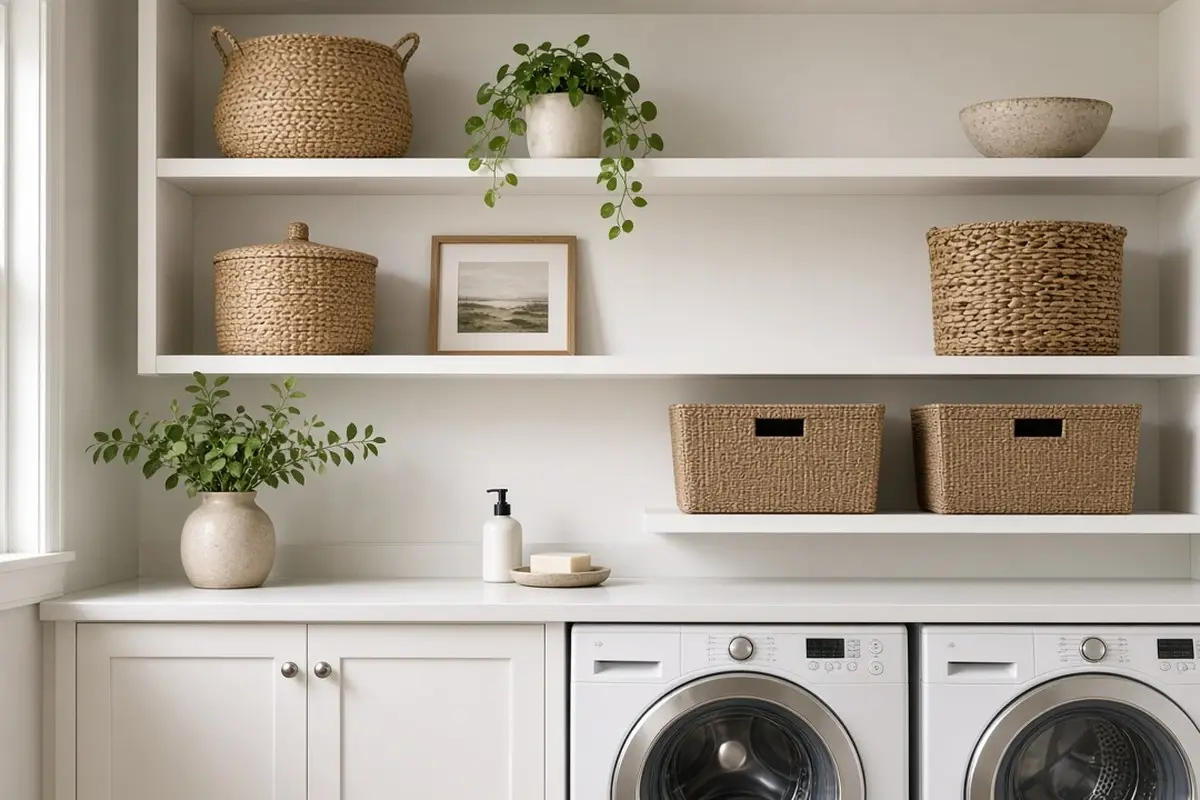
Shelving above the machines holds supplies. Matching bins with labels hide the mismatched bottles and boxes. A row of lidded bins looks calm even when the doors are open. Keep the most used supplies on the lowest shelf, within easy reach above the machines, and seasonal or rarely used items higher up. Decant detergent into a refillable dispenser with a spout if the original jug does not fit; it saves space and looks tidier. Leave one bin empty and label it for lost socks and items found in pockets. That small bin solves a surprising amount of clutter that otherwise collects on top of the dryer.
6. Use the back of the door
The inside of the closet door is free real estate. An over-the-door organizer holds detergent pods, dryer sheets, stain spray, and lint rollers. On bifold doors, use slim organizers designed for the narrower panels. Check that the organizer does not stop the door from closing; hooks over the top edge can catch on tight frames, so screw-mounted racks are often better on closet doors. Clear pockets let you see when supplies are running low. Keep anything hazardous, like bleach or pods, on the upper pockets if small children are around, or move it to a high shelf entirely.
Get the look
7. A fold-down drying rack
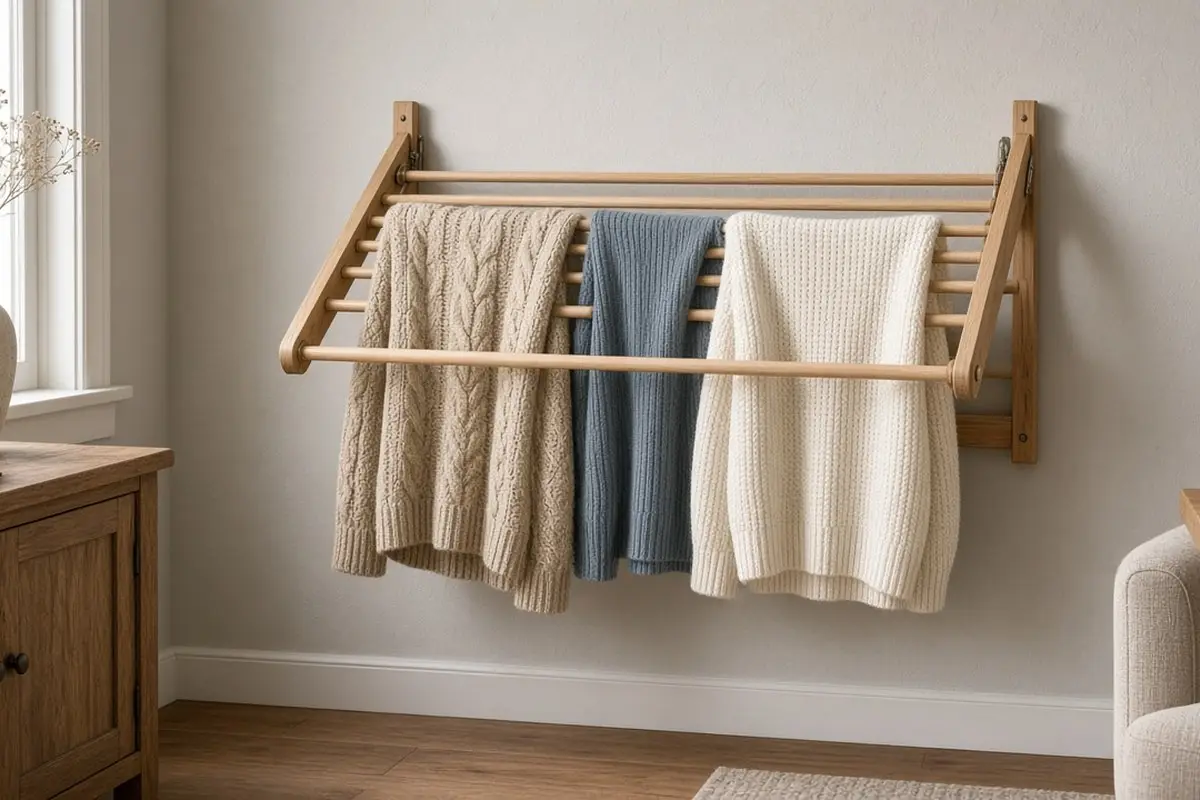
A wall-mounted drying rack folds flat against the wall when not in use and opens for delicates. Mount it on the side wall of the closet or on the inside of the door. An accordion-style wooden rack is quiet and attractive; a steel one holds more weight. If the closet is very tight, a retractable clothesline that pulls across the opening is the smallest option. Hang delicates there after the wash, and let them dry with the doors open for air.
Get the look
8. Choose the right doors
Bifold doors open wide but stick out into the hall. Sliding barn-style doors need wall space beside the closet. Louvered doors help ventilation and moisture escape. Curtains are the cheapest, softest, and easiest option for a rental. A ceiling-mounted track lets a curtain slide fully clear of the opening, and a heavy linen or canvas panel muffles machine noise better than a thin one. In a small apartment where the laundry closet opens into the living area, noise matters; the quiet apartment details post covers other ways to soften sound from appliances. Whatever door you choose, make sure the washer and dryer doors can open fully with the closet door open.
9. Add light inside
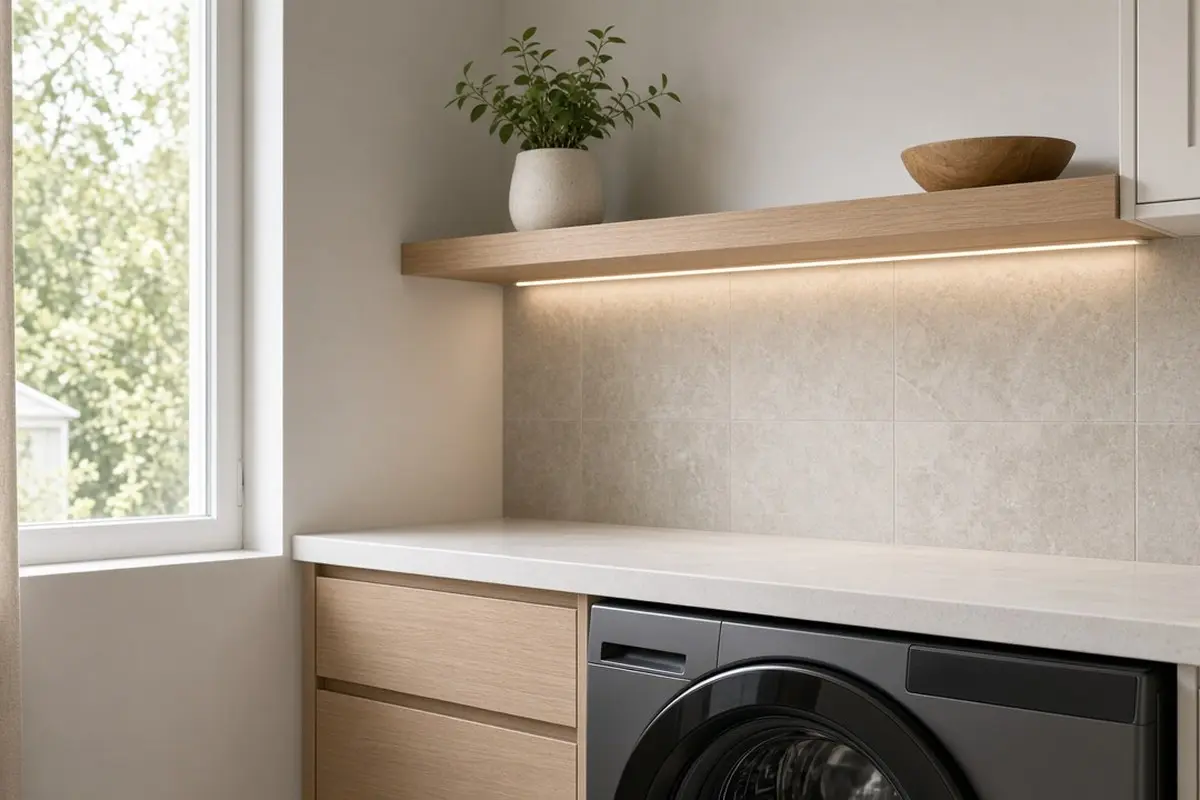
Most laundry closets are dark. A battery-powered motion sensor light strip under the top shelf lights the machines when the doors open and turns off on its own. Rechargeable versions with a USB port save buying batteries. Mount the strip toward the front edge of the shelf so the light falls into the drum and onto the controls, rather than straight down onto the machine tops.
Get the look
Keep it running smoothly
Set a simple rule: the hamper never lives on the floor outside the closet. Once it has a home inside, the doors can close and the whole space disappears.
Planning around a small floor plan
In a small home, the laundry closet often opens straight into a hallway, kitchen, or living room. That makes it part of the main space whenever the doors are open. Painting the inside of the closet the same color as the room outside, or a slightly deeper shade, makes it feel like a built-in rather than a utility zone. The studio apartment layout post has more ideas for keeping utility areas from taking over a small open plan.
Quick questions
Does a laundry closet need ventilation? Yes. The dryer must vent outdoors, and louvered doors or a gap at the bottom of solid doors help the closet stay dry. Check the dryer manual for minimum clearances.
Can I put a hamper on top of the dryer? It works in a pinch, but it blocks the controls and adds weight on a vibrating machine. A shelf or counter is better.
How do I stop things falling behind the machines? A strip of foam or a gap cover along the back edge, or a counter that spans the full width, catches socks before they disappear.
What about a utility sink? Most closets cannot fit one. A collapsible bucket and a small stain-treating kit on a shelf handle the jobs a sink would.
A laundry closet works best when every item has a home behind the doors. Stack if you can, give the hamper a dedicated spot, and use every wall and door surface. When the doors close, the laundry is gone from sight.