
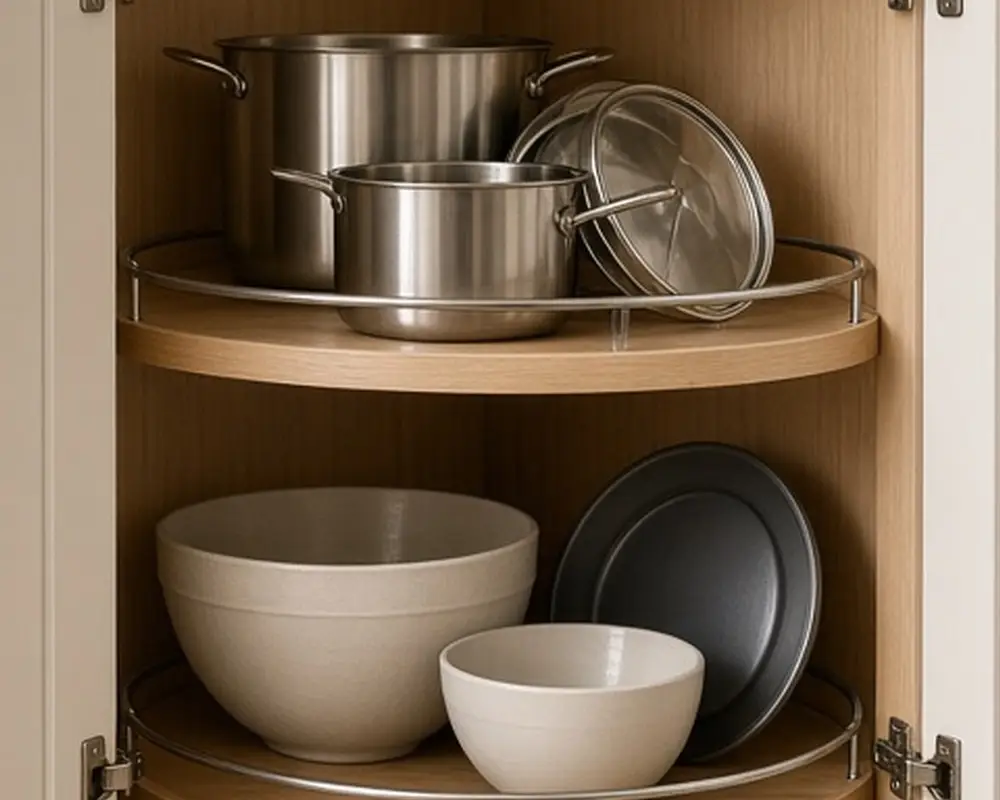
10 Corner Cabinets That Stop Being a Junk Shelf

On this page12 sections
Every L-shaped and U-shaped kitchen has at least one corner cabinet, and in most homes it is the worst storage in the room. It is deep, dark, and hard to reach. Things go in and are never seen again: a fondue set from years ago, a stack of mismatched lids, the slow cooker that only comes out at Thanksgiving. Before you fit anything new, empty the whole cabinet and decide what really deserves to go back in. Getting anything out means kneeling on the floor and pulling half the contents out first.
It does not have to be that way. The corner is often the largest single cabinet in the kitchen, and with the right fittings, it can hold more than any other. The ten ideas below cover the two main types of corner cabinet, the hardware that makes each work, and simple fixes that need no carpentry. For a wider look at the layout around the corner, the U-shaped kitchen layout post covers planning the whole room.
As an Amazon Associate I earn from qualifying purchases.
First, know which corner you have
There are two common types of kitchen corner cabinet, and the best solution depends on which you have.
A diagonal or L-shaped corner has a door that sits in the corner itself, often a bifold door or a door angled at 45 degrees. The cabinet inside is roughly square, and you reach straight into the corner. Lazy Susans were made for this type.
A blind corner has a regular door on one side, and the cabinet extends sideways behind the neighboring cabinet, out of sight. The hidden part is the “blind” section. It is the harder one to use, and it needs pull-out hardware to reach the back.
Open the door, look inside, and measure the opening, the depth, and the width of the blind section if there is one. Every product below lists the dimensions it needs. Take a photo of the inside of the cabinet with the tape measure visible; it saves a second trip to check.
1. A full lazy Susan corner
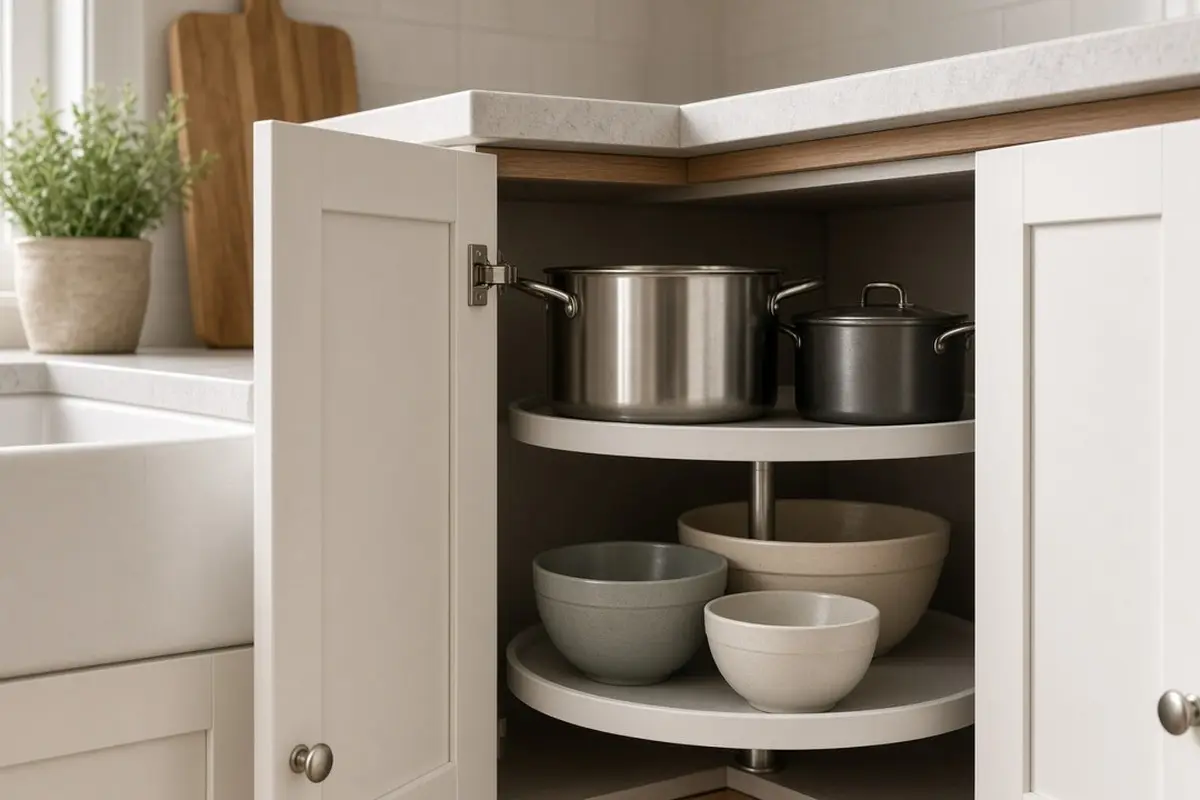
For a diagonal corner, a two-tier lazy Susan is the classic fix. The shelves rotate, so everything in the back comes to the front with a spin. Pie-cut versions, with a wedge removed, attach to the door and turn with it; full-round versions spin freely inside the cabinet.
Put the heaviest things on the bottom tier: pots, a stand mixer bowl, large mixing bowls. Lighter items like storage containers go on top. A raised lip around each shelf stops things falling off the back when it turns.
If you are replacing the hardware in an older cabinet, measure the opening carefully. A lazy Susan must fit through the door, which is often narrower than the cabinet inside.
Get the look
2. A freestanding turntable
If you cannot install a built-in lazy Susan, a large freestanding turntable on the cabinet floor does much of the same job. It costs little, needs no tools, and works in both diagonal and blind corners. Put one on each shelf if the cabinet has more than one.
Choose a turntable with a raised edge and a non-slip base. Large versions, around 18 inches in diameter, suit deep corners.
In a blind corner, place the turntable as far into the opening as you can while still being able to spin it. Items on the back of the turntable come forward with a turn. Two smaller turntables side by side sometimes fit better than one large one in a narrow blind corner.
Turntables are especially good for small items that otherwise get lost: oils, vinegars, cans, cleaning supplies under the sink corner, and jars of baking supplies.
Get the look
3. Blind corner pull-out
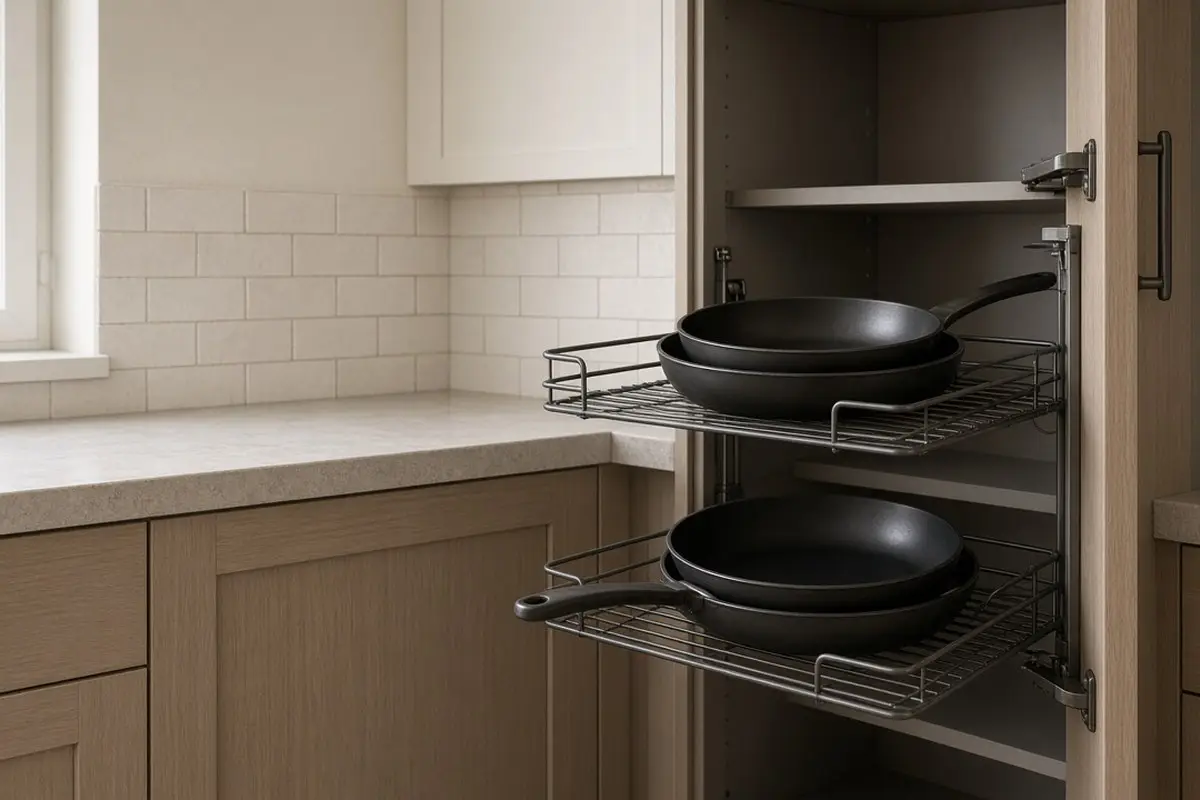
For a blind corner, a blind corner pull-out is the most effective upgrade. Shelves on a hinged arm swing out of the cabinet and slide sideways, bringing the hidden back section into reach. The most elaborate versions pull out in two stages: the front shelves swing out, then the back shelves slide forward into the space they left.
These units are more expensive and need careful installation, but they turn a nearly useless cabinet into one of the best in the kitchen.
Measure the door opening, the cabinet depth, and the blind width, and check whether the cabinet has a center post or face frame that narrows the opening. Many pull-outs are made for specific cabinet widths. Choose one rated for the weight you plan to store; pots and cast iron are heavy.
If a full mechanism is outside the budget, a simpler half-moon swing-out shelf costs less and still brings a good part of the blind section into view.
Get the look
4. Corner drawers
If you are replacing cabinets, corner drawers are one of the best designs available. They are V-shaped and pull straight out of the corner, making every inch reachable. They are especially good for pots and pans.
Corner drawers usually come as part of a new cabinet run, so they are worth considering during a remodel rather than a refresh. They work best with full-extension, soft-close runners rated for heavy loads. Use pegboard dividers inside to hold pans and lids upright.
5. Store only large, occasional items
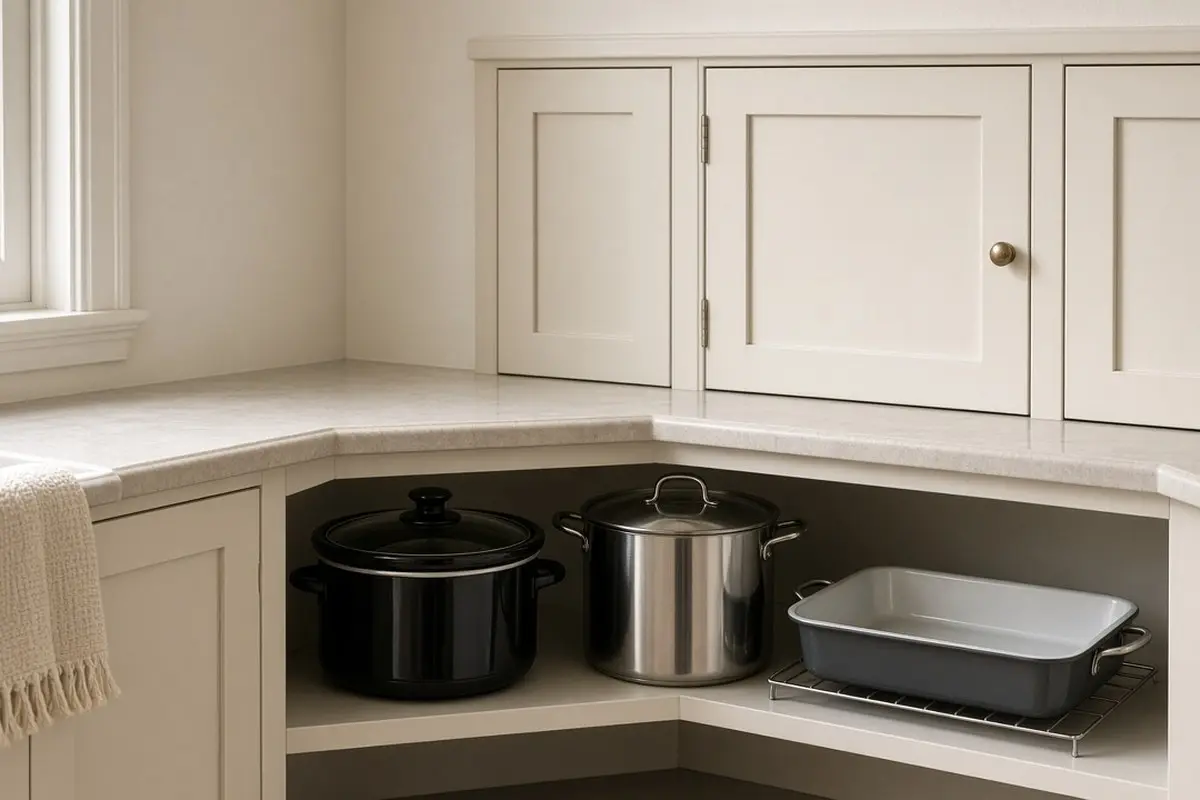
If the corner remains awkward, give it only things you use rarely and that are big enough to find: a stockpot, a roasting pan, a slow cooker, holiday platters. Small items get lost in corners.
This is the simplest strategy of all, and it works with any corner. Big items are easy to identify and pull forward, and you only need to reach them a few times a year. Put the item you use most often at the front and the least used one at the very back.
Get the look
6. Bins with handles
Bins with front handles let you pull the contents of a deep corner out like a drawer. Group items by use.
For example, one bin for baking tools, one for food storage containers, one for picnic supplies. When you need something, you pull out one bin and take it to the counter. Bins also stop things from sliding into the dead space at the back, because everything is contained.
Measure the cabinet depth and choose bins that fit two deep: a front bin for frequent items and a back bin for rare ones.
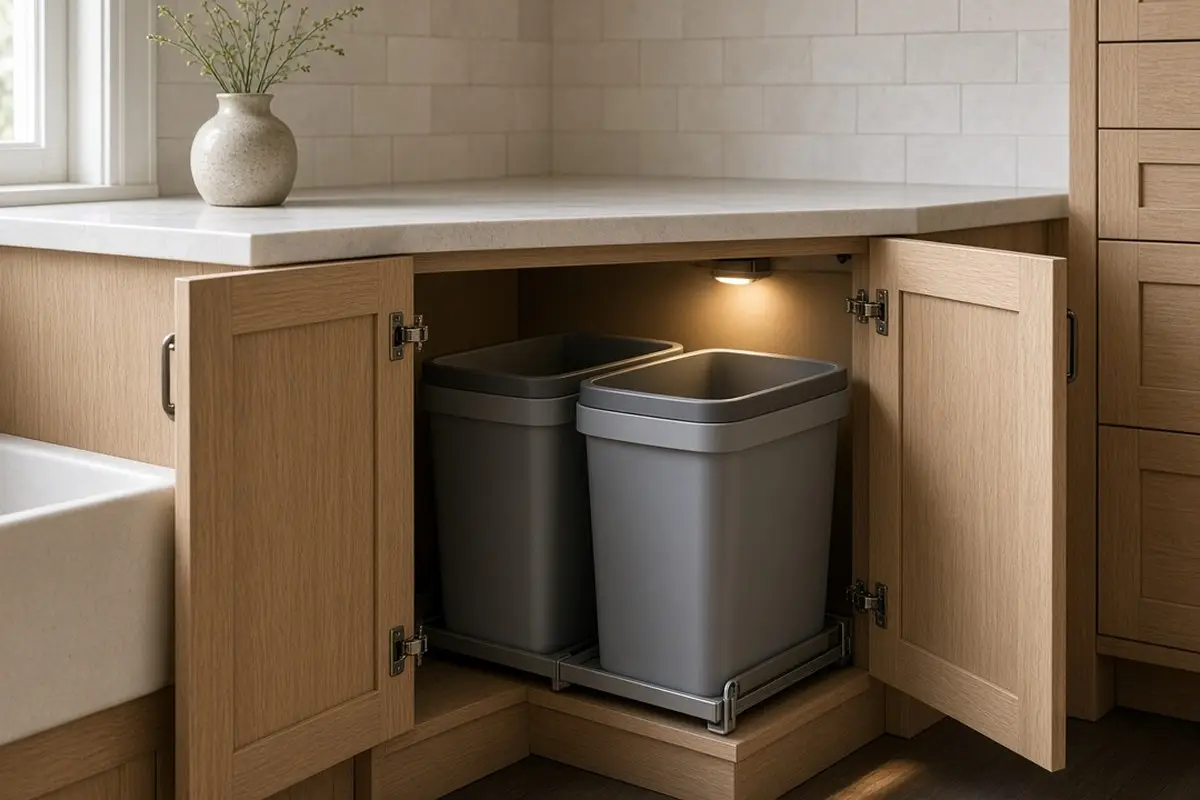
7. Light the corner
A battery or rechargeable motion-sensor light inside the cabinet turns on when the door opens. It helps a lot in dark corners.
Rechargeable lights avoid buying batteries and can be charged with a USB cable every few weeks. Stick them to the underside of the top of the cabinet or to the inside of the face frame, pointing down and back. Warm white light makes it easier to tell colors apart, which helps when you are hunting for a particular lid.
Get the look
8. Upper corner cabinets
Upper corners are easier but still deep. Use a turntable for spices or a two-tier shelf riser for mugs.
Upper corners are also good for things you want to keep away from small children, such as medicines, cleaning supplies, or sharp tools. Fit a child lock if needed, and keep a step stool nearby for the top shelf.
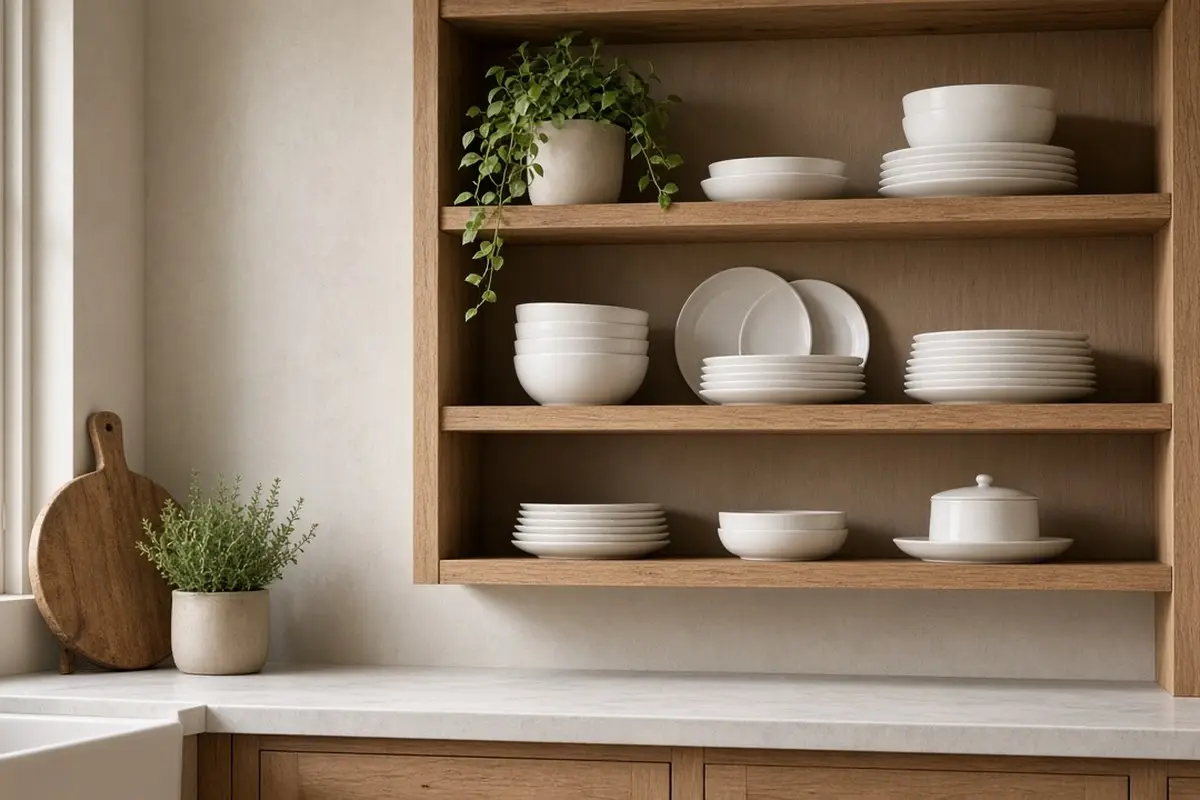
9. Open corner shelves
Replacing upper corner doors with open corner shelves makes them easy to reach and shows off pretty dishes.
Open shelves work best for things you use every day, like plates, bowls, and glasses, because they get used before dust settles. Keep the arrangement simple: stacks of matching dishes and one or two decorative items. The corner becomes a feature instead of a dark hole.
Get the look

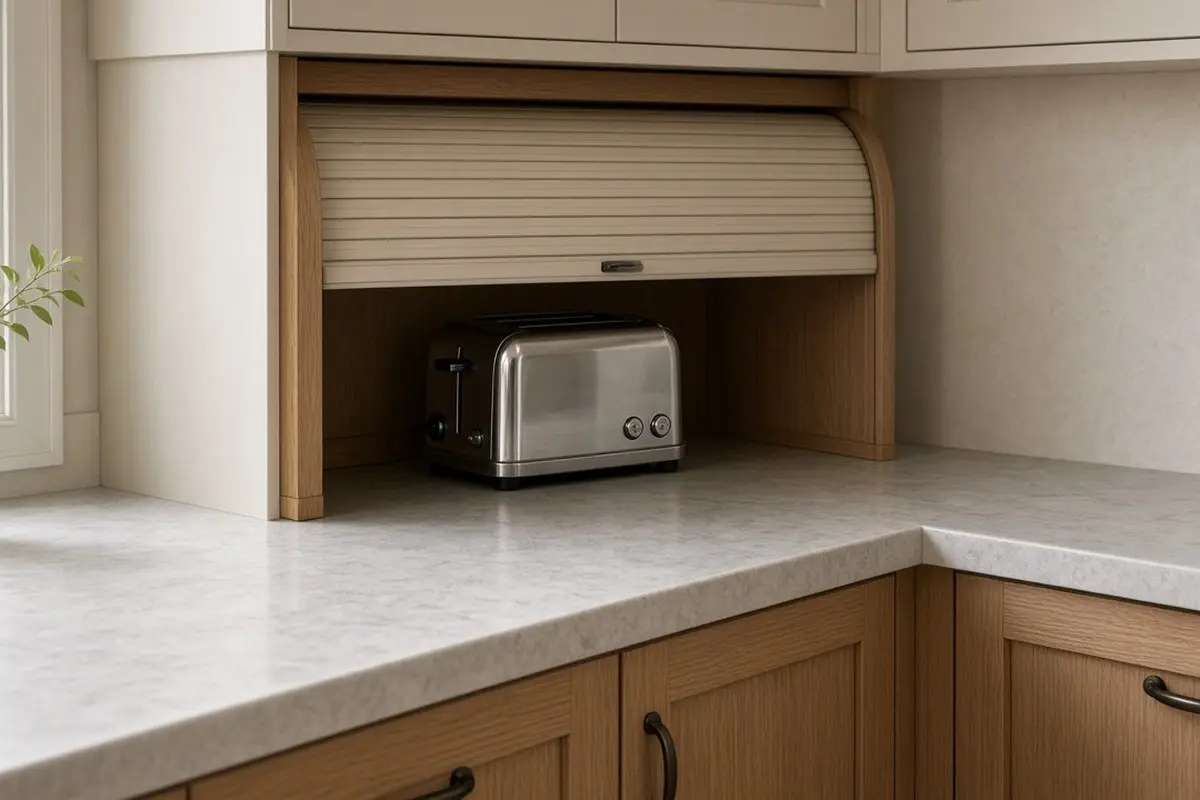
10. A corner appliance garage
The counter in a corner is hard to work on. A small appliance garage there hides a toaster or mixer.
The deep corner counter is perfect for appliances because it is the part of the counter you are least likely to use for chopping or rolling dough. With a roll-up or lift-up door, the appliances are hidden when not in use but still plugged in and ready.
FAQ
What is the best way to use a blind corner cabinet?
A blind corner pull-out, or bins with handles for occasional items.
Is a lazy Susan worth it?
Yes, for diagonal corners. It makes the whole cabinet reachable.
What should go in a corner cabinet?
Large, occasional items or anything on a turntable. The small kitchen organization post covers other cabinets.
Can I add a lazy Susan to an existing corner cabinet?
Often yes. Built-in kits are sized to standard cabinets, and freestanding turntables fit almost anywhere. Measure the door opening first, since it limits what can go in.
How do I organize pot lids in a corner cabinet?
Stand them upright in a lid rack on a turntable or in a bin with a handle. Lids stored flat in a stack are the main reason corner cabinets become messy. The kitchen finish pairings post covers refreshing the cabinet fronts once the inside works.
The awkward kitchen corner can be your best storage. Match the fix to the corner type, and stop losing things at the back.