
8 Wallpapered Backs for a Bookcase

On this page15 sections
- Before you start: check the back panel
- How to measure and cut
- Choosing a pattern that suits the room
- A small botanical print
- Removable paper for a rental
- Grasscloth for texture
- A bold color in a contrasting shelf
- A map or graphic print in a study
- Paper only the top and bottom sections
- Loose insert panels
- Fabric instead of paper
- Styling a patterned back
- Common problems and fixes
- Quick answers
- A small project with a big change
The back panel of a bookcase is one of the best small places in a house to try a pattern. It is a contained space with clear edges, it uses a fraction of a roll, and most of it ends up partly hidden by books and objects anyway. A pattern that would feel like too much on a whole wall becomes a quiet backdrop when it peeks out between spines and vases.
It is also a forgiving project. If a strip goes on a little crooked, a row of books hides it. If you tire of the pattern, a removable paper or a loose panel comes out in an afternoon. This guide covers eight ways to back a bookcase, the materials that suit each, and the steps that make the job neat, whether the bookcase is a built-in, a basic flat-pack unit, or a vintage piece.
As an Amazon Associate I earn from qualifying purchases.
Before you start: check the back panel
Bookcases are built in different ways, and the back panel decides which method works.
- Solid wood or plywood backs take traditional wallpaper paste, peel-and-stick paper, and paint well.
- Thin hardboard backs, common on flat-pack furniture, often have a printed or laminated face. Paste may not stick well, so peel-and-stick paper or a loose insert panel is the better option.
- Open-backed bookcases or built-ins against a wall let you paper the wall itself, or fit a thin panel into the back.
- Glass-fronted cabinets make the back the main feature, so pattern choice matters more.
Clean the back with a mild degreaser and let it dry. Wallpaper of any kind sticks poorly to dust, wax, or furniture polish. If the surface is glossy, a light scuff with fine sandpaper helps adhesion.
How to measure and cut
Measure each section between shelves separately, since built-ins and older furniture are rarely perfectly square. Add an inch or so to each dimension, then trim to fit once the paper is in place.
If the shelves are adjustable, take them out first and paper the whole back in full-height strips. This is faster and hides seams better. If the shelves are fixed, paper each section separately. Match the pattern from section to section by cutting each piece from the same point in the repeat, so the design lines up across the shelves.
Use a sharp craft knife with fresh blades, a metal straightedge, and a smoothing tool. Change the blade often, since a dull blade tears damp paper.
Choosing a pattern that suits the room
A bookcase back is seen through a frame of shelves, so the pattern behaves differently than it does on an open wall. Before you buy, tape a sample inside one section and add a few books in front of it. Look at it from the doorway and from your usual seat. A good choice still reads clearly when about half of it is covered.
Think about the color of the shelves, too. White shelves make almost any pattern look crisp. Wood shelves pair best with warm patterns, natural textures, and greens. Black or dark shelves can carry bolder prints because the dark frame contains them. If the bookcase sits next to a wall that already has pattern or a strong color, choose a back that shares one of its colors so the two do not compete.
1. A small botanical print
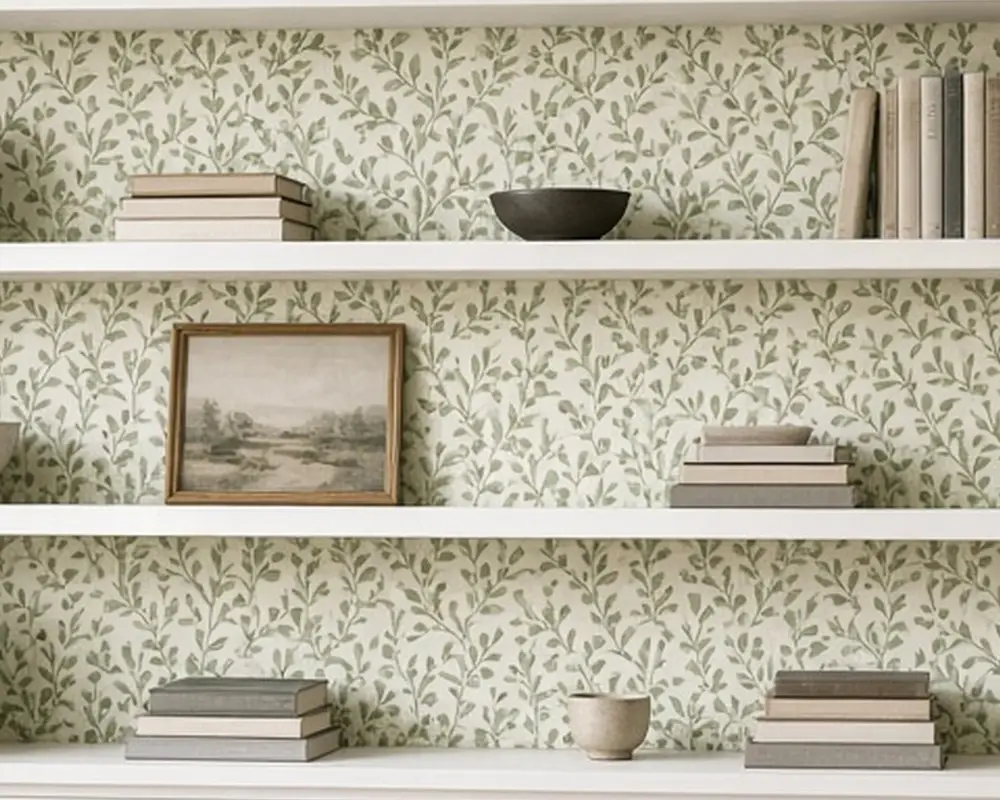
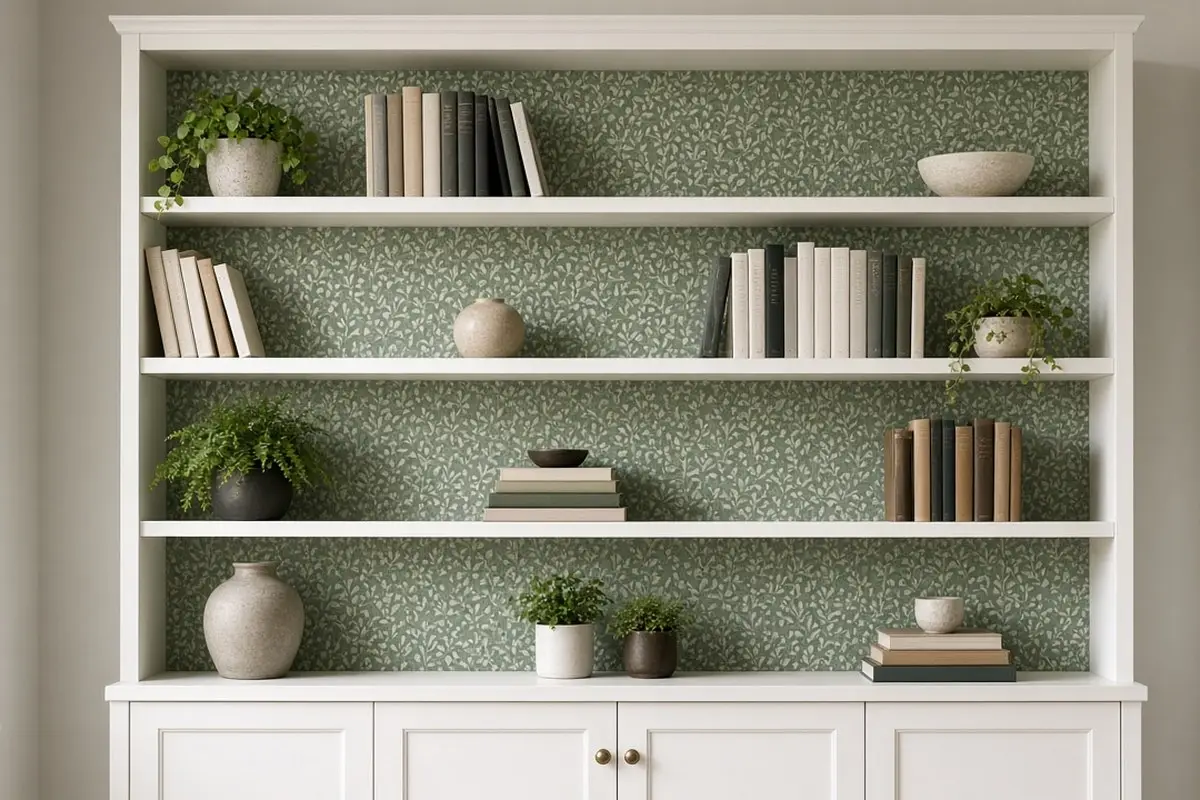
A small-scale botanical, such as leaves, vines, or tiny flowers, is the most forgiving pattern for a bookcase. It reads as texture from across the room and as a pattern up close, and it pairs well with books, plants, and ceramics.
Choose a pattern scale small enough that a full motif shows in each shelf section. Large botanical patterns can look chopped up when most of the design is hidden behind books.
Green and cream botanicals suit a living room or a study. Pale blue or soft pink prints work well in a bedroom or a child’s room.
Get the look
2. Removable paper for a rental
If you rent, or if you like to change things, peel-and-stick wallpaper is the obvious choice. It goes on without paste, can be repositioned while you work, and usually comes off cleanly when you move.
Test a small piece on the back of the bookcase first and leave it for a day or two, then peel it off to check it does not lift the finish. Some flat-pack furniture has a thin printed surface that can tear when strong adhesive is removed. On these pieces, a removable panel (see idea 7) is the safer choice.
Smooth the paper from the center out to push out bubbles. If a bubble remains, prick it with a pin and press it flat. Work in a cool room if you can, since heat makes some peel-and-stick adhesives grab before you have positioned the strip.
3. Grasscloth for texture
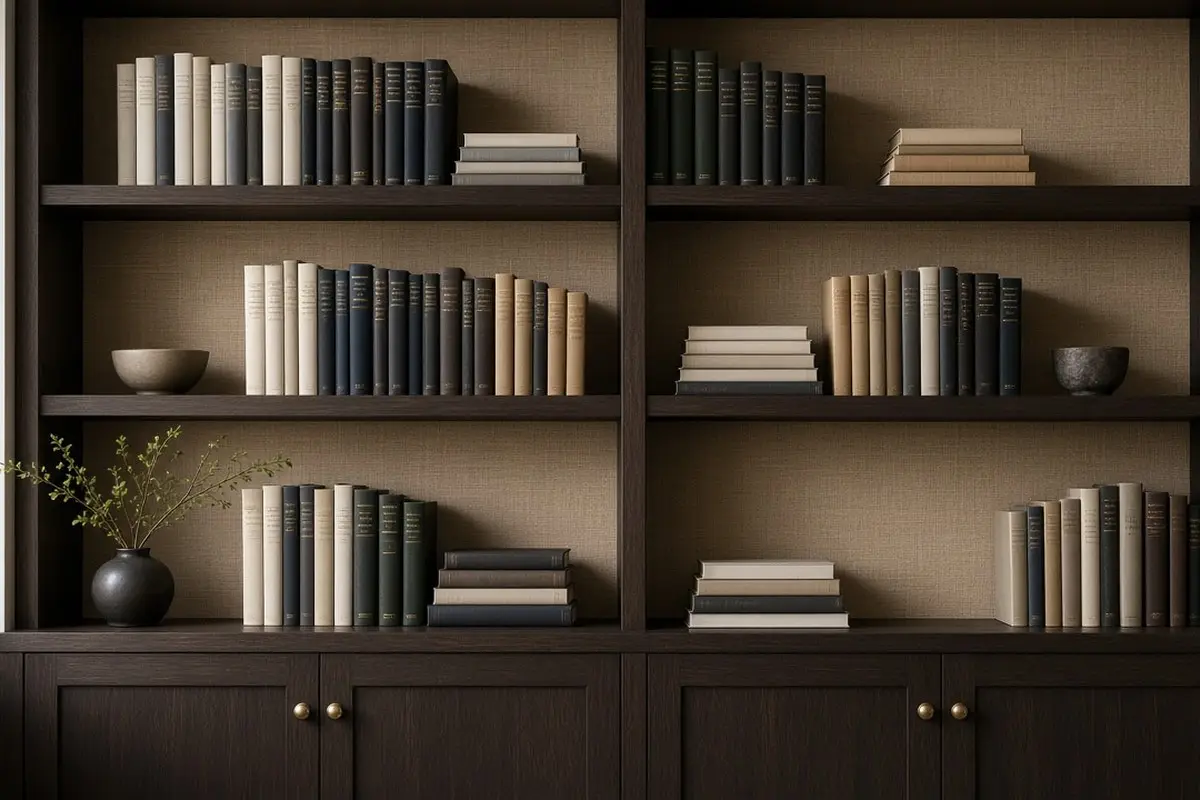
Grasscloth, a wallpaper woven from natural fibers, adds warmth and texture without pattern. It works particularly well in built-ins in a study, a dining room, or a living room with a lot of wood.
Natural grasscloth seams are always visible, since each strip has its own color variations. On a bookcase, this is less of a problem because shelves break up the surface. Use a clear-drying paste made for grasscloth, and keep paste off the face, since it can stain the fibers.
Grasscloth is delicate and does not clean easily, so it suits shelves that hold books rather than items that get handled often. Faux grasscloth in vinyl is a more durable alternative.
Get the look
4. A bold color in a contrasting shelf
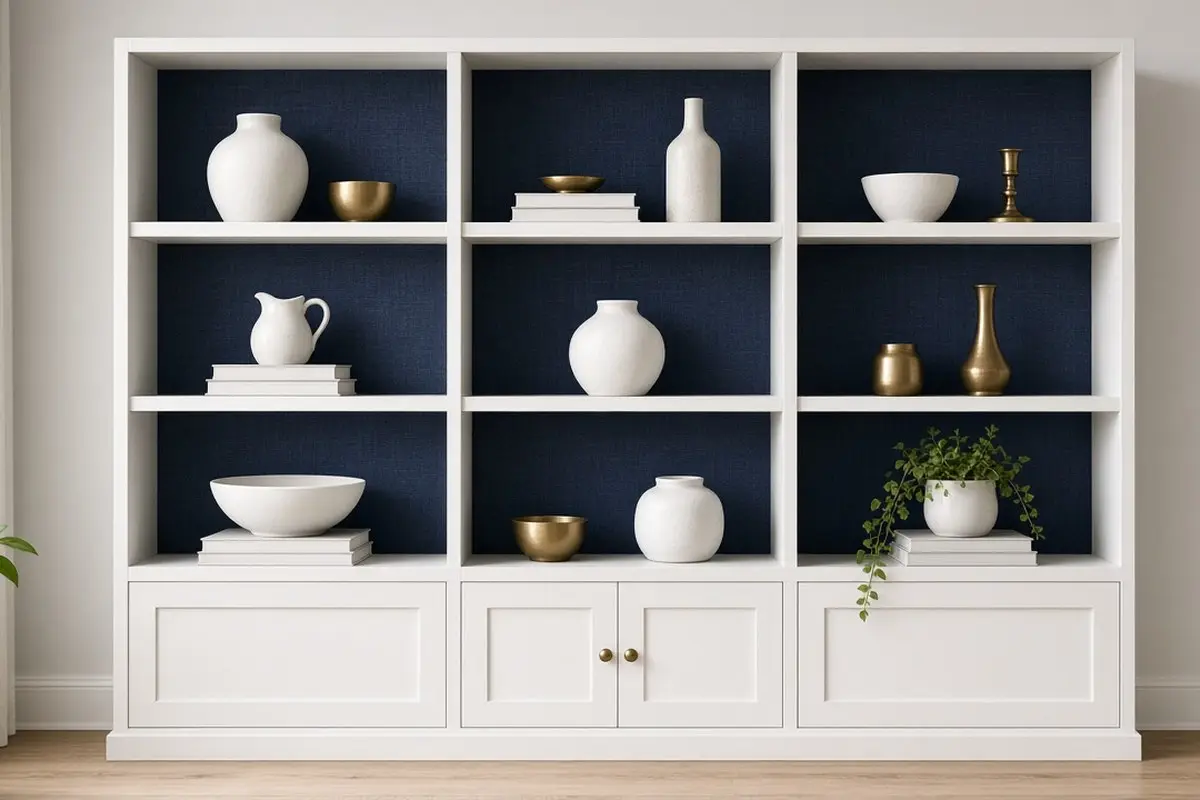
Pattern is not the only option. A solid, saturated wallpaper or a deep painted back makes the contents of a bookcase stand out. Navy, forest green, terracotta, and deep plum all make white ceramics, brass objects, and colorful book spines look sharper.
If you want the color with a little texture, choose a linen-look or lightly textured solid wallpaper. For ideas on what goes on the shelves, see the guide to fall shelf styling, which covers how to arrange books and objects with room to breathe.
Get the look
5. A map or graphic print in a study
A vintage map print, an architectural drawing, or a simple geometric pattern suits a study or a home office. These patterns add interest without being floral, and they pair well with dark wood, leather, and brass.
Line up the main features of the pattern across sections. Even if the pattern is large, keeping its main lines straight across the shelves makes the whole bookcase look deliberate.
6. Paper only the top and bottom sections
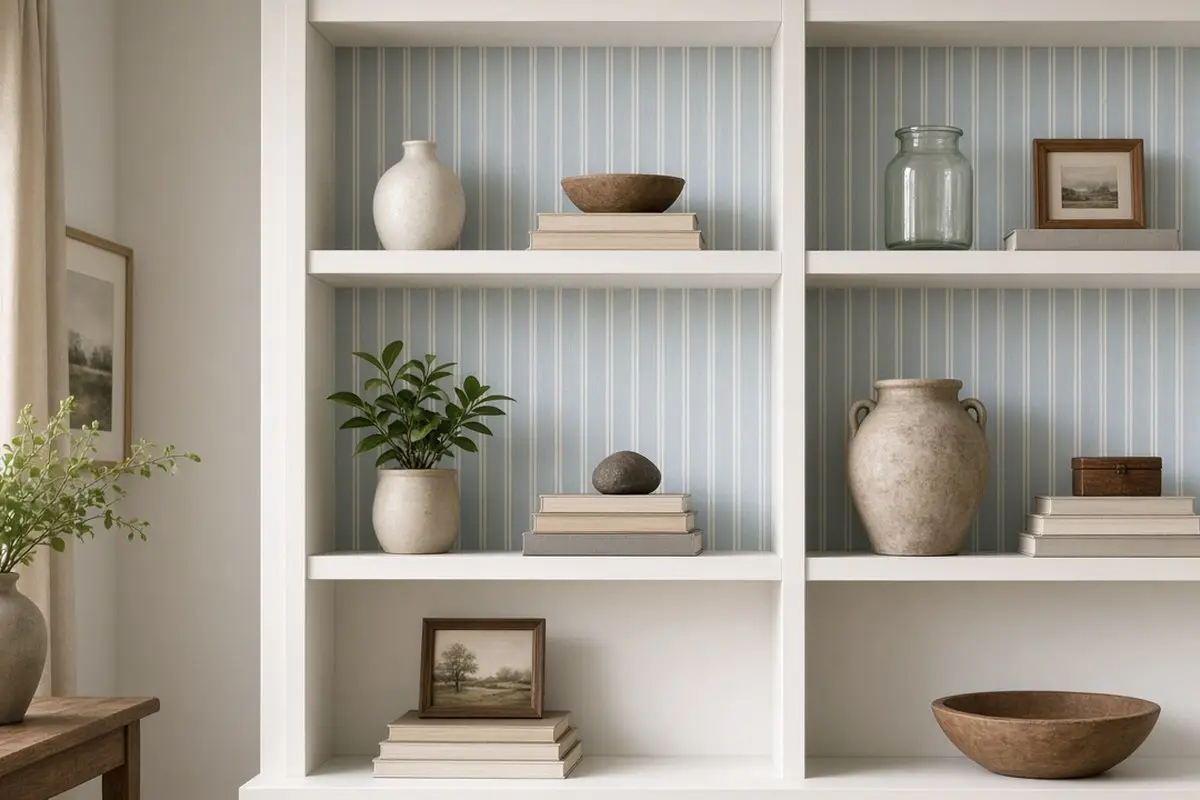
You do not need to paper the whole bookcase. Papering only the top section, or only the bottom cabinet section, gives a bit of pattern without overwhelming the room. This is especially useful in a small room or when the bookcase is already full.
Another approach is to paper alternating sections, which works well with a calm, small-scale pattern. Keep the pattern consistent across all papered sections so it reads as one design.
Get the look
7. Loose insert panels
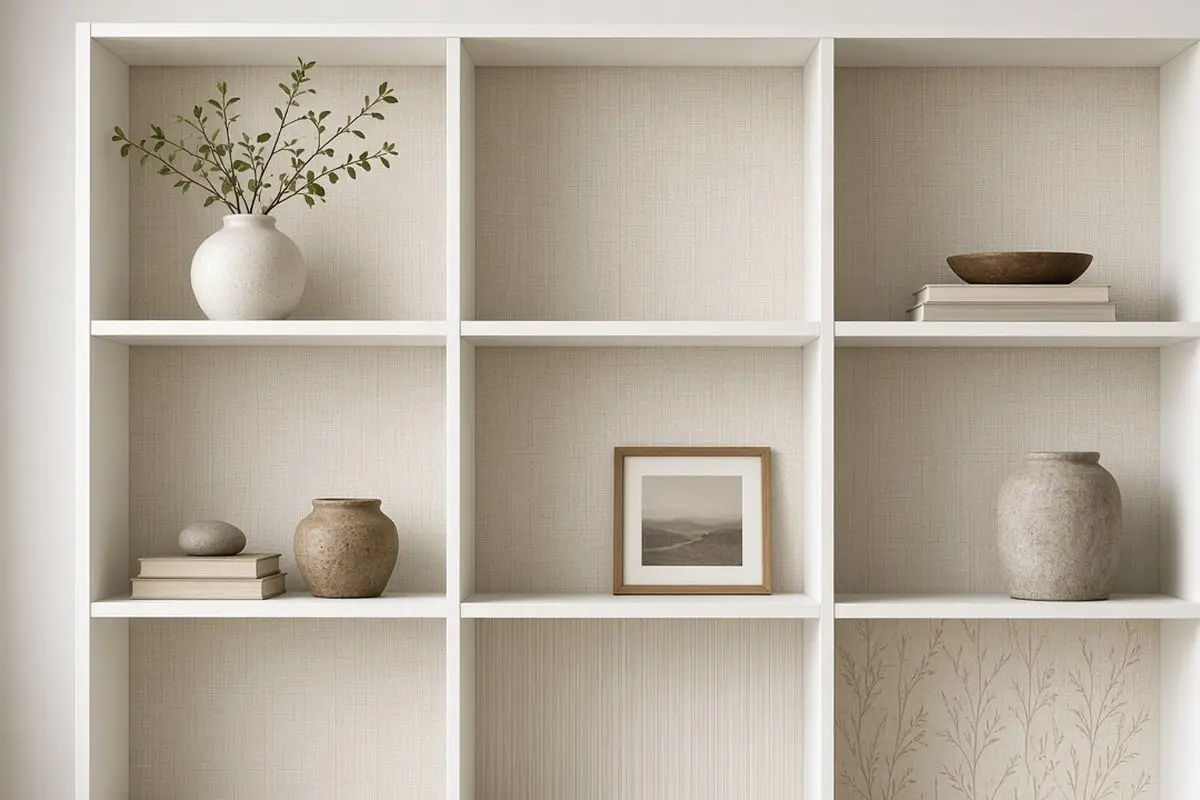
The most reversible method is to paper a thin panel and slide it into the back of each section. Cut thin hardboard, foam board, or thin plywood to fit each section snugly. Paper the panel on a table, wrapping the edges slightly. Then press it into place behind the shelves.
This method suits flat-pack furniture, rentals, and anyone who wants to change patterns seasonally. The panels can come out in minutes, and nothing touches the original bookcase. A few small pieces of removable mounting tape hold the panels in place if they shift.
If you want to style a flat-pack unit further, see Kallax bedroom wall for ideas on making cube shelving look built in.
Get the look
8. Fabric instead of paper
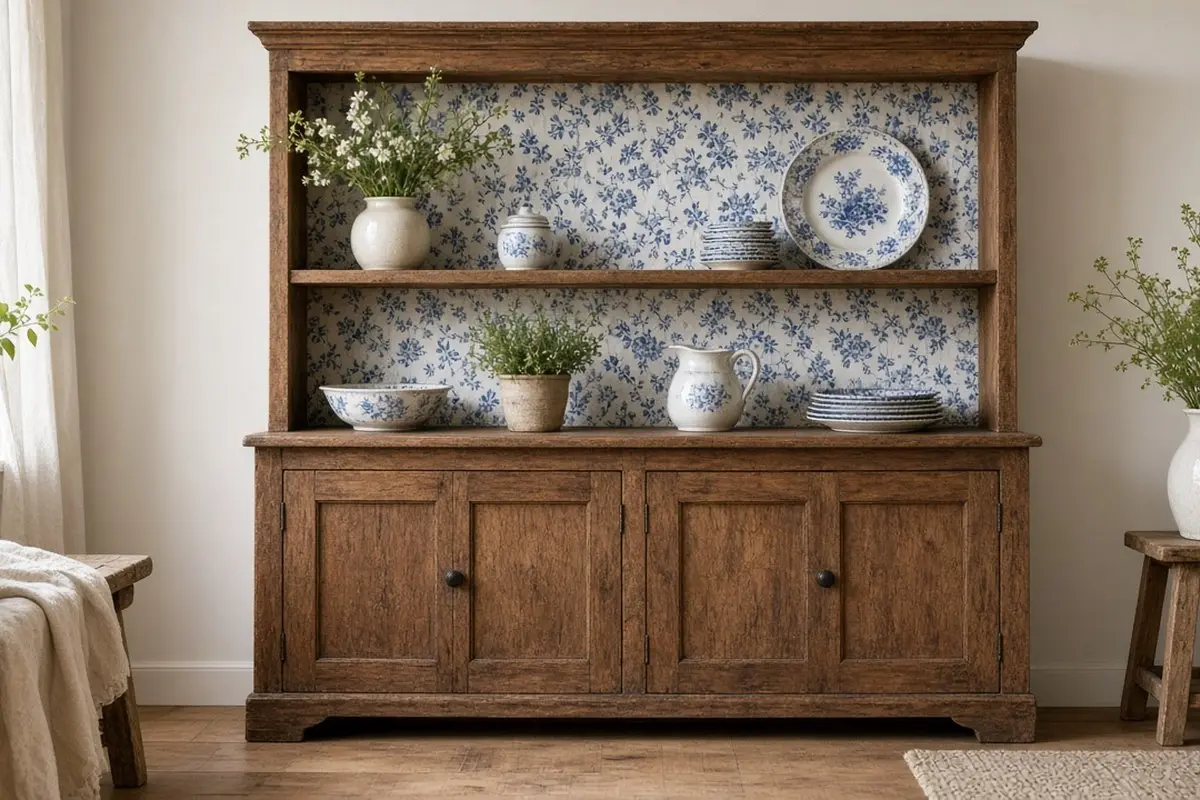
Fabric is a good alternative to wallpaper, especially for a soft, cottage look. Cotton or linen in a small print can be applied with liquid starch, which holds the fabric in place and lets you remove it later by peeling and wiping.
Brush liquid starch onto the back panel, press the fabric smooth, then brush more starch over the top. Trim the edges with a sharp knife once dry. The fabric comes off by peeling it away and wiping the surface with warm water.
Choose a lightweight, tightly woven fabric that does not stretch, and prewash it to remove sizing.
Get the look
Styling a patterned back
Once the back is papered, style the shelves to show it off without hiding it completely.
- Leave gaps. Fill shelves about two-thirds full, so some pattern shows on each shelf.
- Lay some books flat. Horizontal stacks show more of the back than full rows of upright books.
- Use simple objects. Solid-colored ceramics, plain glass, and wood pieces show up well against pattern.
- Repeat colors. Choose a few objects that echo a color in the wallpaper, so the shelves feel connected.
If the bookcase sits in a reading corner, see corner reading nook for how to arrange the seating and lighting around it.
Common problems and fixes
- Bubbles: smooth from the center outward. For stubborn bubbles, prick with a pin and press.
- Edges lifting: add a small amount of wallpaper seam adhesive under the edge and press firmly.
- Pattern not lining up: cut all sections from the same point in the repeat.
- Paper tearing: use a fresh blade and cut slowly along a straightedge.
- Shelf pins blocking the paper: remove the pins, paper over the holes, and then poke through with an awl.
Quick answers
How much wallpaper do I need for a bookcase? Often less than one roll for a standard bookcase. Measure each section and add extra for pattern matching.
Will wallpaper damage the bookcase? Traditional paste can be hard to remove. Peel-and-stick paper, starched fabric, or loose panels are safer choices for valuable or rented furniture.
Can I paper a bookcase with glass doors? Yes, and it is a great place for it. The glass protects the paper from dust and damage.
A small project with a big change
Backing a bookcase takes a weekend or less and very little material, but it changes how the whole room looks. Choose a pattern you love, keep the method reversible if you are unsure, and style the shelves to let a little of it show.