
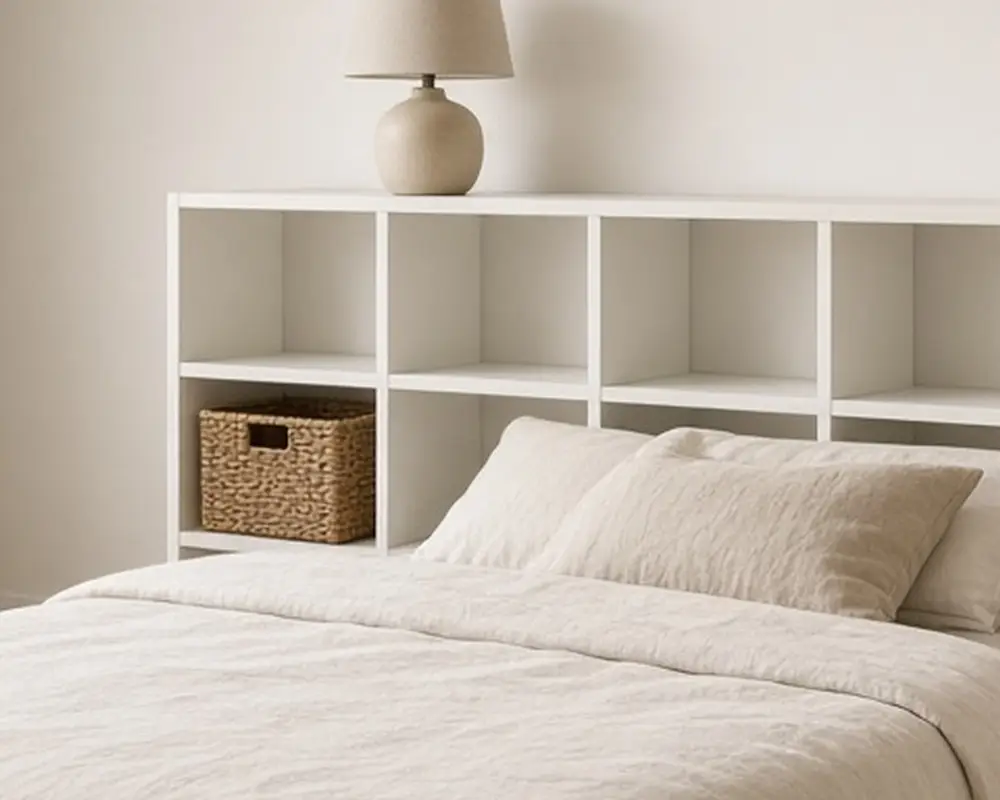
10 Kallax Layouts That Work as a Bedroom Wall

On this page12 sections
The Kallax is probably the most adaptable piece of flat-pack furniture ever made. Its simple grid of square cubes works as a bookcase, a TV stand, a room divider, a bench, and a record shelf. In a bedroom, it can do something even more useful: become a wall. Stand it up, lay it down, stack it, or line it up, and you get storage, display, and structure without building anything.
The ten layouts below turn cube storage into a bedroom feature. They suit renters, small rooms, studios, and kids’ rooms alike, and most can be assembled in an afternoon. The same cube shelf appears in the IKEA living room pieces worth keeping post, if you want ideas for the rest of the house.
As an Amazon Associate I earn from qualifying purchases.
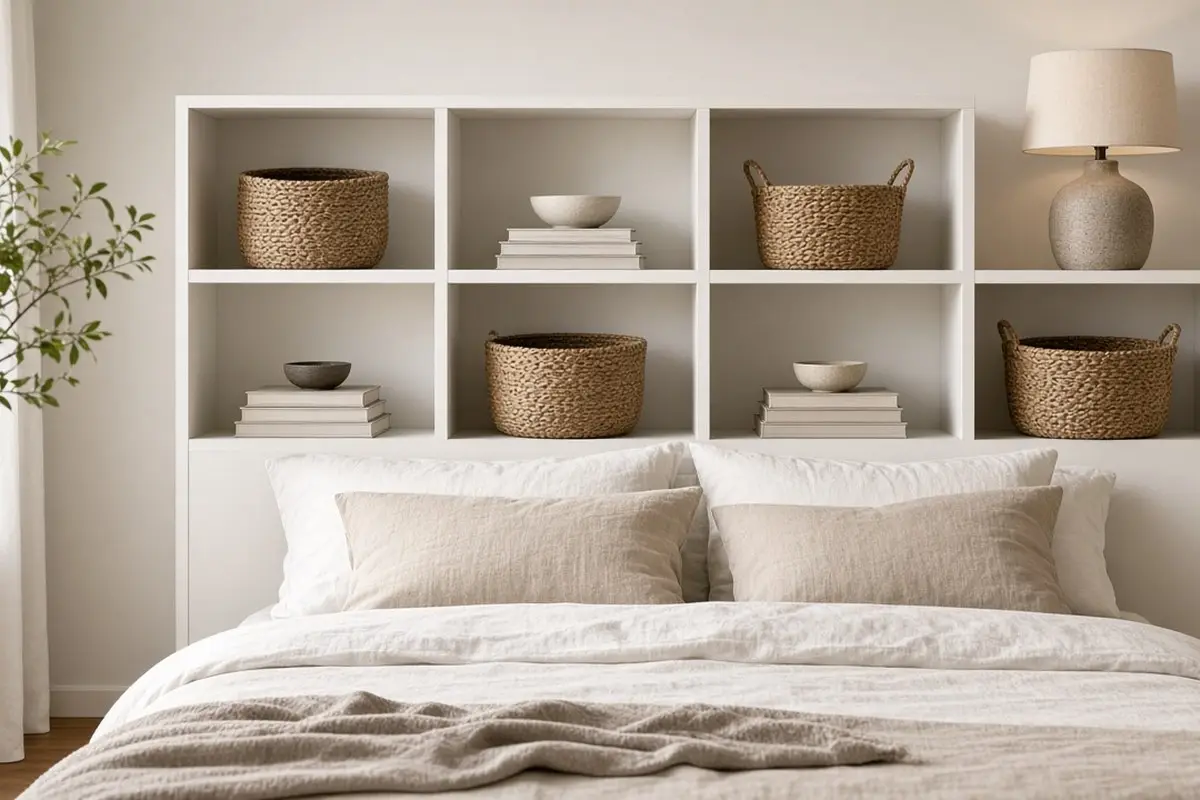
1. A Kallax headboard
Lay a long, two-cube-high unit on its side behind the bed, and it becomes a headboard with built-in storage. The top acts as a shelf for a lamp, a glass of water, and a book. The cubes hold baskets of spare bedding, books, and night things.
Choose a unit about the width of the bed or a little wider. A queen bed is around 60 inches wide; a unit of four or five cubes fits well. Push the bed tight against it so pillows do not fall into the gap. If the unit is shorter than the mattress top, raise it on legs or a plinth so it rises above the pillows.
Anchor the unit to the wall, even when it is lying down. People lean against headboards, and you do not want it shifting.
2. A bedroom bookcase divider
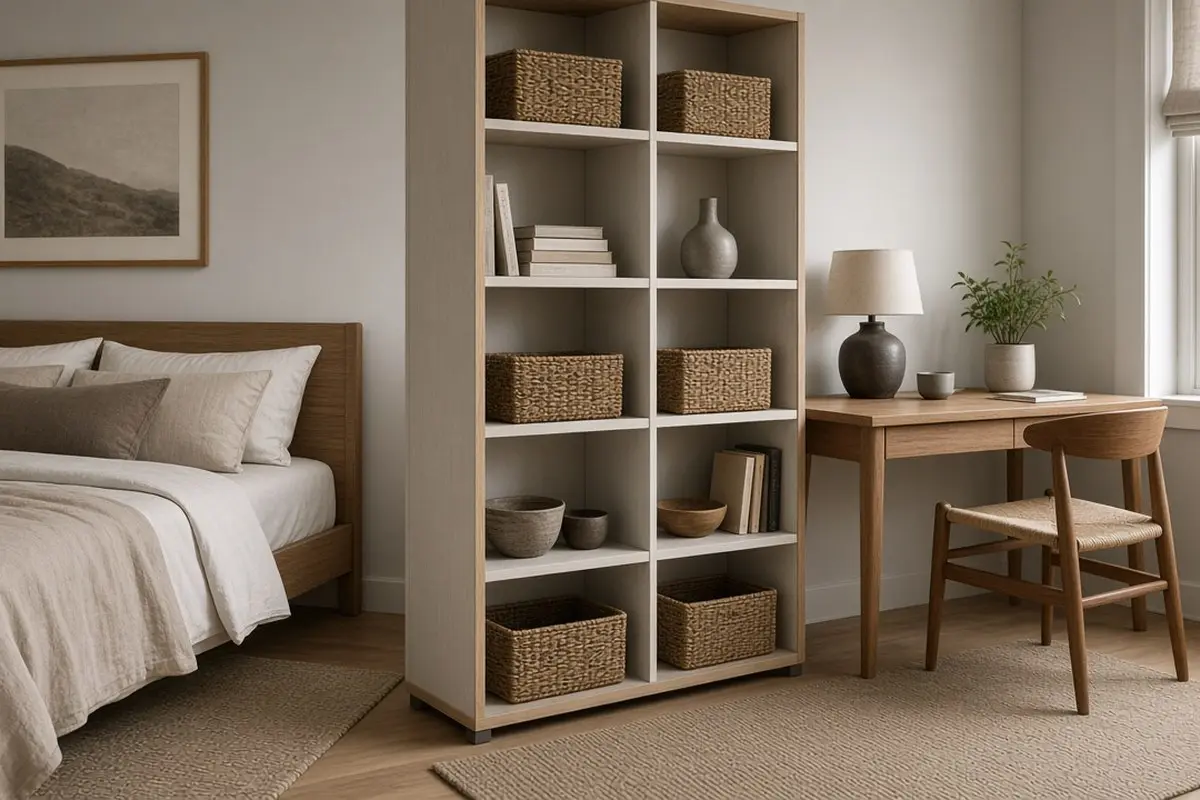
In a studio or a shared kids’ room, a tall Kallax standing at a right angle to the wall creates a divider. One side faces the bed; the other faces the living area or the other child’s space. Because the cubes are open on both sides, light still passes through.
Fill some cubes with baskets for privacy and leave others open. Put heavy books on the bottom rows for stability, and anchor the unit to the floor or ceiling with brackets.
The back of a cube unit is often unfinished on one side. If the back faces the bed, it is hidden by baskets. If it faces the living area, consider adding a thin panel of plywood or a fabric panel to finish it. Some people hang artwork or a mirror on the back of the divider, which makes it feel like a proper wall from that side.
Get the look
3. Two stacks as nightstands
Two short, single-column units, one on each side of the bed, make tall nightstands with a lot of storage. Each holds a lamp on top and baskets below. They are especially useful in rooms without a dresser.
If the units are taller than the mattress, that is fine; a tall nightstand looks deliberate. Keep the top clear apart from the lamp and a book.
This layout gives each person in a shared bedroom their own tall storage column. Use one basket for night things, one for socks and underwear, and one for books. Matching baskets on both sides keep the bed area balanced and calm.


4. A full wall of cubes
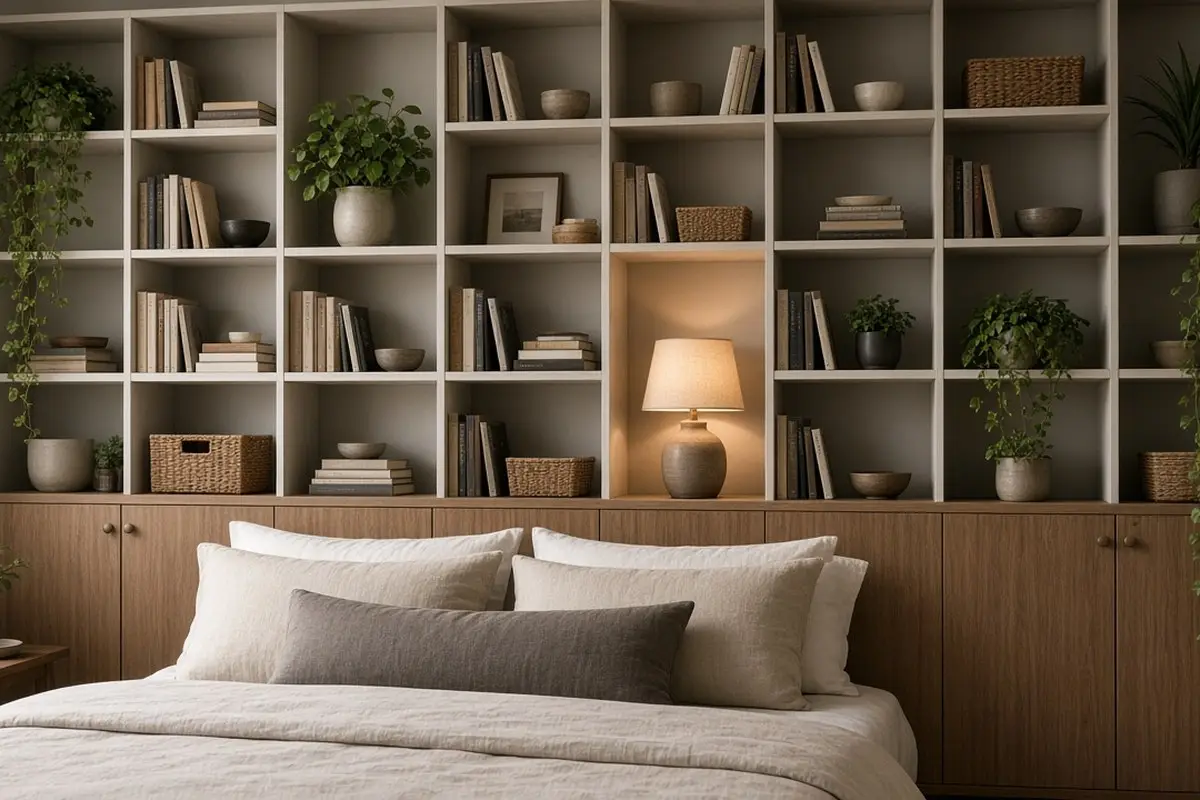
For maximum storage, line the whole wall with tall units side by side. Push them tight together, level them carefully, and anchor every one. The result looks like a built-in library and holds clothes, books, shoes, and bedding.
Add doors or drawers to the lower cubes to hide clutter, and keep the upper cubes for display. A unified look comes from using the same insert or basket in every other cube.
A full wall of cubes is heavy and needs a level floor. Use shims under the base where needed, and check each unit with a level before anchoring. Join neighboring units with small connecting screws so they act as one solid piece.
Leave one or two cubes at eye level for a lamp or a plant. Light in the middle of the wall keeps a large storage unit from feeling like a dark block at night.
Get the look
5. Under-window bench
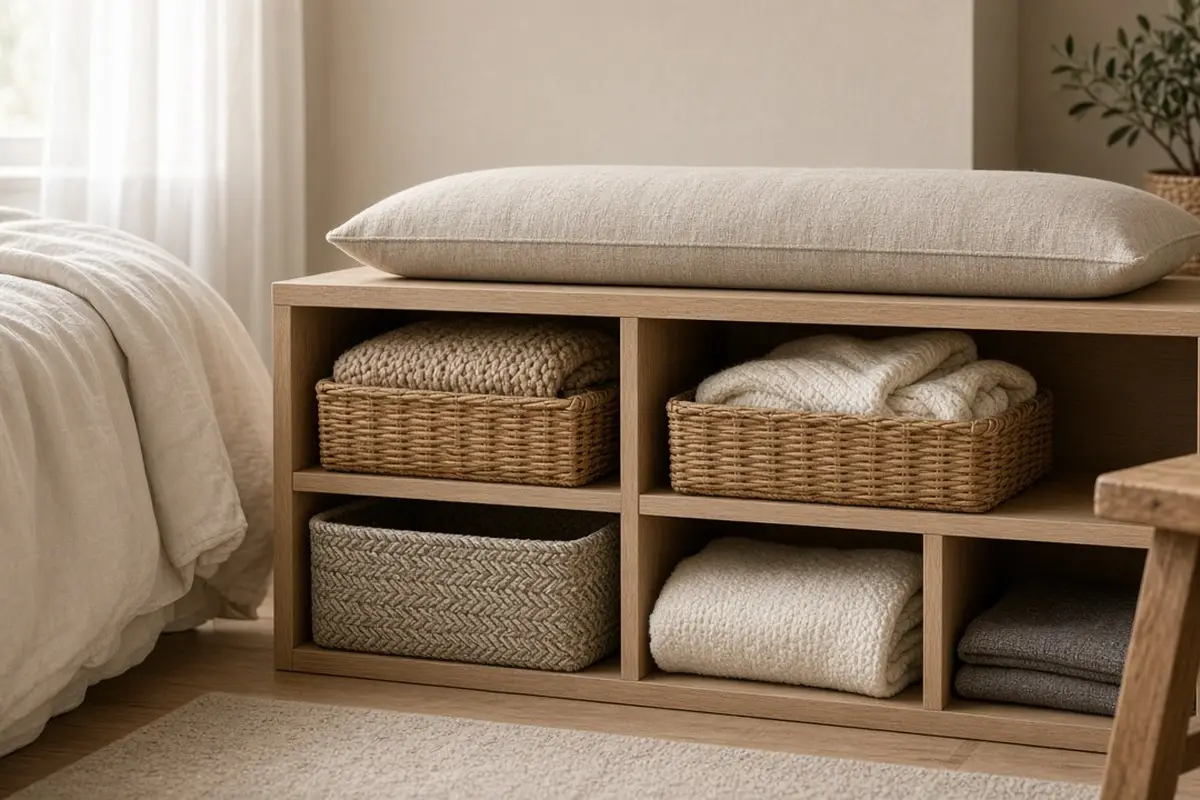
A low, single-row unit laid on its side under a bedroom window becomes a window seat with storage below. Add a long cushion on top and some pillows against the wall. It is a reading spot, a place to put on shoes, and a storage bench in one.
Check that the unit sits below the window sill and that curtains can still close.
If the window is wider than the unit, center it and place a plant or a small stool at each end. If the window seat will be used often, add a thicker cushion with a removable cover so it can be washed. A bench like this is also a good place for a child’s book basket, since the reading spot and the books live together.
6. Foot of the bed storage
A low unit at the foot of the bed, facing out, gives you a bench-like surface and storage for spare blankets and pillows. It also defines the bed area in a larger room.
Choose one about the width of the bed. Add a cushion on top if you want to sit on it.
In a small room, check the walkway first. You need about 24 inches between the unit and any wall or furniture to move around comfortably. If space is tight, a two-cube-deep bench may be better than a long one.
7. Cube storage bedroom wardrobe
In a room without a closet, a tall Kallax with hanging rails added inside a few cubes, or paired with a freestanding rail, can act as a wardrobe. Folded clothes go in drawers and baskets, and a curtain can hide the whole thing.
It is not as neat as a real wardrobe, but it is flexible and cheap.
Hang a ceiling track curtain in front of the whole storage area to hide it at night or when guests visit. Choose a curtain the same color as the wall, and the storage disappears when it is closed.
Get the look
8. Kids’ room storage wall
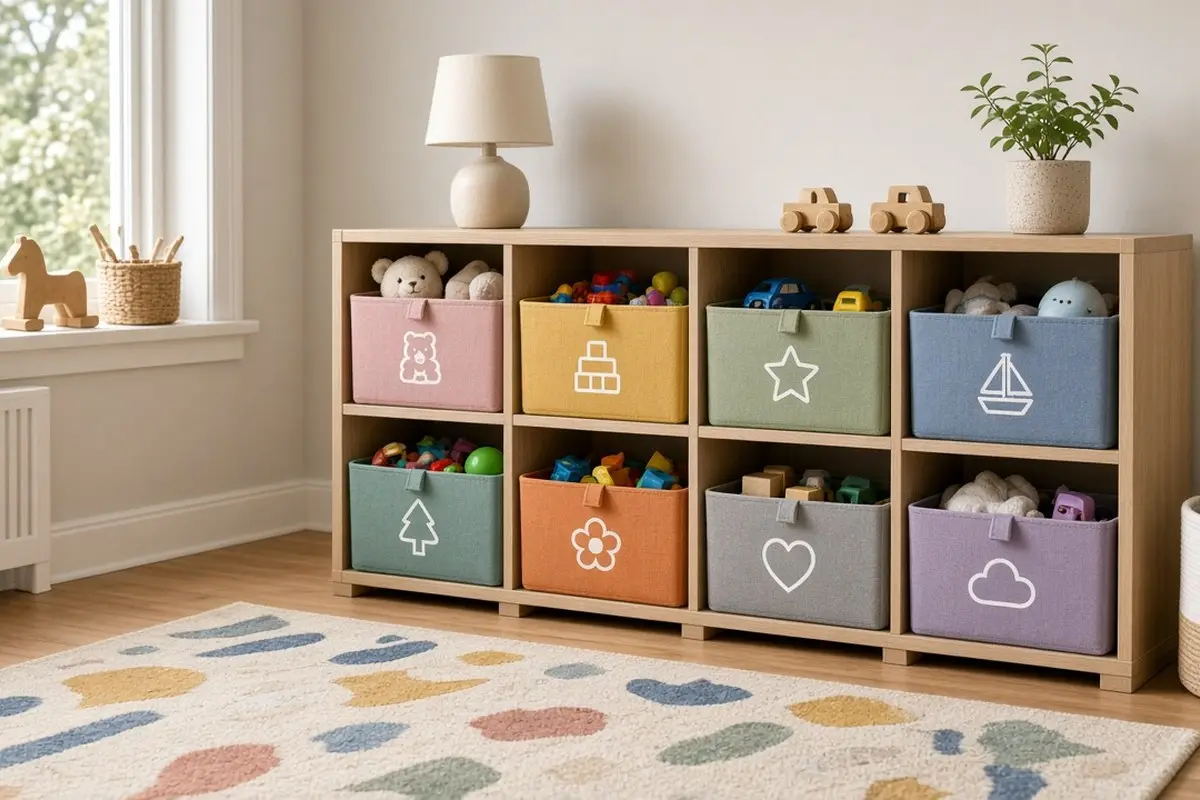
In a child’s bedroom, cube storage is ideal for toys. Low units keep things in reach. Baskets make tidying easy: everything goes in a basket, and the basket goes in a cube. Labels with pictures help small children know where things belong.
Keep the top surface for a lamp and a few favorite items.
As children grow, the same unit changes role. Toy baskets become book baskets, then hobby storage, then school supplies. That flexibility is one of the best reasons to choose cube storage for a kid’s room over furniture designed for one age.
9. Make it look less flat-pack
A few easy upgrades make cube storage look more expensive. Add legs to lift it off the floor. Add a solid wood or stone top. Use matching baskets in natural fibers. Paint the unit the same color as the wall for a built-in look.
If you paint, sand lightly first and use a bonding primer, since the laminated surface resists ordinary paint. Two thin coats of a durable furniture paint hold up better than one thick coat. Let it cure for a few days before loading the shelves.
Get the look
10. Style it with breathing room
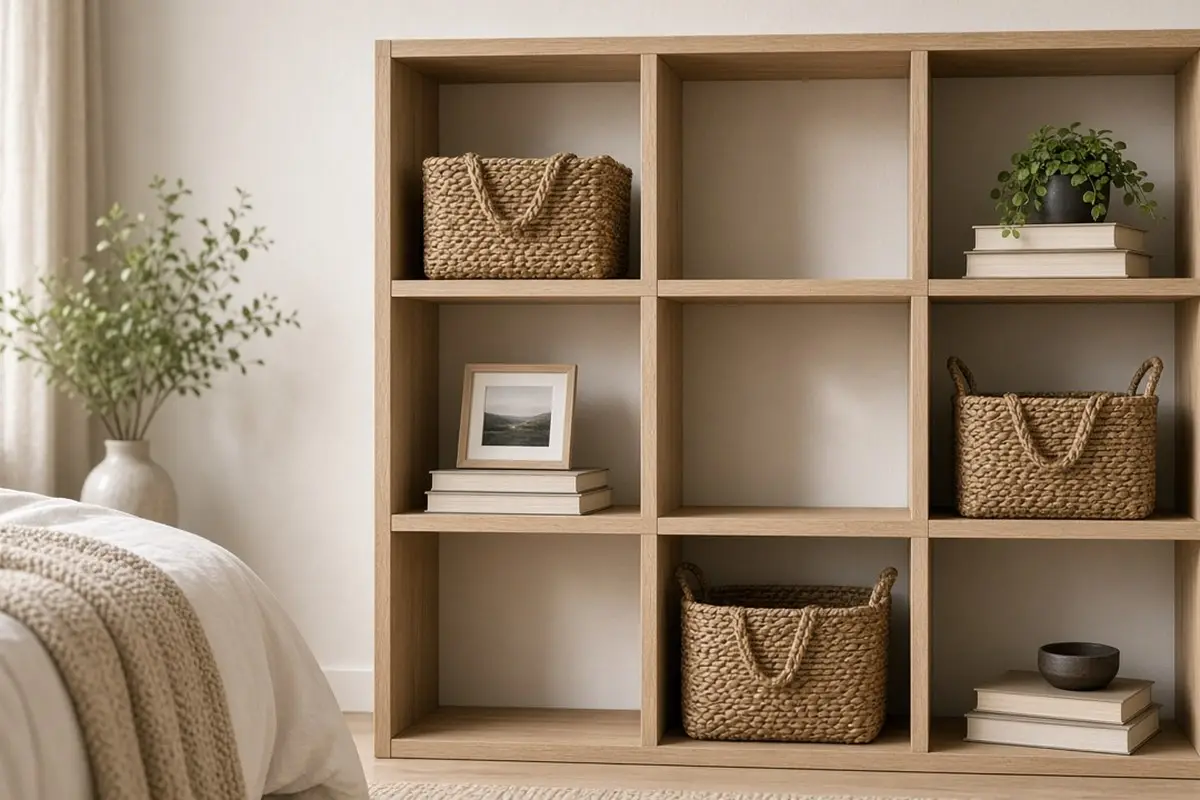
The final layer is styling. A cube shelf crammed full looks like a store. One with breathing room looks like a home. Leave a few cubes nearly empty with one object each: a plant, a framed photo, a small sculpture. Fill others with baskets or books.
A pattern works well: basket, book, object, basket, repeated.
Step back and look at the whole unit from across the room. If one side feels heavier, move a basket. If everything feels busy, remove a few objects. The goal is a calm rhythm, not a full display. In a bedroom especially, fewer objects make for a more restful view from the bed.
Tips Before You Start
- Anchor every unit, standing or lying down.
- Put heavy items in the bottom cubes.
- Use matching baskets for a calm look.
- Raise low units on legs for a lighter feel.
- Leave some cubes nearly empty.
- Measure the bed before choosing a headboard unit.
FAQ
Can a Kallax be used as a headboard?
Yes. Lay a long unit on its side behind the bed, anchor it, and raise it on legs if needed.
Is a Kallax safe as a room divider?
Yes, if anchored to the floor or ceiling and loaded with heavy items at the bottom.
How do I make Kallax look less cheap?
Add legs, a wood top, matching natural baskets, or paint it the wall color. The living room swaps that read as custom post has more upgrades.
What fits in Kallax cubes?
Standard cube baskets, drawers, and doors. Most records, books, and folded clothes fit too. The studio bedroom dividers post shows other ways to split a room.
How many cubes do I need for a bedroom wall?
Measure the wall width and divide by about 15 inches per cube column. A 10-foot wall fits around eight columns. Leave a little space at each end for a lamp or plant.
A Kallax is more than a bookcase. In a bedroom, it can be a headboard, a wall, a window seat, or a divider. Anchor it, style it lightly, and it will work hard without ever looking like a compromise.