
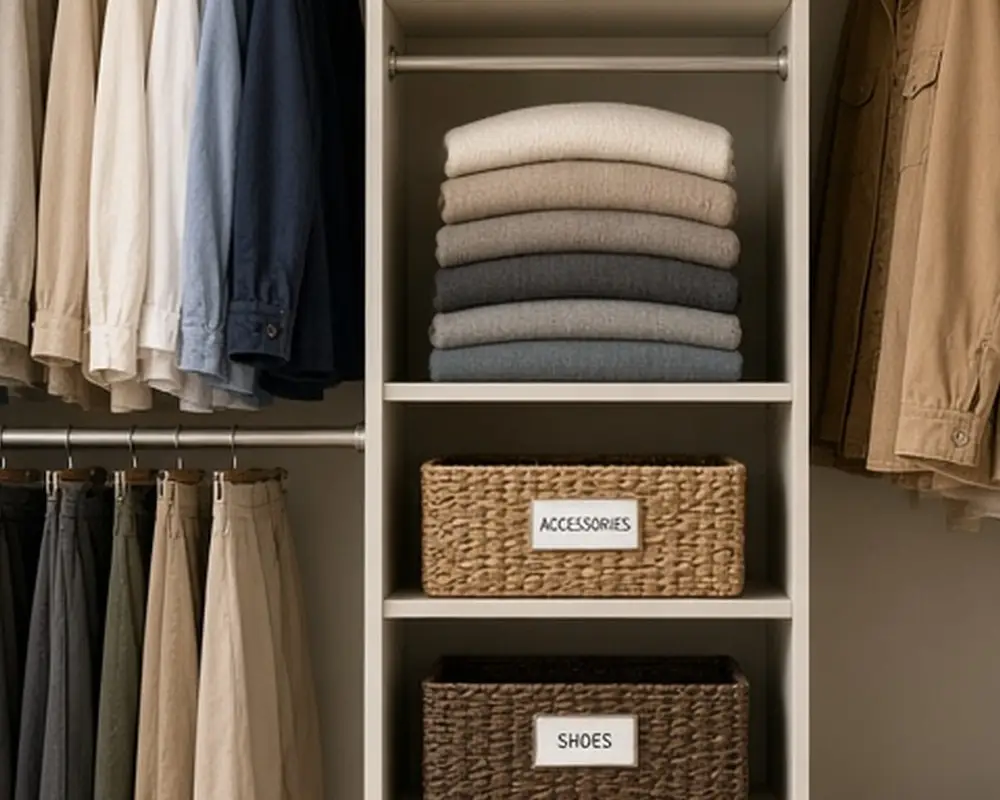
10 Reach-In Closet Layouts for a Single Rod

On this page13 sections
- Take stock first
- Double hanging on one side
- A shelf tower in the middle
- A drawer unit under short hanging
- Bins on the top shelf
- A second shelf above the first## 5. A second shelf above the first
- Over-the-door storage
- Shoe shelves on the floor
- Side-wall hooks
- Slim hangers everywhere
- Lighting
- Common questions## Keeping it working
- Common questions
The standard reach-in closet is a box about two feet deep and five or six feet wide, with one rod and one shelf above it. It is the most common closet in the country and one of the least efficient. Long hanging space wastes the bottom half of the closet for anyone whose wardrobe is mostly shirts and folded pants, and the single shelf is too high and too deep to use well.
You do not need a custom system to fix it. These ten layouts work with the single-rod closet you have, using add-on rods, freestanding towers, and the back of the door. Most can be done in a weekend and undone when you move. None of them require a contractor, and most need nothing more than a screwdriver and a tape measure.
As an Amazon Associate I earn from qualifying purchases.
Take stock first
Empty the closet and sort your clothes into three groups: long hanging (dresses, coats, long trousers hung full length), short hanging (shirts, jackets, folded trousers over a hanger), and folded. Measure how many inches of rod each hanging group takes when the clothes are pushed together. Most people find that short hanging is the largest group by far, which tells you the closet should have more short hanging and less long.
Folded items deserve the same attention. Sweaters stretch out of shape on hangers, so they belong on shelves or in drawers. Jeans and casual trousers fold neatly into stacks. T-shirts can be filed upright in a drawer so you can see each one. Knowing how much of each type you own tells you whether the closet needs more shelves, more drawers, or more rod.
Measure the closet too: width, depth, height to the shelf, height to the ceiling, and the opening width, which is often narrower than the inside. Corners behind the door frame are hard to reach, so plan for the least-used items there.
This is also the moment to edit. Anything you have not worn in a year, anything that does not fit, and anything waiting for repairs that never happen can leave. A smaller wardrobe in a well-arranged closet is far easier to live with than a packed closet where nothing can be seen. Keep a donation bag in the bottom of the closet so editing becomes a habit rather than a once-a-year project.
Sketch the new layout on paper with the measurements, marking where long hanging, short hanging, shelves, and drawers will go. Put the things you use daily between waist and eye height, the occasional items above, and shoes and bins below.
1. Double hanging on one side
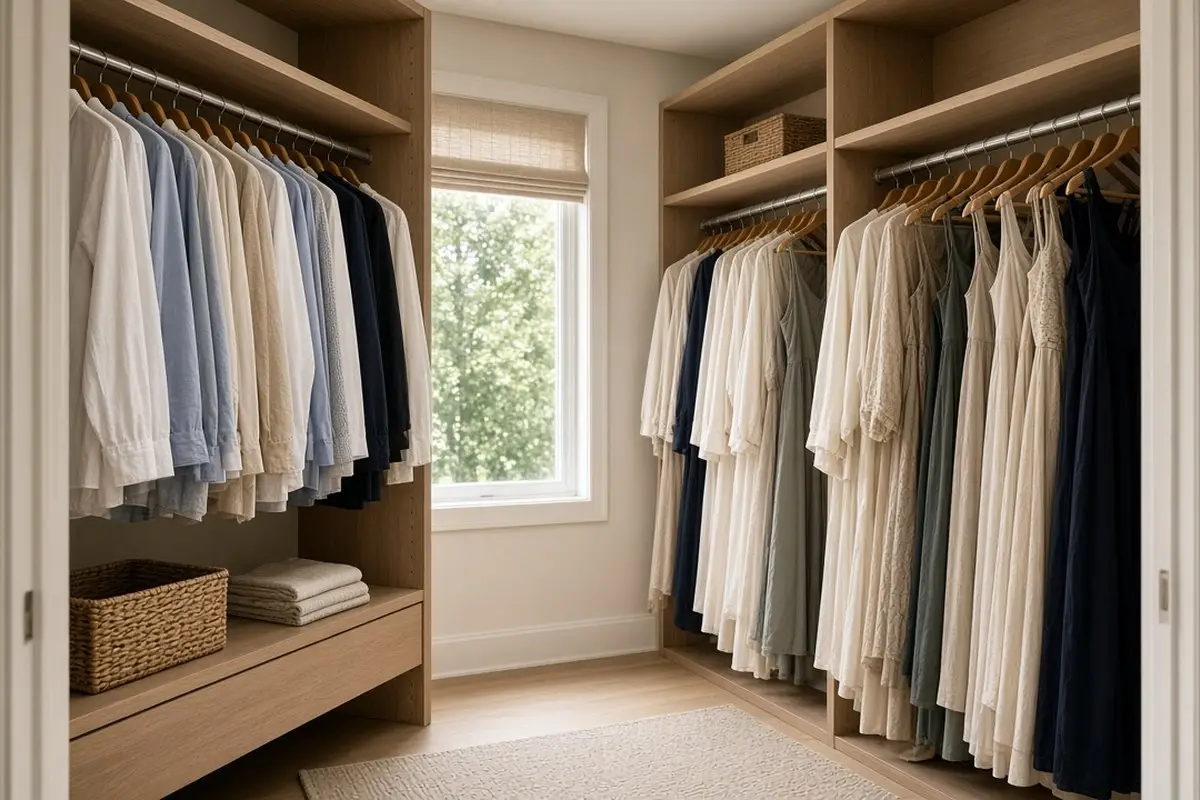
Add a second rod below the first on one half of the closet. An adjustable hanging rod that hooks over the existing rod takes minutes to install. Top rod at around eighty inches, lower rod around forty inches, and you have doubled the short hanging space on that side. Keep the other side for long items.
If you share the closet, double hanging gives each person a clear zone, with shirts above and trousers below. For kids, mount the lower rod at their height so they can choose and hang up their own clothes. A permanent second rod screwed into the side walls is sturdier than a hanging one if your clothes are heavy, but the hanging version is ideal for renters.
Get the look
2. A shelf tower in the middle
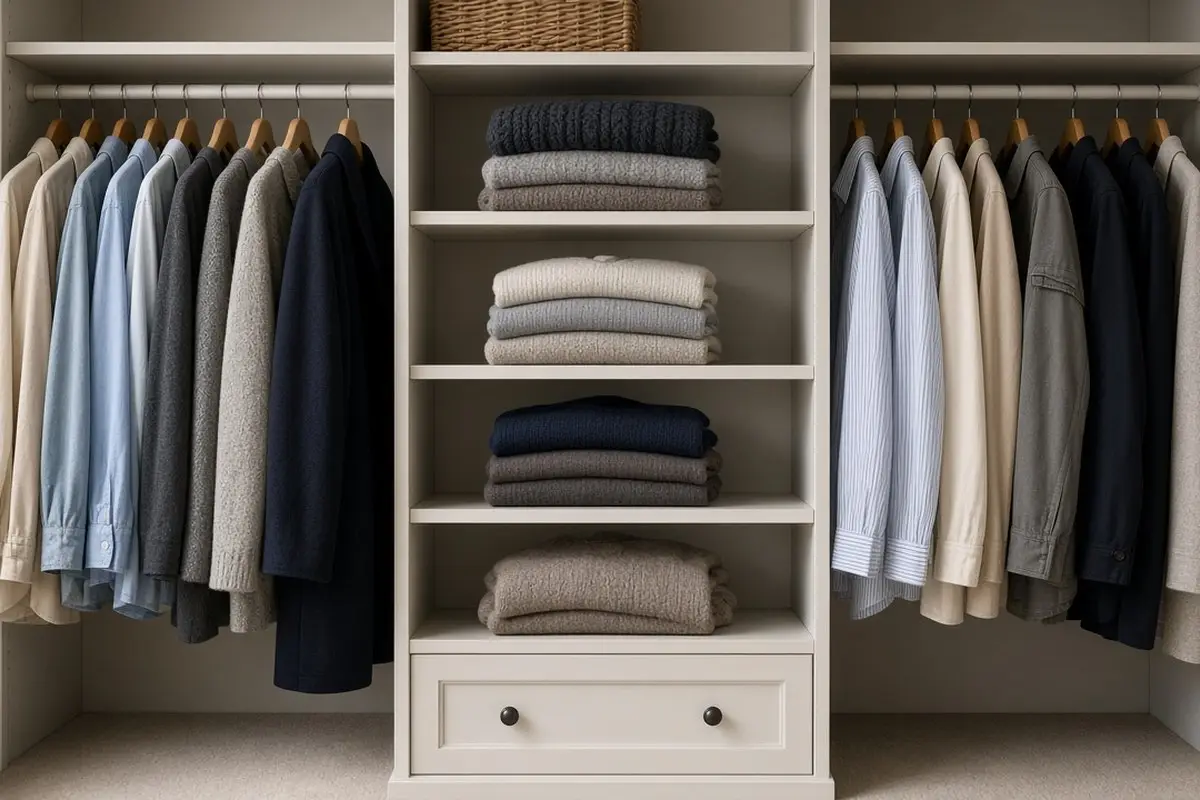
A freestanding shelf tower, twelve to fourteen inches wide, placed in the center of the closet splits it into two hanging zones and adds a stack of shelves for folded sweaters, jeans, and shoes. Cut the existing rod into two pieces either side, or use tension rods.
A tower also gives the closet structure. Folded items stay neat in stacks instead of sliding off a high shelf, and the visual line down the middle makes the closet look organized even before you have finished sorting. If your closet is wide, two narrow towers with hanging between them can work even better.
Get the look
3. A drawer unit under short hanging
Under short hanging, a low drawer unit holds underwear, socks, and workout clothes, which frees up dresser space in the bedroom or replaces a dresser altogether. Choose one with a flat top so you can set a bag or a tray on it.
Measure the space under the short hanging carefully, leaving a couple of inches between the top of the drawers and the bottom of the clothes. Clear drawers let you see contents at a glance; solid fronts look calmer when the closet door is open. Fabric drawers are lightest but sag over time; plastic or wood units hold their shape.
4. Bins on the top shelf
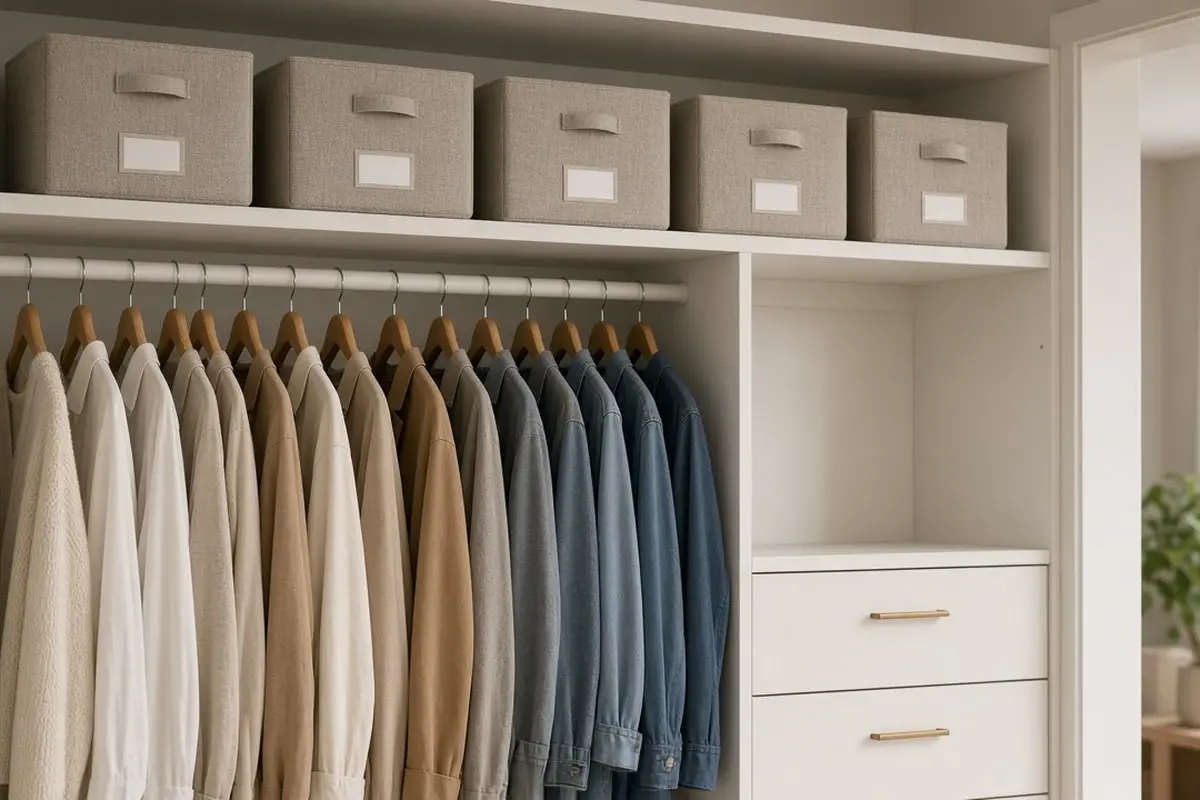
The high shelf above the rod is best for things you use a few times a year. Matching bins or baskets with labels make it easy to grab the right one. Choose bins that are no deeper than the shelf and that have handles at the front.
Label by category rather than by person, such as swimwear, winter accessories, or spare bedding. Keep a small step stool nearby so reaching the shelf is safe. If the shelf is very deep, put the rarely used bins at the back and the more frequent ones at the front.
Get the look
5. A second shelf above the first## 5. A second shelf above the first
This is a quick and inexpensive change that often gets overlooked.
Many closets have a foot or more of dead space above the existing shelf. Add a second shelf higher up for very occasional items like luggage or holiday clothing. Use brackets into studs, since luggage and boxes add up in weight.
6. Over-the-door storage
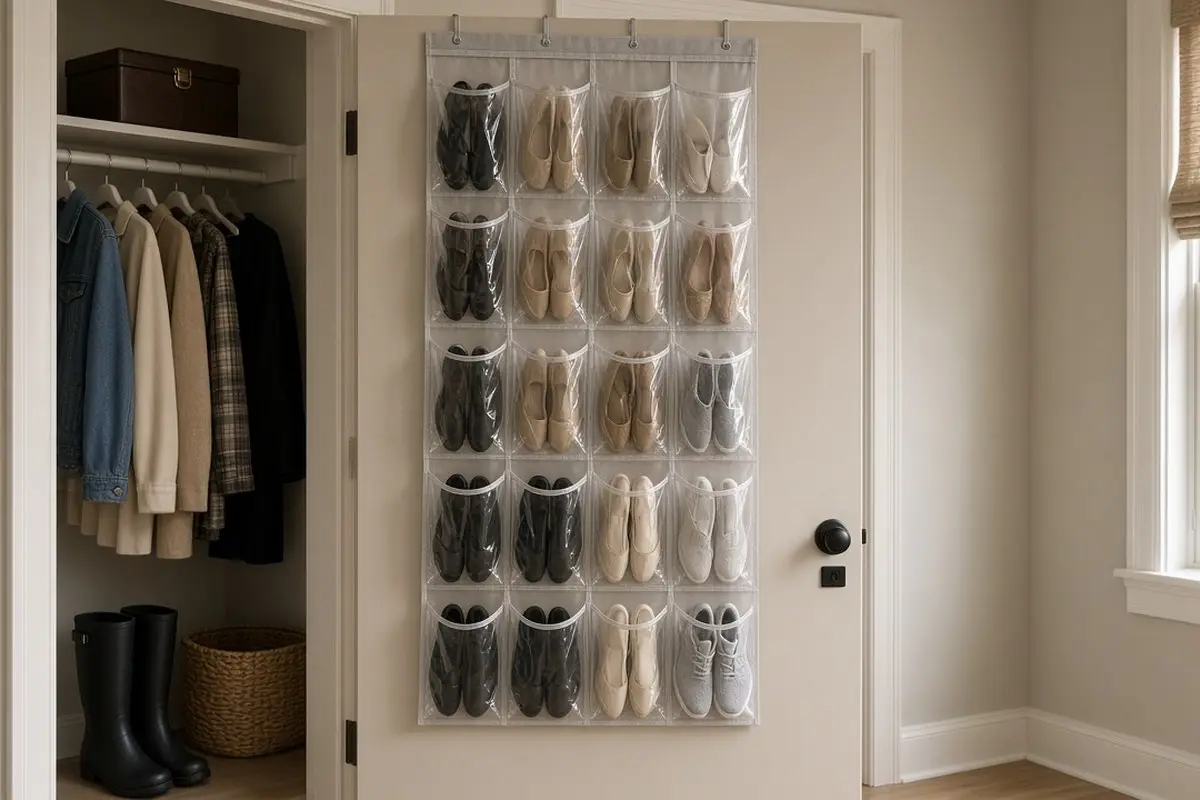
The back of the closet door can hold shoes, scarves, belts, or bags. Over-the-door organizers need no drilling. On bifold or sliding doors, mount slim hooks on the side walls instead.
Door organizers come in many forms: clear shoe pockets, wire racks with shelves, and slim hanging panels with hooks for belts and scarves. Check that the door can still close with the organizer loaded, since bulky shoes can push against hanging clothes. Felt pads on the back stop the rack from rattling every time the door moves. For accessories, clear pockets make it easy to see everything at once, which means you actually use the scarves and belts you own.
Get the look
7. Shoe shelves on the floor
The floor of the closet usually becomes a shoe pile. A two- or three-tier shoe rack keeps pairs visible and off the ground. Angled shelves fit more shoes in the depth. Stand pairs heel to toe, one facing forward and one back, to squeeze in a few more on each tier.
If the closet floor is narrow, a stackable shoe shelf lets you add tiers as needed. Keep boots and bulky shoes on the bottom tier and everyday pairs at the front of the top tier, where they are easiest to grab.
8. Side-wall hooks
The short side walls inside the closet are often ignored. A few hooks there hold belts, a robe, or tomorrow’s outfit. A slim wall rack can hold necklaces.
Use adhesive hooks if you rent, but check their weight rating. A single hook for laying out the next day’s outfit is one of the most useful additions you can make: it speeds up mornings and stops clothes from piling on a chair in the bedroom.
9. Slim hangers everywhere
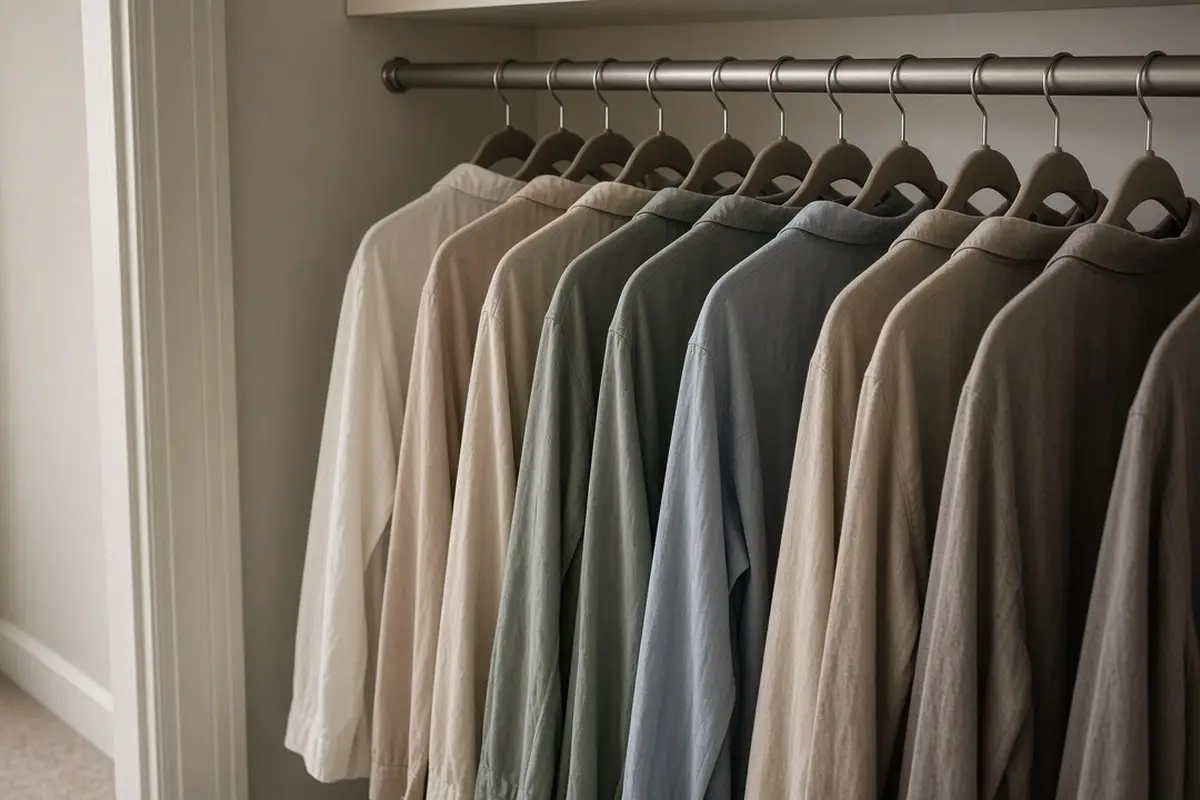
Swapping bulky plastic hangers for matching slim velvet hangers frees a surprising amount of rod space and keeps clothes from sliding off.
Matching hangers also make the closet look calmer instantly, because the line of shoulders sits at one height. Keep a few sturdy wooden hangers for coats and suits, which need more support.
Get the look
10. Lighting
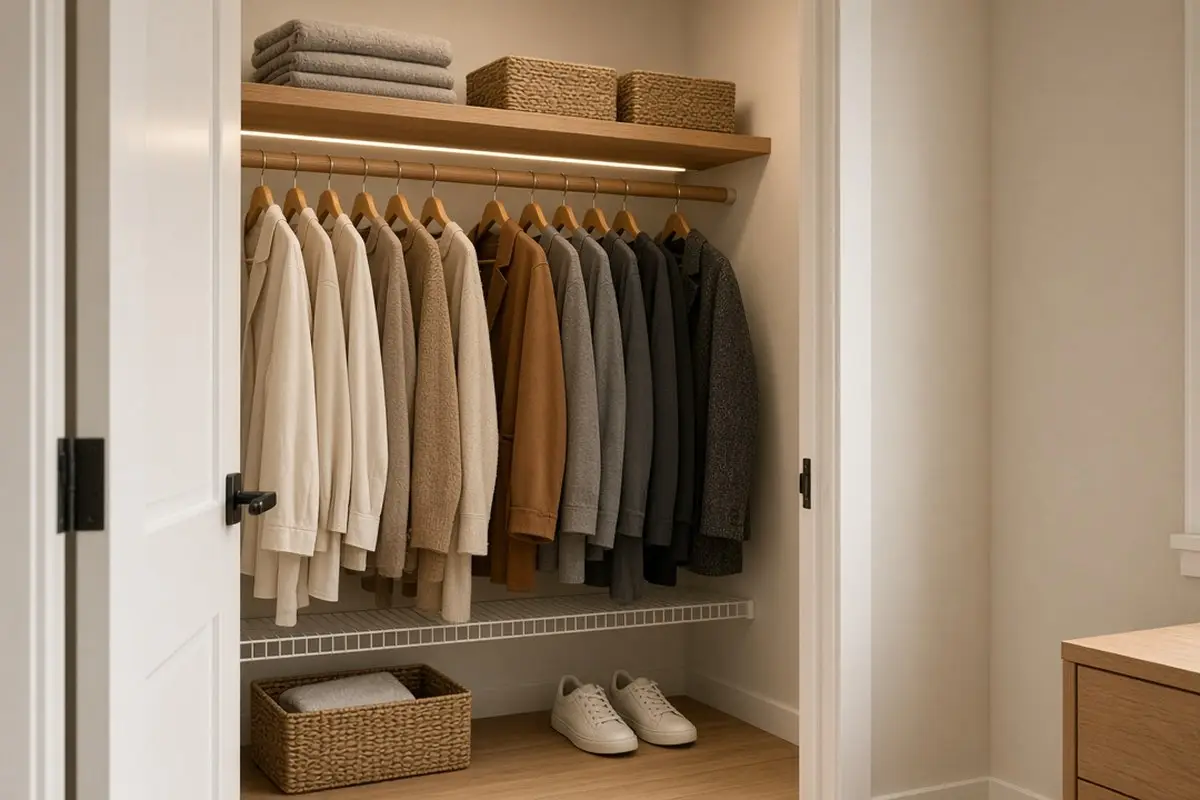
Most reach-in closets have no light at all. A battery-powered motion-sensor strip under the shelf lets you see everything without a flashlight.
Rechargeable strips with a USB port avoid constantly buying batteries. Mount the strip toward the front edge of the shelf so the light falls onto the clothes rather than the back wall. A warm or neutral white shows colors accurately, so you are less likely to leave the house in navy socks with black trousers.
Get the look
Common questions## Keeping it working
A reorganized closet stays tidy when everything has a clear place and it is easy to put things back. Leave a little empty rod space so hangers slide freely; a jammed rod makes putting clothes away a chore. Turn hangers backward at the start of a season and forward when you wear an item, and at the end of the season you will see exactly what went unworn. Do a quick tidy each weekend, refolding stacks and returning stray shoes to the rack, and a more thorough edit at each change of season.
Remember that these changes are reversible. Hanging rods lift off, towers move with you, and door organizers come down in a minute. That makes the single-rod closet a good place to experiment until you find the layout that suits your wardrobe.
Common questions
How can I double the space in a small closet? Add a second rod for short hanging, a shelf tower, and use the door and top shelf.
What is the best height for a closet rod? Around sixty-six inches for single hanging, eighty and forty inches for double hanging.
What goes on the top shelf of a closet? Things you use a few times a year, such as out-of-season clothing, spare bedding, and travel bags, stored in labeled bins.
Should a reach-in closet have shelves or drawers? Both if possible: shelves for sweaters and jeans, drawers for small items like socks, underwear, and workout clothes, which get lost on open shelves.
For more storage ideas, see walk-in closets with a seat and one-closet bedroom storage.