
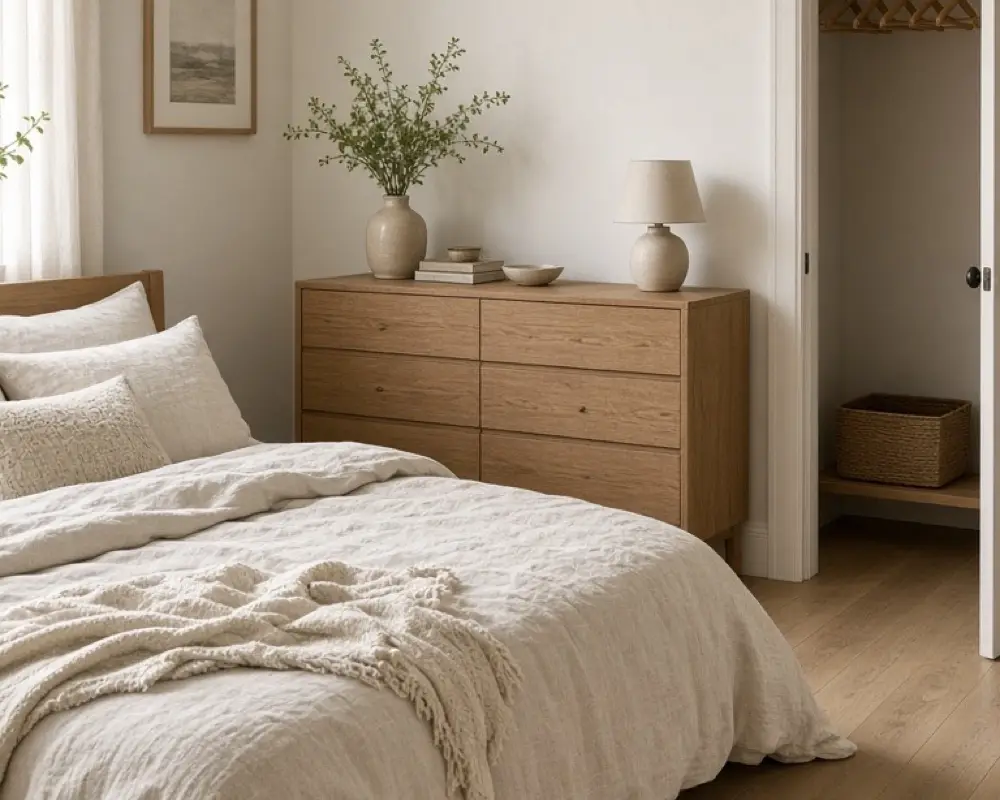
14 Storage Moves for a Bedroom With One Closet

On this page16 sections
- Empty the closet floor before you buy a bin
- Add a second rod only if the ceiling allows it
- Use the back of the door
- Measure under the bed before you buy a box
- Let a low dresser be the nightstand
- Put a shelf above the door
- Keep one bin for the other season
- Hang tomorrow’s outfit on one hook
- Fold knits, and hang what creases
- Keep shoes to one row you can see
- Split the shelf into daily and rare
- Give the hamper a spot that is not the floor pile
- Use the wall beside the bed for what is not clothes
- Take ten garments out before you organize
- Tips Before You Start
- FAQ
Small bedroom storage ideas get expensive fast if the closet is still a pile on the floor. We start with the one closet you have, measure the rod and the gap under the bed, and only then decide what is allowed to stay in the room.
A second closet is not coming. The useful storage is the door, the wall beside the bed, and the space you can still vacuum. If a bin blocks the bed skirt or the closet track, it is not storage. It is a new obstacle.
The small bedroom that feels bigger is about air and scale. This list is about where the clothes go. The same “clear a path first” habit shows up in our living room edits.
As an Amazon Associate I earn from qualifying purchases.
1. Empty the closet floor before you buy a bin
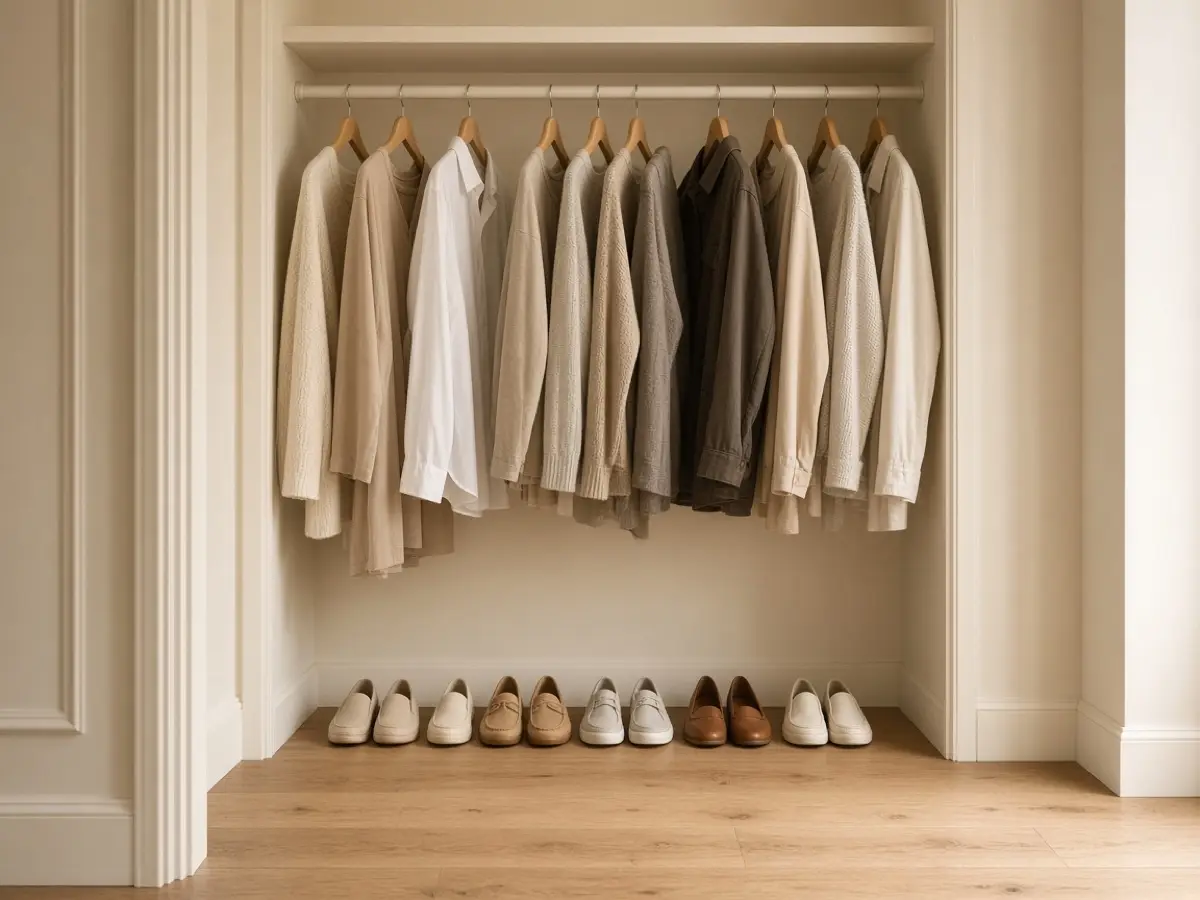
Take everything off the closet floor and sort it on the bed in three piles: hangs, folds, and leaves the room. A reach-in closet is usually about 24 inches deep. If shoes, a hamper, and a suitcase are all on that floor, you have already lost the hanging length above them. We do not add a bin until the floor is down to shoes in one row or a single box that slides.
Leave a 2-inch gap at the door track so the door still closes. Anything that lives on the floor has to come out in one motion. If you have to unpack a stack to find Tuesday’s shirt, the stack failed.
Get the look


2. Add a second rod only if the ceiling allows it
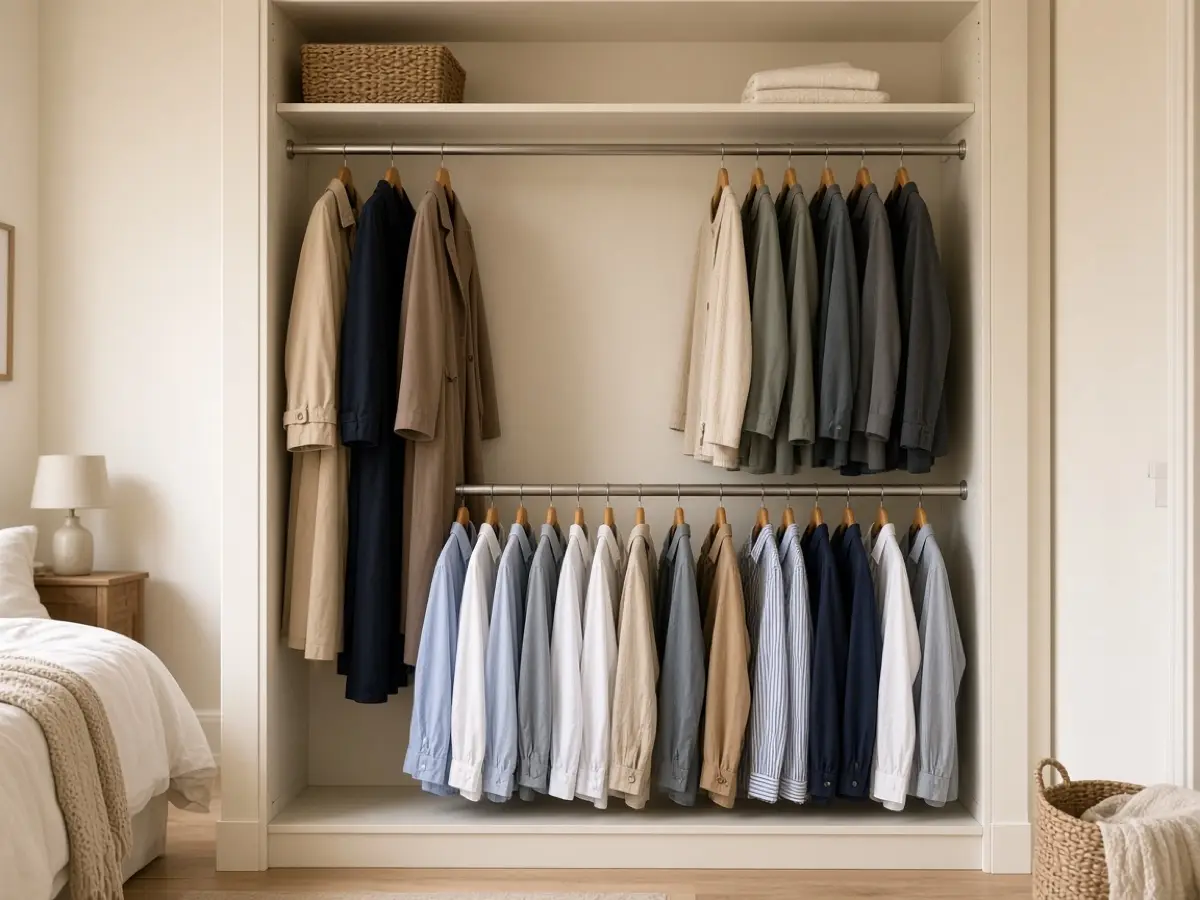
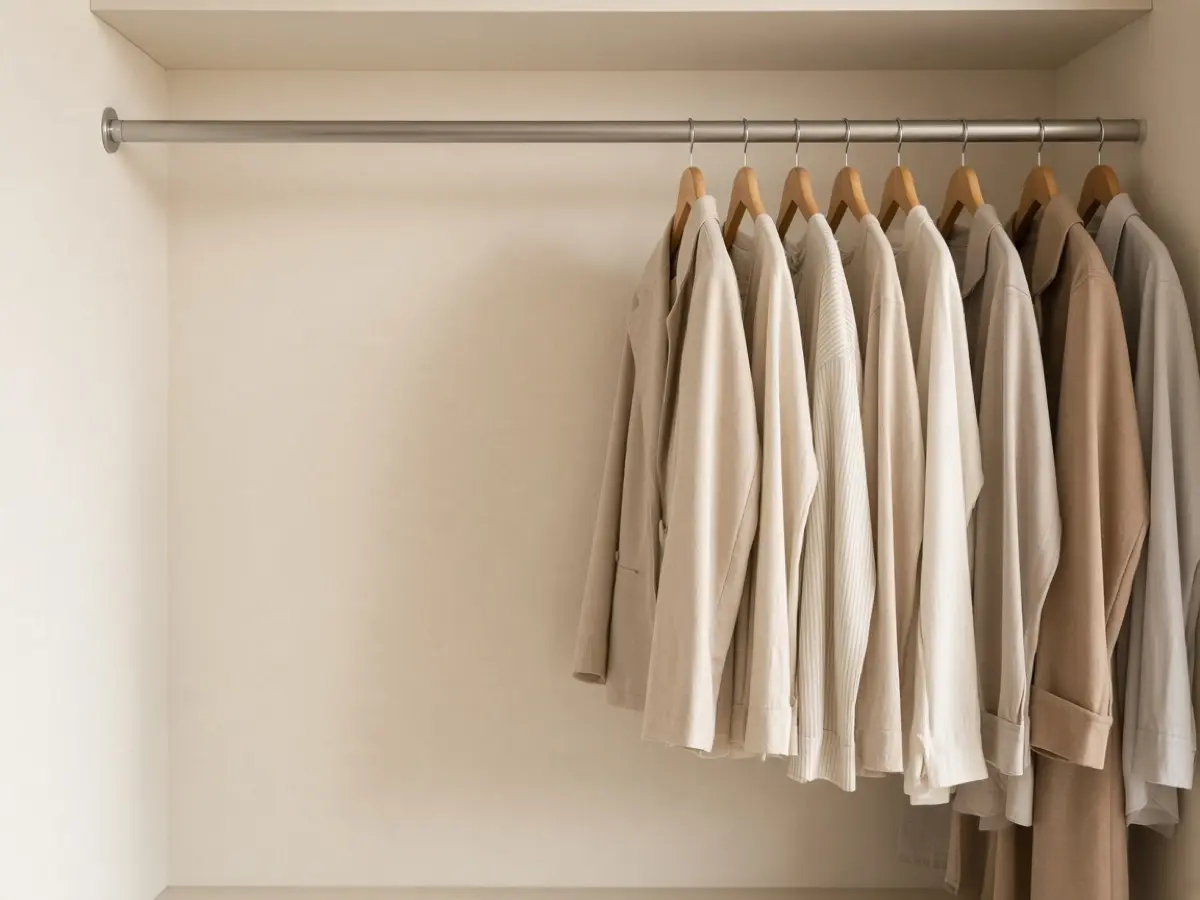
Measure from the current rod to the floor. If you have at least 80 inches, a second rod can sit about 40 inches off the floor for shirts, jackets, and pants folded over a hanger. The upper rod stays near 80 to 84 inches for dresses and coats, or lower if you are shorter than 5 foot 6 and hate a step stool.
Do not add the second rod when the closet is only 60 inches from rod to floor. You will crush the shoulders of everything on the bottom. Use the side wall for a hook instead. A tension rod can be the test. If you still like it after a week, swap in a mounted rod with screws into a stud or a proper anchor.
Get the look


3. Use the back of the door
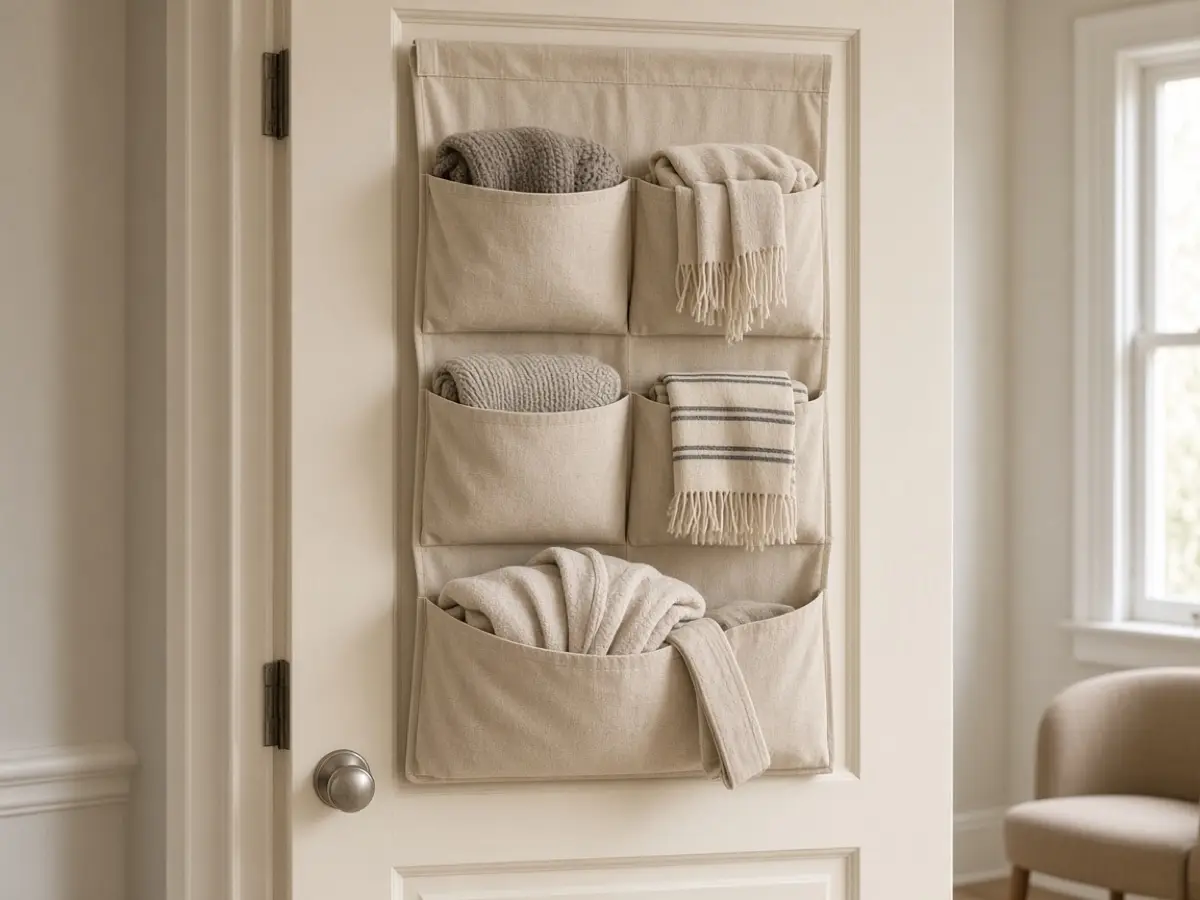
The back of a closet door can hold an over-door rack if the door clears the rod by at least 2 inches when it closes. Measure with the rack loaded, not empty. Robes and a canvas pocket organizer for belts, scarves, and socks belong here. Bulky coats do not. They bounce off the hanging clothes and keep the door from latching.
If the door is hollow and an over-door hook slips, a few screws into the solid top rail are steadier than a giant rack. Keep the visual quiet: one organizer, not three. The bedroom door that faces the bed is a worse place for this. Guests read it as clutter. The closet door hides it.
Get the look


4. Measure under the bed before you buy a box
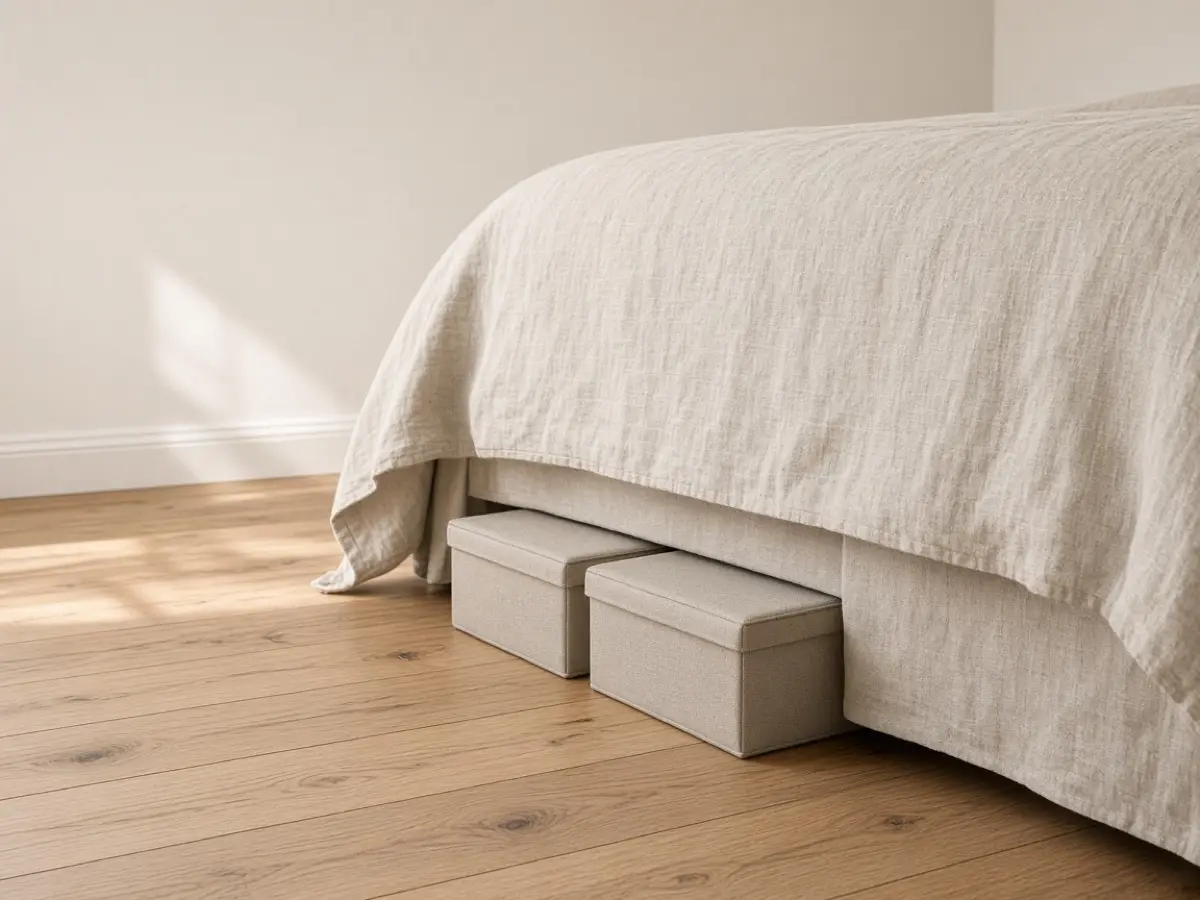
Slide a book under the bed until it hits the frame, then measure that height. Subtract one inch so the box still slides when the carpet compresses. Many beds clear 6 to 9 inches. A 12-inch bin will not magically fit, and lifting the frame on risers to force it can make an 8-foot ceiling feel lower.
Use boxes with lids and a finger cutout, two or three across, not one giant tub you cannot pull while you are kneeling. Off-season bedding and the extra blanket go here. Daily clothes do not. You will not make the bed and then fish for a shirt. Leave the center open if you vacuum from one side only.
Get the look


5. Let a low dresser be the nightstand
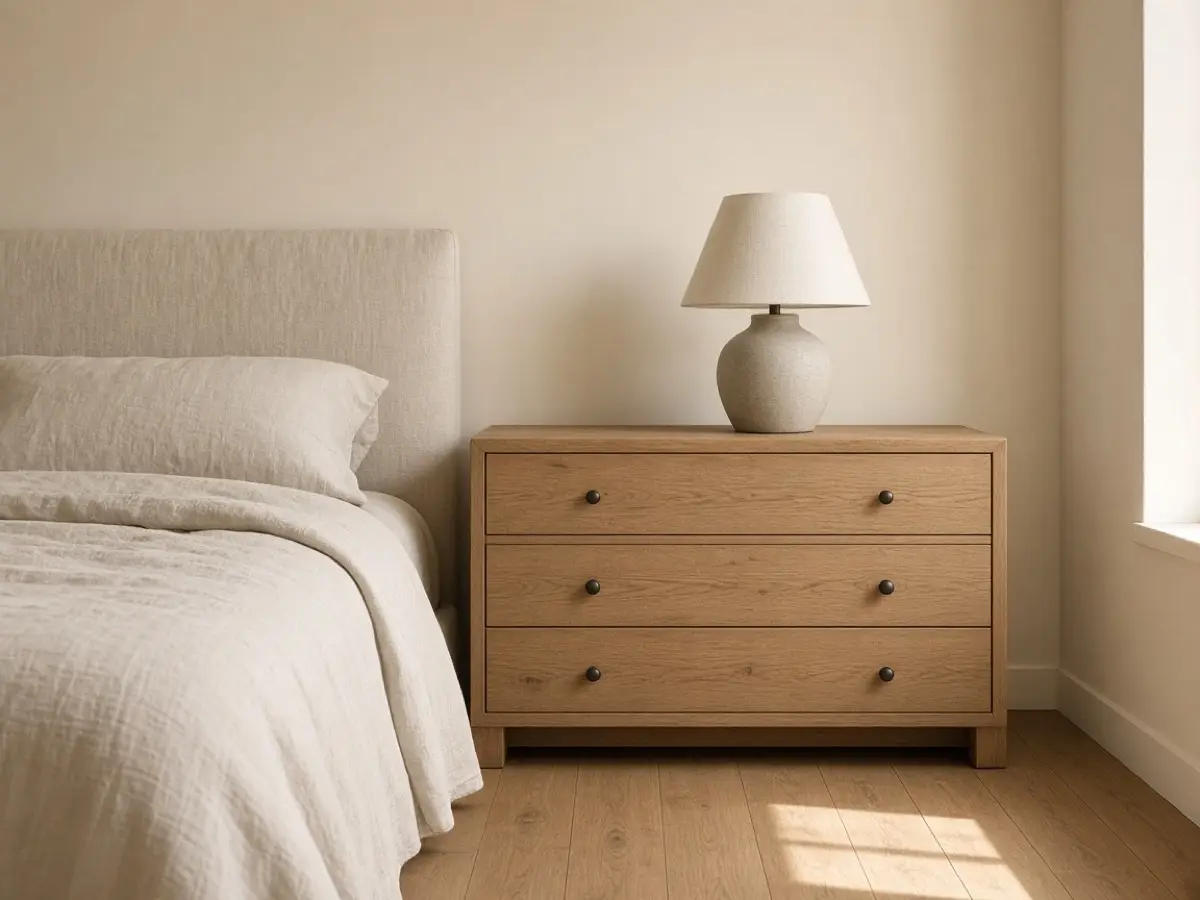
If the room cannot hold a dresser and two tables, drop one table. A dresser around 30 inches tall can sit beside the bed if the mattress top is close to that height, so you are not reaching up for a glass. Leave 2 inches between the dresser and the bed so the drawer opens and the bedding does not catch.
The top stays as strict as a side table: lamp and one small tray. Drawers hold the things that used to live on the floor of the closet, folded, not rolled into mystery balls. If the dresser is deeper than 18 inches, check the walkway. We would rather keep 30 inches beside the bed than gain one more drawer.
Get the look


6. Put a shelf above the door
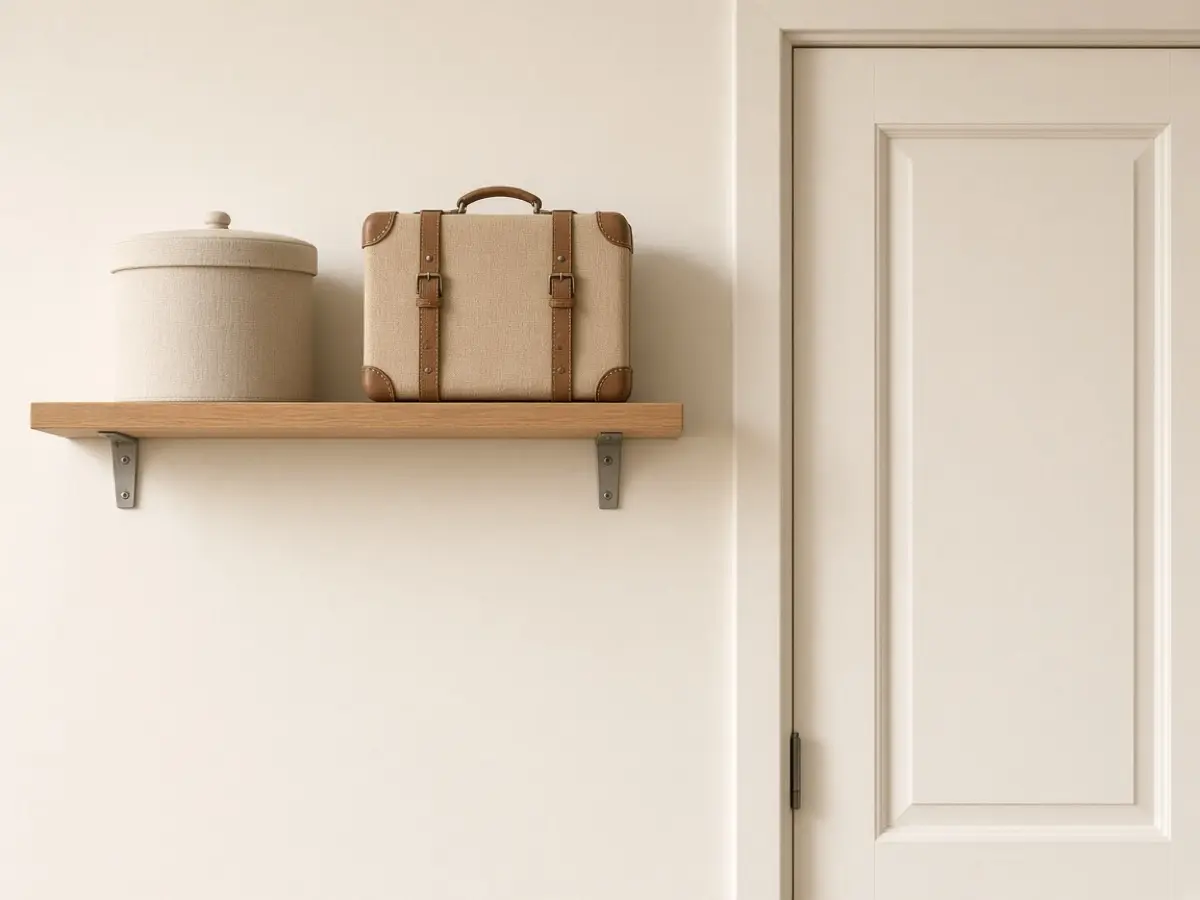
Look at the wall over the closet door. If you have 10 inches or more before the ceiling, a 8- to 10-inch-deep shelf can hold the luggage, the extra pillows, and the bin you open twice a year. It should be screwed into studs. A floating shelf with only drywall anchors will sag once a suitcase goes up.
Do not store anything up there that you need on a weekday morning. Label the front of the bin in pencil so you can change your mind. If the shelf would crowd a pendant or a ceiling fan, skip it. The coffee corner uses the same rule: high storage is for the thing you do not touch daily.
Get the look


7. Keep one bin for the other season
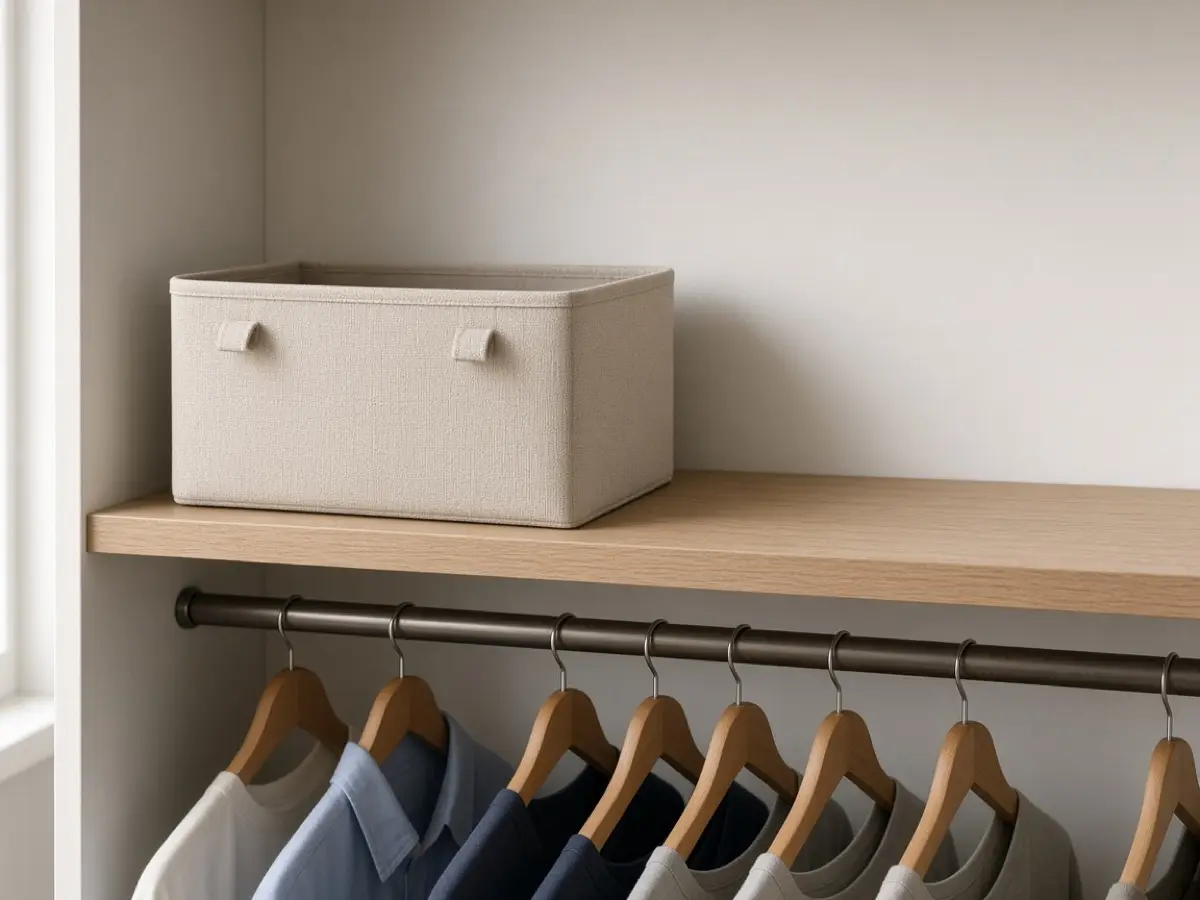
One bin, not a stack. Winter coats or summer dresses, whichever you are not wearing, go in a single box that fits on the closet shelf or under the bed. When the season turns, you swap. You do not add a second bin “just in case.” The case is how closets fill with clothes nobody wears.
If the shelf is 12 inches tall, the bin has to be shorter than that with the lid on. We measure the shelf opening, not the pretty dimensions on a product photo. A clear window on the bin helps, but a label on the short end helps more when the bin is shoved to the back.


8. Hang tomorrow’s outfit on one hook
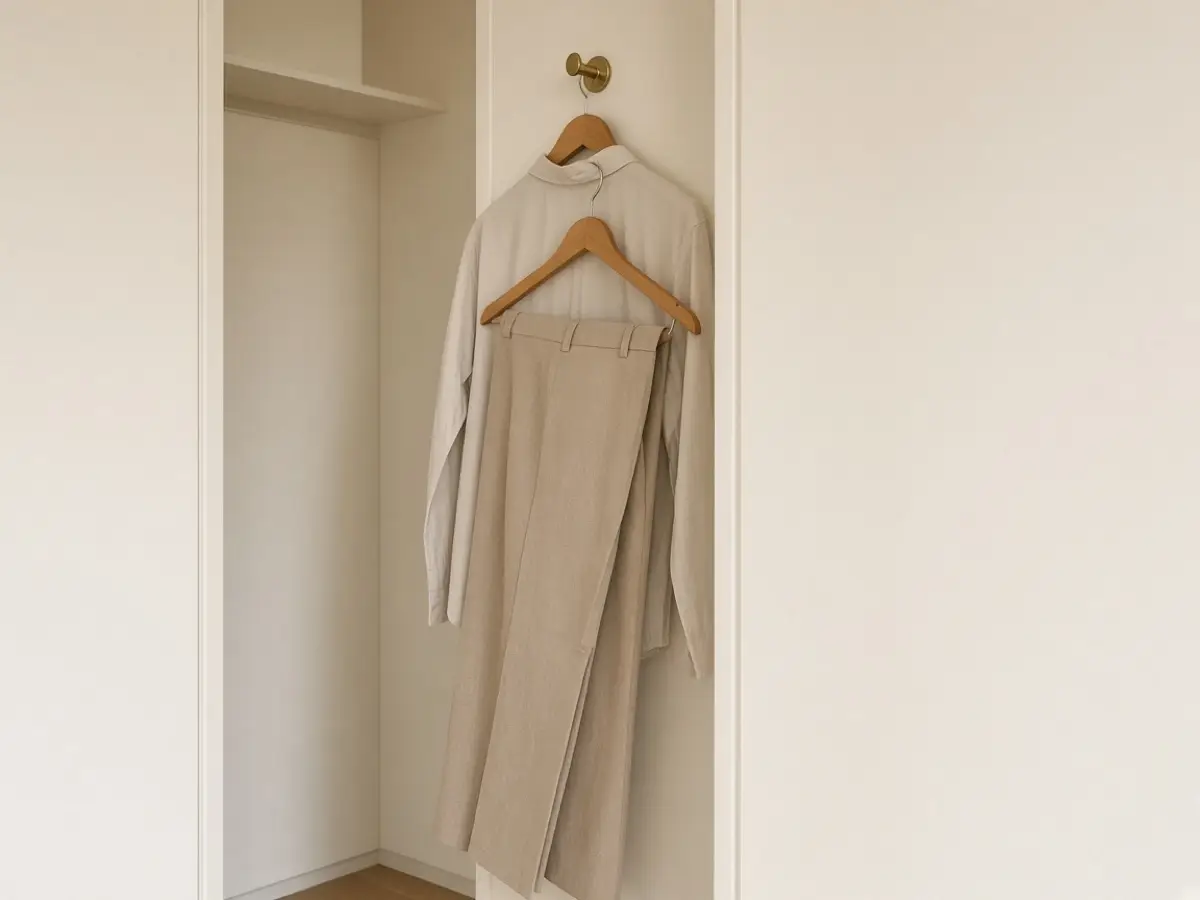
A single hook at eye level inside the closet, about 60 inches from the floor, is for the outfit you will wear next. It stops the “draped on the chair” pile that makes a small bedroom look smaller. The hook is not a second closet. If three things are on it, two go back on hangers.
Place it on the side wall, not where the door will smack it. A robe can live on a second hook lower down, around 50 inches, if the first one is truly for tomorrow. This is a 10-minute fix and it removes the chair as a closet, which matters more than another basket.


9. Fold knits, and hang what creases
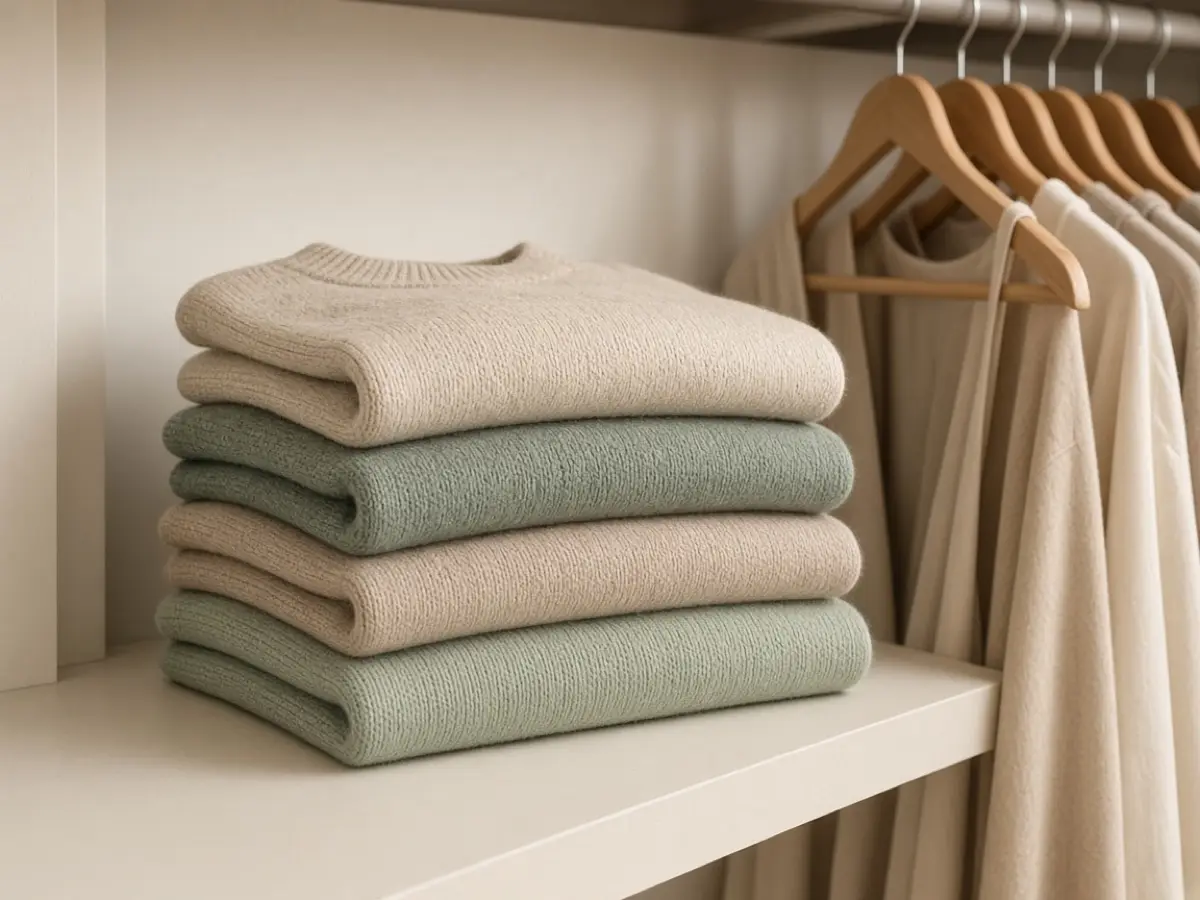
Not every garment deserves a hanger. Sweaters and heavy knits stretch on the shoulders and eat rod space. Fold them in a stack no taller than 8 inches, on a shelf you can see without a stool. Shirts, dresses, and blazers hang. Jeans can go either way. Pick one and keep it.
If you have no shelf, a few hanging shelves that hook on the rod can hold the knits, but only on the side, not across the whole rod. Leave at least half the rod for hangers or you have rebuilt the floor pile in the air. The folds should be the same width so the stack does not topple.
Get the look


10. Keep shoes to one row you can see
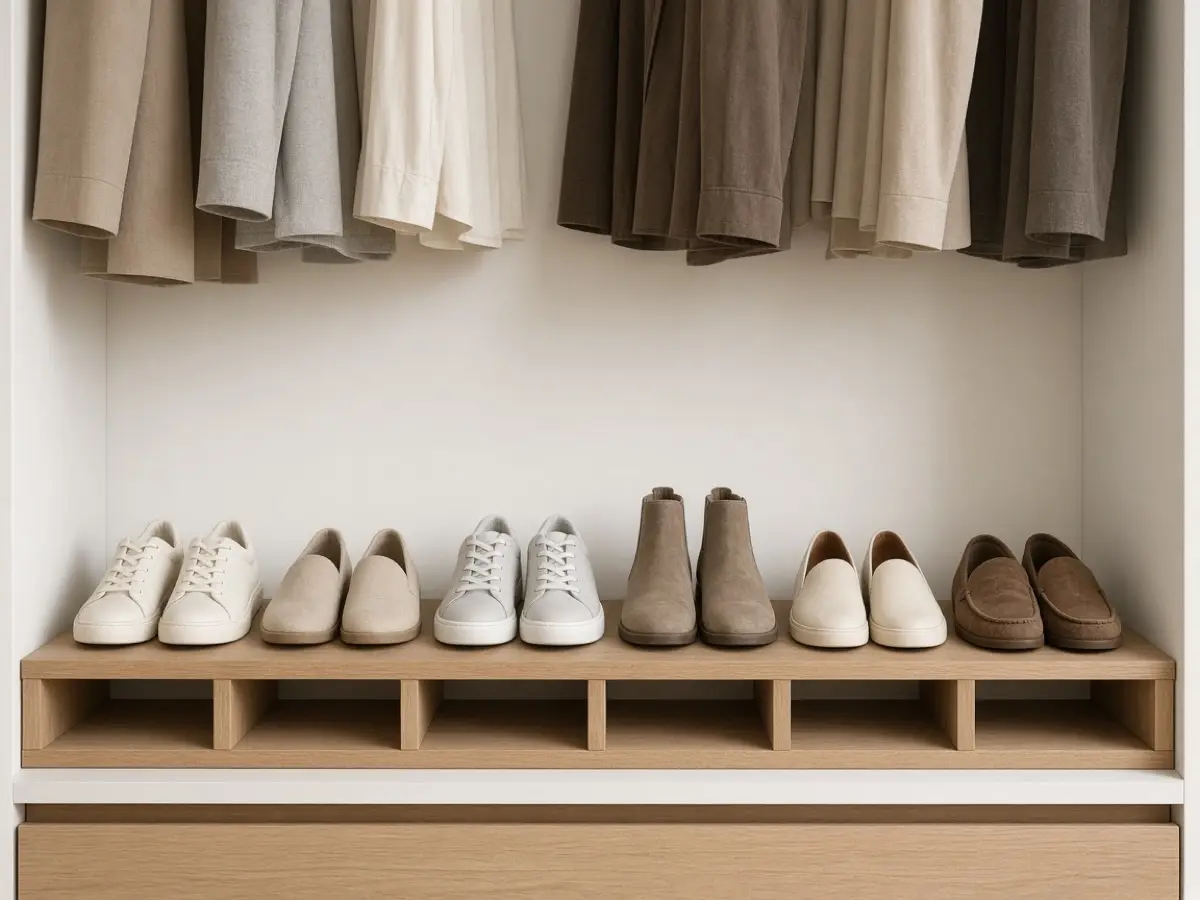
Shoes belong in a single row on the floor or on a rack that fits the 24-inch depth with an inch to spare. Toe-out, heel against the wall, no second row hiding behind the first. If you own more pairs than that row holds, the extras go in the seasonal bin or out of the room. A bedroom with one closet cannot also be a shoe store.
A rack with two short tiers can work if the hanging clothes clear the top tier by 4 inches. Boots lie on their side at the end, not standing where they block the door. Match the rack finish to the hangers you already use so the closet does not look like a hardware aisle.


11. Split the shelf into daily and rare
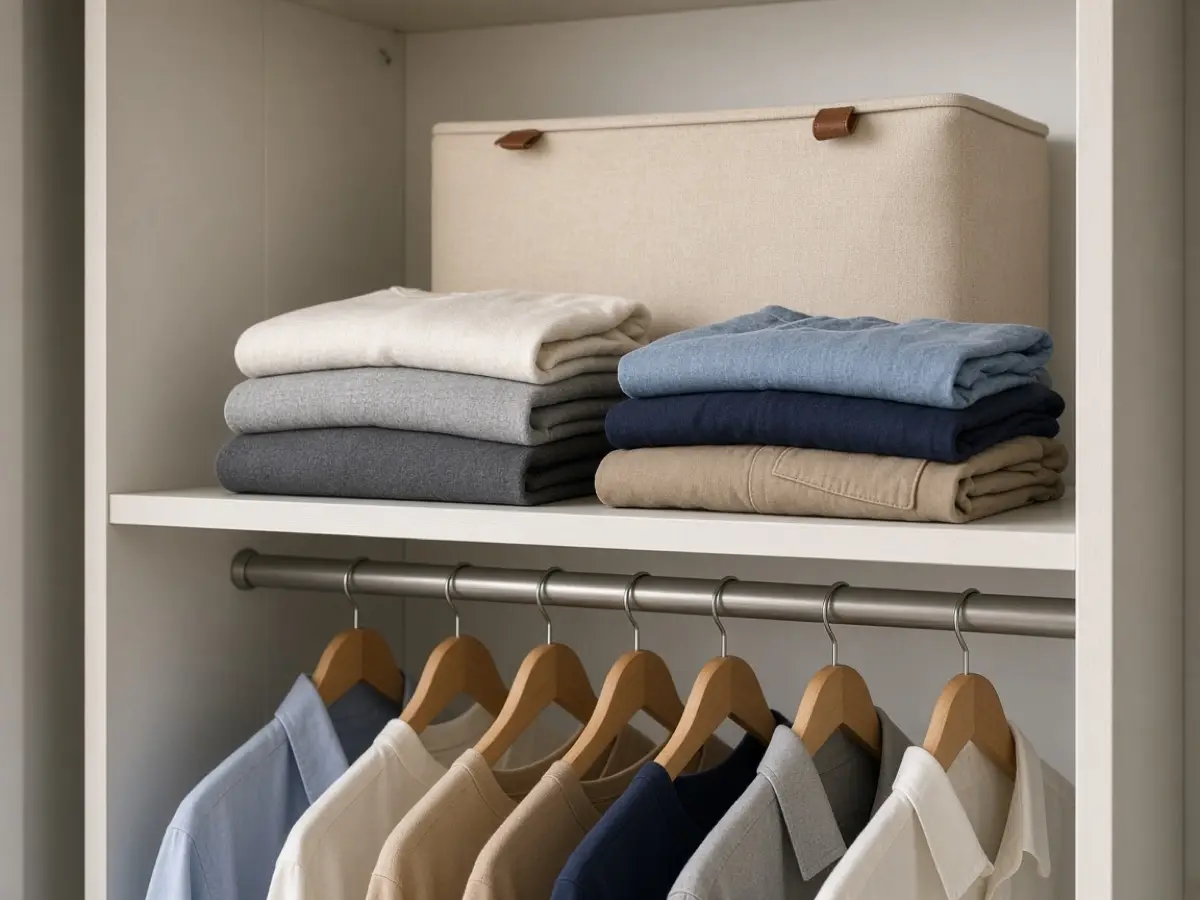
If you have one shelf above the rod, divide it. The front half, the part you can reach without moving hangers, is daily: workout clothes, the sweater you grab at night, a small bin of socks. The back half is rare: the formal dress, the spare bedding, the bin from the other season. A shelf divider, or even a row of books standing on end, keeps the daily pile from sliding backward.
Do not stack daily items more than two high. The back can be one tall bin because you accept the effort. This split is the whole system. Without it, the shelf becomes a graveyard and the chair becomes the closet again.
Get the look


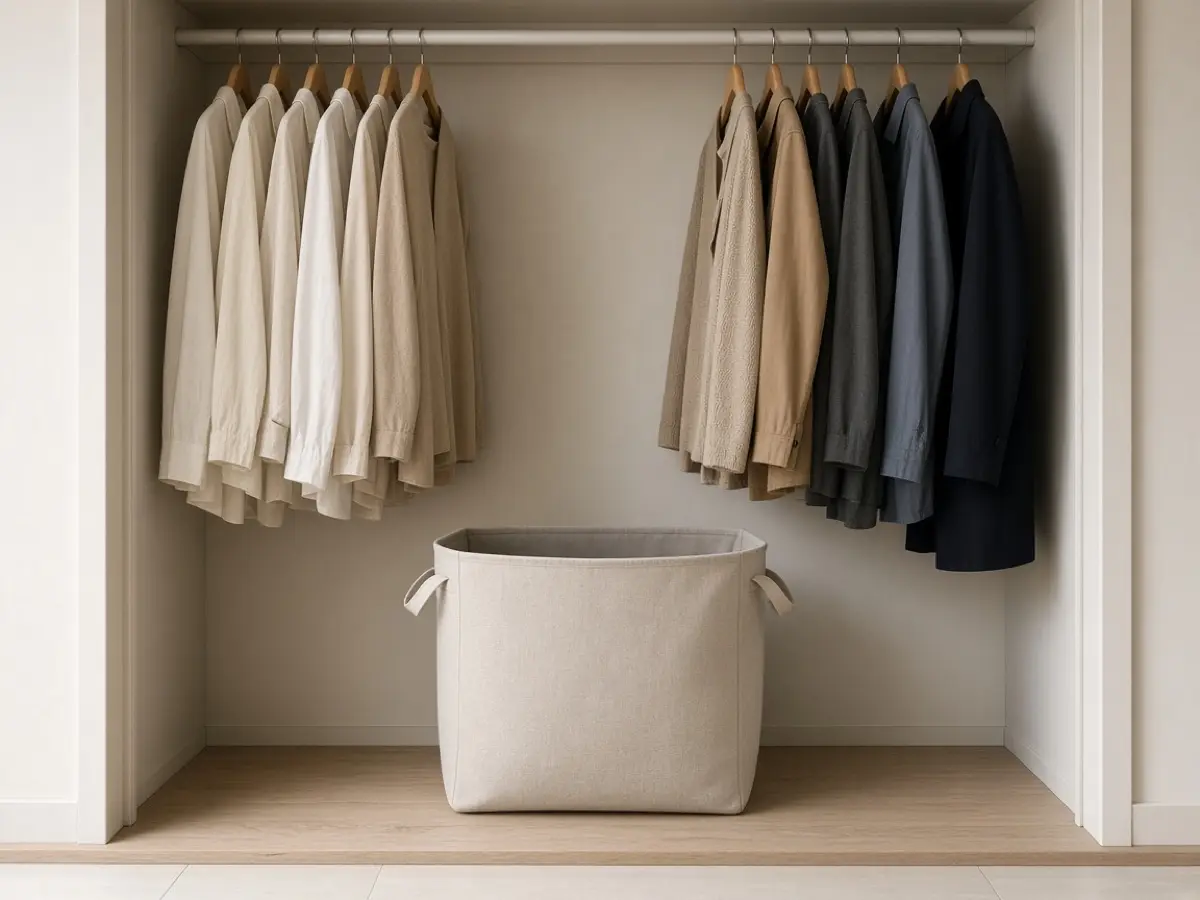
12. Give the hamper a spot that is not the floor pile
The hamper needs a measured home: inside the closet only if 14 inches of floor remain in front of it, or just outside the door if the closet is tighter. A soft hamper with handles beats a lid you will stop opening. Height should stay under the hanging hems, often under 24 inches if the rod is at 66.
Dirty clothes on the chair are a storage failure, not a style choice. If two people share the room, two smaller hampers side by side sort the laundry without a second closet. Empty them on laundry day all the way. A hamper that is always full is just a basket-shaped pile.
Get the look


13. Use the wall beside the bed for what is not clothes
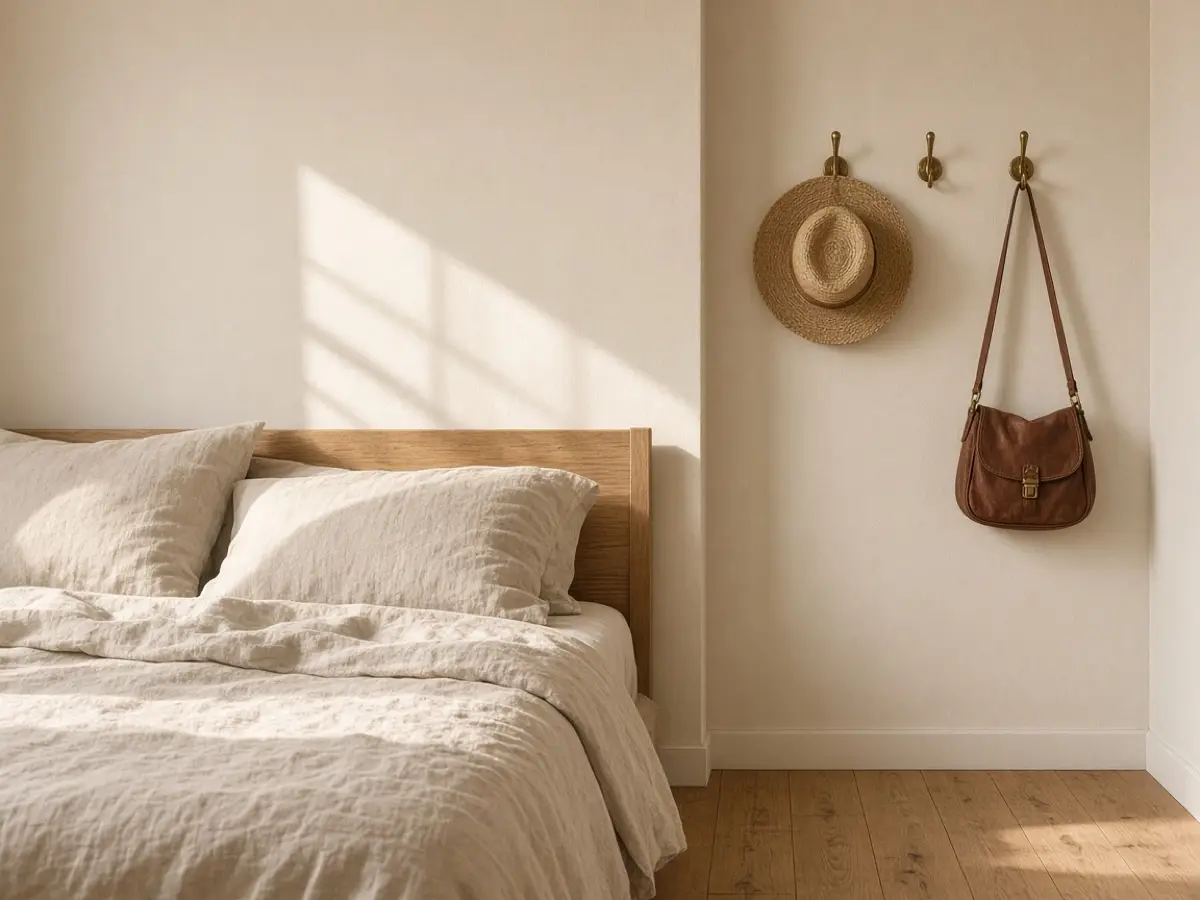
Bags, a hat, and headphones do not belong on the closet rod. A short row of hooks on the wall beside the bed, or on the side of a bookcase, takes them. Keep the row at about 48 to 54 inches so you are not swinging a strap into the lamp. Three hooks are enough. Five becomes a display of everything you own.
The closet stays for clothes and shoes. The wall holds the things you drop when you walk in. That split is why a one-closet bedroom can still look calm. Our weekend living room refresh uses the same idea: one surface, one job.


14. Take ten garments out before you organize
Set a timer for 15 minutes and remove ten items you have not worn in a season. Put them in a box outside the bedroom. Do not reorganize hangers around clothes you already know are done. The rod space you free is the storage you were about to buy.
If ten feels harsh, five is the minimum. Fold or hang what remains using the rules above, then stop. A closet that is 80 percent full looks kept. A closet that is packed to the sides will undo the shelf split by Friday. Storage in a one-closet room is mostly subtraction.


Tips Before You Start
- Measure the closet depth, the rod height, and the under-bed gap before you order any bin.
- Keep a 30-inch path beside the bed. Storage that steals the path has to go.
- One closet door organizer is plenty. The bedroom door that faces the bed stays clear.
- Put sliders or a rug pad down before you drag a dresser beside the bed.
- Label bins on the short end, in pencil, so a season swap does not mean a new shopping trip.
- Stop when the floor of the closet is one layer deep. That is the win.
FAQ
How do I add bedroom storage with only one closet?
Use the closet door, a second rod if the height allows, the space under the bed, and a dresser that can also be the nightstand. Clear the closet floor before you buy containers.
What should go under the bed?
Off-season bedding and clothes you do not need in the morning. Measure the clearance and leave an inch so the box still slides. Daily outfits stay in the closet where you can see them.
How high should a closet rod be?
A single rod often sits around 66 to 72 inches for shirts and pants. If you add a second rod, the lower one lands near 40 inches, and only if the upper clothes still have room to hang straight.
Do I need matching bins for a small bedroom?
No. Matching bins help a shelf look calm, but the fit matters more. Measure the shelf opening and the under-bed gap, then use what you already own if it slides out in one pull.
A bedroom with one closet works when the floor is clear, tomorrow’s outfit has a hook, and the off-season lives in a single bin. Measure once, take ten things out, and leave the rest of the system alone long enough to see if you actually use it.