
12 Sage Bedroom Palettes, Including Sage With Gray

On this page14 sections
- Paint the walls a linen sage
- Pair sage with warm gray
- Use sage bedding on white walls
- Add oak so the green stays grounded
- Keep gray to one textile
- Warm the bulb before you judge the paint
- Choose a sand rug, not charcoal
- Skip peach, gold, and mint together
- Keep the pattern quiet
- Let the headboard be simple
- Paint the ceiling lighter, or the same
- Decide from the pillow, then stop
- Tips Before You Start
- FAQ
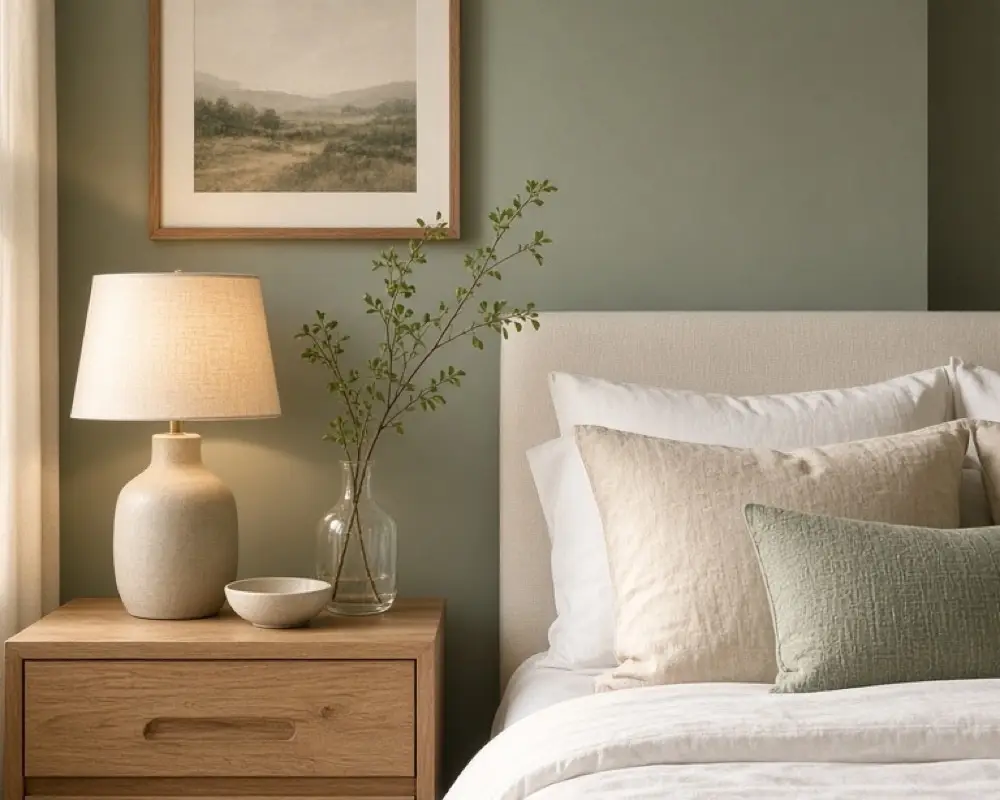
Sage green bedroom ideas go mint when the green is too yellow and the bulb is too cool, or they go gray-green and flat when the gray is blue. The useful sage is the color of a washed linen shirt, and it needs a warm light and a wood tone or it will not look like a bedroom. Gray can join it. Cool gray as the main event cannot.
We are painting or dressing a room you sleep in, including one that faces the street and one that does not. The guest bedroom list was about the stay. This one is about the color you wake up to. Sample it on the wall by the bed, not on a card in the hall.
As an Amazon Associate I earn from qualifying purchases.
1. Paint the walls a linen sage
Choose a sage with gray in it, not a yellow green and not a pastel mint. Eggshell on the walls. Cream or a soft white on the trim, not a bright optic white that makes the sage look dirty. Paint a sample the size of a pillow on the wall you see from the pillow, and look at it at 7 a.m. and at 10 p.m.
A quart may cover a small bedroom’s test and the first wall. Do not buy the gallon until the night test passes. North light will make the same can look bluer. If the room faces the street and gets little sun, shift a half-step warmer than the chip you liked in the store.


2. Pair sage with warm gray
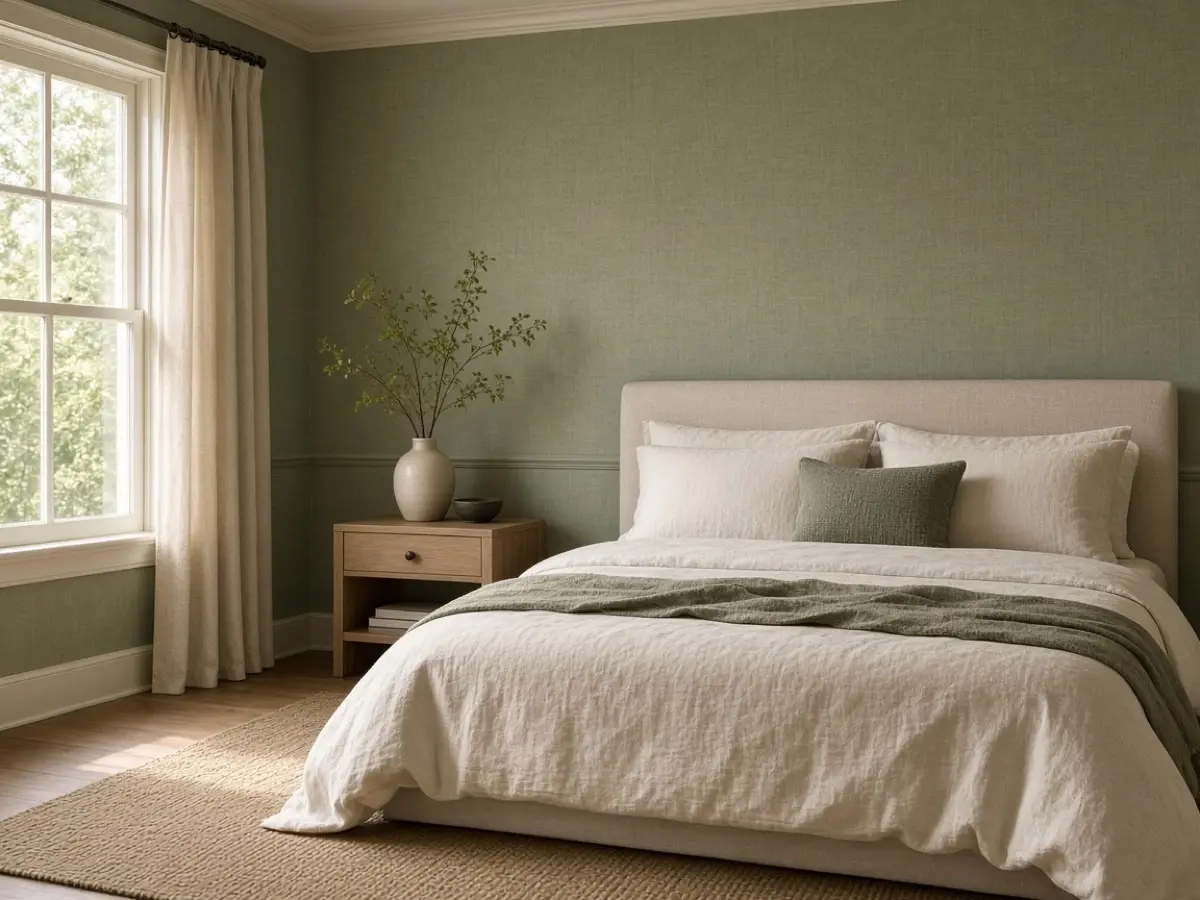
Sage and gray works when the gray has a beige or greige undertone. A blue gray next to sage looks like a clinic at dawn. Use the gray in a blanket, a rug, or one painted wall, not in all three. The sage stays the larger color. Gray is the quiet second.
If the gray is paint, put it on the wall behind the bed or the wall you see least. The wall at the window stays sage or cream so the morning light has a soft surface. Hold the gray chip next to the sage chip under your real lamp. If the pair looks like two different decades, the gray is too cool.


3. Use sage bedding on white walls
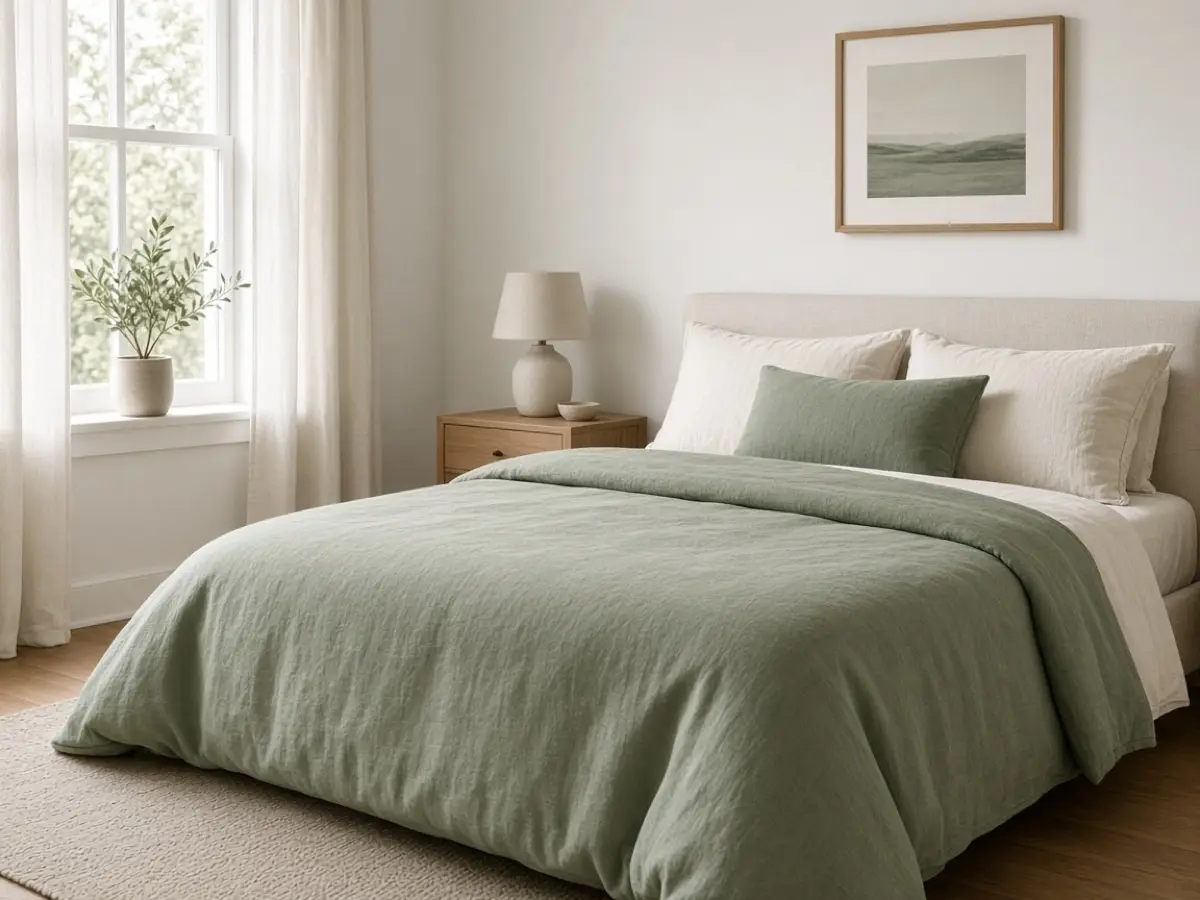
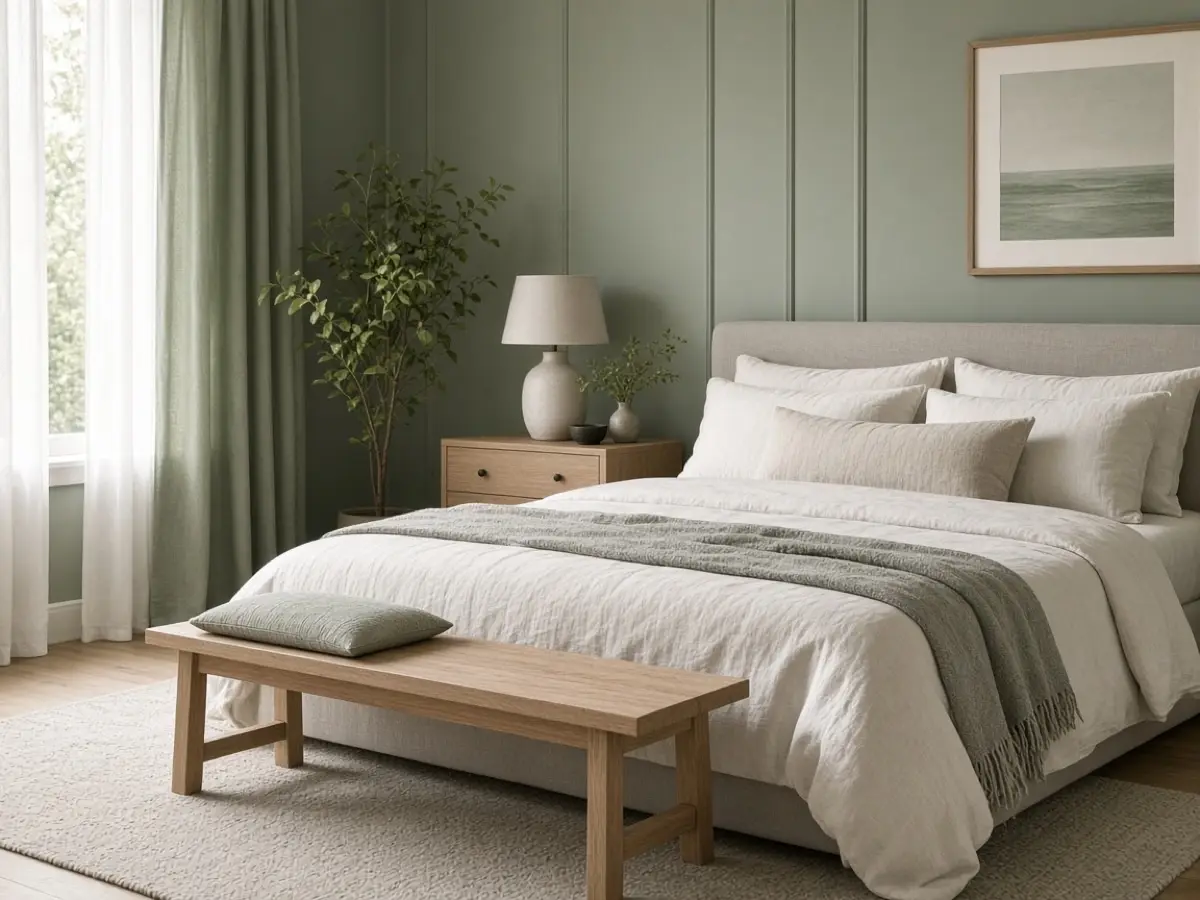
If you cannot paint, the palette can live in the bedding. A sage duvet or a sage coverlet on white or cream walls, with cream sheets. One green, not a patterned set that adds four more colors. White walls with sage bedding read lighter than sage walls, which is better in a room that already feels dim.
Wash the cover before you judge the color. Factory sizing and a finish can make the green look brighter in the bag than on the bed. If it dries mint, return it. The room will not talk you into liking it later. Cream sheets keep the sage from looking harsh against your skin in the morning.


4. Add oak so the green stays grounded
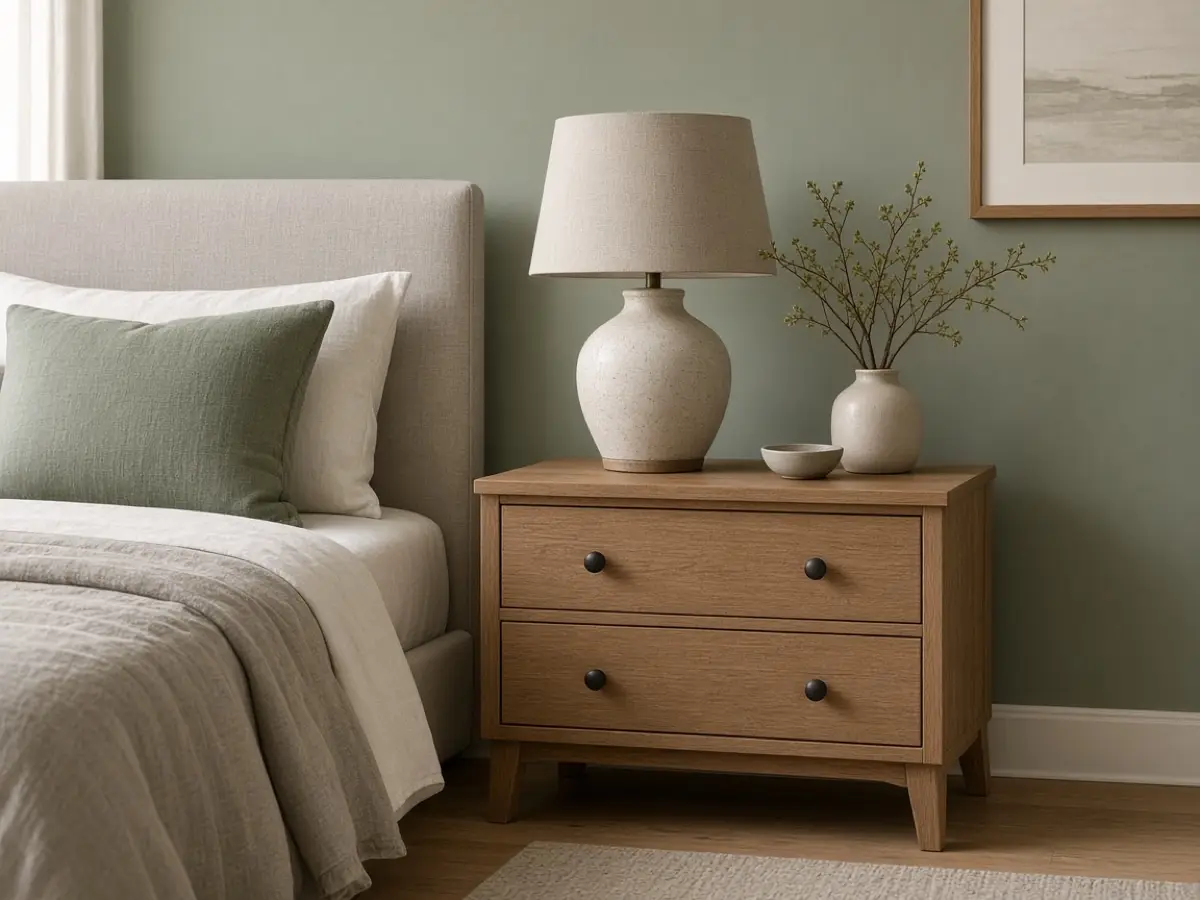
Sage without wood can look like a painted box. An oak or walnut nightstand, even a small one, gives the green a brown to lean on. If the furniture is white, a wood frame, a stool, or a tray on the nightstand does a smaller version. One wood tone. White, oak, and a gray laminate is three rooms.
The one closet plan may already have a wood dresser. Leave it wood. Painting it gray to “match the sage” usually cools the whole palette. The green is the color. The wood is the anchor. Do not make the anchor match the paint.


5. Keep gray to one textile
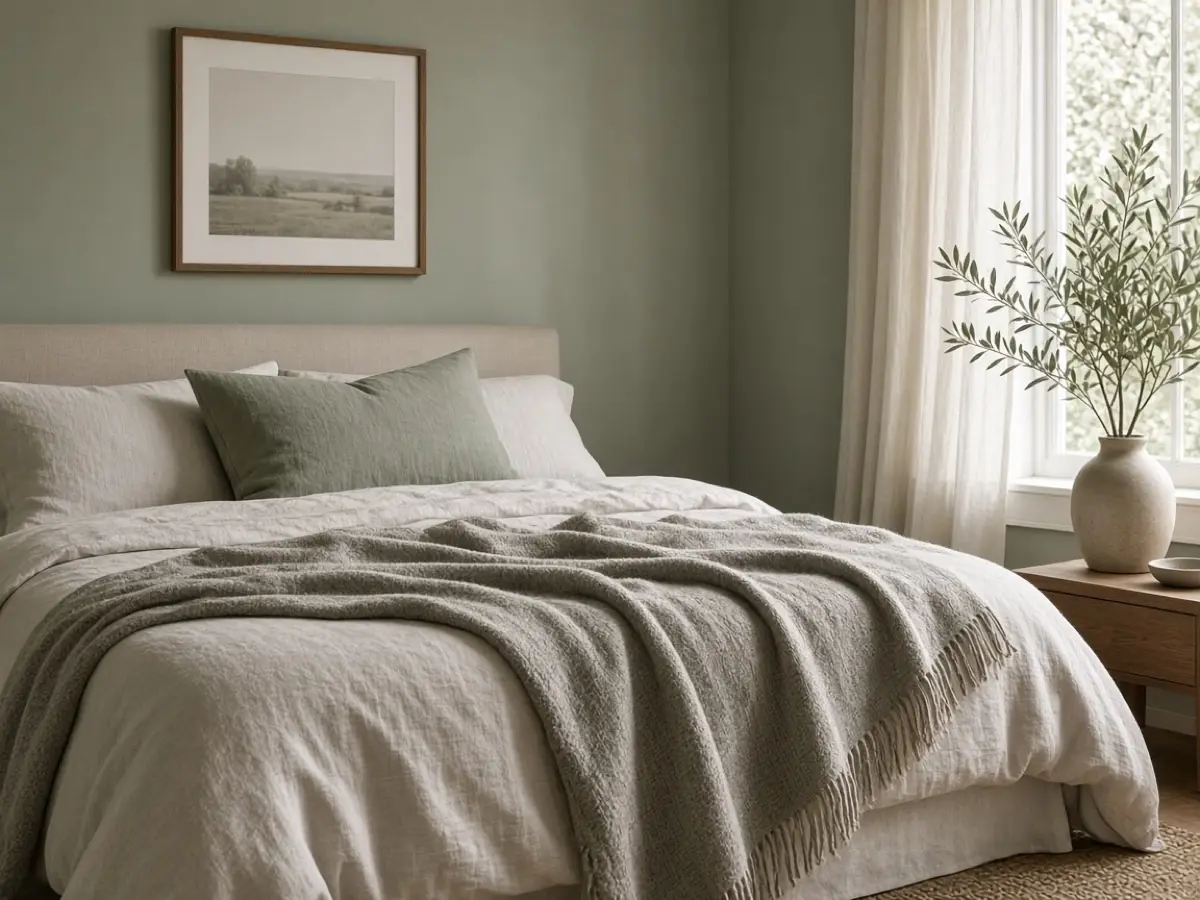
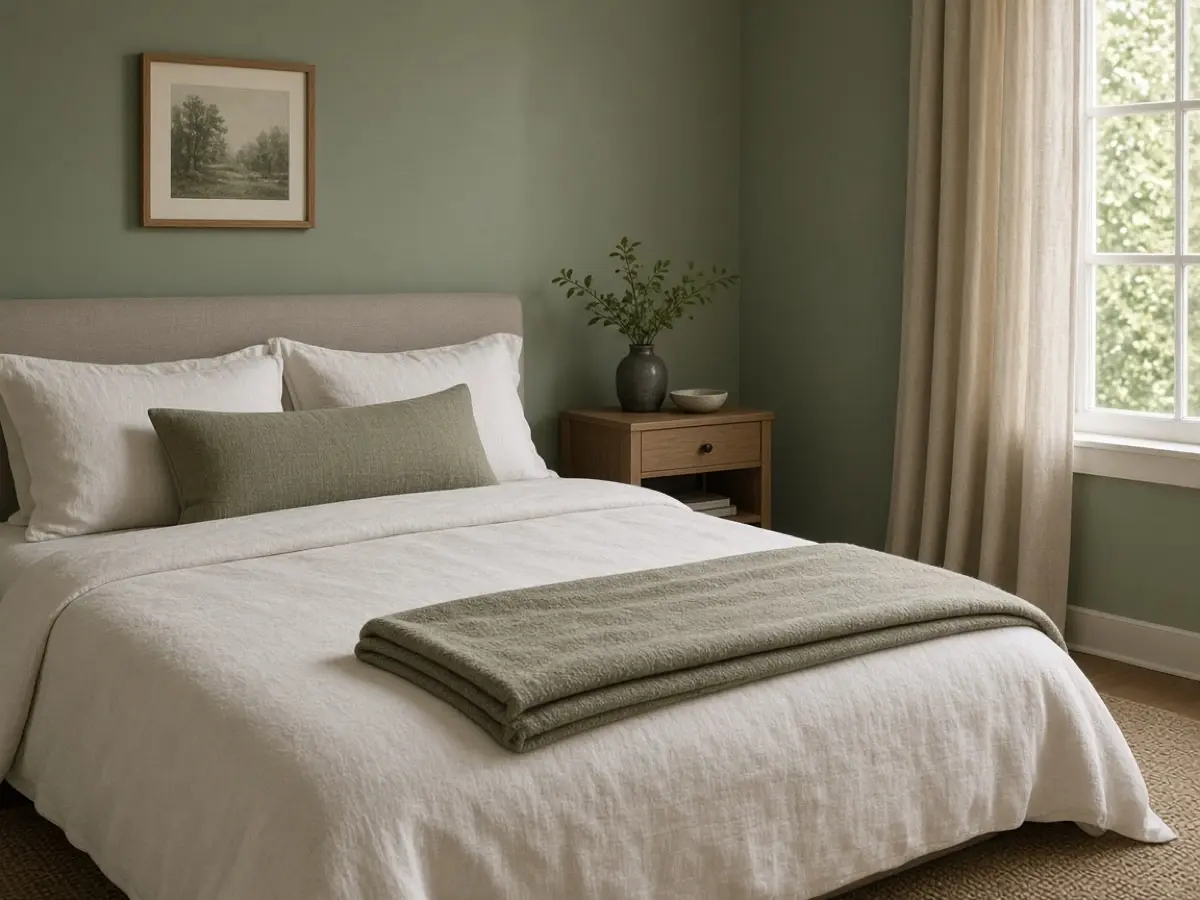
A gray blanket at the foot of the bed is the sage-and-gray palette in one object. A gray headboard, gray curtains, gray rug, and gray lamp is a gray bedroom with a green pillow. Count the grays from the door. More than one, and you remove one. The blanket is the easiest to change with the season, so it is the right place for the gray.
Choose a warm medium gray, not charcoal. Charcoal next to sage at night turns the bed into a dark shape you cannot see. A lighter greige blanket still reads as gray and does not swallow the pillows. Fold it. A heap of gray on sage looks unfinished.


6. Warm the bulb before you judge the paint
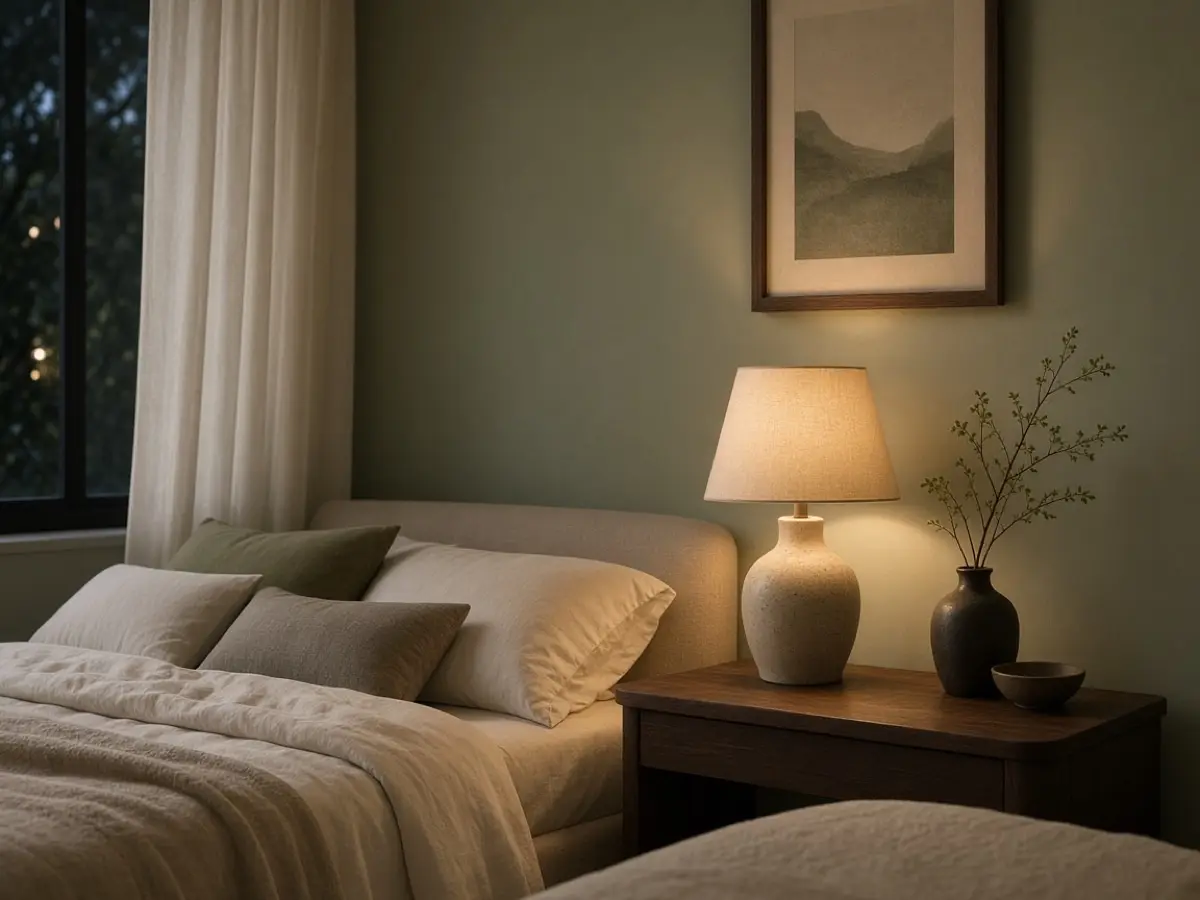
Sage goes blue under a 4000K bulb and yellow-mint under a very yellow one if the paint is already bright. 2700K in the bedside lamp is the test. Look at the sample with that bulb, not with the ceiling light you use for cleaning. The bathroom sage needed the same bulb. The bedroom needs it more because you see it half-awake.
A beige or cream shade helps. A white shade can make the sage look cooler than the can promised. If you only change one thing before painting, change the bulb. A wrong bulb has convinced people to repaint a color that was fine.


7. Choose a sand rug, not charcoal
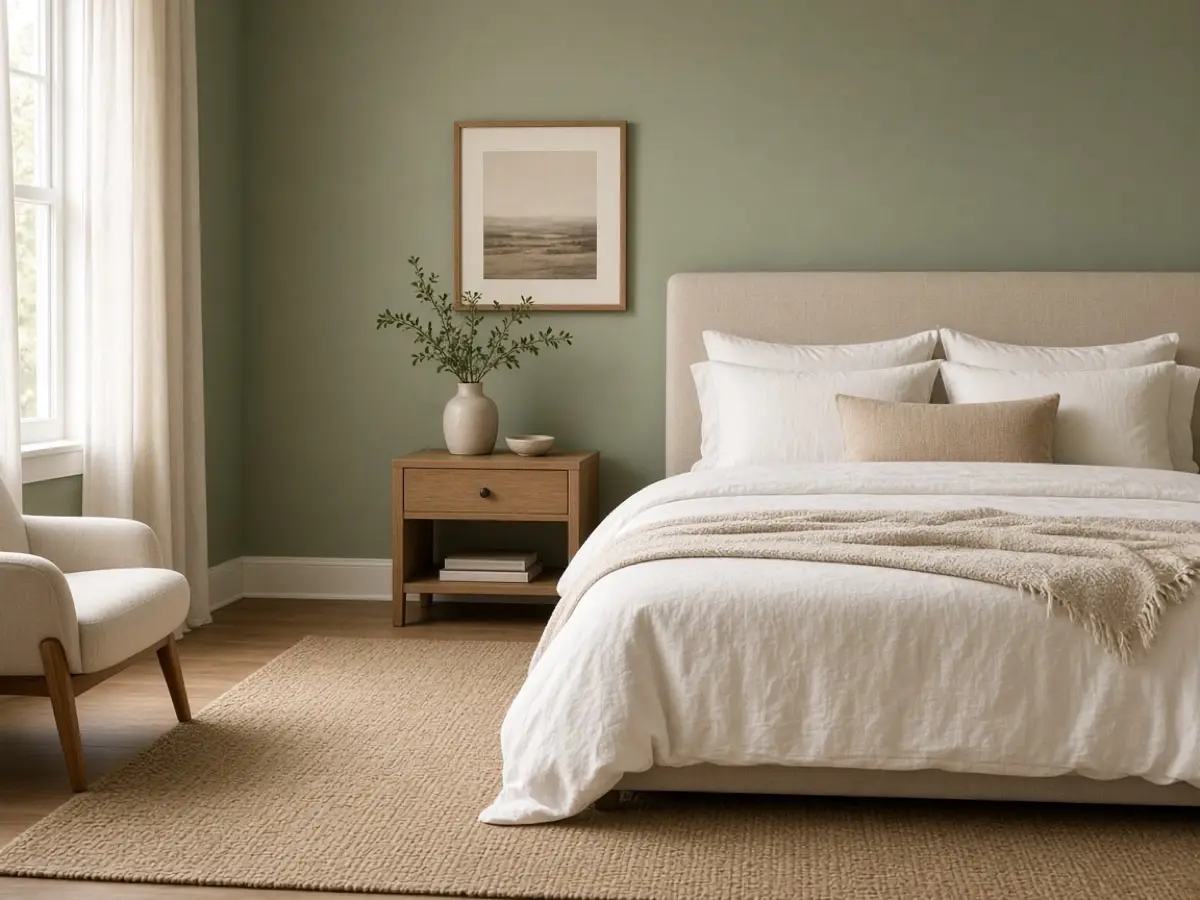
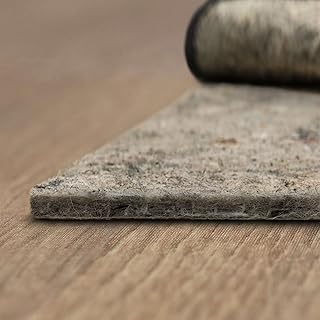
The floor should be lighter than the moment you think “moody.” A sand, oatmeal, or light wood floor keeps sage gentle. Charcoal under sage is a strong look and a dark one, and in a small bedroom it shrinks the floor. If you already have a dark rug, layer a lighter one at the side of the bed where your feet land, or move the dark one to the hall.
The rug should not match the sage exactly. A green rug on green walls is a lot of one color with no rest. Sand next to sage is the rest. Leave the rug short of the door so it does not catch. A bedroom rug is for feet, not for wall-to-wall costume.


8. Skip peach, gold, and mint together
Sage plus a peach pillow plus a gold frame plus a mint throw is four colors pretending to be earthy. Pick sage, a warm neutral, and one wood or one brass. Gold can be the lamp if the shade is cream. It should not also be the pillow, the curtain ring, and the art frame in a shiny finish. One metal.
Peach makes sage look yellow. If you love a warm pink, use it in a very small dose, a single flower, not a sham. The palette is calm because it is short. The blue and beige room stopped at two blues. This room stops at sage plus one neutral plus one warm material.


9. Keep the pattern quiet
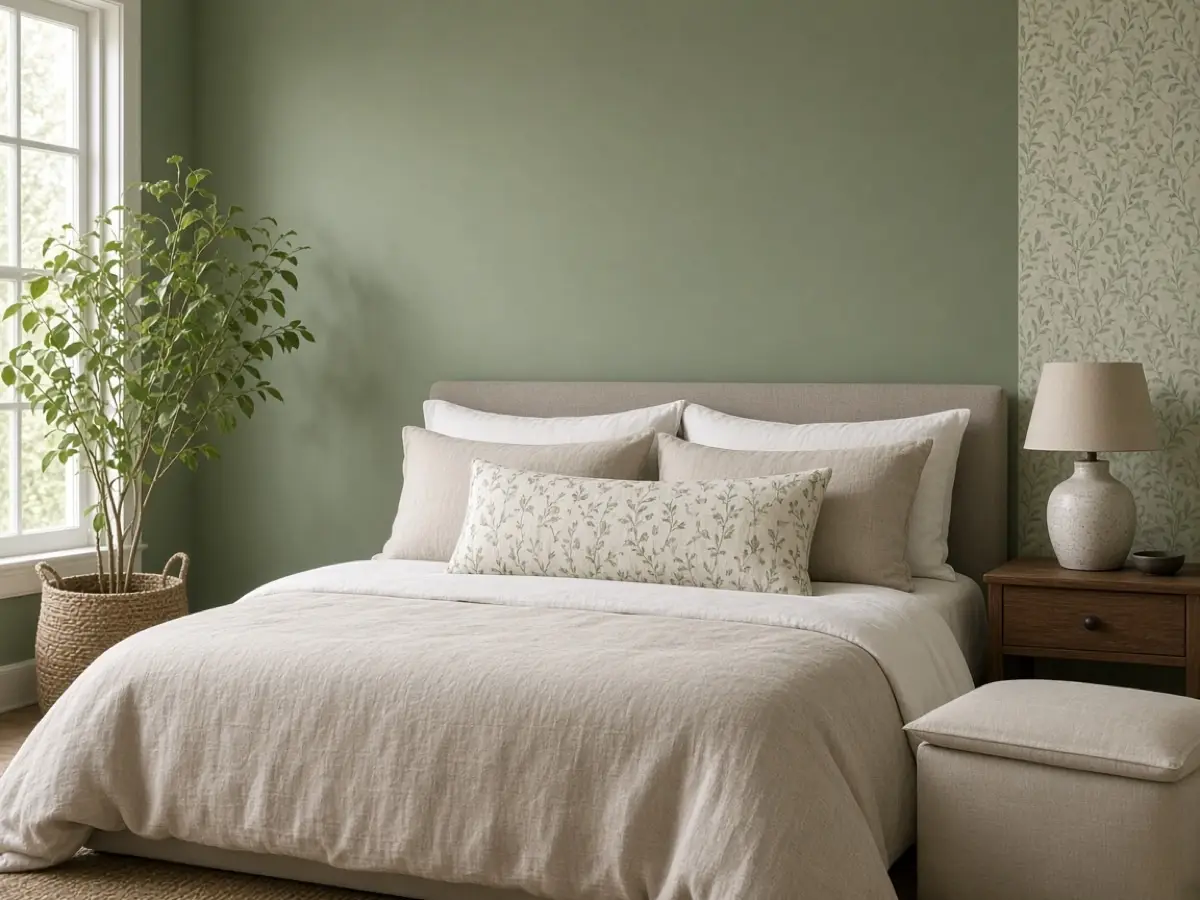
A large floral on sage walls fights the paint. A small check, a thin stripe, or a solid is enough. If the bedding is patterned, the walls should be the solid sage or a solid cream, not both busy. From the pillow, pattern is what you see at midnight when you want less to see.
One patterned pillow is a print. A matched set of shams, euro shams, and a bed skirt in the same print is a catalog. Use the solid sage or cream for the large areas and let one smaller pillow carry a quieter mark, or skip the mark. Sleep is the point of the room.


10. Let the headboard be simple
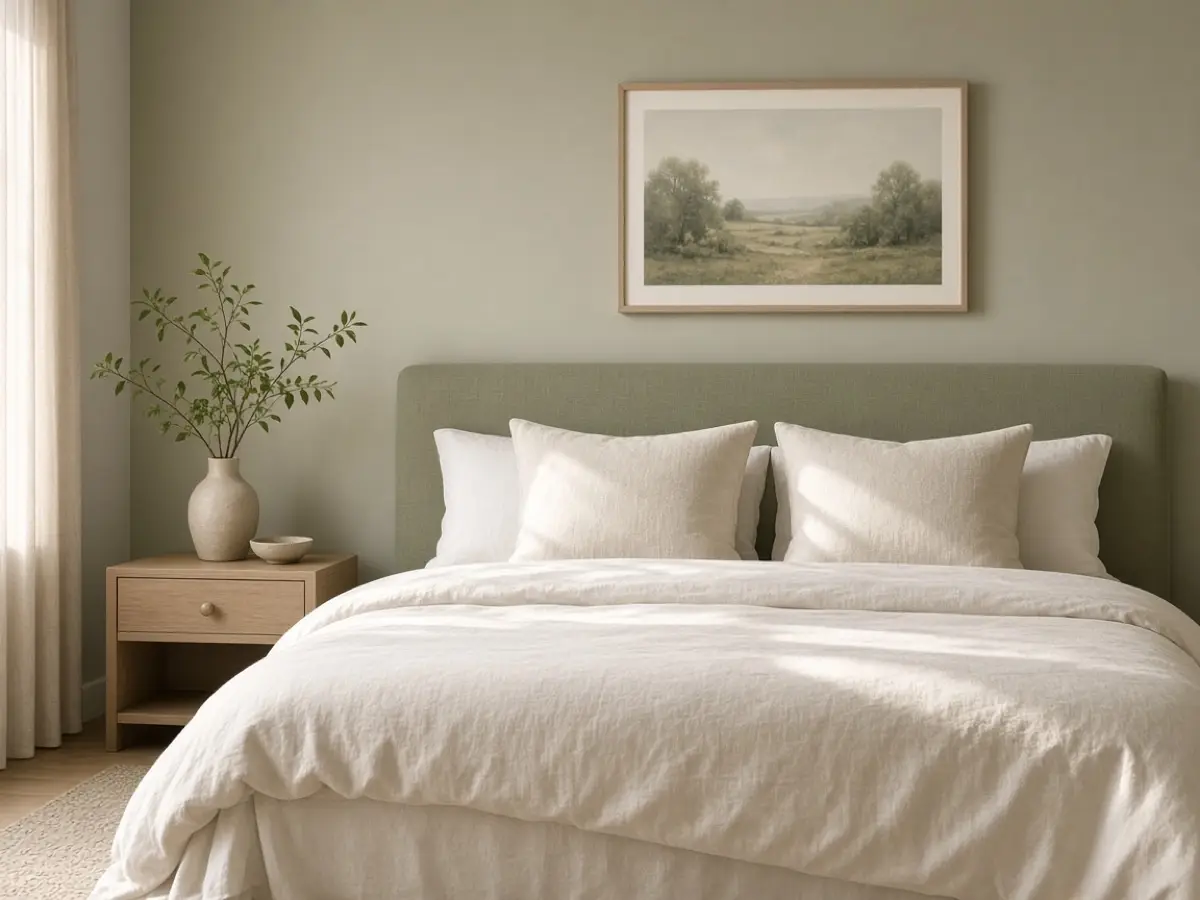
A sage upholstered headboard on sage walls disappears. A wood headboard, a cream upholstered one, or no headboard and a wood shelf as the back is clearer. If you love a green headboard, paint the walls cream and let the headboard be the sage. Two sages of slightly different values look like a mismatch, not a tone-on-tone plan, unless you chose them together in the same light.
Height matters. A tall wing headboard in a small room blocks the wall you just painted. A low wood headboard shows the color. Measure before you order. The wall is doing the palette work. The headboard should not cover it.


11. Paint the ceiling lighter, or the same
A bright white ceiling over sage can look like a lid. Paint the ceiling the same sage in a flat sheen, or a lighter version of it, so the color wraps without a hard line. In a low room, the lighter version is kinder. In a tall room, the same color feels finished. Look up from the pillow. That view is the one that matters.
Prime stains first. A sage ceiling will flash a water mark that white hid. This is still a weekend, not a remodel. Do the trim the same day as the ceiling line. A raw edge at the top undoes the calm.
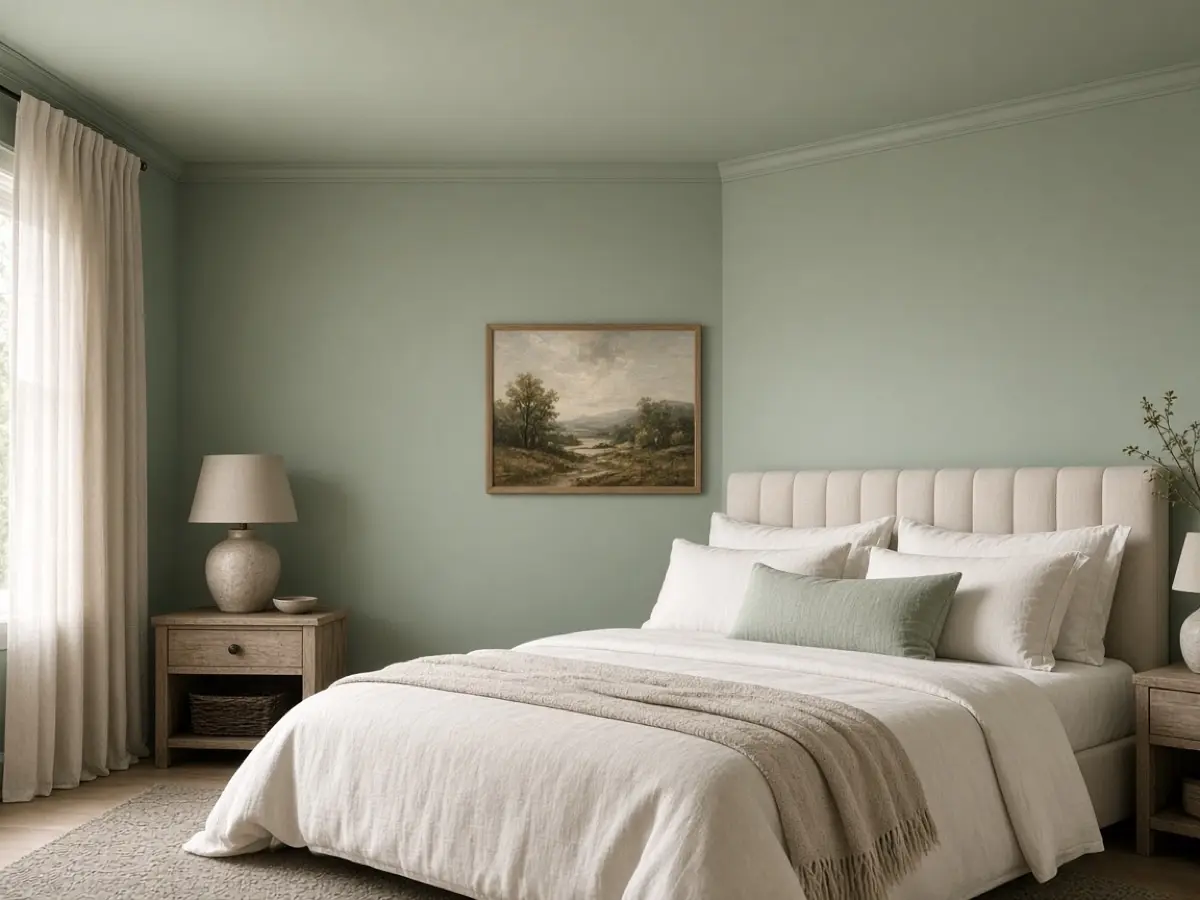


12. Decide from the pillow, then stop
Lie down. If the sage looks like a shirt you would wear and the gray, if any, looks warm, the palette is right. If it looks mint or blue, the paint or the bulb is wrong. Fix that before you buy shams to match a mistake. One set of cream sheets and a sage cover is enough to know.
Then stop adding colors. A bedroom does not need a second green, a blush, and a charcoal to feel designed. It needs a color you can sleep beside. Check it again on a cloudy morning. When that morning looks calm, leave the chips in the drawer.
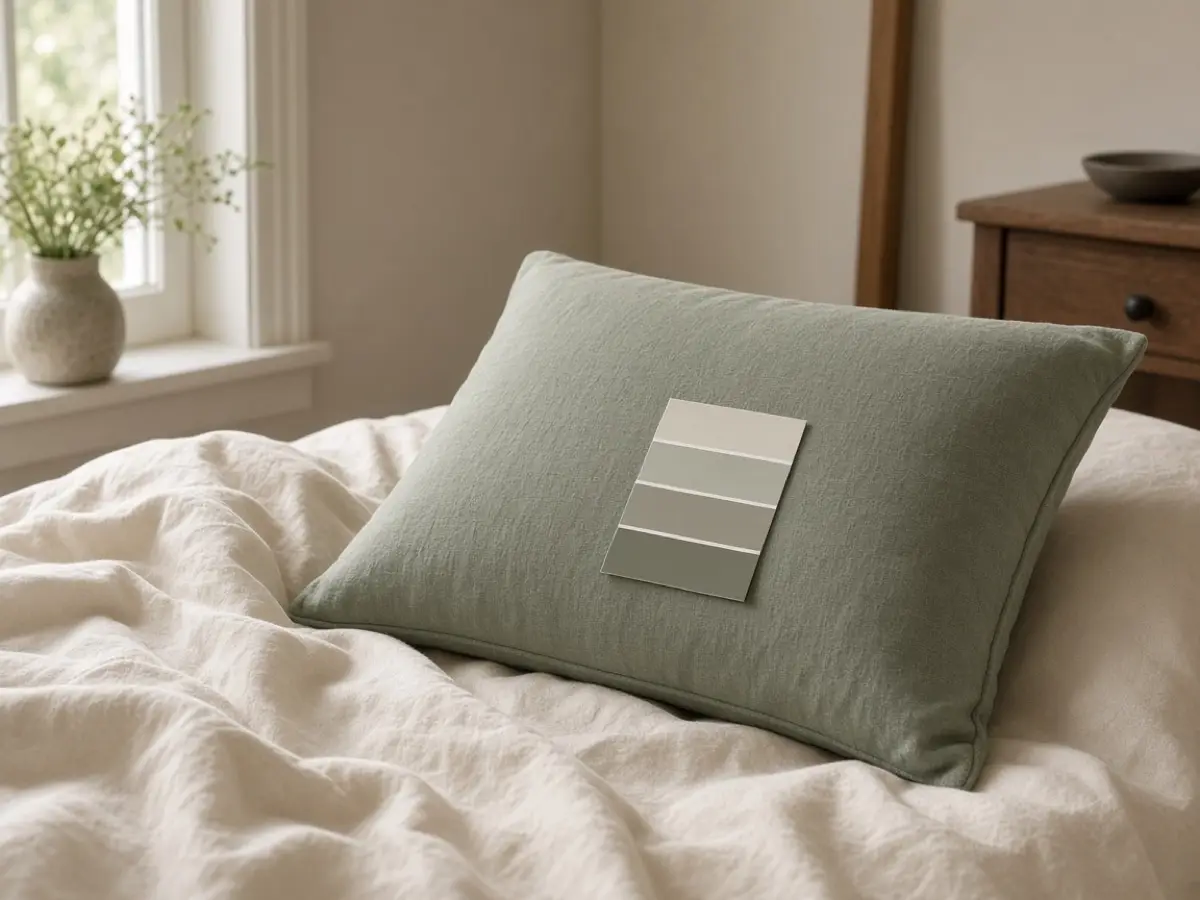

Tips Before You Start
- Sample sage on the wall by the bed, morning and night, with a 2700K bulb.
- Warm gray can join sage. Blue gray makes it clinical.
- Oak or walnut keeps the green from floating.
- One gray textile is the pair. A gray room is a different palette.
- Sand on the floor, not charcoal, in a small bedroom.
- Lie down before you buy more pillows to match.
FAQ
What colors go with sage green in a bedroom?
Cream, warm beige, oak, brass, and a warm gray. Skip mint, peach, and blue-gray as the main partners. The sage should be the largest color, with one neutral and one wood or metal.
Does sage green work with gray?
Yes, if the gray is greige or a warm medium gray, used once, in a blanket or a rug. A cool blue gray on the walls next to sage looks flat at dawn.
Should I paint the bedroom sage or use sage bedding?
Paint if you want the color around you at night. Use sage bedding on cream walls if you rent or if the room is already dim. Do not do a bright sage on both the walls and the duvet unless you have compared them in the same light.
What bulb should I use in a sage bedroom?
A warm 2700K bulb in the bedside lamp. Cool bulbs push sage toward blue. Judge the paint with the lamp you will actually sleep beside.
Sage stays calm when it is a linen green, the bulb is warm, and gray shows up once. Lie down, look at the wall, and stop when the morning feels quiet.