
8 Bedroom Dividers for a Studio That Still Needs Sleep

On this page10 sections
In a studio apartment, the bed is always in view. You see it from the sofa, from the kitchen, from the front door. Guests see it the moment they walk in. And when you are trying to sleep, the light from the kitchen, the hum of the fridge, and the glow of a laptop are all right there with you.
A divider will not make a studio into a one-bedroom, but it can give you a real sleep zone: a space that feels separate, darker, and calmer at night. The eight ideas below range from soft curtains to solid shelving, with honest notes on how much light, sound, and space each one blocks. For the whole studio plan, the studio apartment layout post covers where the bed should go in the first place.
As an Amazon Associate I earn from qualifying purchases.
1. A curtain on a ceiling track
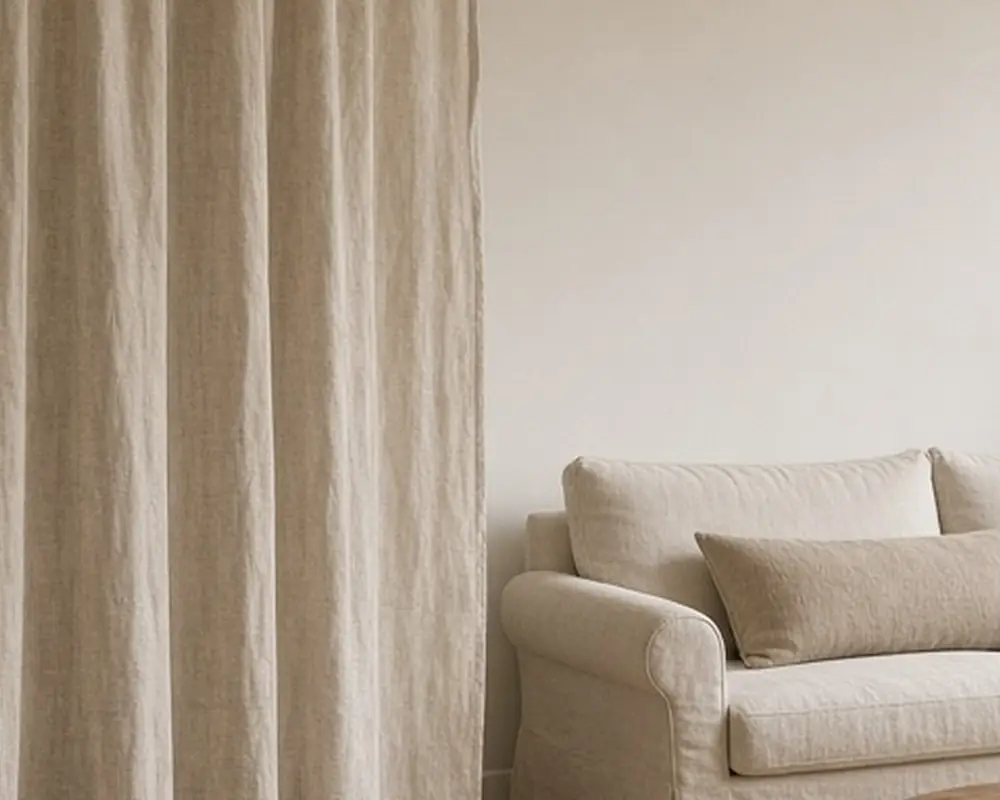
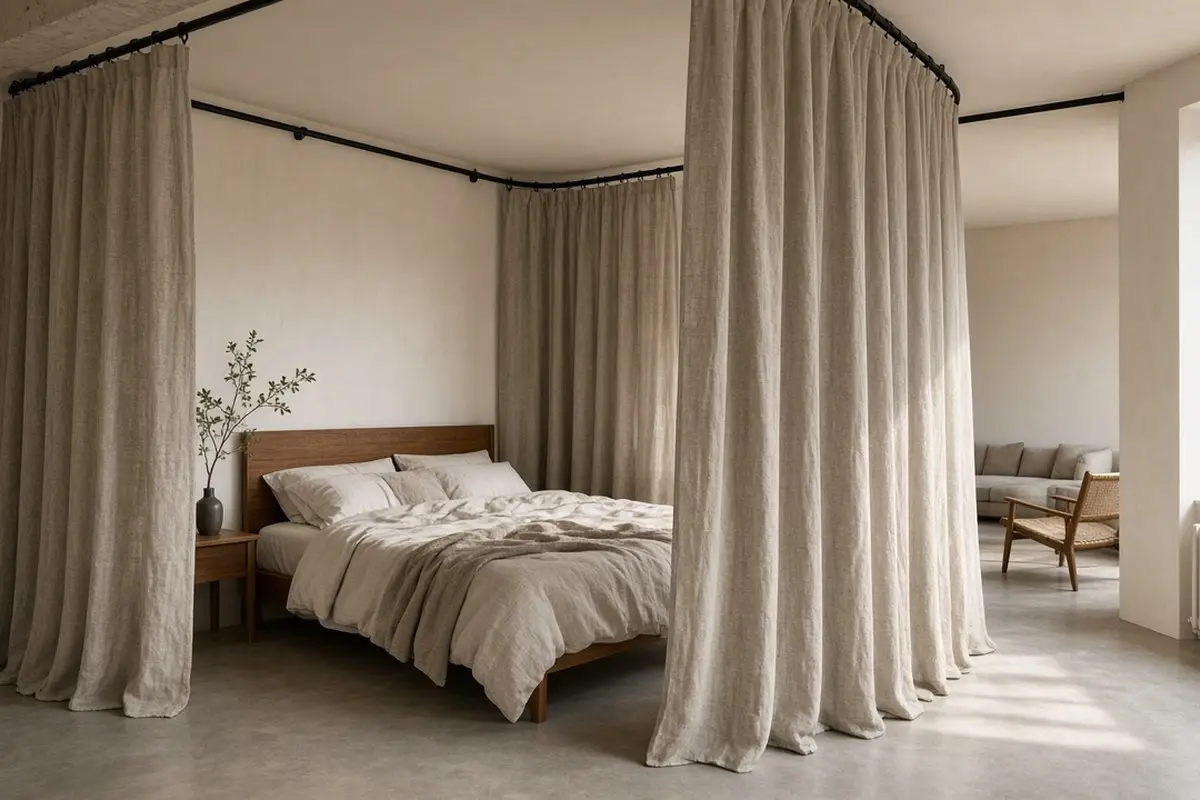
A curtain room divider on a ceiling track is the most flexible option for a studio. Draw it closed at night to block light and create privacy, and open it in the morning to let the whole space breathe. It takes almost no floor space and can be installed in an afternoon.
Choose a heavy, lined fabric for real darkness, such as a blackout-lined linen or a thick velvet. Sheer curtains look lovely but only soften the view; they do not block light. Make the curtain about one and a half to two times the width of the opening, so it falls in soft folds when closed rather than stretched flat.
Ceiling tracks are light and can be mounted with a few screws into joists. If you rent, ask your landlord first; the holes are small and easy to fill. A tension rod between two walls works in narrow alcoves without any drilling at all.
If the bed sits in an alcove or along a short wall, the curtain only needs to cover one side. In an open studio, a track in an L-shape, along the side and foot of the bed, gives the most privacy. Choose a curtain color close to the wall color so the divider blends in when it is open and does not dominate the room.
Hang the curtain so it just clears the floor. A curtain that drags collects dust; one that hangs too short lets light spill under it.
Get the look
2. Open shelving as a see-through wall
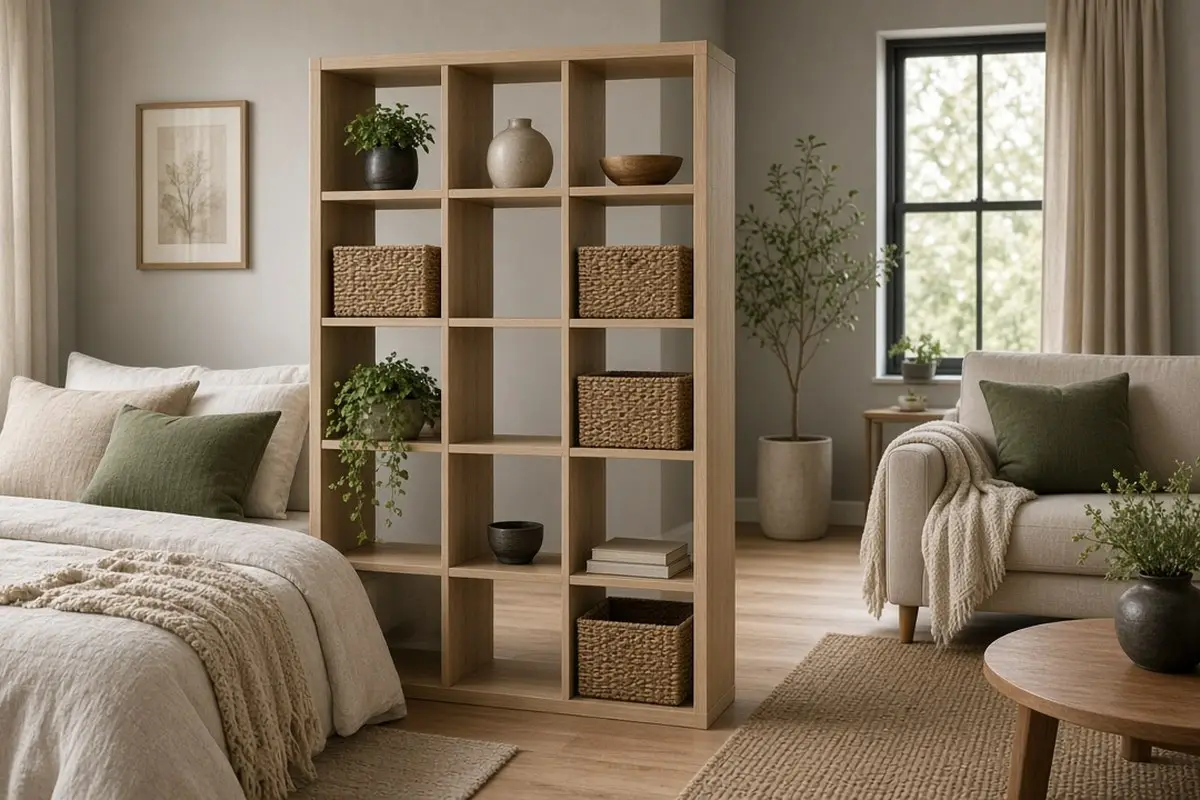
An open bookcase placed at a right angle to the wall, with its back to the bed, creates a strong visual divide while letting light pass through. From the living side, it is a bookcase. From the bed side, it is a headboard wall. Shelves at different heights hold books, plants, and baskets.
Cube storage is especially good because it looks finished from both sides. Fill some cubes with baskets for privacy and leave others open for light. Anchor the shelving to the floor or ceiling, since it will not be against a wall.
A tall shelf blocks more of the view, but a shelf about chest height feels less closed in and still hides the bed when you are sitting on the sofa.
Use the bed side for things you need at night: a lamp on a middle shelf, a box for chargers, a basket for the book you are reading. That way the shelf doubles as a nightstand and you need less furniture overall.
3. A folding screen
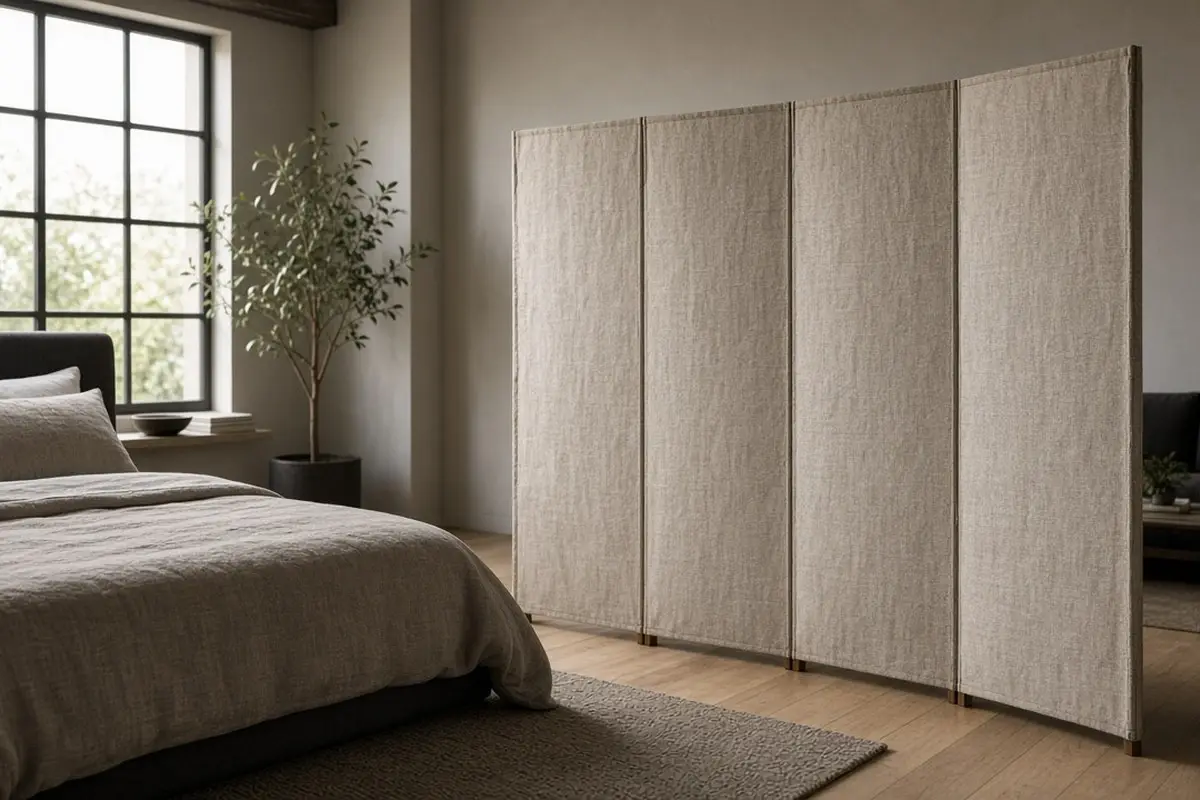
A folding screen is the quickest divider of all. Unfold it beside the bed at night, fold it away in the morning. It is fully renter-friendly and costs little. Screens come in fabric, wood, rattan, and paper.
Choose one tall enough to hide the bed from the main seating, usually about 70 inches. A screen with solid panels blocks more light than one with open lattice. Put it at an angle rather than straight, so it stands steady and looks deliberate.
A screen also works as a backdrop for the bed during the day. Hang a few lightweight frames on a fabric screen with clips, or drape a throw over the top. It becomes part of the decor rather than a temporary fix. Keep it close to the bed, so it does not cut the rest of the studio in half.
Get the look
4. A low half wall of furniture
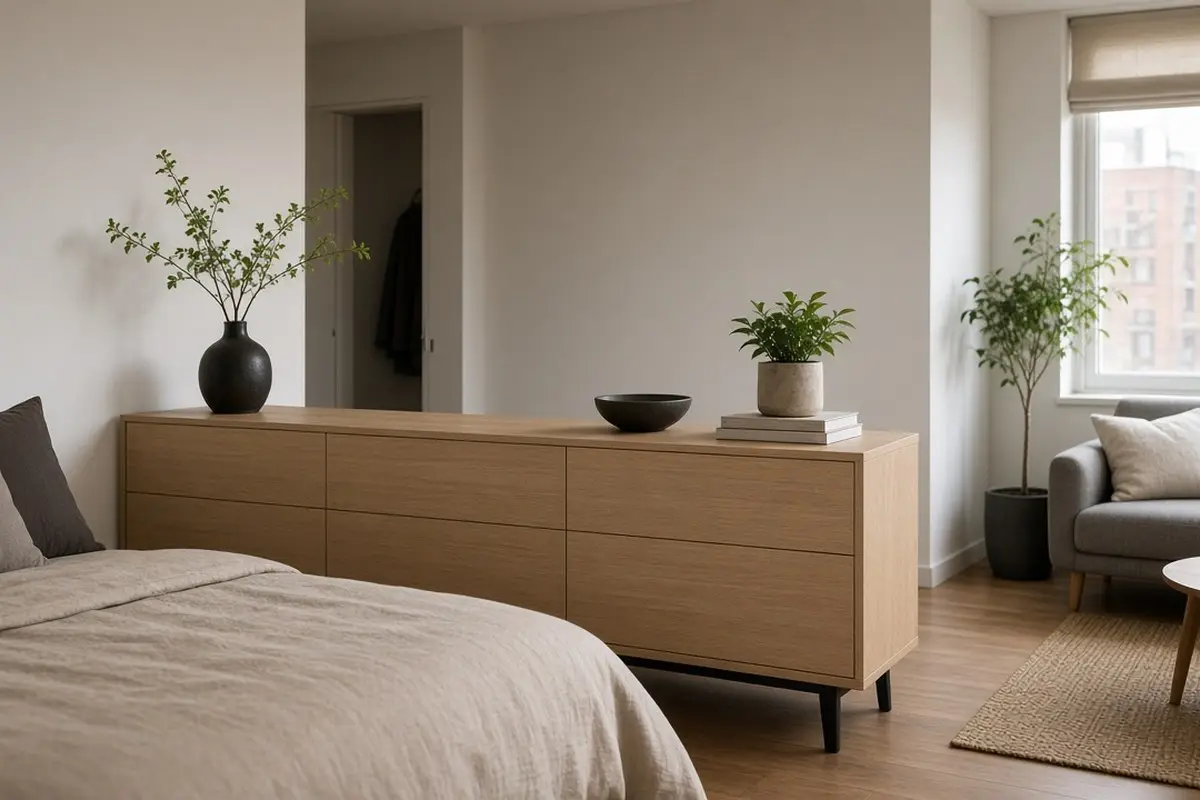
If you do not want to block light entirely, a low divider works well. A sofa with its back to the bed, a low dresser, or a long console set at the foot of the bed creates a clear line between sleeping and living without closing anything off.
This is the most open option. It does not block light or sound, but it tells your eye where the bedroom ends, which makes the studio feel organized. It also adds storage.
This approach works best in larger studios, or in ones where light is precious and you cannot bear to block the window. Combine it with a rug under the bed and warm, low lamps at night, and the sleep zone will feel distinct even without a tall barrier.
5. Studio apartment sleep zone with a rug and canopy
Sometimes the divider can be above and below rather than beside. A rug under the bed defines the sleep zone on the floor. A canopy or a ceiling-hung fabric over the bed defines it from above. Together, they create a room within a room.
A simple canopy of sheer linen, hung from a ceiling hook or a rectangular frame, feels soft and private without blocking the view entirely. It suits romantic and bohemian studios.
A rug under the bed should extend at least 18 inches beyond each side, so the whole sleep zone feels defined. Choose a different texture from the living area rug, perhaps a soft wool in the sleep zone and a flat-weave in the living zone. The change underfoot tells you when you have stepped into the bedroom, even without walls.
Canopies collect dust, so choose a washable fabric and take it down every couple of months.

6. A slatted wood partition
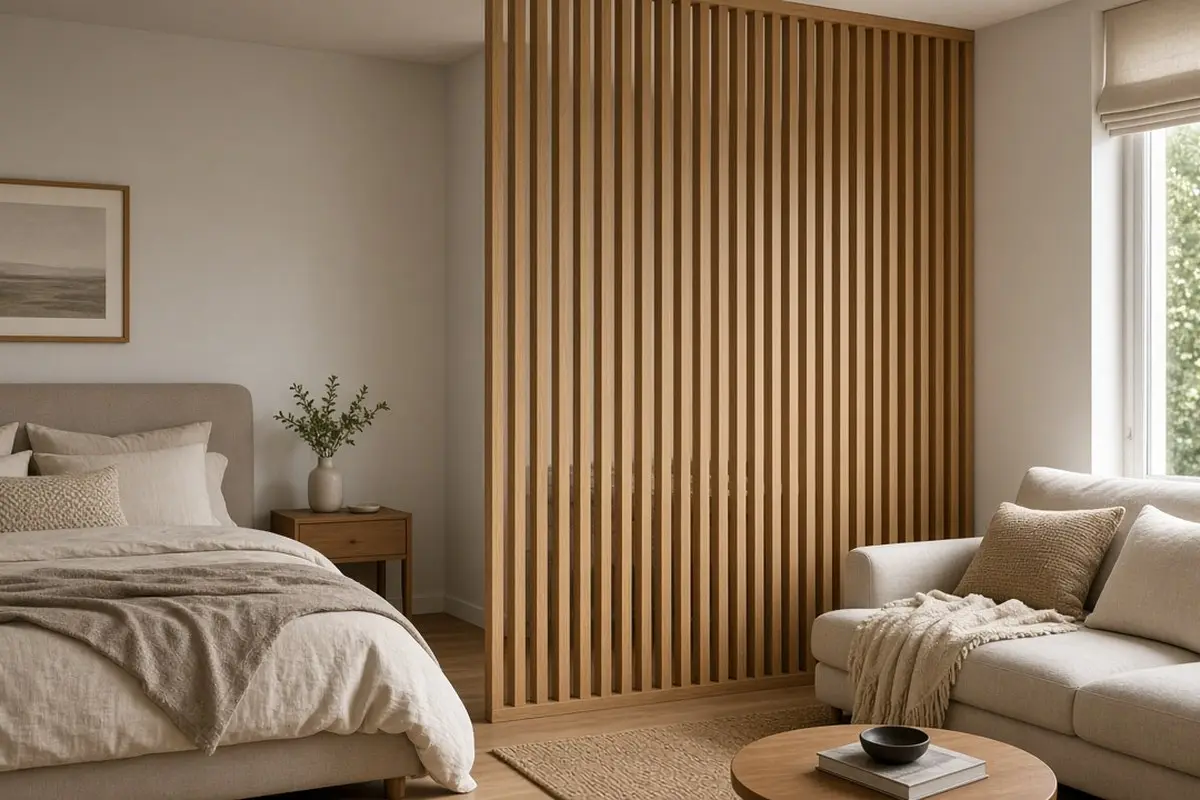
For a more permanent and architectural look, a freestanding slatted wood partition divides space while letting some light through. The vertical slats block the direct view of the bed from most angles but let air and daylight move.
Some come as floor-to-ceiling tension systems that need no drilling, which suit renters. Others are freestanding panels. Either way, the warm wood brings texture to the studio.
Slat partitions also give you a place to hang things: a hook for a robe on the bed side, a small mirror on the living side. They feel more like real architecture than a curtain, which can help a studio feel like a proper home rather than a temporary one.
7. Block the light, not just the view
Most dividers block the view but leak light. For real sleep, the sleep zone needs darkness. Put a blackout blind on the window nearest the bed. Use lamps with warm, low bulbs in the living area at night. Turn off or cover small glowing lights from chargers and appliances.
A sleep mask is the simplest backup. Many studio dwellers swear by one, even with a good divider.
Think about morning light too. If the bed faces the main window, sunrise will wake you no matter how good the divider is. Blackout blinds behind lighter curtains give you the best of both: soft daylight when you want it and full dark when you sleep.
Get the look
8. Soften the sound
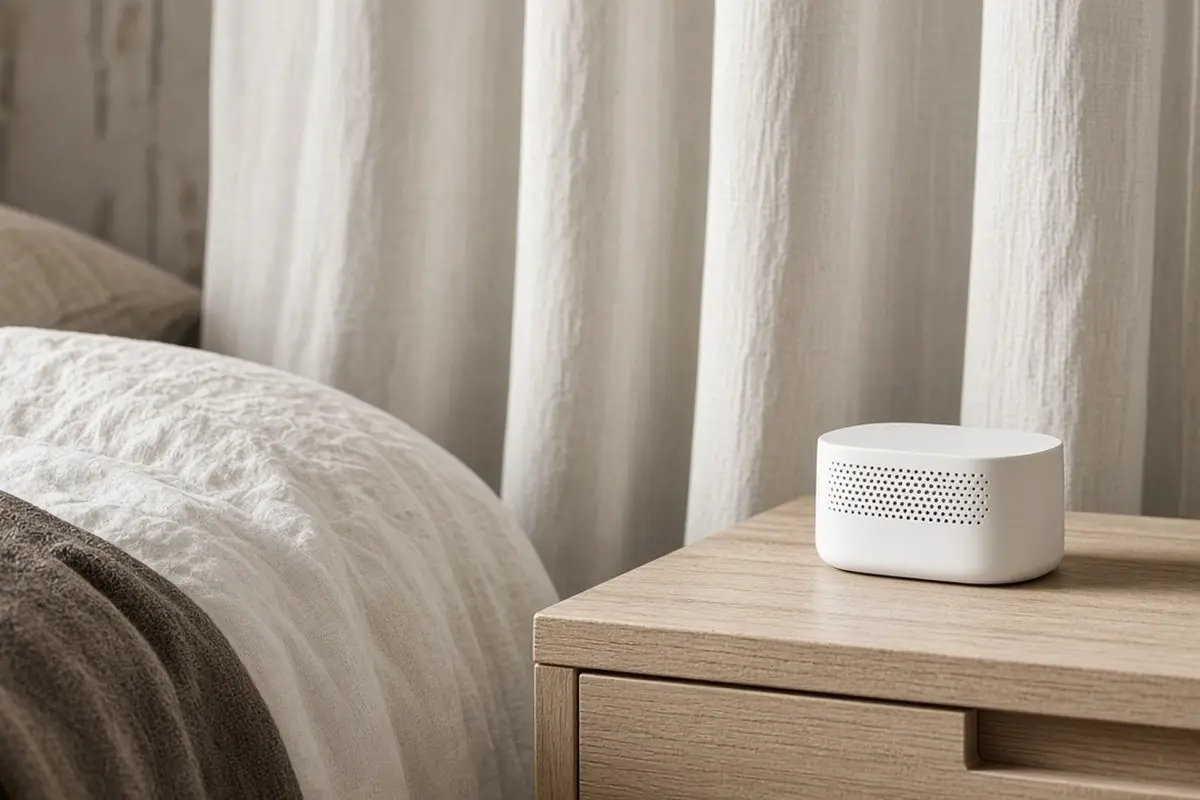
Sound travels easily in a studio. Soft materials help: a heavy curtain, a thick rug, upholstered furniture, and books on shelves all absorb noise. A white noise machine near the bed masks the fridge, the street, and the neighbor.
Place the bed as far from the kitchen and the front door as possible.
If your neighbors are noisy, put a bookcase full of books against the shared wall behind the bed. Books are excellent sound absorbers. A thick headboard does the same job on a smaller scale.
Get the look
Tips Before You Start
- Decide whether you need to block light, view, sound, or all three.
- Use heavy, lined curtains for real darkness.
- Anchor freestanding shelves.
- Ask before drilling if you rent.
- Use a rug to define the sleep zone.
- Add a white noise machine for sound.
FAQ
What is the best divider for a studio apartment bed?
A curtain on a ceiling track blocks the most light and view while staying flexible.
How do I divide a studio without drilling?
Use a folding screen, a tension rod curtain, freestanding shelving, or a tension-mounted slat partition.
Do bookcase dividers block light?
Partly. Open shelves let light through. Fill some cubes with baskets for more privacy.
How do I make a studio bed feel separate?
Combine a divider with a rug under the bed and warm, low lamps. The quiet apartment details post and the living and dining room split post have more zoning ideas.
Can I put my bed behind the sofa?
Yes, if the room is long enough. The sofa back acts as a low divider, and a console behind it adds storage and a lamp for both sides.
What is the cheapest studio divider?
A tension rod with a heavy curtain, or a simple folding screen. Both cost little and leave no marks.
A studio can still have a real sleep zone. Choose a divider that blocks what bothers you most, add a rug and a little darkness, and your bed will feel like a bedroom again.