
8 Fall Shelf Arrangements That Still Leave Room for Books

On this page14 sections
- Start with a quick edit
- Group the warm-colored spines
- One seasonal shelf, the rest untouched
- Small pumpkins as bookends
- Stacks topped with a single object
- Dried stems in a bud vase
- A framed print leaning against the books
- Candlelight on a lower shelf
- A garland draped along the top
- Styling open cube shelves
- Choosing a palette
- Keep the ratio in mind
- Taking it down
- Common questions
Fall shelf styling usually starts with taking books off the shelves to make room for pumpkins, candles, and signs. If your bookcase is a real library, that is backwards. The books are the point, and they already bring color, texture, and personality to a room. The goal for the season is to add a few warm touches that work with the books rather than replacing them.
These eight arrangements keep most or all of the books in place. Some change how books are grouped; others tuck small seasonal objects into gaps that already exist. All of them are quick to put up and quick to take down.
As an Amazon Associate I earn from qualifying purchases.
Start with a quick edit
Before adding anything, spend twenty minutes editing. Pull out books you have finished and will not reread, paperbacks with broken spines you no longer want to see, and anything that has drifted there from other rooms, such as chargers, mail, and toys. You will likely free a few inches on each shelf, which is all the room you need for seasonal touches.
While the books are out, dust the shelves and wipe them with a slightly damp cloth. A clean shelf makes everything on it look better, and fall is a natural time for this kind of reset as the windows close and the house turns inward for the colder months.
Notice the light, too. Shelves near a window catch daylight and suit pale objects and dried stems that glow in the sun. Shelves in a dim corner suit brass, candles, and warm, dark spines that come alive under lamplight. Placing pieces with the light in mind makes a small number of objects go much further.
1. Group the warm-colored spines
Look along your shelves for books with rust, mustard, brown, olive, and deep red spines. Gather them onto one or two shelves at eye level. Without adding a single object, that shelf now reads as autumnal. It is a subtle change, and it costs nothing. Leave the rest of the library in its usual order, so you can still find things.
If you organize by subject or author and do not want to disturb that order, try the reverse: turn a few warm-colored books face-out, resting them against the row behind. A cover facing out acts like a small piece of art and draws the eye without moving anything far.

Get the look
2. One seasonal shelf, the rest untouched
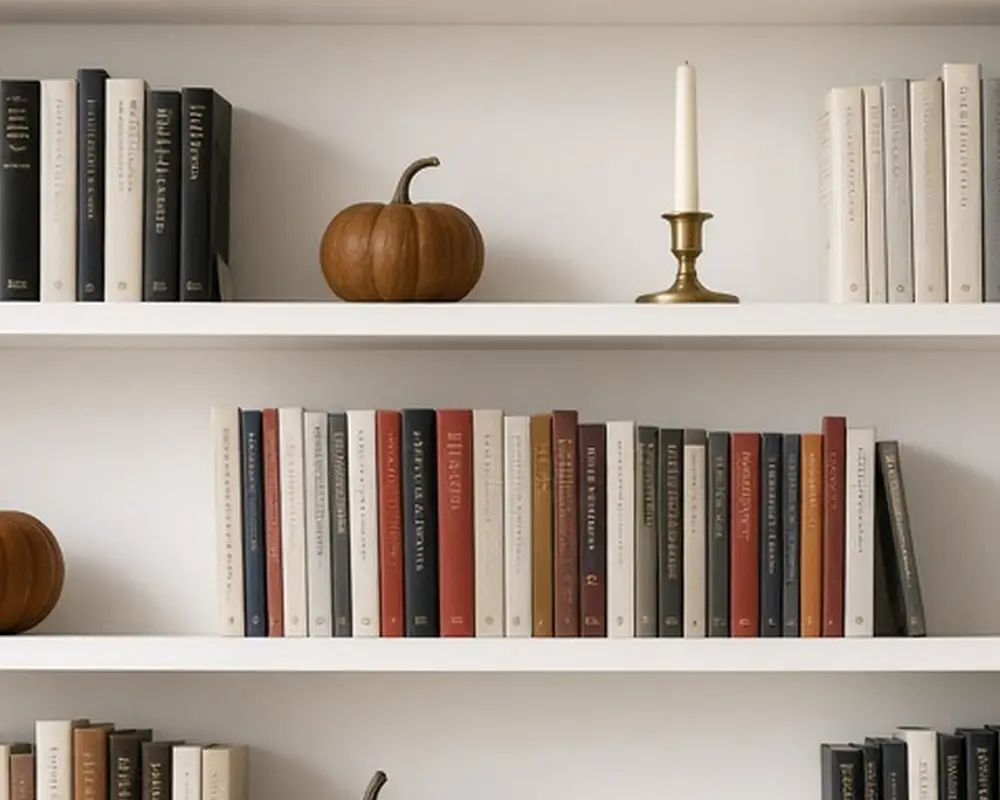
Choose a single shelf, ideally the one at eye level or in the center, and make it the seasonal shelf. Pull the books to one end, stand them upright with a bookend, and use the remaining third of the shelf for a small arrangement: a pumpkin, a candlestick, and a short stack of books lying flat. Every other shelf stays a working library.
The advantage of one seasonal shelf is that changing it takes five minutes. In September it might hold a jar of acorns and a cream candle. In late October, a small black pumpkin and a brass candlestick. By Thanksgiving, a short stack of cookbooks and a sprig of dried wheat. The rest of the bookcase never needs to move.
3. Small pumpkins as bookends
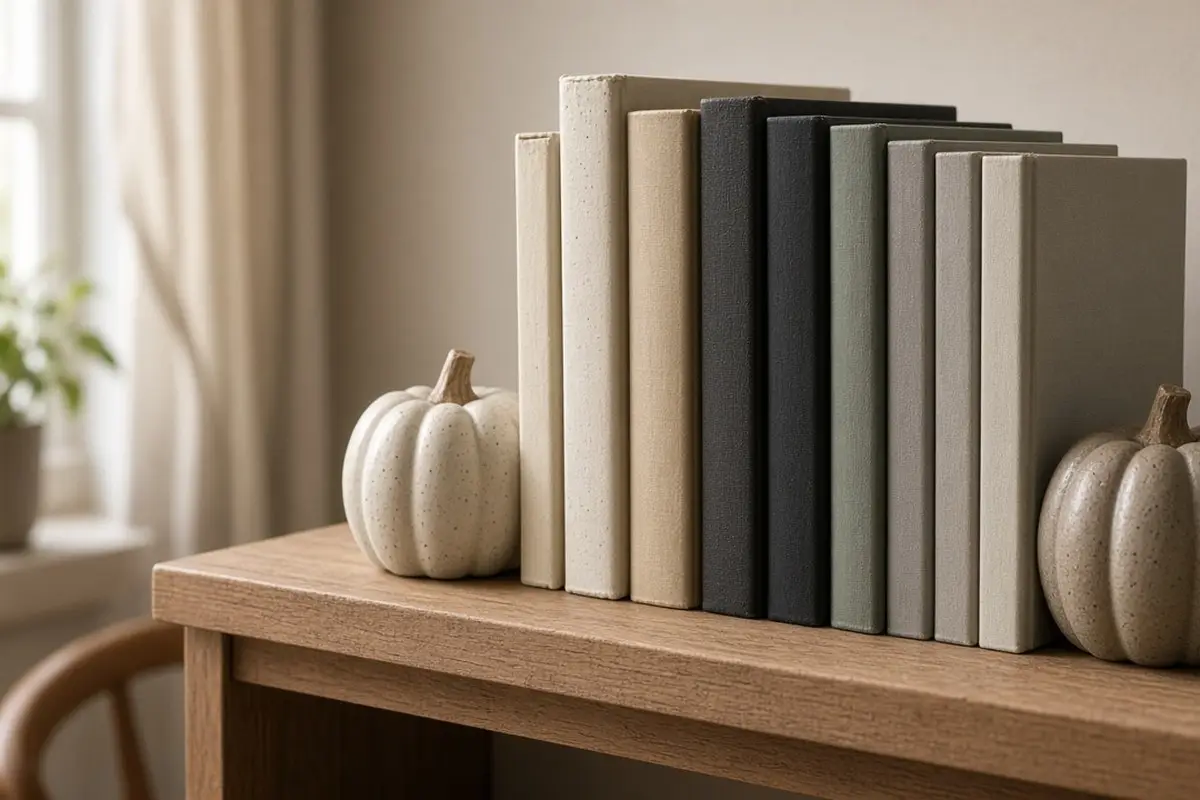
A pair of heavy faux pumpkins, ceramic pumpkins, or even real small pie pumpkins can stand in for bookends at the end of a row. They hold the books upright and add a seasonal touch without taking much room. Real pumpkins need a coaster beneath them to protect the shelf from moisture.
Weight matters here. A light pumpkin will not hold a row of hardcovers upright, so test it before you rely on it. Ceramic and resin pumpkins are usually heavy enough; a hollow plastic one is not. If yours is too light, hide a slim metal bookend behind it and let the pumpkin take the credit.
Get the look
4. Stacks topped with a single object
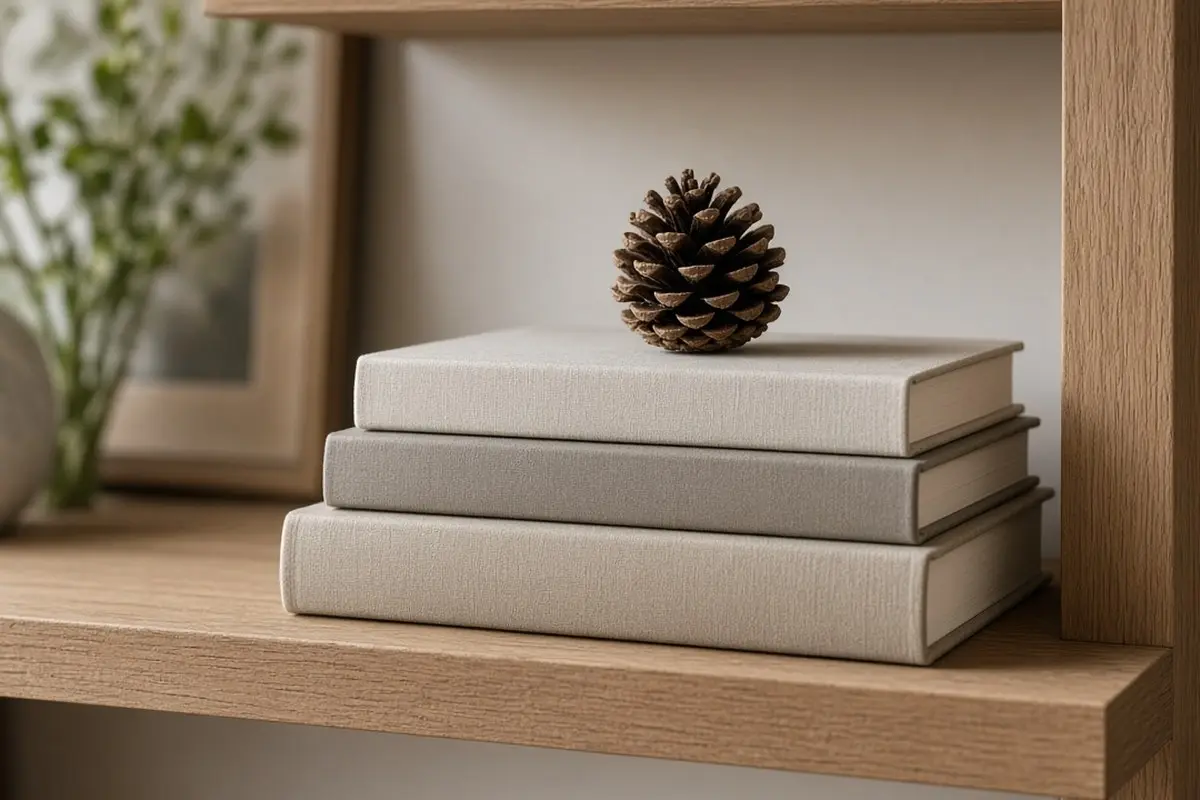
Lay a short stack of three or four books on its side and set a small object on top: a pinecone, a little brass bell, a candle in a glass holder, or a mini pumpkin. Repeat once or twice across the bookcase, staggering the stacks so they do not line up vertically. Horizontal stacks break up long rows of vertical spines and give you a little stage for each seasonal piece. Vary the height of each stack slightly, so the bookcase has rhythm rather than a row of identical pedestals, and choose books with plain cloth covers for the stacks.
Get the look
5. Dried stems in a bud vase
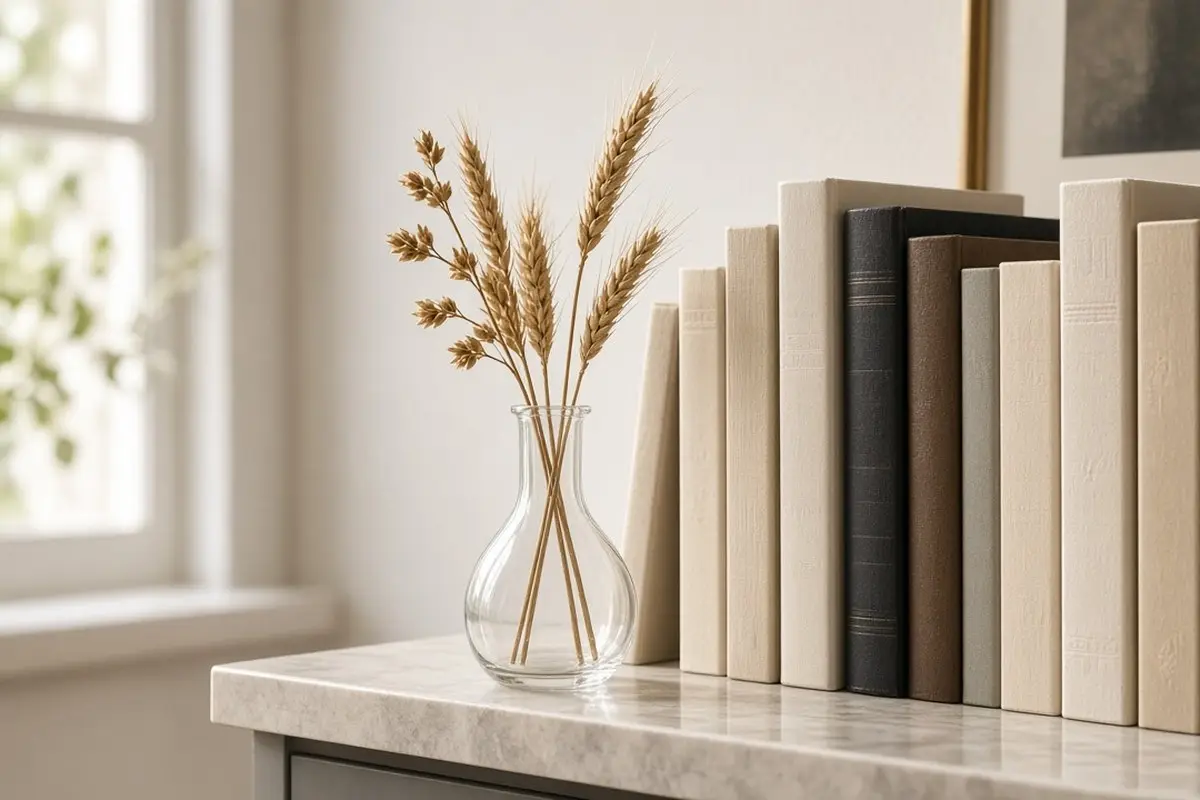
A slim bud vase with two or three stems of dried wheat, bunny tail grass, or a single branch of autumn leaves adds height without taking width. Place it in front of a row of books, slightly off-center, or at the end of a shelf next to a bookend. Because it is narrow, it does not block the spines behind it.
Dried stems hold up for months on a shelf with no care at all. Keep them out of direct sun if you want the colors to last, and give them a gentle dusting with a hair dryer on the cool setting now and then.
Get the look
6. A framed print leaning against the books
Lean a small framed print with an autumn subject, such as a botanical study of leaves, a landscape, or a still life, against the front of a row of books. It covers only a few spines and can be swapped out for a winter print in December. Choose a thin frame so it does not stick out far from the shelf edge.
Vintage botanical prints and old book plates can often be found at thrift stores, flea markets, and online for very little. A simple oak or black frame suits nearly any bookcase.
7. Candlelight on a lower shelf
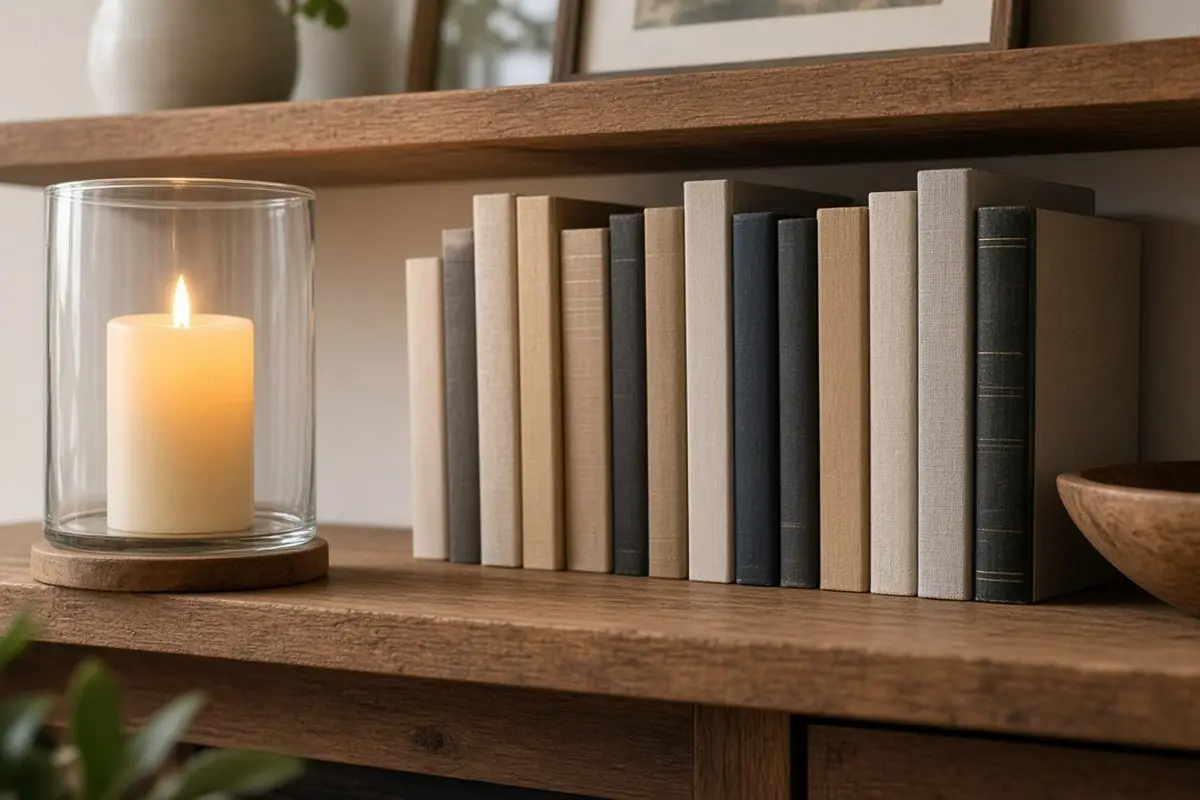
A pair of brass candlesticks with tapers, or a flameless pillar in a glass hurricane, gives a bookcase a warm glow in the evening. Place candles on a lower shelf where heat will not rise into the shelf above, and never leave real flames burning near paper unattended. Flameless candles with a timer are a sensible choice on bookshelves.
The glow does more than any single object to make a bookcase feel seasonal, because it changes the whole corner of the room after dark. If the shelves have no outlet nearby, battery-powered picture lights or puck lights stuck under a shelf give a similar warm wash over the spines. Set them to come on in the late afternoon, when the light starts to fade in autumn.
8. A garland draped along the top
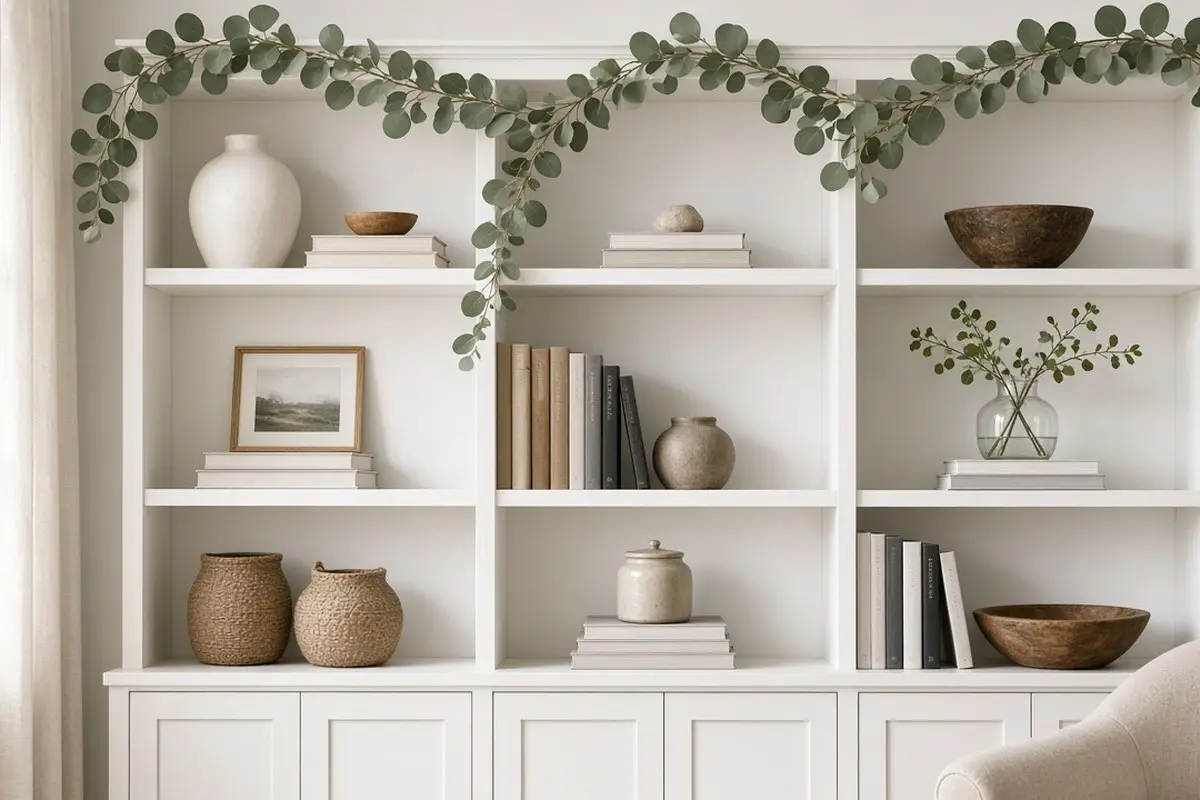
If the bookcase has a flat top or a crown molding, a garland of dried leaves, eucalyptus, or wooden beads draped across it adds a seasonal frame without touching the shelves at all. Let it hang slightly over each side. This works especially well on a pair of matching bookcases or a built-in that runs the length of a wall.
Secure the garland with small removable hooks or a few loops of clear fishing line around the crown molding, rather than tape, which can lift paint when it comes off. If the top of the bookcase is too high to see well, a garland draped along the front edge of the top shelf works instead.
Styling open cube shelves
Cube storage, such as a Kallax-style unit, needs a slightly different approach because each cube is a frame of its own. Treat a few cubes as seasonal and leave the rest for books and bins. One cube might hold a stack of books with a pumpkin on top, another a bud vase and a candle, and a third a woven basket of throws. Use a checkerboard pattern so the seasonal cubes are spread out rather than clustered. Our Kallax bedroom wall guide has more on keeping cube shelves tidy.
Choosing a palette
Fall does not have to mean orange. A shelf styled in cream, tan, and soft white pumpkins with dried grasses looks calm and suits a pale room. Deep greens, burgundy, and brass feel rich and suit a darker library. Pick one palette and repeat it, and the bookcase will look curated instead of busy.
Get the look
Keep the ratio in mind
A useful rule of thumb is that roughly four-fifths of the shelf space should stay books, with seasonal pieces filling the rest. Any more than that and the bookcase starts to look like a store display rather than a library.
Spread the seasonal pieces across the whole bookcase rather than clustering them on one side. A loose zigzag pattern works well: something on the upper left, the middle right, and the lower left, so your eye moves across the shelves naturally. Repeating one material, such as brass or a single shade of orange, in three places ties the whole bookcase together.
Taking it down
Because the books never moved far, taking down a fall shelf is fast. Collect the pumpkins, candles, and stems into one box labeled for next year, put the warm-colored books back in their usual places, and the bookcase is ready for winter. Many pieces, such as brass candlesticks, bud vases, and wooden bookends, can stay out all year with only a change of stems.
Common questions
How do you decorate a bookshelf for fall without removing books? Group warm-colored spines, use small pumpkins as bookends, top short book stacks with a seasonal object, and add a bud vase or a garland.
How many decorative items should go on a bookshelf? Usually one to three per shelf, leaving most of the space for books.
Can I use real pumpkins on a bookshelf? Yes, small ones, set on a coaster or a small dish and checked weekly. Remove any that soften to protect the books and shelves.
For more on building and organizing a book collection, see our paperback home library guide, and for inexpensive seasonal pieces that suit shelves, see budget fall decor.