
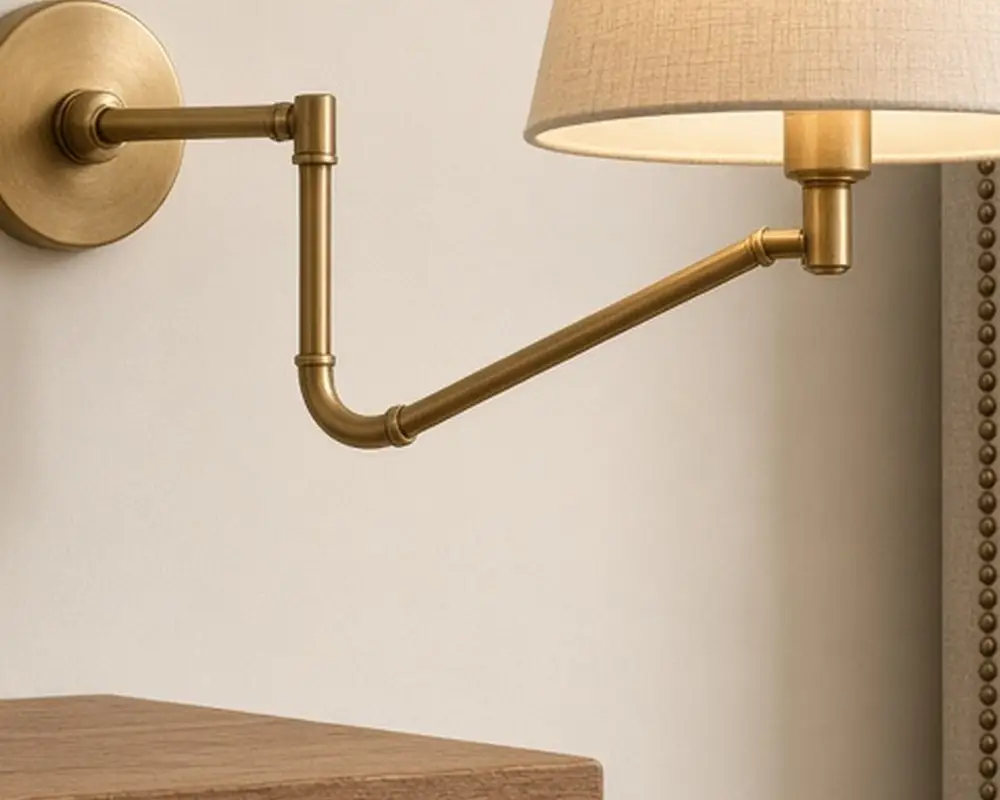
8 Wall Sconce Heights for Halls, Beds, and Baths

On this page14 sections
- The basic idea: eye level, out of the eyes
- Hallways: high enough to pass under
- Bedside: by the reading position, not the headboard
- Bathroom mirrors: flank the face
- Over a bathroom mirror when there is no side room
- Stairs: light the treads
- Living rooms: framing art or a fireplace
- Over a desk or a reading chair
- Plug-in sconces for renters
- Test before you mount
- Hardwired or plug-in
- Bulb choice
- Quick answers
- Getting it right
A wall sconce is one of the most useful lights in a house and one of the easiest to get wrong. Mount it too low and it shines in your eyes. Mount it too high and it lights the ceiling instead of the room. Space a pair too far apart and they look like two lonely lights; too close and they crowd the mirror or the bed.
The heights below are common starting points used by designers and lighting suppliers, not strict rules. Rooms, ceiling heights, fixture shapes, and the people who live in a house all vary, so treat each number as a place to begin and adjust before you commit. The most useful habit in this whole guide is the one at the end: test the position with tape and a lamp before anyone cuts into a wall.
We have covered hanging lights over an island in the guide to kitchen island light height. Sconces work differently because they sit at eye level, so glare and shadow matter more than clearance.
As an Amazon Associate I earn from qualifying purchases.
The basic idea: eye level, out of the eyes
Most sconce height advice comes down to one aim. The light source, meaning the bulb itself, should sit near or just above eye level so it lights faces and walls without shining straight into anyone’s eyes. In most homes with ceilings around 8 to 9 feet, that puts the center of a typical sconce somewhere around 60 to 72 inches above the floor.
Three things move that number:
- The shade. A sconce with an opaque shade that points light up or down can sit a little lower than a bare bulb, because you do not see the bulb directly.
- The ceiling height. Taller ceilings let you raise the sconce slightly, keeping it in proportion with the wall.
- The people. Households with tall or short members may want to adjust to suit them, especially near mirrors.
Measure from the finished floor to the center of the fixture’s backplate or the center of the shade, and decide which you are using before marking the wall. Fixture instructions sometimes give their own recommendations, and those take priority.
1. Hallways: high enough to pass under
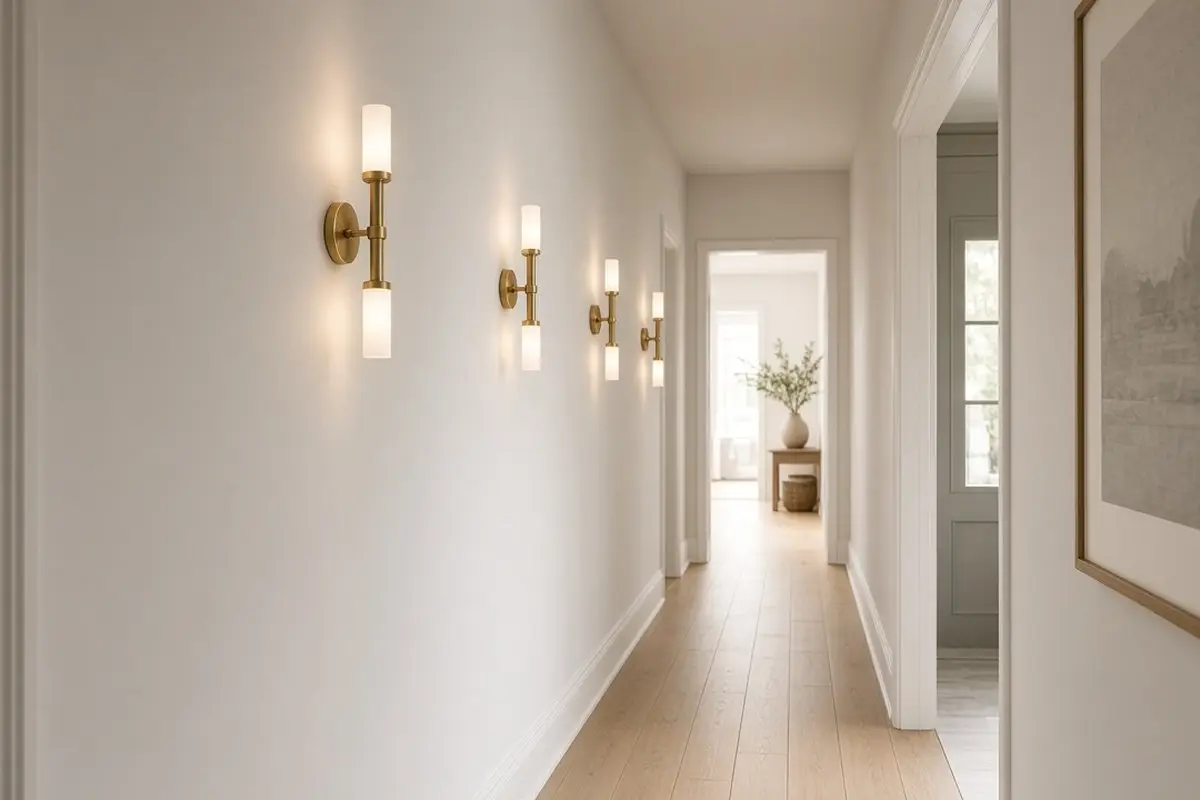
In a hallway, a sconce needs to light the path and the walls without becoming something people bump into. A common starting point is about 66 to 72 inches to the center of the fixture, which keeps the bulb above eye level for most adults.
Depth matters as much as height in a hall. Many building guidelines limit how far wall-mounted objects can project into a walkway at certain heights, so choose a slim fixture, ideally projecting no more than about 4 inches. A flush or low-profile sconce that washes light up and down is a good fit.
For spacing, many designers place hallway sconces roughly 8 to 10 feet apart, or space them so their pools of light just overlap. In a short hall, one sconce at each end may be enough. For more on making a long hall feel intentional, see long hallway ideas.
Get the look
2. Bedside: by the reading position, not the headboard
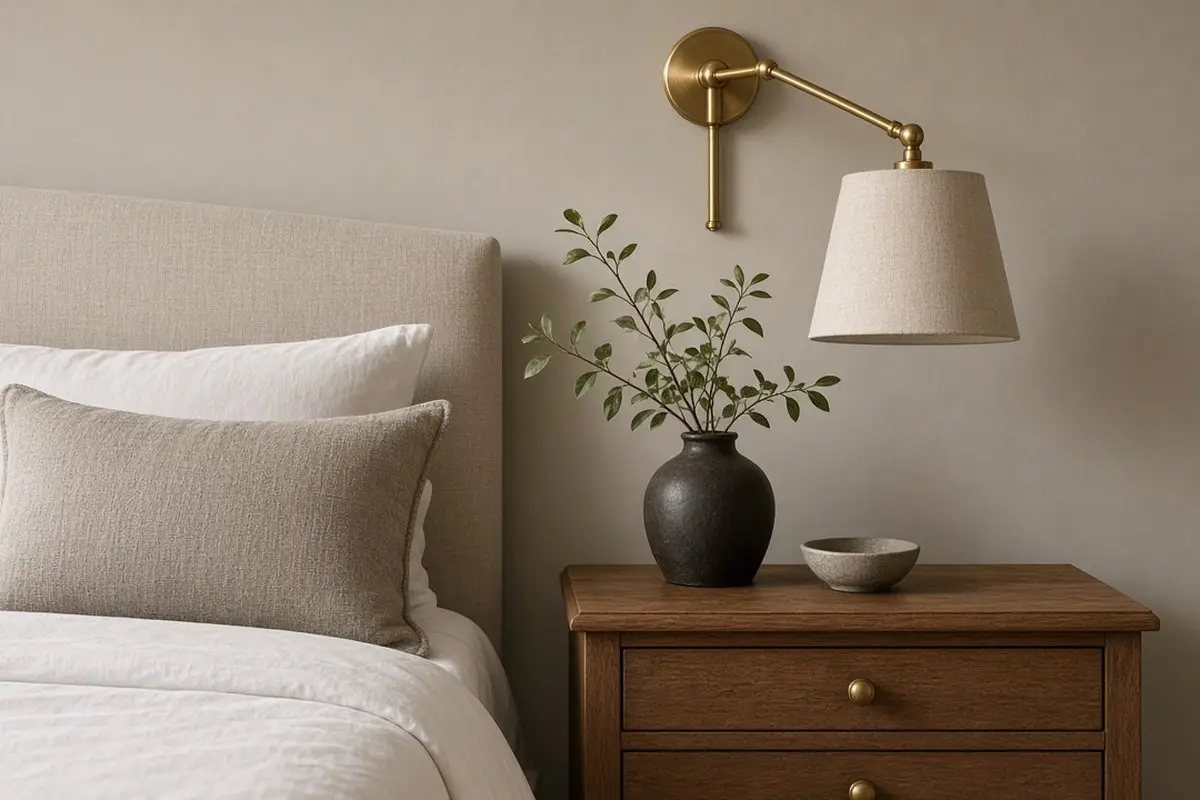
Bedside sconces free up nightstand space and give focused reading light. The key is to place them for someone sitting up in bed, not for how they look on an empty wall.
A common starting point is about 48 to 60 inches from the floor, or roughly 20 to 30 inches above the top of the mattress. The bottom of the shade should land around the shoulder height of a person sitting up against the headboard, so light falls onto the book and not into the eyes.
Horizontal placement matters as much. Mount each sconce near the outer edge of the nightstand or about 6 to 12 inches beyond the width of the bed, so the light falls on the reader’s lap rather than on a partner. Swing-arm sconces are forgiving because the arm adjusts the position.
Get the look
3. Bathroom mirrors: flank the face
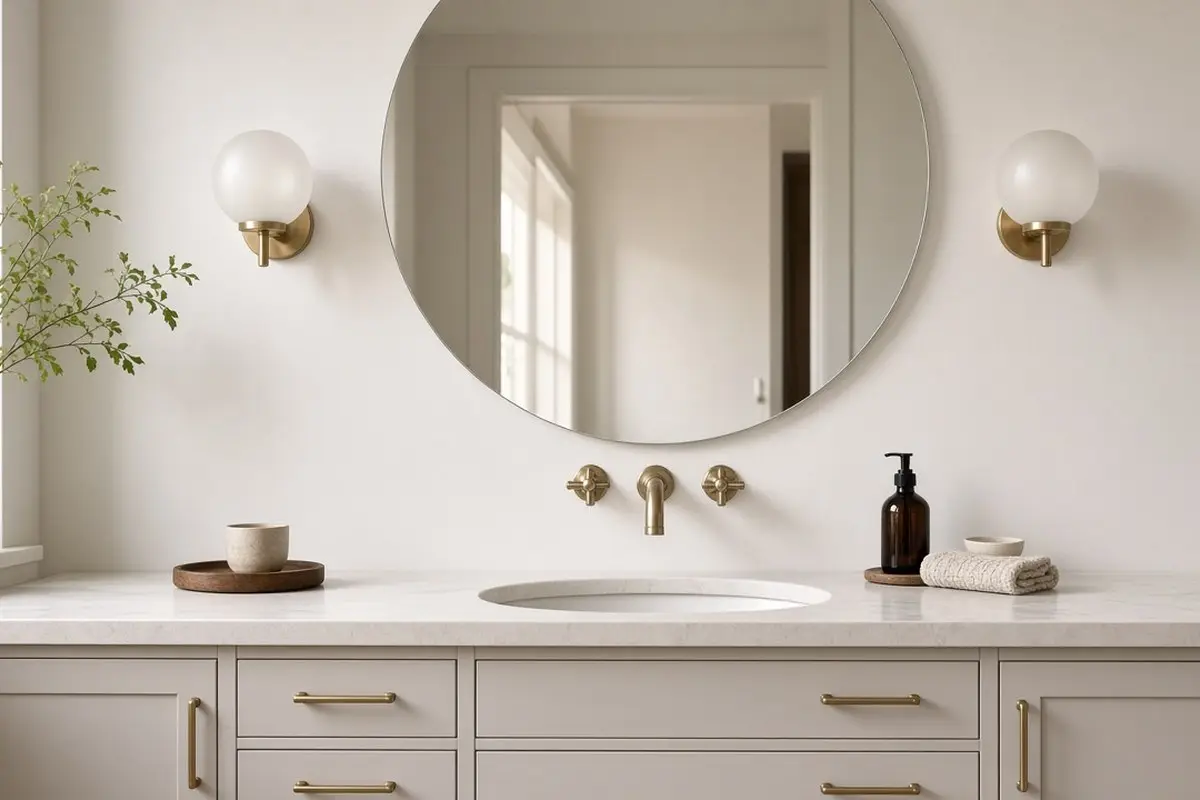
The best bathroom mirror lighting comes from the sides, at face height, because light from above casts shadows under the eyes and chin. A pair of sconces flanking the mirror gives even, flattering light for shaving, makeup, and skincare.
A common starting point is to center the sconces at about 60 to 66 inches from the floor, roughly at eye level. Space them about 28 to 40 inches apart, which typically places them a few inches outside each edge of the mirror. Frosted or fabric shades diffuse light and reduce glare.
Check the fixture’s rating. Sconces near a shower or tub may need a damp or wet location rating, and local electrical codes set rules about fixtures near water. A licensed electrician can confirm what applies to your bathroom.
Get the look
4. Over a bathroom mirror when there is no side room
Some bathrooms have mirrors that run wall to wall, leaving no room for side sconces. In that case, a single sconce or a light bar above the mirror is the practical choice.
Mount it about 75 to 80 inches from the floor, or a few inches above the top of the mirror. Choose a fixture at least as wide as a good part of the mirror, with a diffused lens that spreads light downward and outward. A fixture that points slightly forward lights the face better than one aimed straight down.
Some people add sconces mounted directly onto a large mirror. This requires a mirror designed for it, and it is a job for a professional installer.
5. Stairs: light the treads
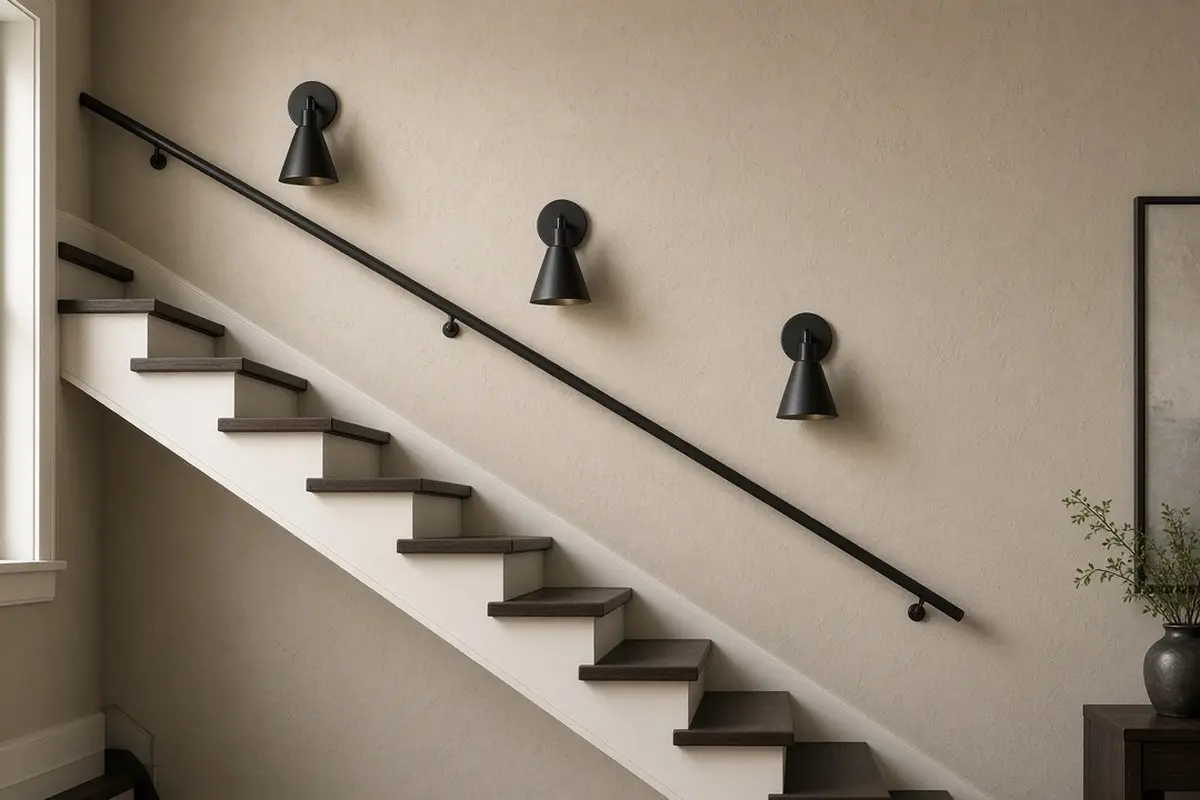
On a staircase, sconces help people see each step, which is a safety matter, not just a style choice. Mount them so the light falls on the treads and the bulb does not shine into the eyes of someone walking up or down.
A common approach is to place each sconce about 66 to 72 inches above the stair nosing, measured vertically from the edge of the step directly below. Follow the angle of the stairs, keeping each sconce the same height above its step. Place one near the top and one near the bottom, and add more on long runs.
For other ideas on this wall, see stair wall art height.
Get the look
6. Living rooms: framing art or a fireplace
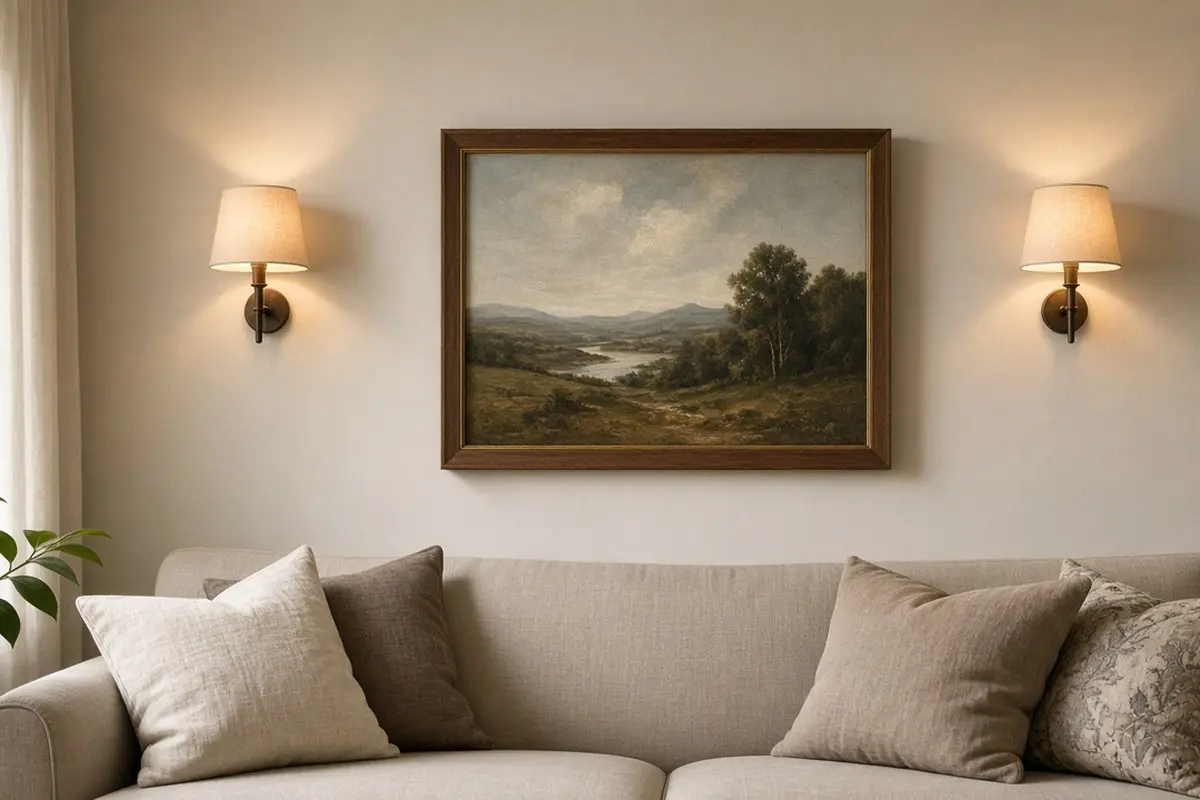
In living spaces, sconces add a warm layer of light in the evening and help a room feel less dependent on overhead fixtures. Placed on either side of a fireplace, a mirror, a bookcase, or a piece of art, they create symmetry and a soft glow.
A common starting point is about 60 to 66 inches from the floor to the center of the fixture, adjusted to suit the height of the art or mantel. Keep a pair at the same height and equally spaced from the feature they frame.
Use warm bulbs, around 2700K, on a dimmer. Living room sconces are usually ambient light, not task light, so softer is better.
Get the look
7. Over a desk or a reading chair
A sconce over a reading chair or desk is a task light, so its job is to put light onto the page or the keyboard. Mount it so the bottom of the shade sits around shoulder height of the seated person, often about 48 to 54 inches from the floor for a typical lounge chair.
Position it slightly to the side and behind the reader, on the side of the hand they do not write with, so the light falls on the book without casting the shadow of the hand. A swing arm helps fine-tune the position.
8. Plug-in sconces for renters
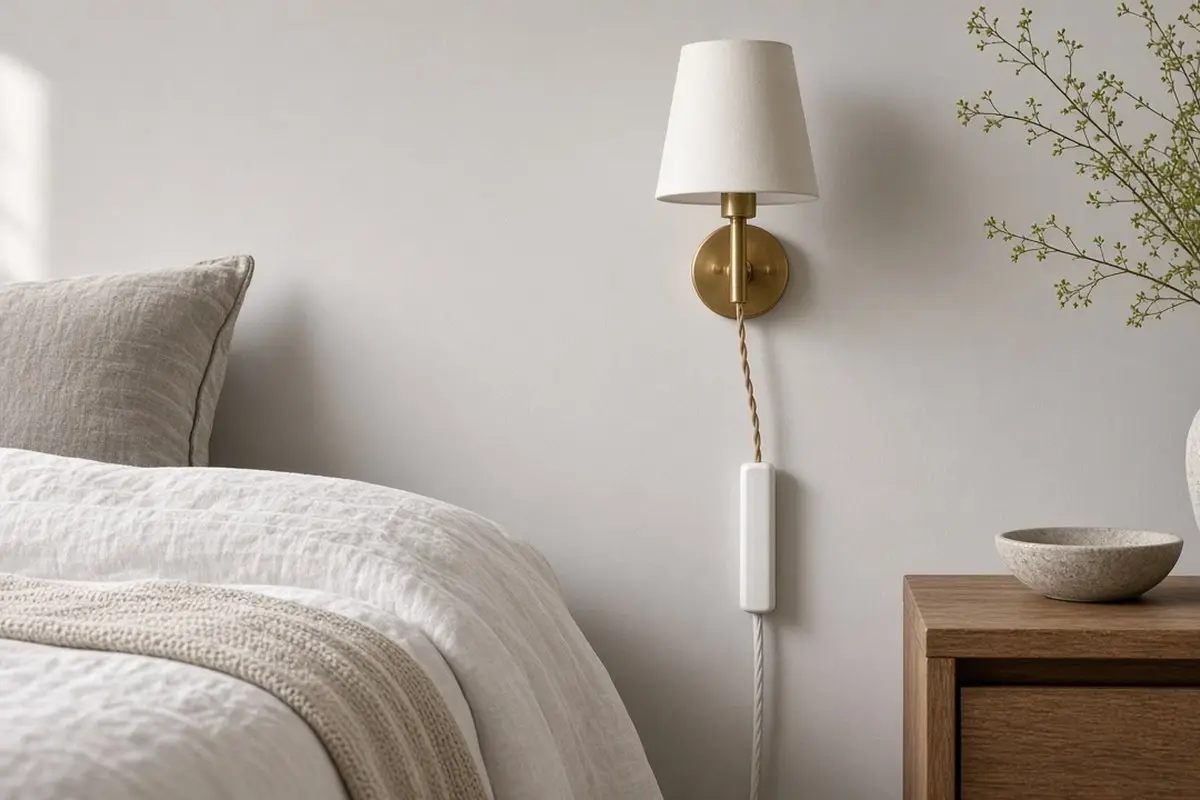
Renters can still have sconces. Plug-in sconces mount to the wall with a couple of screws and run a cord down to an outlet. The same height guidelines apply. The cord can be hidden with a paintable cord cover or styled as a deliberate detail with a fabric cord.
Choose sconces with an inline switch or use a smart plug so they are easy to control. Plug-in sconces are a good test, too: if you plan to hardwire later, living with a plug-in version first tells you if the height is right.
Get the look
Test before you mount
Before drilling, try the position. Mark the proposed center with painter’s tape. Hold the sconce, or a simple paper cutout of the same size, against the wall. Then do these quick checks:
- Sit and stand where you will use the light. In bed, on the sofa, at the mirror. Does the bulb shine into your eyes?
- Check the shadow. At a mirror, check that the light reaches both sides of your face evenly.
- Check from the doorway. A sconce that looks right up close may look too high or too low from across the room.
- Check clearance. Make sure doors, cabinet doors, and drawers do not hit the fixture.
Leaving the tape on the wall for a day or two is worth it, especially for a pair.
Hardwired or plug-in
Hardwired sconces look the cleanest, with no visible cord. Adding new hardwired sconces usually means running new wiring through the wall and installing electrical boxes, which is a job for a licensed electrician in most places. Replacing an existing sconce with a new one on the same box is a simpler job, but always turn off the power at the breaker and confirm it is off with a voltage tester.
Bulb choice
The right bulb matters as much as the height.
- Color temperature: 2700K for living rooms and bedrooms; 3000K for bathrooms where you want slightly crisper light.
- Brightness: sconces are often supporting lights, so modest output is usually enough, especially on a dimmer.
- Color rendering: at a bathroom mirror, a high CRI bulb shows skin tones more accurately.
Quick answers
What is the standard height for a wall sconce? A common starting point is about 60 to 72 inches to the center, but bedside and desk sconces are usually lower.
How far apart should a pair of sconces be? At a vanity, about 28 to 40 inches. By a bed, near the edges of the nightstands.
Can a sconce go on a mirror? Only on a mirror designed for it, installed by a professional.
Getting it right
Sconces are a small detail that makes a big difference to how a room feels at night. Choose the height for the person using the light, check glare and shadow with tape, and adjust before the drill comes out.