
9 Long Hallways With One Reason to Slow Down

On this page15 sections
- Read the hallway first
- A painting at the end of the corridor
- A bench nook halfway along
- A console with a lamp
- A runner that leads somewhere
- A gallery wall in one place
- A window seat or reading spot
- A large mirror opposite a door
- Wall sconces in a rhythm
- A tall plant at a turn
- Keep the rest of the hallway quiet
- Lighting a long corridor
- Wide hallways and foyers
- A quick plan to follow
- Common questions
A long hallway is a strange space. It is too big to ignore, too narrow to furnish like a room, and most of us walk straight through it a hundred times a day without looking. The common mistake is to fill every wall with something, a row of frames, a parade of baskets, three console tables, so the corridor feels busy without feeling better.
The hallways that work usually do one thing well. They give you a single reason to slow down: a bench nook halfway along, a painting at the end, a window seat, a lamp glowing on a console. Everything else stays quiet so that one moment can stand out. This post walks through nine of those moments and how to set up the rest of the hallway around them.
As an Amazon Associate I earn from qualifying purchases.
Read the hallway first
Walk the hallway from both ends and notice where your eye lands. In a long corridor, the far wall is the natural focal point, because you see it every time you walk in. Halfway points, alcoves, and the space beside a window are the next best spots. Measure the width too. A hallway under about three and a half feet wide needs flat, wall-hung pieces; anything wider can take a slim bench or a console without blocking traffic. Keep a clear path of at least three feet.
Then decide on one stopping point. It might be the far wall, a nook, or the stretch by the front door. The other walls get calm, consistent treatment: one paint color, a single runner, and simple lighting.
1. A painting at the end of the corridor
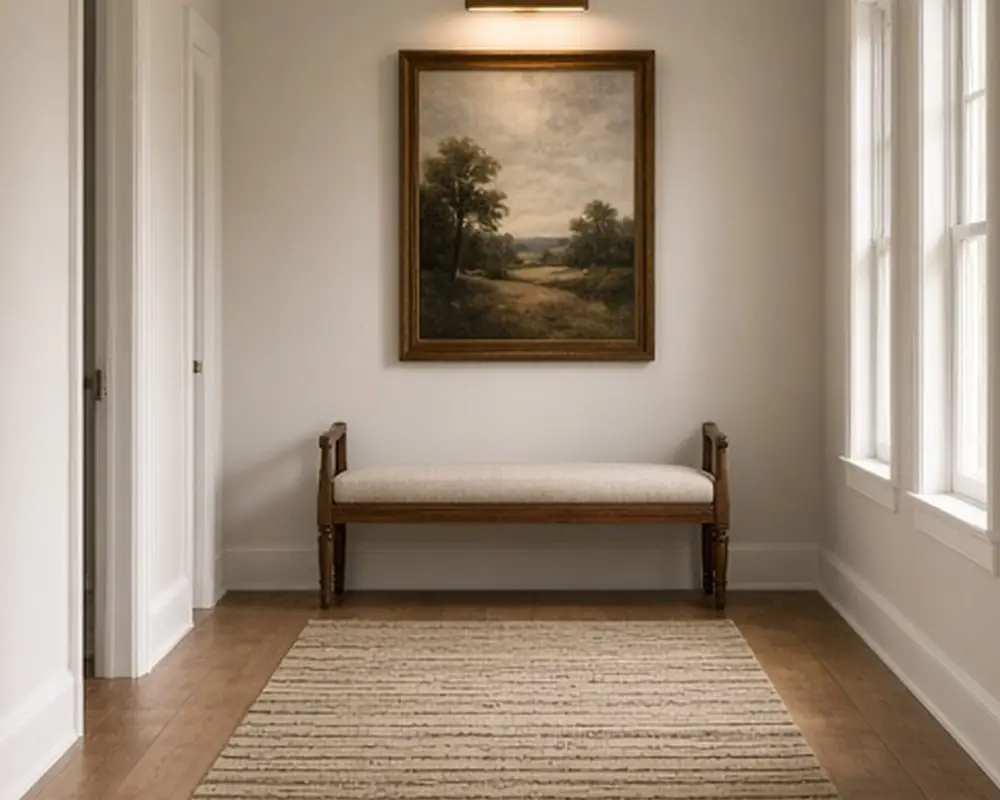
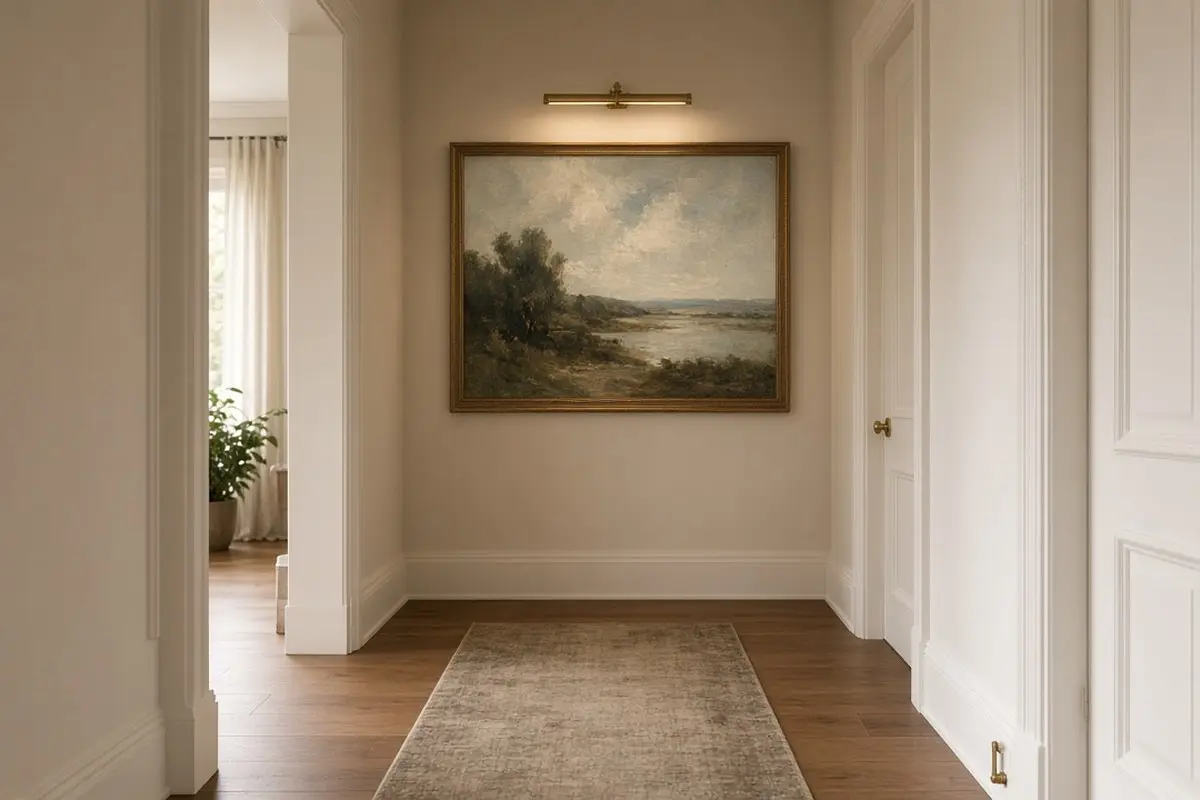
The end wall is the best spot in any long hallway. One large painting or print, lit by a picture light or a sconce on each side, pulls you down the corridor and makes the length feel intentional. Choose something big enough to be seen from the far end, usually at least two feet across. If the end wall has a door, hang art above it or place a pair of sconces either side to frame it instead. A bold paint color on the end wall alone, like a deep green or terracotta, works too, and pulls the eye even before you add art. Keep the side walls lighter so the contrast does the work. A picture light on a timer means the painting glows every evening as you walk in, which turns a dull corridor into the first thing guests remember.
Get the look
2. A bench nook halfway along
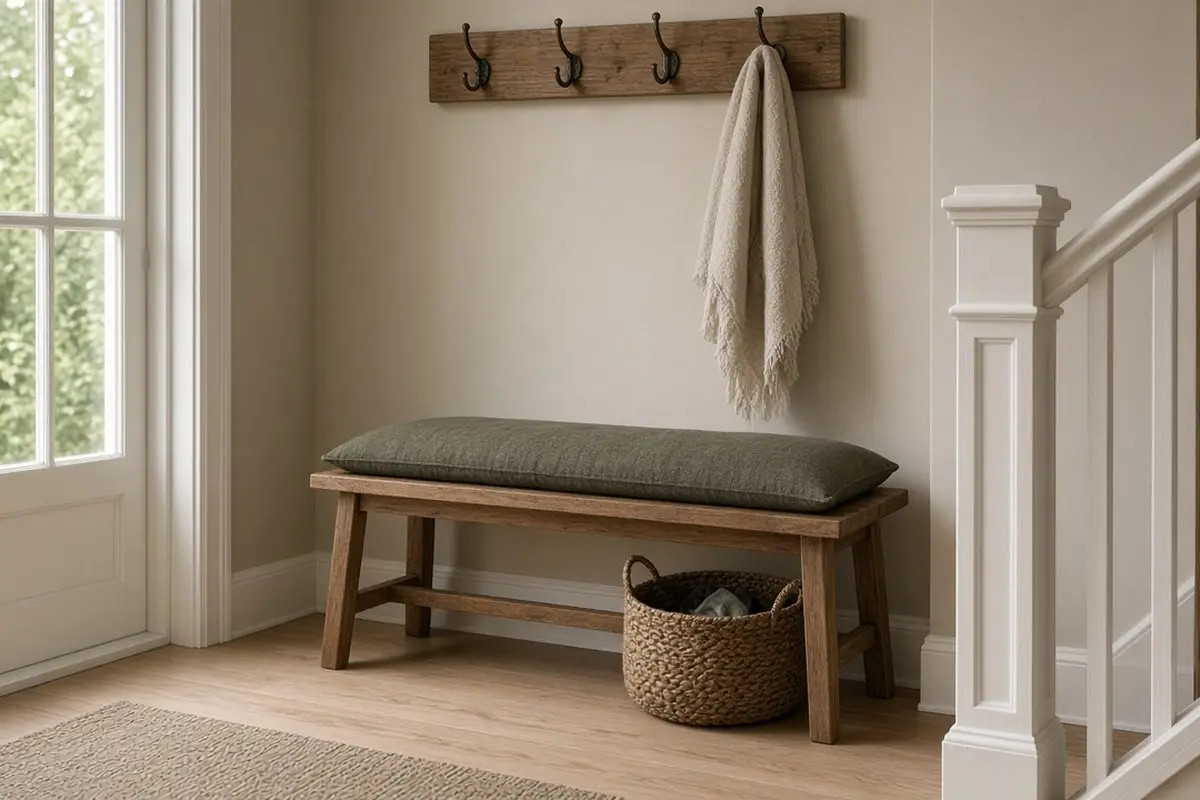
A slim bench with a cushion, a few hooks above, and a small basket below gives the hallway a place to sit and take off shoes. In a wide entry hallway, this becomes the true landing zone. Choose a bench around fourteen to sixteen inches deep for a hallway; deeper benches crowd the path. Hooks mounted at two heights let adults and kids hang coats, and a lidded basket underneath hides shoes. A small framed mirror above the hooks makes the nook useful for a last check before leaving. Keep this nook close to the front door so it catches coats and bags before they travel further into the house.
Get the look
3. A console with a lamp
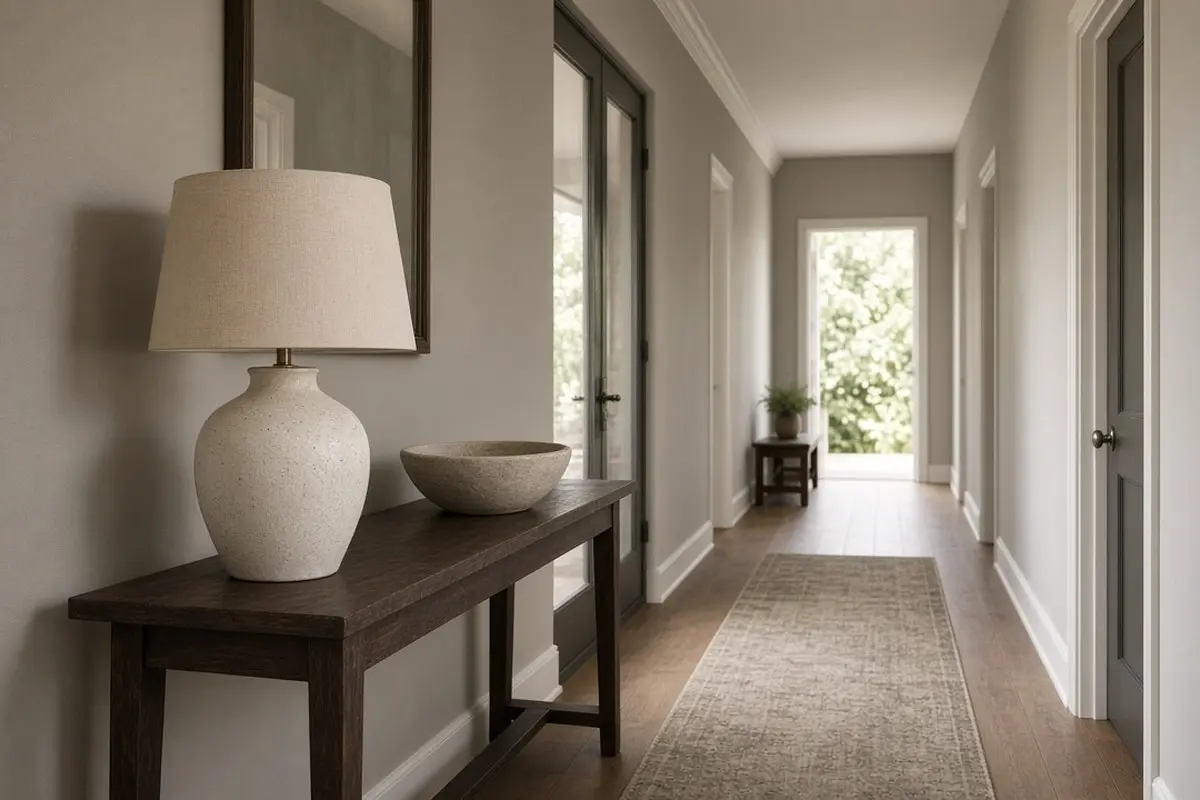
A narrow console with a table lamp creates a warm glow in the middle of a dark corridor. Add a bowl for keys and a small stack of books, and leave the rest of the surface clear. A console between ten and twelve inches deep fits most hallways. A lamp on a timer or smart plug comes on at dusk so the hallway is never dark when you arrive home. Hang a mirror or a single picture above to anchor the arrangement, and slide a pair of stools or a basket underneath if you want a little storage.
4. A runner that leads somewhere
A long runner draws the eye down the corridor toward your stopping point. Choose one that leaves a few inches of floor showing on each side and ends just short of the far wall. Stripes running lengthwise make a hallway look longer; a pattern with a border frames it. In a very long hallway, two runners of the same design with a small gap between them work better than one custom length, and they are easier to wash. A rug pad keeps them from sliding. Choose a flatweave or low pile so doors swing freely over it.
Get the look
5. A gallery wall in one place
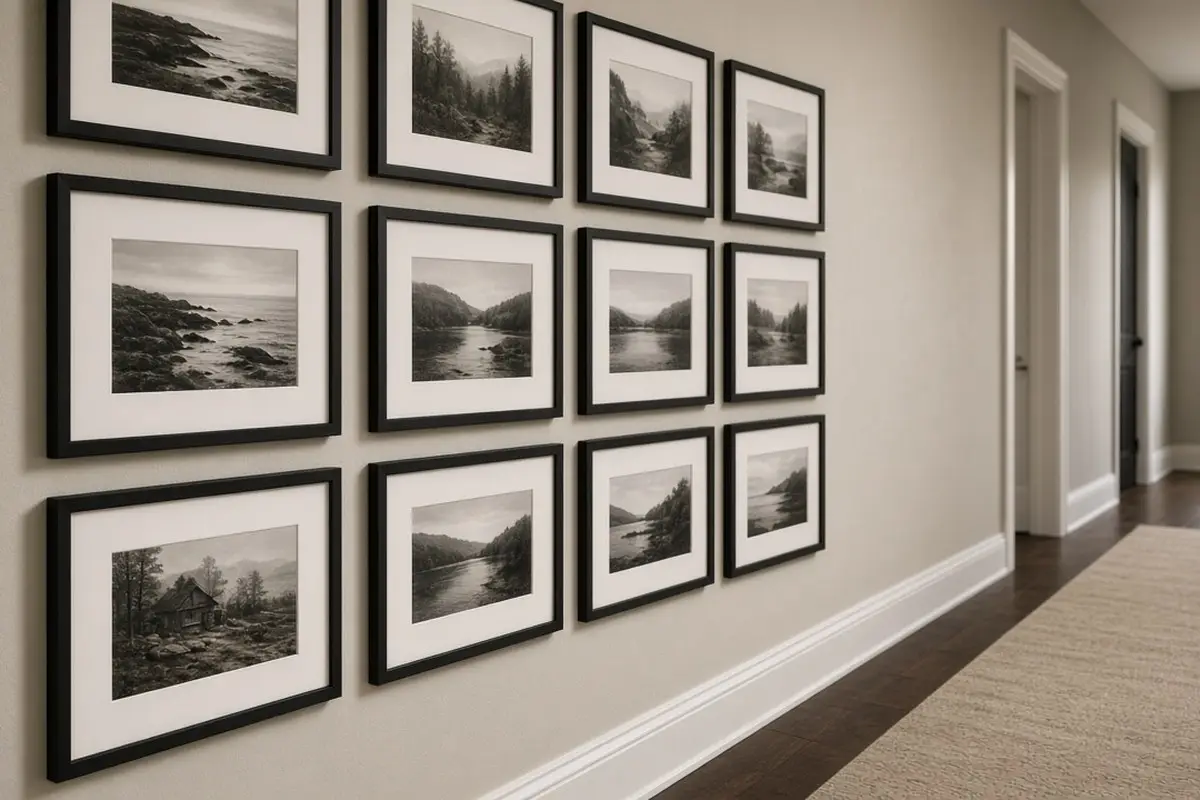
If you love frames, group them in one section rather than spreading them along the whole corridor. A grid of matching frames on one stretch of wall reads as a single feature. Use the same frame color and mat for every piece, and keep the gaps between frames even, around two to three inches. Place the gallery at the stopping point rather than at the busy end by the front door, so people can actually pause to look.
Get the look
6. A window seat or reading spot
If the hallway has a window, put a cushion, a small lamp, and a stack of books there. A window spot is the most natural place to pause. Even a deep sill can become a seat with a cushion cut to size. A plant and a small basket of books make it inviting.
Get the look
7. A large mirror opposite a door
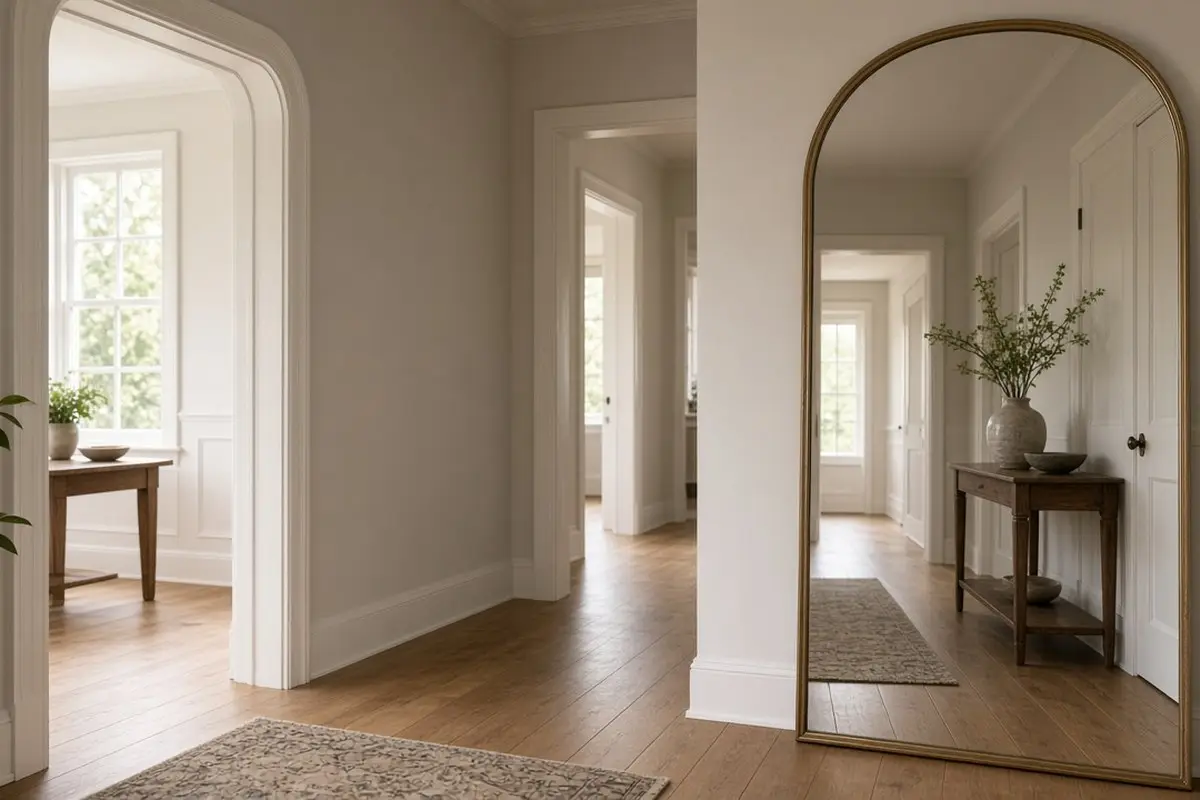
A mirror opposite a doorway or window bounces light into the hallway and makes it feel wider. Use one large mirror rather than several small ones. Hang it where it reflects something pleasant, like a window or a painting, rather than a blank wall or a bathroom door.
Get the look
8. Wall sconces in a rhythm
Evenly spaced sconces make a long corridor feel calm and lead you toward your focal point. Plug-in versions avoid rewiring. Space them roughly every eight to ten feet, at about sixty inches from the floor, and use warm bulbs. Dimmers let you turn the hallway into a soft night path.
Get the look
9. A tall plant at a turn
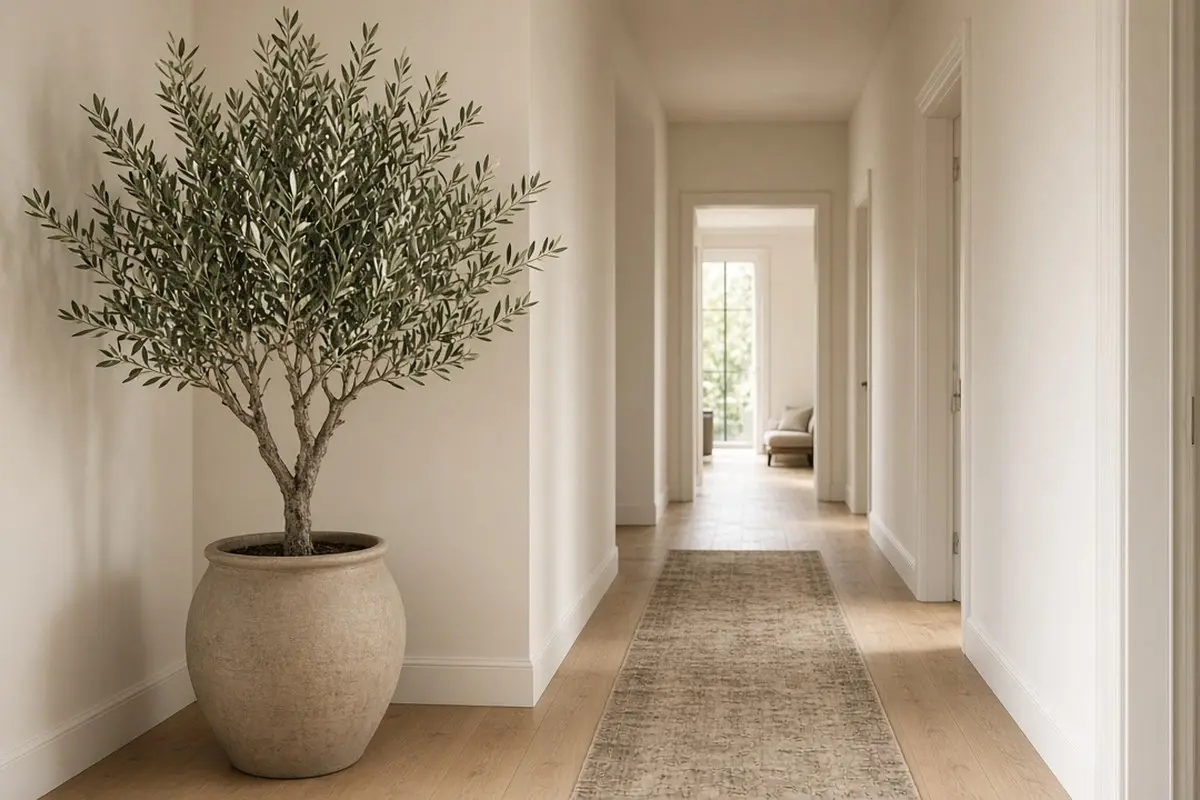
A tall plant at a corner or turn softens the hallway and marks the spot. Choose a plant that tolerates low light, such as a snake plant or a ZZ plant, unless the corner has a window. A tall faux olive tree is a low-care alternative.
Keep the rest of the hallway quiet
Once you have your stopping point, the rest of the corridor should support it rather than compete. Paint all the side walls one color, ideally the same soft tone as the rooms that open off the hallway, so the corridor feels connected to the house. Paint doors and trim consistently too; a mix of white and wood doors along a long hall makes it feel choppy. If the hallway has many doors, a slightly darker or warmer trim color can make them recede.
Avoid lining the walls with small shelves, hooks, and frames from end to end. Every object you add slows people down and collects dust, and too many of them make the stopping point disappear. If you need storage, concentrate it near the entry and keep the deeper parts of the corridor clear.
Lighting a long corridor
Most long hallways have one or two ceiling lights that leave dark patches between them. Layering is the fix. Keep the ceiling lights for general light, add sconces or a lamp at the stopping point, and consider a picture light on the end wall. A warm, slightly lower light at the focal point than in the rest of the hall makes it feel inviting. Motion-sensor night lights along the baseboard are a practical touch for late-night walks to the kitchen or bathroom.
Wide hallways and foyers
If your hallway is wide enough to feel like a foyer, you can treat the stopping point as a small room. A round table with a vase of branches, a pair of chairs flanking a console, or a bench with a large mirror above can all anchor the space. Keep the arrangement centered on the end wall or the widest point, and leave generous space to walk around it. A wide hallway handles a bigger rug, too; a rectangular rug in the foyer area plus a runner beyond it defines the two zones.
A quick plan to follow
Start by clearing the hallway completely, then add back in this order: paint, runner, lighting, the one stopping point, and finally a plant or mirror if there is still a dark spot. Live with it for a couple of weeks before adding anything else. Most long hallways look best with far less than you expect, and the one moment you chose will feel much stronger for it. If you later want more, add it at the stopping point rather than along the walls, so the hallway keeps its single clear reason to slow down and the walk through it stays calm. Less really is more here, and it shows every day.
Get the look
Common questions
How do I decorate a long hallway? Pick one focal point, like art at the end wall or a bench nook, and keep the rest simple with one paint color, a runner, and evenly spaced lighting.
How do I make a long hallway look shorter? Use a bold color or large art on the end wall, and a runner with a cross pattern rather than lengthwise stripes.
What furniture fits a wide hallway? A slim console or bench around twelve to sixteen inches deep, leaving at least three feet of clear walkway.
For more on getting light into a narrow space, see our post on mirror placements for light and the small front porch ideas for the entry outside.