
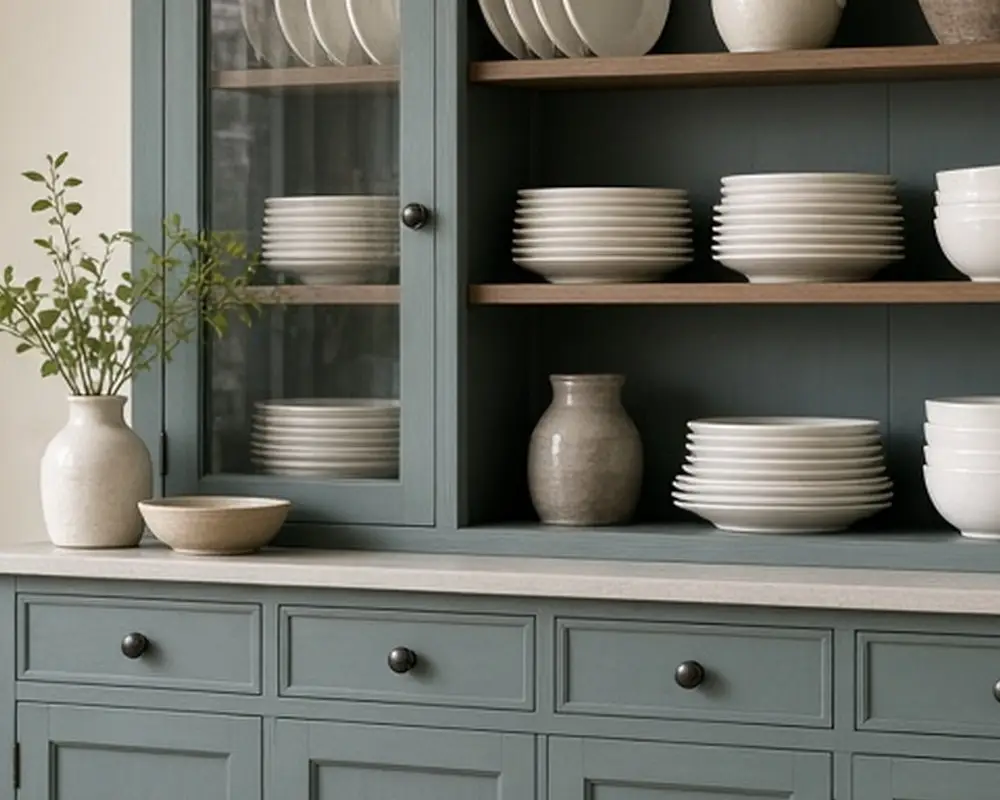
9 Hutches You Can Style and Still Open

On this page12 sections
- Sort what goes in before you style
- Stacks, not stands
- A shelf riser to double the space
- One color family behind the glass
- Hooks for cups under a shelf
- Linens and napkins in the drawers
- Baskets behind the lower doors
- A styled top shelf for the things you rarely touch
- Lighting inside the cabinet
- A clear top with one tall piece
- Keep it working
- Common questions
A hutch styled for a photograph and a hutch you use every day are rarely the same piece of furniture. The photo version has plates propped on stands, a stack of books on every shelf, and a garland across the top. Then someone needs a serving bowl, opens the door, and three things fall over. Within a month the styling is gone and the shelves are a jumble.
The ideas here start from use. A good hutch holds the dishes you actually reach for, shows a few pieces you love, and lets you open every door and drawer without moving anything first. Styling is what you do with the space left over, not the reason the hutch exists.
As an Amazon Associate I earn from qualifying purchases.
Sort what goes in before you style
Empty the hutch completely. Split everything into three groups: things you use weekly, things you use a few times a year, and things you keep for looks or memory. Weekly things go at waist to shoulder height, where you can reach without a stool. Occasional things go low, behind solid doors or in drawers. Display pieces go behind glass or on the top shelf, where they are seen but rarely touched.
Anything that fits none of these groups probably does not belong in the hutch at all.
Be honest about the serving pieces too. Most families use two or three platters and bowls regularly and keep a dozen more. Keep the regulars in the hutch and move the rest to a closet shelf.
This sort is worth doing slowly. Many hutches hold a set of wedding china used once a decade, while everyday plates live in an overcrowded kitchen cabinet. Consider swapping: put everyday dishes in the hutch, where they are close to the table, and box the fine china in padded storage on a high shelf or the lower cabinet. A hutch that serves the table every night is worth more than one that guards dishes nobody touches.
Measure the shelves too. Many older hutches have shelves too shallow for modern dinner plates, which are often 11 inches across. If plates do not fit flat, use that shelf for bowls, glasses, or cups, and keep plates on the deeper lower shelves.
1. Stacks, not stands
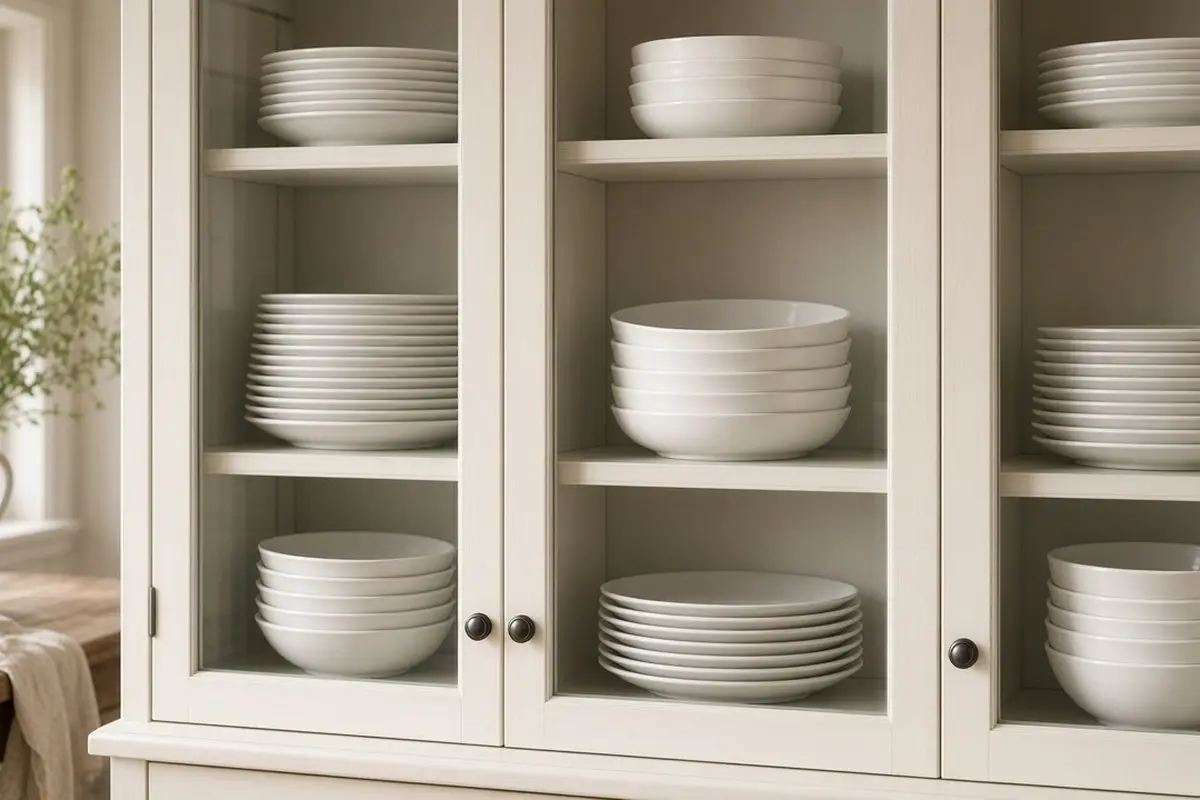
Plate stands look lovely but turn every plate into a balancing act. For dishes you use, stack them flat in neat piles of eight to twelve. A tall, tidy stack of white plates is a display in itself, and you can lift the top plate off without disturbing anything.
Stacking also protects dishes. Plates on stands get bumped by doors and knocked by elbows, while a flat stack is steady. Put a felt plate divider or a paper napkin between fine plates to stop scratches. Line the backs of open shelves with a painted panel or wallpaper if you want color behind the white stacks; it adds interest without adding objects. Save a single plate stand for one decorative platter at the back of a shelf.
Get the look
2. A shelf riser to double the space
A simple wire or wooden riser lets you stack salad plates on top and dinner plates below, or cups above saucers, on one shelf. It keeps the shelf ordered and makes both layers reachable. Choose one slightly narrower than the shelf so the doors close without catching.
For glasses, store them rim up rather than rim down, which can trap moisture and chip delicate edges. Group them by type in short rows, with the tallest at the back, so you can see and reach each one. A shallow glass shelf is the perfect home for wine glasses and tumblers if it is near the table.
3. One color family behind the glass
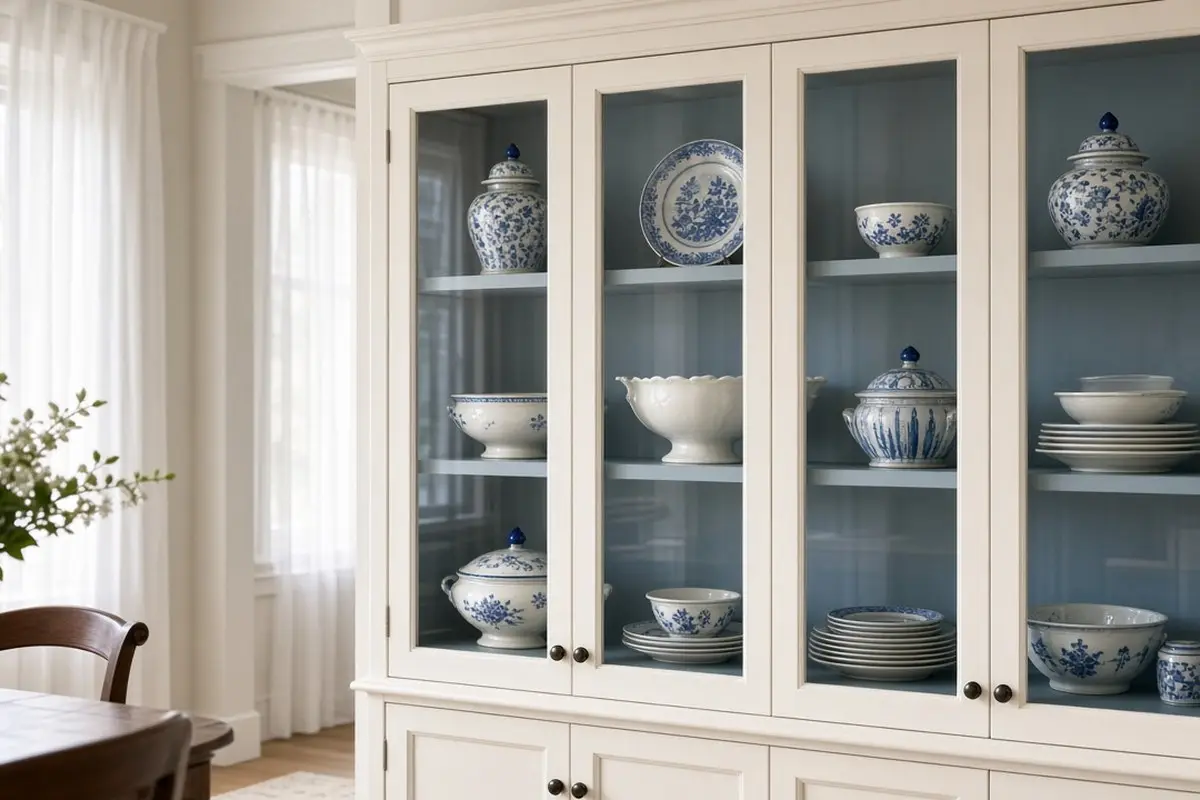
Glass doors make everything visible, which is why they look chaotic so quickly. Limit what sits behind them to one or two color families: all white and cream, white with blue, or warm terracotta and wood. Mismatched mugs and colorful kids’ cups can live behind the solid lower doors.
This rule applies to everyday things, not only display pieces. A row of plain white mugs reads as calm; a row of souvenir mugs reads as clutter, however much you love them. Keep the favorites in use but give them the lower cabinet. If you collect something, such as ironstone or green glass, let that collection fill the glass section and keep everything else out of sight.
4. Hooks for cups under a shelf
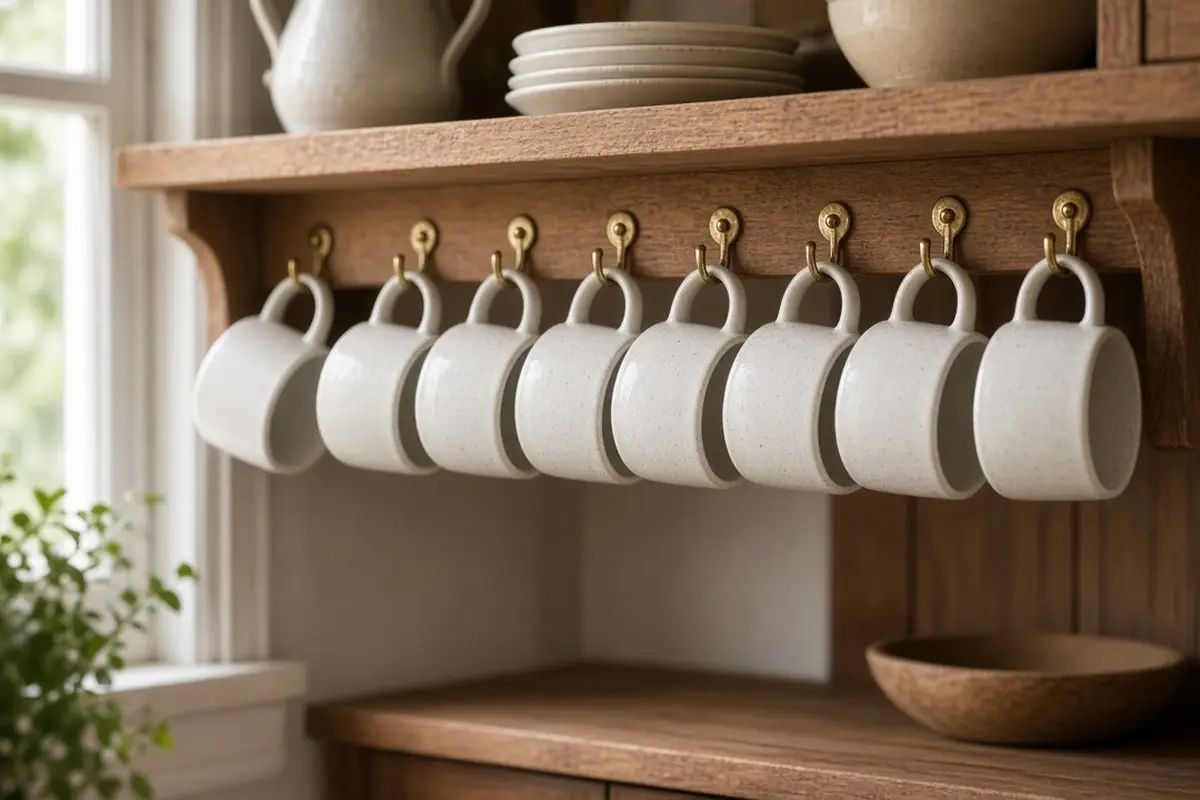
Small cup hooks screwed under a shelf hold mugs or teacups by their handles, freeing the shelf below for plates. Cups hanging in a row also look charming through glass doors. Leave enough gap that a cup lifts off its hook without hitting the shelf beneath.
Space hooks about three inches apart for standard mugs, and stagger them front and back for teacups so the handles do not clash. Brass hooks warm up a painted hutch, while black iron suits a farmhouse style. Pre-drill small pilot holes so the shelf does not split, especially in old hardwood.
Get the look
5. Linens and napkins in the drawers
Hutch drawers are ideal for table linens, napkin rings, candles, and serving utensils. Use drawer dividers so napkins stay folded and flatware does not rattle into a heap. Iron or neatly fold the linens before storing; a drawer of crisp napkins makes setting the table something you do without a fuss.
A few cedar blocks or lavender sachets keep linen drawers smelling fresh, and they discourage moths in natural fibers. Store candles flat and away from any heat, such as the back of a hutch near a radiator. Keep a lighter or matches in the same drawer so the table can be set and lit in one trip.
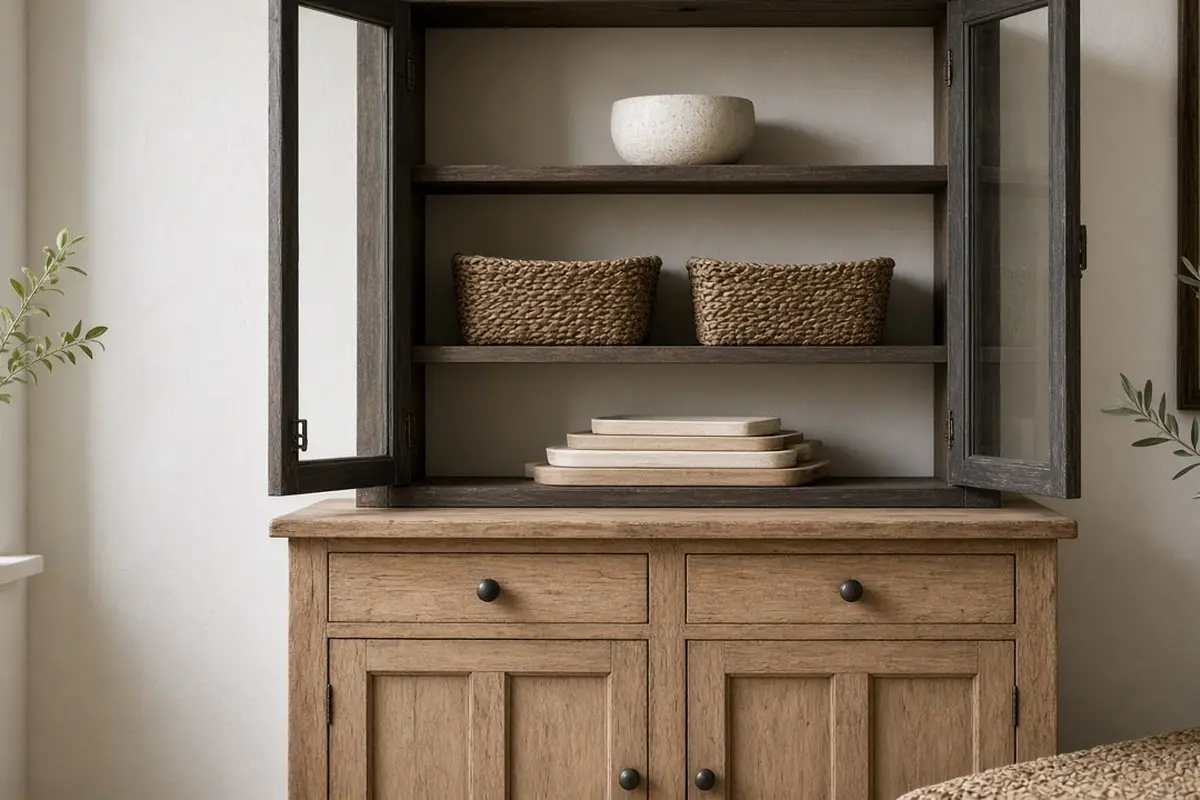
6. Baskets behind the lower doors
The lower cabinet often holds big, awkward things: a slow cooker, a stack of trays, the holiday platter. Group smaller items in lidded baskets or bins so you can pull a whole category out at once. Label the front edge if more than one person uses the hutch.
Heavy items belong on the bottom shelf or the cabinet floor, never up high. A cast iron dish or a stack of stoneware serving platters stored above shoulder height is a hazard every time someone lifts it down. If the hutch is tall and narrow, anchor it to the wall with a furniture strap, especially in a home with children or pets.
Get the look
7. A styled top shelf for the things you rarely touch
The top shelf, which you can see but barely reach, is the place for pure display: a pair of pitchers, a tall vase, a framed photo, or a family heirloom. Things here are seen every day but touched only a few times a year, so they can be delicate and still be safe.
Group the top shelf in odd numbers and vary height a little, such as a tall jug beside two shorter bowls. Leave space between them. A crowded top shelf looks like storage, while a few well spaced pieces look like a collection.
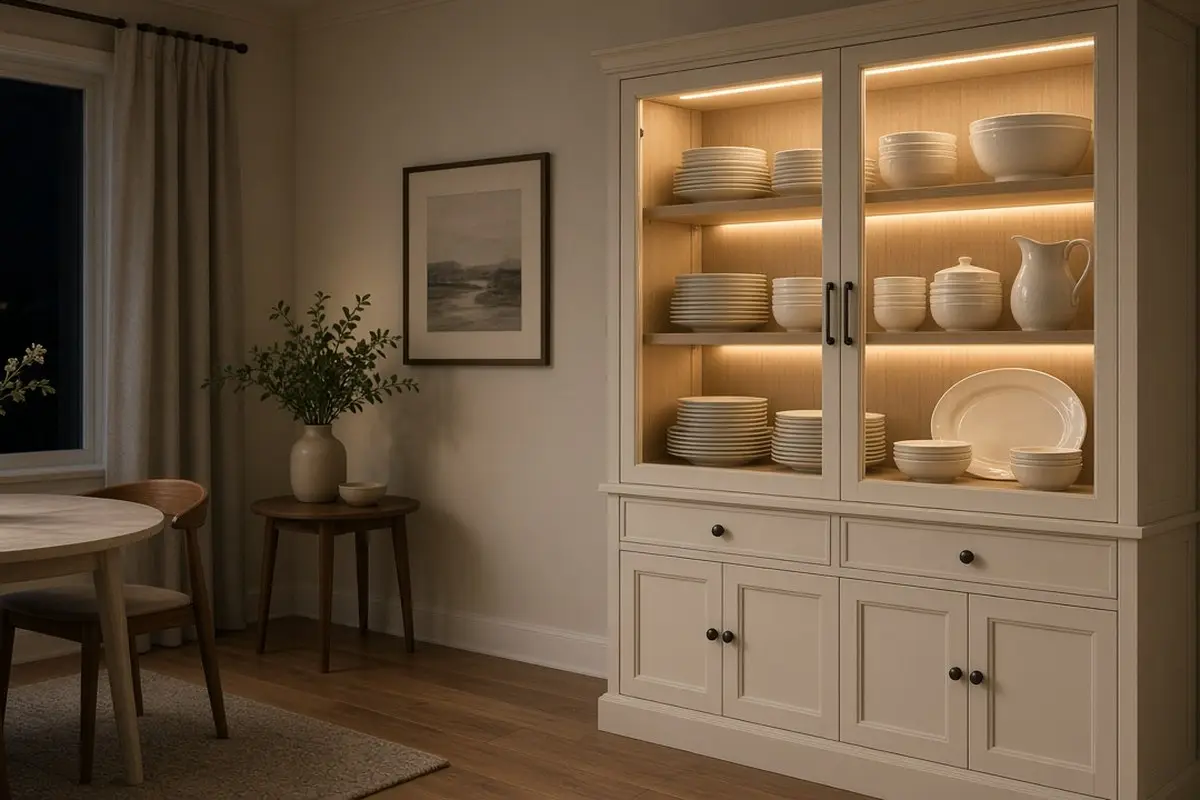
8. Lighting inside the cabinet
A strip of battery LED lights under the top of a glass cabinet makes the contents glow at dinner time and turns the hutch into a soft second light source. Choose warm white and hide the strip behind the face frame so you see the light, not the source.
A remote or a motion sensor saves opening the doors to switch the lights on. Keep the strip away from the very front so it does not glare when the doors open.
Get the look
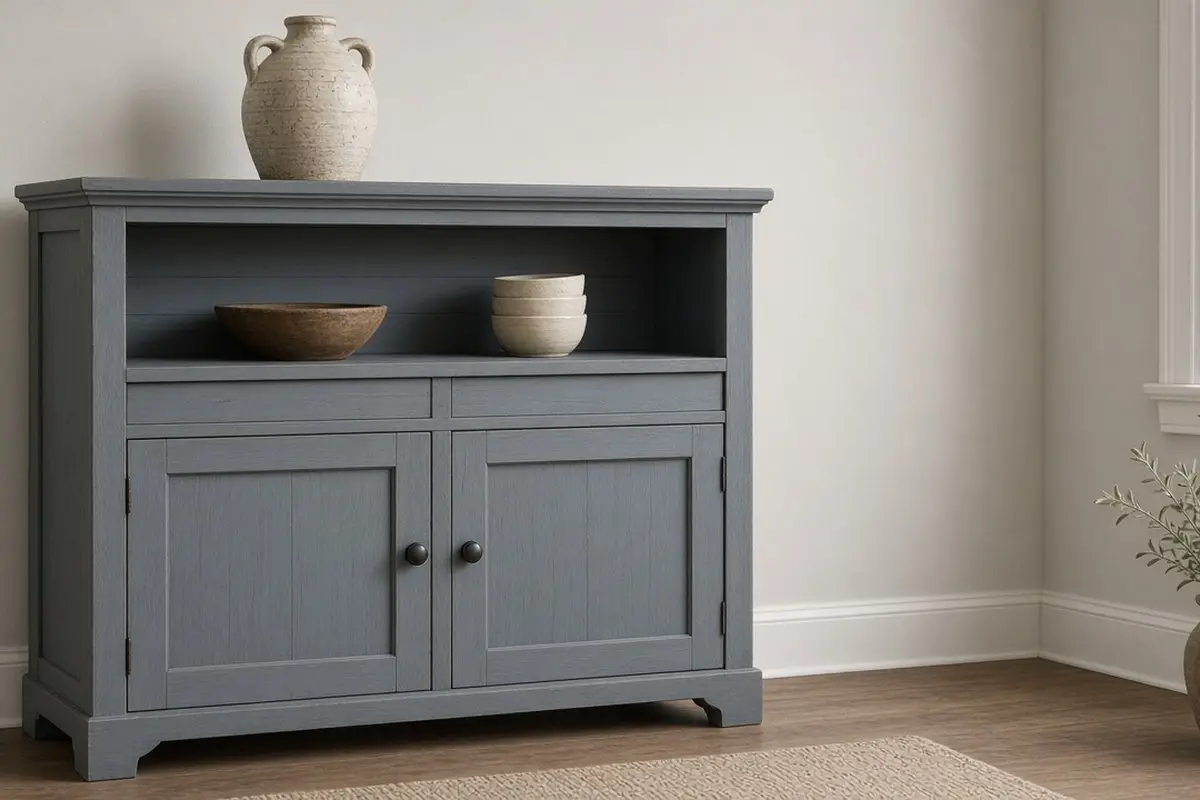
9. A clear top with one tall piece
Many hutches have a flat top above the cornice, and it quickly collects baskets, boxes, and anything that does not fit elsewhere. Keep it nearly empty. One large ceramic jug, a pair of matching baskets, or a tall plant in a light pot is enough. A clear top lets the hutch read as one tall, handsome piece of furniture rather than a shelf piled with storage.
Get the look
Keep it working
Once a season, open every door and drawer and look for anything that has drifted in: receipts, batteries, the odd toy. Wipe the glass, refold the linens, and restack the plates. Fifteen minutes keeps a hutch both pretty and useful.
A seasonal refresh is also a good moment to change one or two display pieces. Swap a summer pitcher of dried grasses for a bowl of pinecones in autumn, or bring the holiday serving platter up to eye level for December. Small changes like this keep the hutch feeling alive without a full restyle, and they remind you to use the pieces you keep for special occasions.
If the hutch itself feels tired, paint is the easiest update. A soft green, a deep navy, or a warm off-white can turn a dated oak hutch into the best piece in the room. Paint the inside back a contrasting color for depth behind the dishes. Swap the knobs for unlacquered brass or simple wood, and the whole piece looks newer without changing how it works.
Common questions
What should you put in a dining room hutch? Dishes you use weekly at reach height, occasional items below, and display pieces behind glass or on top.
How do you style a hutch without clutter? Stick to one or two color families, stack rather than prop, and leave the top nearly bare.
Should you put books in a hutch? A few, if the shelves are deep enough, but keep them to one shelf so the hutch still holds dishes.
How do you light a hutch? Battery LED strips hidden behind the face frame give a warm glow without wiring.
For more, see dining room wall focus ideas, weeknight dining table ideas, and farmhouse dining table care.