
8 Sunroom Floors for Wet Shoes and Plant Water

On this page13 sections
- The three problems to solve
- Matte porcelain tile
- Rigid-core luxury vinyl plank
- Sealed concrete
- Natural stone with a good sealer
- Brick pavers
- Rubber or cork for comfort
- Plant trays and saucers
- Door mats and boot trays
- Floors to avoid
- A simple cleaning routine
- Matching the floor to how you use the room
- Common questions
A sunroom floor takes more abuse than almost any floor in the house. People walk straight in from the garden in wet shoes. Plant pots drip after every watering. Sun pours through the glass for hours, fading anything that is not built to resist it, and the temperature can swing from chilly at dawn to hot by mid-afternoon. A floor that looks lovely in a living room can warp, stain, or bleach in a sunroom within a year or two.
This post is the practical guide. It ranks floors by how well they handle water, sun, and temperature swings, and it covers the small habits that protect any floor. If you are after a country look, our post on farmhouse sunroom floors focuses on style and materials.
As an Amazon Associate I earn from qualifying purchases.
The three problems to solve
Water. Wet shoes and plant water are the most common sunroom damage. Any floor with seams that let water through, such as cheap laminate, will swell and lift. Look for floors that are waterproof, not just water-resistant.
Sun. Ultraviolet light fades wood, carpet, and many vinyls. Fired materials like porcelain, ceramic, brick, and stone do not fade at all. If you choose a floor that can fade, look for UV-resistant finishes and plan on shades.
Temperature. Sunrooms often have little insulation. Floors expand in heat and shrink in cold. Rigid tile handles this well if it is installed over a stable base with movement joints; floating floors need their full expansion gap.
1. Matte porcelain tile
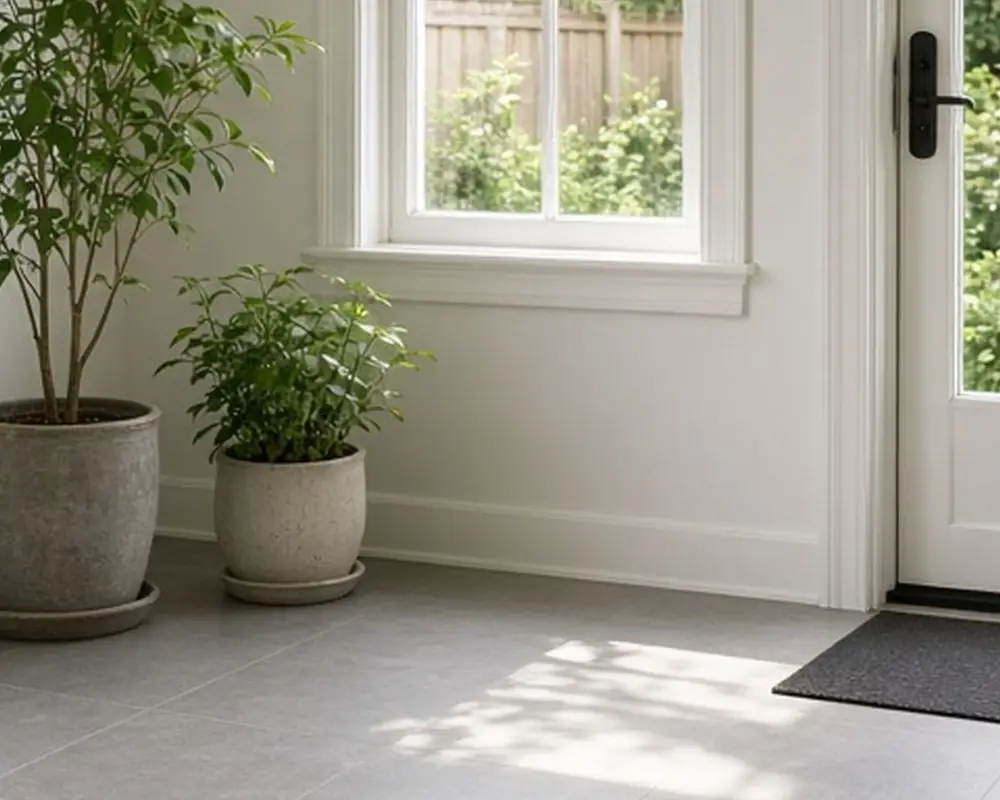
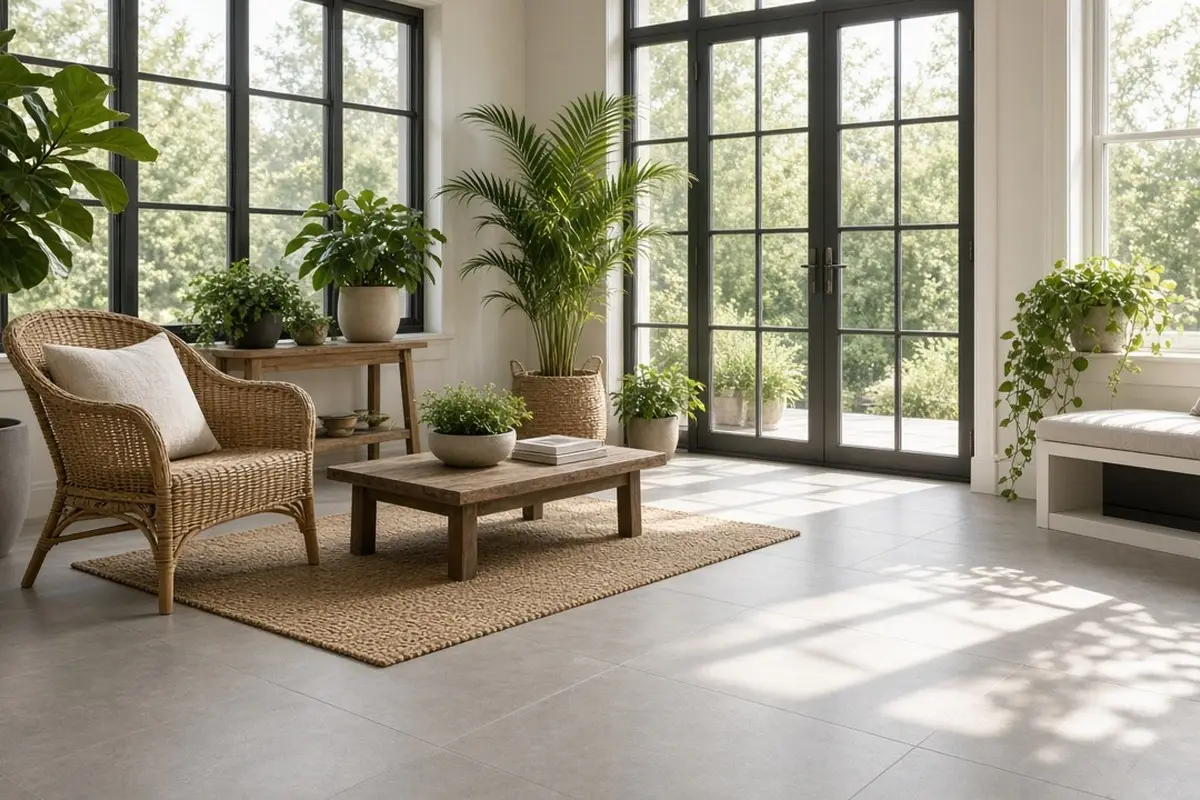
Porcelain is the best all-round sunroom floor. It is fully waterproof, does not fade, resists scratches, and handles heat without moving. A matte or textured finish gives grip when shoes are wet, so look for a slip-resistance rating suited to wet areas. Large tiles mean fewer grout lines to clean. Choose a mid-tone color; very dark tile gets hot in direct sun and shows dust, while bright white shows every muddy print. Ask for a tile rated for floors, not just walls, and check the water absorption rating; true porcelain absorbs almost nothing, which is why it shrugs off puddles. Install it over a cement backer board or an uncoupling membrane, which lets the tile ride out small movements in the subfloor as the room heats and cools. Leave a movement joint around the perimeter and fill it with flexible caulk rather than grout. Seal cementitious grout after it cures, or choose an epoxy grout that never needs sealing and resists plant-soil stains.
Get the look
2. Rigid-core luxury vinyl plank
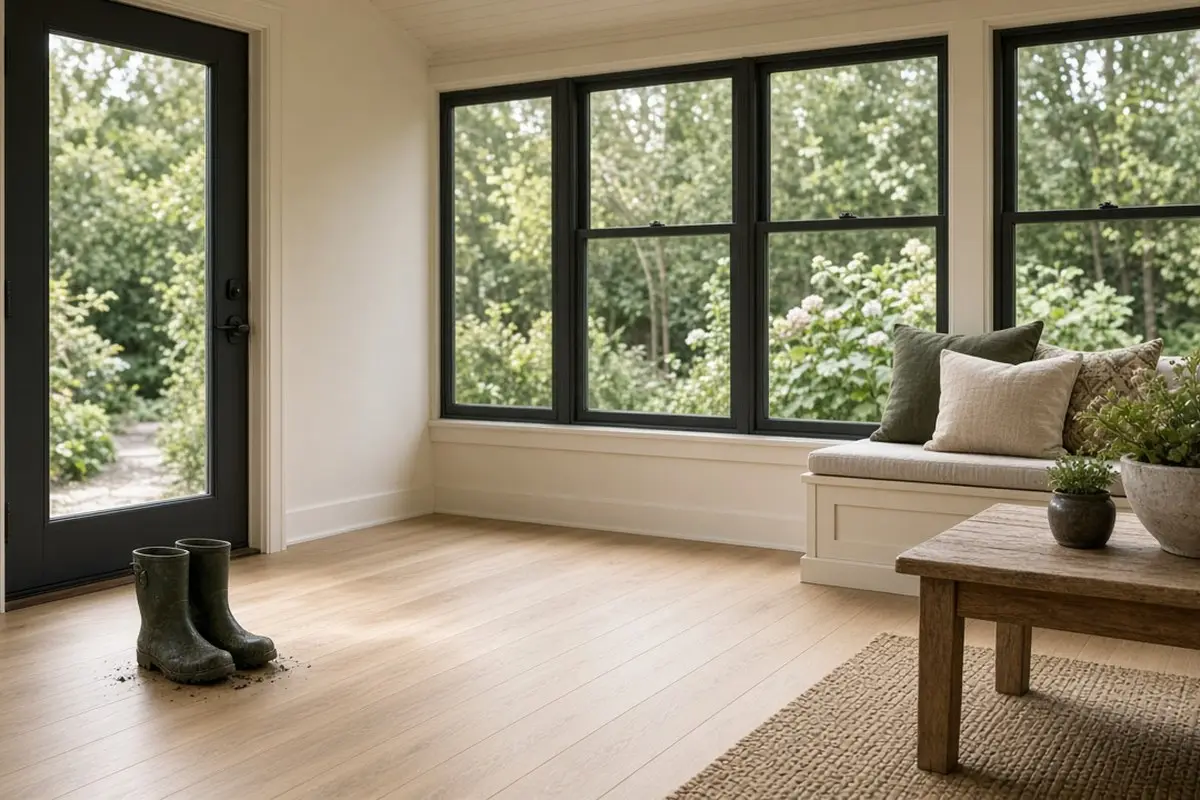
Rigid-core vinyl, often called SPC, is waterproof through its core, so plant spills and wet shoes do not hurt it. It is warmer and softer underfoot than tile and quick to install. For a sunroom, look for a thick wear layer and a product the maker approves for sunrooms, since some vinyl warranties exclude rooms with heavy direct sun. Keep the expansion gap generous. Very dark vinyl in full sun can get hot enough to move noticeably, so lighter tones are safer. Leave furniture with felt pads rather than hard feet, and avoid rubber-backed mats directly on vinyl, as some backings can discolor the surface over time. If a pot leaks and water sits under the planks for days, lift and dry the area; rigid core will not swell, but trapped moisture can still grow mildew on the subfloor below.
Get the look
3. Sealed concrete
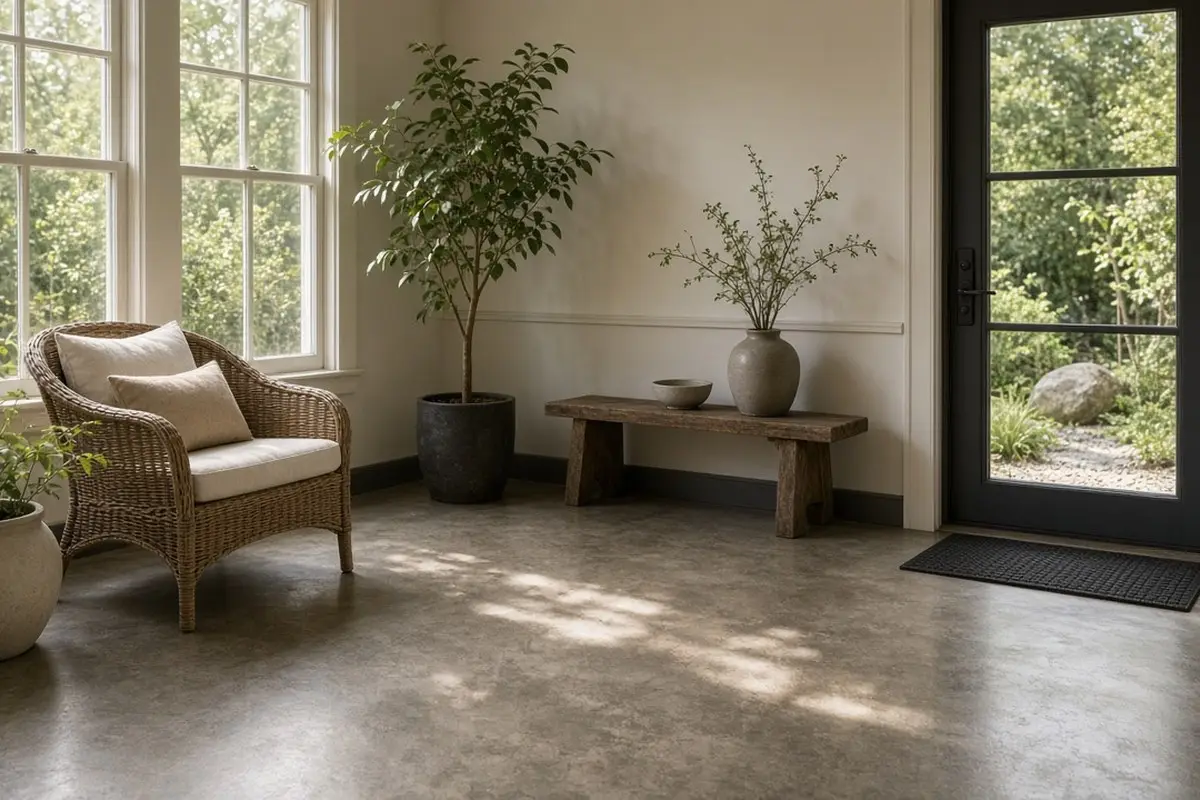
If your sunroom sits on a slab, sealing or staining the concrete is cheap, waterproof, and very durable. A penetrating sealer keeps water out without making the surface slippery, while a glossy topcoat can be slick when wet, so add an anti-slip additive if you choose one. Concrete stays cool, which helps in summer. Before sealing, check for moisture coming up through the slab by taping a square of plastic to the floor for a day; if the underside is damp, use a breathable penetrating sealer rather than a film-forming coating, which can peel. Reapply sealer every few years in the main walking path. A large washable rug over the seating area adds warmth in winter without compromising the waterproof floor beneath.
Get the look
4. Natural stone with a good sealer
Slate, travertine, and limestone all work, but they are porous. Slate is the most forgiving, with natural grip and dark tones that hide dirt. Lighter stones can stain from plant pots and fertilizer, so seal well and keep saucers under every pot. Test the sealer by dripping water on the stone; if it darkens within a few minutes, it is time to reseal. Avoid acidic cleaners like vinegar on limestone and travertine, as they etch the surface. A pH-neutral stone cleaner and a damp microfiber mop are all most stone floors need. Choose a honed or tumbled finish rather than polished, since polished stone becomes dangerously slick when wet shoes come through.
Get the look
5. Brick pavers
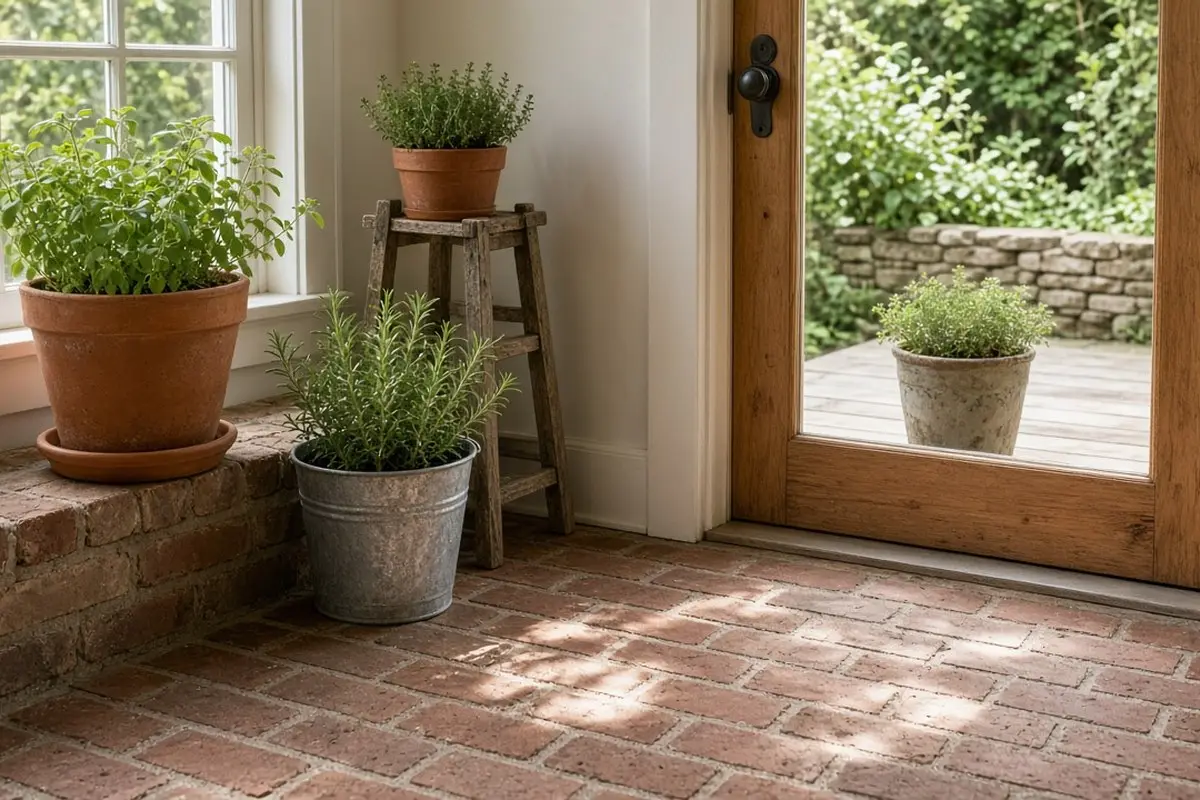
Brick is waterproof once sealed, does not fade, and hides grit well. Its texture gives excellent grip when wet. It is a good choice for a garden-room sunroom where people come straight in from outside. Brick does show efflorescence, a white powdery bloom, in its first months as moisture works out of it. Brush it off dry and let it finish before sealing. Choose a paver rated for floors, since ordinary wall brick is too soft and porous for foot traffic.
Get the look
6. Rubber or cork for comfort
Rubber tile is waterproof and soft, a good pick for a sunroom used as a gym or play space. Cork is warm and quiet but needs sealing and will fade, so it suits shaded sunrooms better than full-sun ones. Rubber can have a strong smell at first; air it out before installing. Choose a thinner rubber tile in a neutral color for a sunroom that doubles as a living space, and save thick gym tiles for a dedicated workout room. With either material, a few rugs and plants keep the room from feeling utilitarian.
Get the look
7. Plant trays and saucers
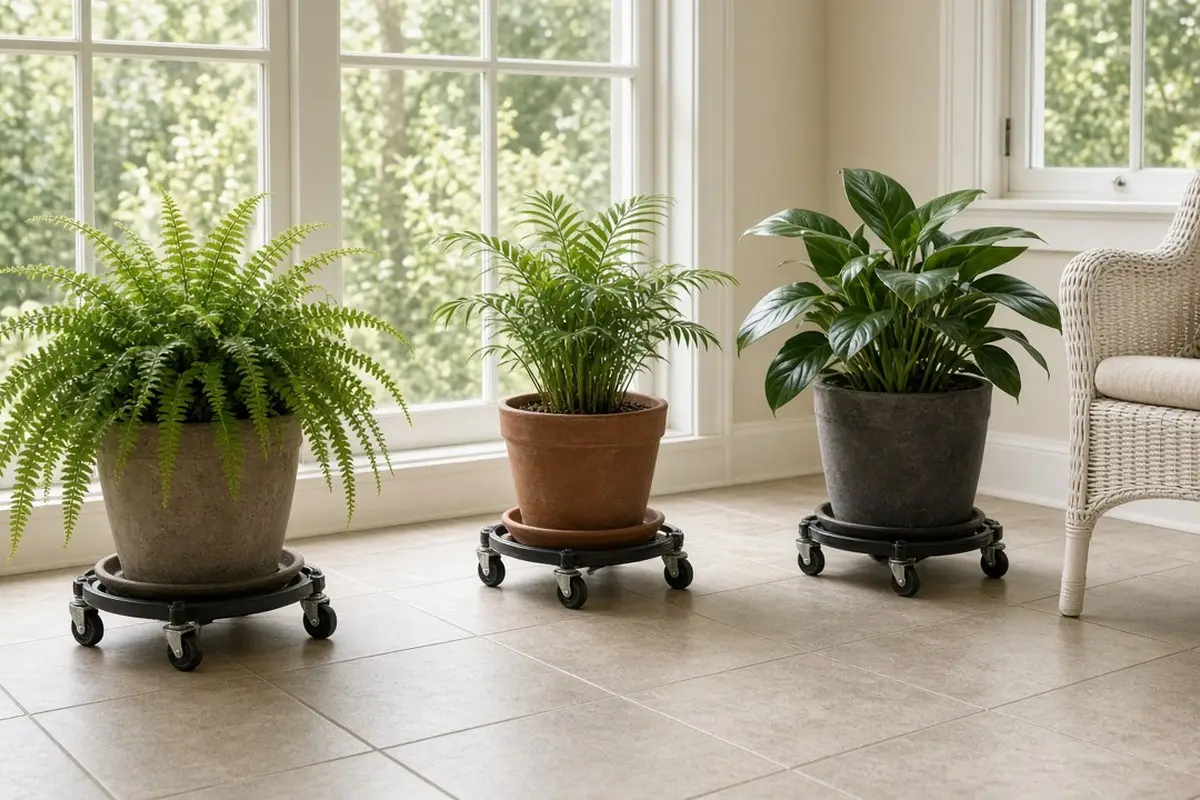
Whatever the floor, protect it from plant water. Use deep saucers with no drainage holes under every pot, and lift pots slightly on plant caddies so air circulates and moisture does not get trapped. A waterproof boot tray makes a neat plant-watering station. Better still, carry smaller pots to a sink or outside to water them, and let them drain fully before bringing them back. For large floor plants, water slowly and stop when the first drips reach the saucer. Check under saucers every few weeks; condensation can collect beneath them even when they do not overflow, and that slow moisture is what stains stone and lifts vinyl edges. Cork or felt pads under saucers let air flow.
8. Door mats and boot trays
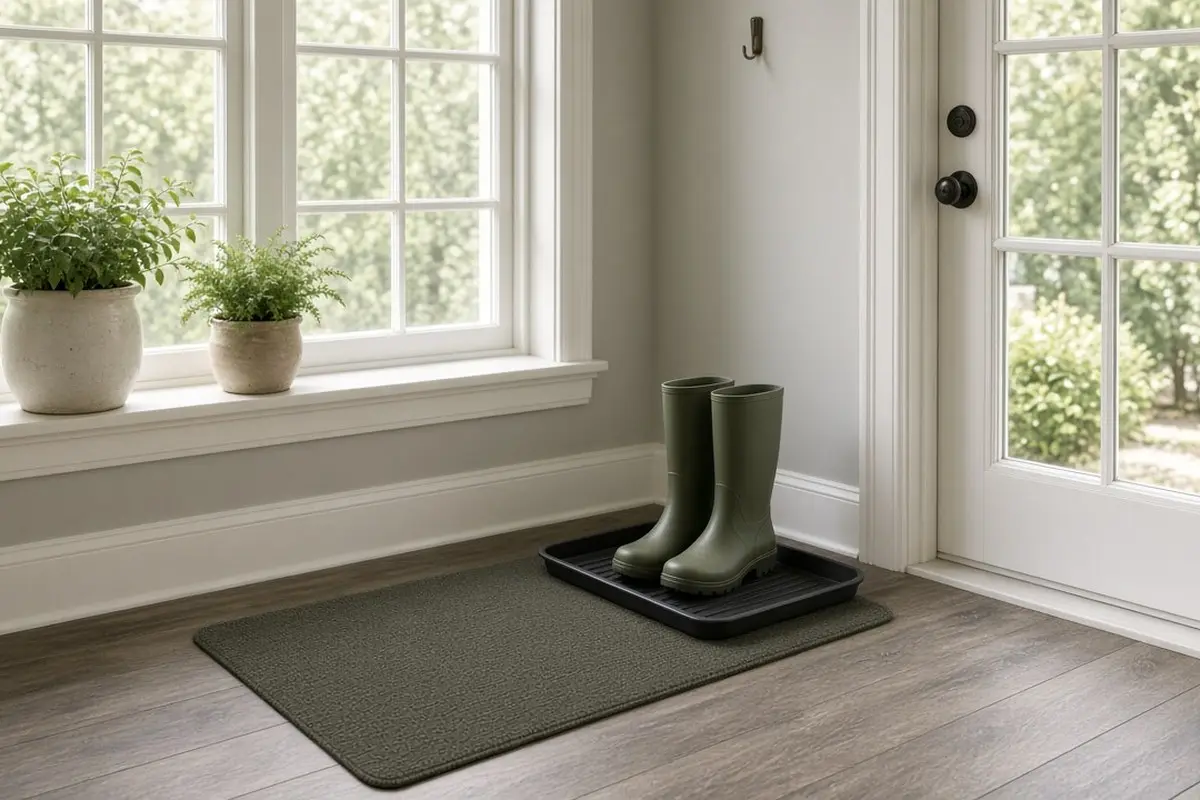
A two-mat system catches most dirt and water: a coarse mat outside the door and an absorbent washable mat inside. Add a rubber boot tray for wet shoes. These keep grit from scratching even tough floors. Wash the indoor mat every couple of weeks in wet seasons, and pick one with a rubber backing that grips without trapping water underneath. If kids or dogs use the sunroom door, keep a towel hook right beside it.
Floors to avoid
Standard laminate swells when water gets into its seams. Solid hardwood fades and moves a lot with temperature swings. Wall-to-wall carpet holds moisture, fades, and grows mildew in humid sunrooms. If you love wood, choose wood-look porcelain or rigid vinyl instead.
A simple cleaning routine
Most sunroom floor damage comes from grit and standing water rather than from the material failing. Vacuum or dry-mop twice a week in the garden months, because tracked-in sand acts like sandpaper underfoot. Damp-mop once a week with a cleaner made for your floor type: pH-neutral for stone and sealed brick, a mild tile cleaner for porcelain, and a vinyl-safe cleaner for plank floors. Wipe up spills and plant drips the same day. Once a year, walk the room with a glass of water and drip a little on the main paths; if it soaks in quickly on stone, brick, concrete, or grout, it is time to reseal.
Sun deserves a routine too. Lower shades during the strongest hours if your floor or rugs can fade, and rotate rugs and furniture a few times a year so you do not end up with pale tracks and dark rectangles. Even on fade-proof tile, a rug left in one spot for years will bleach unevenly. These habits take a few minutes a week and keep any sunroom floor looking new far longer.
Matching the floor to how you use the room
If the sunroom is mostly a plant room, prioritize water and stain resistance: porcelain or sealed concrete. If it is a family room where people sit on the floor and kids play, rigid vinyl or rubber with washable rugs is kinder underfoot. If it is a mudroom-style entry from the garden, brick or textured porcelain with a strong mat system handles the traffic best. Whatever you choose, buy a spare box of tile or planks and store it, so a cracked tile or a damaged plank can be replaced with an exact match years later.
Common questions
What is the most waterproof sunroom floor? Porcelain tile, with sealed concrete and rigid-core vinyl close behind. All three handle standing water from spills and shoes.
Which sunroom floor does not fade? Fired and natural materials: porcelain, ceramic, brick, and stone. Wood, cork, carpet, and some vinyls fade in strong sun.
Is tile too cold for a sunroom? It can be in winter. Add a washable rug, consider electric radiant mats under tile, and choose warmer mid-tones. In summer, a cool tile floor is a bonus.
For controlling sun and heat once the floor is done, see sunrooms that stay usable when the sun is high. For a covered outdoor room, our screened porch furniture guide has more ideas.