
9 Farmhouse Sunrooms With Floors You Can Wipe Down

On this page12 sections
- What makes a floor feel farmhouse
- Herringbone brick pavers
- Painted wide-plank boards
- Slate tile
- Wood-look porcelain plank
- Terracotta squares
- Sealed concrete with a washable rug
- Luxury vinyl plank in a weathered finish
- Braided and ticking-stripe rugs
- A boot tray and doormat zone
- How to pick your floor
- Common questions
A farmhouse sunroom is supposed to feel like the in-between room of an old country house: half porch, half parlor, with muddy boots by the door and a dog asleep in the sun. The floor sets that tone more than anything else in the room. Get it right and the space looks like it has always been there. Get it wrong and a glossy laminate or a pale wall-to-wall carpet makes the whole room feel like a showroom you are afraid to walk into.
This post is about style and materials. It looks at the floors that suit a farmhouse look, from brick and slate to painted boards and wood-look tile, and at how to dress them so they stay easy to wipe down. If you want the practical side, with wet shoes, plant water, and sun fading, read our guide to sunroom flooring ideas next.
As an Amazon Associate I earn from qualifying purchases.
What makes a floor feel farmhouse
Farmhouse floors share a few traits. They are matte rather than shiny. They show a little variation, whether that is the color shift in reclaimed brick or the knots in a pine board. They age well, so a scuff or a worn path reads as character instead of damage. And they are honest materials: clay, stone, wood, or something that looks convincingly like one of them.
For a sunroom, add one more trait: the floor has to tolerate grit, moisture, and strong light. That rules out a lot of soft woods left unsealed and most pale carpets. Everything below balances the look with a surface you can wipe with a damp mop.
1. Herringbone brick pavers
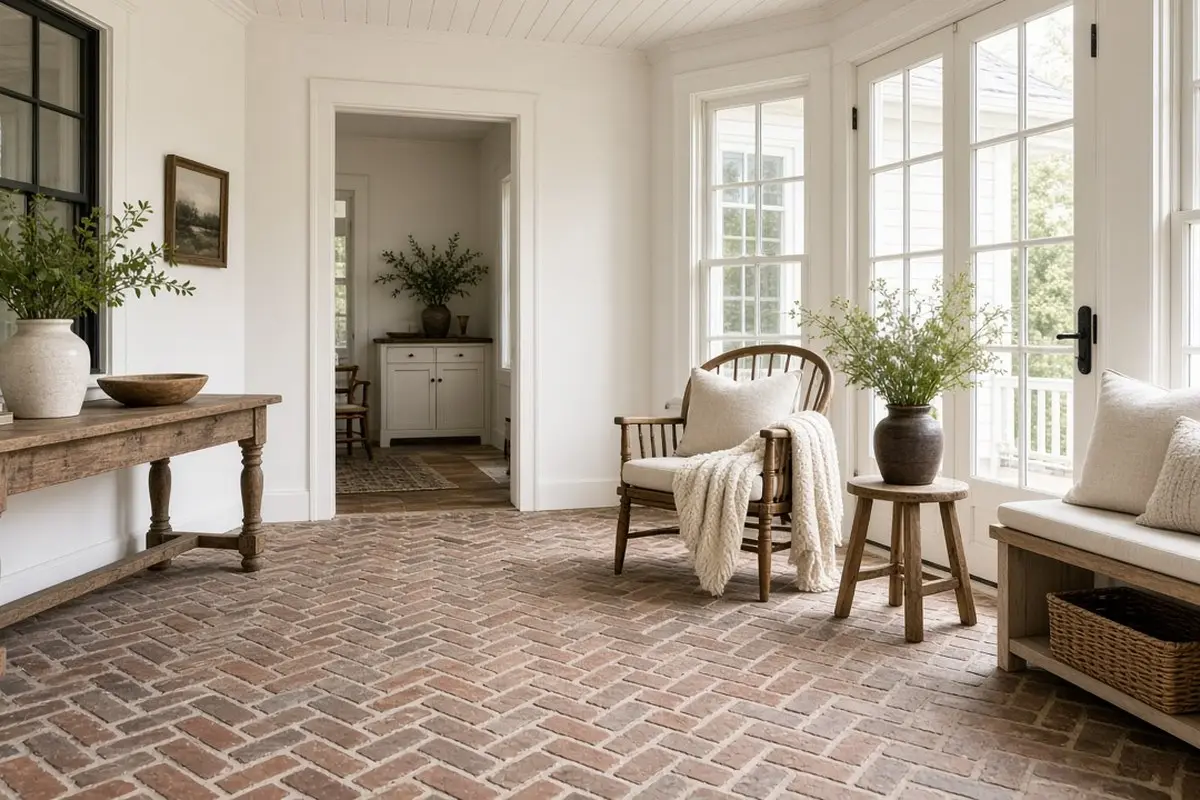
Thin brick pavers are the classic farmhouse sunroom floor. Laid in a herringbone or basketweave pattern, they look like an old garden path brought indoors. Brick holds the sun’s warmth into the evening, hides dirt in its natural color variation, and only gets better with age. Thin pavers are about half an inch thick, so they can go over a concrete slab or a properly prepared subfloor without raising the floor much. Seal them with a penetrating matte sealer so spills bead up and a damp mop lifts grit out of the surface. Reseal every two to three years, or sooner if water stops beading. Pavers can be laid with traditional mortar joints or set tight with polymeric sand swept into the gaps, which looks more like an old patio. If you choose sand-set joints, vacuum rather than sweep hard, so you do not pull sand out of the gaps. Reclaimed bricks look the most authentic, but new thin pavers are more even in thickness and far easier to lay level. A mix of reds, browns, and the occasional charcoal brick keeps the floor from looking flat.
Get the look
2. Painted wide-plank boards
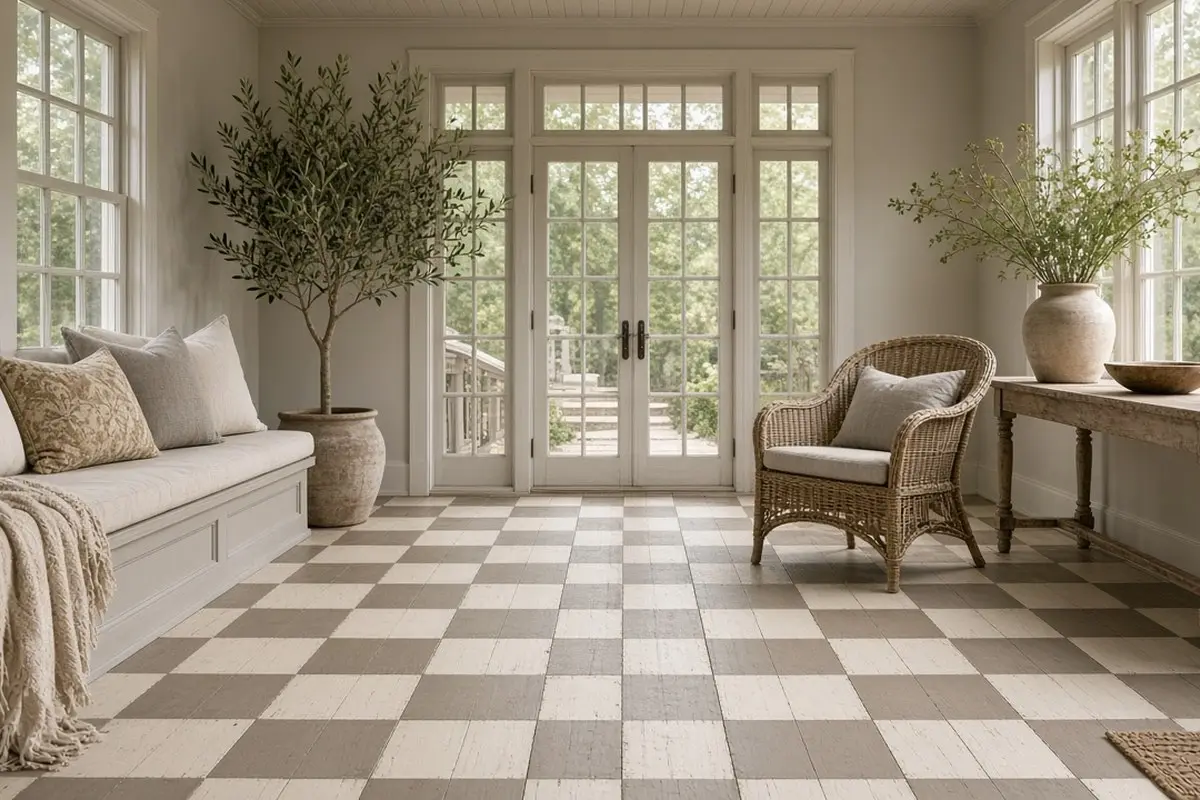
Painted floors were common in old farmhouses because paint protected cheap softwood. A soft gray, sage, or barn red floor with a porch-and-floor enamel looks charming in a sunroom and wipes clean easily. A painted checkerboard in cream and putty adds a little more personality. Use a porch and floor paint designed for foot traffic, and plan to touch up the busiest paths every few years. Light colors show less fading in strong sun than dark ones. Start with a clean, sanded, primed floor, and give each coat the full cure time on the can before moving furniture back. A clear water-based floor topcoat over the paint adds an extra layer of protection in the entry path. If your sunroom has old boards with gaps, fill the larger ones with a flexible filler first so grit and water do not collect between them. Painted floors suit sunrooms built on a wood frame, where heavy stone or tile might need extra structural work.
Get the look
3. Slate tile
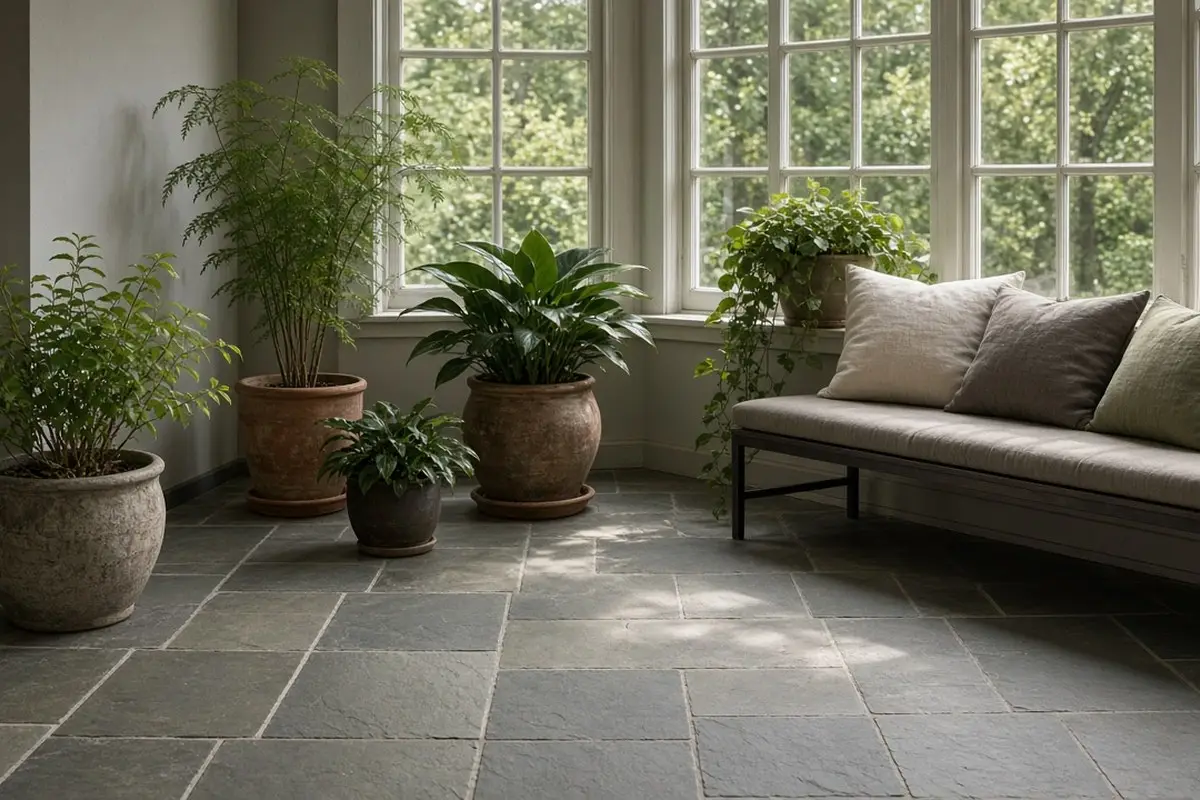
Natural slate has the muted grays, greens, and rusts of a stone farmhouse floor. Its cleft surface gives good grip when wet, and the color variation hides dirt. Choose a gauged slate so tiles sit level, and seal it with a stone sealer to resist staining from plant pots. Slate can feel cold underfoot in winter, which is why many slate sunrooms use a washable rug in the seating area. In a sunroom with radiant floor heating, slate becomes one of the most comfortable floors in the house, holding gentle warmth on winter mornings. Slate can flake slightly in the first year as loose layers release; this is normal and settles down. A matte or low-sheen sealer keeps the look natural, while a wet-look sealer deepens the color but makes it read more formal. Dark slate absorbs a lot of sun heat in summer, so in a hot south-facing room, consider a lighter, multicolor slate instead.
Get the look
4. Wood-look porcelain plank
If you love the look of old pine or oak but worry about water and sun, wood-look porcelain is the safest choice. Good versions have textured surfaces and varied planks that look surprisingly real, especially in a matte finish. Porcelain does not fade, does not swell, and can be mopped as often as you like. Choose a long plank and a grout color close to the tile so the floor reads as boards rather than tile. Ask for samples and lay several planks side by side in the actual room; sunroom light is so bright that a tile that looks warm in the store may look gray at home. Look for products with many different plank faces so the pattern does not repeat obviously. A staggered random layout, rather than a neat brick pattern, looks most like an old board floor. Narrow grout lines, around a sixteenth of an inch, make the illusion even stronger.
Get the look
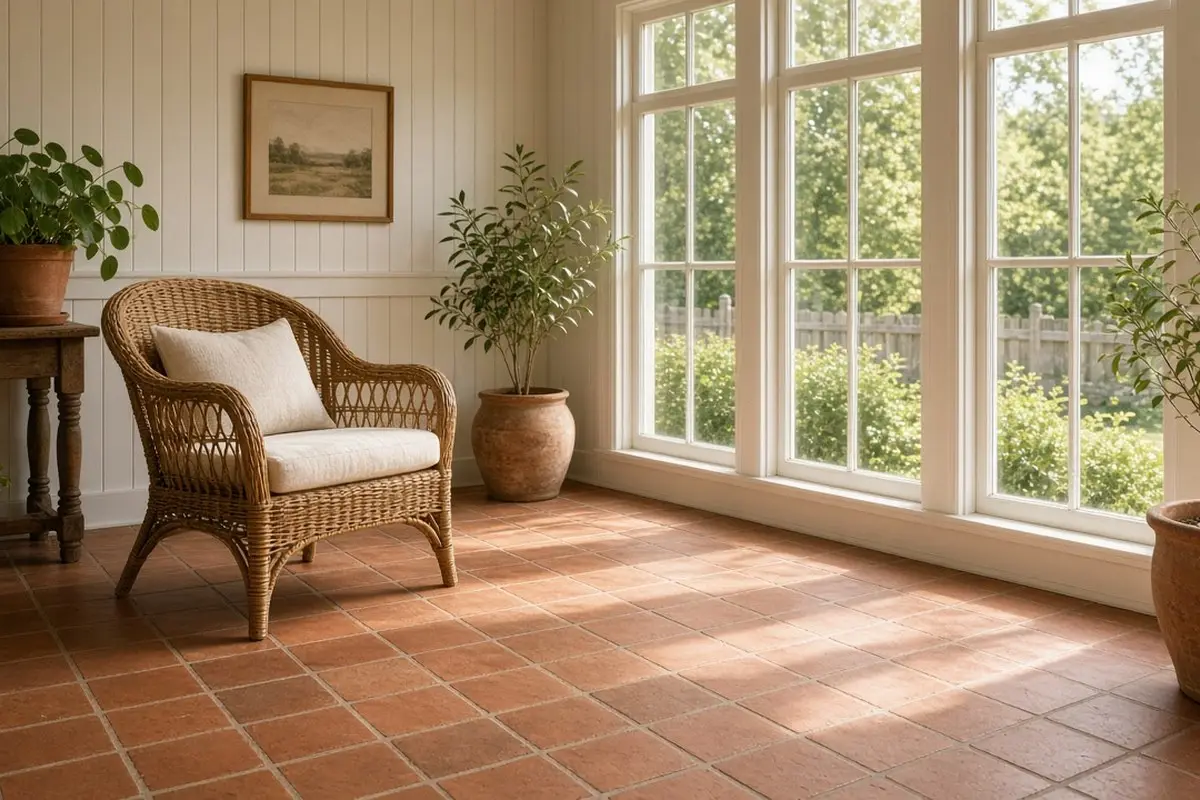
5. Terracotta squares
Terracotta tile brings a warm, rustic note that works in farmhouse rooms as well as Mediterranean ones. Unglazed terracotta is porous and needs a good sealer, while pre-sealed or glazed versions are easier to care for. Square tiles laid in a straight grid look the most farmhouse; hexagons lean more French country. Pair them with white walls and plenty of green plants. Terracotta varies in tone from pale peach to deep rust, so blend tiles from several boxes as you lay them to avoid patches of one shade. Handmade tiles have softer edges and more variation, which looks beautiful but needs wider grout joints. Machine-made tiles are more uniform and easier to clean. A light buffing with a paste wax after sealing gives unglazed terracotta a soft sheen that ages nicely and protects against muddy footprints.
Get the look
6. Sealed concrete with a washable rug
A sealed or stained concrete slab is very practical and suits a modern farmhouse look. A warm, earthy stain softens it, and a matte sealer keeps it from looking industrial. The trick is the rug. A washable flatweave rug with a jute or ticking stripe look adds softness and can go in the washing machine when it gets muddy. Check your washer’s capacity before buying; a five-by-seven rug is about the largest most home machines can handle. Concrete also stays cool in summer, which is a real advantage in a hot sunroom, and pairs well with the warm wood of a farmhouse table or bench. If the slab has cracks, an acid stain tends to emphasize them, so a skim coat or a solid-color stain may be a better choice.
Get the look
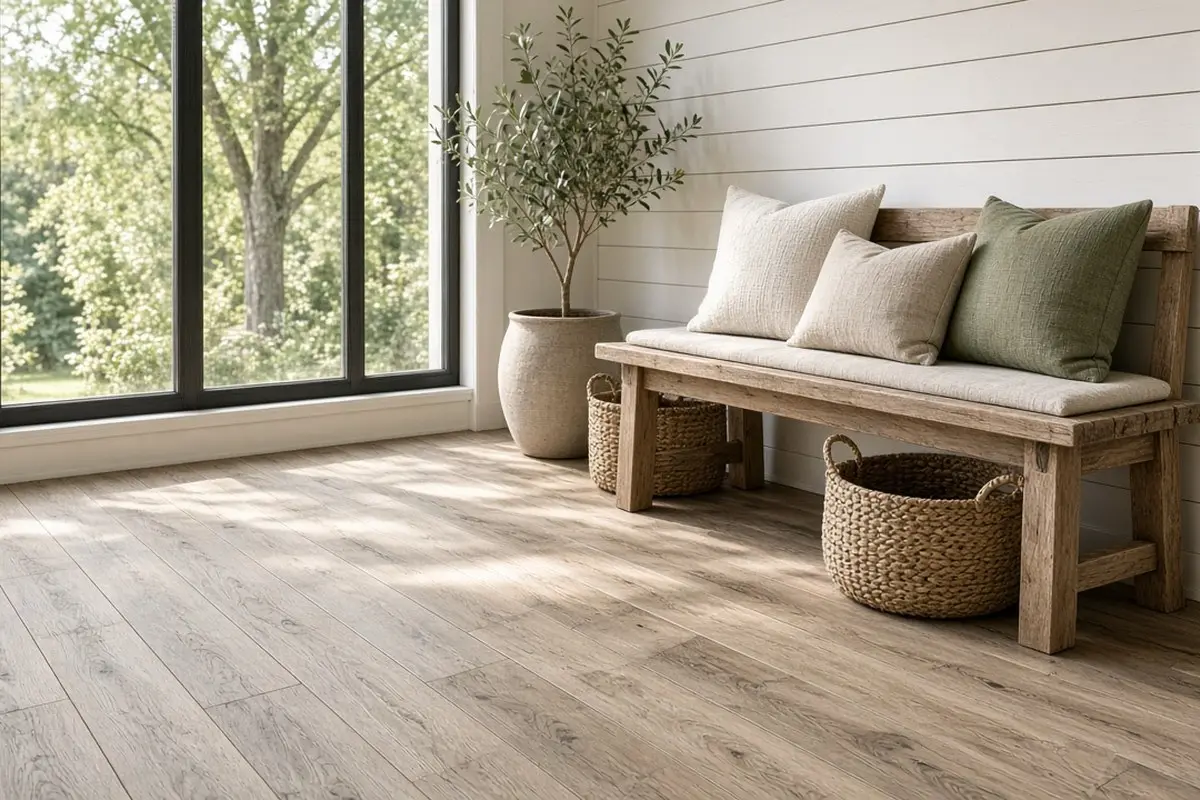
7. Luxury vinyl plank in a weathered finish
Luxury vinyl plank is warmer underfoot than tile and fully waterproof. Pick a matte, weathered oak or barnwood finish with a UV-resistant wear layer for a sunroom. It is one of the easiest floors to install yourself, and it handles wet shoes and plant spills well. Avoid very gray, very glossy versions, which read more modern than farmhouse. Leave the expansion gap the manufacturer specifies around the edges, because sunrooms swing widely in temperature and plank floors move more there than in other rooms. Cover the gap with a quarter-round or shoe molding painted to match the trim. A plank with a subtle wire-brushed texture shows fewer footprints and scratches than a smooth one, which matters near a door used by dogs and kids.
Get the look
8. Braided and ticking-stripe rugs
Rugs are where farmhouse character comes in. A braided rug looks right at home in a country sunroom, and indoor-outdoor braided versions can be hosed off. Ticking stripes, buffalo checks, and faded florals all feel farmhouse. Use a rug pad designed for hard floors so the rug does not slide on tile or brick. Choose a rug size that leaves a border of floor showing all around; in a sunroom, showing off the brick or slate is half the point. Rotate rugs every few months so sun fades them evenly, and shake them out weekly to keep grit from wearing into the floor below.
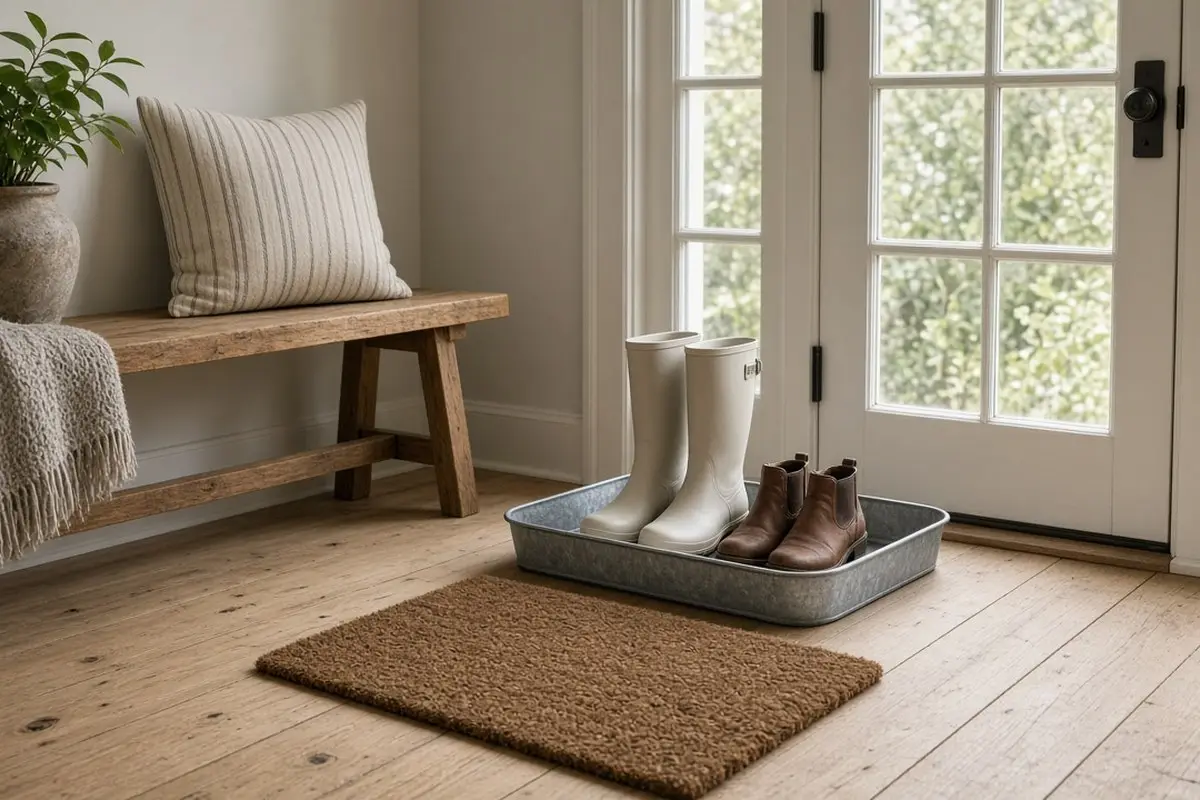
9. A boot tray and doormat zone
Every farmhouse sunroom needs a landing spot. A rubber boot tray, a coir doormat, and a small bench by the door stop most of the mud before it reaches the main floor. A galvanized tray looks especially farmhouse. Keep a basket of old towels nearby for wiping paws. A row of pegs or hooks above the bench holds jackets and leashes, and a small crock can hold umbrellas. This simple zone protects whatever floor you choose and gives the room a lived-in farmhouse feel at the same time.
How to pick your floor
Start with what is under the room. A concrete slab suits brick, tile, slate, or stained concrete. A wood-framed floor may need extra stiffening before stone or tile, while vinyl plank and painted boards are lighter options. Next, think about sun: a south-facing room with lots of glass makes porcelain, brick, and stone the safest picks because they do not fade. Finally, think about upkeep. Sealed brick and porcelain need almost nothing; painted boards and terracotta need occasional touch-ups or resealing.
Common questions
What is the most farmhouse sunroom floor? Brick pavers in herringbone are the most classic, followed by painted wide-plank boards. Both look like they came with an old house.
Can I use real hardwood in a sunroom? You can, but it fades and moves with temperature swings. If you love wood, choose a well-sealed, light-colored oak and use shades to protect it, or go with wood-look porcelain instead.
What is the easiest farmhouse floor to keep clean? Matte porcelain and sealed brick need the least care. A weekly vacuum and damp mop is all they ask.
For more farmhouse ideas, see our post on farmhouse details for a newer house, and for keeping the room comfortable at midday, read sunrooms that stay usable when the sun is high.