
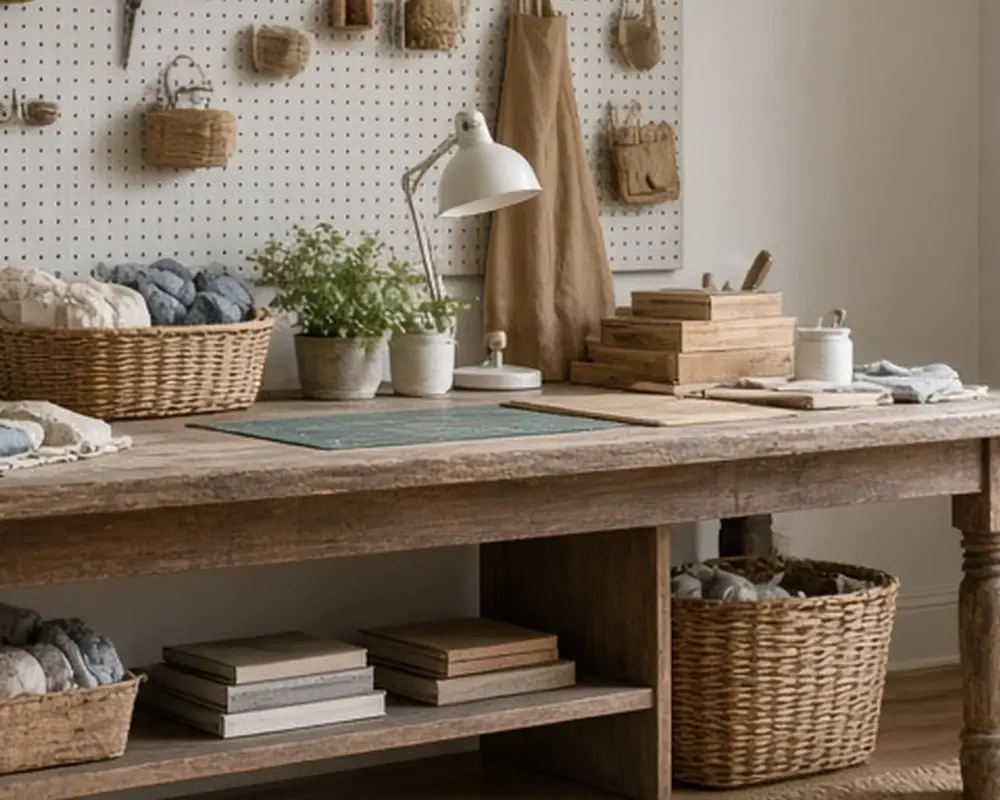
9 Hobby Rooms That Close a Door on the Mess

On this page12 sections
- Why the door matters more than the square footage
- A spare bedroom with one long worktable
- A pegboard wall that shows every tool
- A closet turned into a hobby nook
- A guest room that changes jobs
- Storage sorted by project, not by material
- Task light at the work, warm light in the room
- A floor you do not have to protect
- A basement hobby room with a real door
- A comfortable chair and a place to pause
- How to keep a hobby room from becoming a storage room
- Common questions
The best thing about a hobby room is not the storage or the worktable. It is the door. A project that can stay out overnight, half-cut and half-glued, gets finished. A project that has to be packed away before dinner usually goes back in its box for a month.
These nine hobby rooms start from that idea. Each one gives a craft, a model, a quilt, or a repair job a place to sit undisturbed, and each one lets you close the door on it so the rest of the house stays calm. Some are full spare rooms. Others are a closet, a corner of a basement, or a guest room that changes jobs between visitors.
As an Amazon Associate I earn from qualifying purchases.
Why the door matters more than the square footage
A small room with a door beats a large open corner for most hobbies. Paint, fabric scraps, glue, sawdust, and tiny parts travel. A door keeps them in, keeps pets and small children out, and hides the visual noise of a work in progress. It also gives you a mental boundary: when you step inside, you are working; when you close it, you are done for the day.
Before you buy anything, list what your hobby leaves out between sessions. A puzzle needs a flat surface that nobody else uses. A sewing project needs the machine set up and the pieces pinned. A model kit needs a tray of parts that cannot be bumped. That list tells you what the room must protect.
Think about noise and smell as well. A sewing machine, a rotary tool, or a spray of fixative is easier to live with behind a closed door, especially in a home where someone else works or sleeps nearby. If the room shares a wall with a bedroom, put the noisiest equipment on the opposite wall and add a rug to soften sound. Felt pads under chair legs help too, and a door sweep stops thread and fabric fluff from drifting into the hallway outside.
1. A spare bedroom with one long worktable
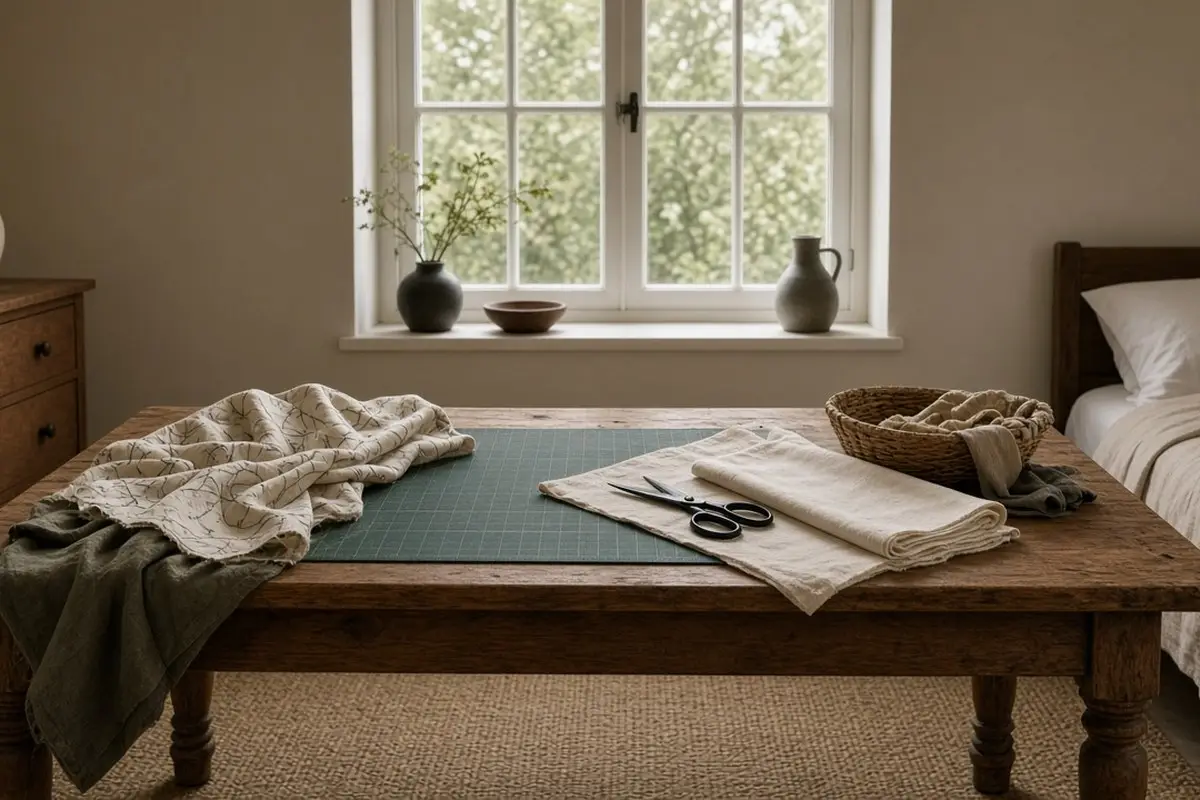
If you have a spare bedroom, resist the urge to fill it with several small pieces. One long table along the longest wall, or under the window, gives you a single surface where a project can spread out. A table about 30 inches deep and 6 to 8 feet long handles cutting fabric, laying out a puzzle, or assembling a model with room for tools on one side.
Put the table where the daylight falls across it from the side rather than straight behind you, so your own shadow does not land on the work.
Under the table, leave clear knee space for at least half of its length. It is tempting to fill the space with drawers, but you will want to pull a chair in at different points along the table as a project moves. Rolling drawer units can tuck under one end and come out when needed.
Get the look
2. A pegboard wall that shows every tool
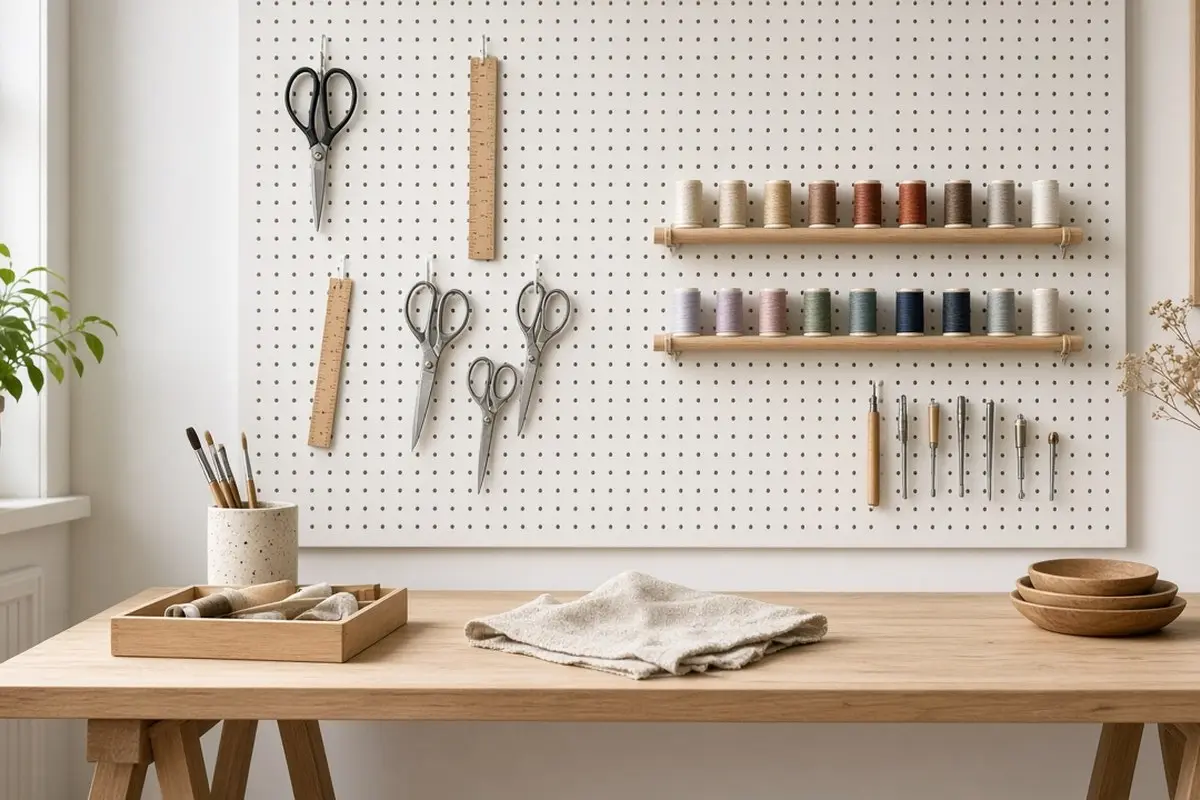
Hobby tools are easiest to put away when each one has a visible spot. A pegboard above the worktable holds scissors, rulers, pliers, thread, and brushes where you can see them. Paint the board the same color as the wall so it reads as part of the room instead of a garage panel.
Leave a few empty hooks for new tools. A pegboard that is already full on day one turns into a pile on the table within a month.
Group tools by task rather than by size. Cutting tools together, measuring tools together, and finishing tools together means you reach for one zone at a time. Outline each tool lightly in pencil on the board so you notice right away when something has wandered off.
Get the look
3. A closet turned into a hobby nook
A reach-in closet is a small hobby room with a door already installed. Take off the hanging rod, fit a desk-height shelf across the width, and add shelves above it. Pull up a chair, work with the bifold doors open, and fold them shut when you stop. This works especially well for jewelry making, scrapbooking, card making, and small electronics.
Add a plug-in or battery light under the top shelf, since most closets have poor lighting. Run a power strip along the back wall above the desk surface so a glue gun, a lamp, and a charger can all plug in without cords crossing the work. For more on reworking a closet, see reach-in closet layout.
4. A guest room that changes jobs
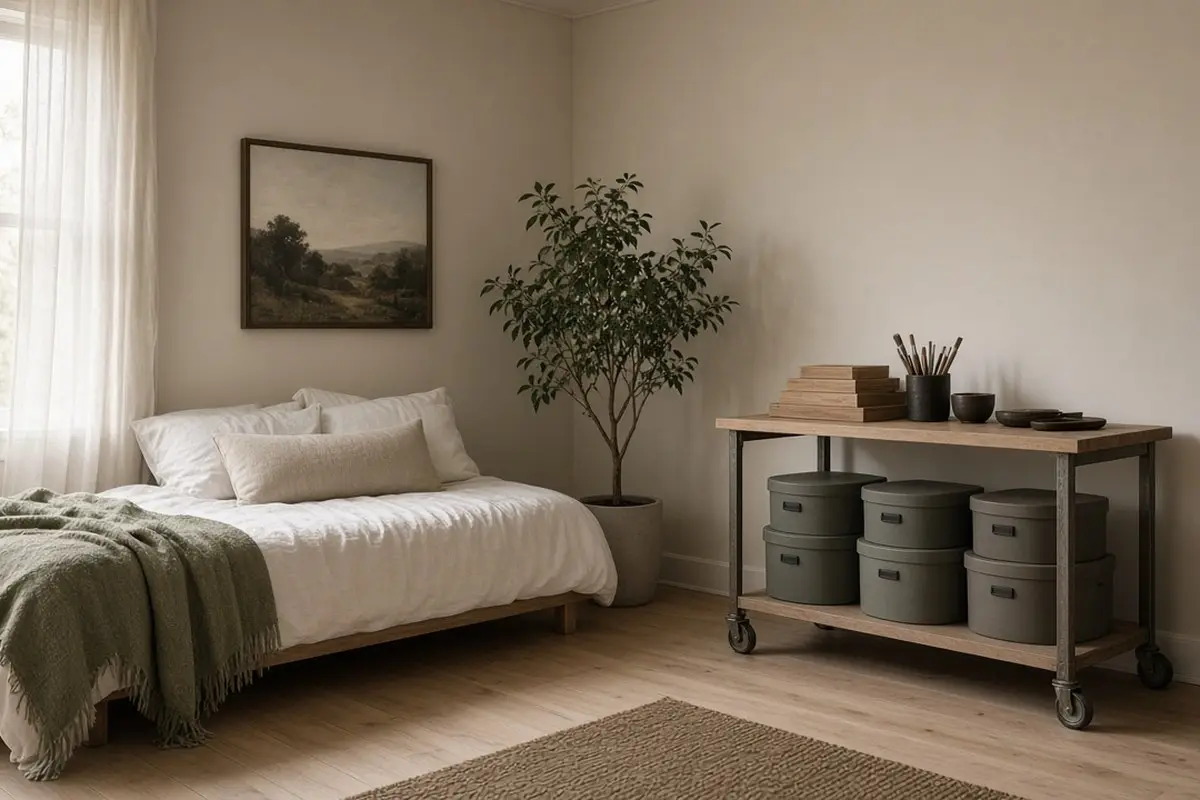
If the spare room is also the guest room, choose furniture that can switch roles. A daybed or sleeper sofa leaves floor space during the week. A worktable on locking casters can roll against a wall when visitors arrive. Keep supplies in lidded bins on a closed cabinet, so the room looks like a guest room within half an hour.
Before guests come, give them a clear surface and an empty drawer. A small tray on the worktable for keys and a phone shows that the room is theirs for the visit, even if the pegboard is still on the wall.
Get the look
5. Storage sorted by project, not by material
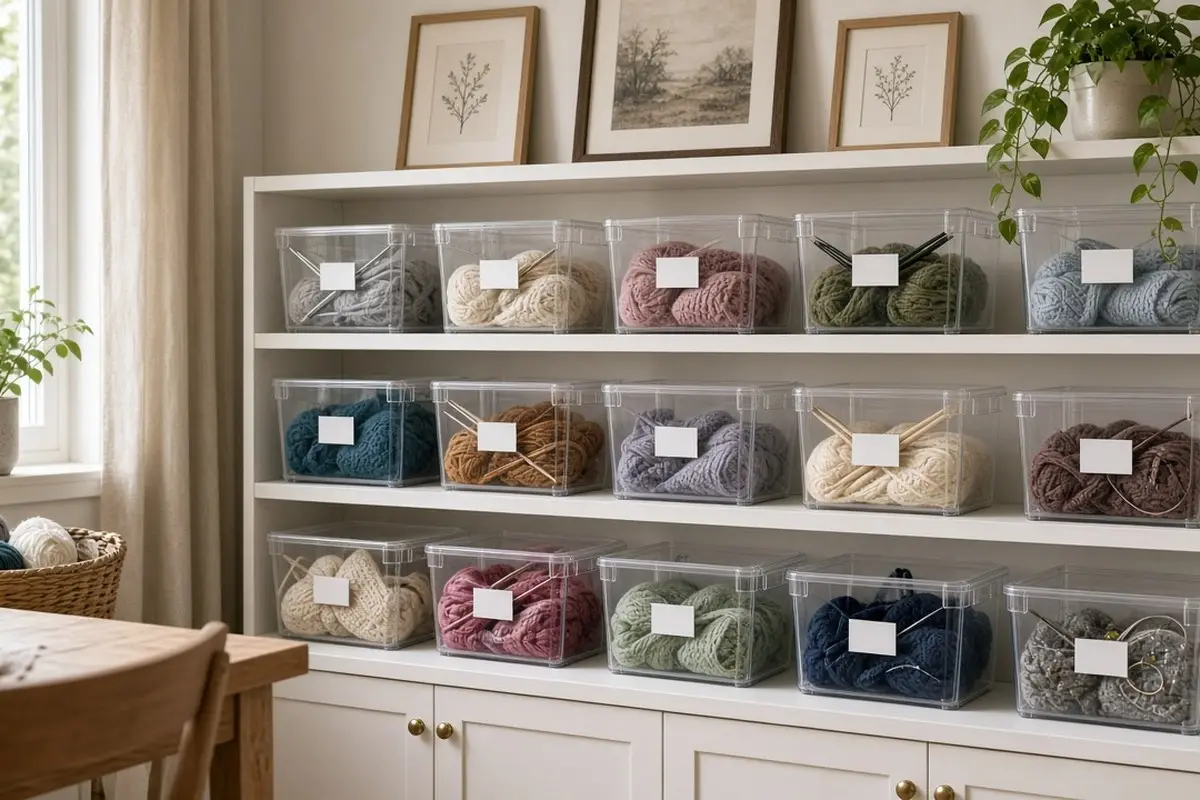
Most craft rooms sort supplies by type: all the yarn in one bin, all the needles in another. That is fine for stock, but projects in progress need their own homes. Give each active project a clear box or a large zip bag with everything it needs inside. When you sit down, you pull one box and start. When you stop, everything goes back in the same box.
Label boxes on the short end so you can read them on a shelf. Clear boxes help, but a label is faster to read than a jumble seen through plastic.
Get the look
6. Task light at the work, warm light in the room
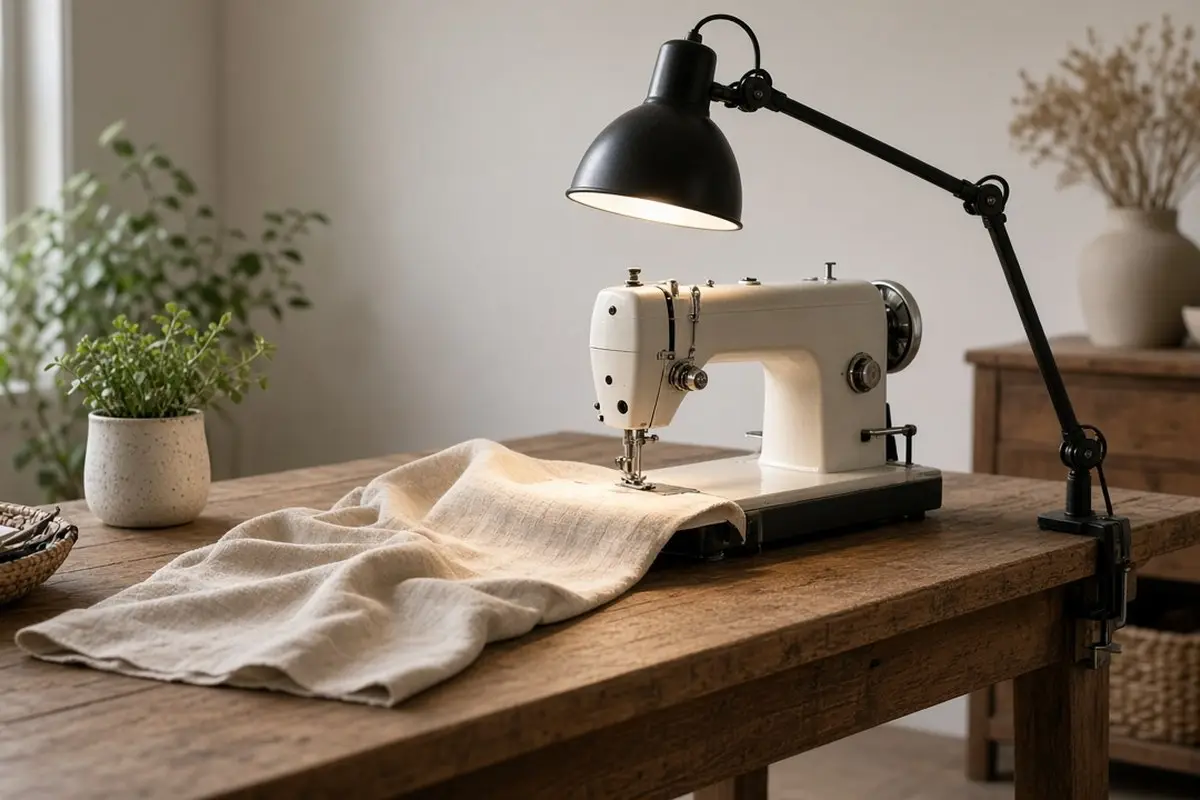
Detail work needs bright, even light right on the table. A clamp-on arm lamp or a daylight task lamp gives you that without lighting the whole room like an office. Keep a warmer lamp or ceiling light for the rest of the room, so the space still feels like part of your home.
If you paint, dye, or match fabric, choose task bulbs with a high color rendering index. Colors will look the same in the room as they do in daylight.
Get the look
7. A floor you do not have to protect
Choose a floor surface that forgives spills and dropped pins. Hard floors are easiest to sweep, and a washable flat-weave rug can go under the chair for comfort. Avoid deep-pile rugs, which swallow beads, sequins, and small screws. A magnetic sweeper is useful for pins and needles that land on the floor, and a small handheld vacuum kept in the room makes clean-up part of the routine. If the room is carpeted, put a clear chair mat under the work area.
8. A basement hobby room with a real door
Basements are a natural place for messier hobbies such as woodworking, pottery, or model railways. The trick is to make it feel like a room rather than a storage area. Build or buy a simple interior door to close off the hobby zone, add a rug, and use the same warm lighting you have upstairs. A dehumidifier helps protect paper, fabric, and wood.
Paint basement walls a light, warm color and add at least two light sources at different heights. Low ceilings feel less heavy when the light comes from lamps as well as the overhead fixture. A runner rug from the stairs to the door makes the route feel like part of the house.
If your hobby involves sawdust, fumes, or a kiln, check ventilation first. A door keeps dust in, but it also keeps fresh air out.
9. A comfortable chair and a place to pause
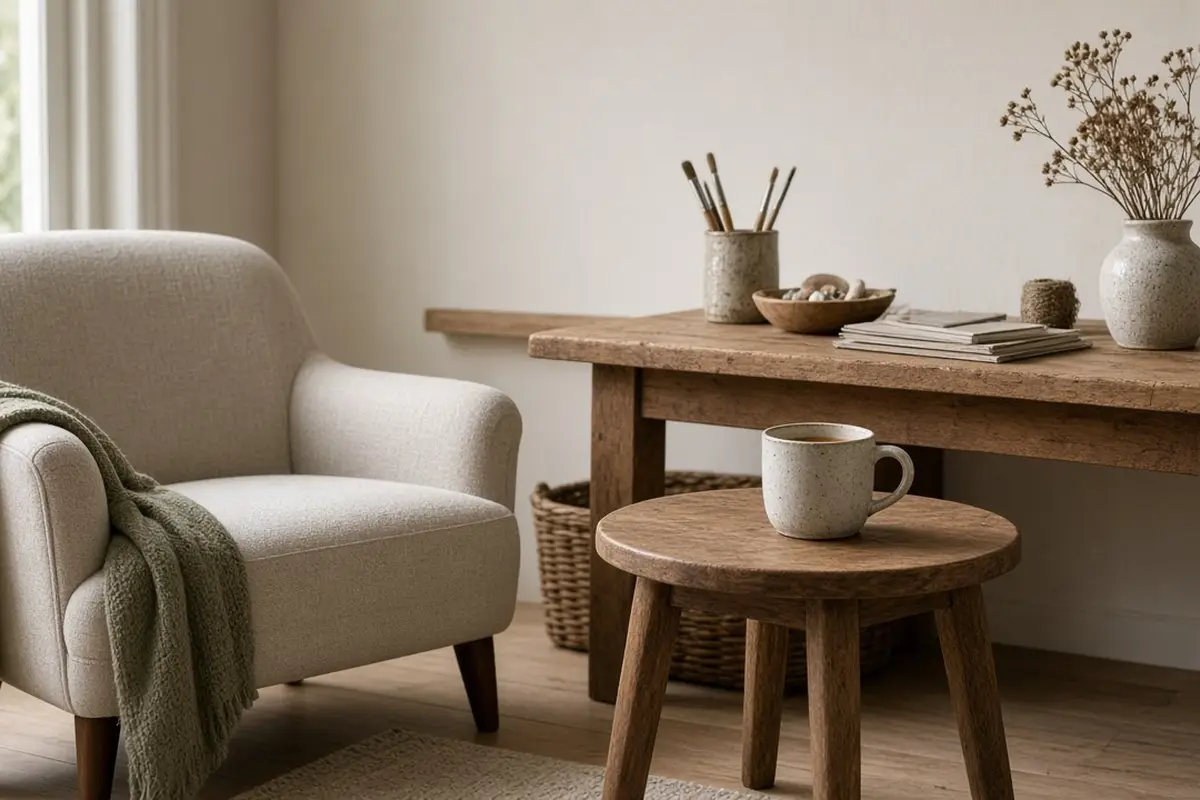
A hobby room is somewhere you will spend hours. Add a comfortable chair or a small armchair beside the worktable for reading patterns, looking at the work from a distance, or simply resting your eyes. A small side table and a cup of tea make the room somewhere you want to be, not just somewhere you work.
Add one or two things that are purely for pleasure: a finished piece framed on the wall, a small radio, or a plant on the windowsill. They remind you why you made the room in the first place, and they make the space feel finished even when the table is covered.
Get the look
How to keep a hobby room from becoming a storage room
The biggest risk to a hobby room is that it fills up with everything else: parcels, off-season clothes, the vacuum cleaner. Set a simple rule that only hobby things live in the room. If something else lands there, move it within a day.
Once a season, sort through supplies and pass on materials for hobbies you have moved past. A room full of good intentions is harder to work in than a room with only what you use.
Common questions
How big does a hobby room need to be? A room or closet with space for one worktable and a chair is enough for most crafts. A closet about 5 feet wide can work for small-scale hobbies.
What is the best storage for a craft room? Open pegboard for tools and clear labeled boxes for supplies, with one box for each project in progress.
Can a hobby room double as an office? Yes, if each use has its own surface. Keep the desk clear for work and let the worktable hold projects, so you are not packing up one to use the other.
For more, see one closet bedroom storage, shed workshop interior, and easy guest bedroom reset.