
8 Dividers That Make a Desk Feel Like Its Own Room

On this page13 sections
- What a desk divider needs to do
- An open bookshelf
- A folding screen
- A ceiling-track curtain
- A desk-mounted privacy panel
- Tall plants
- A slatted wood panel
- A sofa backed by a console
- An acoustic panel screen
- Light, cables, and comfort behind the divider
- Choosing the right divider
- Closing up at the end of the day
- Common questions
Working from a desk in the corner of the living room or bedroom has one big problem: the rest of the room is always there. The laundry pile, the television, the sofa calling you for a nap, the family walking past behind your video calls. Without a boundary, work spills into home and home spills into work.
A divider fixes that without walls or a renovation. It marks the desk as its own small room, blocks the distractions in your line of sight, and gives you something to step out from behind at the end of the day. This post covers eight divider types, focused on the specific needs of a desk: light, sound, cables, and how you look on camera. If you need to separate a bed from a living area instead, our post on studio bedroom dividers covers that.
As an Amazon Associate I earn from qualifying purchases.
What a desk divider needs to do
A desk divider is different from a bedroom divider. It does not need to block light completely or give total privacy. It needs to do four things well.
Block your view of the room. When you sit at the desk, you should see work, not the rest of the house. A divider at seated eye height, around four to five feet, does most of the job.
Keep daylight. Desks work best near windows. A divider should not cut off the light that makes the corner pleasant to work in.
Give a clean video backdrop. The divider often ends up behind you on camera. A tidy, simple surface looks better than a view into the kitchen.
Soften sound. Soft or filled dividers absorb some echo, which helps both concentration and call quality. Before buying anything, sit at the desk and look around. Note what you see straight ahead and to each side, where the window light comes from, and what shows behind you in your webcam. That tells you where the divider should go and how tall it needs to be. Most people need a boundary on only one or two sides, not a full enclosure.
1. An open bookshelf
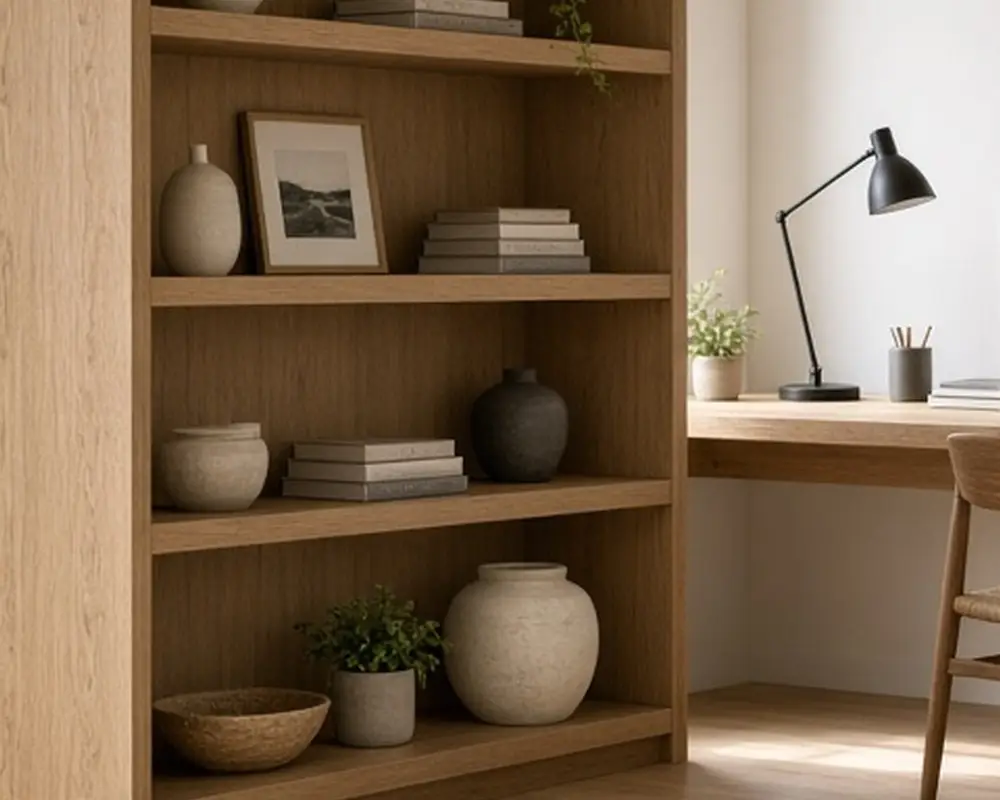
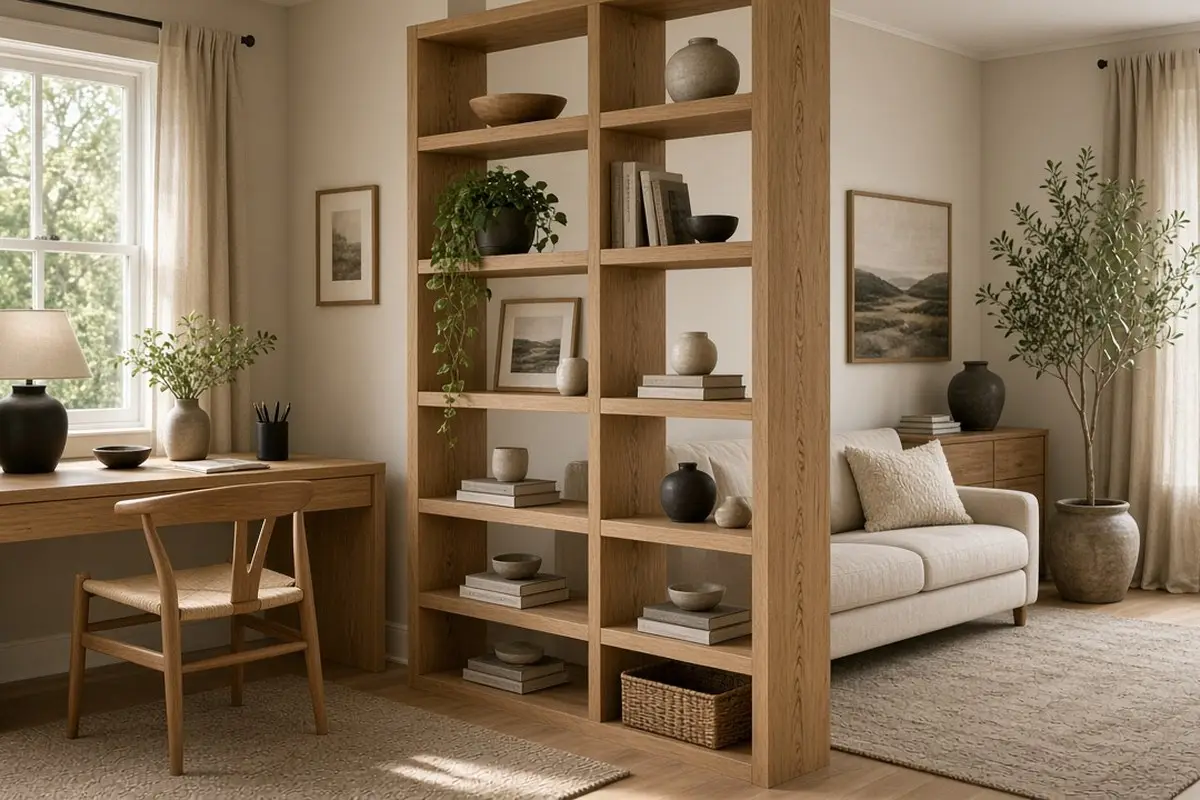
A double-sided open shelf is the classic divider. It holds files and books on the desk side and decor on the room side, and the gaps let light through. Place it perpendicular to the wall to create an L-shaped nook. Anchor tall shelves to the floor or ceiling, since there is no wall behind them to hold them steady. Fill the lower shelves on the desk side with closed bins for paper and supplies, so the clutter of work is hidden from the room. Keep the upper shelves more open so light passes over. On the room side, a few books, a plant, and a lamp make it look like a piece of living room furniture rather than office storage. A shelf about the same depth as the desk lines up neatly and makes the nook feel built in.
2. A folding screen
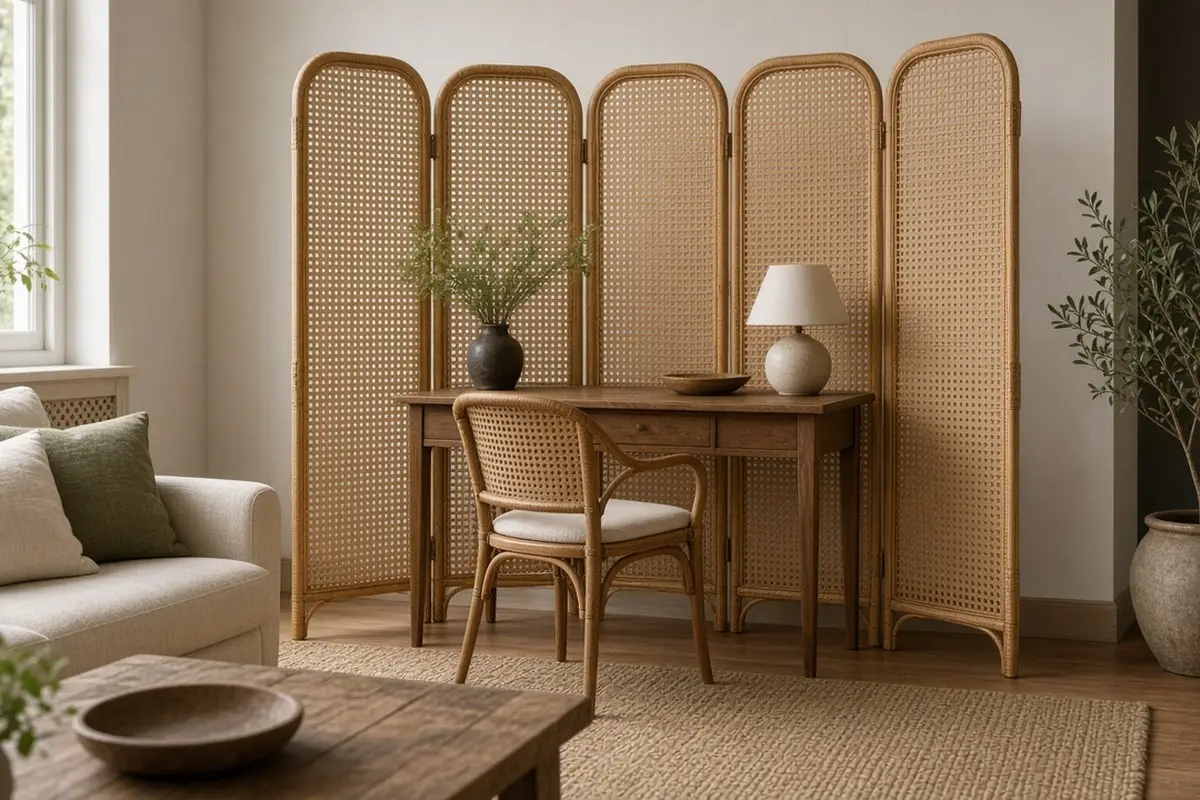
A folding screen is the most flexible option: it opens around the desk during work and folds away in the evening. Fabric or rattan panels let light through; solid wood blocks more. Use a screen with at least three panels so it stands steadily in a zigzag. A screen behind your chair is also the quickest way to fix a messy video background: open it, and the camera sees a calm surface instead of the bed or the kitchen. Choose a height of at least five and a half feet so it covers the view when you are standing too. Lightweight screens are easy to move but can tip in a busy room, so place them where people do not brush past.
Get the look
3. A ceiling-track curtain
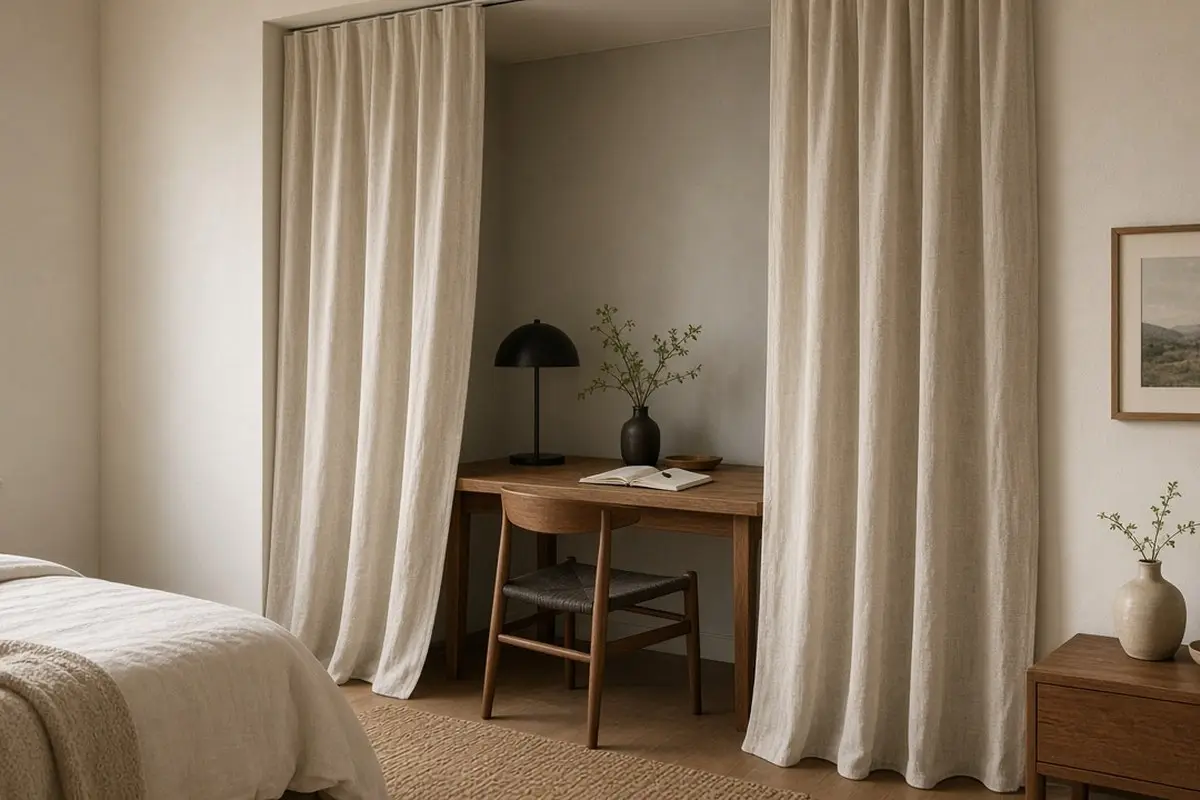
A curtain on a ceiling track wraps around a desk and can be pulled back completely when you are not working. Linen or cotton softens sound and filters light. This works well in a bedroom, where closing the curtain at night hides the desk from view. Pick a curtain about one and a half times the length of the track for soft folds. A light color keeps the nook bright, and a heavier fabric does more for sound. Flexible tracks bend around corners, so one curtain can enclose two sides of a desk. Tracks screw into the ceiling joists or attach with tension rods in rentals.
Get the look
4. A desk-mounted privacy panel
A panel clamped to the back or side of the desk gives a small, personal boundary. Felt panels absorb sound, and many double as pinboards. They are ideal in shared rooms where two people work. Panels also help when two desks face each other: a single divider between them gives each person a private screen without blocking the shared light. Look for clamps that fit your desk thickness and pins or a magnetic surface so the panel doubles as a notice board.
Get the look
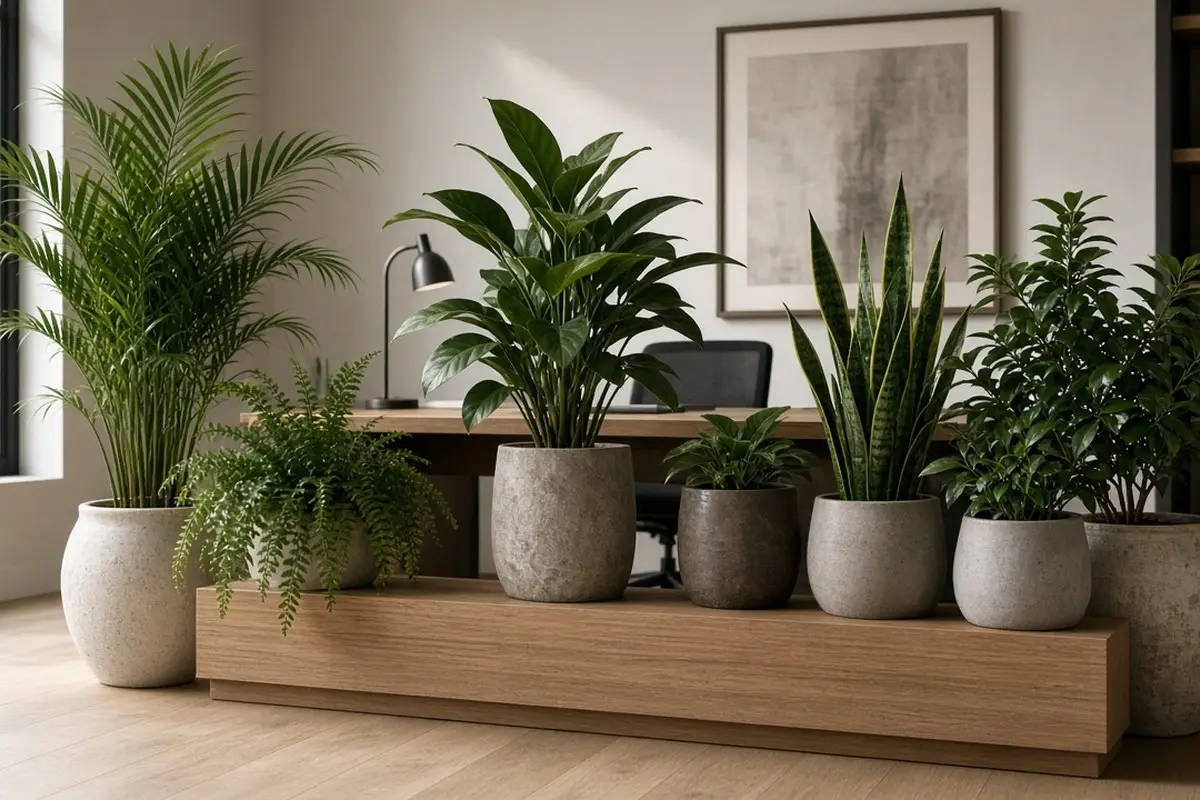
5. Tall plants
A row of tall plants in planters makes a soft, living divider. A planter box with a trellis or a group of fiddle-leaf figs works well. Plants also make a cheerful video backdrop. Choose plants suited to the light on that side of the room, and use self-watering planters so a busy week does not undo the divider. Faux plants work well in darker spots.
Get the look
6. A slatted wood panel
Vertical wood slats look modern, let light through, and add warmth. Freestanding slatted screens are easy to move; floor-to-ceiling slats mounted on a frame are more permanent. Slats spaced a few inches apart block most of the view while still letting light and air through, which suits a desk near a window. Paint them to match the walls for a quiet look, or leave natural oak for warmth.
Get the look
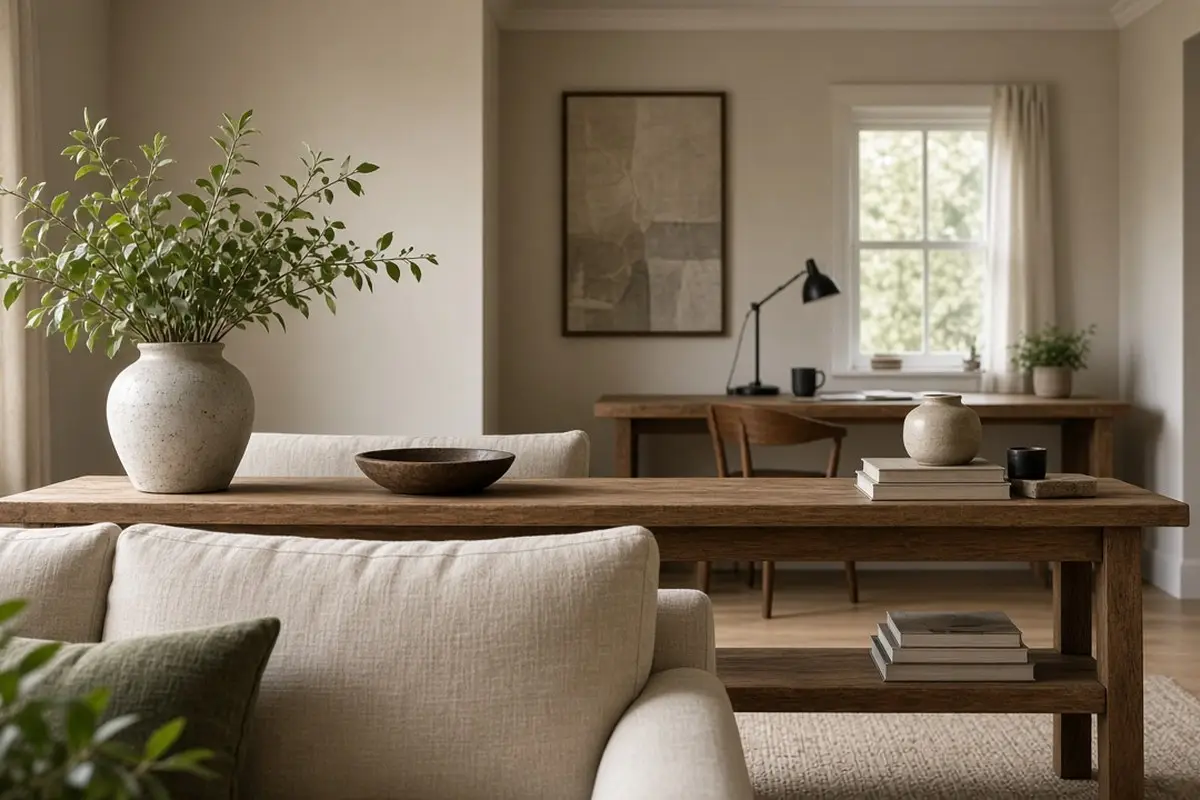
7. A sofa backed by a console
In an open living room, turn the sofa away from the desk and put a console table behind it. The sofa back becomes a low divider, and the console holds a lamp and supplies. This is the most invisible divider of all, because it uses furniture you already need. A console at about sofa-back height hides the desk surface from the living area, so at the end of the day the work tools disappear from view.
Get the look
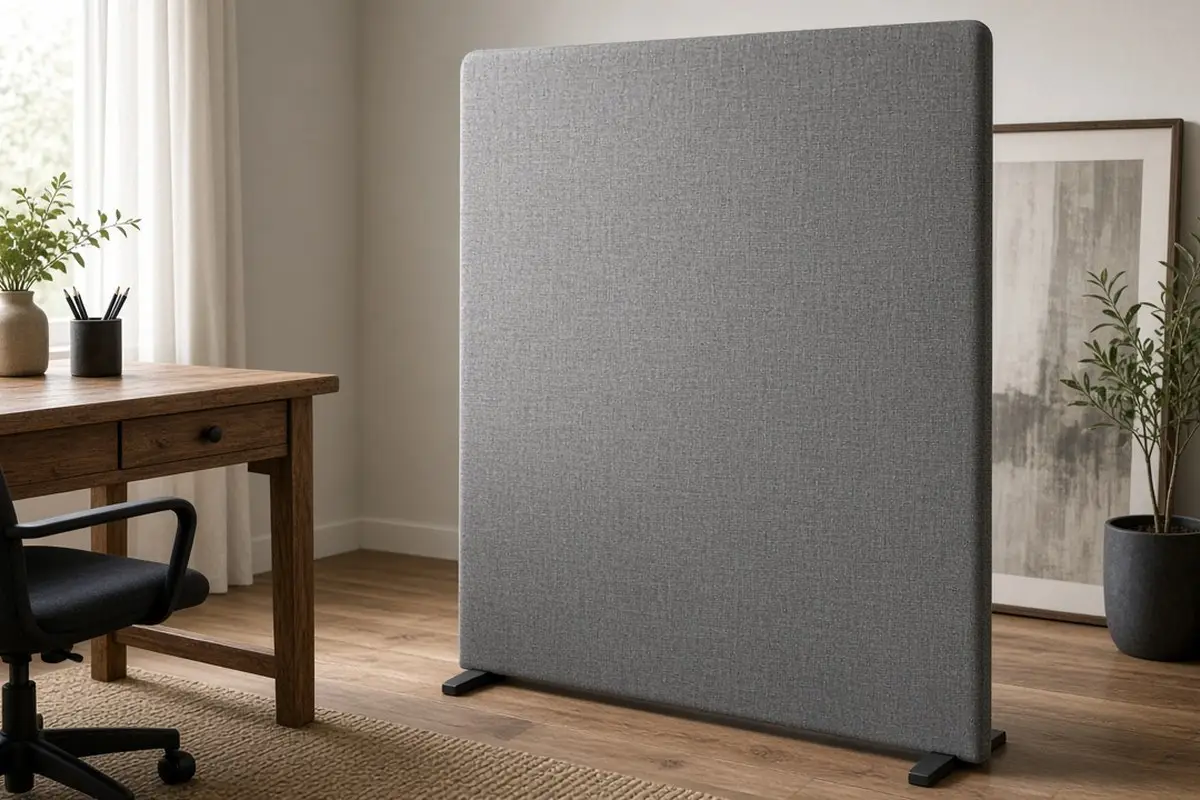
8. An acoustic panel screen
Freestanding acoustic panels absorb sound, a big help for calls in echoey rooms. Choose a fabric color that suits the room. Place them behind your chair or beside the desk where your voice reflects off hard walls. Even two panels can noticeably reduce the echo on calls.
Light, cables, and comfort behind the divider
A divider changes how light reaches the desk, so check the corner at different times of day once it is in place. If the nook feels dim, add a task lamp with a warm, adjustable head on the desk and a small uplight behind the divider to bounce light off the ceiling. Keep the window to your side rather than behind you; a window at your back puts your face in shadow on video calls, while a window in front of you causes glare on the screen.
Cables are the other giveaway that a desk is squeezed into a living space. Run a single extension lead along the base of the divider, use a cable tray under the desk, and bundle cords with sleeves or ties. A charging station tucked in a drawer keeps phones and earbuds out of sight. Behind a bookshelf divider, cables can drop down the back of the unit, invisible from the room.
Finally, think about the floor. A rug under the desk and chair defines the work zone just as clearly as the divider, protects the floor from chair wheels, and softens sound. Choose one large enough that the chair stays on it when pushed back. A low-pile or flatweave rug lets chair casters roll smoothly; a chair mat on top of a plush rug is another option.
Choosing the right divider
If you need storage, go with the bookshelf. If the desk shares a bedroom, a ceiling curtain hides it best at night. If you take a lot of calls, use a folding screen or acoustic panels behind the chair. If you rent, stick with freestanding pieces and plants. If the room is open plan, use the sofa and a console. Many of the best nooks combine two: a bookshelf on one side and a rug underneath, or plants beside a slatted screen. Start with one divider, work behind it for a week, and add a second only if you still see the room when you look up.
Closing up at the end of the day
The real value of a divider is the ritual of leaving. Fold the screen, draw the curtain, or switch off the desk lamp and step out from behind the bookshelf. Put work papers in a bin, close the laptop, and push the chair in. Within a minute the room is a living room again. That small routine helps the brain switch off, which is the hardest part of working at home. For more on that idea, see our upcoming guide to home offices you can close at the end of the day.
Get the look
Common questions
How do I separate a desk from a living room? Use an open bookshelf, a folding screen, or the back of a sofa with a console table to create a boundary at seated eye height while keeping light.
What is the best divider for video calls? A folding screen or acoustic panel behind your chair gives a tidy background and reduces echo.
Can I use a divider in a rental? Yes. Freestanding shelves, screens, plants, and tension-rod curtains need no drilling.
For more on working from a small home, see our bedroom corner desk ideas and the studio apartment layout guide.