
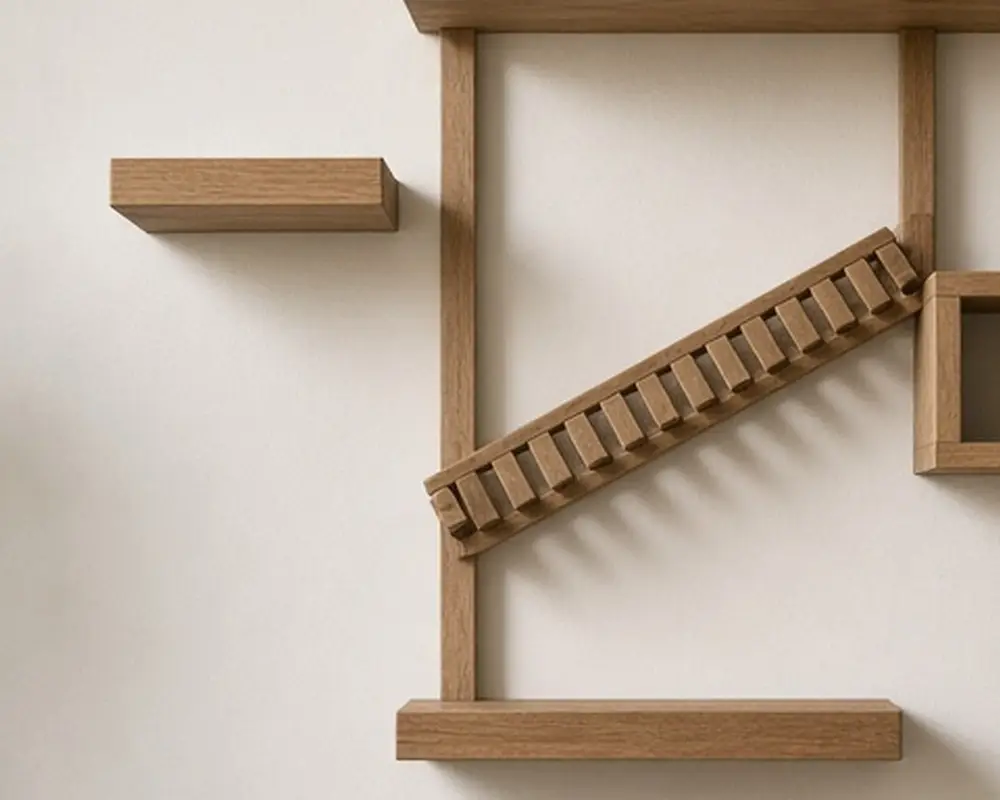
9 Cat Climbing Walls Anchored to a Stud

On this page16 sections
- Finding and using the studs
- Spacing for a cat’s jump
- The simple staircase
- The zigzag
- The bridge
- The cat highway
- A climbing wall with a hideaway box
- Sisal steps for scratching
- A window perch at the top
- A low wall for senior cats
- A corner tower
- Always plan the way down
- Surface and finish
- Load test
- More pet-friendly ideas
- Quick answers
A cat climbing wall is a shelf that gets jumped on, landed on, and launched off of, sometimes at three in the morning. That makes it different from a bookshelf. A shelf holding books carries a steady, even load. A shelf holding a cat takes a sudden, off-center impact every time a 12-pound animal lands on its front edge. Drywall anchors that are fine for a picture frame can slowly loosen under that kind of use.
So every layout below is built around one rule: anchor the brackets into wall studs. Once the wall is solid, the fun part is the layout, and there are plenty of ways to make it fit the room, the cat, and the space you have.
As an Amazon Associate I earn from qualifying purchases.
Finding and using the studs
In most homes, wall studs sit 16 inches apart, measured center to center. Some older homes and some walls use 24 inches. Find them with a stud finder, then confirm each one by driving a thin finish nail through the drywall where it will be hidden behind a bracket. If the nail hits solid wood, you have a stud.
Mark each stud lightly with painter’s tape from floor to ceiling. Now you have a grid to plan on.
Before drilling, sketch the layout on the wall itself. Cut rectangles of kraft paper the size of each shelf and tape them up along the stud lines. Step back, look at the shape from across the room, and check it against furniture, light switches, and outlets. Electrical wires often run horizontally near outlets and vertically above switches, so keep screws away from those zones. A cheap paper mockup catches most mistakes before they become holes.
What to screw into: use wood screws at least 2.5 inches long, so at least 1.5 inches of thread bites into the stud through the drywall. Two screws per bracket is the minimum. Most cat shelf kits include short screws meant for drywall anchors; set those aside and buy longer ones. Pre-drill a small pilot hole into the stud so the wood does not split, and drive the screws until they are snug, not until the drywall dimples.
When a stud is not where you need it: mount a horizontal board, about 1 by 4 inches, across two or three studs first, then attach the cat shelves anywhere along that board. This is called a ledger or cleat, and it makes it easy to place steps exactly where you want them while every load still goes into wood.
Spacing for a cat’s jump
Most adult cats jump comfortably about 12 to 18 inches up and across. Kittens and senior cats prefer less. A good rule:
- Vertical rise between steps: 10 to 14 inches.
- Horizontal gap between steps: 8 to 14 inches.
- Shelf depth: at least 8 to 10 inches, so a cat can land with all four feet.
- Top platform: at least 12 by 16 inches, big enough to lie down on.
Older cats and heavier breeds like Maine Coons do better with smaller gaps and larger landing pads. Watch your cat use the first two or three steps, then adjust before adding the rest. A few treats on each new step encourages a hesitant cat to try it, and you will see right away if a jump looks like a stretch.
1. The simple staircase
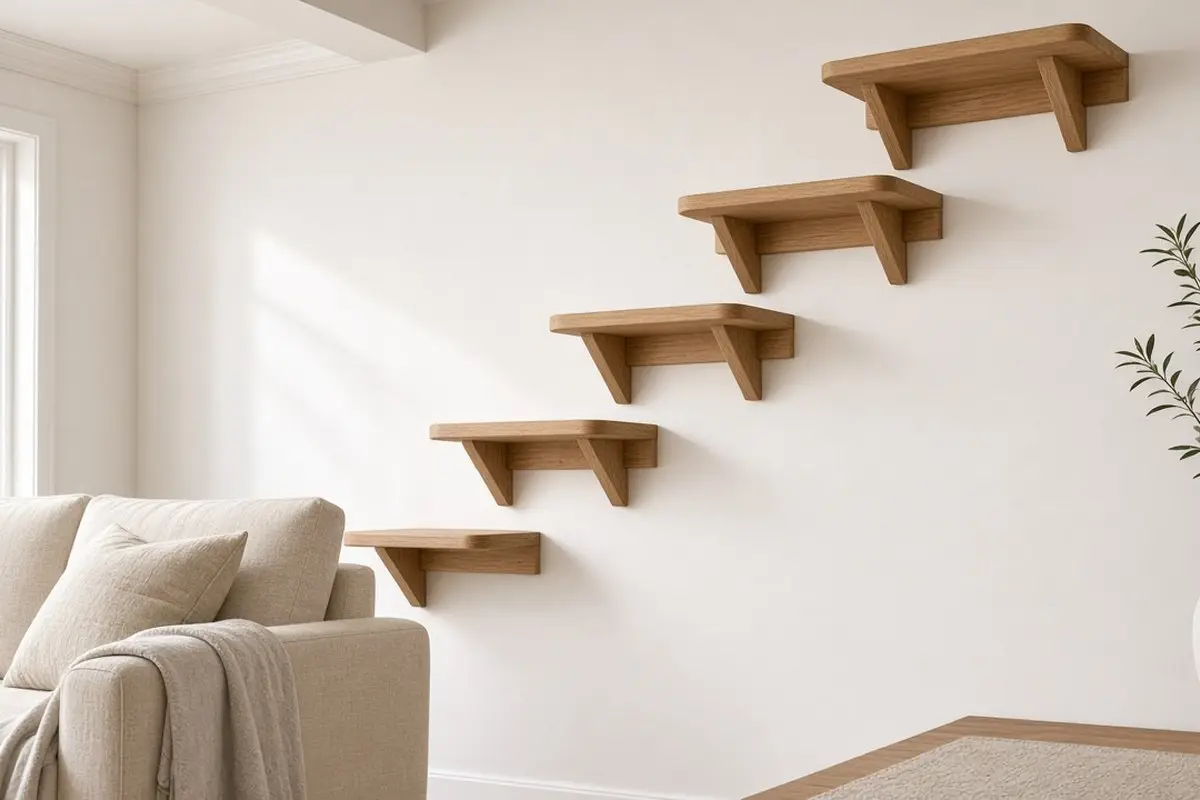
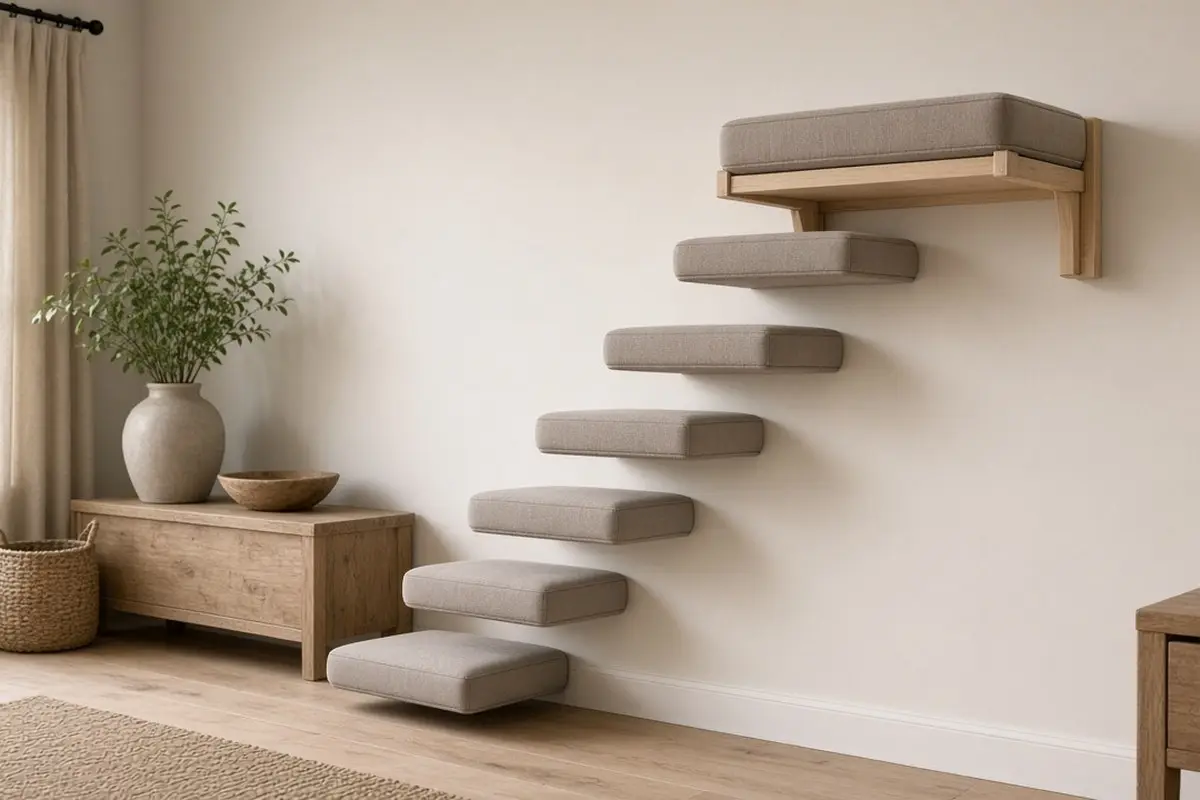
The starting point for most homes: five to seven shelves climbing diagonally up a wall from a sofa arm or a low bench to a top platform. Each shelf goes into its own stud, which keeps the line naturally at 16-inch intervals across the wall.
Start the first step about 24 inches off the floor, or use a piece of furniture as the first step. Leave the top platform wide enough for the cat to turn around comfortably, and set it where it looks down on the main room, since cats prefer a perch with a view of the door and the people.
Get the look
2. The zigzag
A zigzag climbs the wall in a narrower column, switching back and forth between two studs. It fits beside a doorway or between two windows where there is no room for a long diagonal. If the two studs are 16 inches apart, alternating steps between them gives a natural horizontal gap that suits most cats. For a tighter column, use a ledger board and offset the steps by about 10 inches.
3. The bridge
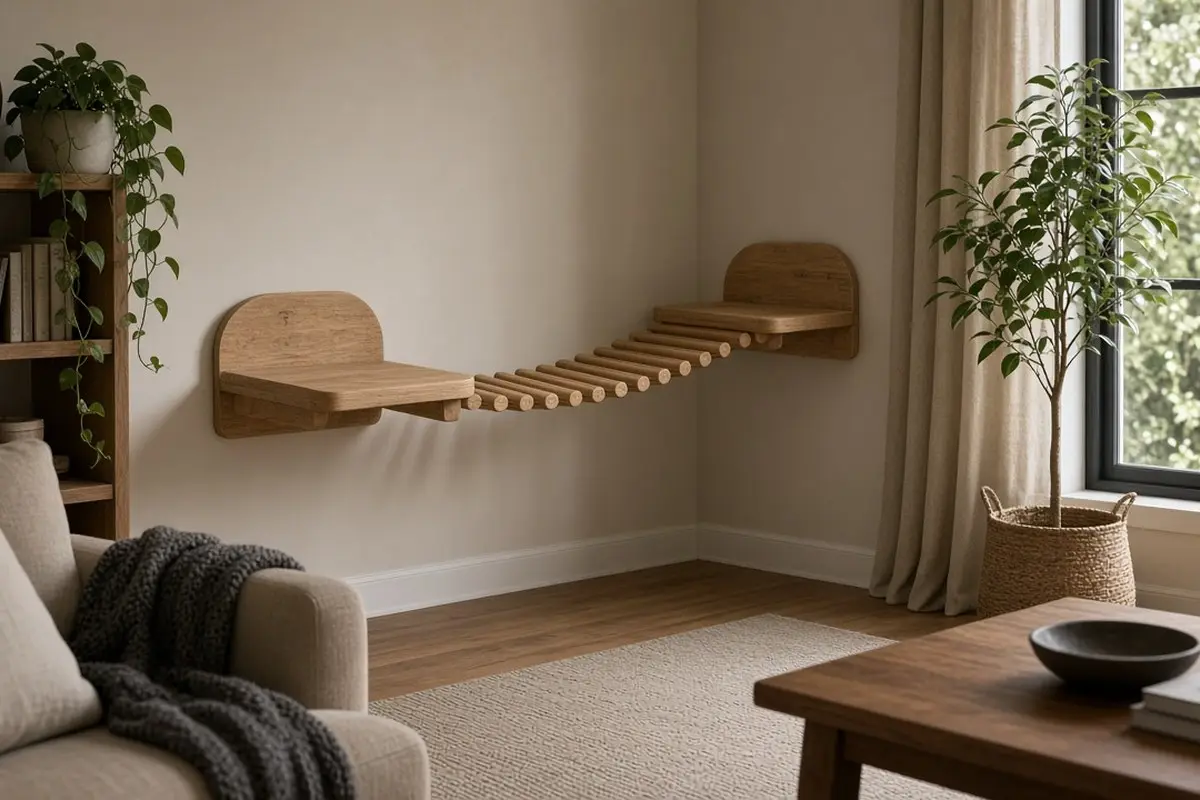
A rope or wooden bridge between two platforms on the same wall, or across a corner, adds a long, high walkway. Cats love to cross it and lie on it. Anchor both ends into studs, and make sure the bridge has some sag but not so much that the cat feels it swinging.
Get the look
4. The cat highway
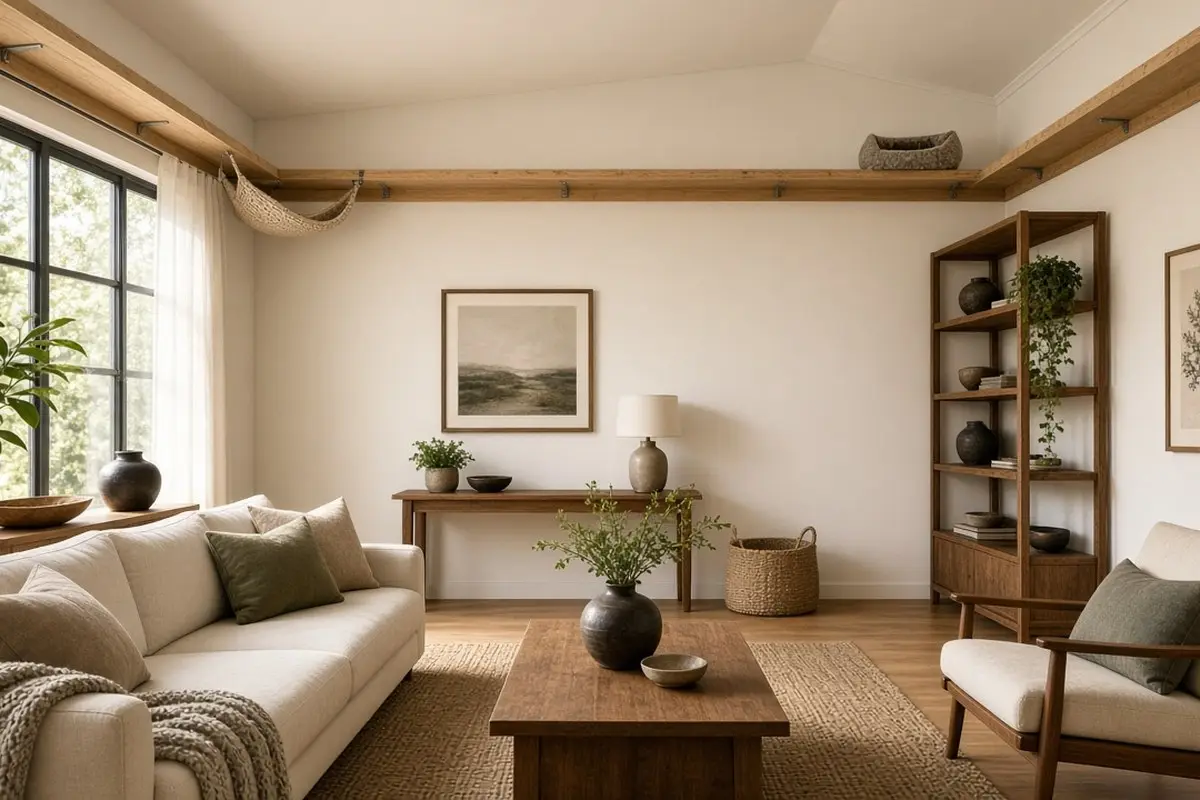
A continuous walkway of shelves running around the top of a room, 12 to 18 inches below the ceiling. Cats can patrol the whole room from above. Ceiling-height runs need an easy way up and an easy way down at both ends, never only one.
This works best along a ledger board across all the studs on the wall, since each section of walkway carries a cat walking along it, not just landing on it.
Get the look
5. A climbing wall with a hideaway box
Swap the top platform for a wall-mounted box with an entrance hole, lined with a soft cushion. Shy cats love a high hiding spot. Make sure the box can be cleaned easily and has more than one exit, or at least a large opening. A removable cushion that goes in the wash keeps it fresh, and a hinged front makes it easy to reach in if you ever need to lift the cat out for a vet visit.
6. Sisal steps for scratching
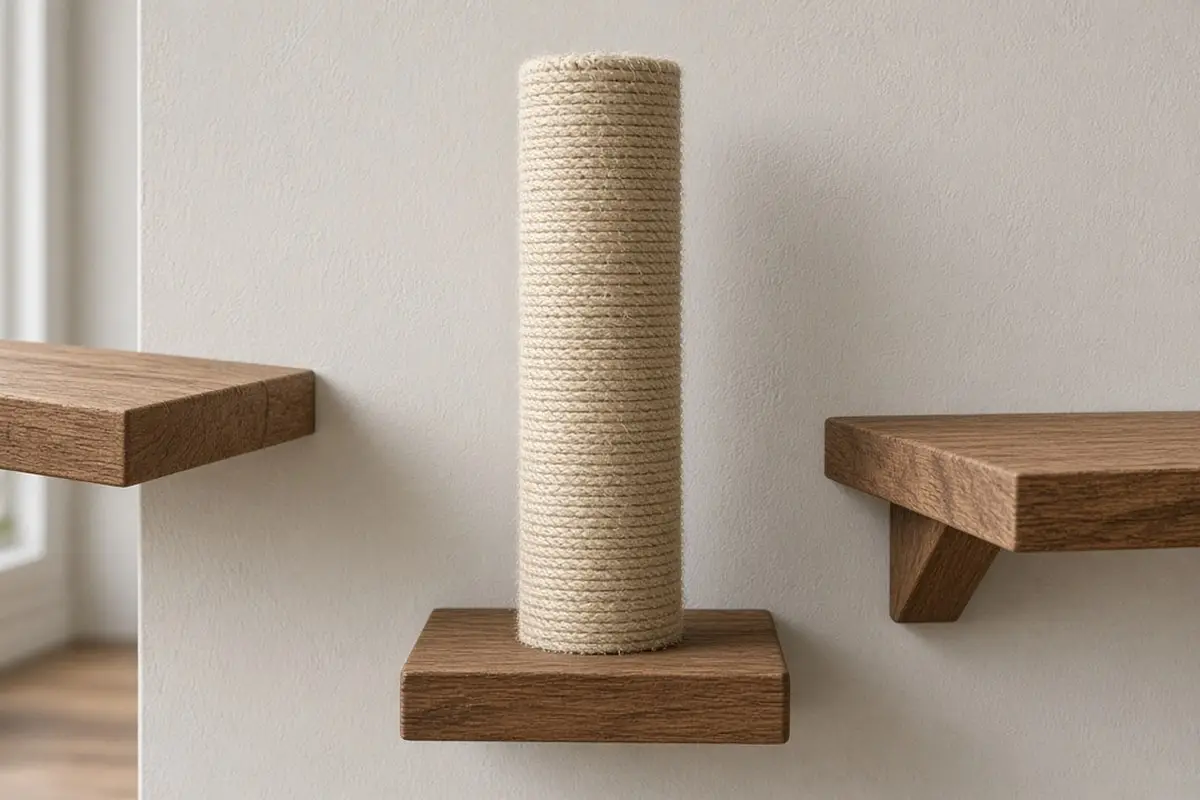
Wrap one or two of the steps or a vertical post in sisal rope. Cats will scratch on the way up, which keeps claws off the sofa. Sisal wears out over time. Wrap it so it can be replaced without taking the whole post off the wall, by stapling the ends at the back where they are hidden. Mount a vertical sisal post on a backing board screwed into a stud, so the post does not wobble when the cat pulls on it.
Get the look
7. A window perch at the top
Lead the climbing wall to a window. A perch at the window sill gives the cat a destination with a view. Anchor the perch to studs on each side of the window, or to the framing around it. Bird feeders outside the window turn the perch into the best seat in the house, and many cats will spend whole afternoons there.
8. A low wall for senior cats
Older cats with stiff joints still like to be up high, just not as high. A low wall with shallow steps, 8 to 10 inches apart, up to a padded platform at about 4 feet gives them a lookout without long jumps.
Get the look
9. A corner tower
Corners are good places for a climbing wall, because a corner has framing on both walls. A vertical tower of corner shelves climbs straight up without taking any floor space.
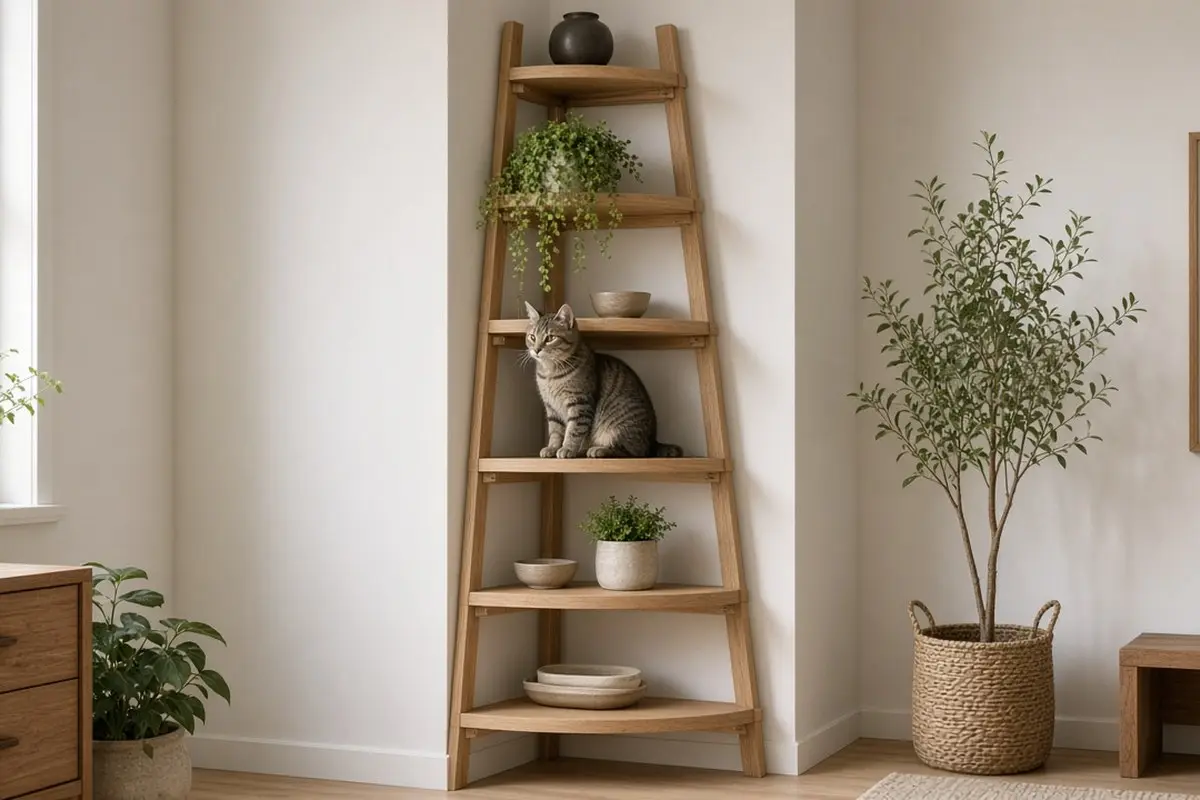
Alternate the shelves between the two walls as they climb, so the cat zigzags up the corner. Each shelf can be anchored to the corner framing or to a stud a few inches out from the corner, which is usually easy to find.
Always plan the way down
The most common mistake with a cat wall is a dead end. Cats climb up easily, but jumping down from a high platform is harder and riskier. Every top spot should connect back down by a different route, or by the same steps reachable without turning around in a tight space.
If your cat ever hesitates at the top or cries to be lifted down, add a step. Also leave a spot where a person can reach the top platform. Cats sometimes get sick, get frightened, or need to be caught for a carrier, and a top platform that only a cat can reach makes all three harder.
Surface and finish
- Add grip. Cats slip on smooth, varnished wood. Add carpet tiles, cork, or sisal mats to each step, held with screws from below or strong adhesive.
- Round the edges. Sand edges smooth so the cat does not land on a sharp corner. Rounded corners are also kinder to the people walking past at head height, so check the step heights against your own height before you mount them near a walkway.
- Use pet-safe finishes. Choose water-based finishes and let them cure fully before the cat uses the wall.
Load test
Before letting the cat on, test each step by pressing down hard on the front edge with your hand. Lean your weight into it. It should not flex, creak, or move. A shelf that moves under your hand will loosen further under a cat.
More pet-friendly ideas
Quick answers
Can I use drywall anchors instead of studs? For a picture frame, yes. For a cat shelf that takes repeated jumping impacts, stick to studs or a ledger board screwed into studs.
How high should the top platform be? Most climbing walls top out between 5 and 7 feet. Leave at least 12 inches between the top platform and the ceiling so the cat can sit up.
Will renters be able to do this? It involves screwing into studs, so check your lease. The holes are easy to patch when you move out.
For a whole room built for cats, see indoor cat room ideas. The tips in cat feeding station placement help with where the bowls should go. And for dogs in the house too, see dog bed placement.