

7 Door Curtains That Give a Bedroom Real Privacy

On this page9 sections
Not every bedroom has a door. Loft apartments, older homes with wide archways, studios with sleeping alcoves, and rentals where a door was removed long ago all leave you with an opening and no way to close it. Even bedrooms with doors sometimes need more: a door that does not shut properly, a glass door that lets in light, or a doorway where a swinging door would block furniture.
A curtain is the simplest fix. It costs little, installs in an afternoon, and can be removed without a trace. But a thin panel on a tension rod rarely gives real privacy. It lets in light, sways with every draft, and leaves gaps at the sides. The seven ideas below are about doorway curtains that actually work: heavy enough, wide enough, and hung well enough to make a bedroom feel closed.
If your bedroom is part of a larger open space, the studio bedroom dividers post covers more ways to separate the sleeping area.
As an Amazon Associate I earn from qualifying purchases.
1. A ceiling track curtain
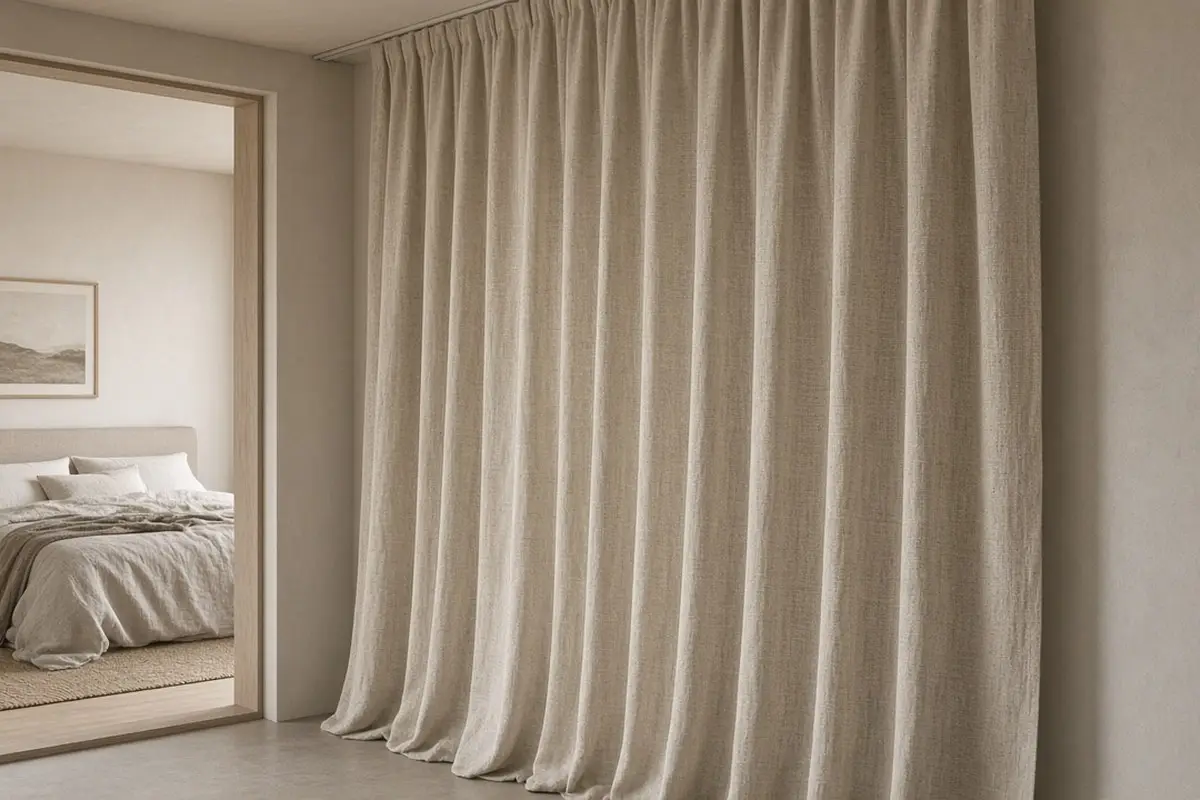
The most effective doorway curtain hangs from a ceiling-mounted track rather than a rod inside the door frame. A track lets the curtain run right up to the ceiling, blocking the gap above the door, and lets it slide smoothly to one side when open.
Mount the track a few inches out from the wall on the bedroom side and extend it past the door frame by at least 8 inches on each side. That overlap stops light and views from sneaking in at the edges. When open, the curtain stacks neatly beside the doorway against the wall.
Ceiling tracks come in flexible versions that can bend around corners, which is useful if the doorway sits near a wall. Most screw into the ceiling with a few anchors. In a rental, choose a track that uses small screws and fill the holes when you leave.
Choose a curtain that reaches from the track to just above the floor, about half an inch clear, so it slides without dragging.
Check the ceiling material before you buy. Plaster and drywall need proper anchors; concrete ceilings need masonry plugs and a hammer drill. Wooden joists give the strongest hold, so use a stud finder and aim screws into them where you can. A heavy lined curtain can weigh several pounds, and it gets pulled every day.
Get the look
2. A bedroom curtain instead of a door
If a door is missing or has been removed, a full-width curtain can replace it. The key is making it feel as substantial as a door. Use a thick fabric with a blackout or thermal lining, double the width of the opening so it falls in deep folds, and hang it on a sturdy rod or track mounted above the frame.
Two panels that meet in the middle are easier to walk through than one wide panel. Add a small magnetic tie or a hidden snap where they meet to keep them closed against drafts.
Heavy fabrics like velvet, wool, or a thick cotton canvas absorb sound better than light linen. They will not soundproof the room, but they soften noise noticeably, which matters in a shared home.
A curtain that replaces a door also looks better if it matches the walls or the bedroom curtains, so it reads as a soft wall when closed instead of a temporary fix.
Think about which way the curtain stacks when open. If the bed is on one side of the doorway, stack the curtain on the other so it does not block the path. If the doorway is the main route through the home, consider a tieback or a holdback hook so the fabric stays neatly out of the way during the day.

Get the look
3. A blackout curtain over a glass door
French doors and glass-paneled doors look lovely, but they let in light from the hallway, which disrupts sleep. A blackout curtain on the bedroom side solves it without replacing the door.
Mount a rod above the door frame and extend it so the curtain can be pulled fully clear of the glass during the day. For doors that swing into the room, use a swing-arm rod or mount the curtain on the door itself with rods top and bottom, which keeps the fabric tight against the glass.
Sash rods on the door give a neat, tailored look and let you open and close the door without moving the curtain at all.
If the glass is frosted rather than clear, the problem is usually light more than privacy. In that case, a blackout roller blind fitted to the door itself is a slimmer option that still blocks the hallway light at night.
Get the look
4. A doorway curtain for privacy in a shared room
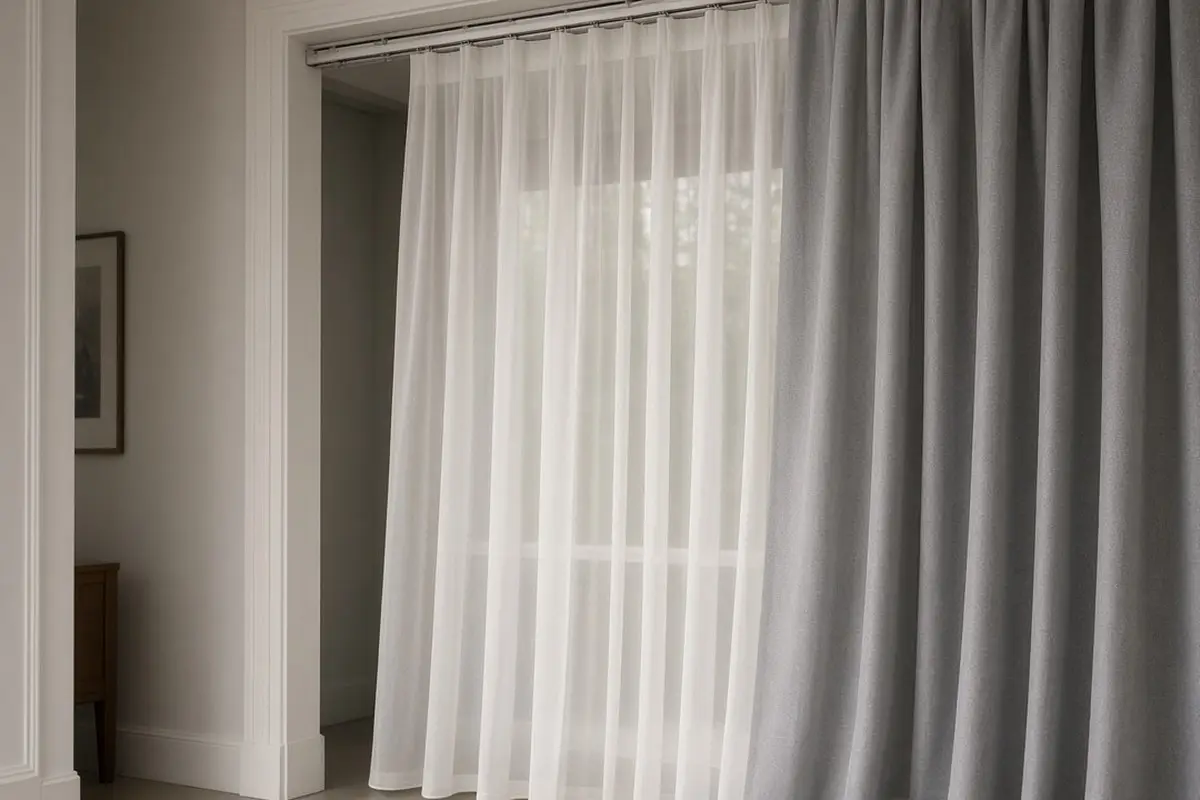
In a shared apartment or a bedroom that opens straight onto a living area, a curtain gives each person privacy without closing them off entirely. A semi-sheer curtain during the day lets light through while blurring the view; a heavier layer behind it closes fully at night.
A double track or double rod makes this easy. Hang the sheer at the front and the blackout panel at the back, or the other way around depending on which side you want to see the pretty fabric from.
This layered approach also works well for teenagers’ rooms or a home office corner of a bedroom, where you want flexibility through the day.
Agree on simple signals with roommates or family. A fully closed heavy curtain can mean do not disturb, while the sheer alone means come in. It sounds small, but it makes a curtain work more like a real door.
Get the look
5. A room divider curtain for an alcove
Many studios and older apartments have a sleeping alcove: a recess that fits a bed but has no wall. A room divider curtain across the opening turns it into a real bedroom.
Run a ceiling track across the full width of the alcove. Use a curtain at least one and a half times the width so it gathers softly. When open, the alcove feels like part of the room; when closed, it is a separate, cozy sleeping space.
Alcove curtains can be beautiful. A patterned or colored fabric turns the opening into a feature, like an old-fashioned box bed. Make sure the fabric is lined so light from the main room stays out.
Add a wall light or a small lamp inside the alcove so you can read in bed with the curtain closed. A plug-in wall sconce avoids any wiring work and makes the space feel like a proper room.

Get the look

6. Block the gaps
Even a good curtain leaks light around the edges. A few small fixes close the gaps. Return the rod or track to the wall at each end so there is no side gap. Let the curtain touch or nearly touch the floor. Mount the rod as close to the ceiling as possible, or add a pelmet or valance across the top.
For the most light-tight result, use hook-and-loop tape or magnetic strips along the edges of the frame, so the curtain seals against it at night.
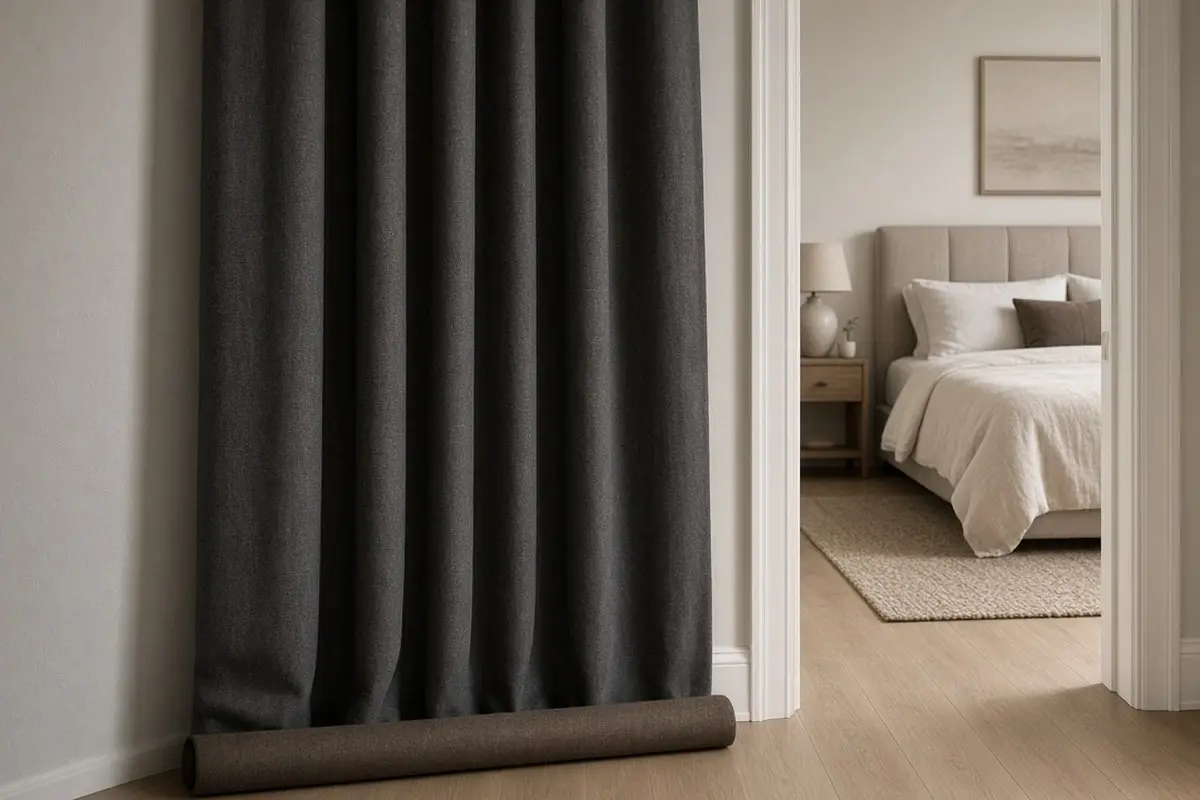
Under the curtain, a draft stopper or a thick rug at the threshold helps block light from a hallway that stays lit at night. It also catches the last of the drafts in a cold home.
Get the look
7. Choose fabric for sound and warmth
Fabric choice decides how much privacy a curtain really gives. Light linen looks lovely but does little for light or sound. Heavy velvet, wool, quilted, or thermal-lined curtains block more of both. Thermal curtains also keep drafts out of a bedroom with an open doorway, which makes a real difference in winter.
Weigh the curtain’s practical job against its look. A blackout-lined linen gives you the relaxed texture of linen with much better light control. Velvet adds sound softening and a rich, cozy look.
Consider care too. Doorway curtains get touched far more than window curtains, so pick a fabric that can be washed or brushed clean. Darker colors and textured weaves hide hand marks better than pale, smooth fabric.

Get the look
Quick Doorway Curtain Rules
- Mount from the ceiling when you can.
- Extend past the frame on both sides.
- Use double width fabric.
- Line for light, thicken for sound.
- Seal edges with magnets or a returned rod.
- Let it nearly touch the floor.
FAQ
Can a curtain replace a bedroom door?
Yes, for privacy and light. It will not lock or fully block sound, but heavy lined fabric softens noise and gives a real sense of a closed room.
What is the best curtain for doorway privacy?
A heavy, lined curtain hung from a ceiling track that overlaps the frame on both sides.
How do I hang a doorway curtain without drilling?
Use a tension rod inside the frame or adhesive hooks for very light curtains. For heavier fabric, drilling is safer. The one closet bedroom storage post shows renter-friendly ways to hide storage behind curtains too.
Do curtains help with noise?
Heavy, dense fabrics like velvet, wool, and quilted sound curtains reduce echo and soften noise, but do not soundproof a room.
How wide should a doorway curtain be?
At least one and a half to two times the width of the opening, plus the overlap at each side. Generous width gives deep folds, better light blocking, and a more finished look. The mirror placements for light post helps if closing the doorway leaves the bedroom darker by day.
A doorway curtain is one of the cheapest ways to make a bedroom feel private. Hang it high, wide, and heavy, close the gaps, and an open doorway becomes a soft, quiet wall whenever you want one.