
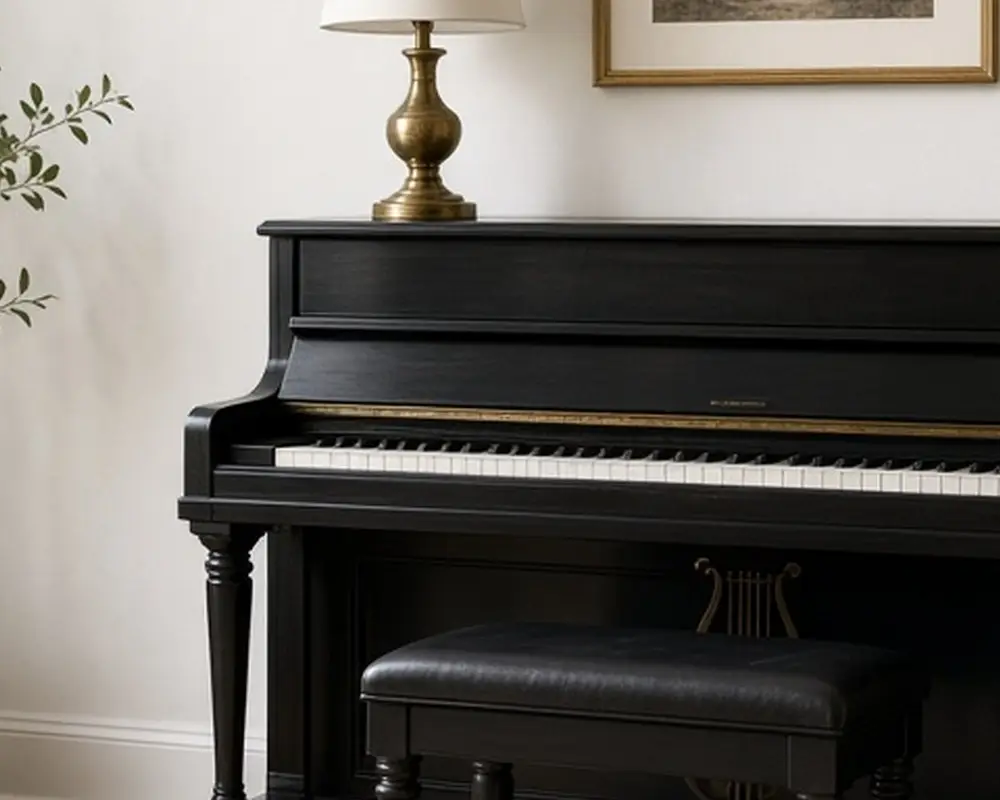
7 Rooms That Fit an Upright Piano and a Bench

On this page11 sections
- The measurements that matter
- The living room wall behind the sofa
- A dining room wall
- An entry hall or wide landing
- A corner of a bedroom
- A small music nook
- A digital upright for a tiny apartment
- A shared room with the piano as a focal point
- Lighting the music
- Styling the top without hurting the sound
- Common questions
An upright piano is about five feet wide, two feet deep, and heavy enough that you will not want to move it twice. Add a bench and a player, and it claims a zone close to five feet by four and a half. In a small house that is a real commitment, and the wrong spot means a piano that goes out of tune every season, a player squeezed against a sofa arm, or a room that suddenly feels like a music shop.
These seven rooms show where an upright fits well and what each placement needs. The common thread is simple: an inside wall, enough space behind the bench, good light on the music, and a top kept mostly clear.
As an Amazon Associate I earn from qualifying purchases.
The measurements that matter
Most uprights measure 56 to 60 inches wide and 23 to 26 inches deep. A standard bench is about 30 inches wide and 14 deep. The player needs room for the bench to slide back, so plan for at least 3 feet from the front of the piano to anything behind the bench, and 4 feet if that space is also a walkway.
Height matters too. Uprights range from small spinets about 36 inches tall to studio and full uprights over 48 inches. A taller piano generally sounds richer, but a shorter one fits under a window or a low shelf and looks less imposing in a small room. Measure the height you have before shopping, especially if you plan to hang art above it.
Choose an inside wall where you can. Outside walls swing in temperature and humidity, which pulls the strings out of tune and can crack a soundboard over time. Keep the piano well away from radiators, heating vents, fireplaces, and windows that get direct sun.
Aim for a steady room humidity of roughly 40 to 50 percent. A small humidifier in winter and a dehumidifier in damp summers help more than any placement trick. Leave a couple of inches between the back of the piano and the wall so air circulates and sound can open up. Check the floor as well: a piano weighs four to six hundred pounds, so on an older or upper floor, place it near a load-bearing wall rather than in the middle of a long span.
1. The living room wall behind the sofa
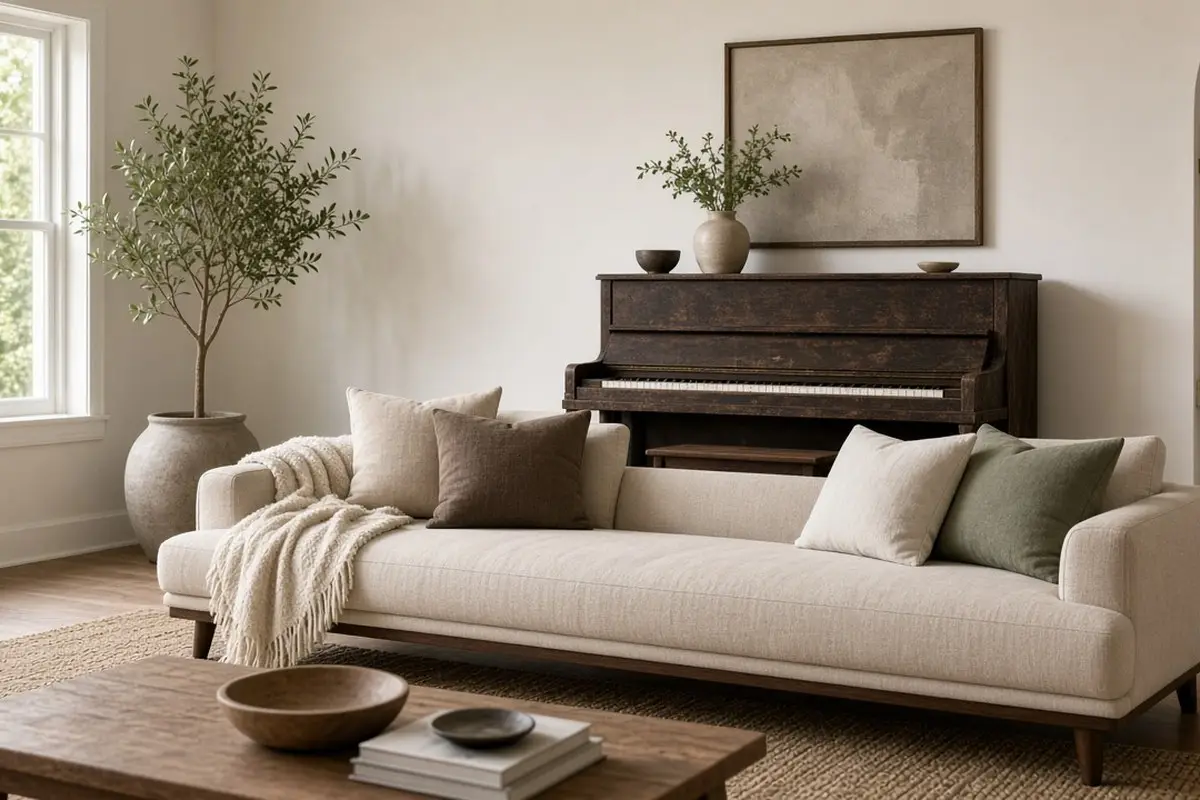
In a living room, the wall opposite the seating is often taken by the TV. The wall behind the sofa is frequently free. If the sofa floats a few feet from that wall, an upright tucked behind it gives the player a private spot facing the wall while the room faces the other way. Leave at least 3 feet between the bench and the back of the sofa.
This spot also keeps the piano out of the direct line of the TV, which matters if someone wants to practice while others watch. Use a sofa table or a low console behind the sofa only if there is still room for the bench; otherwise let the open space between them be the music zone. A small rug under the piano and bench softens the sound in a room with hard floors.
Get the look
2. A dining room wall
Dining rooms are often quiet most of the day and have a long free wall. An upright there gives practice a calm room away from the TV, and the dining chairs can serve as audience seats. Keep it on the wall farthest from a sideboard so the two big pieces do not compete.
Dining rooms often have the best overhead light in the house, but chandeliers sit too far away to light music well, so add a lamp. Protect the piano from spills by keeping drinks on the table, never on the piano top, during dinner parties. The piano also makes an easy buffet backdrop when it is closed and covered with a runner, though remove the runner before anyone plays.
3. An entry hall or wide landing
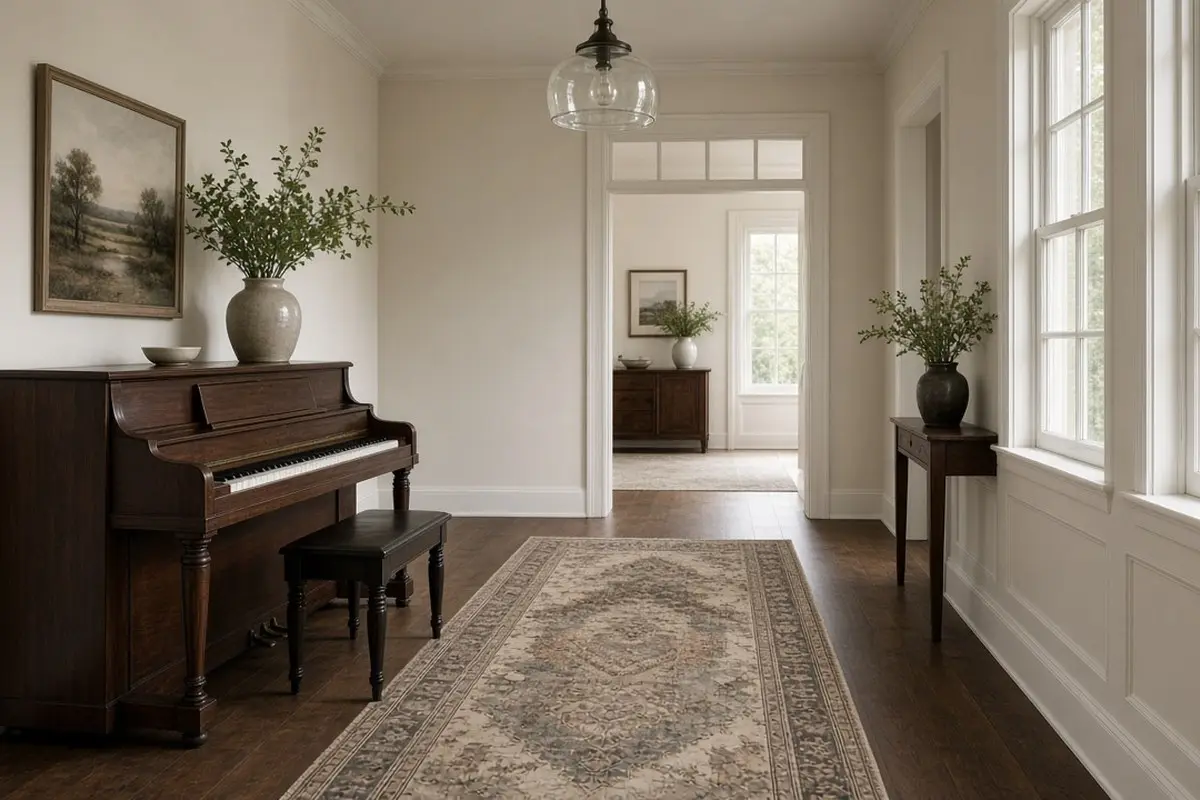
A wide hall with an inside wall can take an upright neatly, and the bare surfaces carry sound well. Check that the bench clears the main route through the door. This works best in a house where the hall is a real room, not just a corridor.
Entries change temperature every time the front door opens, so keep the piano on the wall farthest from the door and out of any draft. A piano in the hall is also a lovely welcome; guests hear music as they arrive, and a quick piece before school becomes part of the morning routine.
Get the look
4. A corner of a bedroom
For a teenager or an adult who practices late, a bedroom gives privacy and keeps sound away from the rest of the house. Put the piano on the wall shared with a closet if you can; the clothes act as sound insulation for the next room.
In a bedroom, the bench can double as a desk chair if the piano sits beside a desk, and a narrow shelf above holds both books and sheet music. A thick rug and lined curtains soak up sound so practice is less loud for everyone else. If the bedroom is small, measure the bed and door swing carefully; an upright must never block a way out of the room.
5. A small music nook
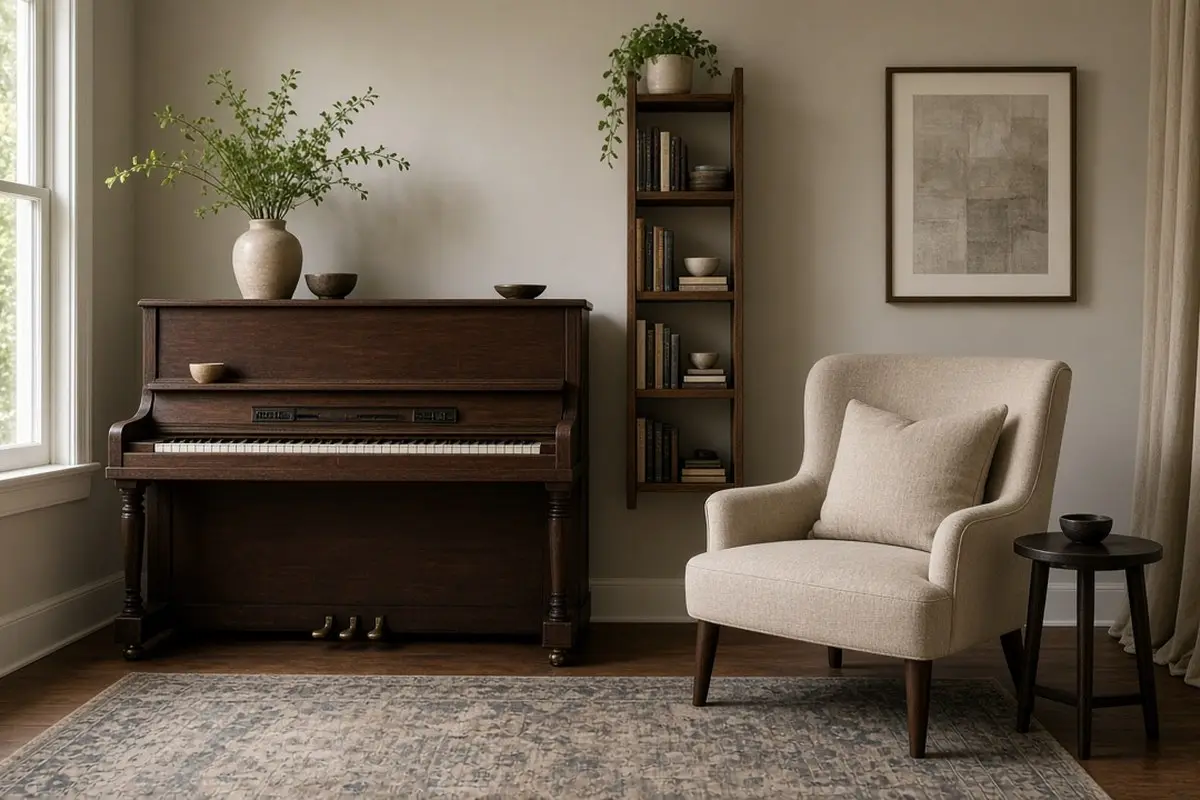
If a spare room is too much, a nook can be enough: a section of wall with the piano, a narrow shelf for music, a lamp, and one chair for a listener. Paint the nook a slightly deeper color and hang a few pieces of art to mark it as its own space within a larger room.
A music nook is easy to keep tidy with closed storage. A slim cabinet or a set of magazine files keeps sheet music flat and sorted by student or difficulty. A metronome, a pencil, and a tuner can live in a small tray on the shelf, ready for lessons.
Get the look
6. A digital upright for a tiny apartment
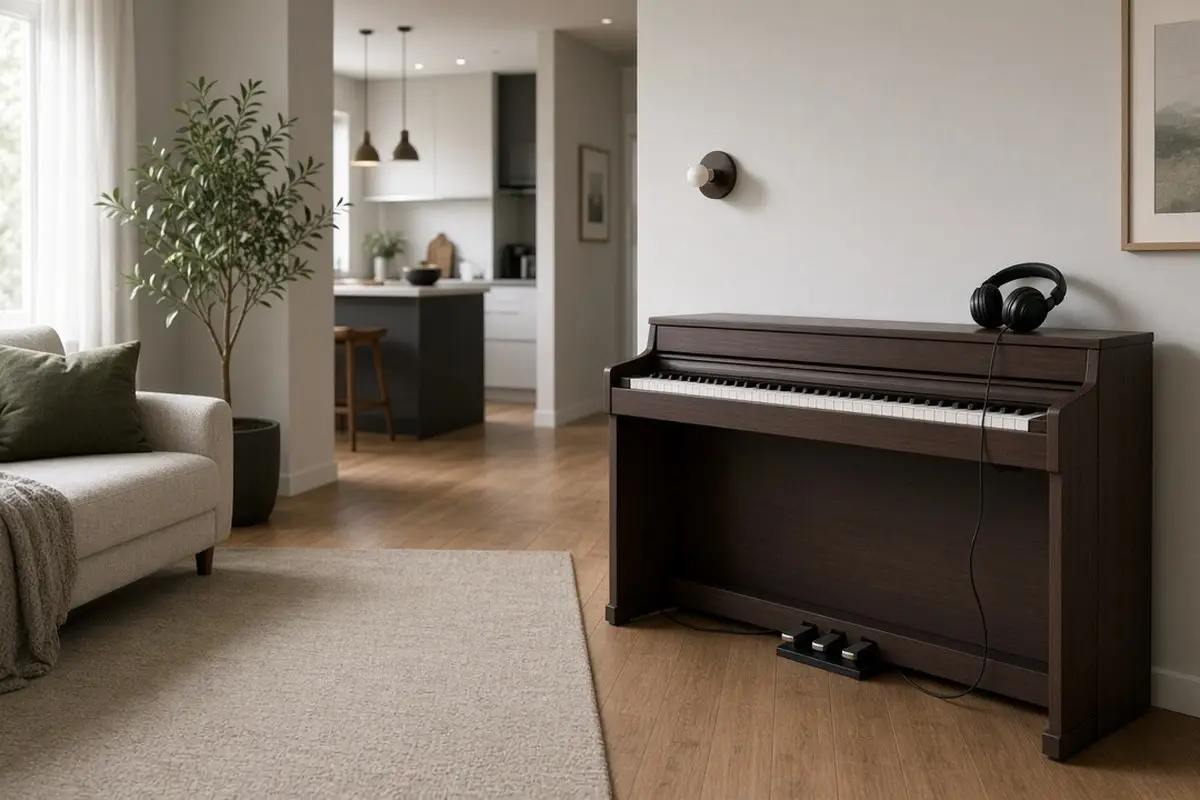
Where an acoustic upright simply does not fit, or neighbors share walls, a digital upright gives the same keyboard in a cabinet half the depth. It can sit closer to a window and needs no tuning, and headphones keep late practice quiet.
Choose a model with fully weighted, graded keys if anyone is learning seriously, since that feel transfers to an acoustic piano. Many digital uprights come in wood-look finishes that sit happily among other furniture. A matching bench and a closing key cover keep it looking like a piece of furniture rather than equipment.
Get the look
7. A shared room with the piano as a focal point
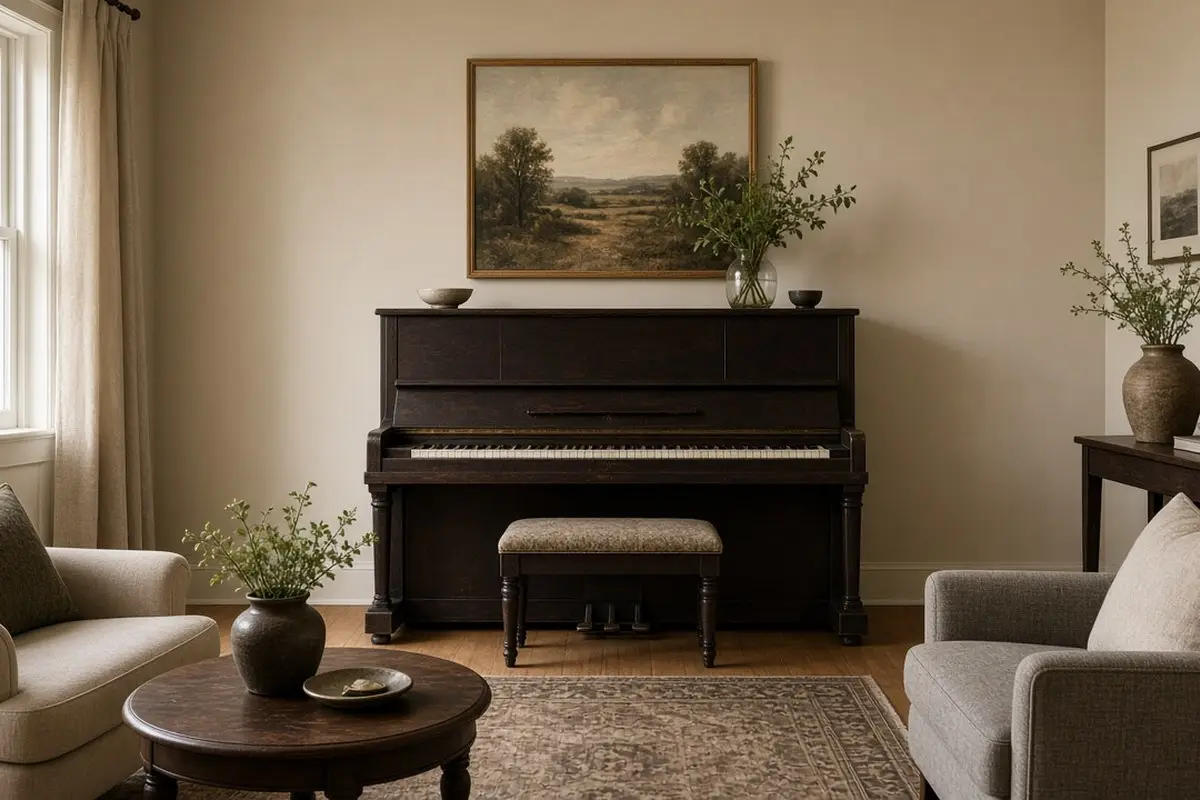
Sometimes the piano is the most handsome thing in the room. In a front room or a study without a TV, make it the focal point: center art above it, flank it with a pair of plants or sconces, and arrange chairs to face it. It becomes both furniture and the reason for the room.
Art above a piano should be about two thirds of the piano’s width and hung low, so the bottom of the frame sits a few inches above the top of the instrument. That way the piano and art read as one composition. Avoid a heavy mirror or glass frame directly above, since hanging hardware can fail and vibration slowly works nails loose. A pair of plants on stands at each side, set back from the case, frames the piano without crowding the player.
If the piano has a lovely wood case, let it stand against a plain, light wall. If it is a black upright, a warm wall color such as deep green or clay brings it forward and keeps it from looking like a dark hole in the room.
Get the look
Lighting the music
Overhead light casts the player’s shadow on the music. Add a piano lamp on top, an adjustable floor lamp beside the bench, or a wall sconce set to one side. Warm white light is easier on the eyes for long practice sessions.
Position the light so it comes from the side opposite the player’s dominant hand, which keeps shadows off the page. Dimmable lamps let the piano spot double as soft evening lighting for the room.
Styling the top without hurting the sound
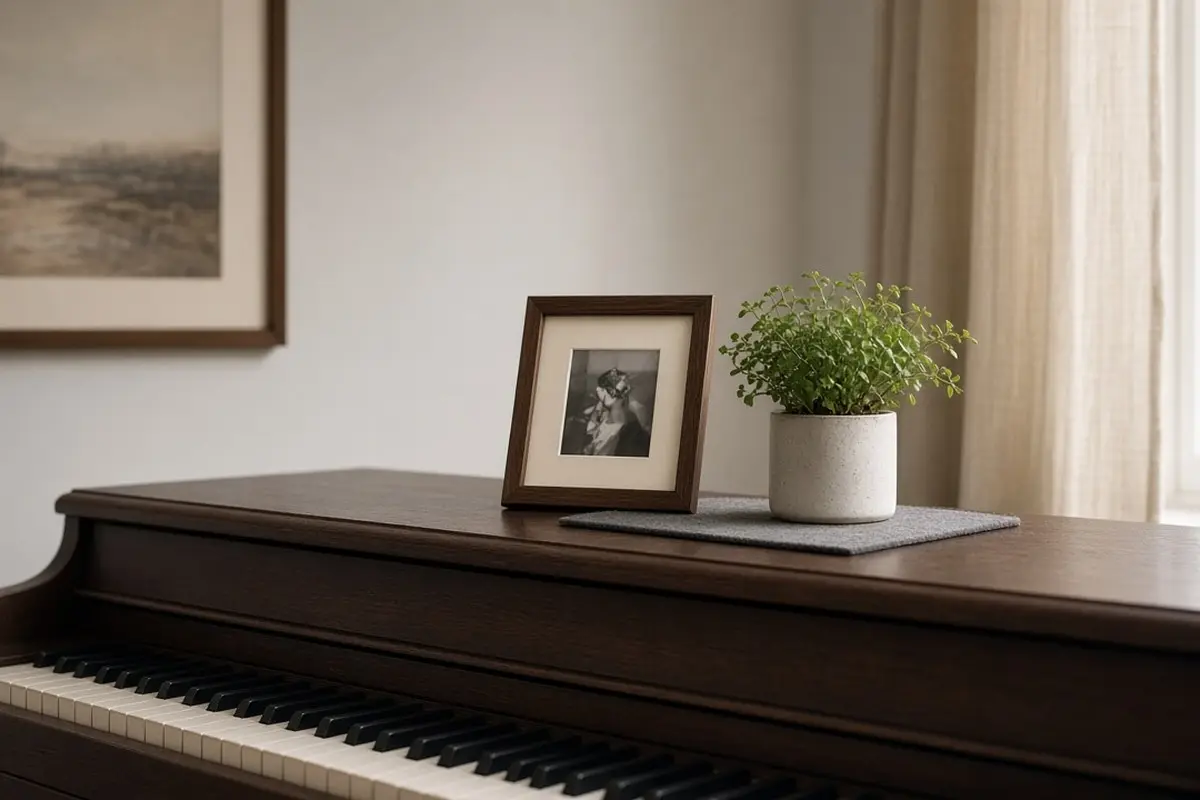
Keep the top mostly clear. Objects can buzz or rattle, and a vase of water is a disaster waiting to happen. One framed photo, a small plant in a saucer well away from the edge, or a single sculpture is enough. Place a felt pad under anything that sits on the finish, and keep the lid free to open if your piano’s top lifts.
Dust the top and keys with a soft dry cloth once a week, and keep the fallboard closed when the piano is not in use so the keys stay clean. Schedule a tuning twice a year, ideally after the heating comes on and after it goes off, when humidity shifts most.
Get the look
Common questions
Where should an upright piano go in a house? On an inside wall, away from heat, vents, and direct sun, with about 3 feet behind the bench.
Can a piano go against an outside wall? It can, but temperature swings make it go out of tune faster; an inside wall is better.
How much space does an upright piano need? About 5 feet of wall and roughly 4 to 5 feet of depth for the piano, bench, and player.
What can you put on top of an upright piano? A few light, stable things on felt pads; never drinks or vases of water.
Should an upright piano go on a rug? It can sit on a rug or on bare floors; a rug softens sound in a room with hard surfaces.
For more, see living room ottoman ideas, dining room wall focus ideas, and small living room furniture plans.