
10 Plant Walls You Can Water Without a Ladder

On this page16 sections
- The reach rule
- Water and walls
- A grid of ceramic wall pockets
- A pegboard plant wall
- Floating shelves at three heights
- Self-watering wall planters
- A wall of hanging rail planters
- A felt pocket wall
- A trellis wall for one climbing plant
- A plant ladder leaned against the wall
- Mounted staghorn ferns and air plants
- A window wall
- The forgiving plant list
- Light check
- More plant and wall ideas
- Quick answers
Most plant walls fail for a simple reason: nobody can reach the top row. The pictures show a lush, floor-to-ceiling wall of green. Six months later, the bottom plants are thriving and the top ones are brown, because watering them meant hauling out a ladder every few days and nobody did.
The ten ideas below start from the opposite direction. They keep every pot within reach of a person standing on the floor, which in practice means the top of the highest planter sits no higher than about 6 feet. From there, the choices are about drainage, light, and which plants forgive you when you forget.
As an Amazon Associate I earn from qualifying purchases.
The reach rule
Stand facing the wall with a watering can in your hand. Lift it to pour comfortably, without stretching onto your toes. For most adults, that is somewhere between 5 and 6 feet. Mark that height lightly with a pencil. That line is the top of your plant wall.
The bottom of the wall should start around knee height, about 18 to 24 inches, so you do not have to kneel to water the lowest row and so pets and vacuum cleaners do not knock into it. That leaves a band of wall between roughly 2 feet and 6 feet, which is plenty for a full, lush display.
Within that band, think in layers. Upright plants like snake plants and small rubber plants go in the bottom row, where their height fills space without blocking anything. Bushy plants fill the middle. Trailing plants like pothos and string of hearts go on top, so their stems hang down over the rows below and soften the edges. The wall looks full from top to bottom while the highest pot is still within easy reach.
Water and walls
Every plant wall has to deal with water. A few habits protect the paint and the floor:
- Use planters with a sealed bottom or an inner pot. Water should never drip straight down the wall.
- Water less, more often. A small amount every few days is easier on wall planters than a big soak once a week.
- Use a long-spout watering can. A narrow spout puts water right at the soil without splashing.
- Seal the wall behind the planters with a satin or semi-gloss paint, which wipes clean better than flat paint.
- Mount into studs or proper anchors. A wet pot of soil weighs far more than a dry one. A 6-inch ceramic planter with damp soil and a plant can easily top 5 pounds, so use anchors rated for well above that.
- Lay a runner or a washable rug under the wall if it is above wood floors, so a stray drip lands on fabric instead of the finish.
1. A grid of ceramic wall pockets
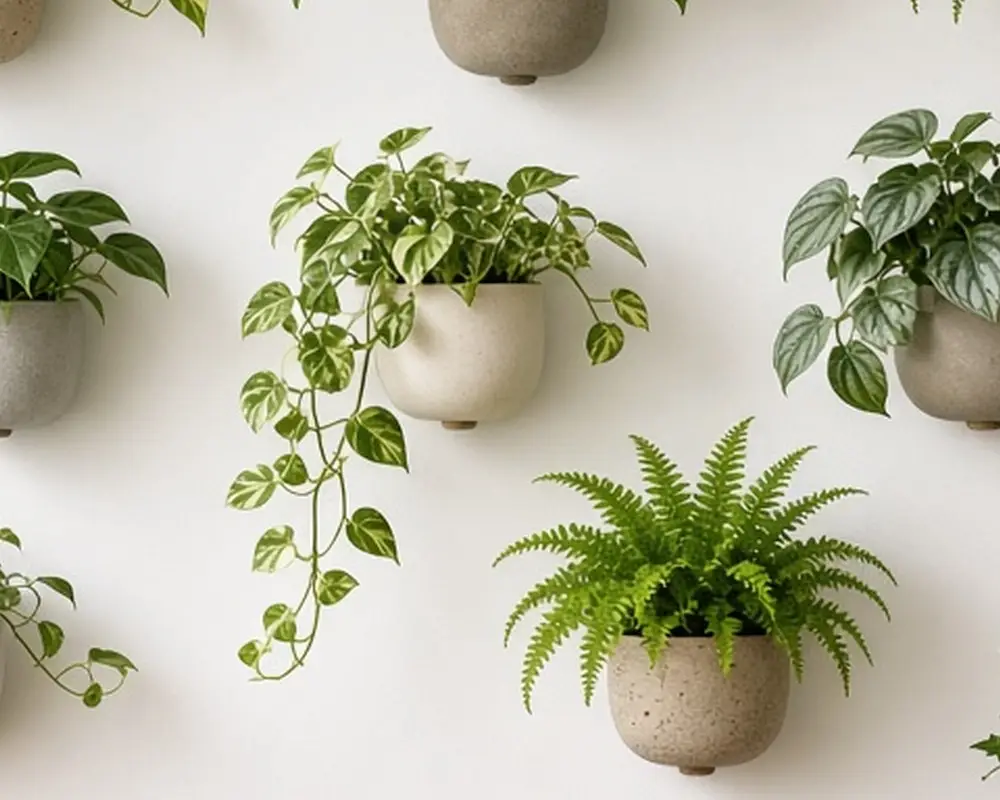
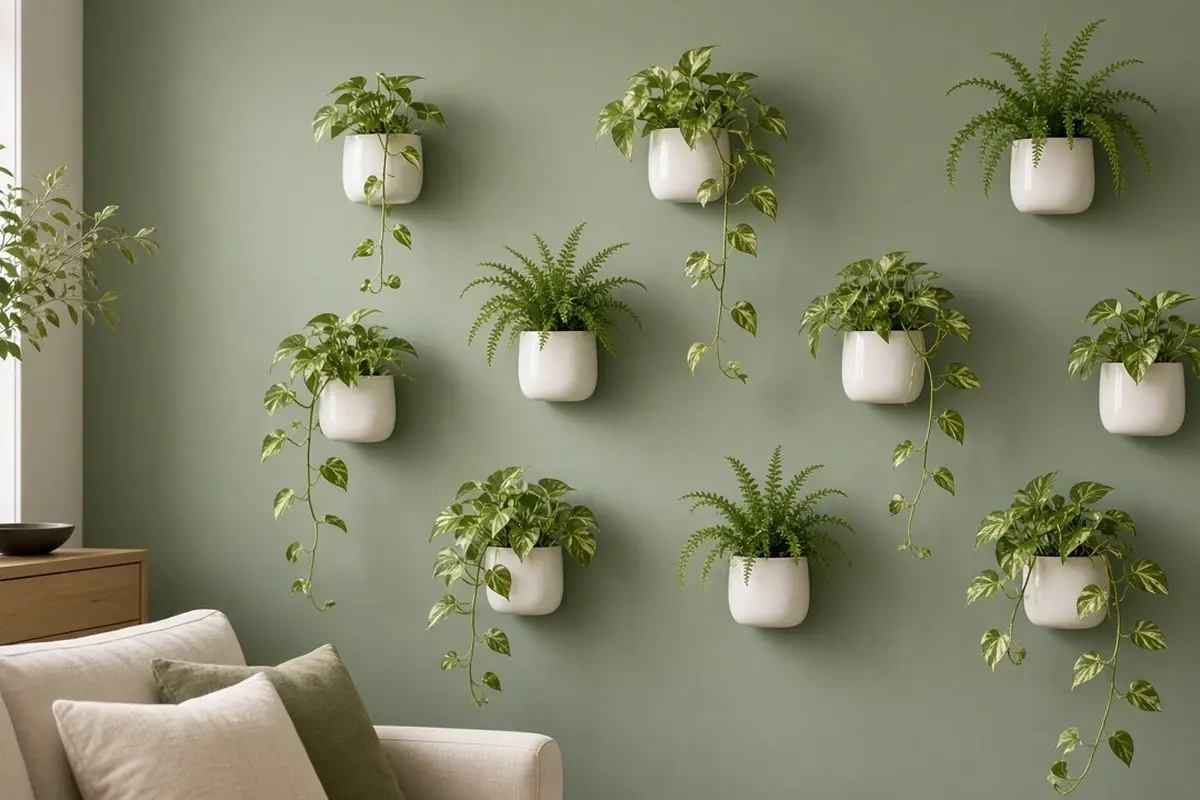
The simplest version: six to twelve small ceramic wall planters hung in a grid. Each one holds a 4-inch nursery pot, which can be lifted out and watered in the sink, then dropped back in once it has drained.
Space them at least 6 inches apart in each direction so trailing plants have room to hang without crowding the row below. Lay the planters out on the floor first, then trace each one on paper and tape the paper shapes to the wall. Live with the layout for a day before drilling.
Get the look
2. A pegboard plant wall
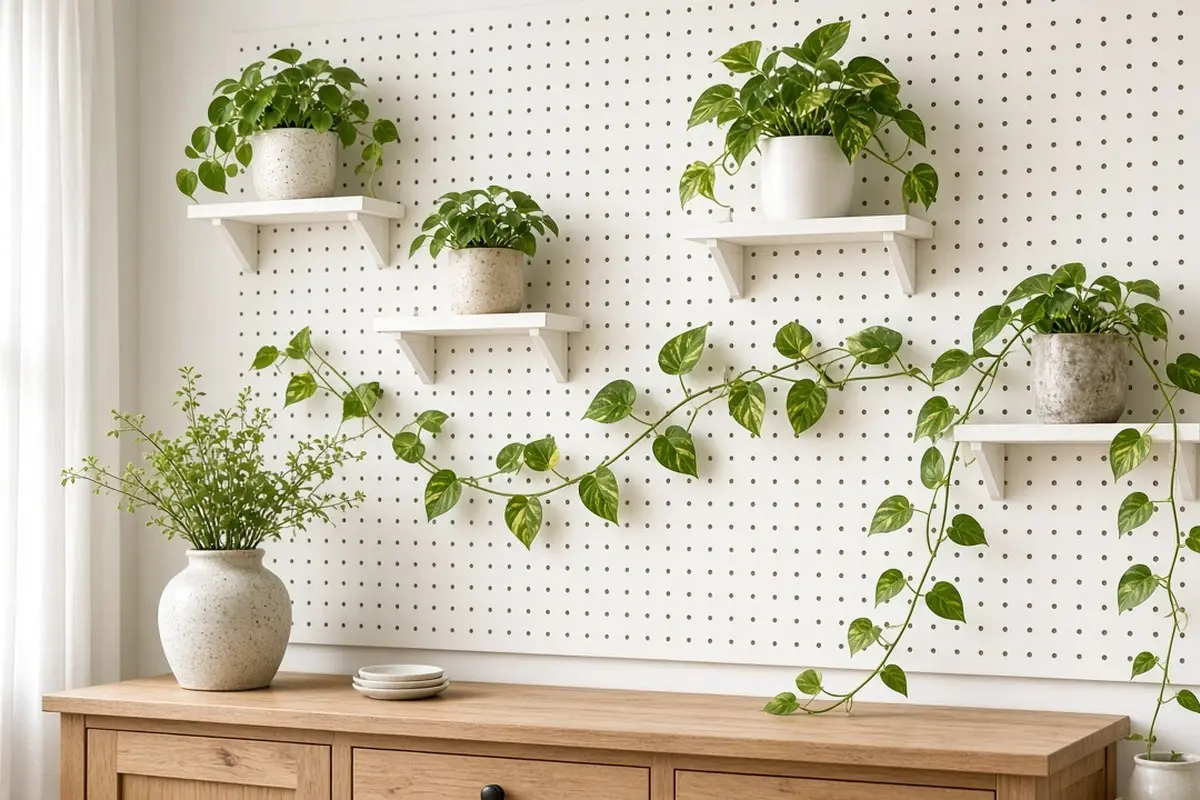
A painted pegboard panel lets you move plants around as they grow or as light changes with the seasons. Hang small shelves and planters from pegboard hooks, and add a few clips for trailing stems.
Mount the board on a frame with an inch of space behind it so air can circulate and the wall does not stay damp. Paint the pegboard the same color as the wall for a quiet look, or a contrasting dark green or black to make the plants pop.
Get the look
3. Floating shelves at three heights
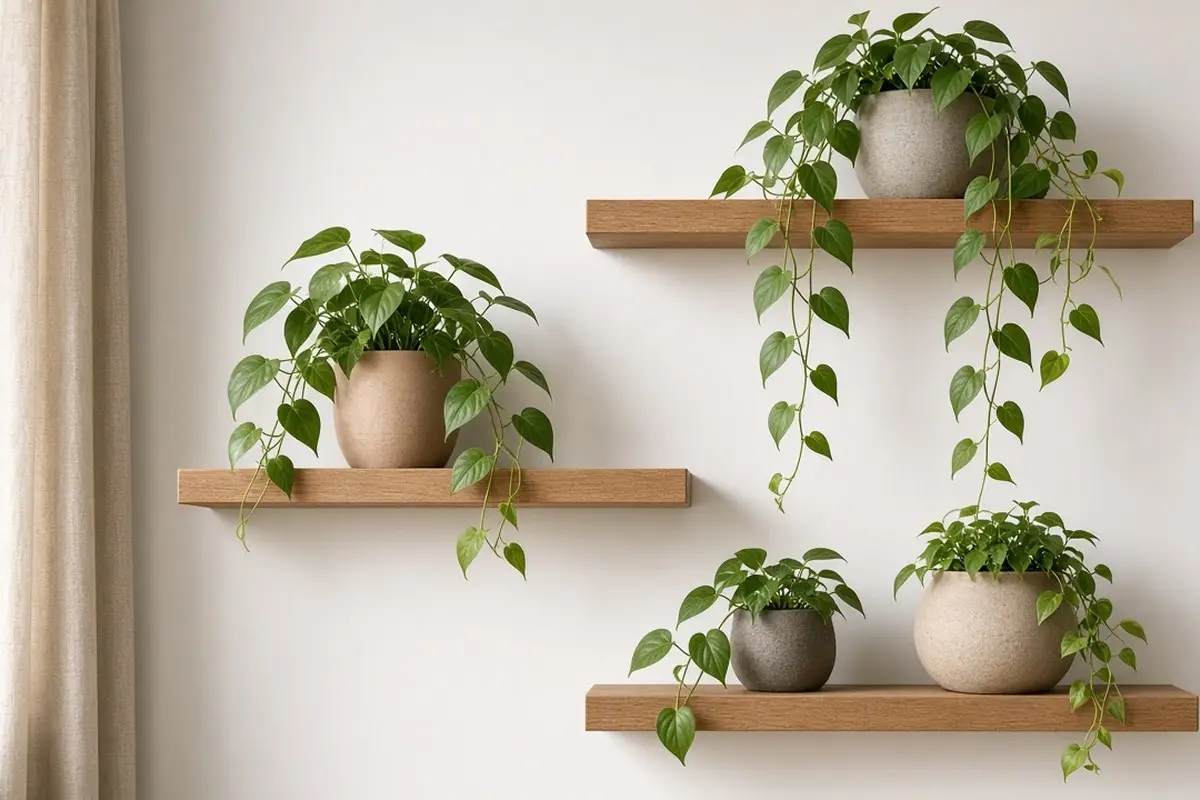
Three narrow floating shelves, about 6 inches deep, hung at 30, 45, and 60 inches make a plant wall that is easy to water and easy to rearrange. Put trailing plants on the top shelf so they drape down over the ones below.
Use a small saucer under every pot. A shelf full of water rings is the most common way a plant wall damages furniture.
Get the look
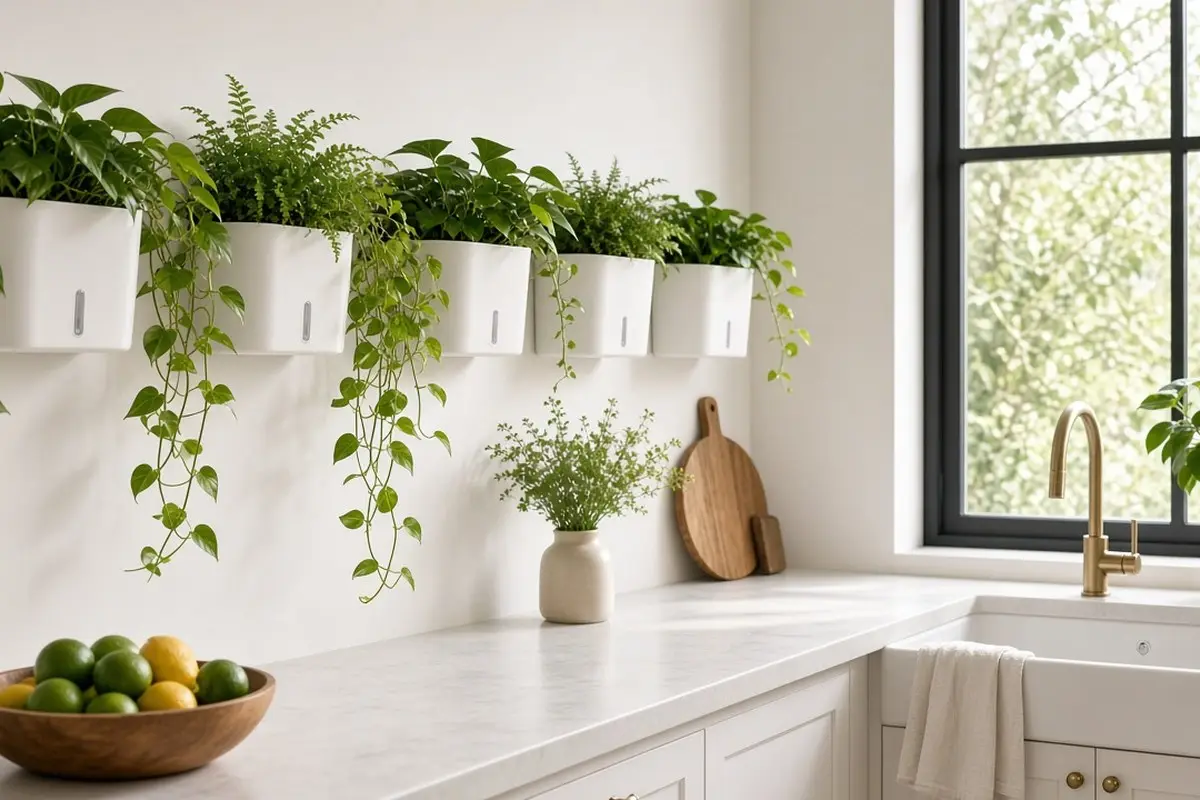
4. Self-watering wall planters
Self-watering wall planters hold a reservoir at the bottom that wicks water up to the roots. Fill the reservoir every week or two, and the plants stay evenly moist. This is the best option for anyone who travels or forgets to water.
Check the water-level indicator and fill only to the line, or the soil will stay too wet. Every couple of months, empty the reservoir and flush the soil with plain water at the sink to clear out mineral buildup from tap water.
Get the look
5. A wall of hanging rail planters
A metal rail mounted on the wall with planters hung from S-hooks works well in kitchens, where it can hold herbs. Mount it at about 5 feet so the pots sit at eye level, where you can see when they need water. Basil, parsley, and mint all do well near a bright kitchen window, and you will water them more often simply because you are cooking with them every day.
6. A felt pocket wall
Felt pocket planters are light and inexpensive, and they make a soft, full wall. The catch is moisture: felt wicks water, so you need a waterproof backing between the pockets and the wall. Choose a version with a built-in liner, and water with a measured cup rather than a hose. A quarter cup per pocket every few days is usually enough. Felt walls suit bathrooms and sunrooms best, where the extra humidity helps the plants.
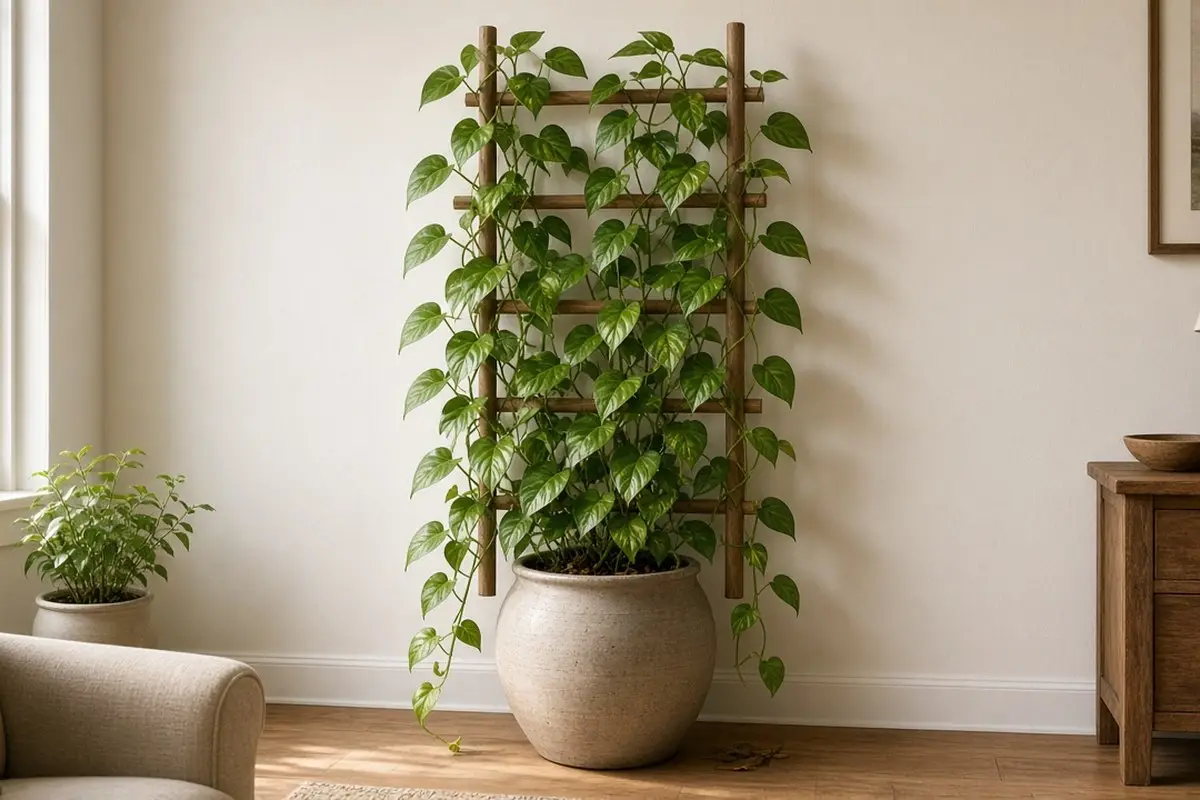
7. A trellis wall for one climbing plant
One large climbing plant, like a pothos or a philodendron, trained up a wooden trellis can cover a whole wall section from a single pot on the floor. Only one pot to water, right at floor level. A large pot holds more soil and dries out slower, so this is also the most forgiving setup on the list. Set the pot on a plant caddy with wheels, and you can roll it out to clean behind it.
Guide new stems along the trellis with soft plant ties every few weeks.
Get the look
8. A plant ladder leaned against the wall
A wooden ladder shelf leaned against the wall needs no drilling at all, and every rung is within reach. Put the biggest, heaviest pots at the bottom and the trailing plants on top. Check that the ladder sits firmly on the floor and against the wall, and use furniture-safe pads under the feet on hard floors. A single anchor strap to the wall is wise if children or pets live in the house.
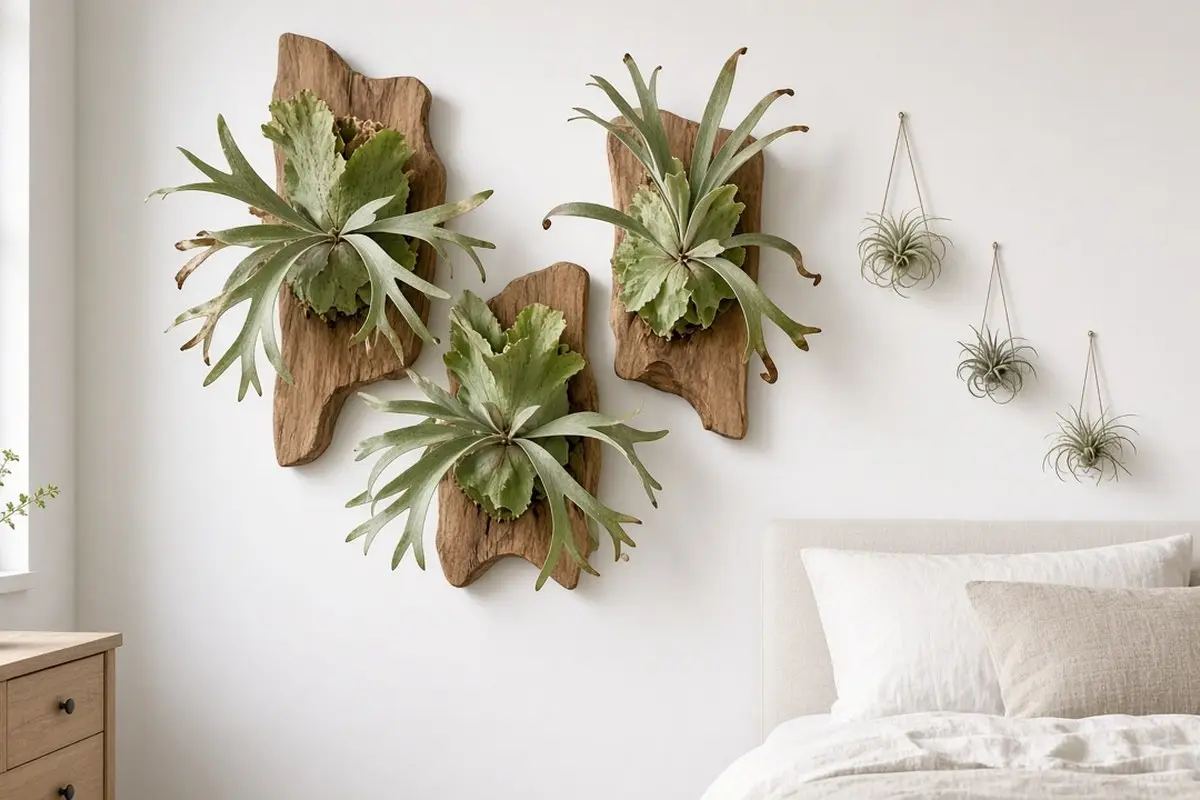
9. Mounted staghorn ferns and air plants
Plants that live without soil, like staghorn ferns mounted on boards and air plants on small hangers, make a different kind of plant wall. Water them by taking them down and soaking or misting them at the sink, then hanging them back up. Air plants want a soak of about twenty minutes once a week, then a good shake and a few hours upside down to dry so water does not sit in the base. Staghorns can be dunked in a sink for a few minutes and drained before going back on the wall.
Get the look
10. A window wall
The wall around a window gets the most light in the room. Hang a few planters on either side of the frame and a small shelf below the sill, and the plants get light without taking floor space. Keep plants a few inches back from cold glass in winter, since leaves that touch a frosty window can scorch.
The forgiving plant list
On a wall within easy reach, you can water often, but life still happens. These plants handle a missed week:
- Pothos: trails beautifully, grows in low light, and droops visibly when thirsty.
- Heartleaf philodendron: similar to pothos with softer leaves.
- Snake plant: upright, sculptural, and needs water only every two to three weeks.
- ZZ plant: glossy and almost impossible to kill.
- Spider plant: sends out babies that hang over the edge of the pot.
Avoid ferns and calatheas on a wall unless the room is humid, since they dry out quickly in small pots.
Light check
Before you hang anything, look at the wall at three times of day. A wall that gets bright, indirect light for most of the day suits almost any of these plants. A dim wall suits pothos, snake plants, and ZZ plants only. If the wall is very dim, add a small grow light on a timer above the top row. Modern grow lights come in warm white and look like ordinary picture lights, so they blend in instead of glowing purple across the room.
More plant and wall ideas
Quick answers
How do I water a plant wall without dripping? Pull small pots out and water them at the sink, or use a narrow-spout watering can and planters with sealed bottoms.
Will a plant wall damage my wall? Not if planters are sealed, a gap allows airflow, and the paint is washable. Check behind the planters every few months.
How many plants do I need? Six to twelve small plants make a full wall in a section about 4 feet wide.
For more about choosing plants for the light you have, see houseplants for one window. The ideas in wall updates without furniture pair well with a plant wall. And for a quiet corner with greenery, see home yoga corner.