
8 Home Yoga Corners With a Mat-Sized Floor

On this page11 sections
You do not need a spare room for yoga. You need a rectangle of floor a little bigger than your mat, a place to keep the mat when it is rolled, and a corner calm enough that you want to step onto it. Most homes have that already, hidden under a chair or behind a laundry basket.
These eight yoga corners start from the mat itself. Measure it, mark it, clear it, and then add only what makes practice easier: storage within reach, gentle light, and a wall that does not shout at you during savasana.
As an Amazon Associate I earn from qualifying purchases.
How much floor you really need
A standard yoga mat is about 68 to 72 inches long and 24 inches wide. For most practices, add a foot at each end and a foot and a half on each side, so you can stretch your arms and step wide without hitting furniture. That gives a clear zone of roughly 8 feet by 5 feet. For a gentle stretching or meditation practice, 7 by 4 feet is usually enough.
Mark the zone with painter’s tape for a week. If you keep tripping over the tape, the spot is in a walkway. Move it.
Ceiling height matters for standing poses with arms overhead. Most rooms are fine, but check under a sloped attic ceiling or a low beam. Also look for what sits at floor level near the zone: a radiator, a sharp table corner, or an outlet with a tangle of chargers. You will be at eye level with the floor for much of your practice, so tidy that view as well.
1. A bedroom corner by the window
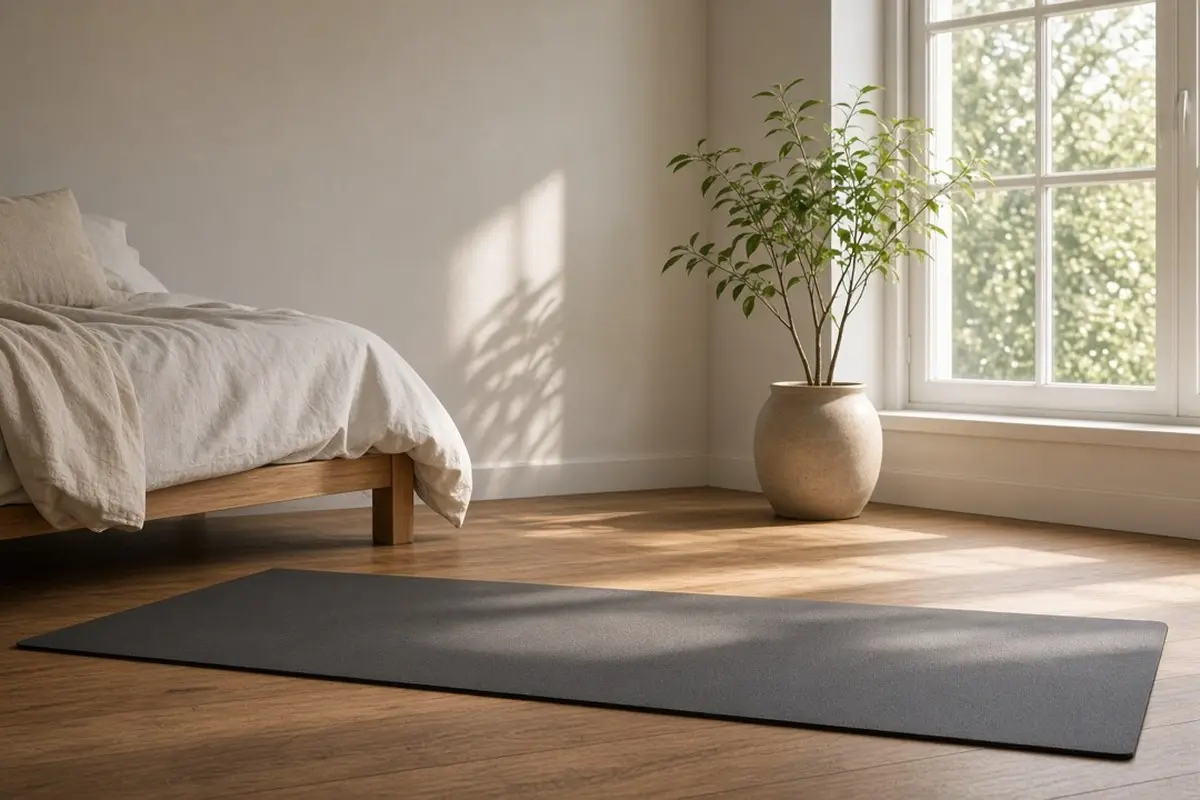
The bedroom is often the quietest room in the house, and the floor at the foot of the bed or beside a window is usually free. Morning light makes it an easy place to start the day. A sheer curtain filters glare, and a window that opens lets fresh air in during warmer months. Keep the mat in a basket by the wall, and the corner reads as a calm part of the bedroom rather than a gym.
A bedroom corner also helps with an evening wind-down practice before sleep, since there is nowhere to go afterward. Keep electronics out of the zone and charge your phone elsewhere, so a few minutes of stretching do not turn into scrolling. A plant and a simple wall make the corner feel restful.
Get the look
2. A living room spot behind a movable piece
In a living room, the clear floor often appears when you slide the coffee table aside. Choose a coffee table on casters, or a pair of light nesting tables, so clearing the floor takes ten seconds. Before practice, pick up anything small on the floor, such as a stray toy or a charging cable, since these are easy to step on with bare feet. A large ottoman can roll against the sofa and become a bolster for restorative poses.
If the living room is shared, practice at a time when it is quiet, such as early morning before the family is up. Keep a small lidded basket nearby so the mat and props disappear when guests come. Over time, a coffee table that rolls aside in seconds makes a daily practice far more likely than one that needs heavy lifting.
3. A wall-mounted mat rack
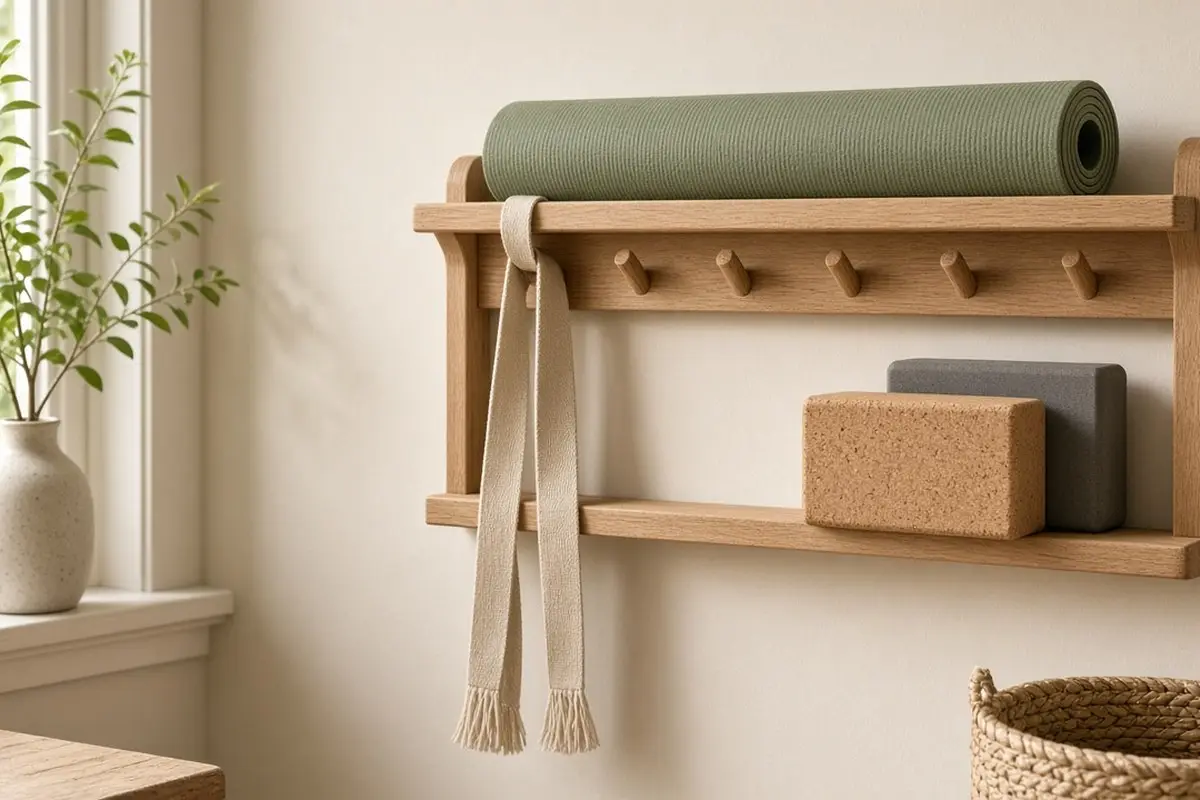
Rolled mats tip over and get kicked. They also collect dust and pet hair on the floor, which then ends up on your hands and face during practice. A slim wall rack holds the mat, a strap, and a block by the corner, so everything is visible and ready. It also turns the corner into an obvious practice spot, which is a helpful nudge on mornings when motivation is low.
Hang the rack near where you unroll the mat, at a height you can reach without stretching. A few hooks alongside it can hold a towel and a light sweater for the end of practice. If you cannot drill, a freestanding mat stand or a tall umbrella basket holds rolled mats upright just as well.
Get the look
4. A basket for props
Blocks, a strap, a bolster, and a blanket are easier to use if they live together. When props are scattered across the house, you skip the poses that need them. A single home for every prop means each session starts with everything at hand, and putting them away takes a moment. A large lidded basket keeps them neat and dust-free and can double as a side table when closed.
Wool or cotton blankets fold neatly and serve as both a prop and a cover during rest. A cork block is heavier and steadier than foam, while foam is softer for kneeling. Keep a small bottle of mat cleaner and a cloth in the basket so wiping down becomes part of finishing.
5. A quiet wall in front of the mat
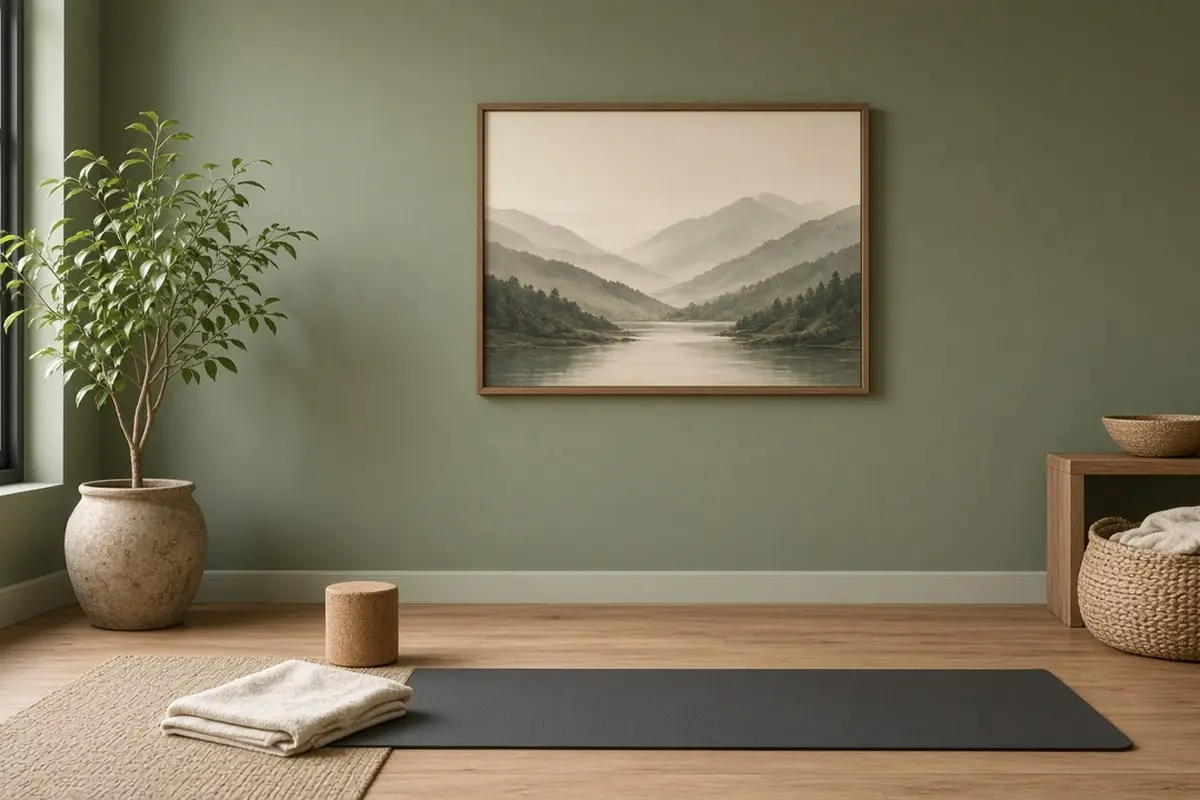
Whatever you face during practice shapes how it feels. A blank wall in a soft color, a single calm piece of art, or a window works far better than a bookshelf full of clutter. Soft greens, warm whites, and muted blues are restful colors for a practice wall, while bright reds and busy patterns tend to keep the mind active. If you rent, a large framed print or a fabric hanging in a calm tone changes the view without paint. Turn the mat so you face the quietest view in the room.
If you cannot change the wall, change your angle. Face a window, or put the mat diagonally so the clutter sits behind you. A folding screen or a curtain on a ceiling track can also hide a desk or shelves while you practice, then slide back when you are done.
Get the look
6. A mirror for checking alignment
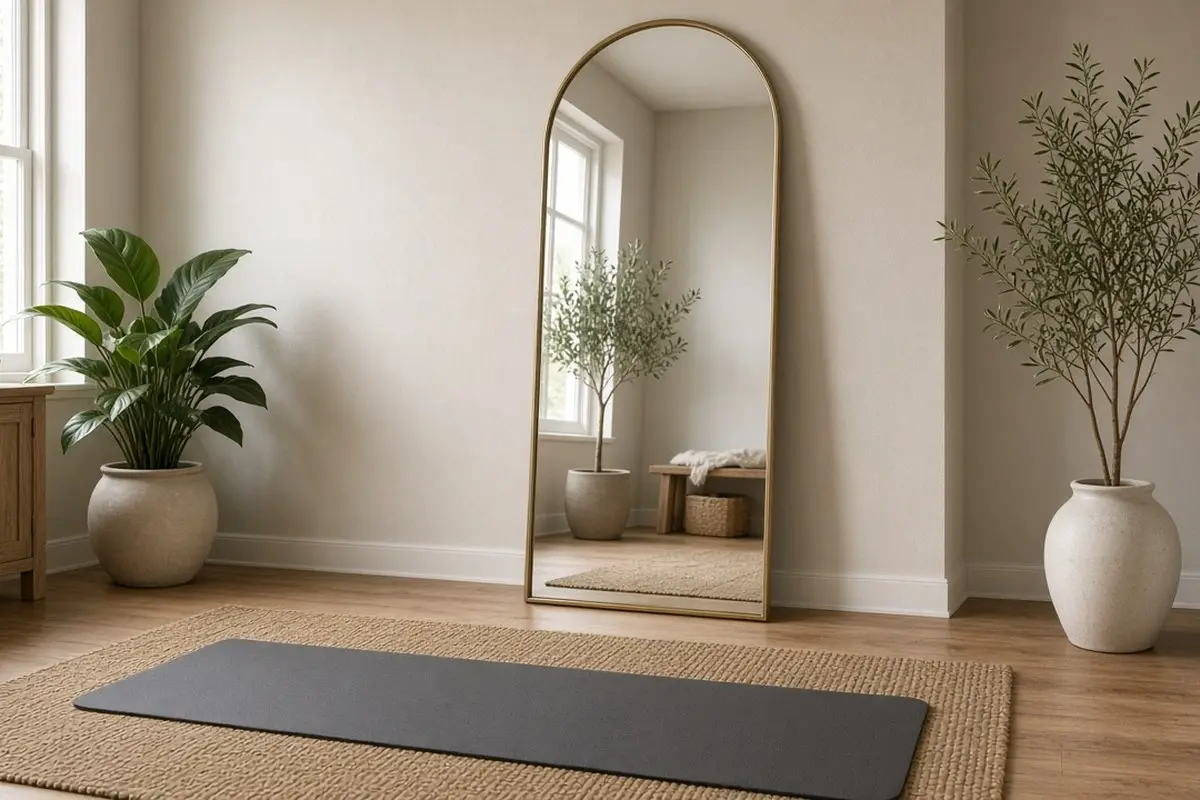
A full-length mirror leaning against the wall at one end of the mat lets you check your posture without filming yourself. Keep it out of view when you lie down; nobody needs their reflection during a final rest. Choose a mirror that is tall enough to show your whole body when standing at the far end of the mat, roughly 60 inches or more. Lean it at a gentle angle and add anti-tip straps or a small bracket to the wall, especially in a home with children or pets. A mirror also bounces light around a small room, so the corner feels brighter and larger even when you are not practicing.
Get the look
7. Soft, dimmable light
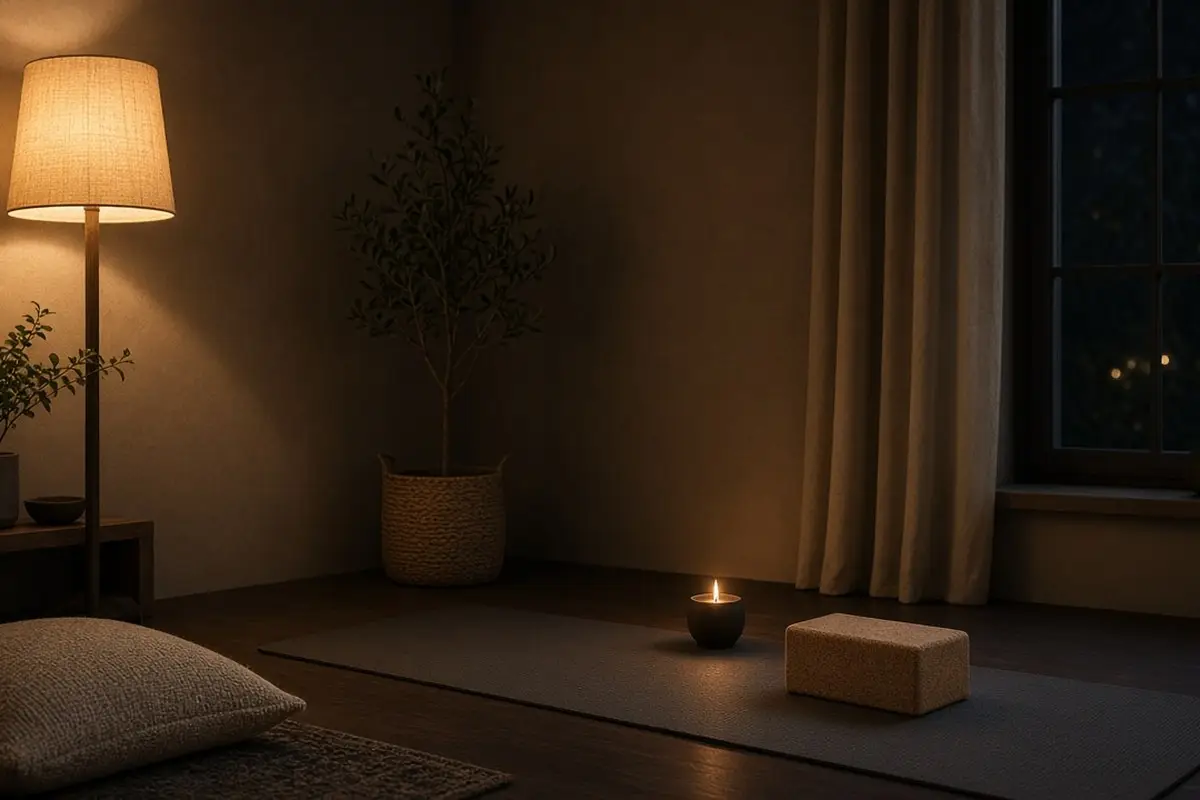
Bright overhead light is rarely relaxing. It flattens the room, throws hard shadows, and feels more like an office than a place to slow down. Turn it off and let lower, warmer sources do the work. A floor lamp with a fabric shade, a salt lamp, or a string of warm lights makes evening practice gentler. A smart bulb that dims slowly works as a calm wind-down signal.
In the morning, natural light is best. Open the curtains fully, or practice facing east if you can. Sheer curtains soften harsh direct sun and keep you from squinting in poses that look upward.
Get the look
8. A rug that stays put
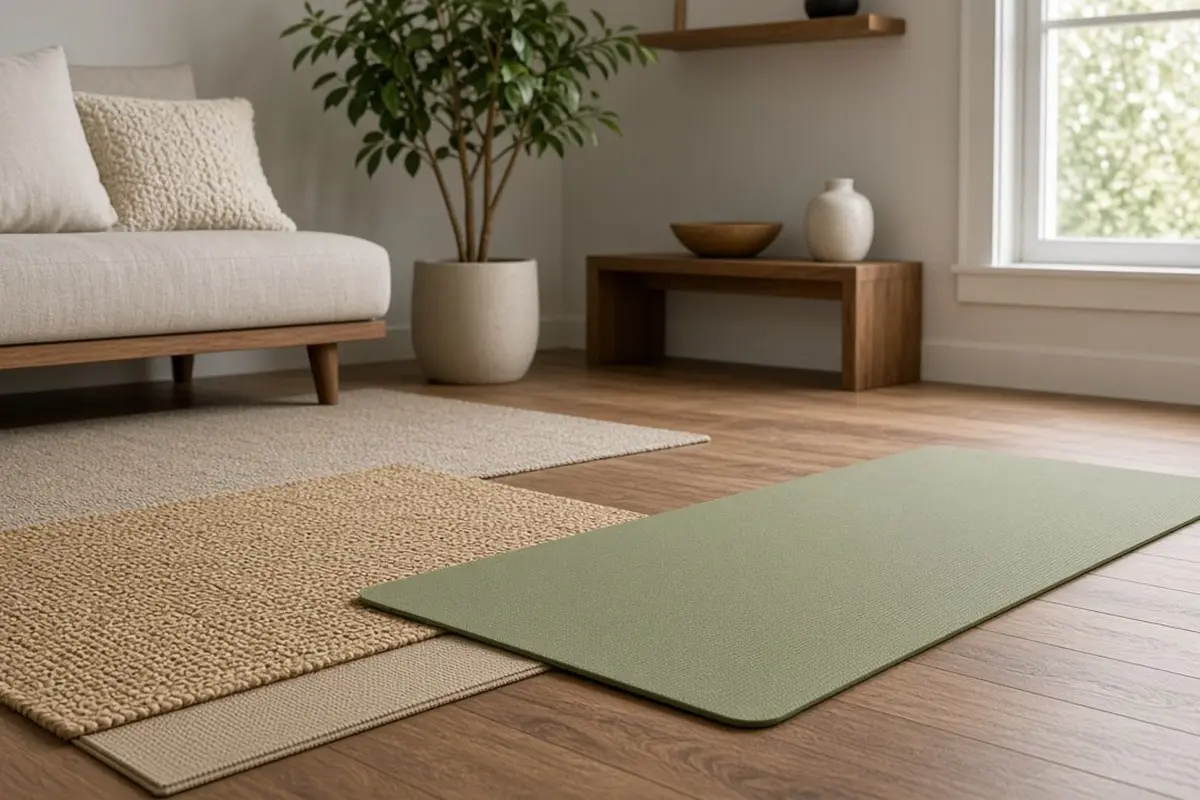
On hard floors, a thin flat rug defines the space and warms the room, but it must not shift under the mat. Use a low-pile rug with a gripping pad, or put the mat straight on the floor and keep the rug beside it for sitting and stretching.
On carpet, a firmer mat or a thin board underneath gives better balance in standing poses, since soft carpet lets the mat sink and wobble.
Get the look
Keep the corner ready
The best yoga corner is the one you can step into without clearing it first. Put things back after each session and roll the mat with the top side out so the corners lie flat next time, wipe the mat once a week, and keep the zone free of laundry and parcels. When it stays clear, practice becomes easy to start.
It helps to make the corner a little ritual. Some people light a candle or open a window before they begin, others play the same short piece of music. These small cues tell your mind that practice has started, much like a commute marks the start of a workday. Keep whatever cue you choose in the corner itself, so you do not have to hunt for it.
Think about sound as well. A corner next to a noisy kitchen or a shared wall with a television makes it hard to focus. Soft furnishings help: a rug nearby, lined curtains, and a few cushions all absorb echo. If noise cannot be avoided, a small speaker playing gentle music or nature sounds masks distractions. Headphones work too, though many people prefer to hear their breath.
Finally, keep the air fresh. A room that feels stuffy makes practice harder and shorter. Open a window for a few minutes before you begin, or run a quiet fan on low in summer. A small air purifier is a good addition in a bedroom corner, especially if the room also has a dog bed or a busy closet. Plants such as a pothos or a snake plant add a little life and suit lower light.
Common questions
How much space do you need for yoga at home? About 8 by 5 feet of clear floor for most practices.
Where should you put a yoga space at home? In a quiet corner with soft light and a calm view, away from walkways.
What do you need for a home yoga corner? A mat, a few props, storage within reach, soft light, and a calm wall to face.
Can you do yoga on carpet? Yes, with a firmer mat so balance poses feel steady.
For more, see bedroom reading corner ideas, small bedroom that feels bigger, and quiet wall colors.