
9 Wall Colors for a Floor That Should Feel Quiet

On this page11 sections
Painting one room is a small decision. Painting a whole floor, the living room, hallway, dining area, and maybe the kitchen, is a different job. Every room is visible from the next, so the colors have to work together. Get it right and the floor feels calm and connected. Get it wrong and every doorway shows a jump from one mood to another.
The quietest floors usually use one main color, or a small family of closely related shades, carried from room to room. The nine relaxing paint colors below are the kinds of shades that work as whole home paint: forgiving in different light, easy to live with, and calm enough that you stop noticing the walls and start noticing the rooms. For bedrooms specifically, the calm bedroom paint colors post covers that room in detail.
As an Amazon Associate I earn from qualifying purchases.
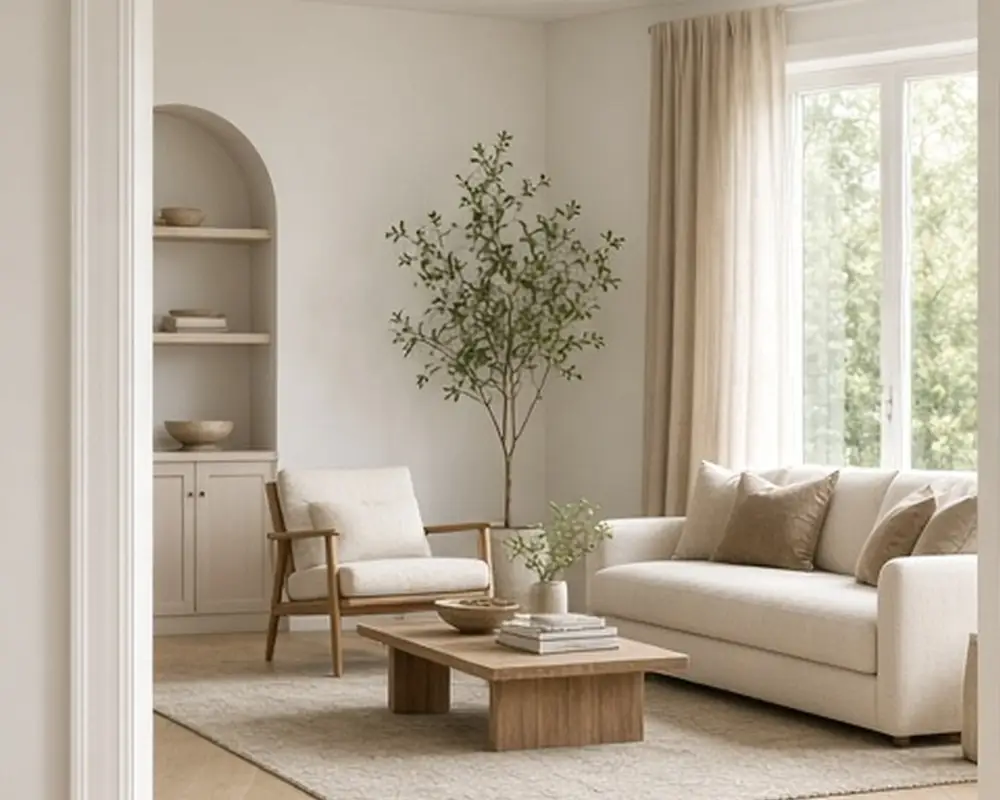
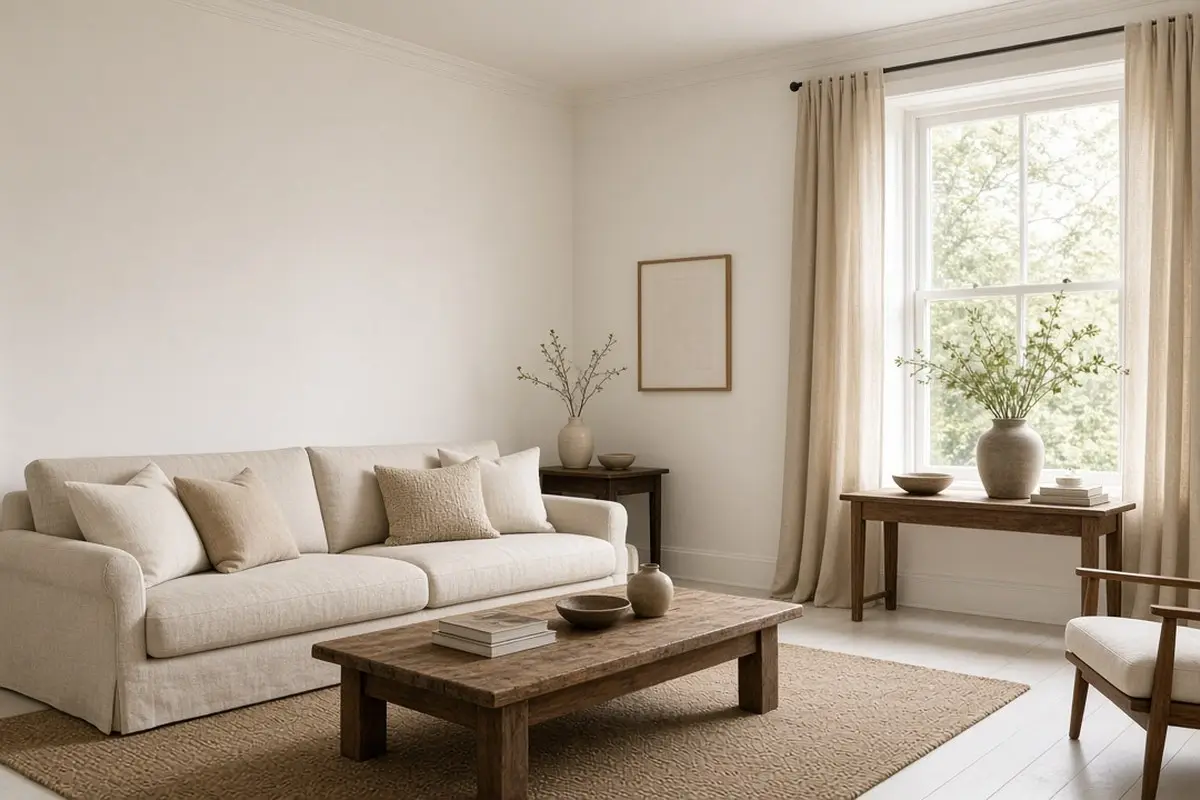
1. A soft warm white
A warm white is the safest calming wall color for a whole floor. It reflects light, goes with any furniture, and feels clean without being cold. The key is warmth. Bright, blue-based whites look stark and clinical in hallways and north-facing rooms. A white with a hint of cream or yellow stays soft in every light.
Test it in the darkest and brightest rooms on the floor. A good warm white looks creamy in the dark room and clean in the bright one. If it looks yellow in the bright room, try one a touch cooler. If it looks gray in the dark room, try one a touch warmer.
Use the same white on trim and ceilings in a slightly different sheen, so the whole floor reads as one calm envelope.


2. Pale greige
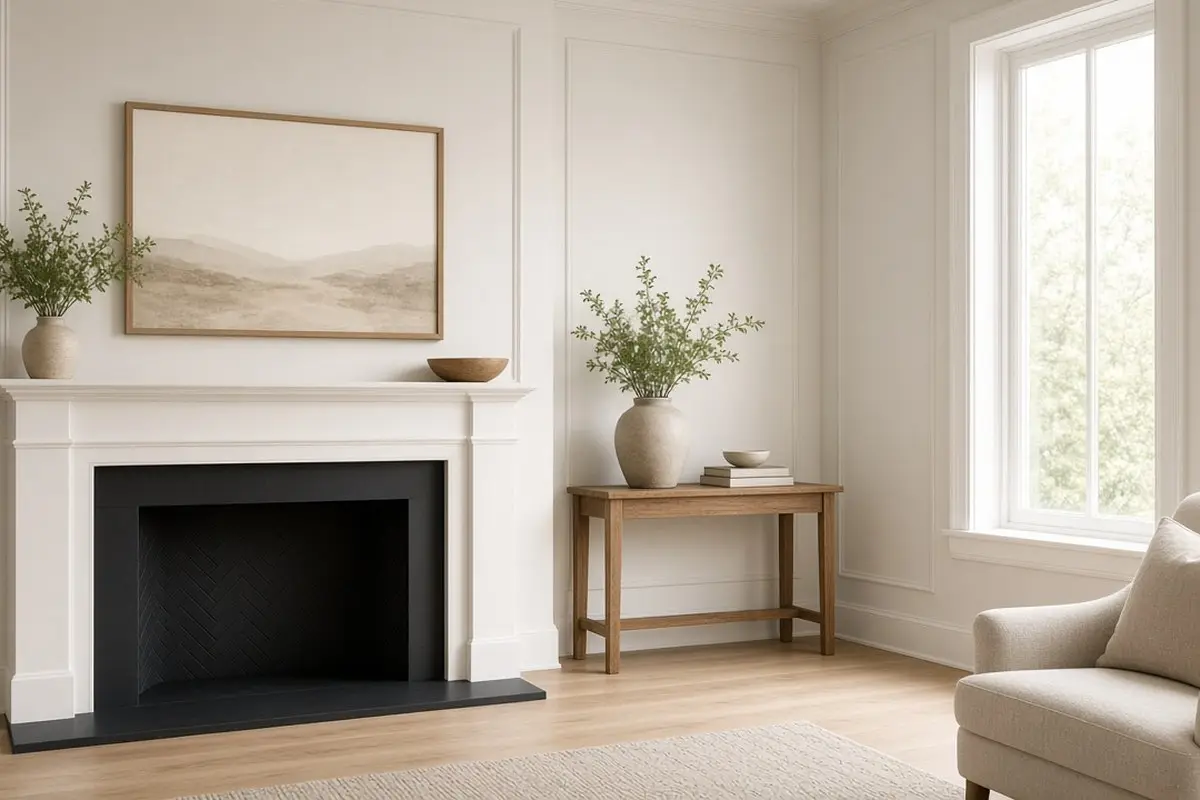
Greige, the mix of gray and beige, is a quiet whole-home color because it sits between warm and cool. It suits houses with both warm wood and cool stone or tile. It looks calm in hallways and soft in living rooms.
Choose a light greige so the floor stays bright. A deeper greige can look heavy in narrow halls. Check the undertone on a large sample. Some greiges lean green, some pink, some purple. Pick one that looks neutral next to your floors.
Greige is also a good choice in homes where the furniture is still changing. It works with black, brass, oak, walnut, white, and most fabrics, so it will not need repainting if the sofa or rug changes in a year. That flexibility makes it a popular choice for people who are renting or about to move.


3. Soft sage
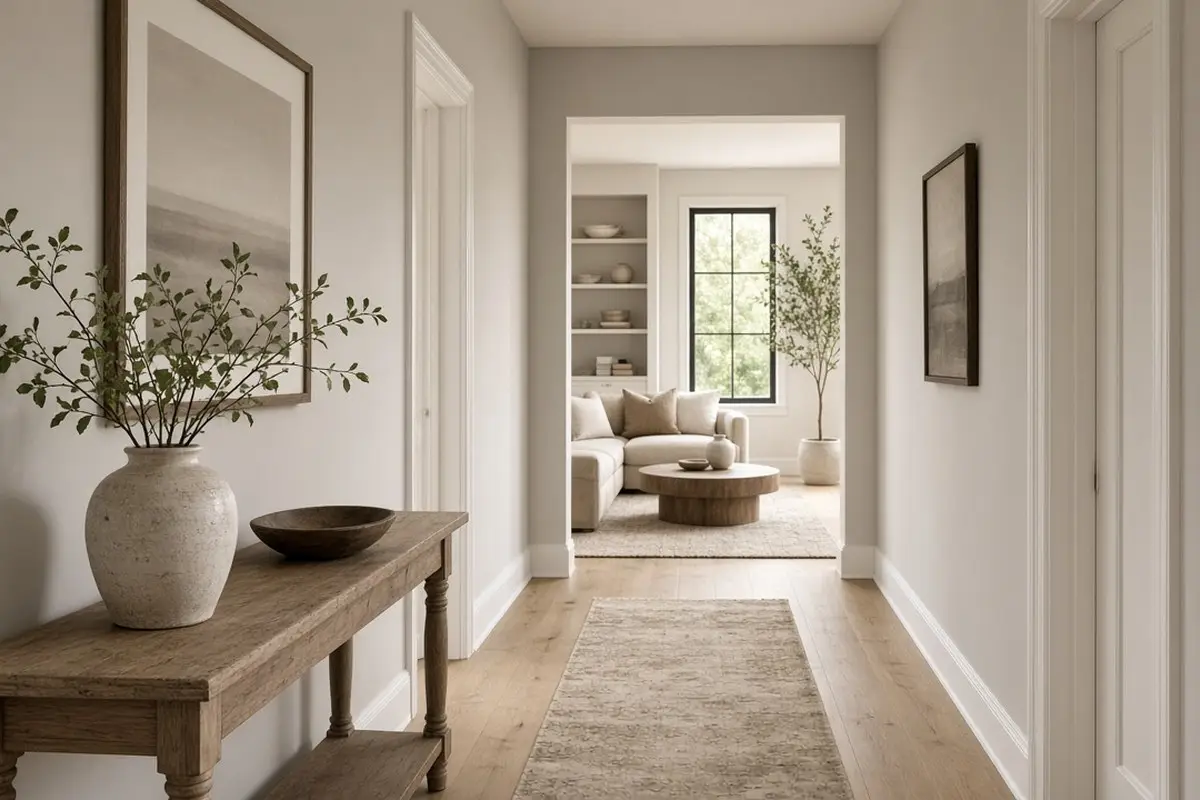
A very soft, grayed sage is one of the most serene interior paint colors. It brings a little nature into the house without feeling like a color statement. It works especially well with wood floors, linen, and plants.
Use it on the whole floor, or only in the living and dining areas with warm white in the hallway. Keep it light and muted. A strong green on every wall is not quiet.
Sage is particularly good in homes with garden views. It brings the green from outside in and makes the boundary between the two feel softer. Next to white trim it looks fresh, and next to stained wood it looks warm and traditional. The sage bedroom palettes post shows the gentler sage family in more detail.

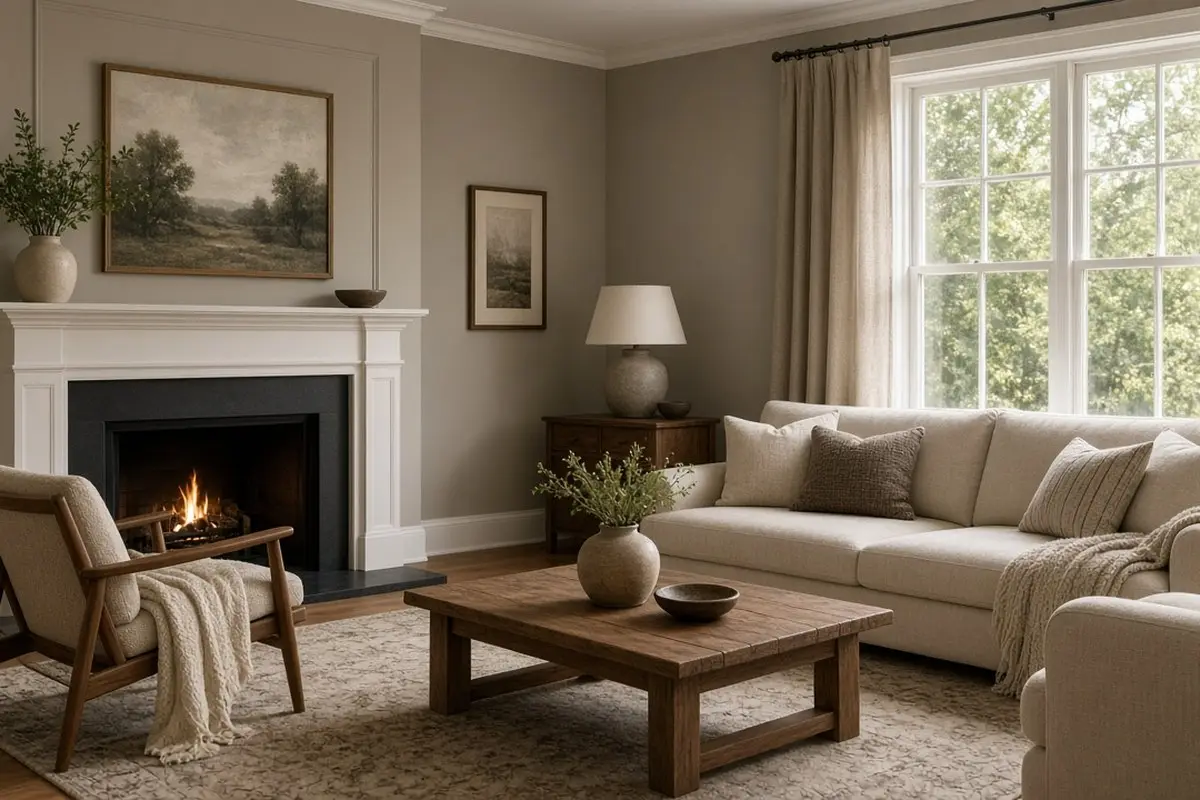
4. Mushroom
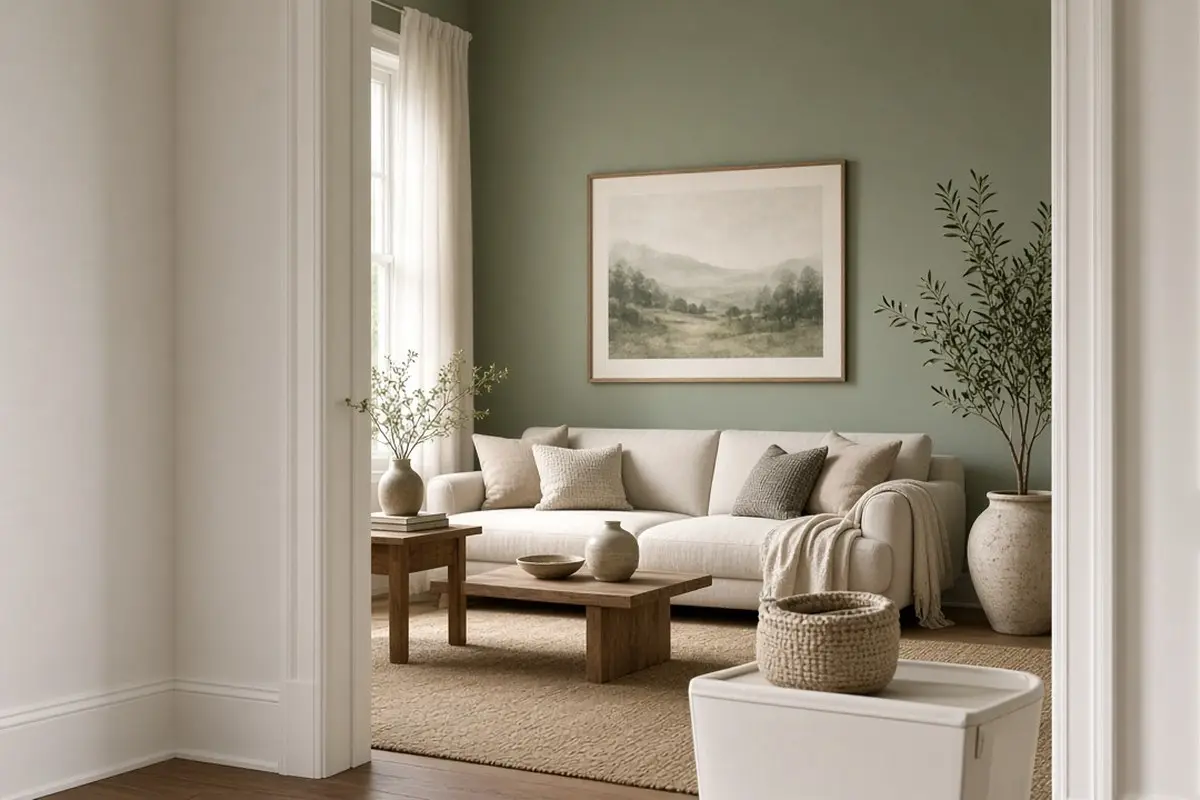
Mushroom is a soft, earthy taupe with a little brown and gray. It is warmer than greige and cozier than white. On a floor with lots of wood, it looks rich and calm. In small rooms it feels like a warm hug rather than a dark box, as long as it is a light mushroom.
Pair it with white trim for a crisp look, or paint trim the same color for a softer, more modern effect.
Mushroom changes a lot with light. In a south-facing room it can look warm and almost pink. In a north-facing room it can turn grayer and cooler. Paint large samples in both kinds of room before committing. If the floor has mixed light, choose a mushroom that looks good in the north-facing room, because south light flatters almost everything.

5. Pale oat
Oat is a pale, warm beige that sits close to white but with more body. It works well where pure white looks too stark and greige looks too gray. It is especially good in older houses with warm wood trim and floors.
Oat is forgiving. It hides small marks better than white, which makes it practical in hallways and family rooms.
Oat also pairs beautifully with cream textiles, linen, and natural wood. It gives a floor a soft, warm glow at night under lamps, which makes it one of the coziest whole-home choices for colder climates. If you have young children or pets, use a scrubbable matte finish in oat so marks wipe off without leaving shiny patches.

6. Soft blue-gray
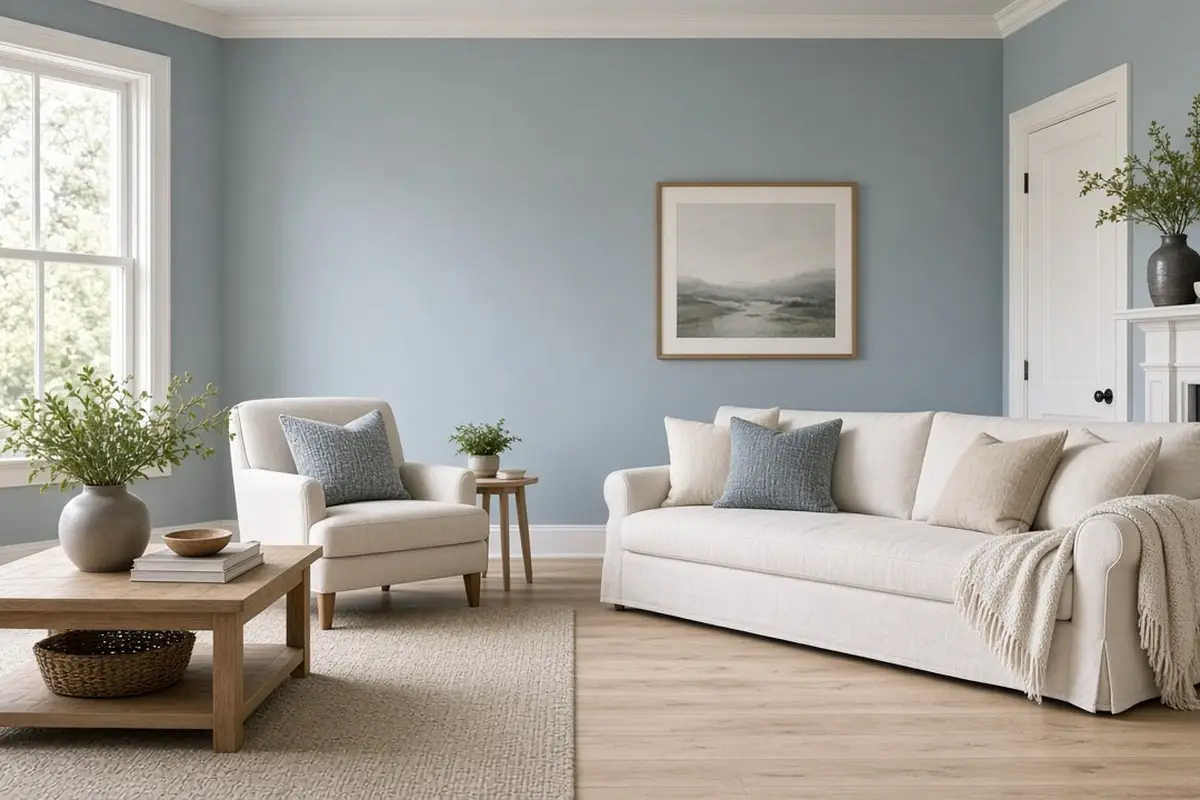
A very soft blue-gray feels calm, airy, and fresh. It suits sunny homes and rooms with lots of white and wood. In north-facing rooms it can feel cold, so test carefully and choose one with a little green or warmth.
Blue-gray can look very different on a small chip and on a full wall. On a wall, the blue becomes stronger. Choose a sample that seems almost too gray on the card, and it will often look like a soft blue once it covers the room.
Use it for the main living areas and keep a warm white in the hallway and kitchen for contrast. Or use it everywhere in a bright, south-facing home.
7. One color, many strengths
A quiet trick for a whole floor is to use one color in different strengths. Choose a color card and use the lightest shade in the hallway, a mid shade in the living room, and the deepest one in a small room like a study or powder room. The floor feels related, and each room still has its own character.
Many paint brands offer the same color at different saturation levels. Ask for that, or buy shades from one card.
The deepest shade should go in the smallest room or the one you use least during the day. A study, a powder room, or a reading nook can take a deeper color because you are not passing through it constantly. The lightest shade goes in the spaces with the least natural light, usually the hallway, so it stays bright.
Walk the floor after painting. As you move from room to room, the color should feel like it is gently changing, not jumping.
8. Same color on walls, trim, and ceiling
Painting walls, trim, and ceiling in the same color, sometimes called color drenching, makes a floor feel very calm. There are no sharp lines between surfaces, so the eye rests. Use a matte finish on walls, eggshell or satin on trim for durability, and flat on the ceiling.
This works best with soft, light colors. A dark drenched room is dramatic rather than quiet. Drenching is also forgiving of imperfect walls and older houses, because there is no crisp contrast line to show wobbly trim or uneven corners.


9. A quiet color for the doors
Interior doors are seen from every room on a floor. Painting them all the same soft color, a little deeper than the walls, adds subtle structure without noise. A soft gray, warm taupe, or muted green on doors looks calm and considered.
Keep door hardware consistent too. Matching handles across the floor help the whole space feel connected.
Use a small foam roller on flat doors for a smooth, brush-free finish, and a brush for panels and edges. Take the handles off before painting rather than taping around them; it takes a few minutes and gives a much cleaner result. Let doors dry fully before closing them, or the paint can stick to the frame.
Tips Before You Start
- Test samples in the darkest and brightest rooms on the floor.
- Choose one main color, or one family.
- Use warm whites rather than stark ones.
- Keep trim and ceiling related to the walls.
- Use washable finishes in hallways.
- Look at samples at night under lamps.
FAQ
What is the most calming wall color?
Soft warm white, pale greige, and muted sage are among the calmest. They work in most light.
Should every room on one floor be the same color?
It is not required, but keeping one main color or one family makes the floor feel connected and quiet.
How do I pick a whole home paint color?
Test a few large samples in every room, at different times of day. Pick the one that looks good everywhere, not perfect in one room. The wall updates without furniture post has tips for testing.
What finish should I use?
Matte or eggshell for walls, satin or semi-gloss for trim, flat for ceilings. Hallways benefit from washable finishes.
Can I use a darker color and still have a quiet floor?
Yes, if you keep it to one small room and choose a muted shade. A deep green study off a warm white hallway feels calm and cozy. Darker colors become loud when they appear on many walls next to many other colors.
A quiet floor starts with a quiet color. Choose one soft, forgiving shade, carry it from room to room, and let the furniture, light, and people bring the rest of the life into the house.