
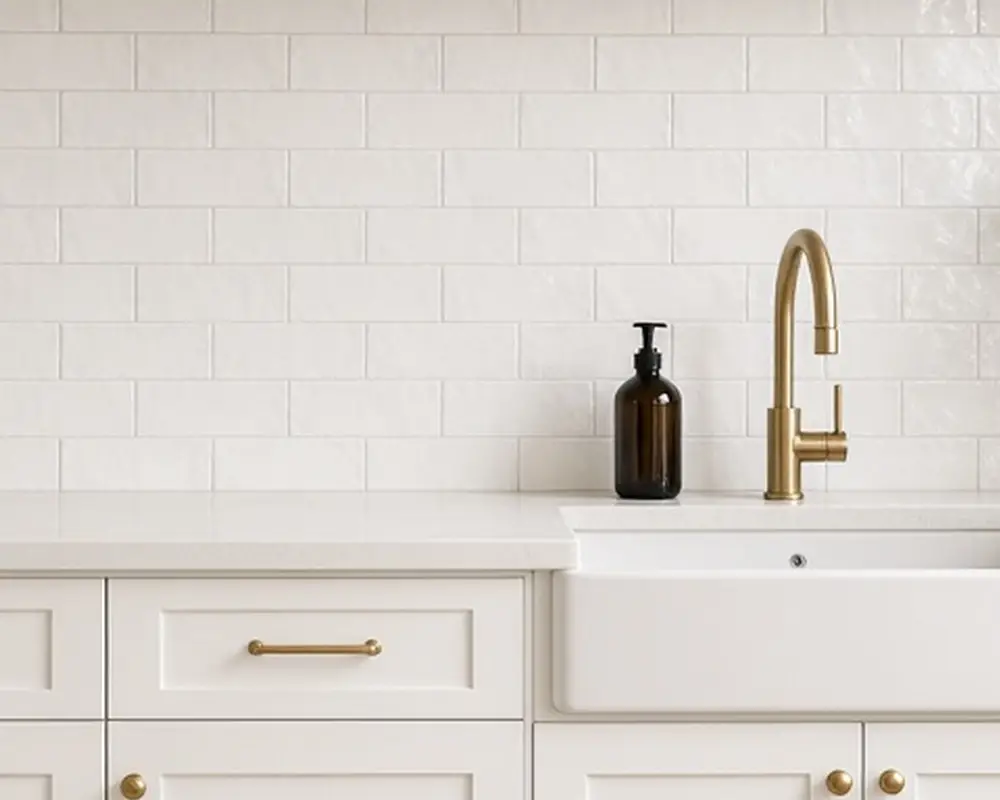
12 White Kitchens That Hide Everyday Fingerprints

On this page13 sections
- Choose a soft, warm white
- Use satin or semi-gloss on cabinets
- Add hardware where hands go
- A counter with soft movement
- A white kitchen backsplash with darker grout
- A darker toe kick or base
- Wood counters or shelves for warmth
- A forgiving floor
- A runner in front of the sink
- Stainless steel that resists prints
- A simple daily wipe
- Touch up as you go
- FAQ
A white kitchen looks wonderful in photos: bright, fresh, and calm. Living with one is another matter. Fingerprints show on the cabinet doors, coffee rings show on the counter, grout darkens behind the stove, and scuffs gather along the base. Many people love the look but worry it will always look a little dirty. It is a fair worry, especially in a family kitchen where breakfast, homework, and dinner all happen at the same counter.
It does not have to. The difference between a white kitchen that looks tired and one that stays fresh is mostly in the details: the shade of white, the paint finish, the hardware, the counter pattern, the grout color, and a few simple habits. The twelve ideas below are about choosing bright kitchen materials that forgive everyday life. If you are still deciding on a palette, the kitchen color schemes post covers how to build one around an existing counter.
As an Amazon Associate I earn from qualifying purchases.
1. Choose a soft, warm white
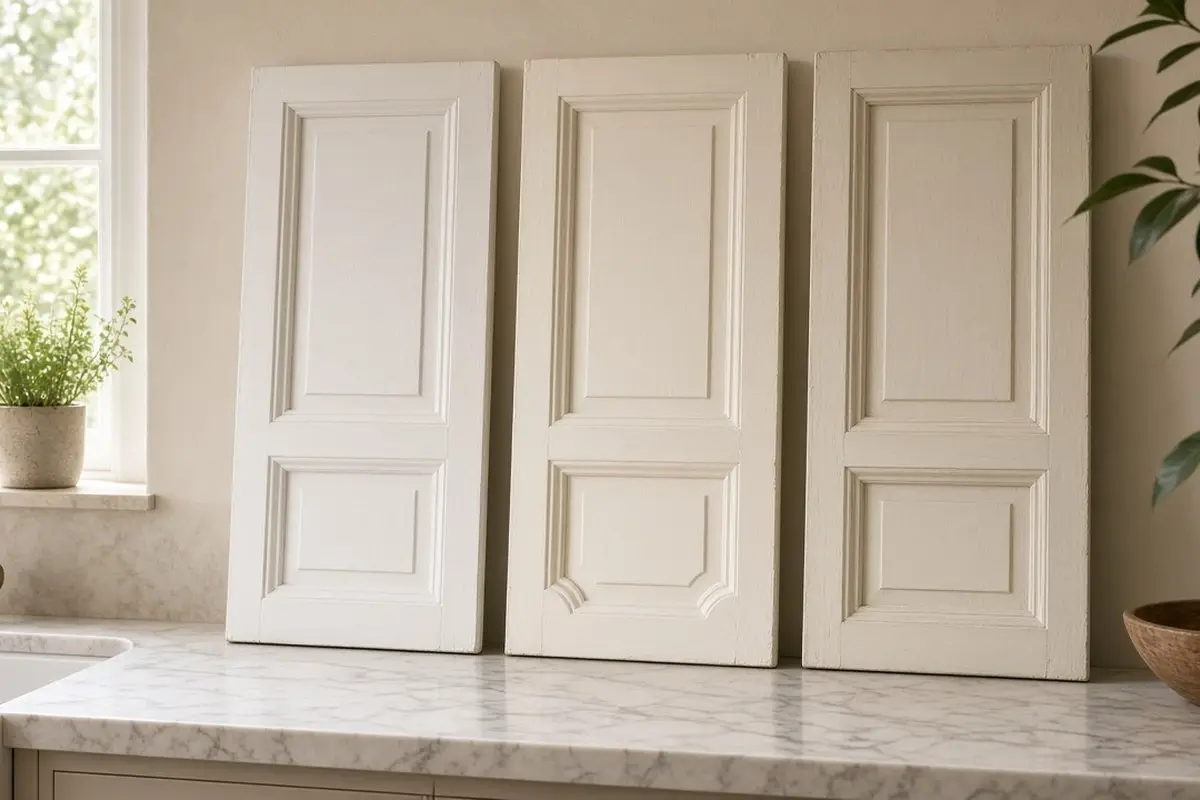
Pure, bright white shows every mark. A soft white with a touch of warmth, such as a white with a hint of cream, gray, or beige, hides small smudges and shadows much better. It also looks less clinical and more inviting.
Test your white next to the counter and floor, in both daylight and evening light. Warm whites look creamy at night; cool whites can look blue or gray. A gently warm white is the safest choice for most kitchens.
Use the same white on all the cabinets, and a matching or very slightly different white on the walls and trim. Several different whites side by side can make the cleanest one look gray and the warmest one look dirty. One family of whites throughout keeps the room calm and makes small marks harder to spot.
Light also matters. Warm bulbs around 2700K to 3000K flatter soft whites. Very cool daylight bulbs make every fingerprint and shadow sharper.
Get the look
2. Use satin or semi-gloss on cabinets
Matte paint looks soft but holds onto fingerprints and grease, and scrubbing it can burnish the surface. Satin or semi-gloss paint resists stains and wipes clean easily. Satin is the most popular balance: durable and washable, without too much shine. Semi-gloss is even tougher and suits busy family kitchens, though it shows brush marks and dents a little more, so careful application matters.
If your cabinets are factory finished, they are probably already durable. If you are repainting, use a dedicated cabinet enamel, not wall paint.
White cabinet care is mostly gentle. Use a soft cloth with warm water and a drop of dish soap, and dry the surface after cleaning. Avoid abrasive scrubbers and strong solvents, which dull the finish and make it easier for dirt to stick next time. A melamine sponge can lift stubborn marks, but use it lightly and test on a hidden spot first.
3. Add hardware where hands go
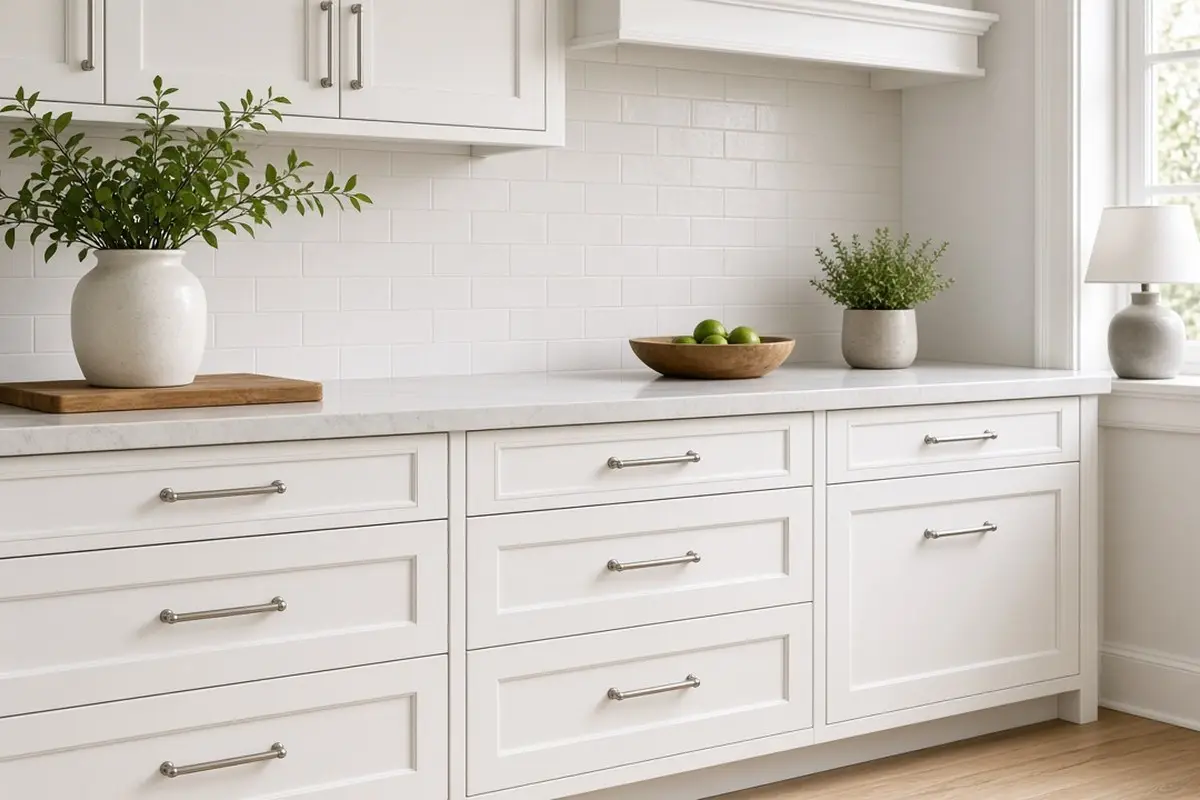
Fingerprints on white doors usually come from opening them by the edge. Pulls and knobs on every door and drawer give hands somewhere to go, so the paint stays clean. Longer pulls on drawers spread the grip even more.
Brushed finishes, like brushed brass or brushed nickel, hide fingerprints on the hardware itself better than polished finishes.
If you prefer a clean, hardware-free look, choose finger pulls routed into the top edge of the door, or push-to-open latches. Both keep hands off the main painted surface.
Get the look
4. A counter with soft movement
A solid bright white counter shows every crumb and ring. A white or cream counter with soft veining or a light speckle hides small marks while still reading as white. Quartz with gentle marble-like veining is the most popular choice; it is also non-porous and easy to clean.
Avoid real white marble if you want low maintenance. It is beautiful but etches and stains easily.
If you already have a solid white counter, keep a few small trays in places where things gather, like beside the stove for oils and near the coffee maker for spoons. Rings and drips end up on the tray, not the counter, and the tray goes in the sink.
Get the look

5. A white kitchen backsplash with darker grout
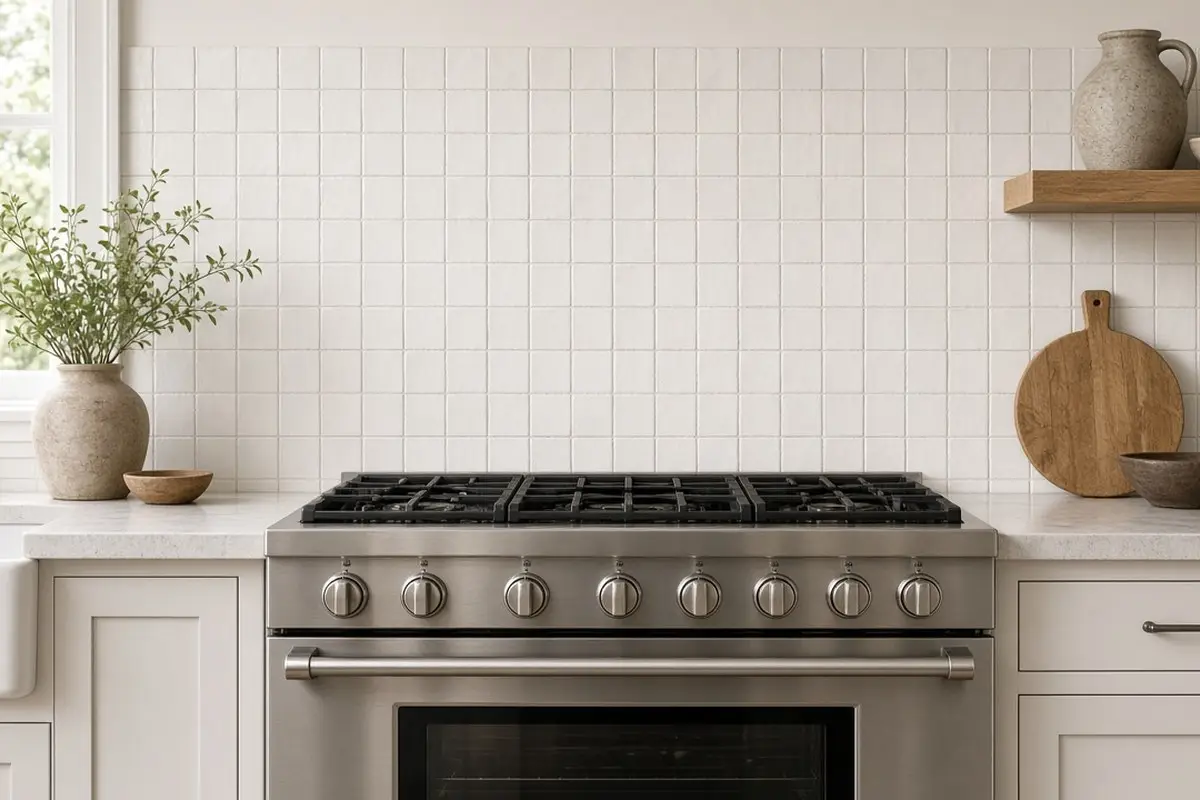
White tile with bright white grout looks crisp at first, but grout behind a stove darkens quickly. Choosing a light gray, warm gray, or almond grout hides it. Sealing the grout helps too. A penetrating sealer is invisible and lasts. Reseal it once a year, especially behind the range and the sink.
Handmade-look tiles with slight color variation hide splashes better than perfectly flat, glossy tile.
Behind the range, a single slab of quartz or a sheet of tempered glass is even easier to keep clean than tile, because there are no grout lines at all. It wipes down in seconds after cooking.
6. A darker toe kick or base
The bottom of base cabinets takes kicks from shoes, mops, and pets. It is the first place a white kitchen starts to look worn. Painting the toe kick a darker color, or using a wood or metal toe kick, hides scuffs.
The lower edges of the cabinet doors also collect marks. A slightly warmer or darker white on the lowers than on the uppers, a subtle two-tone, hides scuffs without changing the overall look of a white kitchen.
7. Wood counters or shelves for warmth
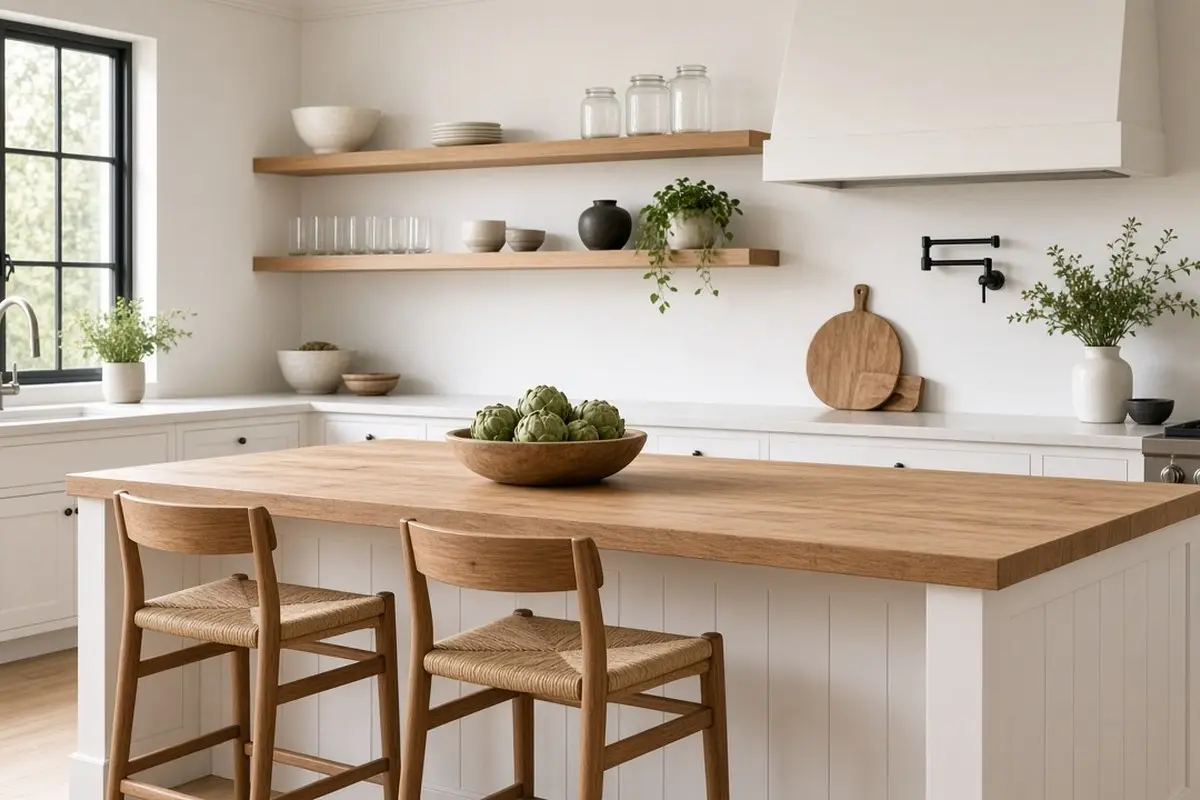
A wood island top, open wood shelves, or wood stools break up the white and hide everyday wear.
Wood also makes a white kitchen feel lived in rather than sterile. Even a large wood cutting board leaned against the backsplash and a wood bowl of fruit soften the room.
Get the look
8. A forgiving floor
Bright white floors show everything. Choose a floor with some color and pattern: wood, wood-look tile, or a mid-tone stone. Medium tones hide both dark dirt and light dust better than very light or very dark floors. It hides crumbs between sweeps.
If you have a white or very light floor already, a large washable rug and a cordless vacuum kept in the kitchen make daily cleanup quick. Grout on a light tile floor benefits from the same darker-grout trick as the backsplash.
Get the look
9. A runner in front of the sink
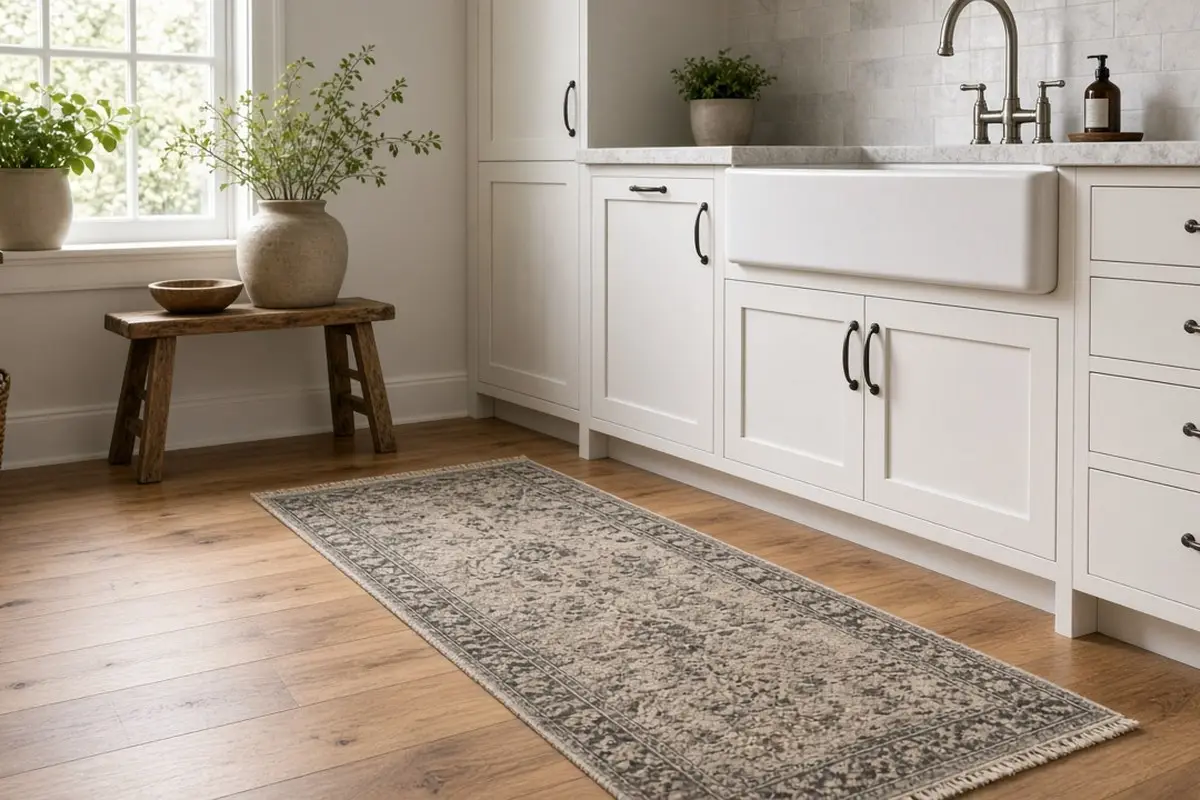
A washable rug in front of the sink and range catches drips and crumbs before they reach the rest of the floor.
Choose a rug with a pattern and a mid-tone color, not white or cream. Stripes, small geometrics, and vintage-style prints hide stains between washes. A flat-weave rug that goes in the washing machine is the easiest to keep fresh.
Get the look

10. Stainless steel that resists prints
Choose appliances with fingerprint-resistant stainless finishes, or panel-ready appliances that blend into the cabinets.
Clean stainless steel with the grain, using a microfiber cloth. A little oil-based polish after cleaning leaves a thin film that resists new prints for days.
Get the look
11. A simple daily wipe
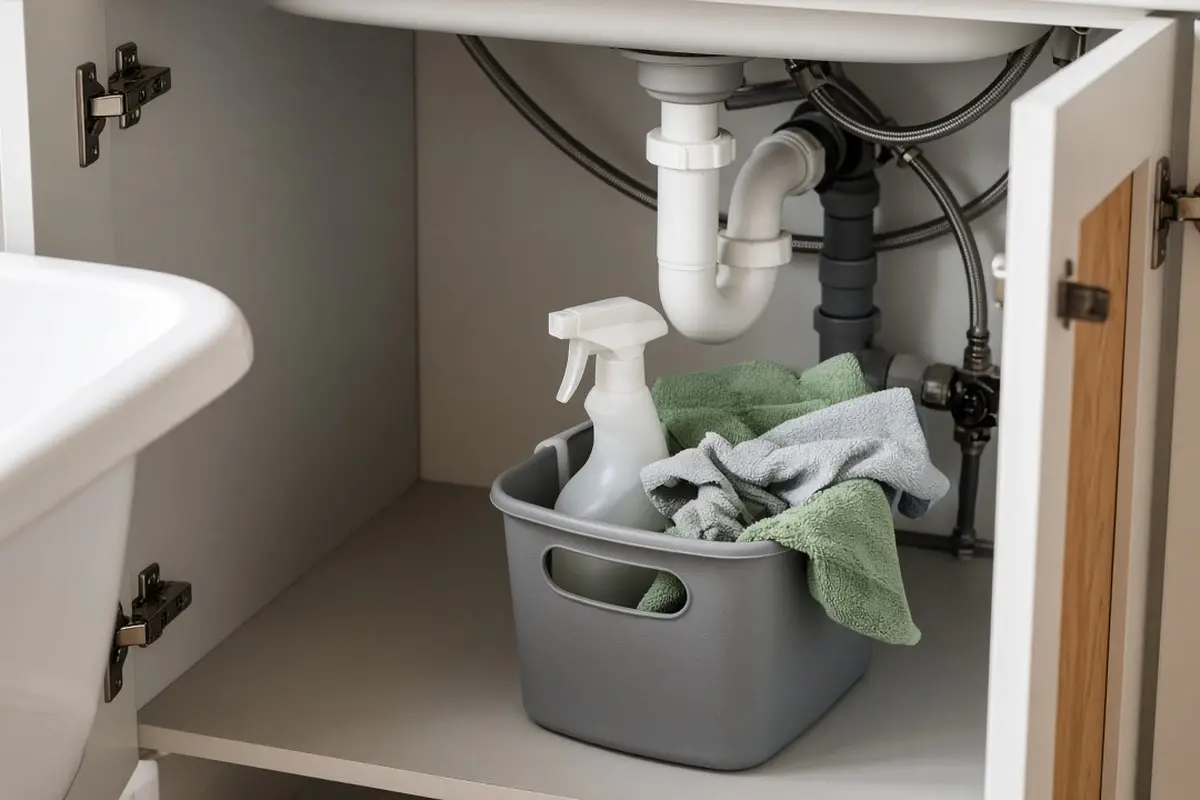
Keep a spray and a cloth under the sink and wipe cabinet doors and counter once a day. A gentle, pH-neutral cleaner is safe for painted cabinets, quartz, and most tile. It takes two minutes. Make it a habit and it soon becomes automatic.
The best time is right after dinner, when the kitchen is already being cleaned. Wipe the doors near the sink, the trash cabinet, and the fridge handles first, since they get the most fingerprints. A quick daily wipe means grease never builds up, and a white kitchen never needs a deep scrub.
Get the look

12. Touch up as you go
Keep a small jar of cabinet paint and a fine brush for quick touch-ups on chips.
White paint chips show dark wood or primer underneath, so fixing them quickly keeps the cabinets looking new. Store leftover paint in a small airtight jar, labeled with the color name and finish, so you always have an exact match.
Get the look
FAQ
How do I keep white kitchen cabinets clean?
Use a satin finish, add hardware, and wipe regularly with a mild cleaner.
What is the best white kitchen backsplash?
White tile with light gray or warm grout, sealed. Handmade-look tile hides splashes.
Are white kitchens hard to keep clean?
Not with the right materials. The kitchen finish pairings post has ideas for hardware.
What white is best for kitchen cabinets?
A soft, slightly warm white. It is more forgiving than a bright, cool white and looks good in most light. The quiet wall colors post lists calm whites for the walls around them.
Do white kitchens go out of style?
White kitchens have been popular for decades because they suit almost any home. Warmer whites, wood accents, and handmade-look tile keep them feeling current.
What hardware hides fingerprints best?
Brushed and matte finishes, such as brushed brass, brushed nickel, and matte black, hide fingerprints far better than polished chrome or shiny brass.
A white kitchen can be practical. Choose a soft white, washable finishes, forgiving surfaces, and a simple routine.