
12 Kitchen Color Schemes Built From the Counter You Have

On this page14 sections
- How to read your counter
- Beige and brown granite with sage cabinets
- Beige granite with warm white
- Black granite with white and wood
- Black counters with deep green
- White quartz with navy lowers
- White quartz with warm wood
- Gray laminate with soft blue-gray
- Butcher block with white and black
- Butcher block with green or blue
- Marble look with greige
- Terracotta tile counters with cream
- Speckled laminate with a single color
- FAQ
Most color advice for kitchens starts from a blank slate: pick your dream cabinet color, then choose a counter to match. Real kitchens rarely work that way. The counter is usually the most expensive and permanent surface in the room, and it is often staying, whether it is speckled granite from 2005, a busy laminate, a butcher block, or a white quartz.
So start there. Your counter already has colors in it, even if it looks neutral, and those colors decide which paint, cabinet, and backsplash shades will look right. The twelve schemes below each begin with a common counter and build a palette around it. If the walls are your next step, the quiet wall colors post covers calm shades that suit most kitchens.
As an Amazon Associate I earn from qualifying purchases.
How to read your counter
Before choosing paint, look closely at the counter in daylight. Pick out three colors: the main background color, the darkest fleck, and a secondary accent fleck. A speckled granite might be beige with brown and black flecks and a hint of gold. A gray laminate might be warm gray with white and charcoal.
Hold paint swatches flat on the counter, not up on the wall. Colors that pick up one of the flecks will look related. Narrow your shortlist to three, then buy sample pots and paint large boards you can move around the room. Colors that fight the undertone, such as a cool blue-gray next to a warm golden granite, will make both look worse.
Undertone matters more than color. Warm counters (gold, beige, brown, cream) want warm paint. Cool counters (white, gray, black, blue) want cool or neutral paint.
Floors count too. A warm oak floor nudges the whole kitchen warm, while gray tile or vinyl nudges it cool. When the floor and counter disagree, choose a cabinet color that sits between them, such as a greige or a soft olive, which can bridge both.
Finally, think about how much of each color you will see. Cabinets usually cover the most area, then walls, then the counter and backsplash. A bold cabinet color needs a calmer wall; a quiet cabinet can take a little more color on the walls or backsplash.
1. Beige and brown granite with sage cabinets
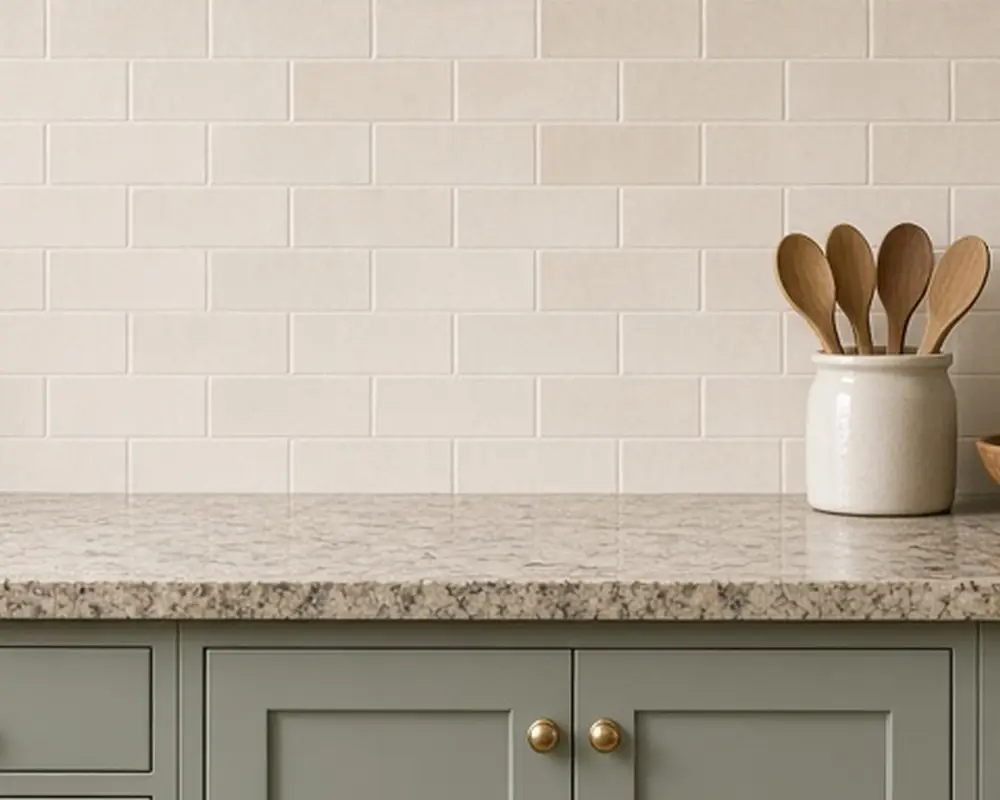
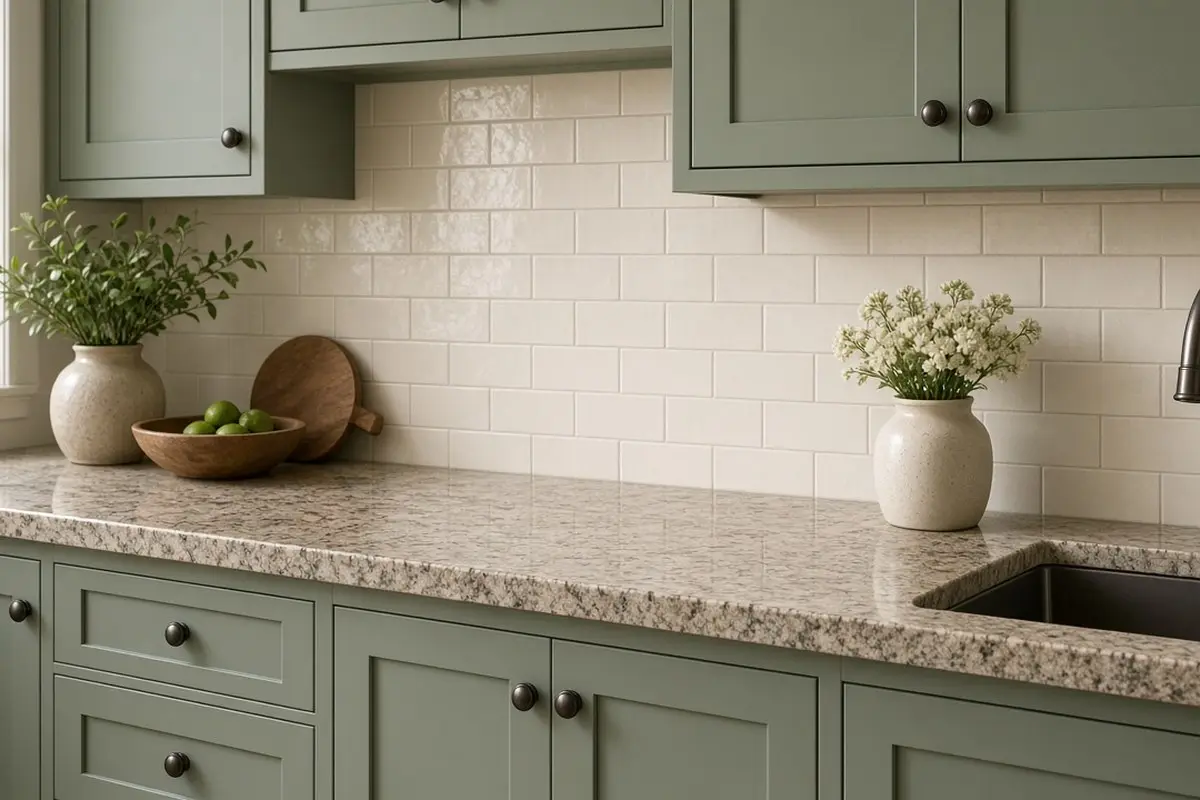
The classic tan or brown speckled granite is everywhere, and many people want to escape it. The trick is not to fight it. Muted sage green cabinets pick up the earthy tones and make the granite look intentional. Add a creamy backsplash and brushed brass hardware.
Sage works because it sits in the same earthy family as the granite’s browns and golds, without matching any of them exactly. Choose a sage with gray in it rather than a minty one. Paint a cabinet door and set it against the counter in morning and evening light before committing.
Keep the walls a warm white or very pale cream so the cabinets and counter are the main event. A wood floor or a warm-toned tile floor completes the scheme.
Get the look
2. Beige granite with warm white
If you prefer a light kitchen, choose a warm white with a little cream or yellow in it, not a stark blue-white. Stark white makes beige granite look dirty; warm white makes it look creamy.
Pair with a backsplash in a soft beige or warm white tile, and bring in wood with stools or open shelves.
The goal here is a soft, tonal kitchen: cream cabinets, beige counter, warm white tile, and natural wood. It feels calm and timeless, and it lets the granite read as a warm neutral rather than an old choice. Avoid gray anywhere in this scheme; it pulls against the warmth. Brass or bronze hardware suits it best.
Get the look
3. Black granite with white and wood
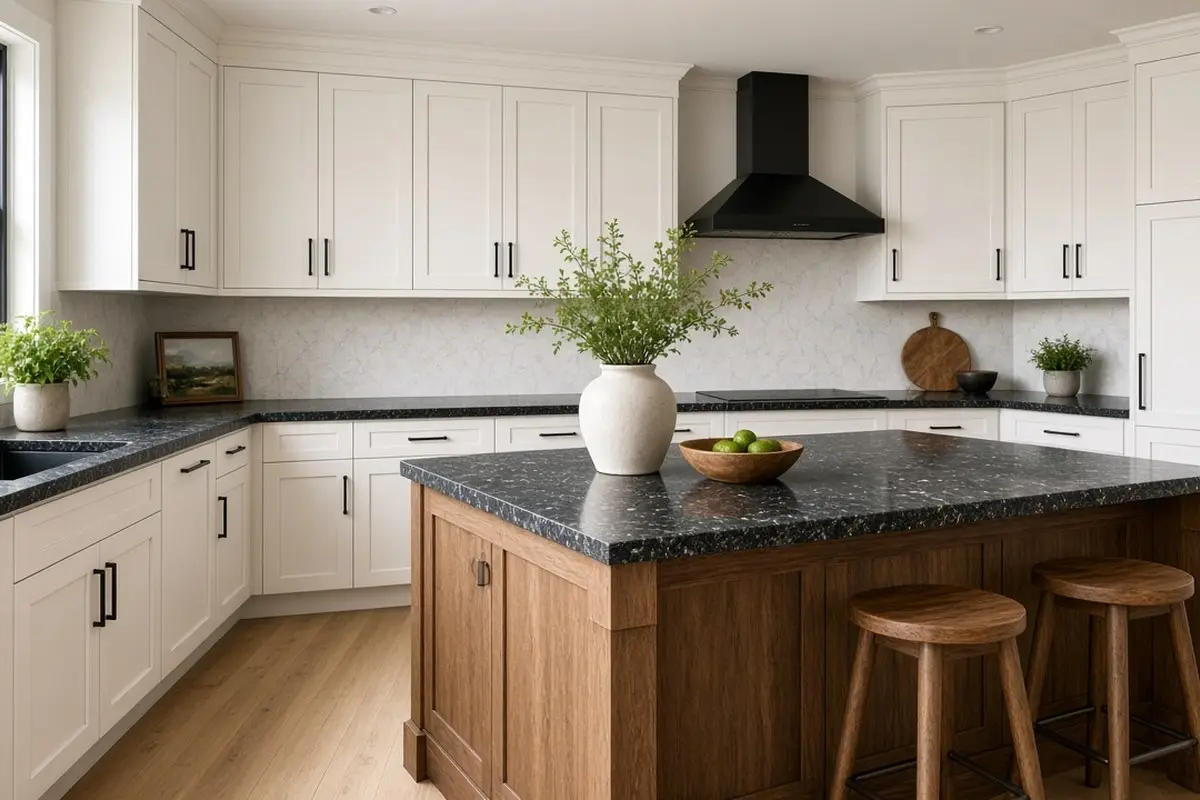
Black or near-black counters are flexible. White cabinets with black counters is crisp and classic. Add warm wood for balance, or the room can feel stark.
Black counters show crumbs and water spots more than lighter ones, so a honed or leathered finish is easier to live with than polished. If yours are polished, a soft cloth and a quick wipe after cooking keep them looking sharp.
Get the look
4. Black counters with deep green
For drama, pair black counters with deep forest or hunter green cabinets and brass hardware. It looks rich and slightly traditional.
This scheme needs good light. In a kitchen with small windows, use plenty of under-cabinet lighting and warm bulbs so the dark green and black do not feel heavy. White walls and a white or cream backsplash help reflect light around.
Get the look
5. White quartz with navy lowers
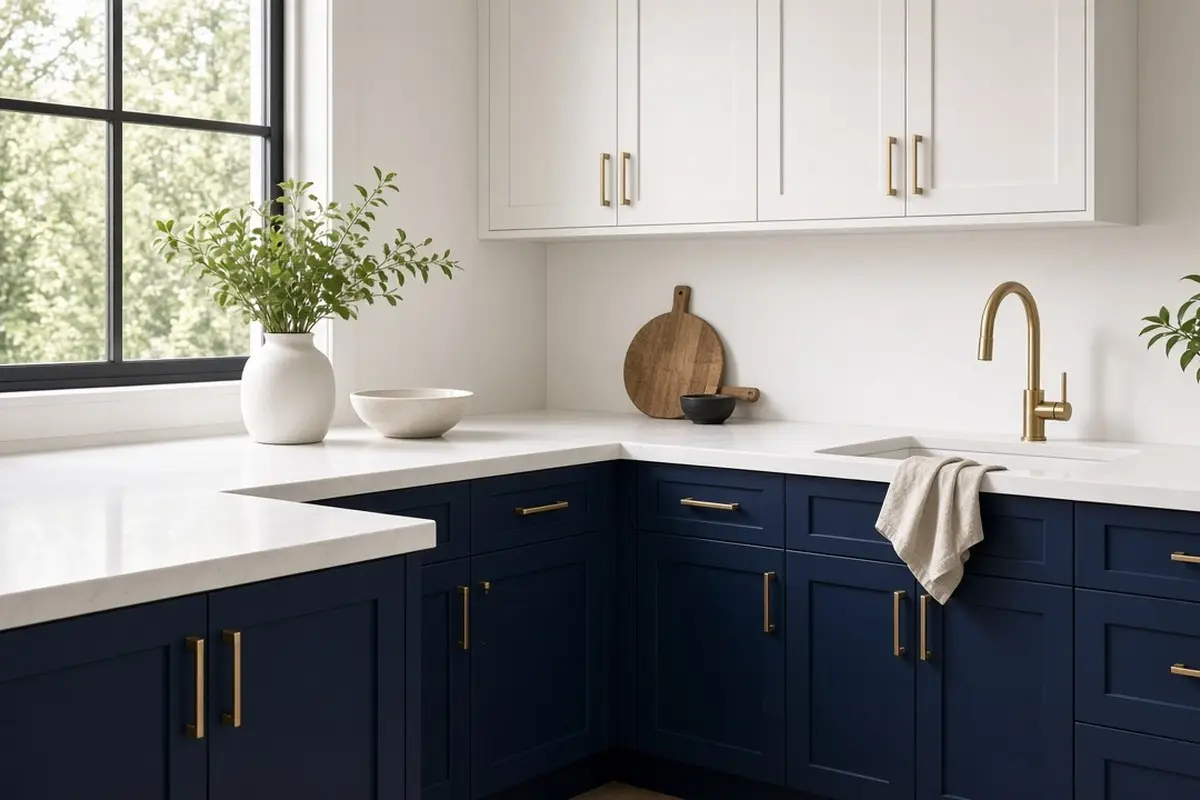
White quartz goes with nearly everything. A two color kitchen with navy lower cabinets and white uppers is balanced and timeless. Navy grounds the room; white keeps it bright.
The dark lowers also hide kicks, scuffs, and splashes, which makes this one of the most practical two color kitchen schemes for families. Repeat navy somewhere else, such as on a window frame, a rug, or a pendant, so the color feels at home.
Get the look
6. White quartz with warm wood
Natural wood cabinets on white quartz feel modern and warm. The bright counter keeps wood from feeling heavy, and the wood keeps white quartz from feeling cold. Choose oak, walnut, or a wood-look laminate. If refacing the doors is too expensive, painting the walls a soft warm white and adding wood open shelves gives a similar warmth on a smaller budget.
Get the look
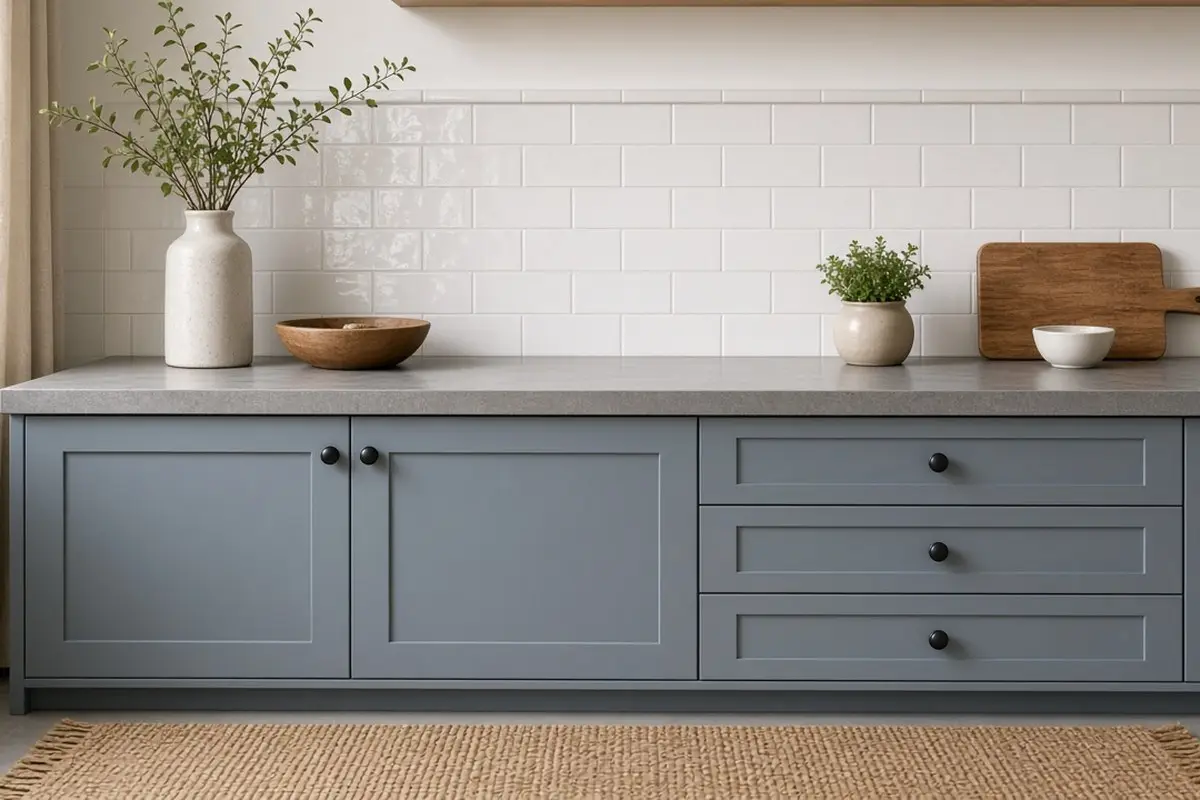
7. Gray laminate with soft blue-gray
Cool gray counters work with blue-gray cabinets and white walls. The result is calm and coastal.
Add warmth with natural textures: a jute runner, woven baskets, and a wood cutting board. Without them, an all-cool scheme can feel chilly, especially in a north-facing kitchen.
Get the look
8. Butcher block with white and black
Butcher block counters are warm. Pair them with white cabinets and black hardware for a farmhouse look.
Oil butcher block every month or so to keep it from drying out and to protect it from water. The oil deepens the wood’s color slightly, which you should account for when choosing paint. Look at swatches next to an oiled section, not a dry one.
Get the look
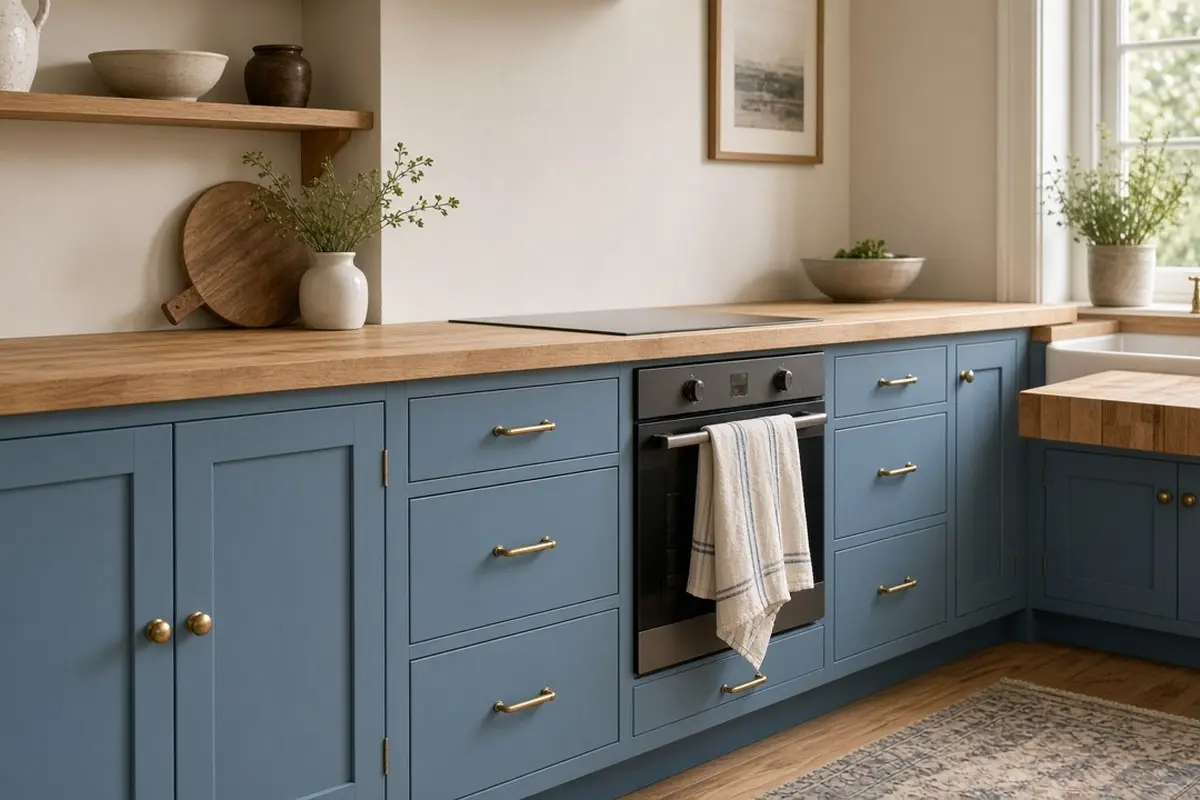
9. Butcher block with green or blue
Butcher block also suits colored cabinets: sage, olive, dusty blue, or navy all look lovely against warm wood.
Blue and warm wood are opposites on the color wheel, which is why they look so good together. The wood makes the blue feel friendly; the blue makes the wood glow.
Get the look

10. Marble look with greige
Marble-look counters with gray veining suit greige cabinets and soft white walls. The palette is calm and elegant. Pick a greige with the same undertone as the veining: a warmer greige for creamy marble looks, a cooler one for crisp white and gray.
11. Terracotta tile counters with cream
Older tiled counters in terracotta or rust tones look great with creamy white cabinets and olive or green accents.
This scheme leans Mediterranean and suits old houses especially well. Leave the tile as the feature and keep everything around it simple. If the grout is stained, a grout pen or a fresh regrout makes a dated tiled counter look cared for.
Get the look
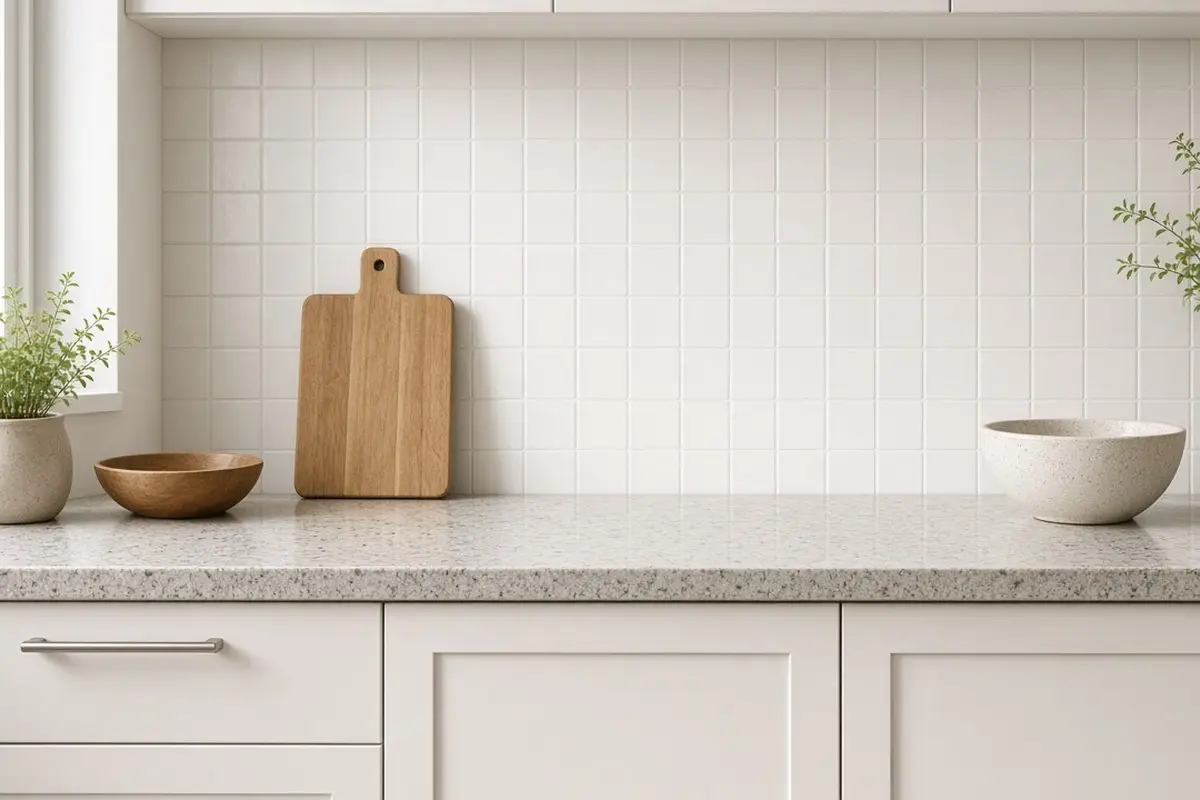
12. Speckled laminate with a single color
Busy speckled laminate looks calmer with plain, solid cabinets in one of its colors. Avoid more pattern on the backsplash.
If you do want pattern, put it somewhere away from the counter, such as on a rug or a curtain, so the two busy surfaces do not compete.
Get the look
FAQ
How do I choose cabinet and counter colors that go together?
Find the undertone and colors in the counter, then pick a cabinet color that repeats one of them.
What is the best two color kitchen combination?
Dark lowers with light uppers, such as navy and white or green and cream.
What paint color goes with beige granite?
Warm whites, creams, and muted sages. The kitchen finish pairings post covers hardware for each scheme.
Should kitchen walls match the cabinets?
Not necessarily. A slightly lighter or softer version of the cabinet color, or a warm white, usually works best. Painting walls and cabinets the same color can look striking in a small kitchen, but test it first.
What kitchen paint finish is best for cabinets?
Satin or semi-gloss. They wipe clean easily and resist moisture. Walls do well in eggshell or satin. The small kitchen organization post covers keeping the newly painted kitchen tidy.
Can I change my kitchen colors without replacing the counter?
Yes. Paint, hardware, backsplash, and textiles can completely change how an existing counter looks. Start from its undertone and every other choice gets easier.
Your counter is not a problem; it is a starting point. Read its colors, pick a palette that agrees, and the whole kitchen will look planned.