
10 Playrooms That Pack Into Bins Before Bed

On this page13 sections
- The rule: one category, one bin
- Low open shelving at child height
- Fabric bins that are light when full
- Picture labels for non-readers
- Clear bins for small parts
- A big floor bin for the last-minute sweep
- Rolling bins for art supplies
- Toy rotation from a closet
- Dress-up on hooks, not in a box
- Books face-out on ledges
- A clear floor and a defined rug
- The ten-minute pack-up routine
- Common questions
The test of a playroom is not how it looks on a Saturday morning. It is how long it takes to put back together at seven in the evening, with tired children and a tired adult. If the answer is half an hour of sorting tiny pieces into the right drawers, the room will stay messy. If the answer is ten minutes of tossing toys into the right bin, the room resets every night.
That is the whole idea behind these ten playrooms. Storage is designed around bins that are easy to fill, easy to carry, and easy to put back, so the clean-up is a habit rather than a battle.
As an Amazon Associate I earn from qualifying purchases.
The rule: one category, one bin
Every bin holds one kind of thing: blocks, cars, dolls, dress-up, art supplies, animals. Not “small toys,” which becomes a junk drawer. When a child can answer the question “where does this go?” in one second, they can clean up alone. Start by sorting every toy in the room into categories on the floor, and count how many bins you actually need.
Most families find they need fewer categories than expected, and that some categories are too large for one bin. That is a sign to pass some toys on or to start a rotation.
While sorting, set aside anything broken, missing pieces, or outgrown. Puzzles with three pieces gone and toys nobody has touched in months take up bins that the favorites need. Children are often happy to help choose what to pass on if they understand that it makes room. Keep a donation bag in the closet and add to it whenever something stops being played with.
1. Low open shelving at child height
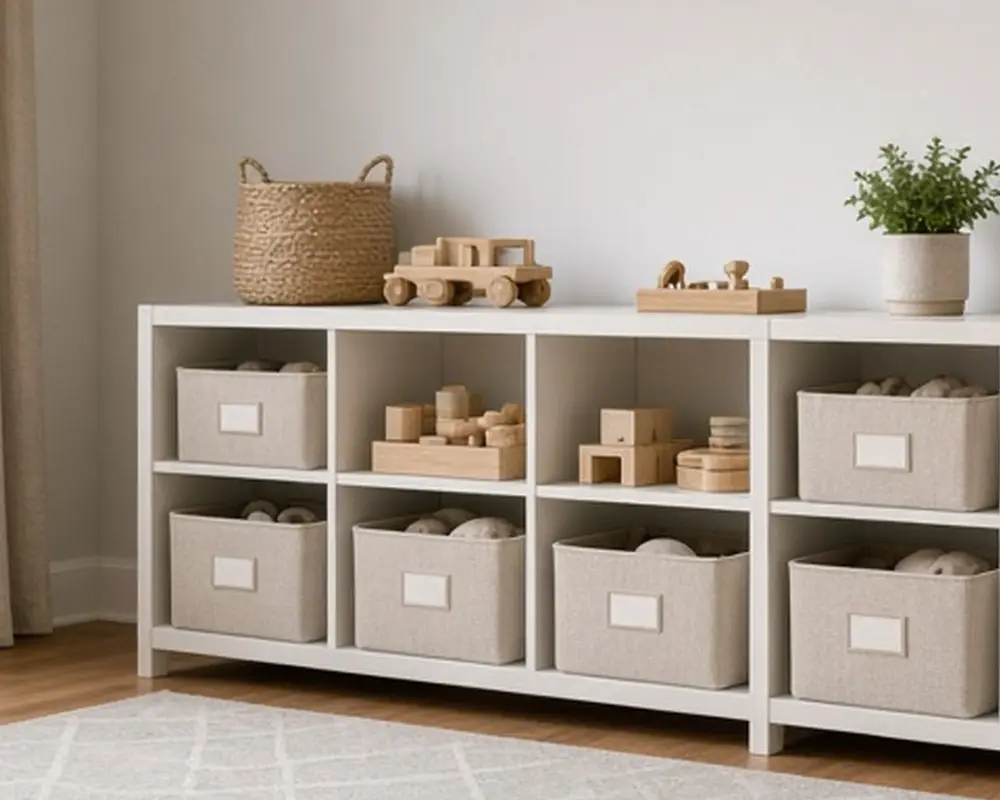
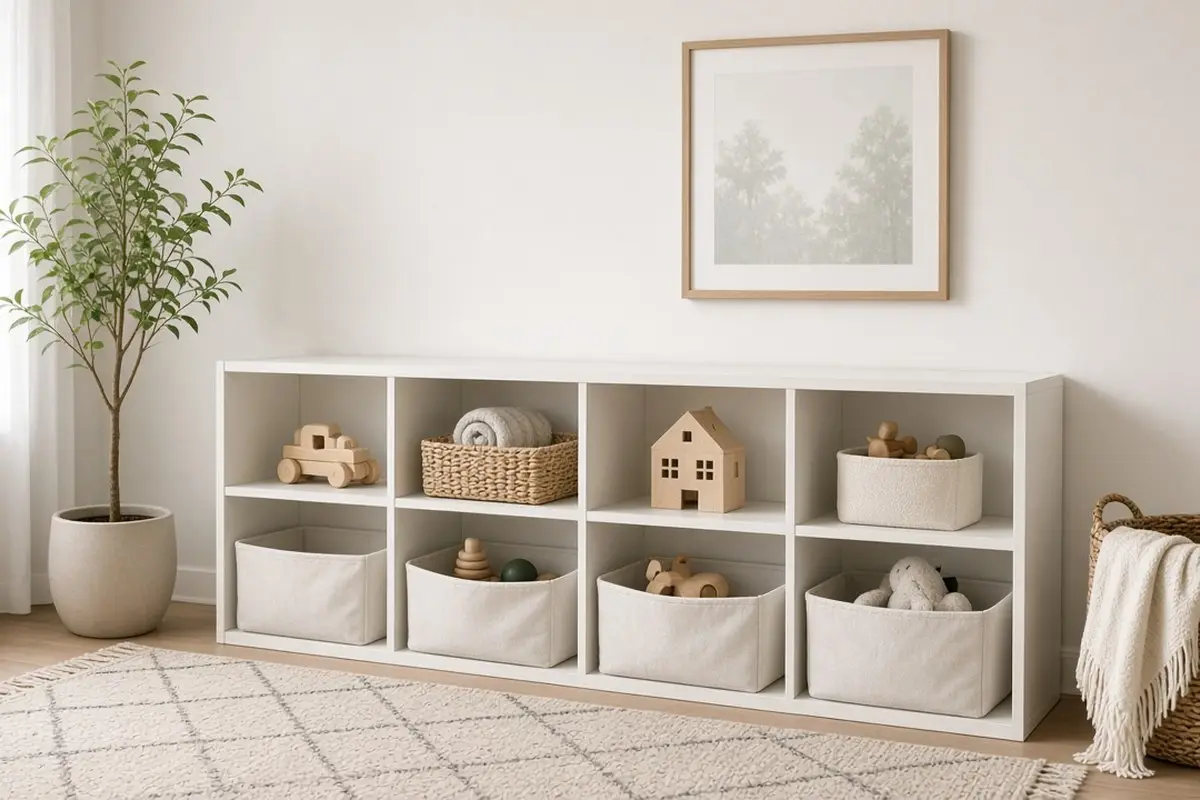
A low cube shelf or a bookcase laid on its side puts every bin within a small child’s reach. Nothing should require a stool. Any bins that hold toys you prefer to supervise, such as paints or toys with batteries, can sit on a higher shelf that only adults reach, and that shelf becomes the place for anything special. Keep the top surface clear for a puzzle in progress or a block tower, and anchor the unit to the wall even if it is low.
A bookcase laid on its side gives you a long, low surface that doubles as a play counter for a toddler. Put the heaviest bins, such as wooden blocks, on the bottom row and the lightest on top. Leave one cubby empty as a spot for the toy of the week, or a special project that should not be packed away yet.
Get the look
2. Fabric bins that are light when full
Children carry bins to the play spot and back, so weight matters. Fabric or felt bins with handles stay light even when full and do not hurt anyone if dropped. Look for bins with a firm base and stiff sides, since soft bins collapse as soon as they are half empty and become hard to fill. Washable covers are a bonus; playroom bins get sticky faster than anyone expects, and a quick wash every few months keeps them looking new. Choose bins that fit your shelf openings snugly so they slide in without a fight.
Matching bins make the room look calm even when it is full. Pick one or two colors that suit the room, such as natural, gray, or a soft sage, rather than bright primary colors on every bin. The toys bring plenty of color, and quiet bins let the room feel restful at bedtime.
3. Picture labels for non-readers
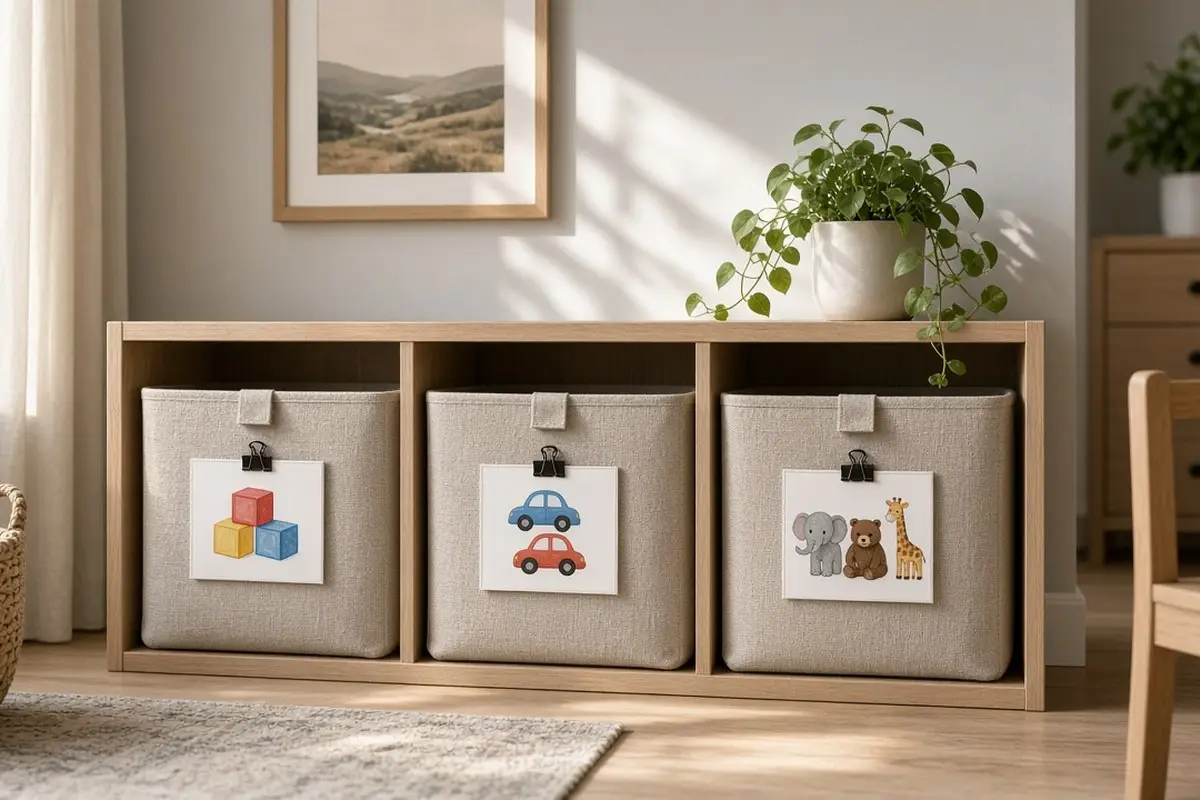
Clip a photo of the contents to the front of each bin, or use labels with simple drawings. Pre-readers can match a picture of cars to a bin of cars, and older siblings can read the word below. Label holders that clip on make it easy to change categories as interests shift.
Make the photo labels with your phone: lay the contents of each bin on the floor, take a quick picture, print it small, and slip it into the holder. Seeing their own toys on the label helps children recognize the bin instantly. Laminate the prints or use a clear sleeve so sticky fingers do not ruin them, and update them when a category changes.
Get the look
4. Clear bins for small parts
For sets with many small pieces, such as building bricks or train track, clear lidded boxes let children see what is inside without tipping the whole box out. Choose a size that one child can carry with two hands.
Big building sets often work better on a shallow tray than in a deep box. A wide, low bin lets children spread the pieces and find what they need, then tip everything back in one motion. Under-bed rolling storage is perfect for this and slides away when the floor needs to be clear.
5. A big floor bin for the last-minute sweep
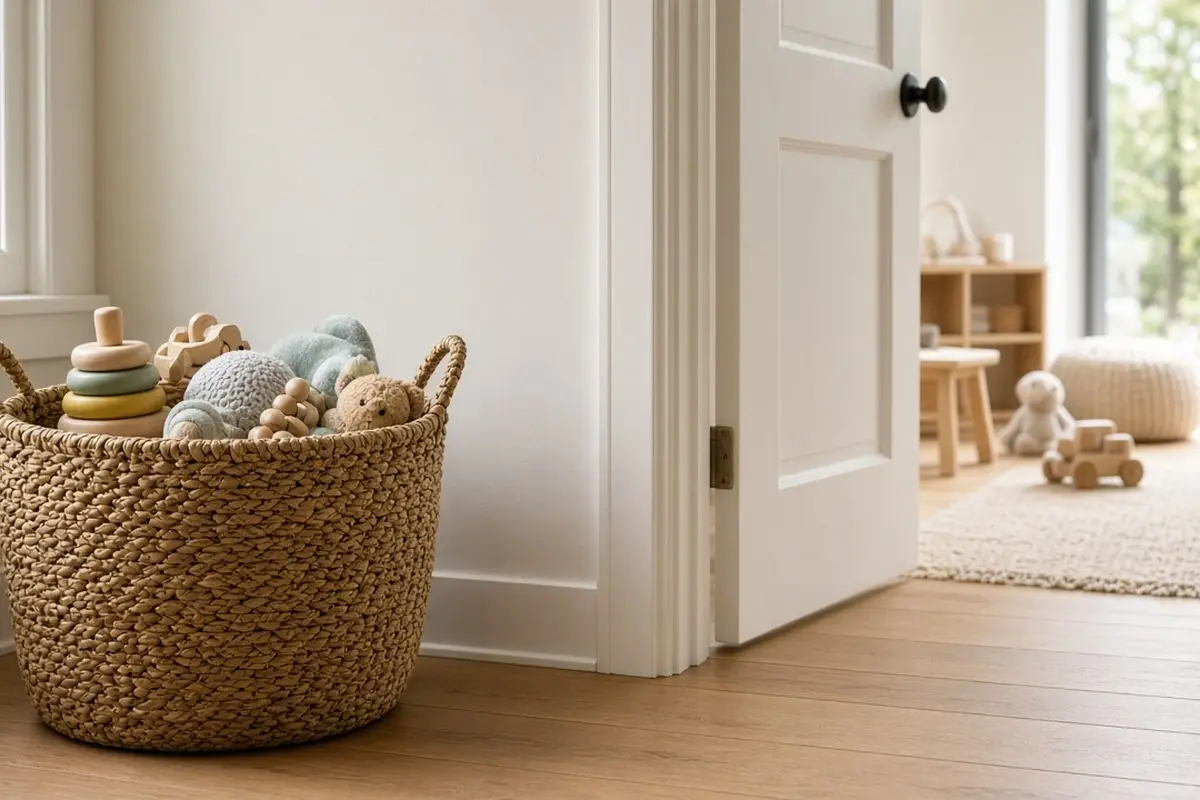
Even with good categories, the last five minutes of clean-up produce odd pieces nobody wants to sort. A single large basket by the door catches them. Once a week, an adult sorts it back into categories. This keeps the nightly reset fast without letting the system collapse.
The sweep basket also keeps peace at bedtime. A child who is too tired to sort can still toss, and the room is clear either way. The weekly sort can become a quiet job for an older child, perhaps with a small reward, or a few minutes for an adult on Sunday evening with a podcast on.
Get the look
6. Rolling bins for art supplies
Art supplies travel between the playroom and the kitchen table. A rolling cart with three tiers holds paper, crayons, and glue, and moves to wherever the art happens. At bedtime it rolls back to its spot.
Keep messy supplies, such as paint, glitter, and slime, on the top tier or in a lidded box an adult opens, while crayons and plain paper stay on the lower tiers for free use. Store finished artwork in a single flat file or a large portfolio, and choose a few favorites to frame each season. The rest can be photographed and recycled, which keeps the cart from overflowing.
7. Toy rotation from a closet
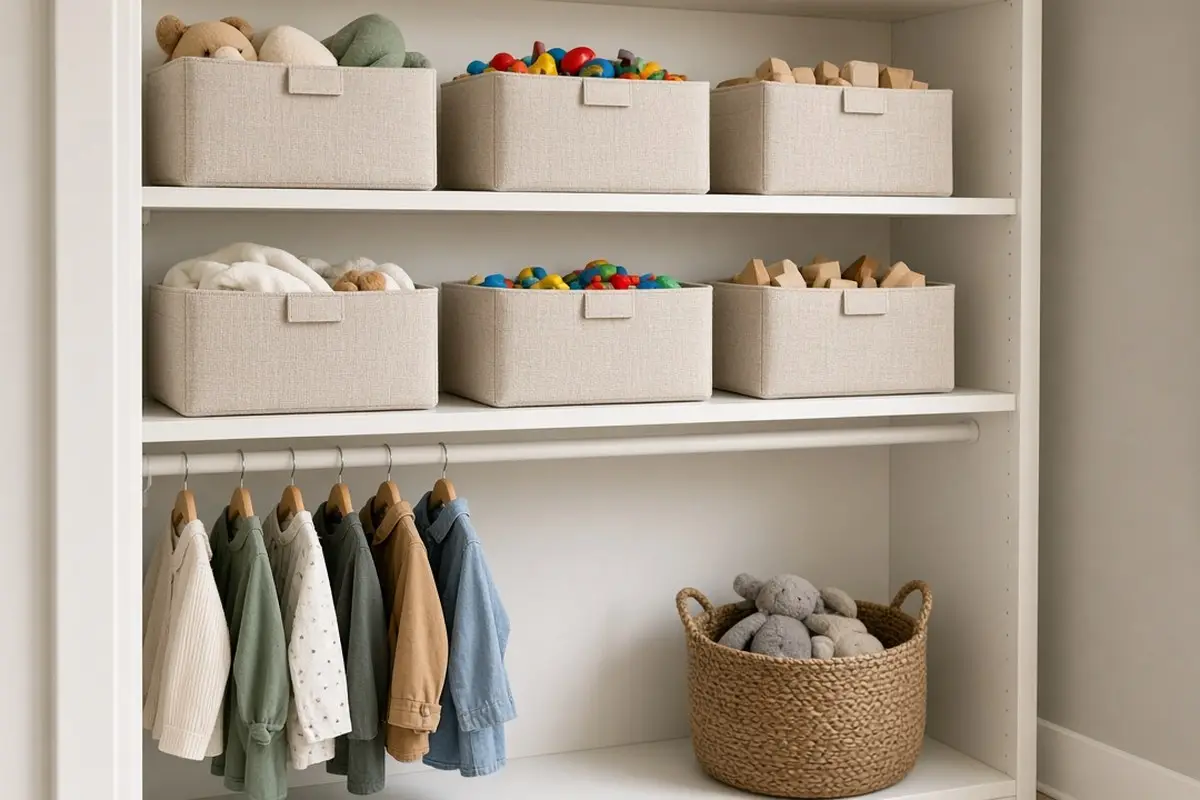
Keep only a third to half of the toys out at once. Store the rest in labeled bins in a closet or under a bed, and swap a few bins every couple of weeks. Fewer toys out means faster clean-up, and returning toys feel new again.
Rotate by category rather than random toys, swapping the whole vehicles bin for the whole animals bin, so the labels and shelf spots stay simple. Watch which toys get ignored and which get asked for. Toys that have not been missed after two rotations are good candidates to donate.
Get the look
8. Dress-up on hooks, not in a box
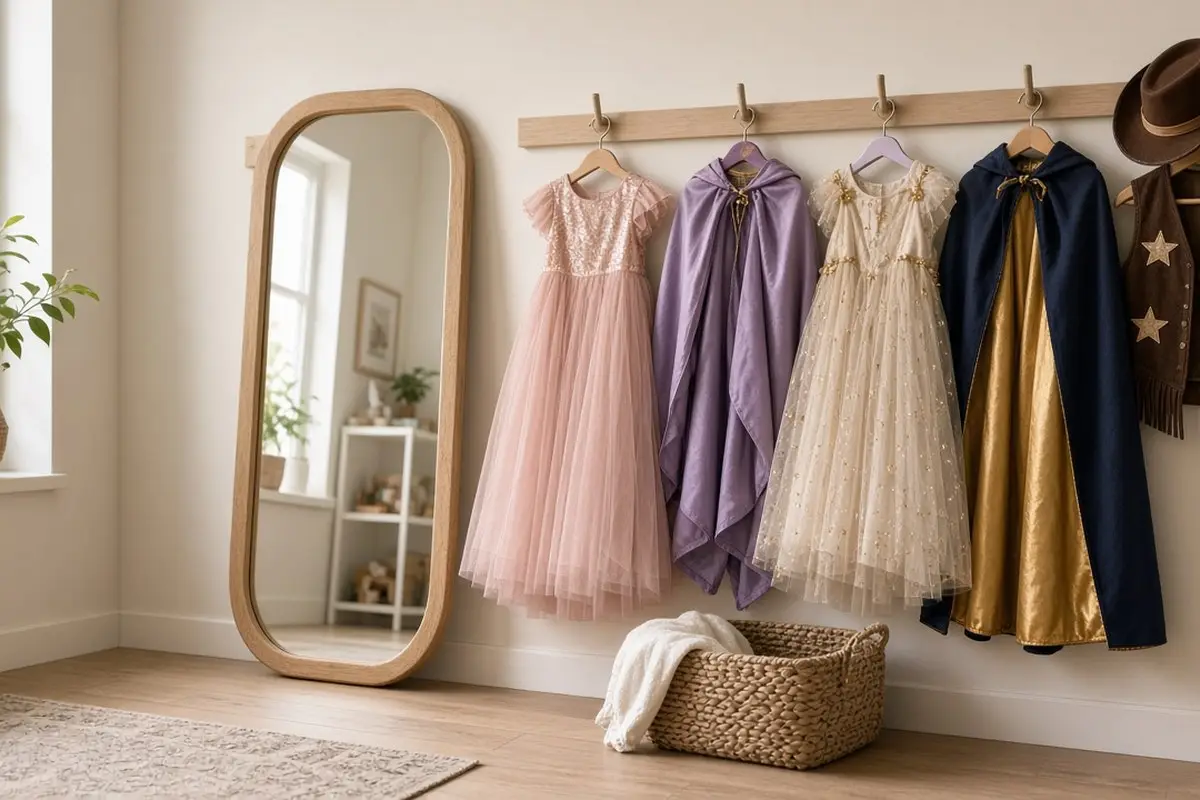
Costumes stuffed in a trunk get tangled and wrinkled. A row of low hooks or a small open rack makes dress-up visible and easy to hang back. A mirror at child height beside it completes the corner.
Hooks also work for bags, capes, and hats, and they teach children to hang things up, a skill that carries over to coats in the entry. Mount them at the height of the child’s shoulder, and space them widely enough that costumes do not pile on top of each other.
Get the look
9. Books face-out on ledges
Children choose books by their covers. Shallow picture ledges or a front-facing book rack show covers and take far less effort to tidy than a packed bookcase. Slide a book onto the ledge and it is put away.
Rotate the books along with the toys. A dozen books facing out are more inviting than a hundred spines, and a basket of library books on the floor below keeps borrowed books from mixing with your own.
10. A clear floor and a defined rug
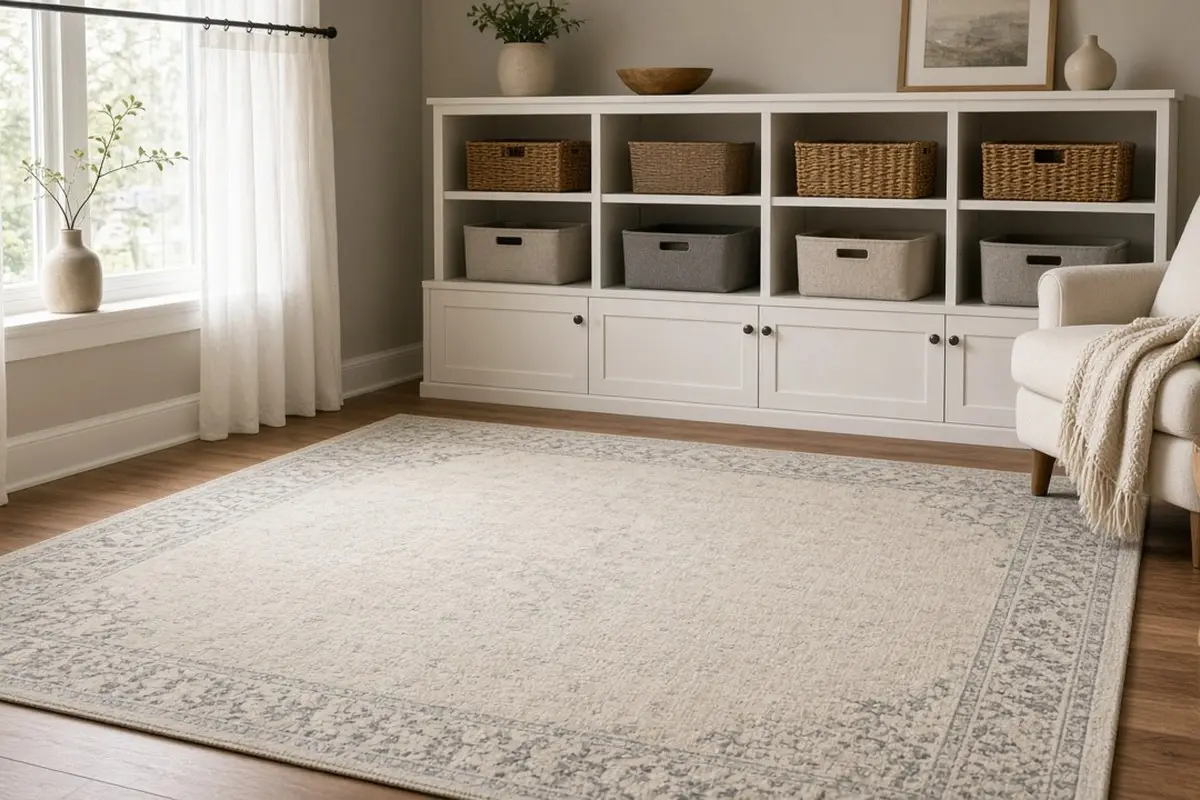
A playroom feels clean when the floor is clear. A washable rug defines the play zone, and everything lifts off it into bins at night. The goal is a bare rug by bedtime, which is easy to see and easy for children to aim for.
If the playroom shares space with a living room, the rug and bins become a boundary. Toys stay on the rug during the day, and at night the bins slide into a cabinet or behind closed doors, so the room becomes an adult space again after bedtime. Choose a rug with a low pile for building on and a pattern that hides small stains.
Get the look
The ten-minute pack-up routine
Set a timer or play two songs. Children put toys in bins, an adult moves the sweep basket and checks the floor, and the lights go off. Keep the routine the same every night. Within a few weeks, most children do it without being asked.
Make it predictable rather than perfect. Children do better with a simple order, such as books first, then big toys, then the sweep basket, than with a list of rules. Praise the effort and let small mistakes go. A car in the animal bin is still off the floor. As children get older, give each one a zone to own, such as the shelf or the rug, so the work feels shared and fair.
Common questions
How many toy bins does a playroom need? One per category, usually eight to twelve, plus a few for rotation.
What is the best playroom storage for toddlers? Low open shelves with light fabric bins and picture labels.
How do you get kids to clean up the playroom? Make every bin one category with a picture label, and keep the routine short and the same each night.
What is toy rotation? Storing part of the toys away and swapping bins every few weeks so fewer toys are out at once.
For more, see bunk room ideas, above-refrigerator storage, and one-closet bedroom storage.